Veo Micromobility scooters officially rolled out in Denver last month.
Dockless scooters have been around Denver since 2018, but Veo is the new — and only — operator in town after the Denver City Council ended the city’s relationships with Lime and Bird.
So how does Veo compare to its predecessors? Denverite asked scooter-ers in downtown Denver and checked in on online chatter.
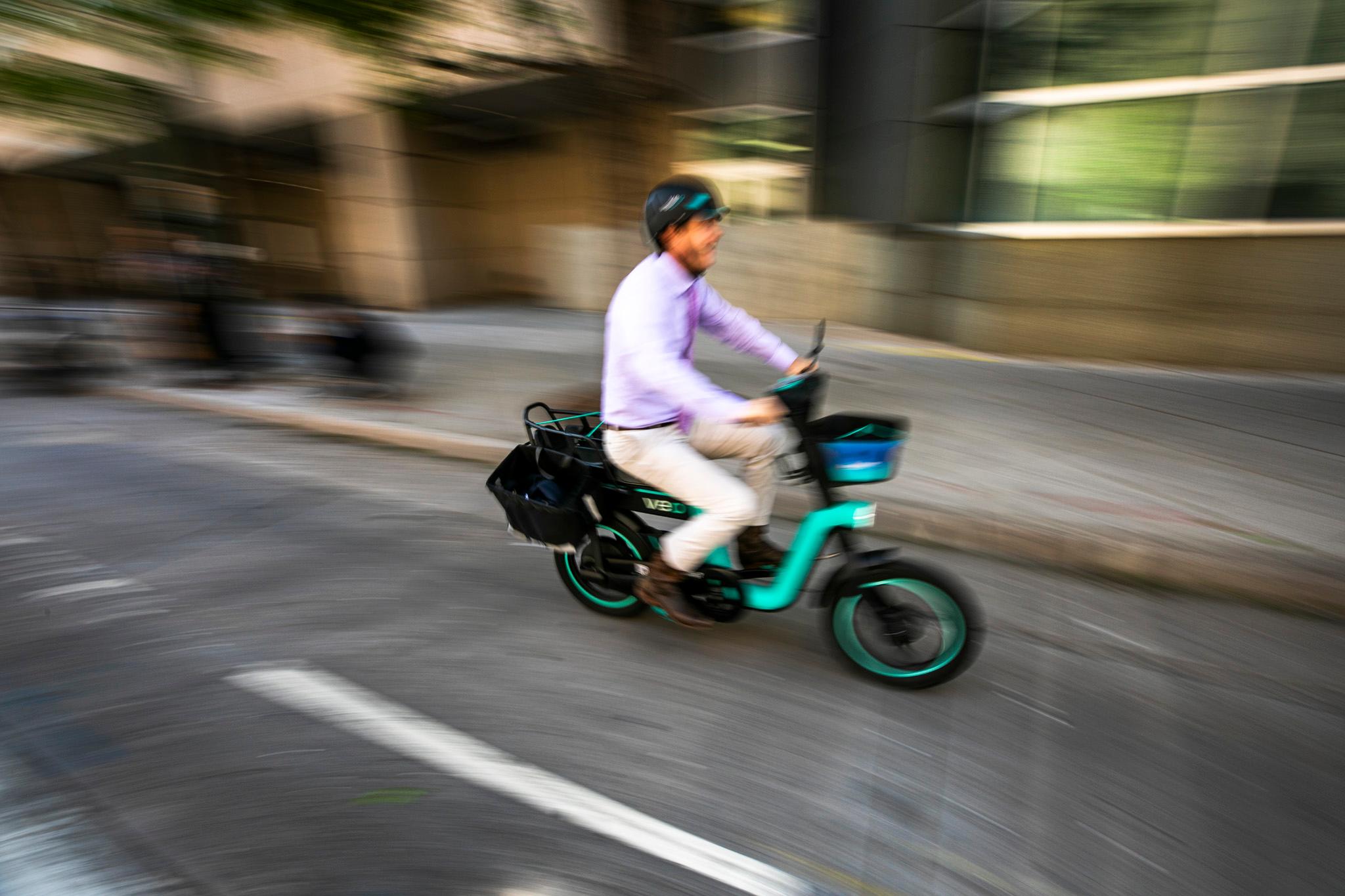
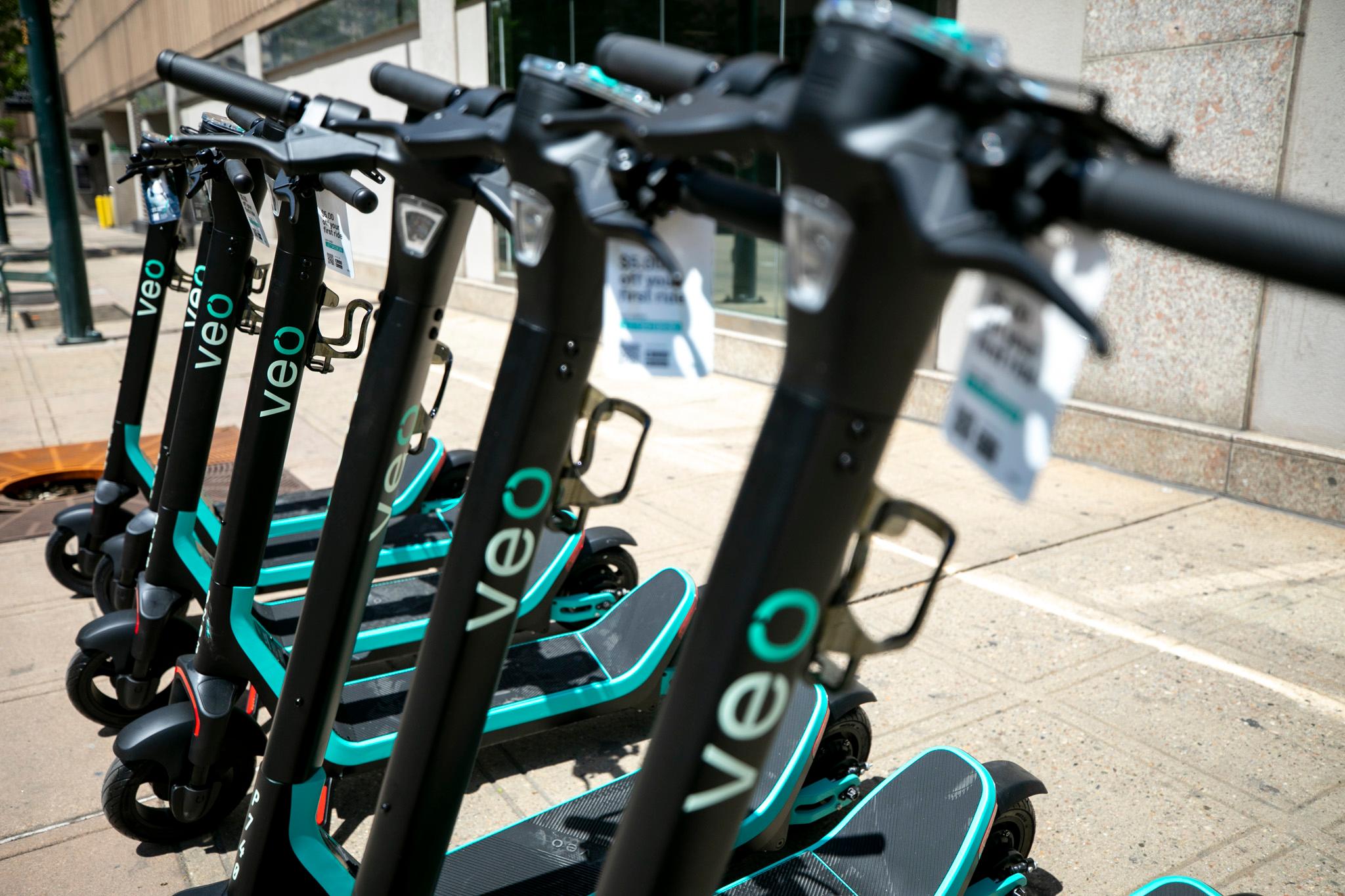
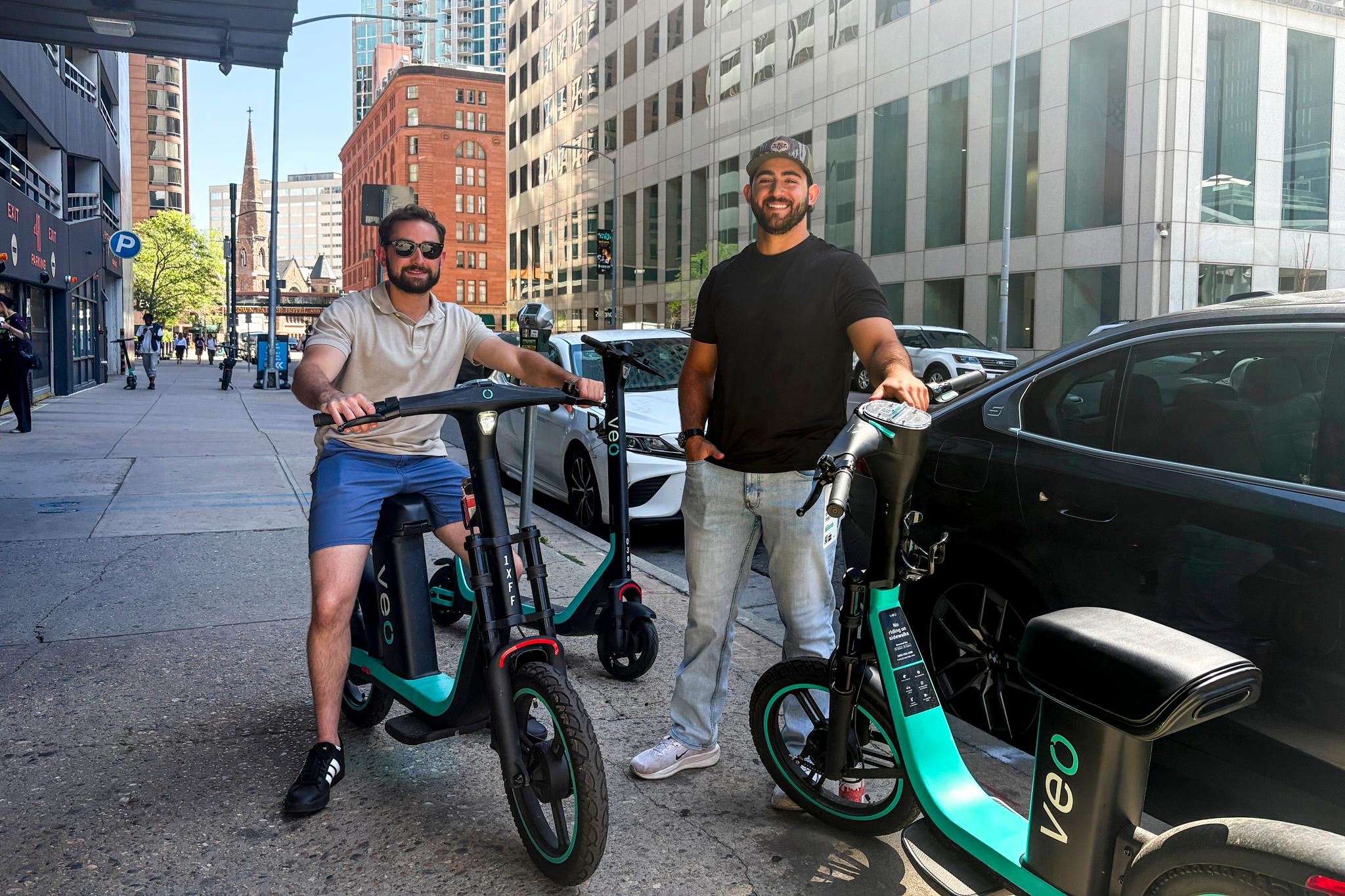
Veo offers standing scooters, seated scooters, e-bikes and a tricycle, with a total of five different configurations.
Deep discounts for some
It costs 39 cents a minute to ride a Veo, plus a $1 unlock fee. Veo also offers passes with bulk discounts on riding minutes.
But all Denver residents qualify for the Denver Resident Pass, which costs 25 cents a minute with a $1 unlock fee.
Low-income Denver residents also can qualify for free daily rides. Veo Access provides 60 free minutes of ride time every day. After that, rides cost 15 cents a minute with no unlock fee, according to the Veo website.
To qualify for the resident or Access program, riders have to upload identification to Veo to prove their status and complete face scans before gaining access.
“It’s basically free so I can’t complain,” Ian Echelmeier, 24, a Cap Hill resident who works downtown, told Denverite. He hockey-stopped an upright Veo on the sidewalk right before starting his shift.
The access program is limited to:
- Those making less than 200% of the federal poverty line, or $31,920 for a single person.
- Recipients of SNAP, Medicare or Medicaid
- Recipients of local public housing assistance
- Recipients of RTD’s LiVE program, which includes anyone below 250% of the poverty line
- Recipients of utility assistance programs
- Students receiving financial aids
- Veterans and active-duty military members
“Pricewise, I prefer the Veos,” Echelmeier said. He rode Lime and Bird scooters a lot before they were phased out and now rides Veo to work and “around town.”
One loyal micromobility user and Denver resident, who declined to provide his name, said that he doesn’t like Veo’s pricepoint. Comparing Veo to Lime, he said that it’s not a good option for people who want to commute with scooters regularly but don’t qualify for the low-income access program.
“It does seem to be a little bit more expensive than Bird and Lime,” Ari Jahanfar, a tourist from Atlanta, also told Denverite.
They ride fine
“It’s a smooth ride, nice torque curve,” Jahanfar’s friend, Max Earley, added. The duo were on seated scooters.
Echelmeier likes how easy it is to park Veo scooters, but said the riding experience is not as smooth as the competition.
“I honestly prefer the actual Lime and Bird scooters. I feel there was more suspension, less bumps.”
And while there are fewer of the vehicles on the road, some people said the streets were more chaotic.
“I almost creamed one just now,” said Wash Park resident Patti, who declined to give her last name. “They're small. People aren't used to using them. They go really fast and people seem like they're out of control. Seriously this guy just now, I stopped at a four-way stop sign. I was ready to go. He came zipping through and I slammed on my brakes and I was like, ‘Wow.’”
Veo’s contract says vehicles can’t exceed 15 mph — the same limit the city set for Lime.
Also, nobody we talked to was wearing a helmet while scootering — just like it’s been since dockless scooters arrived back in 2018.
The app works
Robert Keefe is a former Denver resident but now just visits for business.
“It’s my first time using [Veo], the app was very easy to download,” he said. “It uses Apple Pay, which makes it very easy for the user. Now I don’t know how it rides or what the fees are, so that part is yet to be determined.”
You can (kinda sorta) still ride on sidewalks
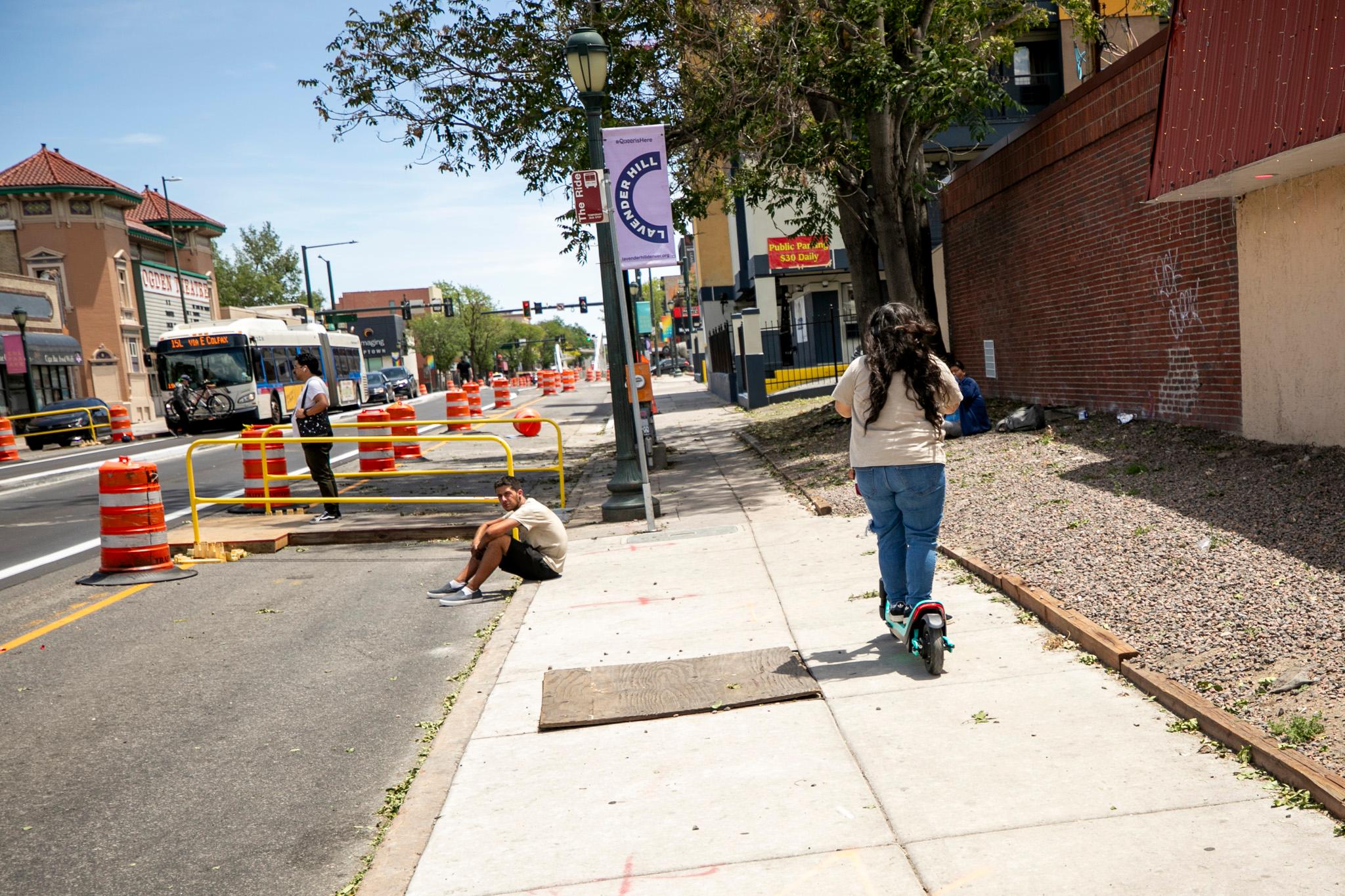
The city required Veo to include sidewalk detection technology in its vehicles— a way to keep scooters and bikes off sidewalks. Enforcement still isn’t super consistent.
“While we were riding in that section, it just slowed down,” Jahanfar said, pointing to the 16th Street sidewalk area.
Veo does yell at you when it detects you on some sidewalks. But when I tested the feature, I was able to ride on sidewalks without a warning. (I promise I did it carefully.)
“It tells you not to. It’ll give you a message whenever you get on the sidewalk,” Echelmeier said. “It still lets you. I think it might lower your speed.”
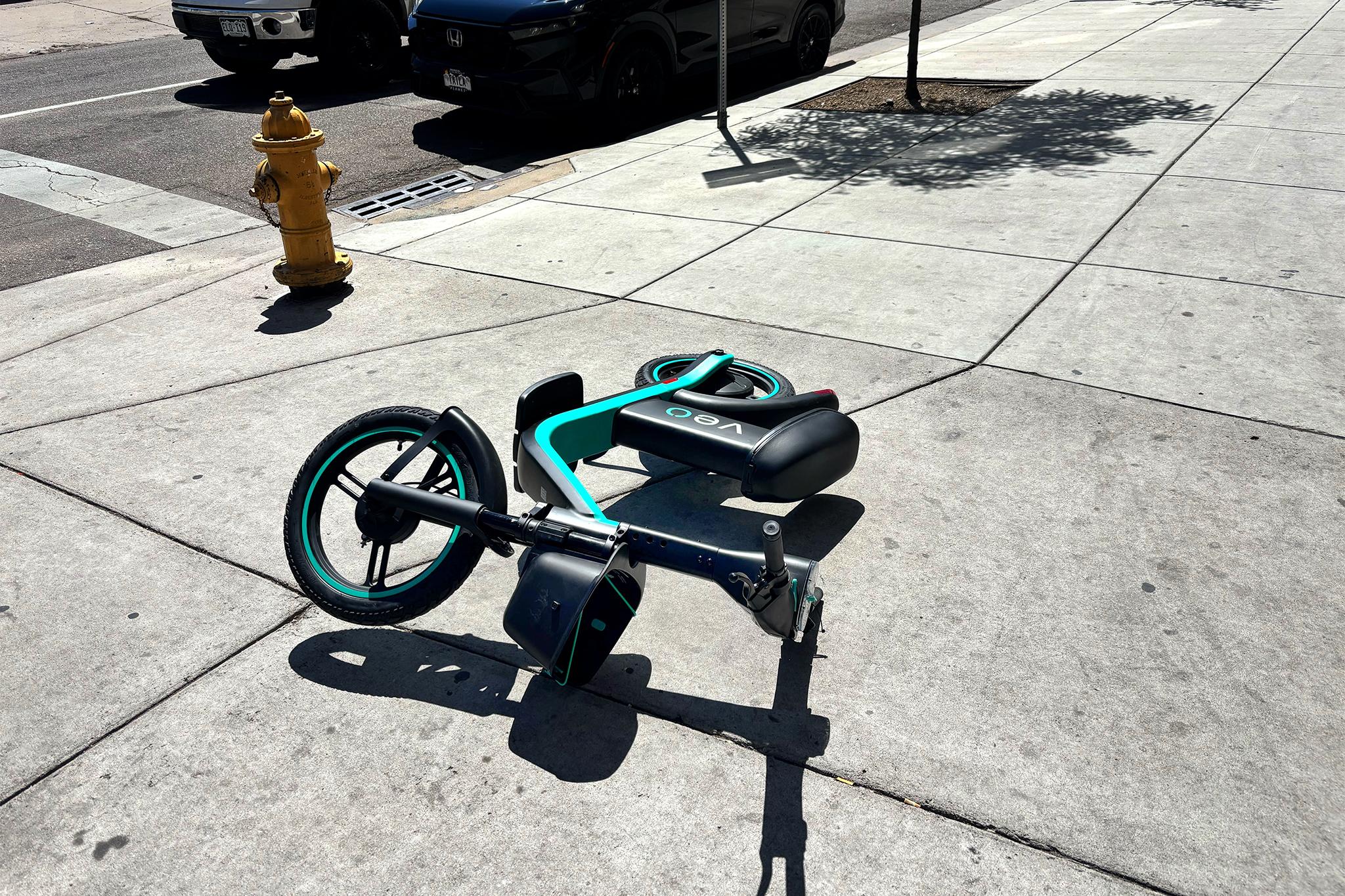
Veo says it will ban “repeat offenders” of sidewalk riders but we’ve yet to see if that’s actually true. And plenty of scooters are still strewn about on the sidewalk.
There are fewer vehicles — for now
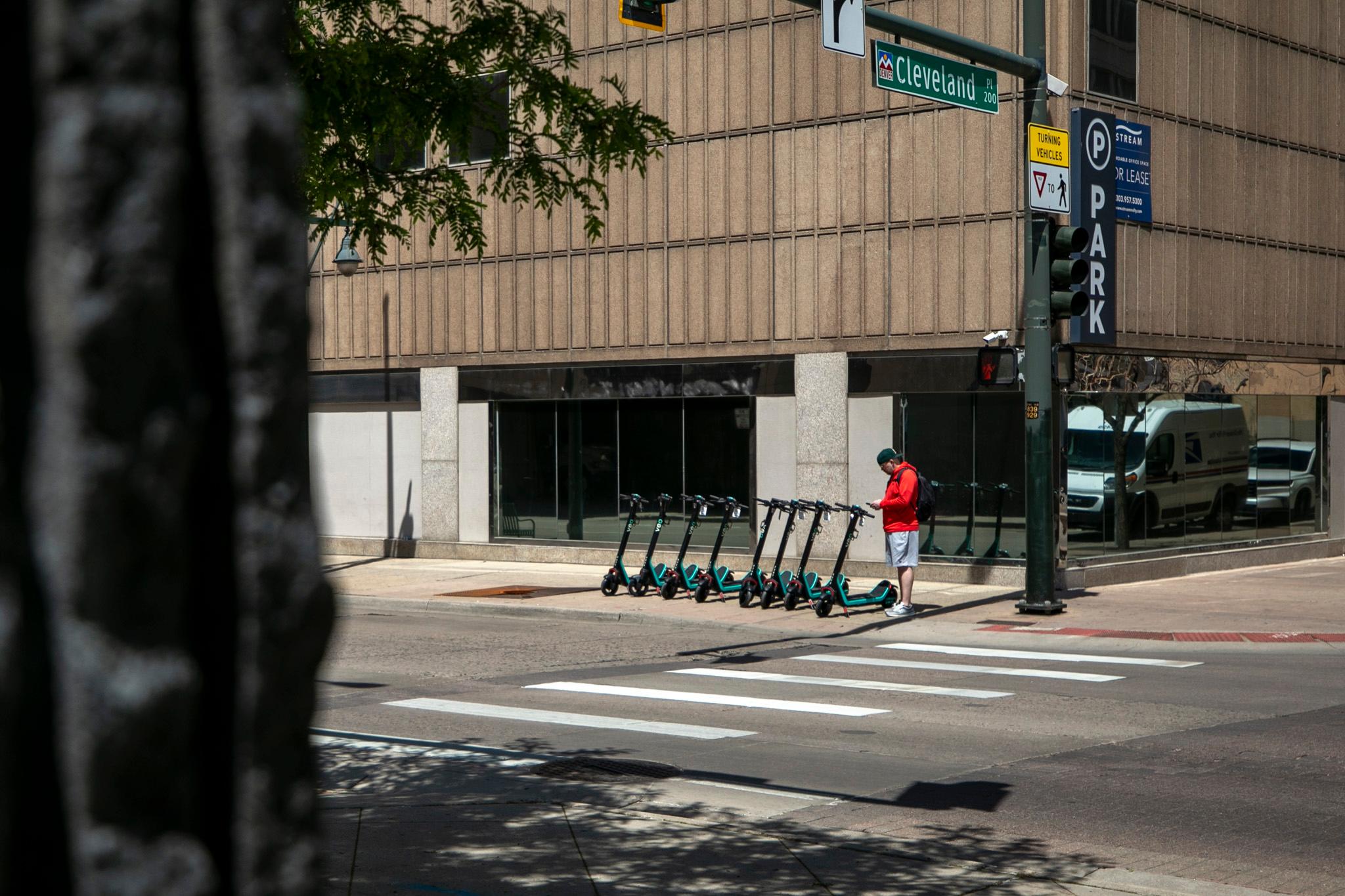
As of late May, there were about 7,200 Veo vehicles on the streets, The Colorado Sun reported. That’s a drop from the peak under the former operators, which was above 9,000 at times.
But Veo is allowed to deploy up to 9,000 vehicles and plans to reach its “full fleet size” by June 15, the Sun reported.
If you have scooter thoughts, let us know!