

Updated at 3:07 p.m. on Wednesday, Nov. 19, 2025
For all their popularity and towering size, there are still some little-known secrets to elephants.
Like how they can communicate with low-frequency vibrations in the ground, which they can pick up with their padded feet. Or that they didn’t descend directly from mammoths, but rather an animal that looks like “if a ferret was much rounder.”
Those pieces of elephant lore and more await in “The Secret World of Elephants,” a new exhibit at the Denver Museum of Nature and Science.
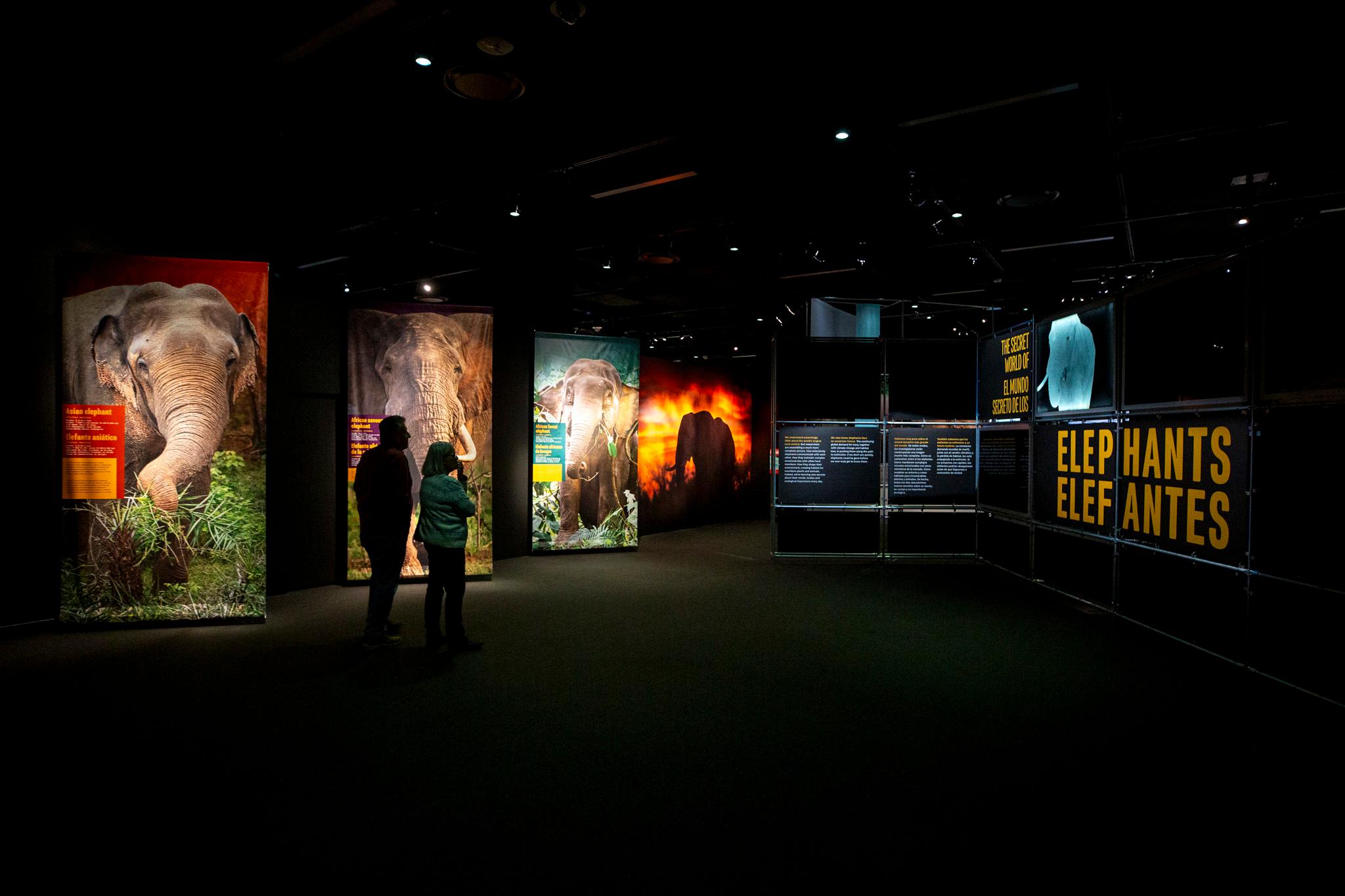
Originally curated by the American Museum of Natural History, the exhibit is now touring the country, with Denver as its first stop.
According to Holly Lutz, the associate curator of mammals at the Denver Museum of Nature and Science, the Mile High City is a fitting beginning.
“One of the fossils that visitors will get to look at is the skull, or partial skull, of a species that was called Amebelodon, or ‘shovel tuskers,’” Lutz said. The shovel tusker was found in Yuma County in the early 20th century.

The exhibit opened to the public Oct. 24 with three different elephant models, two fossils, and bilingual signage for an inclusive look.
“The Secret World of Elephants” opens up with banners of the three elephant species we see today: the African savanna elephant, the African forest elephant and the Asian elephant.
Visitors are then taken along the elephant's evolutionary journey. A hallway of images of their closest living relatives runs across from mammoth dioramas, replicas of tusks and models of dwarf elephants.
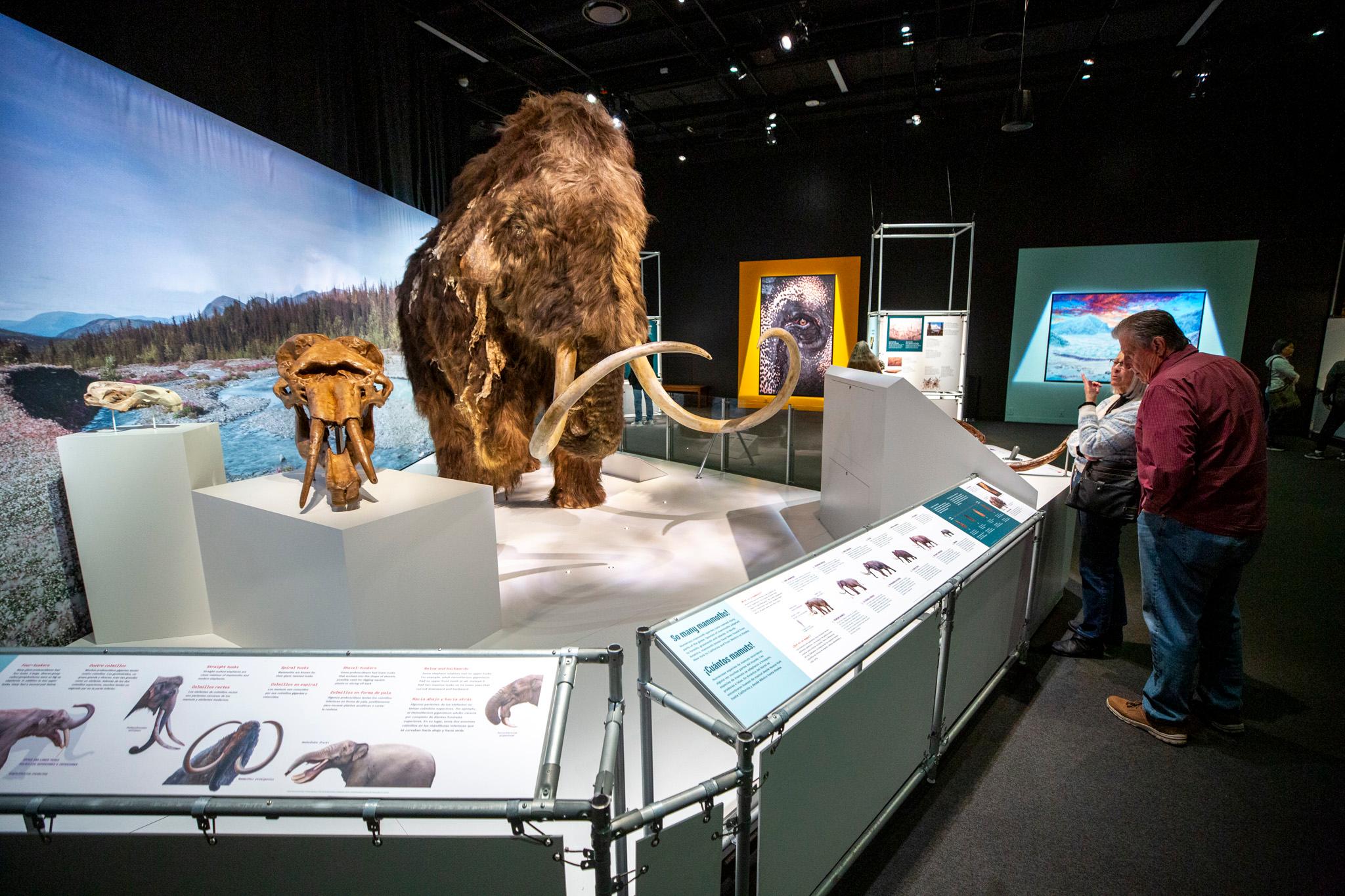
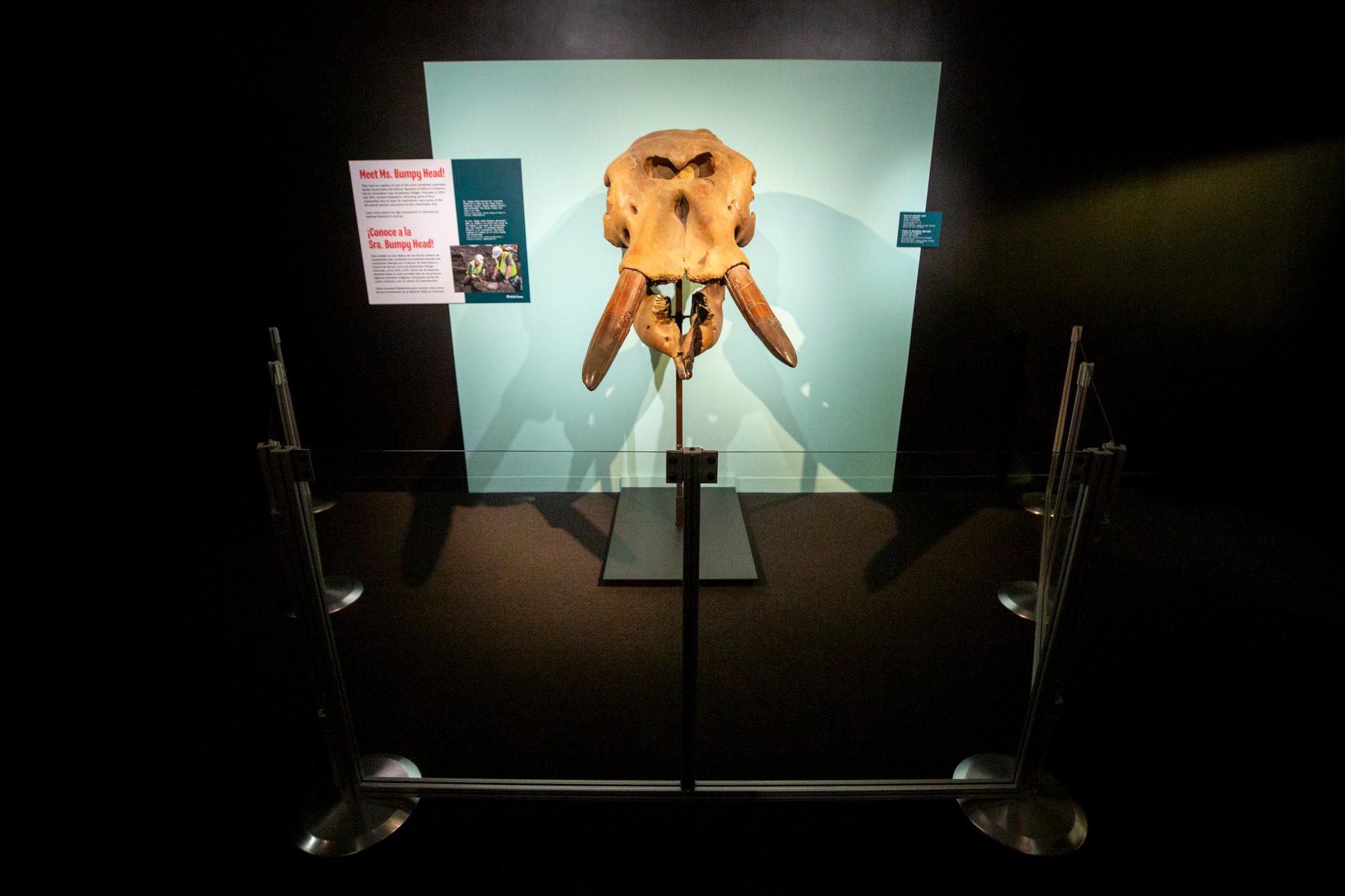
“People kept thinking that the dwarf elephant was a baby elephant and so the designers of the exhibit ended up including an actual baby dwarf elephant for scale,” Lutz said. “ Elephants were fairly small way back in their early origins. And size became something that changed over time.”
Next up: How the modern elephant eats, drinks and communicates.
A projected model of an elephant's skeleton takes over the center of the room, followed by an interactive section that allows visitors to feel those aforementioned vibrations through which elephants communicate.
Across from it, a tower of water cans takes over. (Denverites, if you thought drinking eight glasses of water was difficult, think about the 200 liters elephants require daily.)
There’s also its daily diet of 441 pounds of plants, packed into a giant ball resting on a scale.
The exhibit then looks at elephant migration, socialization, and their job as "ecosystem engineers.”
“Elephants really shape the environments that they live in,” Lutz said. “When they move through the forest and tear down trees, they create space for other plants to grow and compete with each other.”
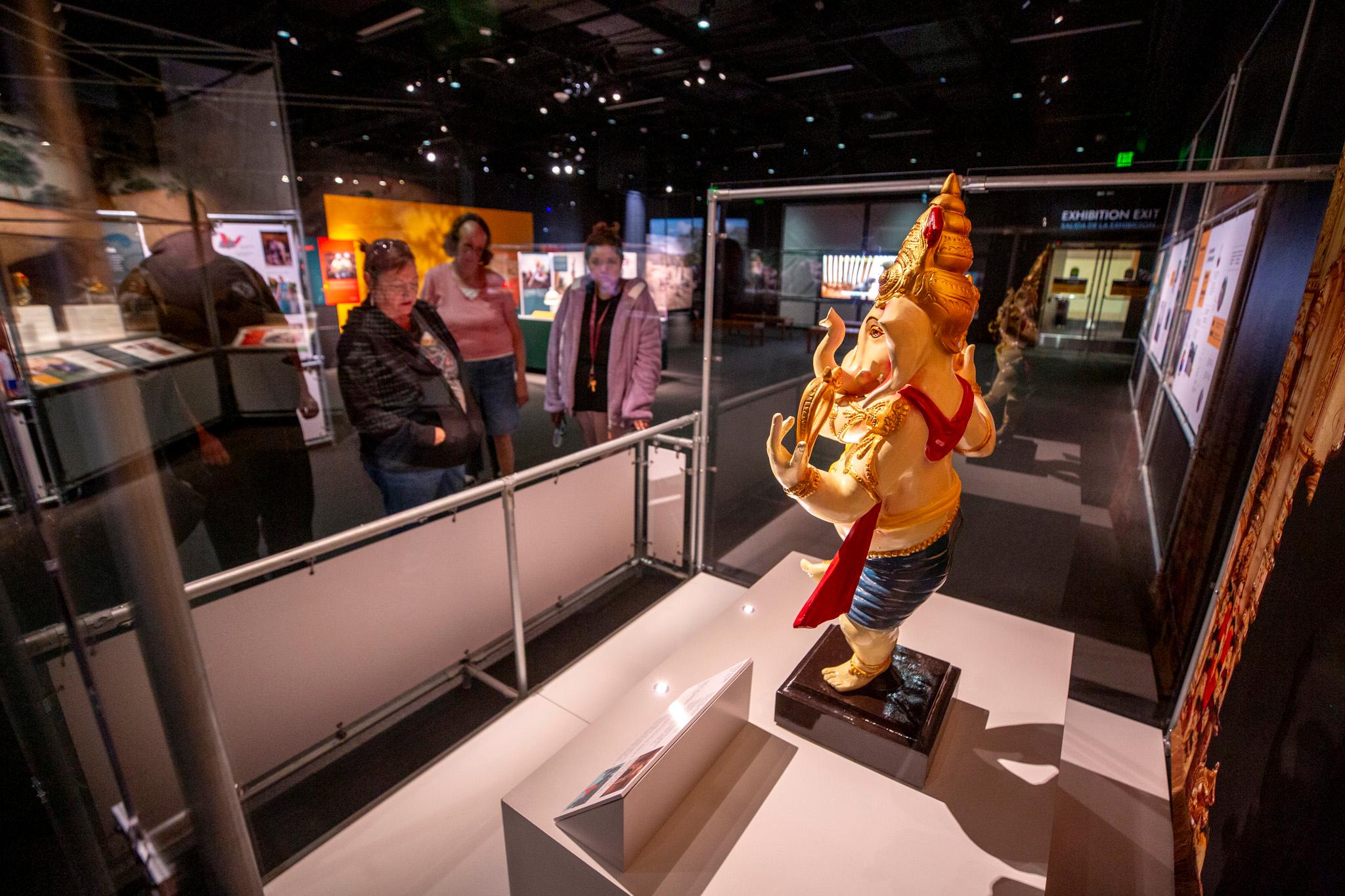
The droppings elephants leave behind on their migrations disperse seeds from the plants they eat, sparking habitat growth and diversity. Elephant poop is some of the richest sources of nutrients for some insects and plants.
The movement of their tusks when they lean to drink can also expand and even create new water holes.
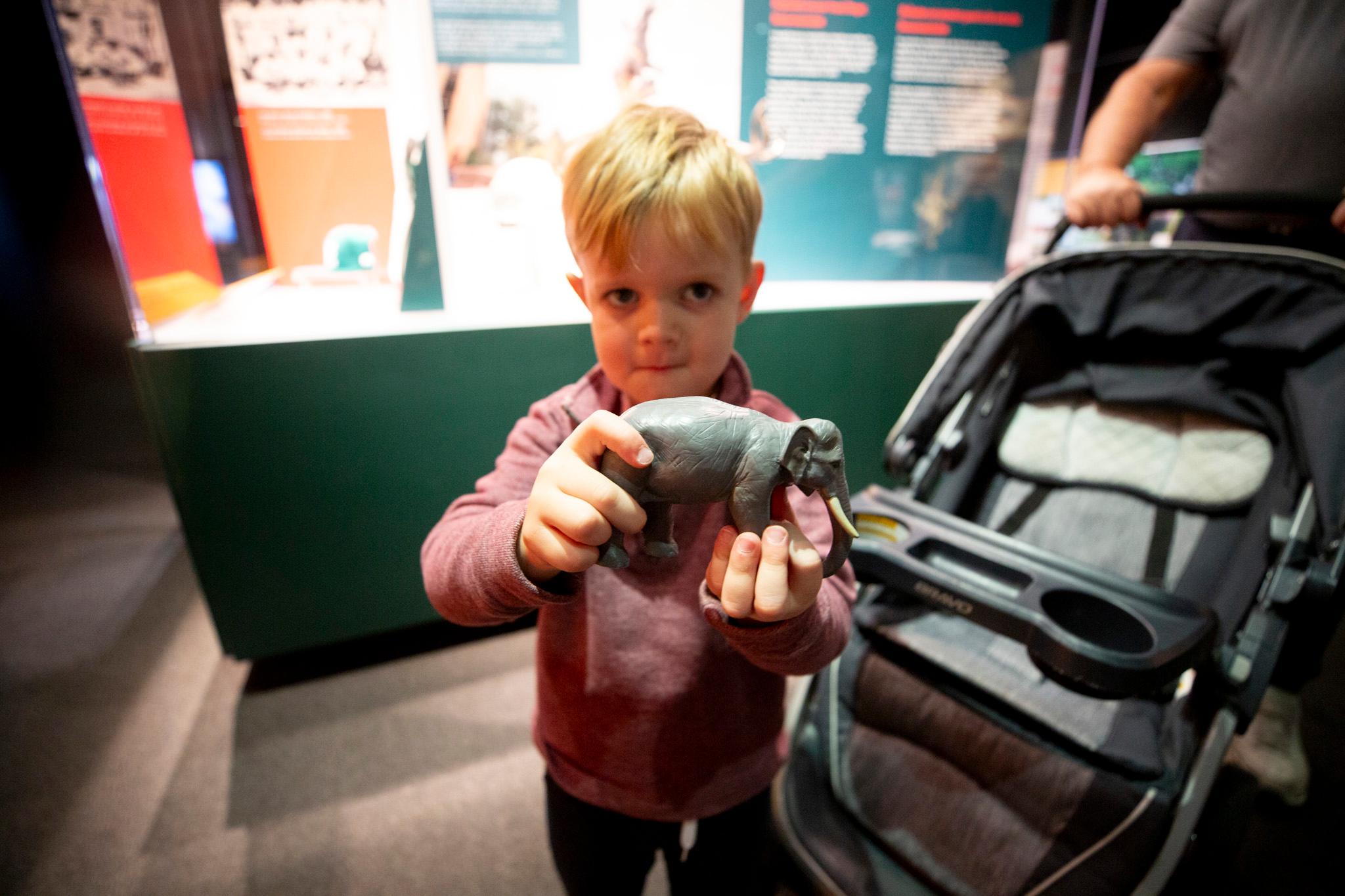
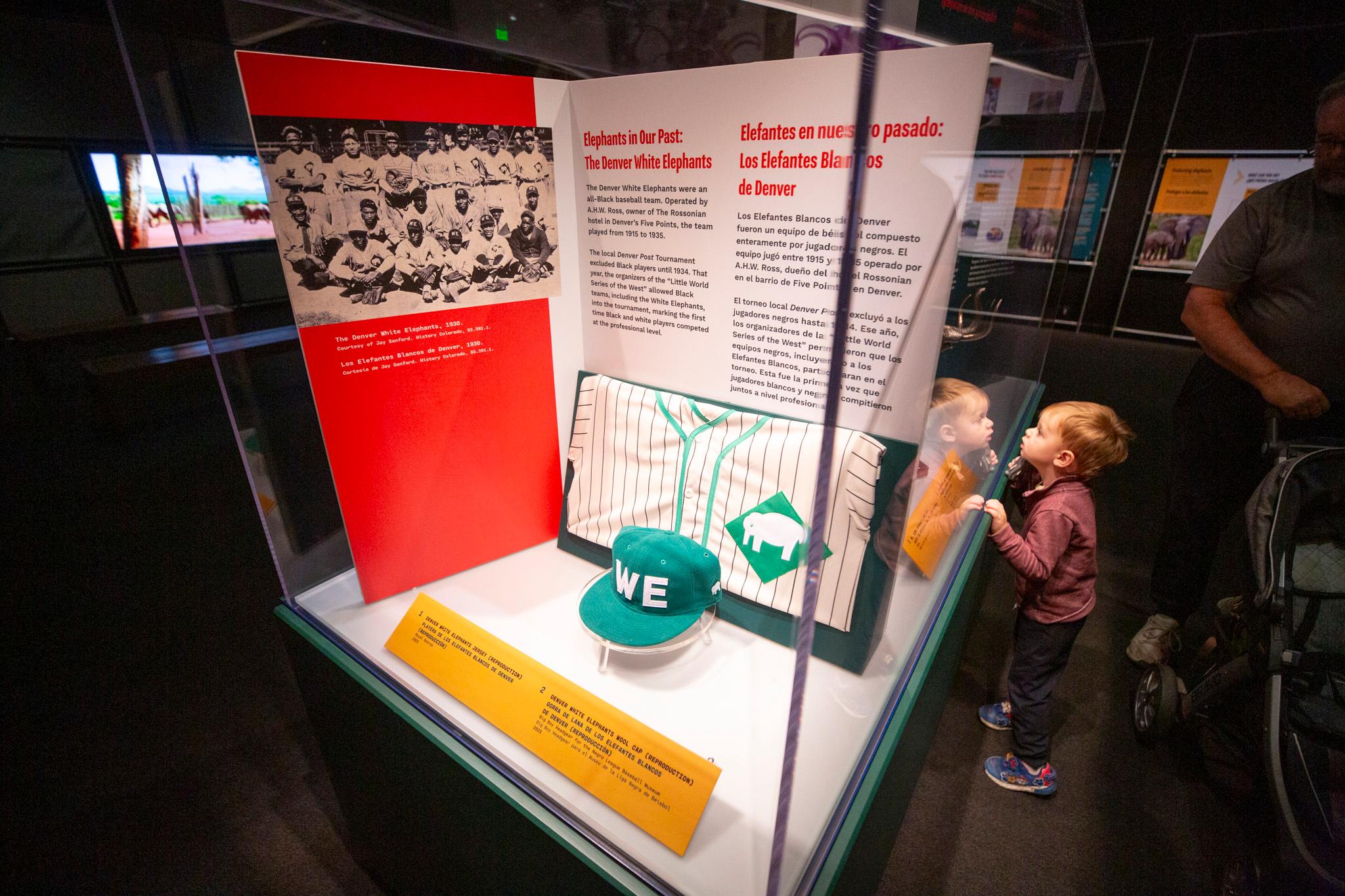
“Secret World” wraps up with a hallway looking at how elephants run into conflicts with humans in an interactive screen depicting crop destruction and the ivory trade.
“It's just really exciting that guests will be able to visualize so many different storylines across different habitats, prehistoric and contemporary,” and how elephants and related species have interacted, transformed, and shaped those habitats, Lutz said.
“The Secret World of Elephants” is open at the Denver Museum of Nature and Science through Jan. 25, 2026. Entry to the exhibit is included with a general admission ticket.
Correction: One image caption in this story was updated to reflect that it is a mammoth model, and not a mastodon, in the photo. This story was also updated to correct the spelling of the species named Amebelodon, and to clarify where its fossil was discovered in Colorado.