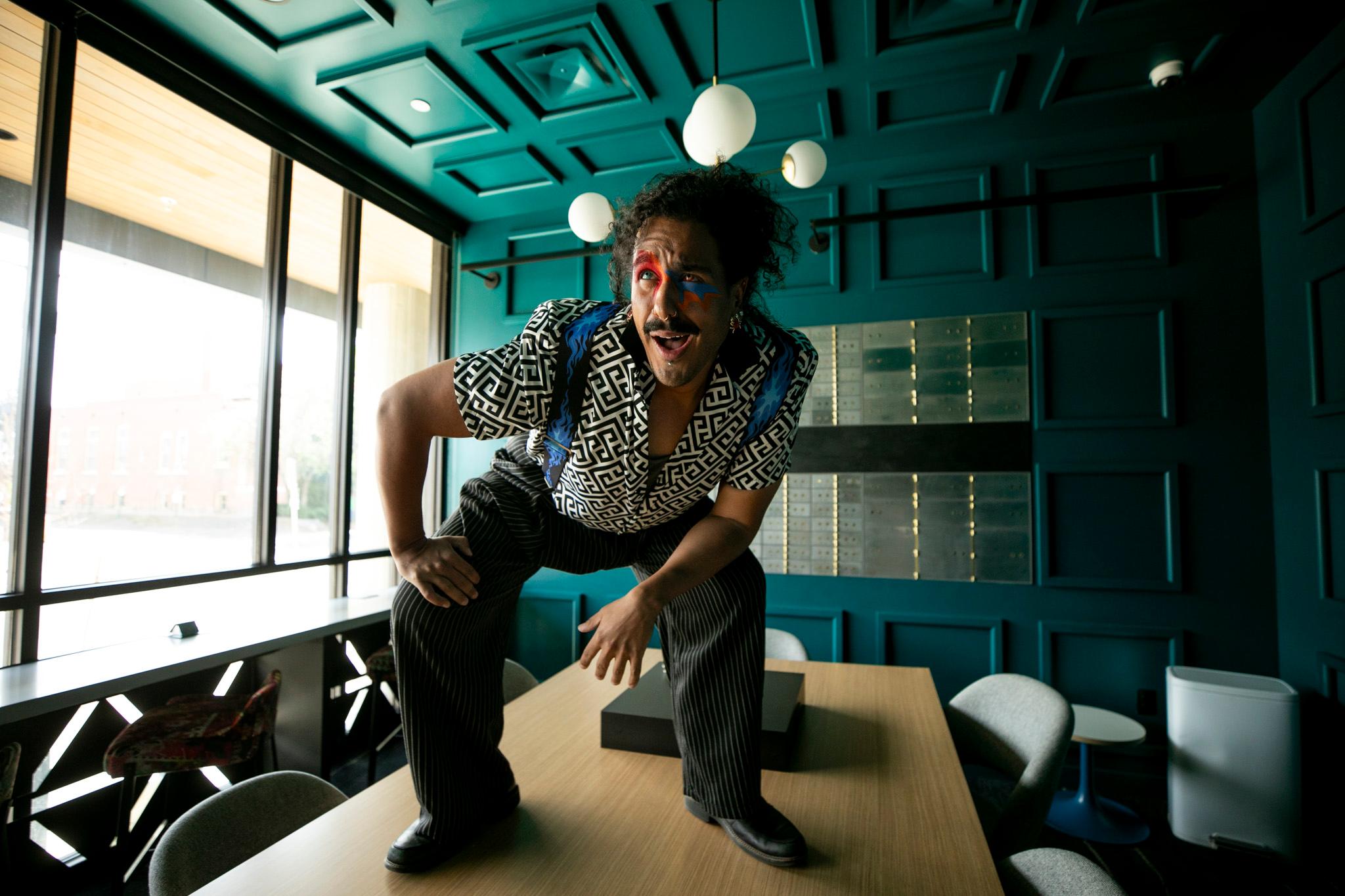
Today is a big one for the clown named Crabman: for the 1,000th day in a row, he’ll be stuffing a crab into one of his orifices, he tells his audience.
Crabman poses center stage at Buntport Theatre in Denver — tall in shoulder pads, big hair, a chaotic patterned shirt that clashes with the pinstripe pants held together with blue flame suspenders. His heterochromatic contact lenses, one bright orange, one unsettlingly blue, are framed with asymmetric, bold David Bowie-esque makeup.
Crabman needs you to not look away.
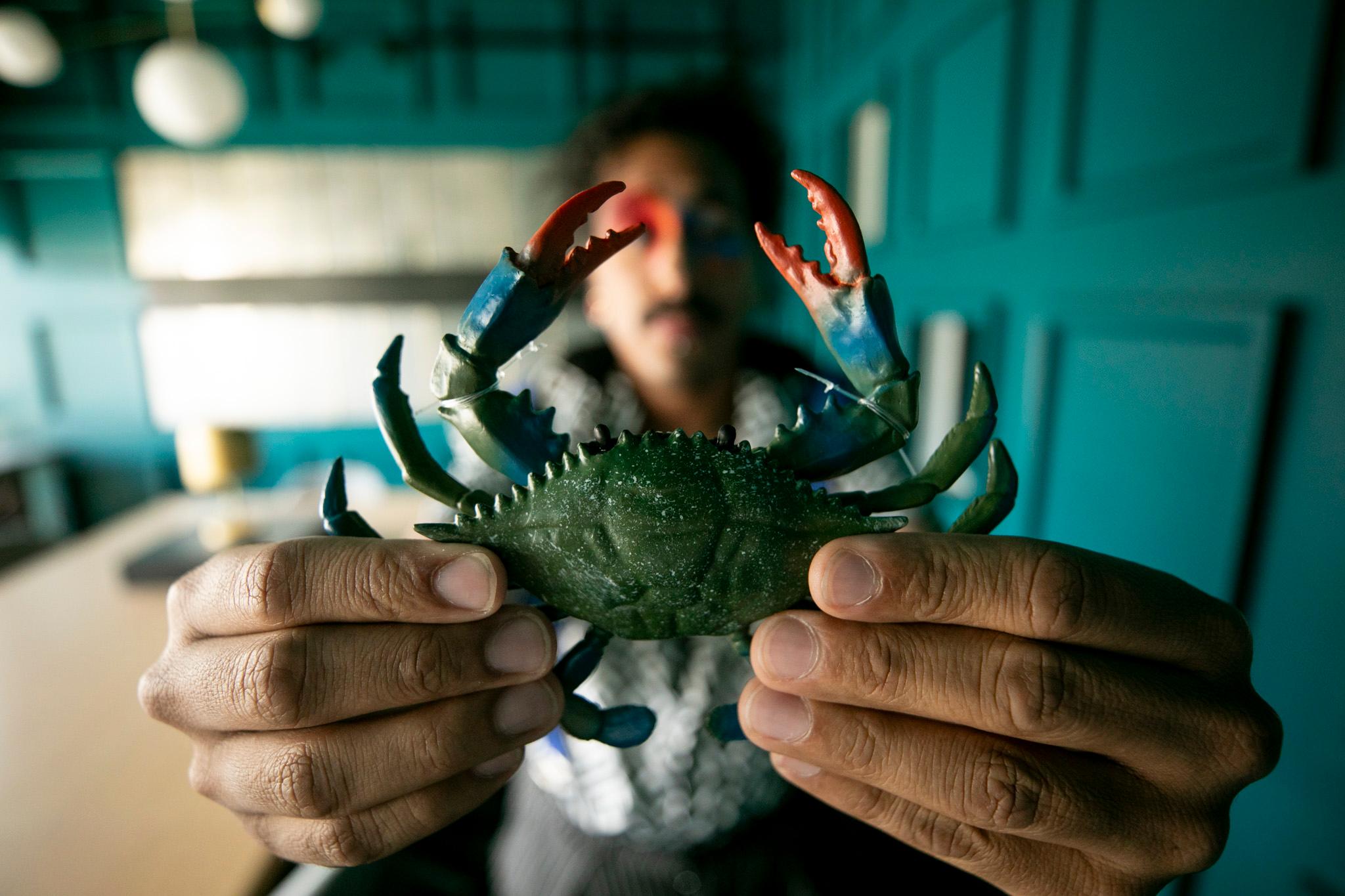
Crabman is a clown, which means Crabman sees you, too. He comes out into the audience, asking questions, playing games. “This is not a sexual occasion,” Crabman says of the whole crab-stuffing situation. And it is not. It’s silly!
The orifice, supposedly, is his rectum. But the crab is a puppet; the stuffing happens with shadow work. This is not really the 1,000th time. Crabman is not a real social media influencer; he is a clown. But maybe not how you’d expect.
Red nose, big shoes, white face paint, balloon animals and a squirting flower. That’s a clown! A traditional clown, found at a birthday party or the circus.
But modern clowning is different.
Modern clowning is a form of performance, often comedic, but not always, where the performer interacts with the audience as a character. There is little to no fourth wall as the clown is connecting with the audience.
The art form is having a moment in Denver. Clown performances are all over this year’s Denver Fringe Festival lineup, running June 3-7, and clowning classes are gaining popularity throughout the metro.
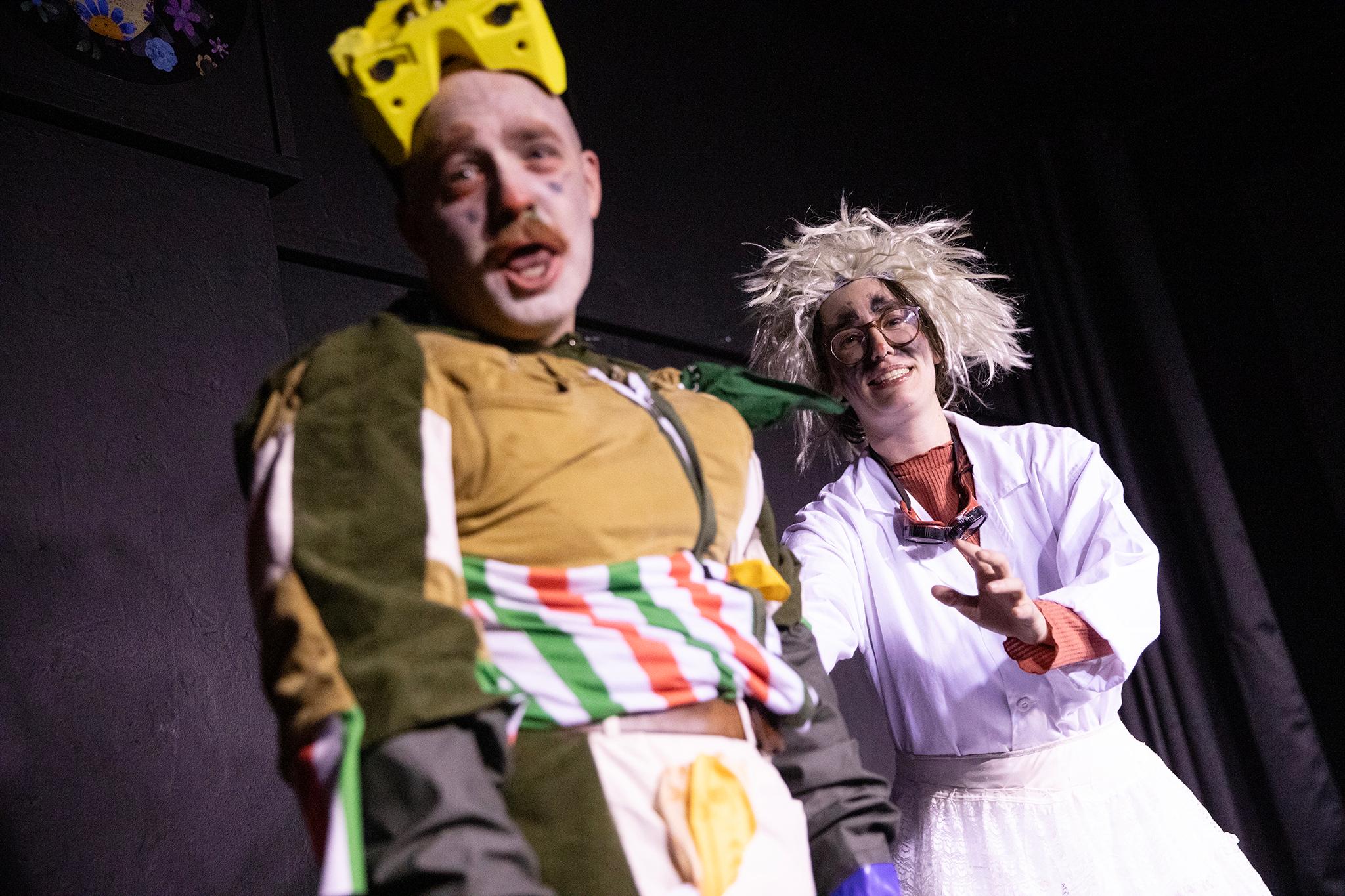
There's no limit to who a modern clown performer can be: A flirty, borderline misogynistic trash collector in space, a man on trial for murder doing origami, an influencer who stuffs a crab up his butt.
“Trying to define this is so foolish in itself. It's very clown-y to try to define modern clown,” said Melo Acevedo, the Denver-based performer behind Crabman. (He stylizes it CRABMAN, just FYI.)
Some modern clowns who have the performance style include Lucille Ball, Andy Kaufman, Eric Andre, and Sacha Baron Cohen. Recently, Connor Storrie, of "Heated Rivalry" fame, credited studying clown as part of why he was so successful in his roles.
In Denver, you can see clown acts at improv theaters and other comedy venues, such as Chaos Bloom Theater, Rise Comedy, The Savoy, or sometimes, a generous clown’s backyard.

'Life-is-hard clown. Be-nice-to-me clown.'
Clowning spans the nation and the world. The Los Angeles clown scene specifically has been having quite the moment. Los Angeles clowns are known for chaotic shows, the wilder of which happen in alleyways and may involve ice cubes filled with bodily fluids.
The Denver modern clown scene is relatively new but vibrant. You can find clown events almost any day of the week on the CLOWN cal: Colorado's Local Outstanding Whimsical Nonsense Calendar.
“The L.A. clown scene, they've been doing it longer and they're really provocative and they're sort of fearless. Then Philly has a huge clown scene and they're sort of sexy dumpster performance art clowns,” Alice Gillette, aka Meat Show, says. “Denver, I think we're just … doing inner child work on stage. Life-is-hard clown. Be-nice-to-me clown.”
Gillette was a founding member of the clown group Idiot Theater. Under her, the org ran two showcases a month for years at Rise Comedy and Chaos Bloom Theater. This year, Idiot Theater put on a week-long clown-heavy festival, Freaky Weeky, that Gillette hopes will become annual.

'A clown comes out with a plan, the plan fails.'
All kinds of performance involve audience interaction. Stand-up comedians use crowd work to get people talking. You from Denver? Eh?
But clowns do it differently. They perform as characters who try to play games with the audience. You wouldn’t see a stand-up comedian playing peekaboo, and if they did, that might be a clown.
“A game can be anything. A game is wherever more than one person is finding pleasure in something,” says Acevedo. “It's the thing where we're having fun and your role as a performer is normally to get as many people bought into as fun of a game as possible.”
Trying to make a whole bunch of people laugh is difficult, so every clown must embrace vulnerability. Stand-up comedians bomb, clowns flop.
The Flop is a key part of clowning: “A clown comes out with a plan, the plan fails, the clown tries to be funny. The clown isn't funny. If the clown reacts honestly to the failure of being funny, that's funny,” Sullivan says.
‘Clown is about the exploration of human relationships.’
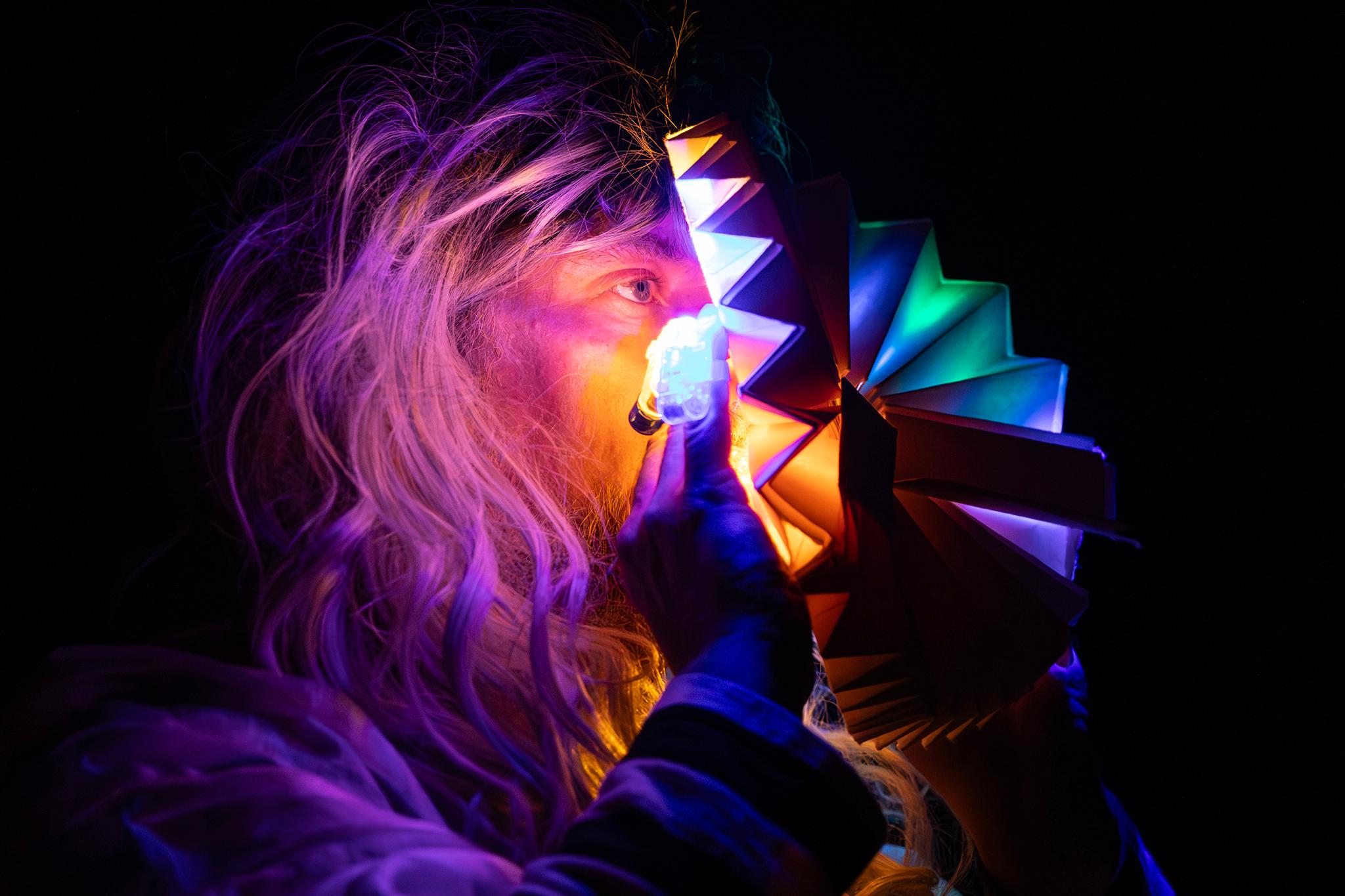
Todd Sullivan’s faux-Shakespearean murder trial clown show Maniac isn’t funny. It’s mesmerizing. Maniac follows the trail of a serial killer. His props include an ancient folded paper toy called a Troublewit (which is kind of a precursor to balloon animals), LED finger lights, and, at some performances, buckets.
Clown shows have a temporal and ephemeral nature. What happens at one performance may not happen again. The clown may have a plan, but they will often improvise at the audience’s whim.
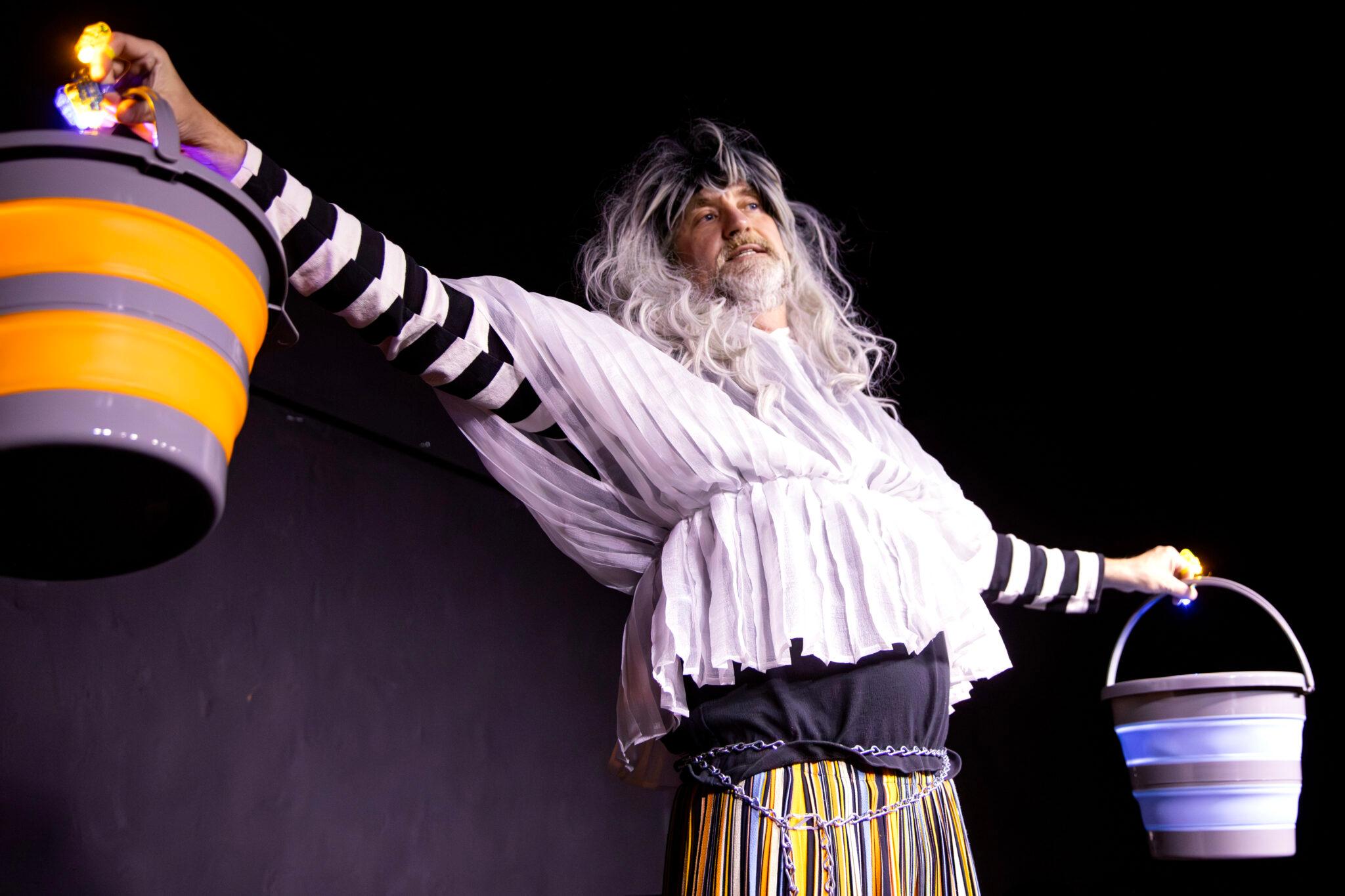
At one point during a showing of Maniac, Sullivan walks the room with his Troublewit — endowing it as the manuscript that drove the killer on trial to madness, and inviting the audience to kiss it.
Theater lights low, finger lights highlighting his movements, Sullivan sets out the rules for this game: “Don't kiss it with your lips. You kiss it with your prayer shawl. You brush the manuscript with your prayer shawl, and then you kiss the prayer shawl. And once you have done this, many blessings will befall you in your family. And if you don't have a prayer shawl, you can use your shirt or a hat.”

The audience of around two dozen is enraptured as he glides around the space. Quiet music adds to the solemnity of the moment that is only broken by Sullivan’s comments. He dips in and out of the serious character by pointing out strangeness. Encouraging one audience member to “do it for real” and pointing out when another uses her hair to touch the Troublewit manuscript and receive the blessing.
Every single person in the room reverently pressed sleeve to lips, then sleeve to Troublewit.
And it wasn’t funny. It was almost holy. For a brief moment, all in the theater were connected by this Troublewit manuscript that had held no meaning before the clown said it did. There was no laughter but there was a connection. A quiet piety just because the clown had coaxed it out of them.
As Sullivan says, “Clown and modern clown is about the exploration of human relationships.”

That exploration of connection is what draws performers like Melo Acevedo, aka Crabman, aka CRABMAN, to clowning.
Acevedo compared the connection between clown and onlooker to that of giggly best friends who need to be separated in class.
"(Clown is) that moment of you two looked at each other, and there is no reason, there's nothing funny. There's no joke. It's just the fact that you both know that you're not supposed to be looking at each other because you make each other laugh," he said. "And that's what happens on stage when you're clowning."
Acevedo studied clowning for several years before introducing Crabman. He got his start in classes in Denver, then took his studies to France at the École Philippe Gaulier clown school in summer 2025.
Crabman is his first solo Denver Fringe Festival show. In it, he plays Crabman, a social media influencer who stuffs a crab. Again, the crab isn’t real; it’s a puppet, but the emotions are.
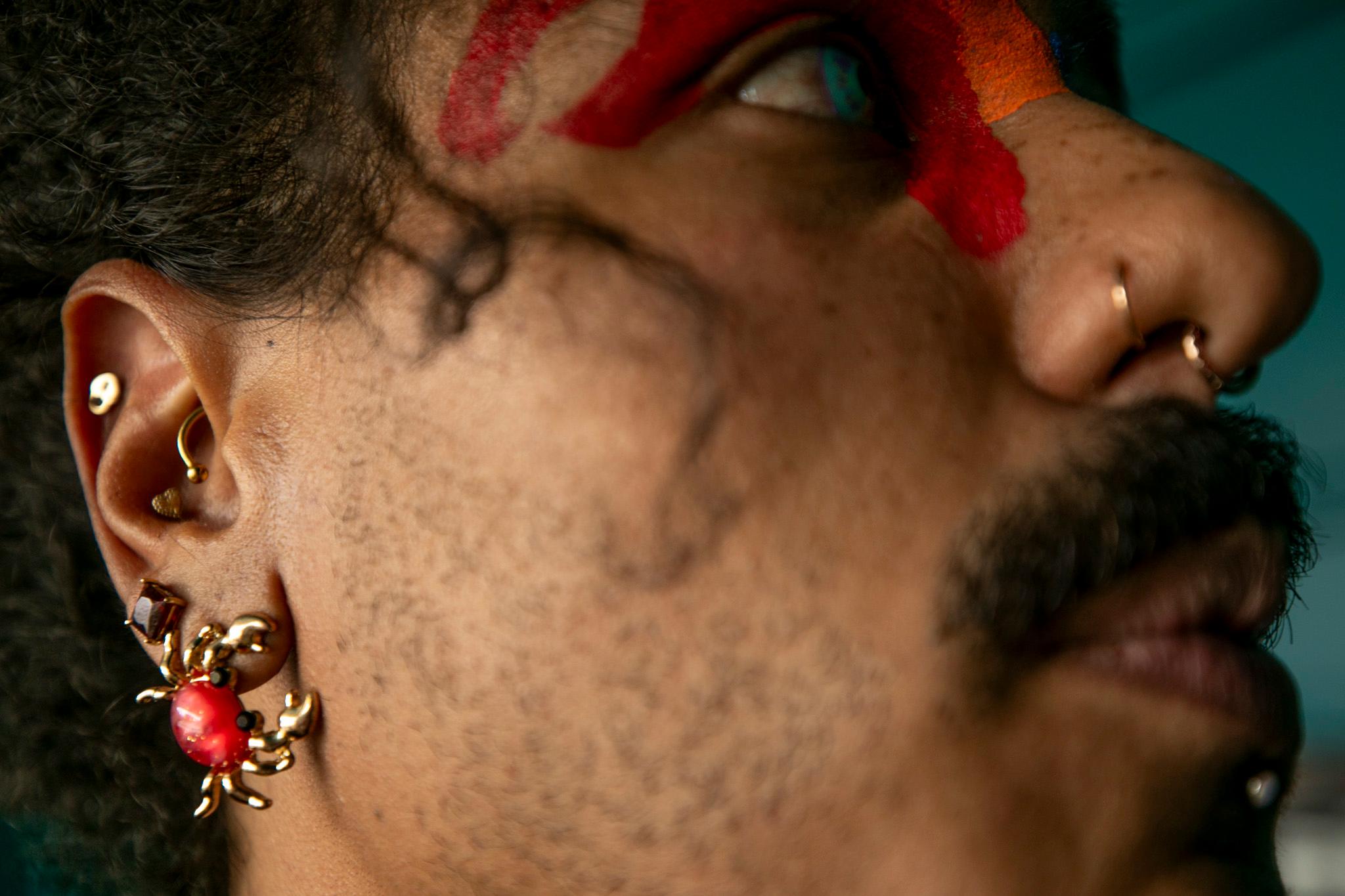
Every show is day 1,000 of the stuffing and Crabman doesn’t know what he’ll do next; he fears he’ll lose the love of his audience. Crabman is so desperate to perform and to please. The premise is absurd, but Acevedo says that Crabman’s motivations are pulled from his real life. Not the crab-up-the-ass thing, but the emotions of being unemployed and unsure of what to do next.
“What's so interesting about Crabman is that it's a commentary on, ‘Oh, can you believe this guy is throwing an event just to have people come see him, shove a crab up his ass just for fame and acclaim and money and just for views, and ha ha, how silly is that?’ But what's the reality? There really is a guy named Melo, who really is pretending to put a crab on his ass for acclaim and for your love and for your validation,” Acevedo explained.
Acevedo appreciates how clown performance allows him to have meaningful but temporary connections. “This person, maybe they'll forget about it, but it gives me the opportunity to be vulnerable, show people a side of myself that is foolish or silly or absurd or unreasonable, an extremely heightened aspect of a truth, right? Because I am showing a truth, even if the basis, the story, is completely unreal.”
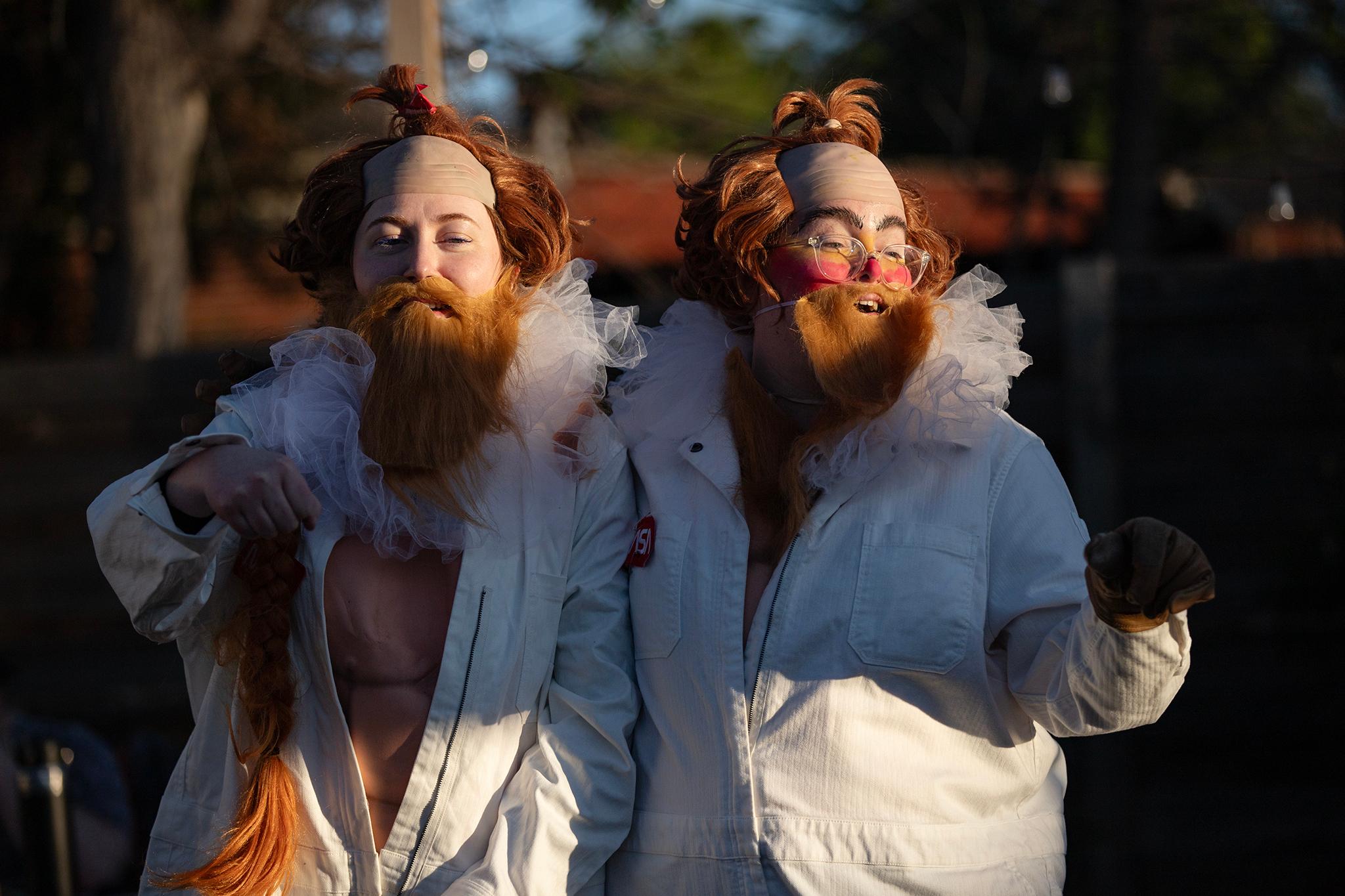
Being foolish, silly, absurd and unreasonable is the name of the game for clowns like Meat Show. Meat Show, played by Alice Gillette, is a misogynistic space trash collector who smells with his tongue.

“(Meat Show) has cracked a space helmet and he finds stars. And instead of asking them for, ‘Hey, I wish to fix my helmet,’ he instead asks for more wishes, and he just slowly dies in space.”
Meat Show in Space is live-scored with galactic music and occasional interjections from the disembodied voice of “NASA,” who guides Meat Show through cracking his helmet, beginning a slow death and a lot of thinking about his Babe, a disembodied braid of red hair.
Meat Show says odd things about women, but he’s charming in his own way. Gillette says she’s used the character of Meat Show to explore toxic masculinity and mortality, but at the end of the day, floating in space, Meat Show is silly: “And also my hope is that people watch the show and they're like, ‘Wow, that was so dumb.’”
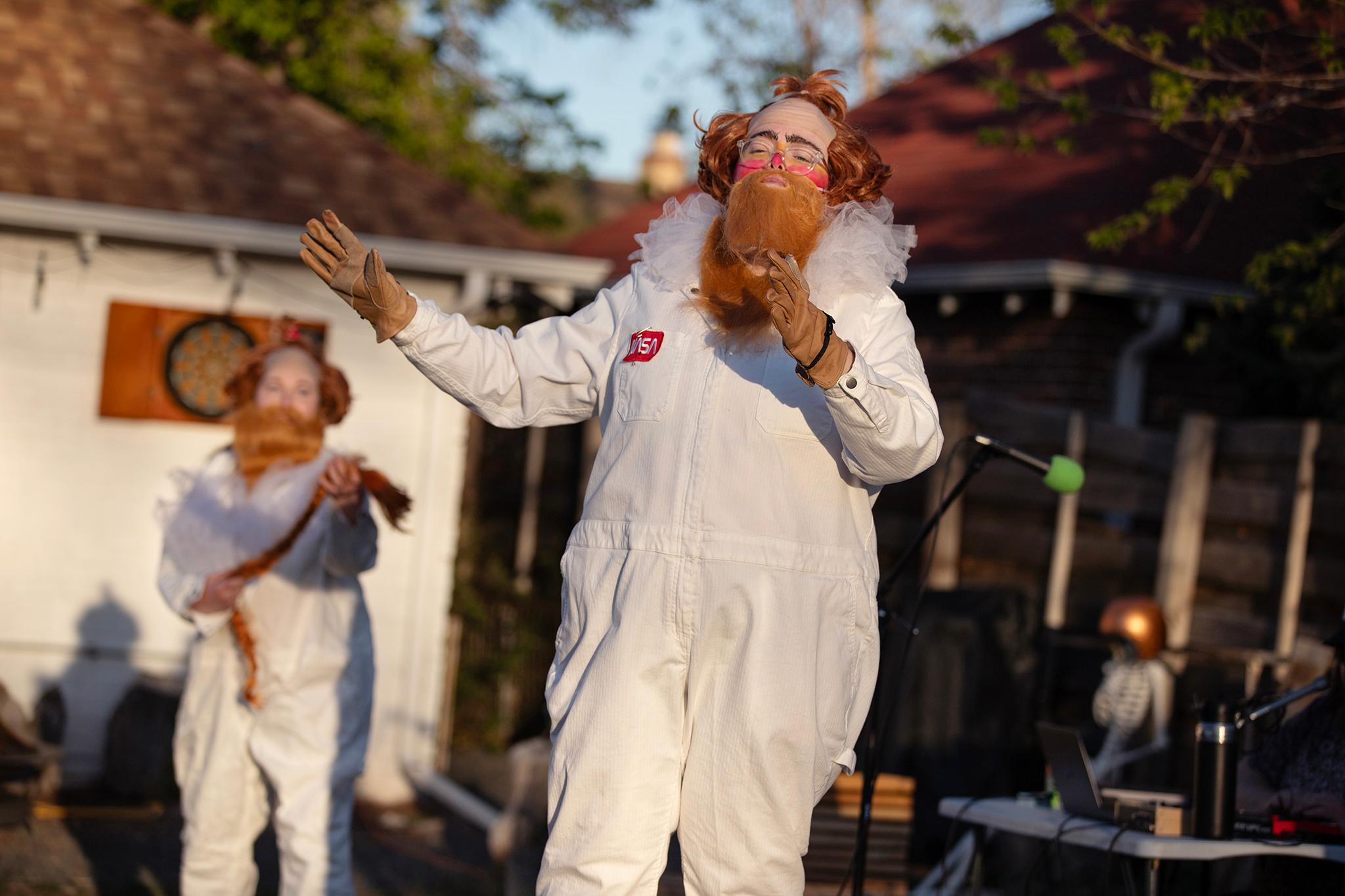
When Gillette teaches clown classes at Rise Comedy in Denver, she tells her students that modern clowning is about getting in touch with childlike humor and wonder.
“When you study clown, you're relearning how to be that toddler who puts sunglasses on for the first time and wants to show everyone your cool sunglasses,” Gillette says. “If you can just be that the whole time on stage, you're doing clown, that's it … And there's all those definitions of clown, but for me, that's like the physical embodiment. It's just like a kid in sunglasses.”
Why clown, why now?
Now, AI can generate pretty much whatever, and social media keeps us separate from our entertainers.
Sullivan thinks a clown show gives us something different, temporal and unique.
“We can get anything we want, precise entertainment, directly … into our systems while at home. And if we go out to a show, I think people really want to believe that this performer is very present and they are doing something that is only for us in this room. And I think people really like that and respond to that. They liked that part where they're like, ‘That couldn't be replicated, that could not have been planned.’”
Halfway through Crabman, he does the thing. Crabman uploads the crab. The audience sees it all through shadowplay.
But the show isn’t over, so Crabman has to flail to keep the audience's attention. He gets sillier and sillier. Doing weirder and weirder things to make the audience laugh, trying to somehow top the crustacean. And at some point, Crabman will make eye contact with you in the crowd.
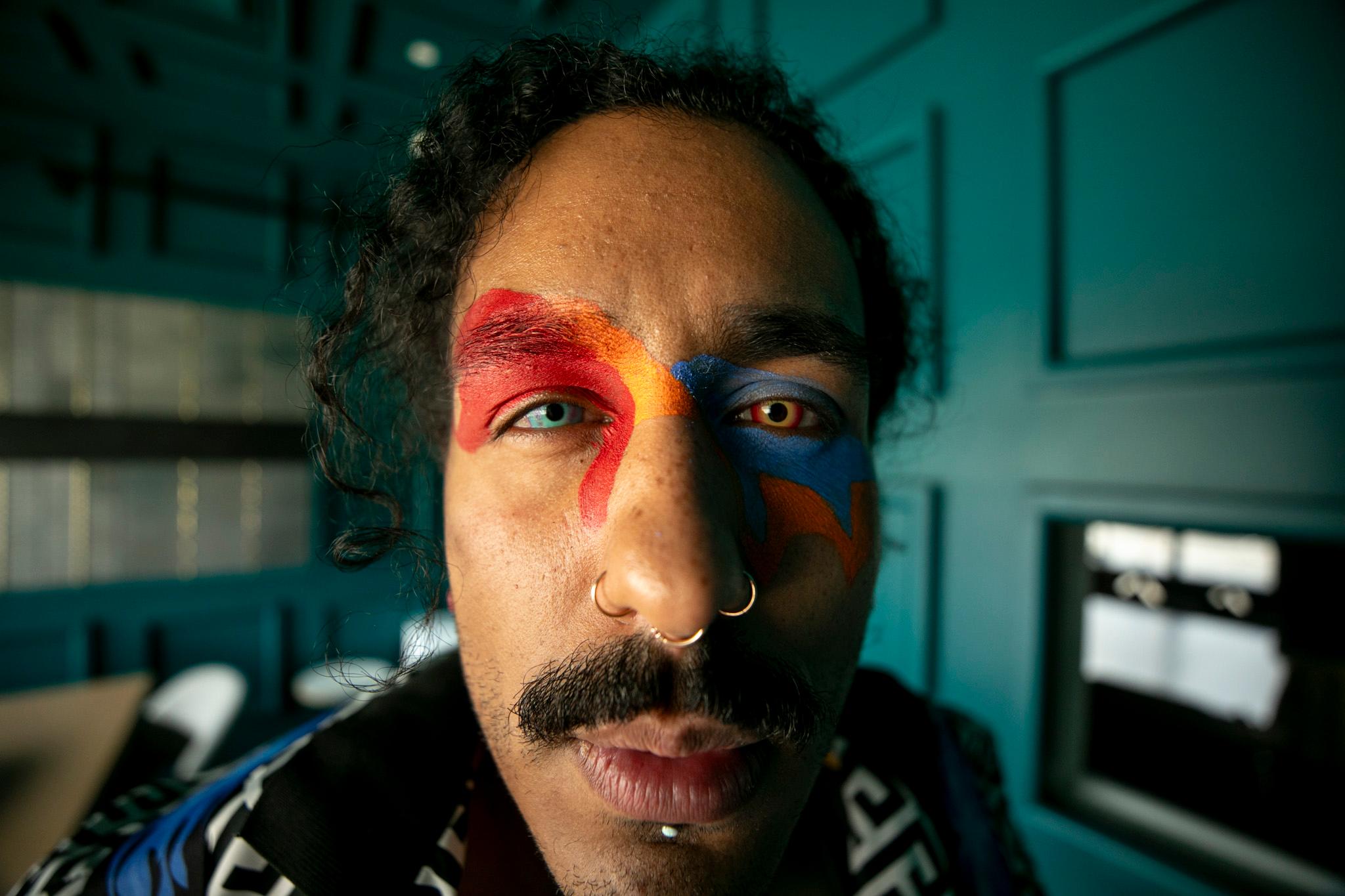
You will see Crabman, and Crabman will see you, and as Acevedo says, “For just a moment, you can tell that it's that human being looking at you … acknowledging the weird thing that just happened.”
Try not to laugh.
If you go (i.e. if you’re down to clown)
The Denver Fringe Festival runs June 3-7 at venues across the city. Tickets to individual shows are $20, and festival passes cost $95 for first-come, first-served seats at all venues. Find more information about shows at DenverFringe.org.
Crabman performs at the Bug Theater, June 4-6. Todd Sullivan will perform Maniac at The People’s Building Black Box in Aurora, June 4-5.
And to find more clowning in Denver the rest of the year, there’s the CLOWN cal.