Updated Feb. 25, 2026, at 10 a.m.
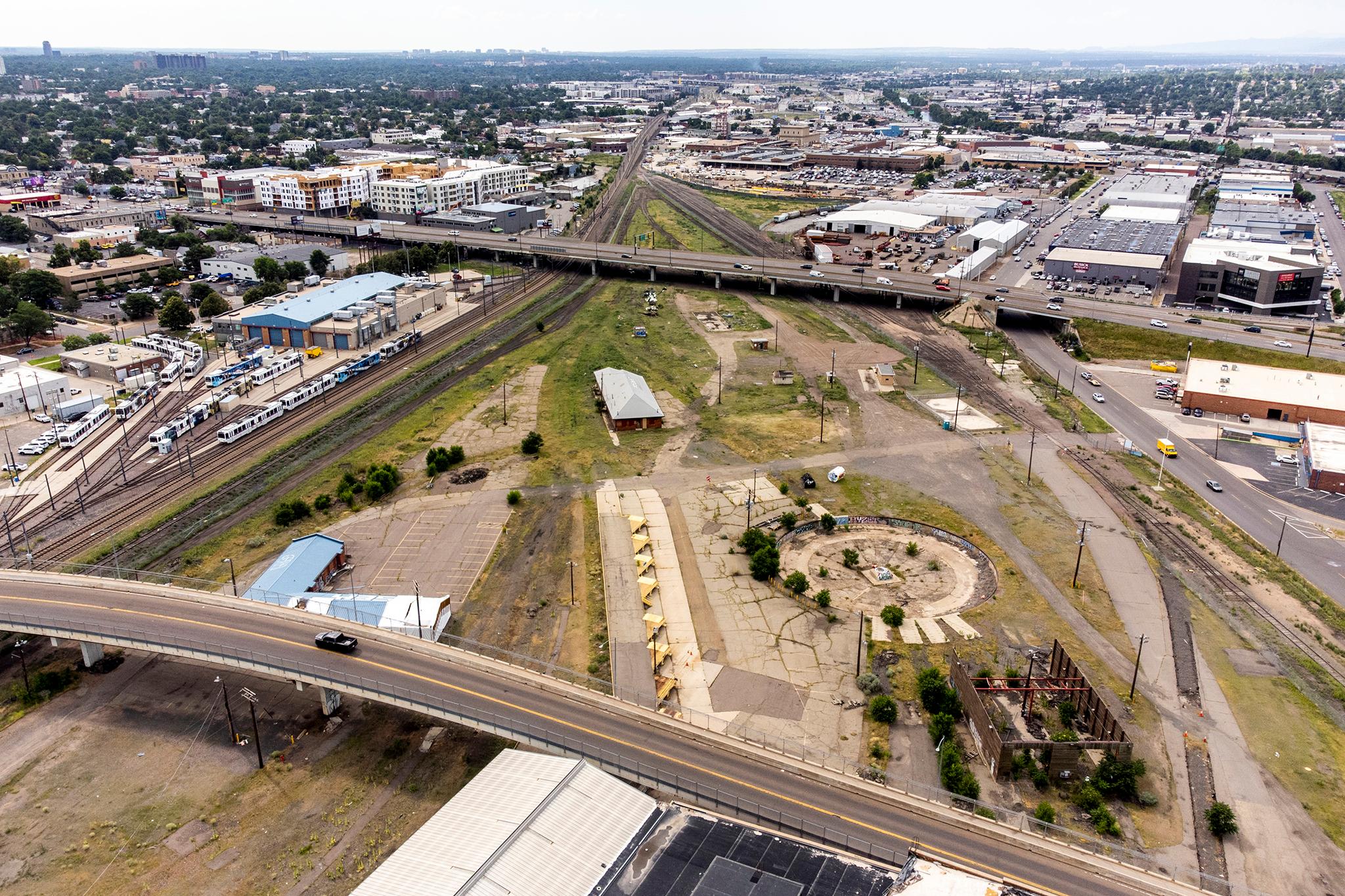
Property owners around Burnham Yard have been preparing for the arrival of the Denver Broncos and the team’s planned new stadium.
Some have already sold their warehouses and other properties. Some are in negotiations. And many just received a letter that adds another wrinkle to the team’s multi-billion-dollar effort to buy land and develop the area.
The letter, sent by the Denver Urban Renewal Authority, states that the agency is investigating whether the area qualifies as a “slum” or "blighted” area.
The study could mark another significant step in the area’s redevelopment. It could eventually lead to the establishment of an urban renewal plan. That could allow DURA to use several development powers in the area, including:
- Granting tax subsidies to developers to pay for construction.
- Using eminent domain to force current property owners to sell their land to make way for the stadium and adjoining development.
Those powers can be controversial, and can only be used if DURA can find concrete proof of blight in the affected area. Team officials have acknowledged they’re interested in tax-increment financing. DURA has said that forcibly purchasing land, however, would be a measure of last resort.
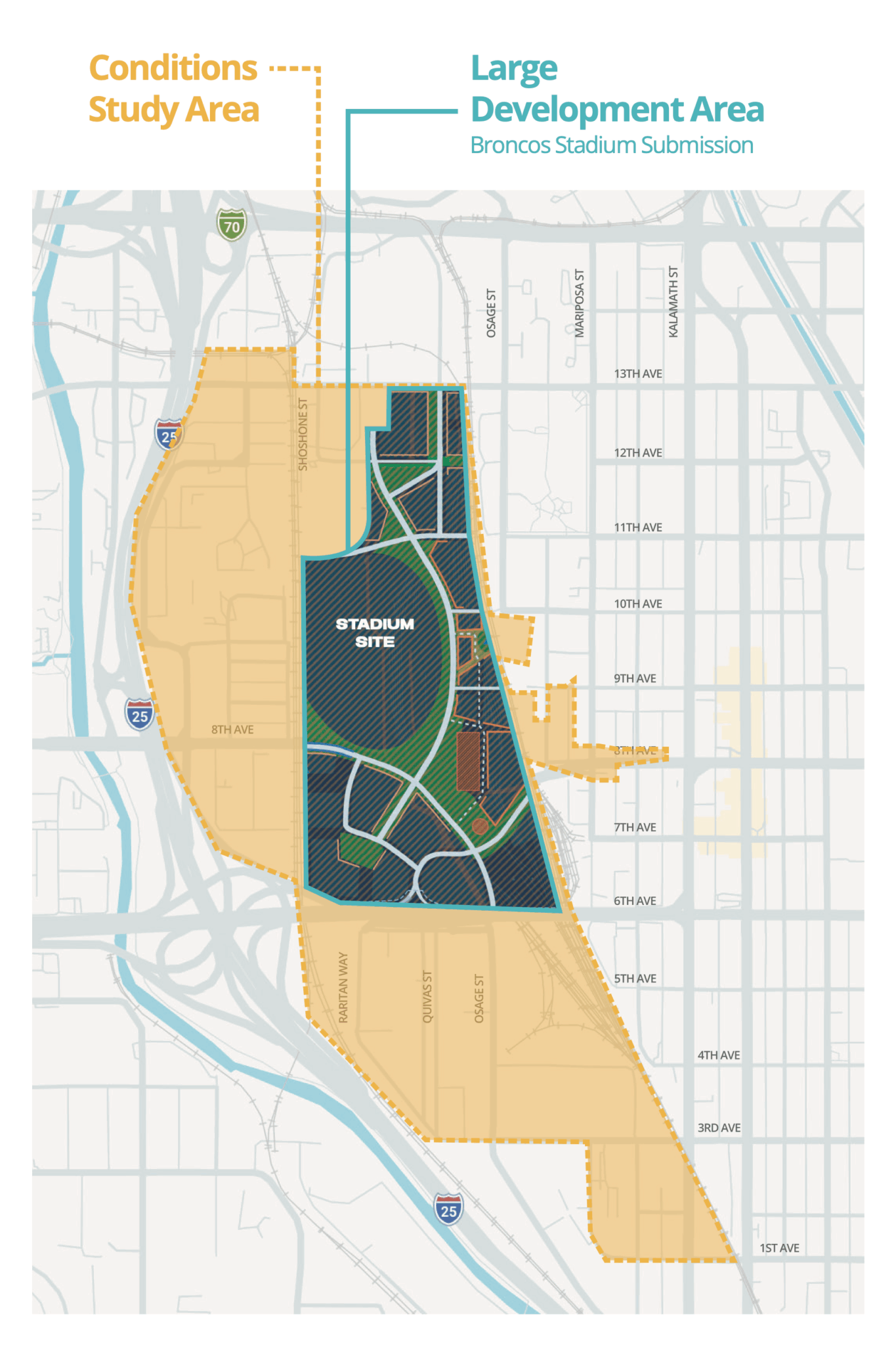
In addition to the 150-acre stadium site, DURA is studying conditions in a larger swath of land, including areas as far south as First Avenue, industrial buildings bordering Interstate 25 and near the 10th and Osage RTD station.
DURA initiated the study at the request of the Broncos. In a statement, the team described the study as standard practice.
“As part of our due diligence and overall long-term planning for Burnham Yard, we are going through the standard process established by DURA. This type of analysis, which is typical for a site that has had development challenges, allows us to better understand existing conditions to ultimately determine the fit within broader planning and public improvement considerations," wrote spokesperson Patrick Smyth in a statement to Denverite.
What is blight?
The role of DURA, the city’s quasi-governmental urban renewal authority, is to seek out blighted areas of the city and help come up with ways to redevelop them.
Its anti-blight campaign led to major shifts across Denver’s neighborhoods — often to mixed results. City authorities used the legal powers of urban renewal to destroy and displace existing neighborhoods, including Auraria.
In Auraria, the vision of urban renewal in the neighborhood didn’t involve raising up the existing community — it required the razing of the neighborhood and building the Auraria Campus in its place.
Today, urban redevelopment is subject to more checks and balances through state law, though its use remains controversial. Officially, blight is the presence of factors that hinder redevelopment. The state requires that an area be judged against 11 factors to determine whether it is blighted. Those factors include unsanitary conditions, deterioration of on-site improvements, inadequate public utilities and life-threatening conditions.
An independent contractor carries out the study. For an area to be considered blighted, it has to meet at least four of the criteria. Denver City Council has the final say on whether to accept DURA’s findings.
The city, neighborhood groups or private developers can request DURA to determine whether an area is blighted. In this case, the Broncos made the request.
What happens if DURA finds signs of blight?
If blight is found, the next step is to draft an urban renewal plan, which would guide redevelopment in the area. It would provide basic details on what is planned in the area, like new roads, public spaces, housing and more.
Those plans are worked on by both DURA and Denver city planners. Redevelopment plans have to fit in with the existing area plans for both the city, like Blueprint Denver, and the neighborhood’s small area plan.
Public outreach is mandatory at this phase, including a public hearing and notifications to property owners, residents and businesses before a final council vote.

Once an urban renewal plan is approved by Denver City Council, DURA can begin negotiations with the developer that plans to build in the area.
In Burnham Yard’s case, the Broncos already have committed to redeveloping 150 acres of land within the urban renewal site. However, DURA’s conditions study area accounts for land beyond the Broncos’ reach, which could be available for developers or the Broncos to purchase.
According to BusinessDen, some nearby owners have already received DURA’s notice and are contemplating whether they’d accept potential offers on their land.
Urban renewal opens up the possibility of reimbursing developers with tax dollars.
A common part of urban renewal plans is the use of tax increment financing (TIF). The system allows developers to be reimbursed for private construction using tax dollars generated within the urban renewal area. Future tax revenue that would otherwise flow to general government services is instead used to cover project costs.
TIF is a common tool for DURA. It is often used to cover the cost of expenses like environmental remediation, the restoration of historic buildings and more.
In recent years, TIF waterfalls have been promised to the Denver Summit FC soccer team for its permanent stadium in Baker, as well as the Rock Drill redevelopment in Cole.
The Broncos owners say their stadium will be privately funded, but they haven’t ruled out the use of tax financing.
Could this lead to eminent domain?
Eminent domain is when a local government seizes private property and pays the owner. Under state law, DURA can use eminent domain to acquire property that has been deemed blighted, but must pay just compensation.
DURA says eminent domain is a “last resort” to urban redevelopment efforts.
However, if DURA is unable to reach an agreement with a property owner over acquiring their land, it can use eminent domain as the ultimate trump card.
In order to do so, DURA must receive Denver City Council’s specific approval and prove that the property or area is showing at least five factors of blight (up from the normal four), and also determine that urban redevelopment is impossible without that specific parcel of land. The sale price of the land is set by a jury or by an independent board.
Questions about the development of Burnham Yard? Email us.
Editor's note: This article was updated with comment from the Denver Broncos.