Plans to build bus rapid transit on Colorado Boulevard are slowly moving forward, and the public got an early glimpse of it this week.
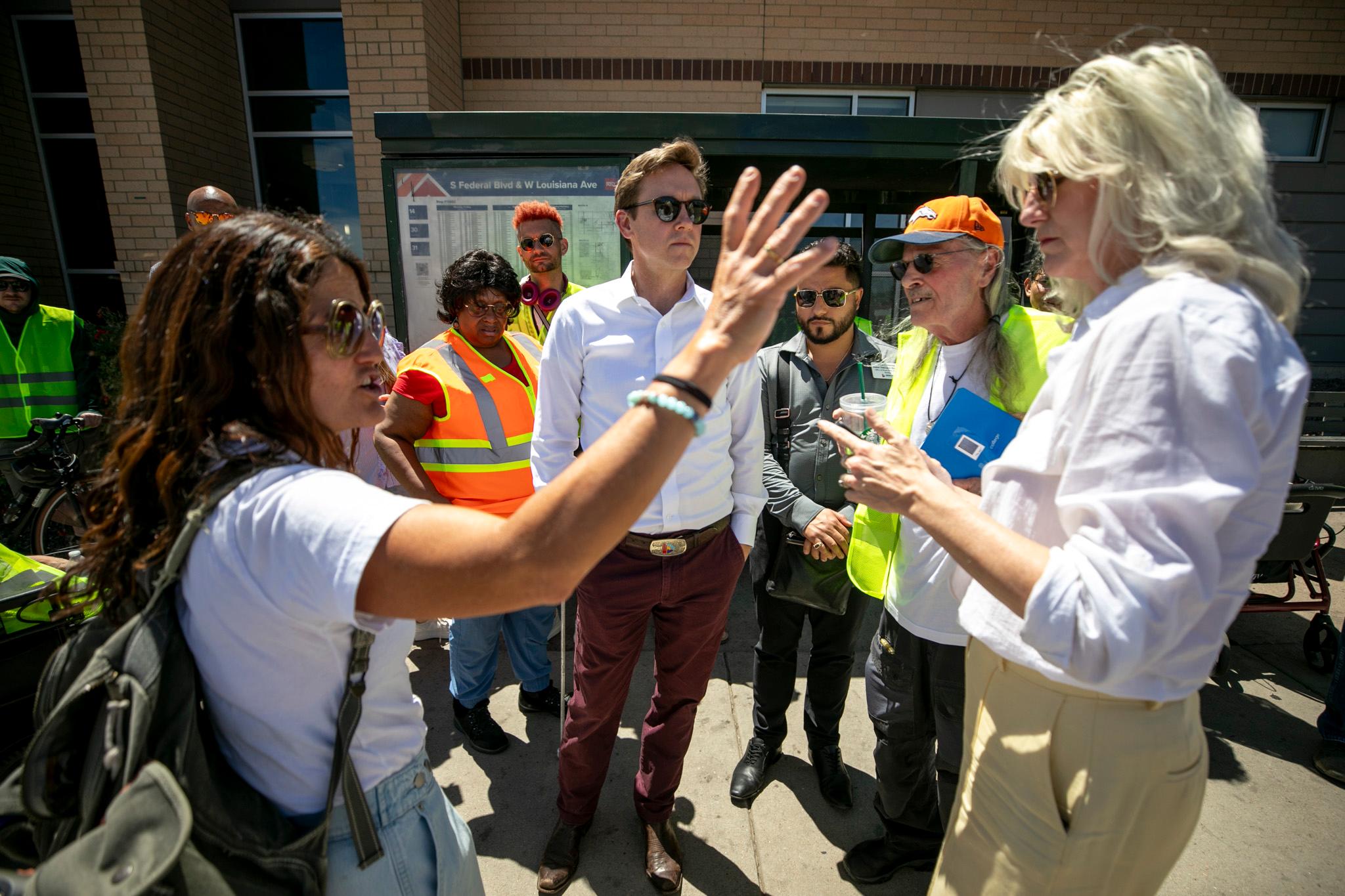
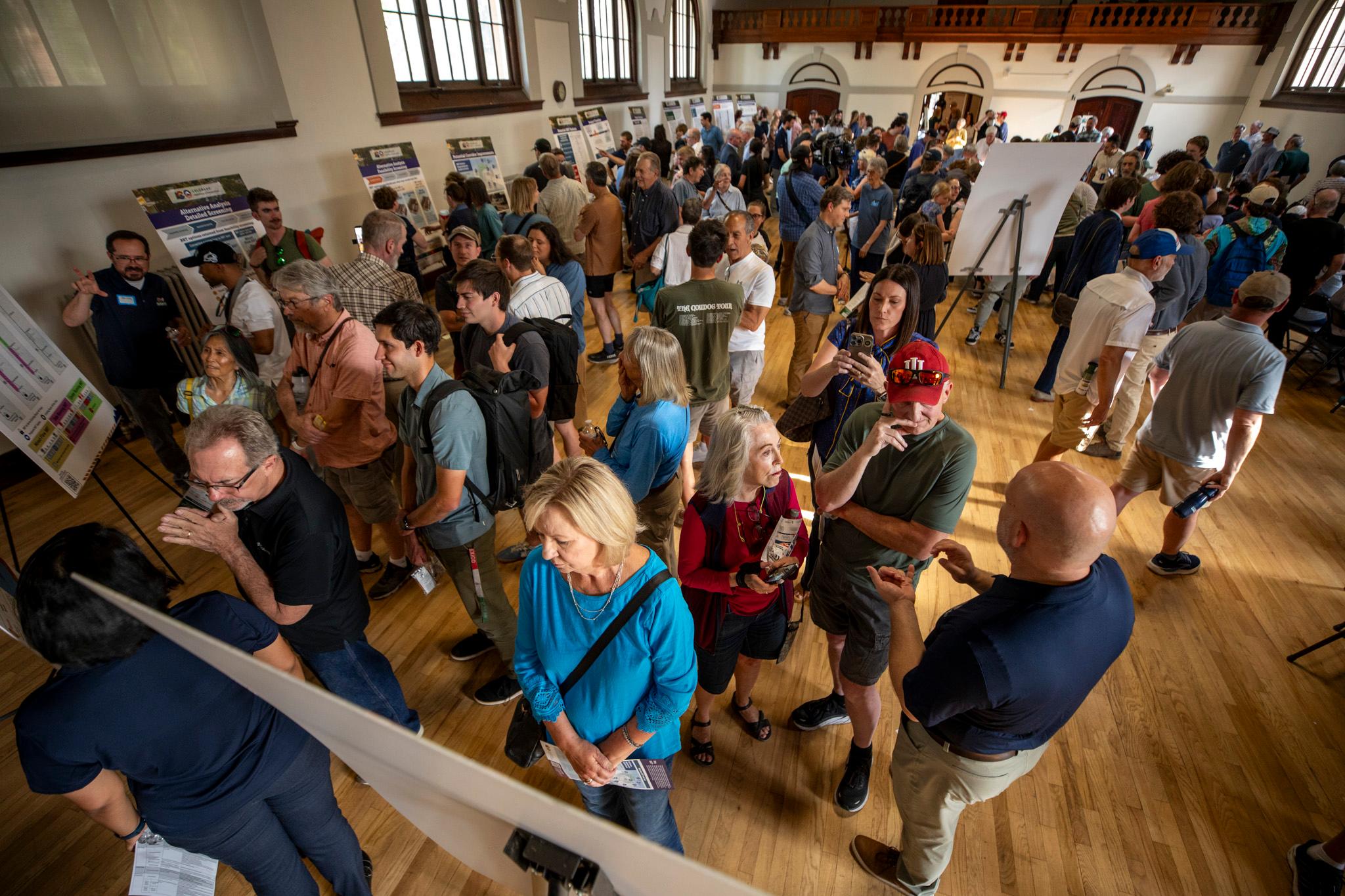
Hundreds of people packed into a room Wednesday afternoon at the Clayton Early Learning Campus as the Colorado Department of Transportation presented several visions for the BRT system, which is meant to allow fast, frequent bus service on one of the city’s busiest boulevards.
The debate about Colorado Boulevard BRT is as heated as the room was — several attendees stepped out of the room drenched in sweat. A pile of 8-ounce plastic water bottles slowly dwindled as the two-hour meeting went on.
The event attracted people from all points of the public transit spectrum. Transportation officials have positioned those kinds of systems as the future of public transit in the metro area, but many were skeptical after watching the disruption that has come with BRT construction on Colfax Avenue.
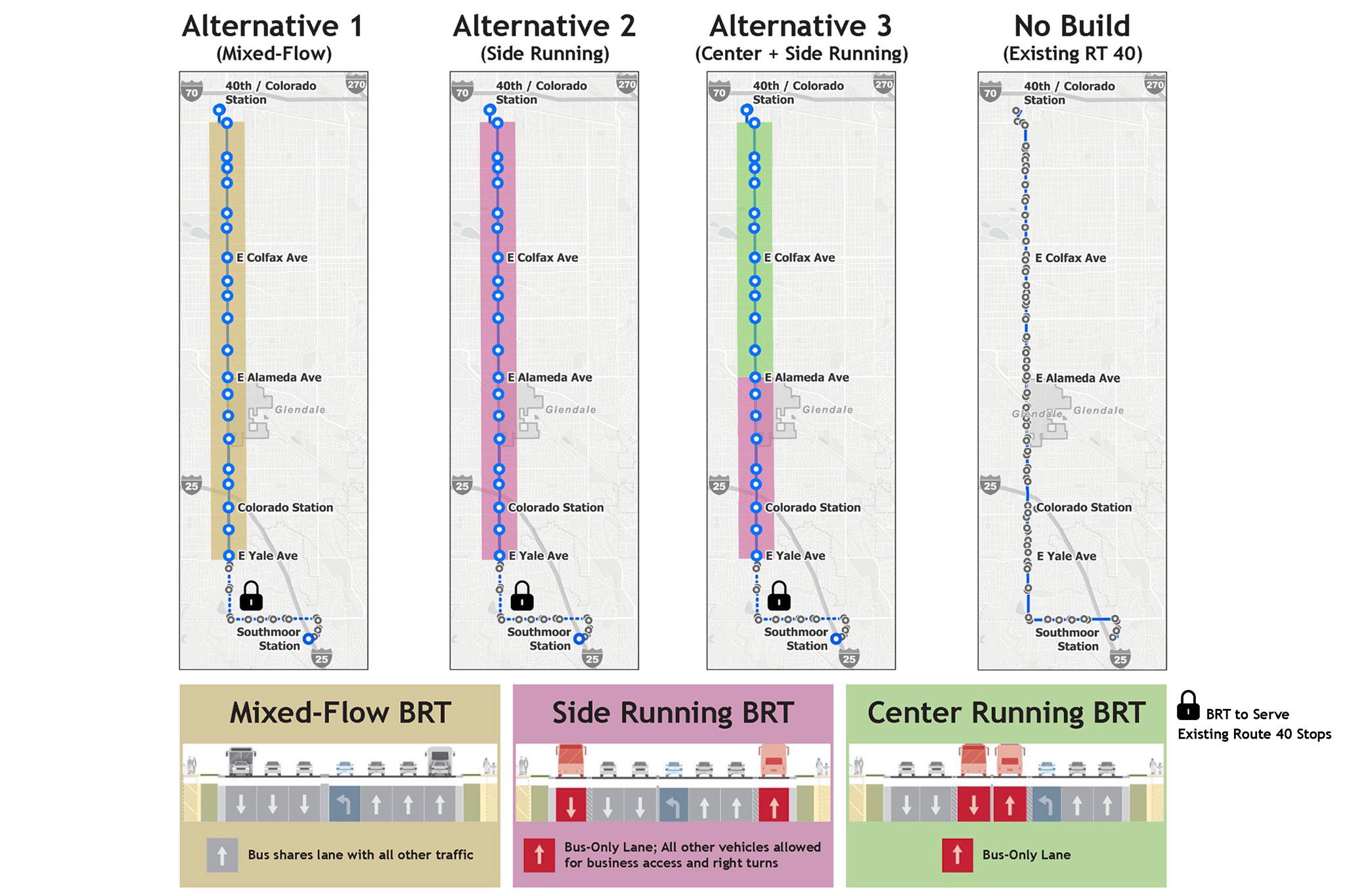
Here’s what the Colorado Boulevard BRT could look like.
CDOT last presented publicly about its Colorado BRT plans in 2024, when state officials were still trying to figure out potential designs.
Nearly two years later, the department has returned with four options for the future of the 40 bus route.
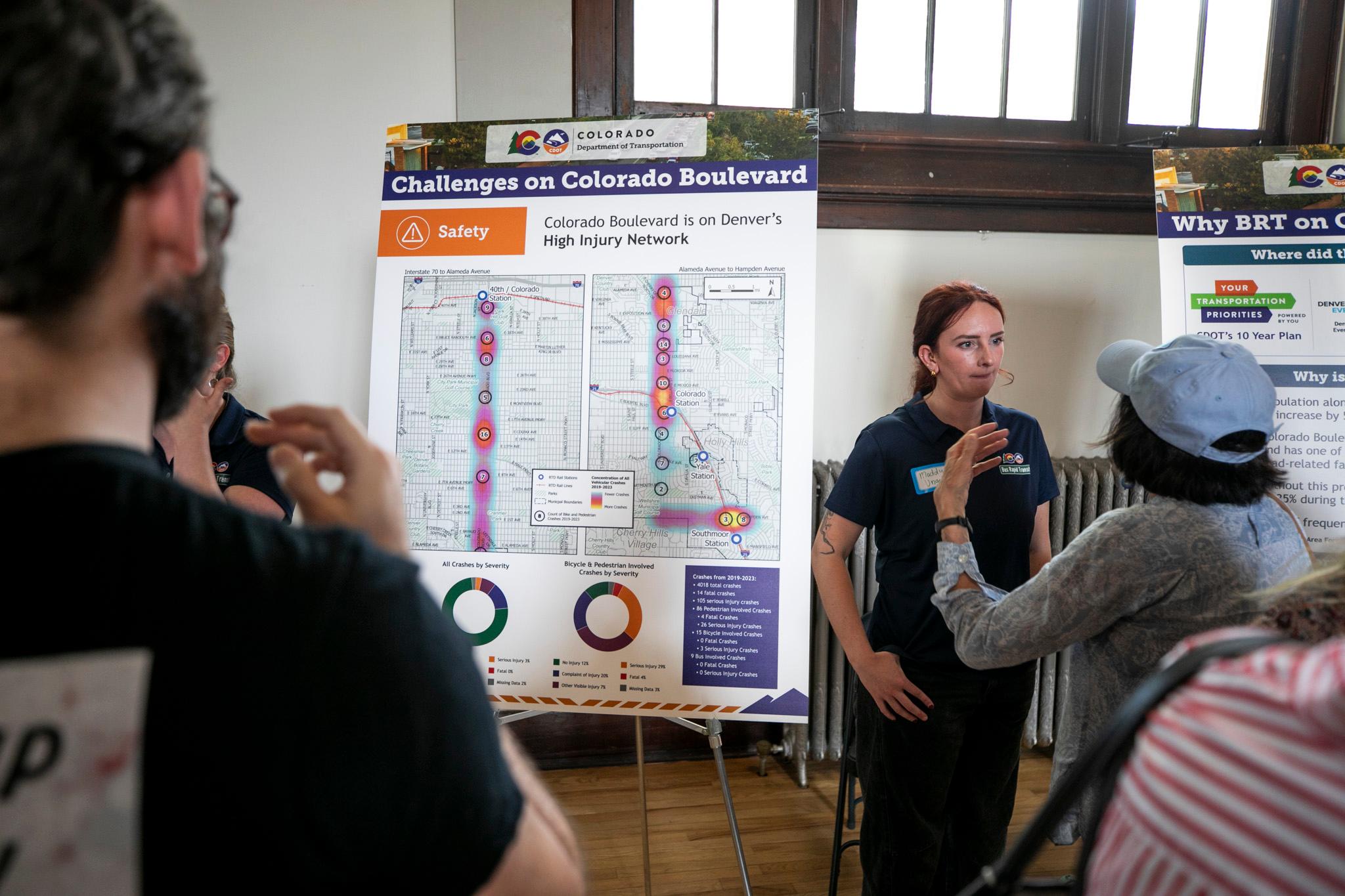
One option would be to do nothing, keeping Colorado Boulevard the same. Technically a state highway, the road can stretch to 11 lanes at its widest point. In certain stretches, there’s no buffer between traffic and a narrow sidewalk. Each year, there are dozens of fatal or serious accidents along the road, according to the city’s Department of Transportation.
The other three options would radically change the urban “stroad”.
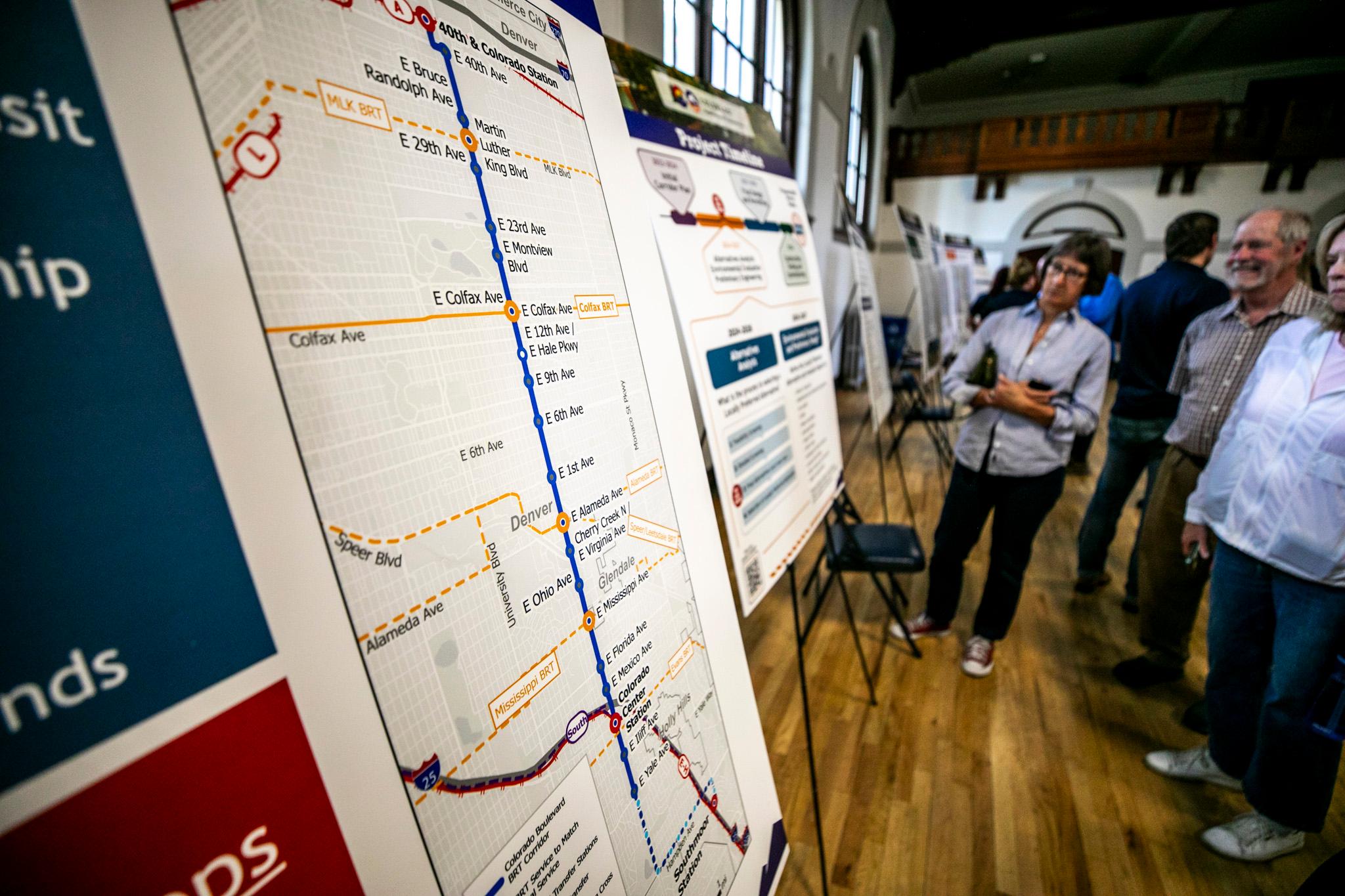
The project would run for 7 miles between 40th Avenue and Yale Avenue, with each option placing the bus lane in a different position. The proposals include:
- a traditional side-running lane
- a center-running lane that turns into a side-running lane at Alameda Avenue
- and a mixed-flow format where buses share lanes with other traffic.
CDOT asked attendees and participants in an online survey about which option they prefer.
Like every single debate about BRT, opinions were split.
BRT has been positioned as a cheap (relative to building train lines) way to improve Denver’s lackluster public transportation system and address safety concerns along one of the metro area’s most dangerous roads. Colorado Boulevard, like most of the major arterial roads in Denver, is part of the city’s “high injury network”, which accounts for 50% of traffic deaths.
Because Colorado Boulevard is a state road, the project is being managed by CDOT, in collaboration with other government agencies, like the Regional Transportation District and city and county of Denver, the Denver Regional Council of Governments and more.
RTD is hoping that faster bus service could help to rebuild transit ridership after the pandemic crash. It may need to win over skeptics to do that — like Hoke Stapp of Hilltop.
Stapp is among a cacophony of voices worried that a BRT-only lane would increase traffic for drivers.
“Do I think that that would decrease traffic on Colorado Boulevard? No, I don't think so,” he said. “Do I think it would substantially increase people's use of RTD? Certainly not.”
Outside the meeting, the nonprofit Denver Streets Partnership was trying to build support for one particular design: a full bus-only center-running lane, similar to what’s being built on Colfax.
“One of the options is mixed-flow, which we would argue is not actual bus rapid transit,” said Jill Locantore, DSP’s director. “If the bus is stuck in congestion with everybody else, it's not rapid and we're not going to achieve the intended benefits of the project.”
CDOT has defined BRT as “high-quality transit service” that combines the perks of light rail with the “flexibility, cost and simplicity of bus service.”
Wayne Graham is a bit of a rare breed. A self-described public transit enthusiast who takes trains or buses to places as near as the airport and as far as Loveland, he wore a sign crudely attached to his shirt saying “No BRT.” He’s not convinced that demand for increased service for the 40 bus route is that high while those who don’t live near major bus routes face long waits.
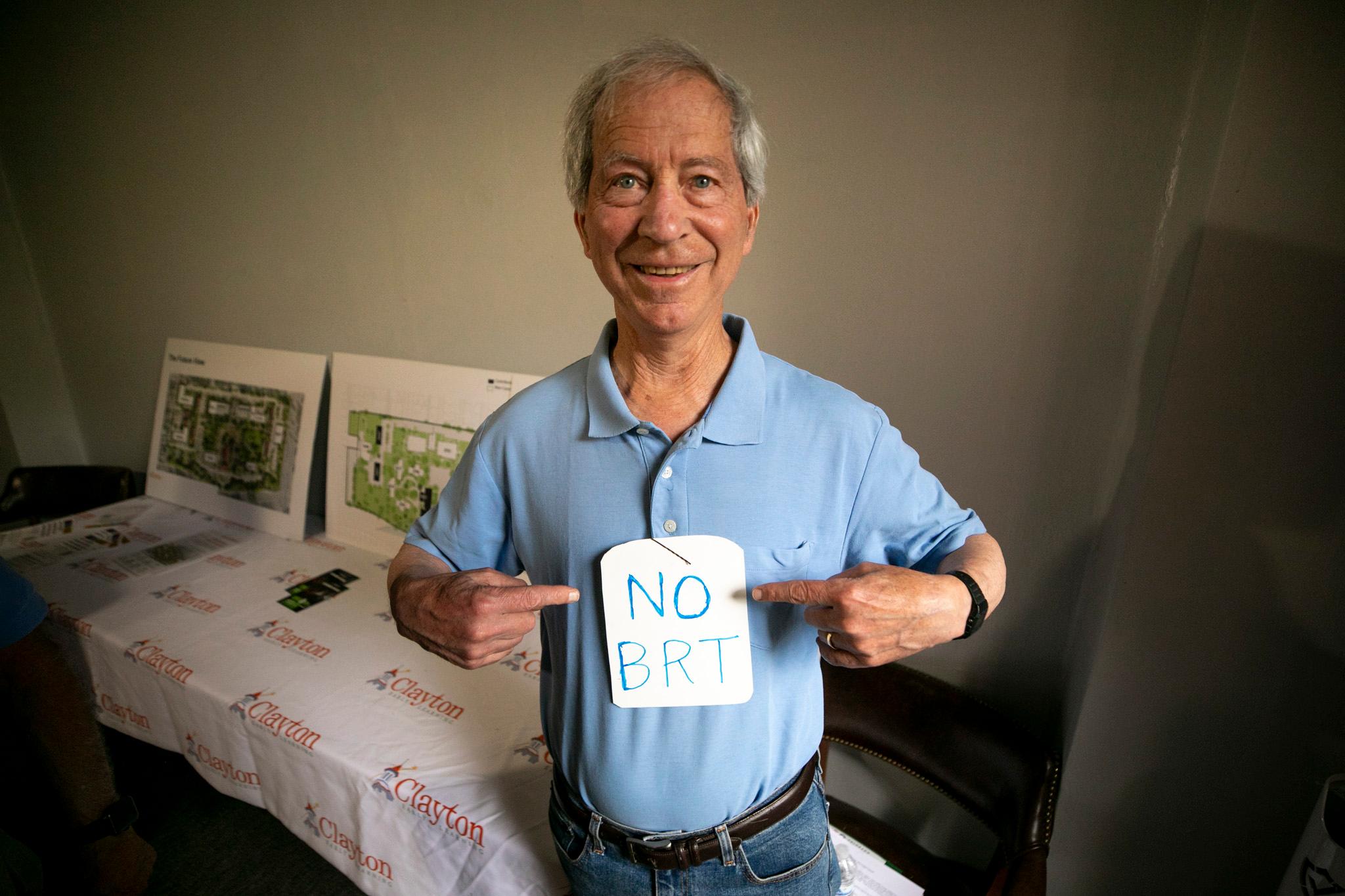
“I would not spend $300 million to do it,” Graham said. “Maybe promote the (new payment method) Tap-n-Ride, eliminate some of the stops, but I think CDOT just wants to have a project.”
Molly Jones, a local transit advocate, said she supports BRT to build out the bus network and increase safety.
“That's a very scary street to cross and walk around,” she said.
(The road was once a pedestrian’s paradise, but a controversial mid-century effort to widen the road flooded the corridor with cars.)
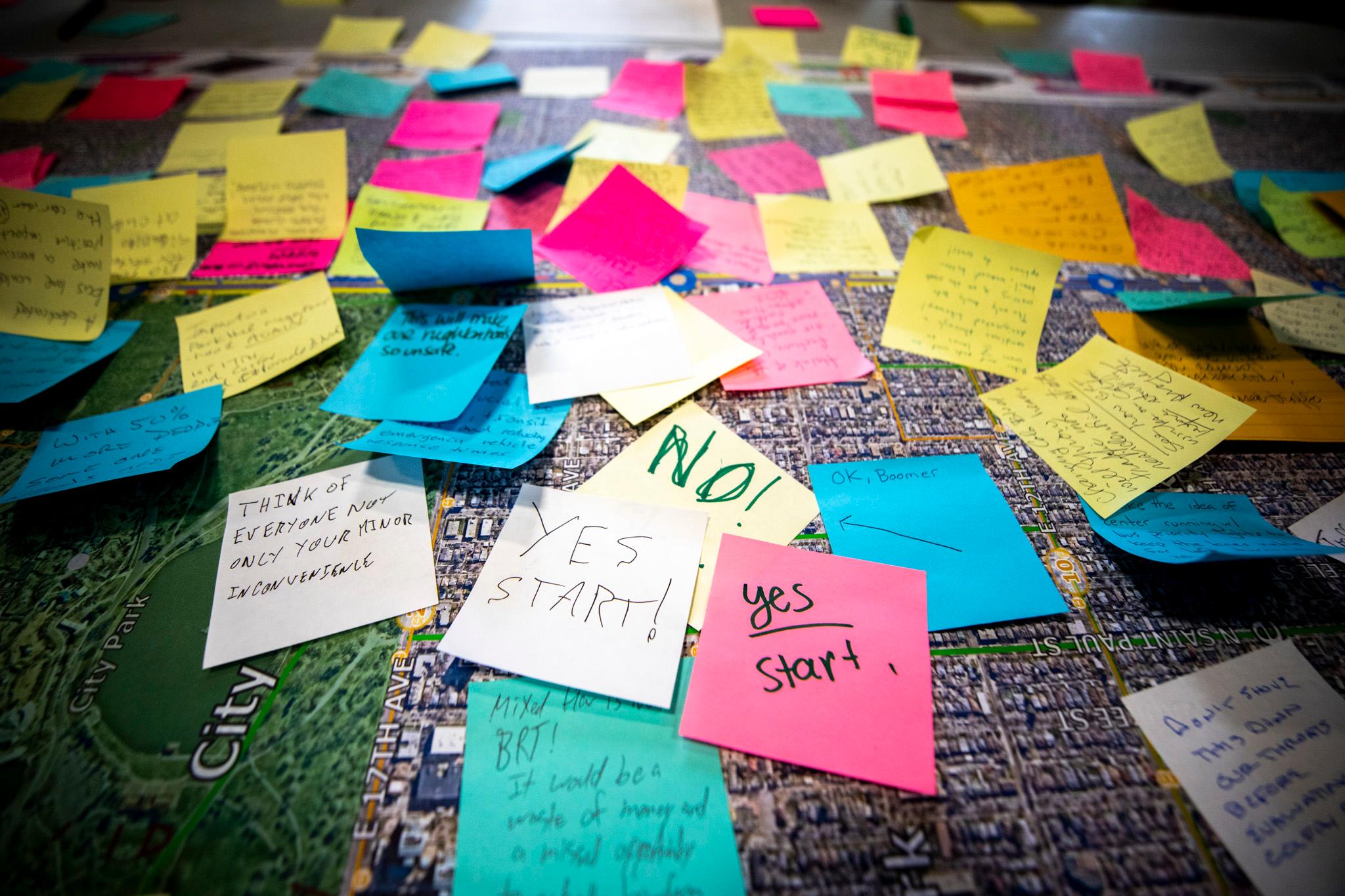
At the meeting, attendees wrote on sticky notes on poster boards.
Some left detailed feedback. Other notes were far more succinct.
“NO!” one yellow sticky note said. A neighboring blue sticky note responded: “OK, boomer.”
Roslyn Washington said the heat and crowd led to heightened emotions that made real engagement impossible. Overall, she was skeptical but was willing to hear out the argument.
“Taking two lanes away from that makes absolutely no sense, but if there is some logic to that, this would've been the perfect opportunity to present that, to let people voice their concerns, to alleviate those concerns,” Washington said. “To show the community you actually do care.”
What’s next for the Colorado BRT?
Of the metro area’s three immediate BRT projects, Colorado Boulevard is last in line for completion, slated for 2030.
The Colfax BRT is set for completion by mid-2027, with some stretches finishing construction by the end of the year. The Federal Boulevard BRT, which would stretch from Westminster to Englewood, is next on deck. It’s also a CDOT project.
Some say the BRT along Colorado Boulevard faces an uphill battle, since residents are unable to see the potential benefits on another major corridor until the Colfax project is complete. But advocates have pointed to other BRT projects across the country, like in Minneapolis and Albuquerque, as reasons to invest.
CDOT spokesperson Tamara Rollison said the next steps are to select a preferred design using community feedback and “do a deep dive” through a required federal analysis. After that, they can begin the design phase.
CDOT has secured funding for design but not construction. In total, the project could cost up to $300 million, depending on which design option CDOT chooses.