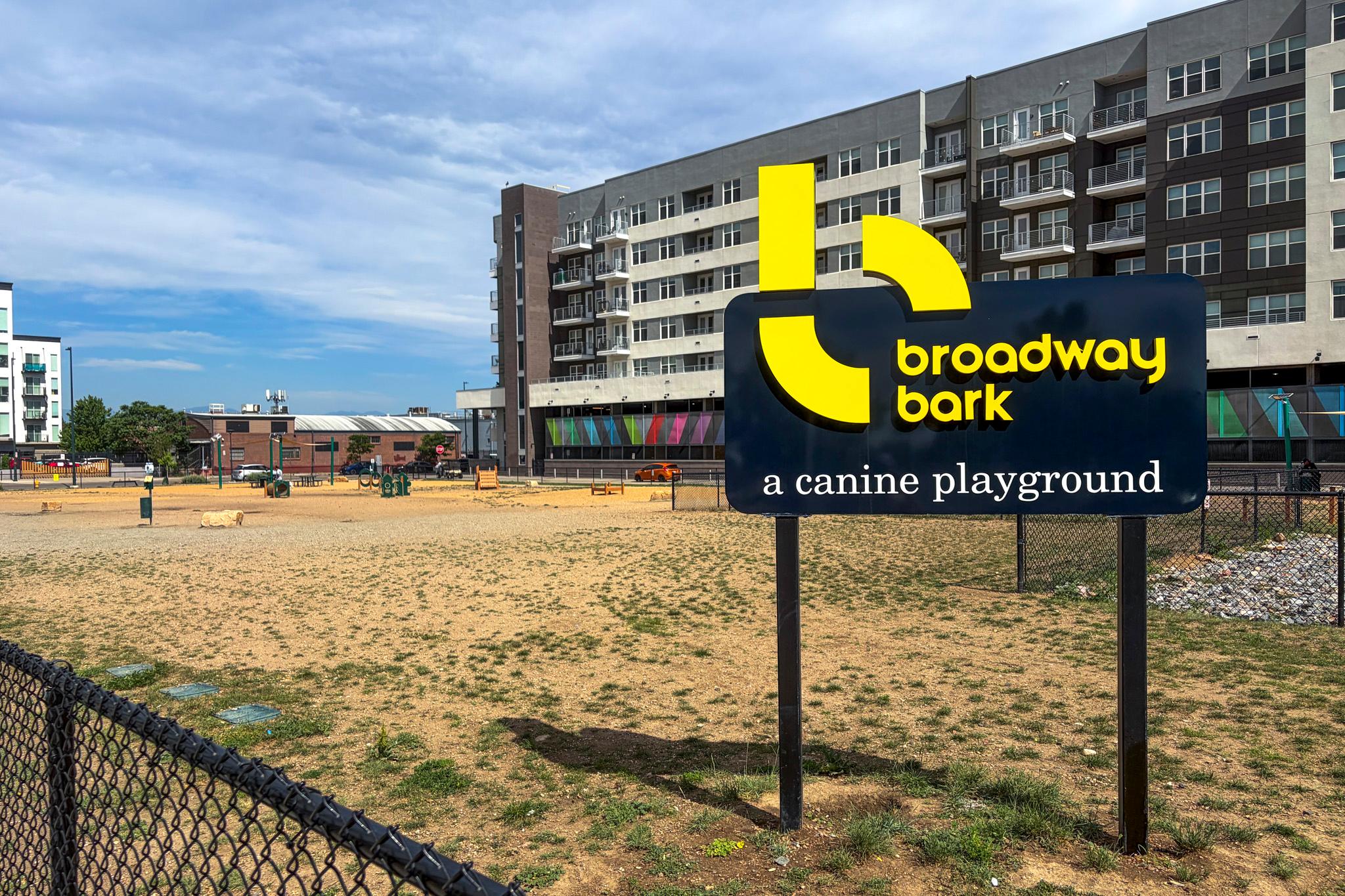
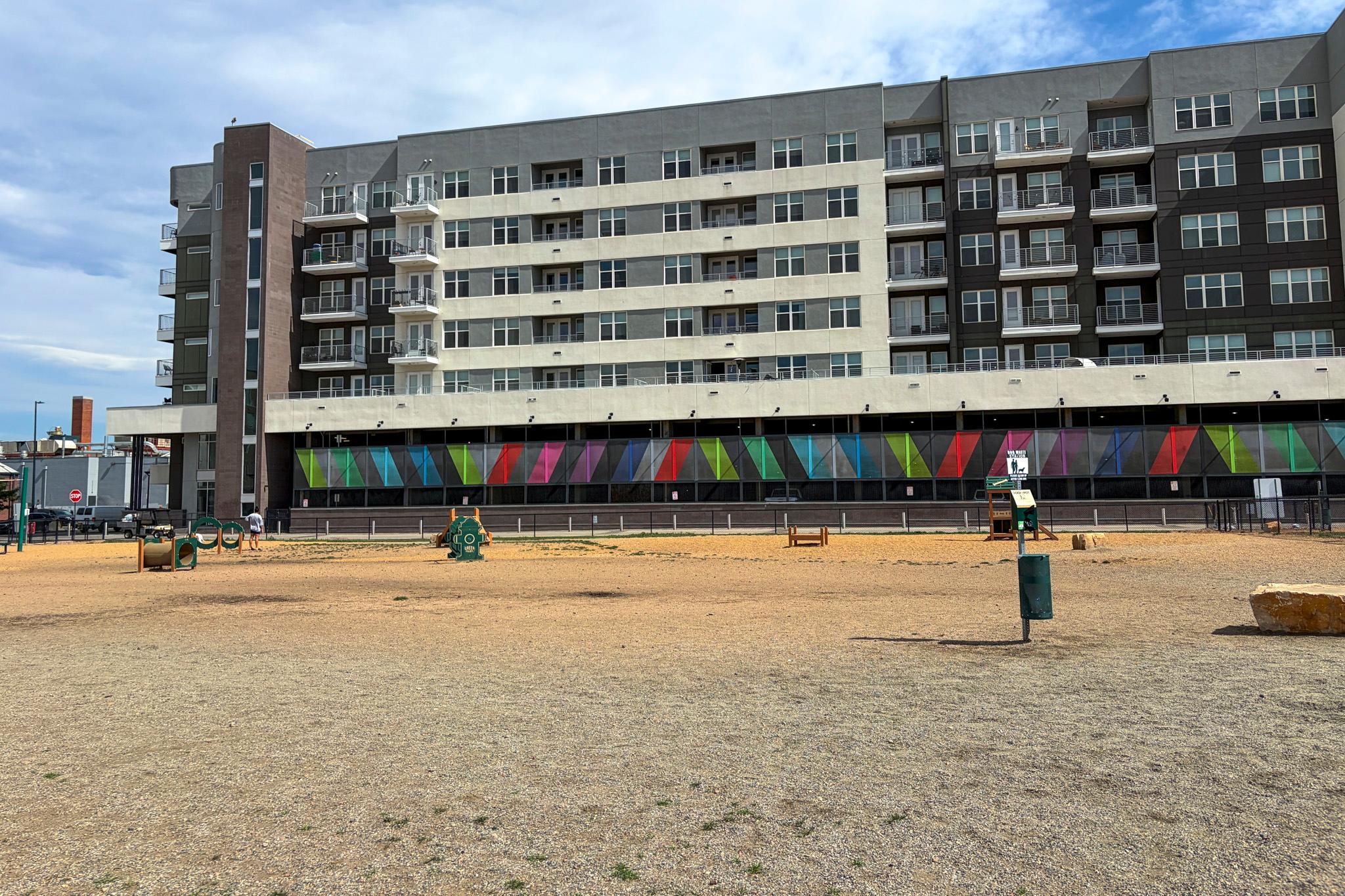
A dozen dogs frolicked on Tuesday morning at the Broadway Bark dog park, a patch of land tucked between apartment buildings in south Baker. At other hours, the canine crowd swells much larger.
The privately owned park at 380 S. Cherokee St. opened in 2024 and is freely accessible to the public, becoming a hub for the fast-growing neighborhood in recent years.
“There’s always people here,” said Craig Lavid, who was bringing his three small dogs — Wilson, Woody and Duke — to the park on Tuesday morning. “My dogs mainly just come to sniff. I have one dog that plays with other dogs, but the rest of 'em just kind of hang out and sniff and just run around.”
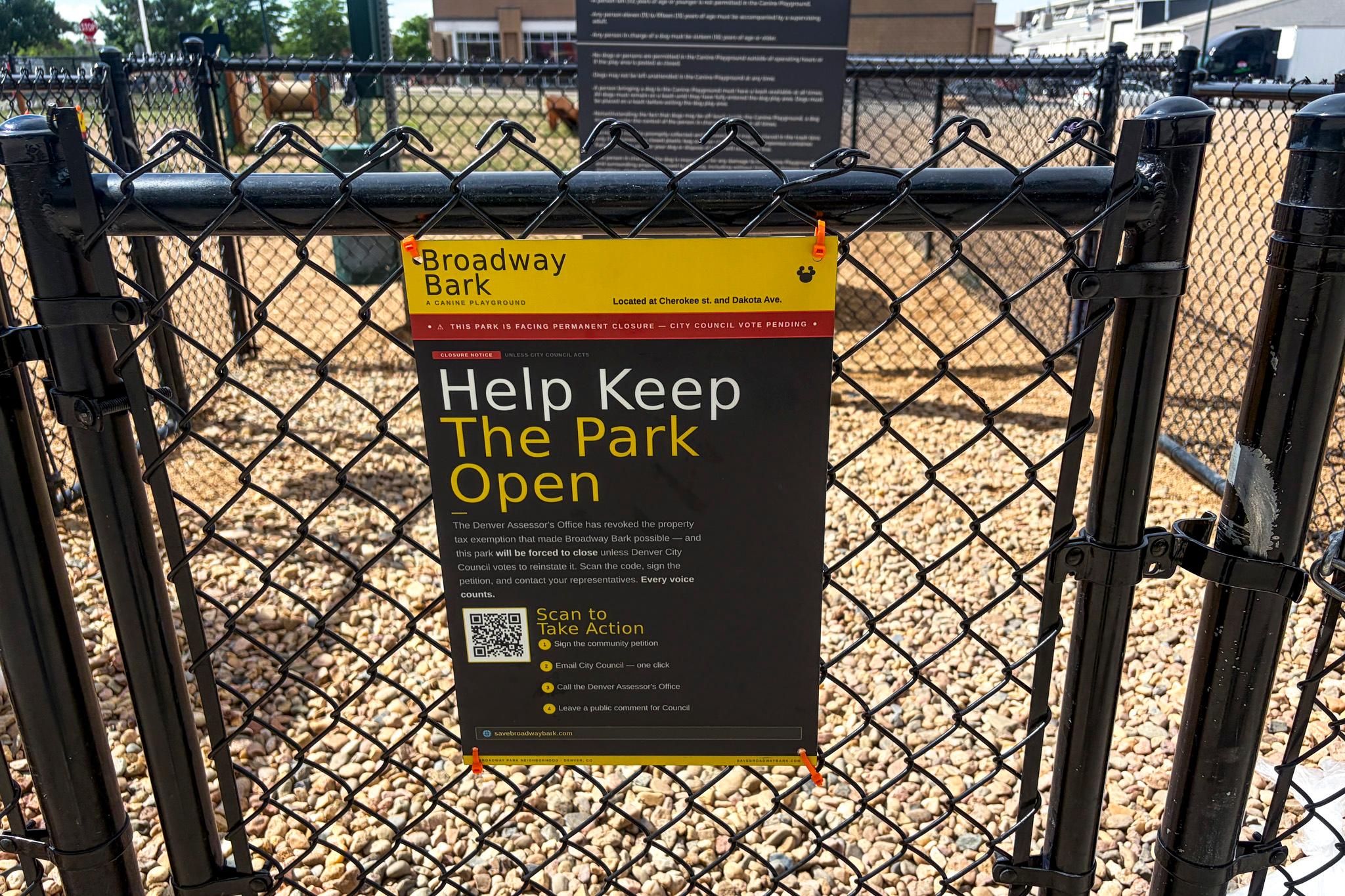
But the puppy party might be coming to an end. The property owners say a recent change in state law — pushed forward by tax assessors across Colorado — could mark the end of the dog park unless the Denver City Council takes action.
Here’s how the park works.
The dog park is about an acre, with separate spaces for large and small dogs. It has obstacles and play structures, and a maintenance crew regularly cleans the park and trash cans — something its patrons say sets it apart from other parks across the city.
“I have a senior dog,” Lavid said. “I do think he got sick at a dog park once where he's like maybe sniffed something or ate something he shouldn't have and then he got sick. It's happened a couple of times. So I do try to come to the ones that are more well kept.”
But beyond the barks and howls is a complex property deal — one that is in danger now.
The land is owned by D4 Urban, the mixed-use development company behind the planned Broadway Park project near Alameda Station. The future of the lot hasn’t been determined, but it’s zoned for commercial mixed-use.
Meanwhile, the developer saw the dog park as an alternative to a vacant dirt lot. The company also got property tax benefits for opening it to the public.
D4 Urban leases the property to Broadway Park North Metropolitan District No. 1, a quasi-governmental entity that oversees the district’s infrastructure, at no cost. Because the land was leased to a governmental entity, the developer could claim a property tax exemption — saving the company tens of thousands of dollars per year.
Here’s how that could change.
A state law passed in 2025 tightened the rules for property tax exemptions.
House Bill 25-1289 sets limits on how and when metropolitan districts can grant exemptions, potentially requiring approval from local elected officials.
The bill was spearheaded by the Colorado Assessors’ Association, a group that consists of the state’s 64 county assessors. Denver supported its passage.
“The City and County of Denver believes that this new state bill – which passed unanimously in state legislature – closes a loophole and increases the transparency for citizens of when and where property tax exemptions are granted,” Denver Department of Finance spokesperson Laura Swartz said in an email.
The dog park ran afoul of the law because of the relationship between the developer and the metro district.
Broadway Park North Metropolitan District No. 1’s board includes members of D4 Urban, which owns the dog park. That poses a conflict of interest, which triggered the revocation of the property exemption under the new state law.
The developers said if the park didn’t get its tax exemption renewed under the new state law, it would be forced to close. The metropolitan district has to prove that the park serves the public and obtain approval from the city council.
In all, the company is exempted from about $81,000 per year in taxes, but it pays $58,000 to the district to make up for the revenue the district loses from the exemption.
For a break worth about $222 per day, Cohen said, "hundreds of people use the park every day.'
Dan Cohen, the CEO of D4 Urban, said he was frustrated by the passage of the new law.
“I don't think they're targeting this park specifically, but certainly they're targeting the structure that allows for these spaces to be made available to the public,” he said. “And quite frankly, is this the best use of City Council's time?”
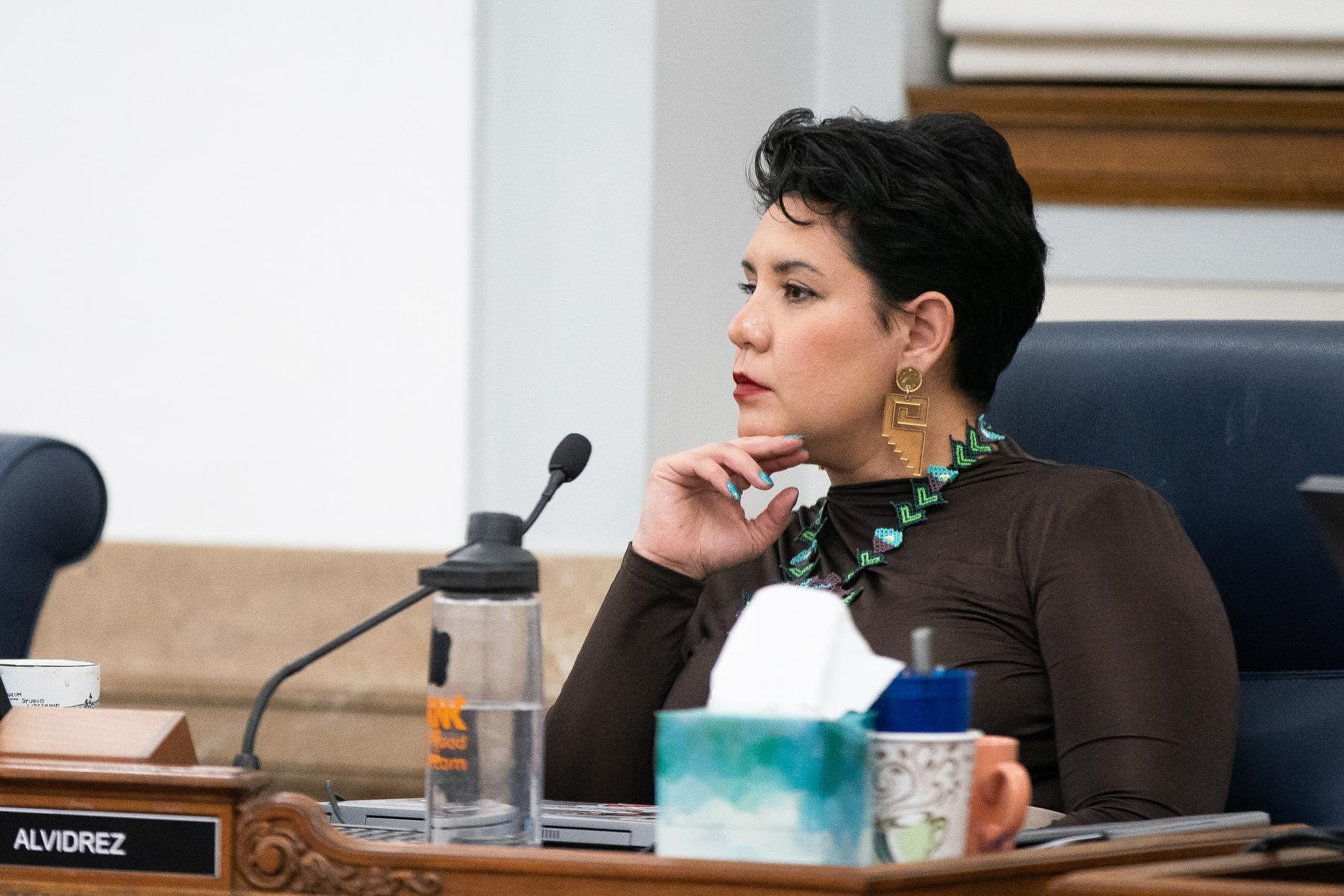
Councilmember Flor Alvidrez, who represents the area, is not sure her colleagues will join her in approving the tax exemption.
“I think Council's hesitant to provide tax exemptions,” she told Denverite. “My hope is that we would, because I see this as an asset to District 7, but I can't say that all my colleagues will feel that way.”
An online petition to support the park’s tax exemption has gathered over 1,000 signatures. As part of the petition, signatories have to declare that the park serves the public interest and acknowledge the land will eventually be developed.
Swartz said property owners must submit a formal request for a property tax exemption, which D4 Urban has yet to do. If it does, Denver City Council would have 63 days to process the request.
If the park closes, residents say it will be a loss.
Several people at the park on Tuesday morning walked from the adjacent apartment buildings. Others drove to the park because it’s the closest — or the cleanest — one in their vicinity.
Katie Wells brings her black-and-white mutt, Gary, to the park before work to tire him out. She supports renewing the tax exemption. She said without the Broadway Bark park, she’d have to drive to a smaller, dirtier dog park.
“It would be really, really devastating if it closed, which sounds stupid about a dog park with the world that we're in right now, but community's important and we should be encouraging that,” Wells said.
Alvidrez said Broadway Bark ensures other nearby parks — like Washington Park and Dailey Park — aren’t overrun with canines. She also said the dog park adds walkability to a dense neighborhood.
“One of the biggest complaints that I get from the dense areas where we're adding more dense housing is the lack of dog parks,” she said.
The developers haven’t said how soon they might close the dog park. If that happens, the property may go vacant. There’s no concrete timeline for developing the land, Cohen said.
“Ground up development is challenging in Denver right now for a variety of reasons,” he said. “That's probably a whole ‘nother article.”