Mayor Mike Johnston might have once been a school principal, but this time, he was on the receiving end of a report card.
Johnston was being graded on just one subject: how he’s fared on transportation safety, access and mobility since he took office two years ago. Plastered on the top of his report card was a big, red D — not quite a failing grade, but indicative of the disapproval his administration has received from a collective of mobility advocates.
The report was authored by Denver Streets Partnership, Denver Bicycle Lobby, Pedestrian Dignity and Greater Denver Transit, all organizations dedicated to safer streets through better infrastructure for bicyclists, pedestrians, drivers and transit riders.
“While our missions may differ, we are united by a shared concern: Denver’s streets are becoming more dangerous and inaccessible, and the current administration is falling behind on its commitments to protect people’s lives and provide safe, accessible and sustainable transportation choices,” the organizations told the mayor in a letter accompanying the report card.
It was cosigned by other organizations like Bicycle Colorado, the Colorado Cross-Disability Coalition, the West Washington Park Neighborhood Association, YIMBY Denver.
The report card assesses Johnston’s progress on promises from his 2023 campaign and outlines actions advocates would like him to see in the remaining two years of his first term.
Jon Ewing, a spokesperson for Mayor Johnston, said his office remains “steadfast in his commitment to make Denver a safer city for cyclists, pedestrians, and drivers” and maintains that they’ve made significant progress in the last two years.
“A vibrant city is one where people can move freely without fear, and we are committed to delivering on that promise,” Ewing said, mentioning changes like the installation of speed cameras this year on Federal Boulevard as well as major transit infrastructure projects.
The coalition said Johnston has failed to live up to his campaign’s promises.
“As a candidate, Johnston committed to implementing and expanding the city’s existing plans and providing the leadership needed to follow through. He also made public safety a central campaign theme, including reaffirming Denver’s commitment to Vision Zero and the goal of eliminating traffic deaths and serious injuries,” a paragraph in the report card said.
“Two years into his term, those commitments remain largely unmet,” it continued.
Several major points of contention led to Johnston’s poor grade, including record-high traffic deaths in 2025, a slowdown in building multimodal infrastructure compared to his predecessor, and a lack of investment in transportation from the recently approved Vibrant Denver bond.
Former Mayor Michael Hancock implemented Vision Zero — the ambitious plan to end all traffic deaths and serious injuries in the city by 2030 — nearly a decade ago. But the deaths haven’t slowed. Last year, 93 people were killed on Denver streets, a record high since 2013.
The transit community argues the Johnston administration has not implemented radical changes to Denver roadways, saying the city has not wanted to disrupt the status quo for drivers.
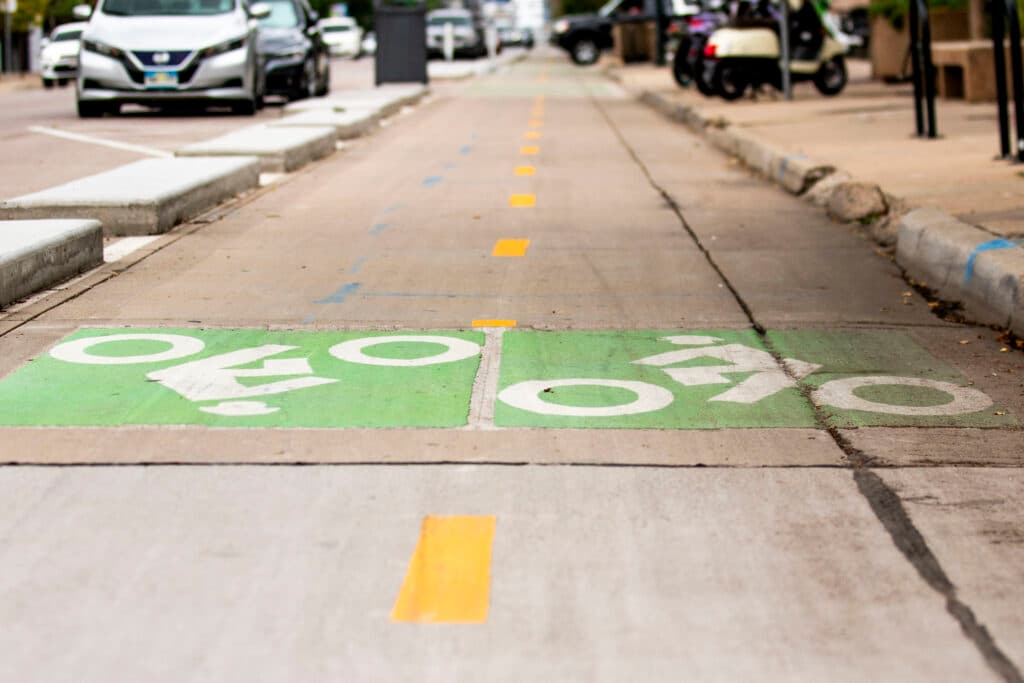
The report said the city has averaged around 21 miles of new bike lanes since Johnston took office. Hancock’s administration built about 46 miles per year in its final two years, according to the report, thanks in large part to funding authorized by voters. (Hancock averaged 27 miles per year when including a longer five-year period.)
The report also mentions longstanding complaints with the administration, like decisions to water down a bike lane on West 29th Avenue and scale back a road narrowing plan along Alameda Avenue.
The groups praised the city’s new tax-funded sidewalk program, though the coalition said it could be better implemented.
“Denver’s sidewalk construction program did not begin until the second half of 2025, nearly three years after voters approved the Denver Deserves Sidewalks initiative, and the development of a Sidewalk Implementation Plan (SIP) is only now beginning,” it said. “Initial sidewalk investments have not focused on high-injury corridors with heavy foot traffic.”
Voters approved the sidewalk program in 2022, before Johnston took office. The city will spend $108 million over the next three years in an effort to complete or improve thousands of miles of sidewalks. The sidewalk tax will be collected indefinitely.
More on the mayor's response
Ewing, the mayoral spokesperson, touted achievements like abolishing parking minimums, lowering speed limits along several major roadways and expanding the Denver Connector, a popular microtransit service.
He noted that the city’s SPEED program — which includes more speed limit signs, enforcement and signal adjustments — has reduced crashes on Alameda and Federal and will soon expand to Colorado Boulevard.
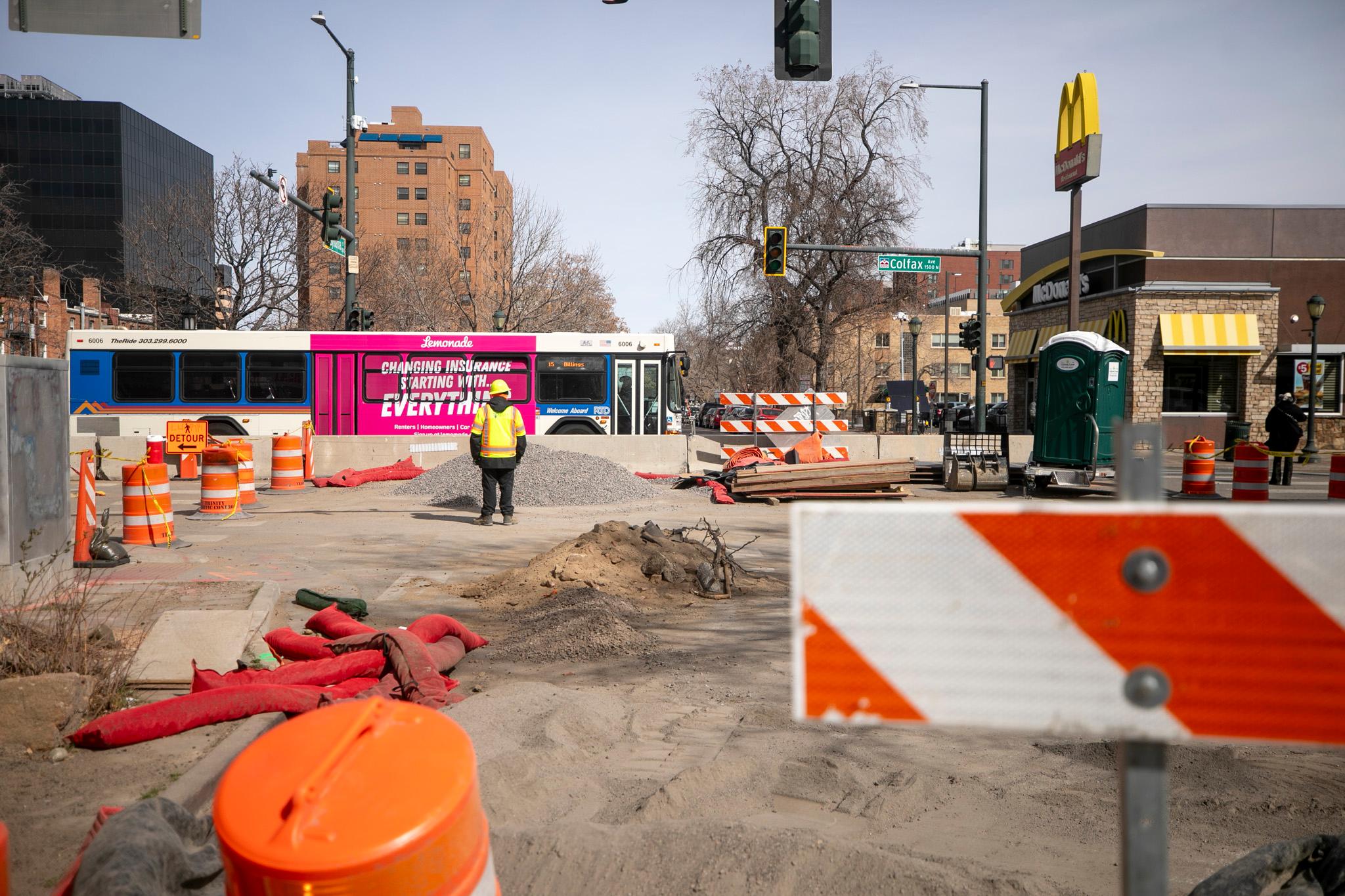
Ewing also said the city plans to install more automated speed traffic cameras along Federal Boulevard and Alameda and to improve bus stops in West Denver. He also highlighted continued planning for the Federal Bus Rapid Transit buildout and work on the upcoming Broncos and Summit FC sports stadiums, which will feature dense development and multimodal improvements. The city also is nearly halfway through construction of East Colfax BRT.
Ewing noted that the Federal bus project would include “lessons learned from Colfax BRT construction and the well-documented impact it has had on surrounding businesses — to ensure the community is sufficiently supported.”
Bike lane construction also will continue. The city previously committed to building 20 miles of bike lanes by the end of 2025, with another 18 miles planned by the end of 2026.