This article was updated at 11 a.m. on Feb. 24, 2026.
Police in Colorado could face stricter requirements when using automated surveillance systems like Flock Safety to track vehicles.
A pair of bipartisan bills introduced in the Colorado legislature would require law enforcement to obtain warrants before seeking certain information from the sprawling camera networks, which are now widely used across Colorado and the nation, and introduce other limits on artificial intelligence.
“I think it is a useful tool for law enforcement, and I don't want that to go away,” said Sen. Judy Amabile, a Democrat from Boulder. “But I do want to make sure that people's privacy isn't being invaded and that the data is secure so that ICE doesn't have access to it, so that it can't be used to go after people who are seeking reproductive healthcare.”
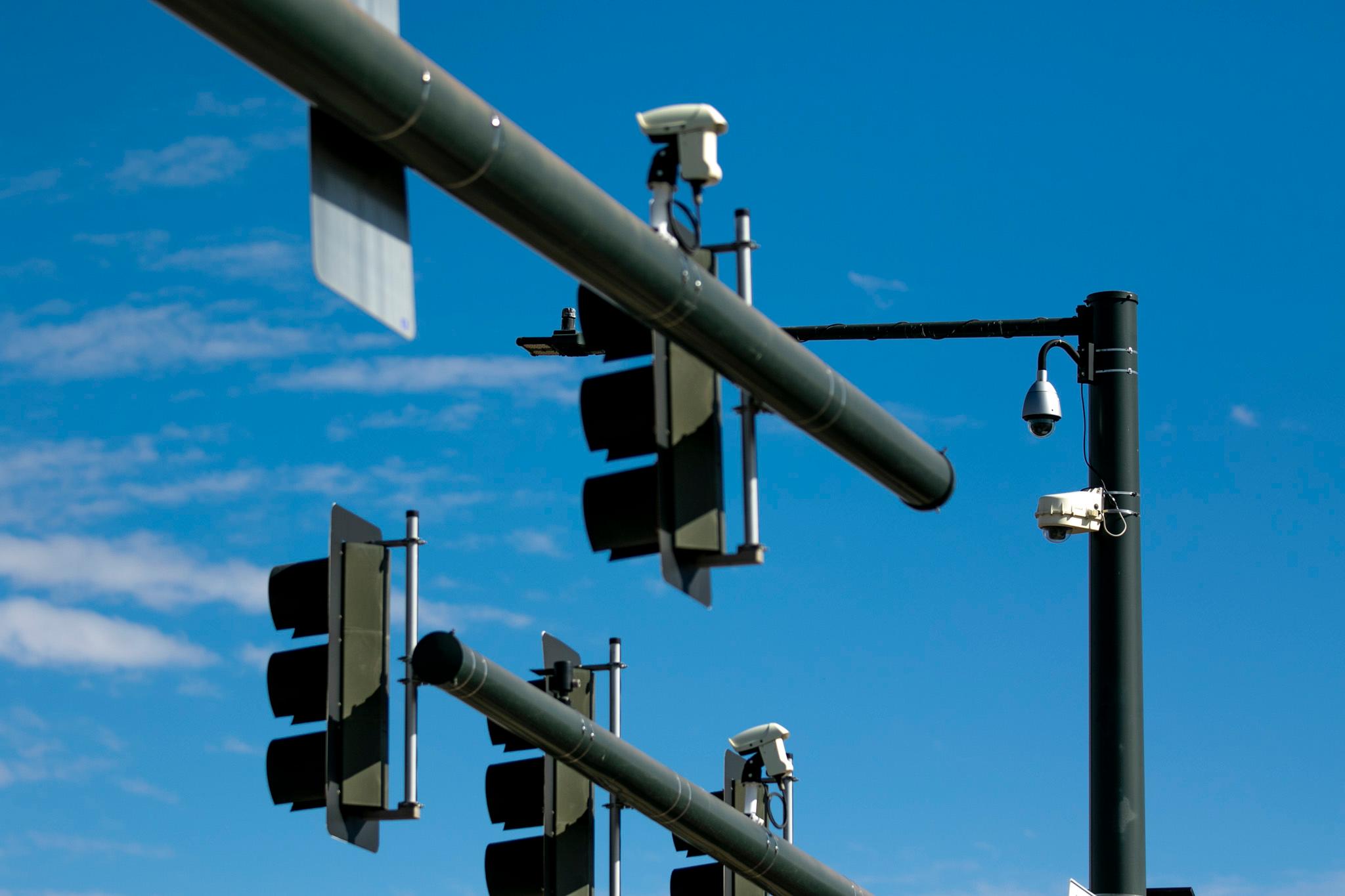
Flock operates in 75 Colorado communities, with cameras recording the license plates of millions of vehicles as they pass each day. Police officers can search that data for specific cars, using license plate numbers, vehicle types and other information to track people between locations.
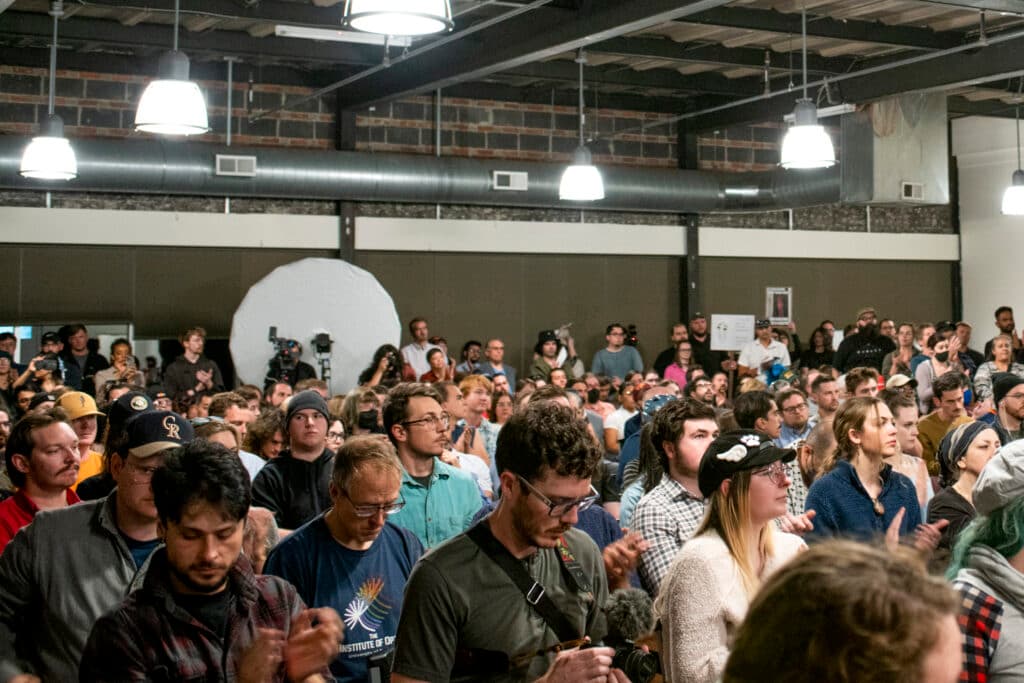
Police say the technology has revolutionized their work, allowing them to quickly locate suspect vehicles and missing people. But ubiquitous surveillance has drawn growing public outrage in Denver and beyond in recent months, especially with concerns about federal agents tapping into the data.
Amabile said she worked with a lobbyist from Flock Safety to get the company’s input on Senate Bill 26-070, the measure she is sponsoring.
“I think the industry understands that regulation is coming, and I think they want to make sure that it's not too restrictive,” Amabile said. “But at the same time, I think if we do nothing, then cities will start to say, ‘we don't want to use this at all,’ because people don't trust it.”
Requiring warrants would slow officers’ use of the technology, generally requiring them to prove in court that they have probable cause to seek information about a specific vehicle or location.
The warrant requirement would not apply when officers are searching for data from the immediate past. Under the original bill, officers would be free to search for vehicle location data from the past 24 hours without a warrant. In an amended version, that period of warrantless searches was extended to 72 hours.
The bill includes an exception for situations where there’s an immediate threat and for other uses like toll collection and speed cameras.
The bill would also require agencies to log when and why they access data from the systems, producing an annual report for the public. The reports also would have to be an inventory of the surveillance devices used by each agency.
Local law enforcement oppose the bill.
“Law enforcement is not happy. They don't like the warrant piece. That's the most consistent thing I've heard,” she said. “I want law enforcement to be able to use this as a tool. I just want to make sure that the citizens are comfortable with what's going on. And I'm hearing from tons of people that right now they're not.”
SB26-070 faces opposition from the state associations for police chiefs, officers, district attorneys, sheriffs, as well as the Colorado Municipal League and numerous local governments, according to state lobbying records. Supporters include advocates for immigrants, civil rights and reproductive rights, such as Color and the ACLU of Colorado.
A spokesperson for Flock, Paris Lewbel, did not say whether the company supports or opposes the proposal. Instead, Lewbel gave a general statement.
“Flock Safety strongly supports legislation that creates guardrails for how license plate recognition data is used and shared, enhances transparency, and helps build public trust - while preserving the efficacy of this important public safety tool,” he wrote, noting that Flock’s technology has helped to locate five children who had been abducted in Colorado cases.
The bill was introduced last month and will be heard by the Senate Judiciary Committee on Feb. 23. It would take effect in August.
The bill has bipartisan support from its prime sponsors. Republican Sen. Lynda Zamora Wilson of El Paso County is co-sponsoring the measure, as are Rep. Yara Zokaie of Larimer County and Rep. Kenny Nguyen of Broomfield, both Democrats.
A second, more sweeping bill:
Zamora Wilson also introduced SB26-071, a bill that would establish the “Surveillance Accountability and Freedom Ensured Act,” or SAFE Act.
Zamora Wilson’s bill would set broader requirements for AI. It would require police to seek public input and governmental approval before deploying surveillance technology. It also would require warrants for use of facial recognition and sets limits for data retention, among other changes.
Zamora Wilson didn’t respond to requests for comment.
Loveland was sharing its Flock data with Border Patrol and Denver Mayor Mike Johnston extended the city’s contract with Flock despite pushback from the Denver City Council.
The city says there is no evidence that Denver’s Flock data has been used for immigration enforcement. But thousands of agencies around the nation had access to Denver data through the “national search” function — a fact that DPD officials said they weren’t aware of until April, when they deactivated the function.
Rules in Denver’s new contract state that other jurisdictions can’t access Denver’s data without coming to an agreement with the city. But the company’s relationship soured with some Denver lawmakers, and the mayor's office recently signaled that it would consider moving to a new provider.
Editor's note: This article was updated with comment from Flock Safety and with information about exemptions to the proposed warrant requirement.