“This is our town,” Julie Davis declared to hundreds of revelers on the 30th floor of a vacant downtown Denver office building.
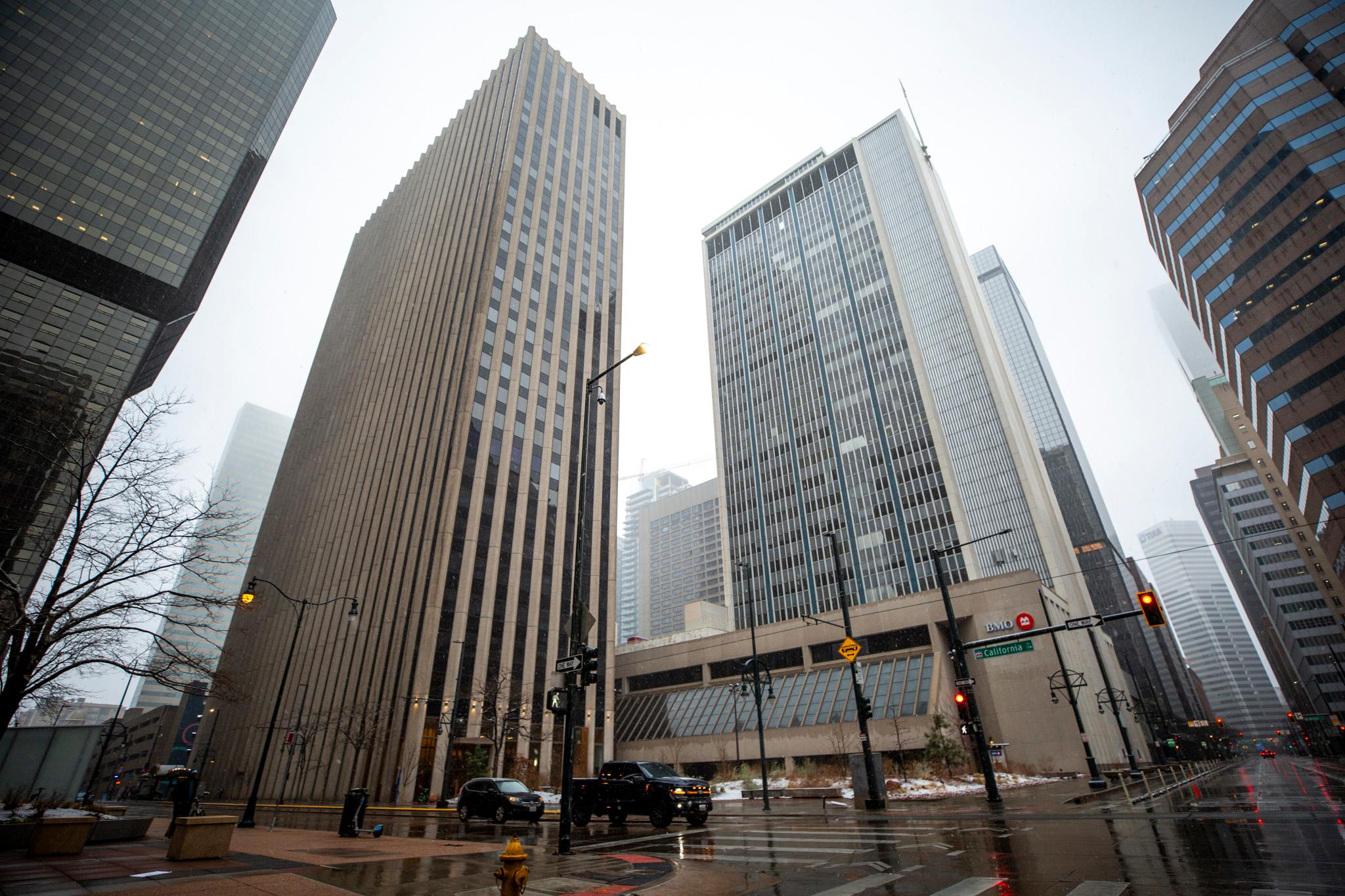
Most nights, the streets around the high-rise at 633 17th St. have been empty, save for a murder of crows painting the concrete with guano.
But on the last Friday in February, around 500 fashionable guests – artists, musicians, curators, city officials and more – walked like misfits through the empty corporate lobby, and took the ear-popping elevator ride to the 30th floor.
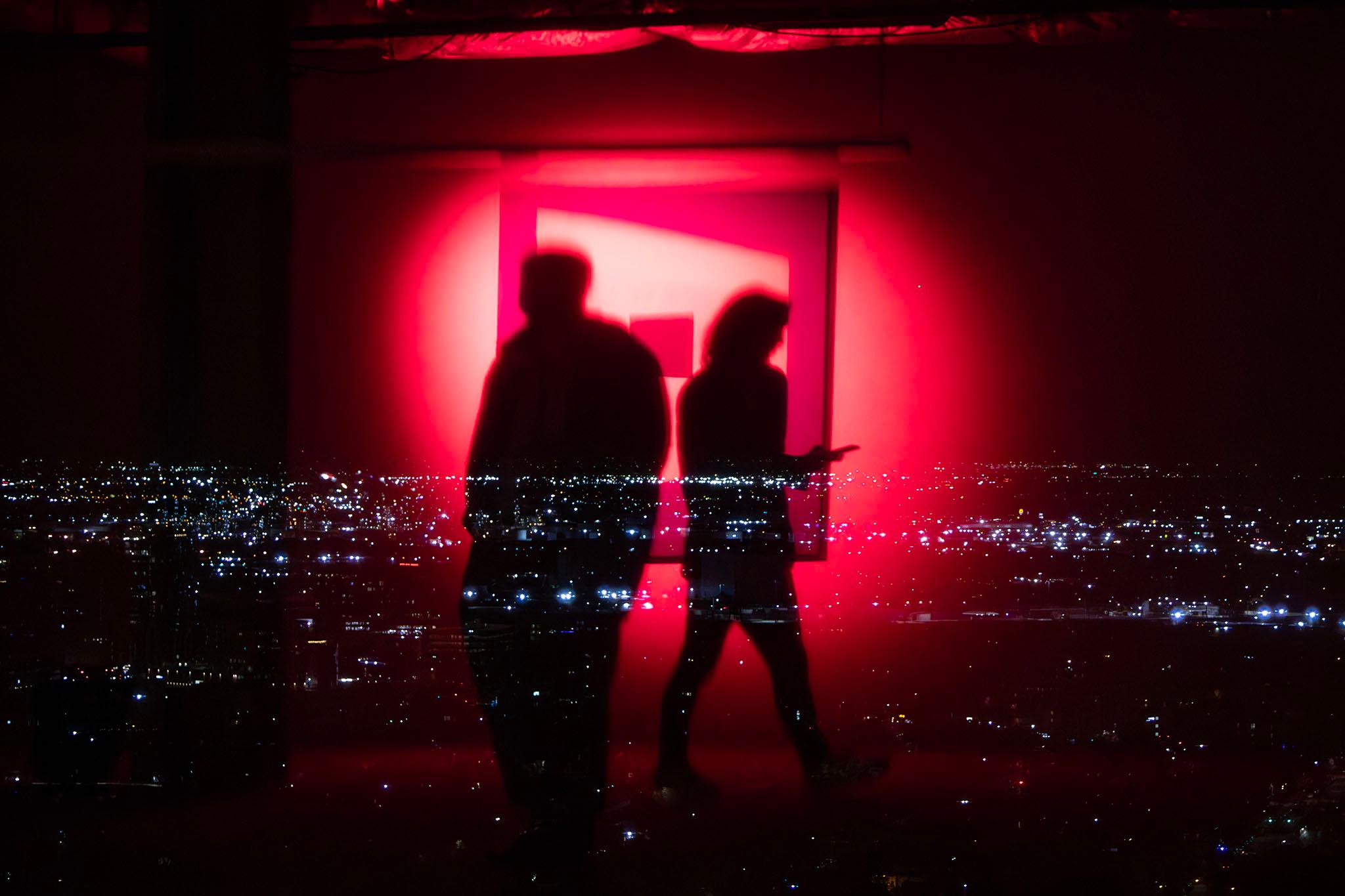
Two stories of gutted office space had been converted into a series of galleries dimly lit with colored lights. Solitary guests stood at windows, staring into adjacent office towers with floor after floor of illuminated emptiness.
They spent the evening gazing at geometric paintings that seemed to change as the colored lights shifted. Projections slowly unfolded on large screens in rooms that once rattled with keyboards.
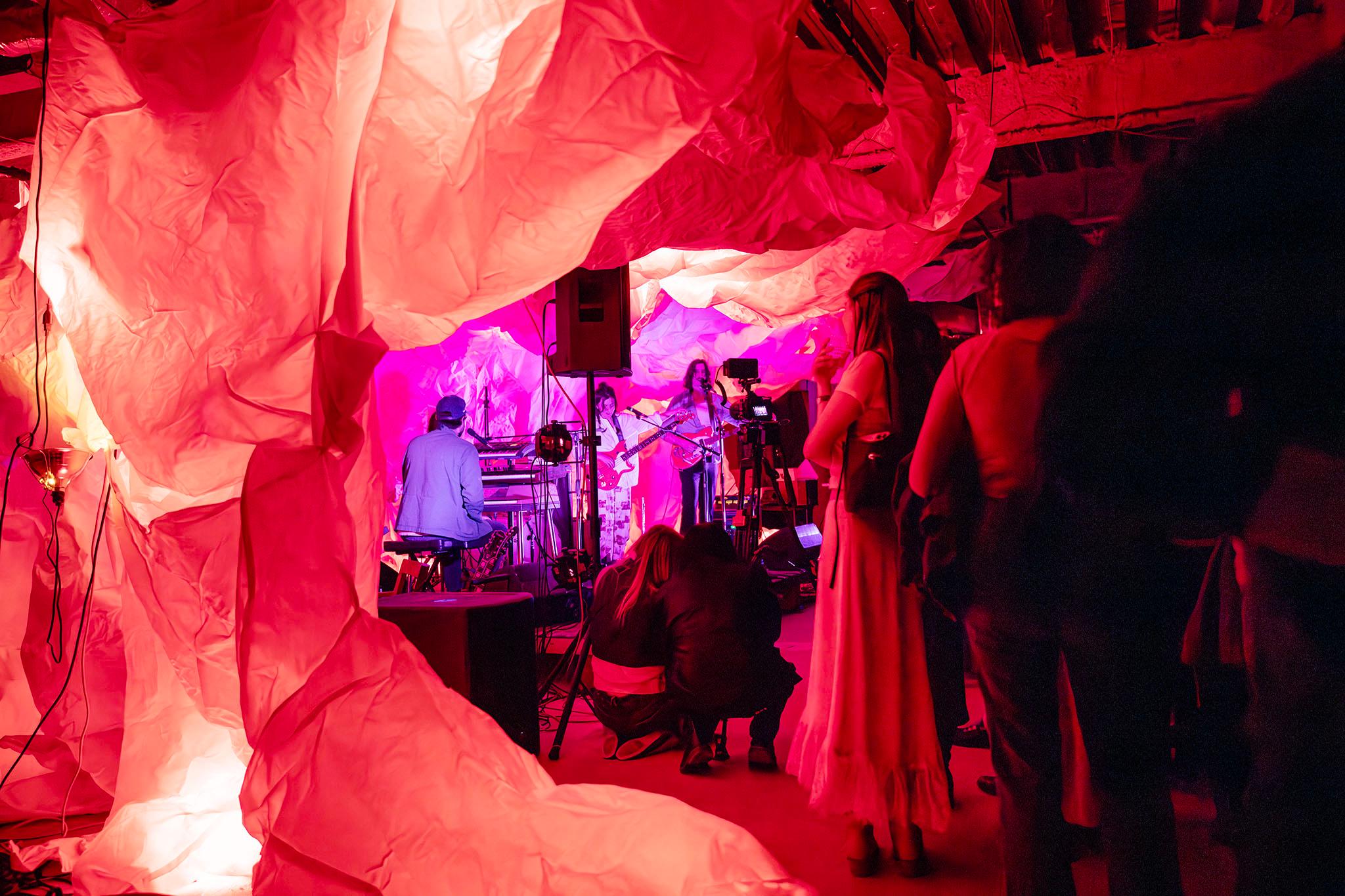
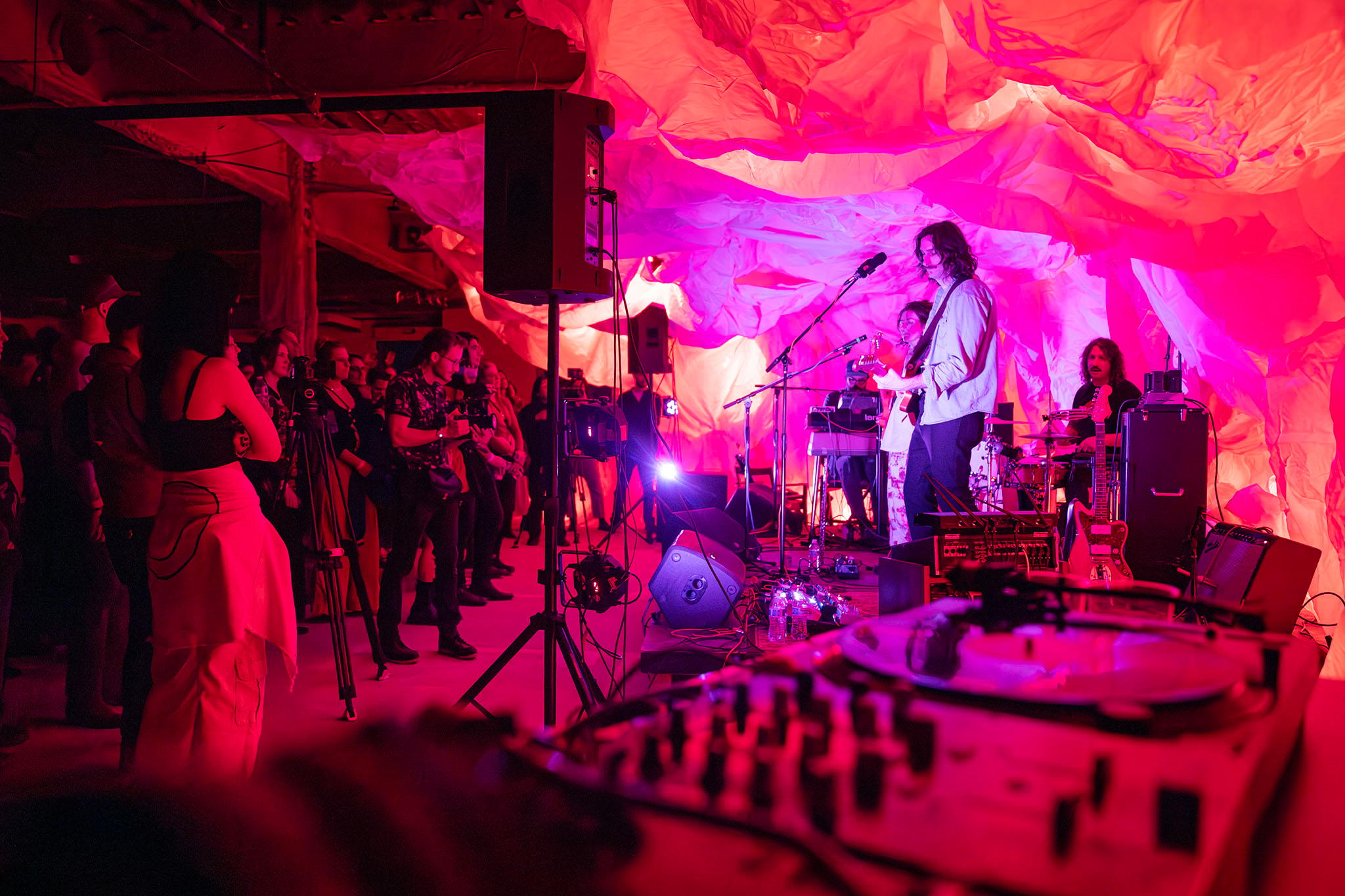
And in one corner of the desiccated cubicle farm, Davis led her musical quartet, Bluebook, in a joyful set as the crowd danced into the night.
For weeks, Davis and her partner, Joseph Pope III, had been preparing this unlikely downtown arts venue — a half-century-old office tower that, like so many, was emptied out by the pandemic.
The building’s owner, developer Asher Luzzatto, lent the space to the couple. His charge: create something sublime in an underused space.
Artists once had space in this city.
For years, artist-run venues sprouted up across Denver in warehouses and dilapidated living rooms, basements, garages and backyards. If a person wanted to do something creative, it was easy to rent space, and there were few rules to gum up the fun.
Those venues disappeared throughout the 2010s. They were shut down by stricter regulations after Oakland’s deadly Ghost Ship fire in 2016, or priced out by cannabis growhouses and a hot housing market.
Today, artists like Davis and Pope see another blank canvas — a wasteland of empty offices created in 2020 by remote work and slower growth.
“We were talking about this for years,” Davis said. “How can we get into some of these empty spaces?”
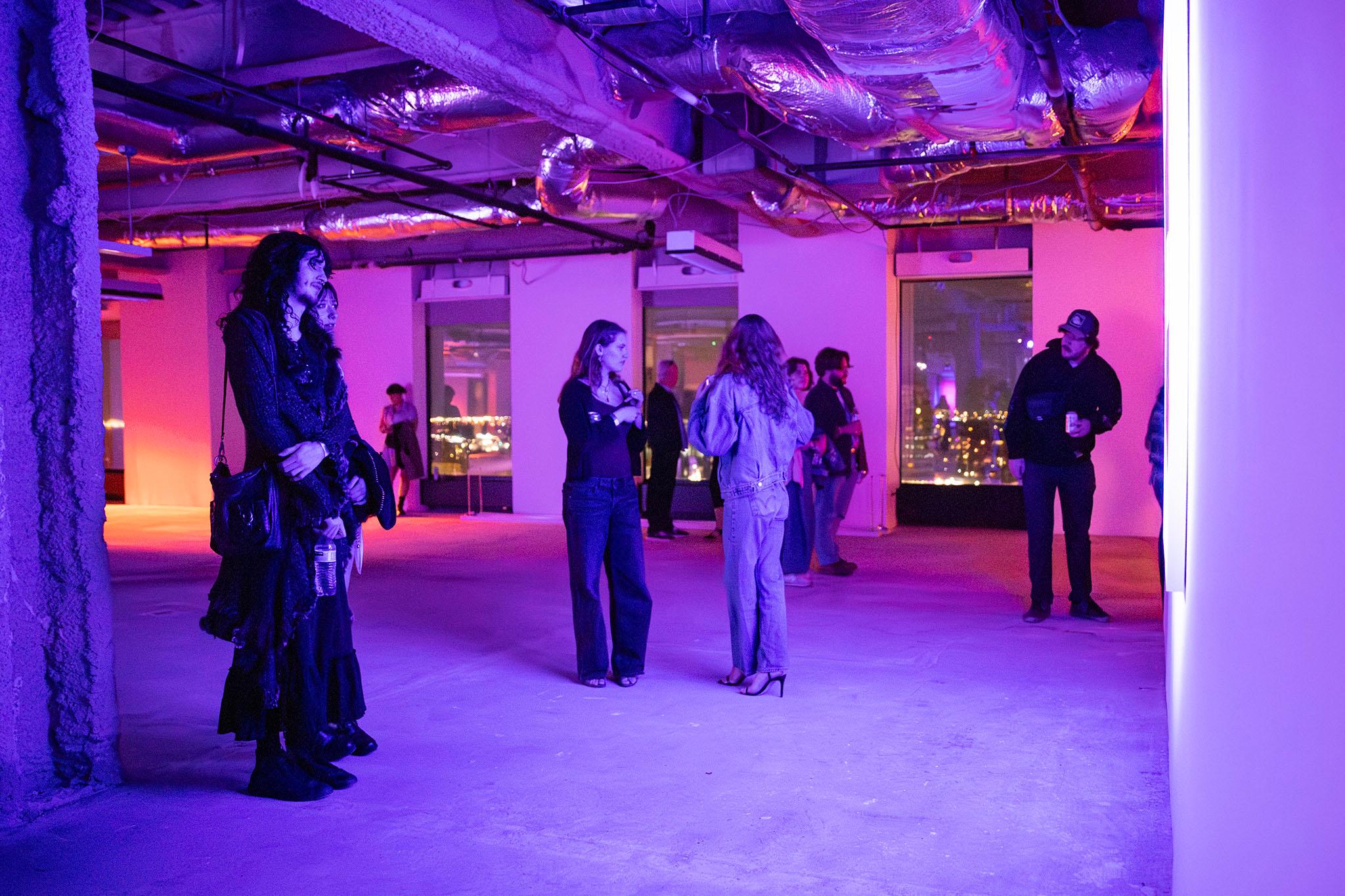
People interact with a Jeremy Roth installation during Sound / Sight / Space. Feb. 28, 2026. McKenzie Lange/CPR News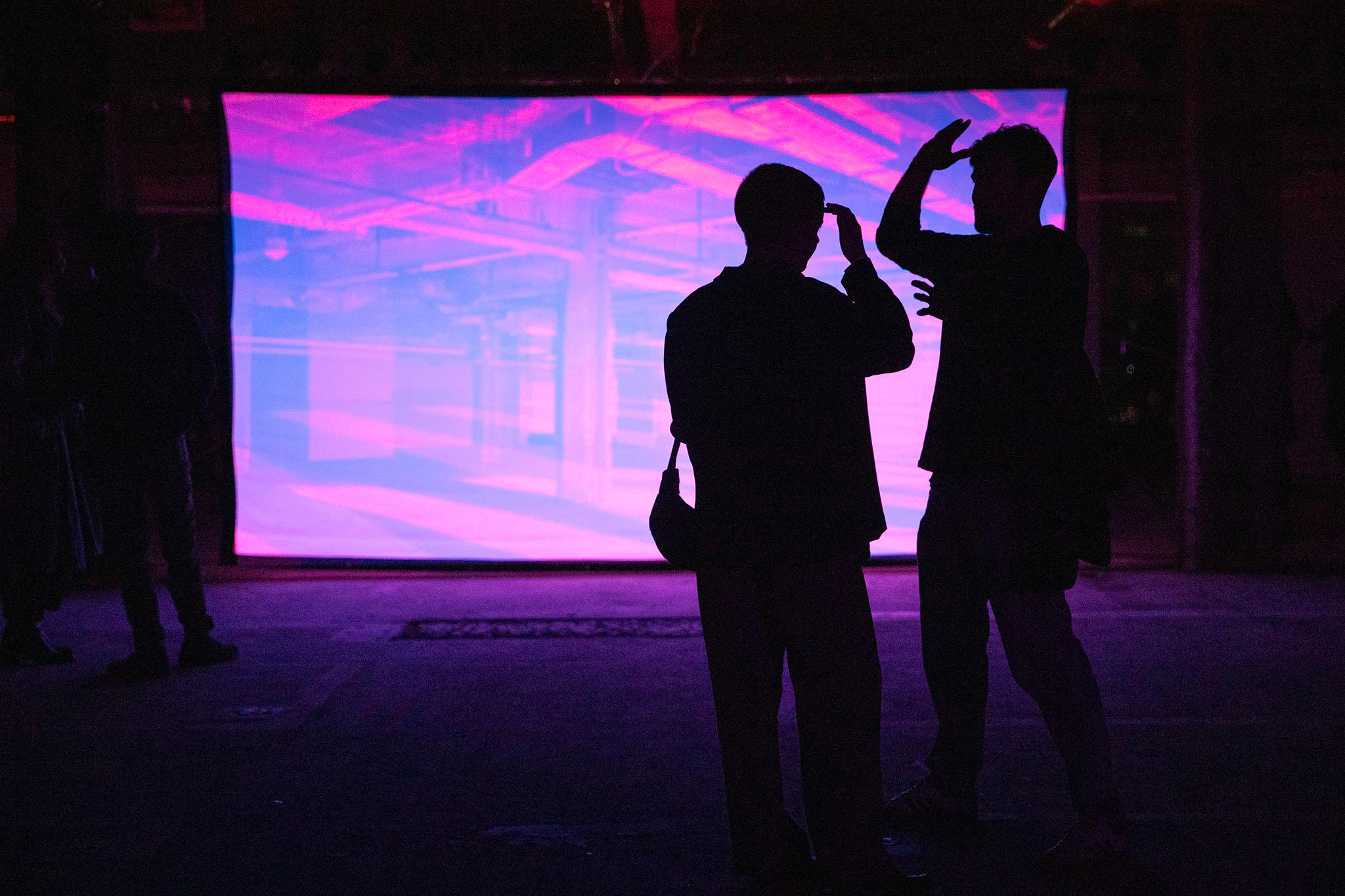
People interact with a Jeremy Roth, Jospeh Pope III, and Geoff Davis installation during Sound / Sight / Space. Feb. 28, 2026. McKenzie Lange/CPR News
Artists in New York, Detroit and other cities have built creative spaces in defunct commercial buildings when markets crashed. Denver itself had downtown DIY venues decades ago. Why not now?
Five years after the pandemic, nearly 40% of downtown office space remains empty in Colorado’s capital, according to commercial real estate giant CBRE. Luzzatto thinks the true number is even higher, perhaps even 60% unleased or unused. The office recovery has lagged far behind bigger tech-focused cities.
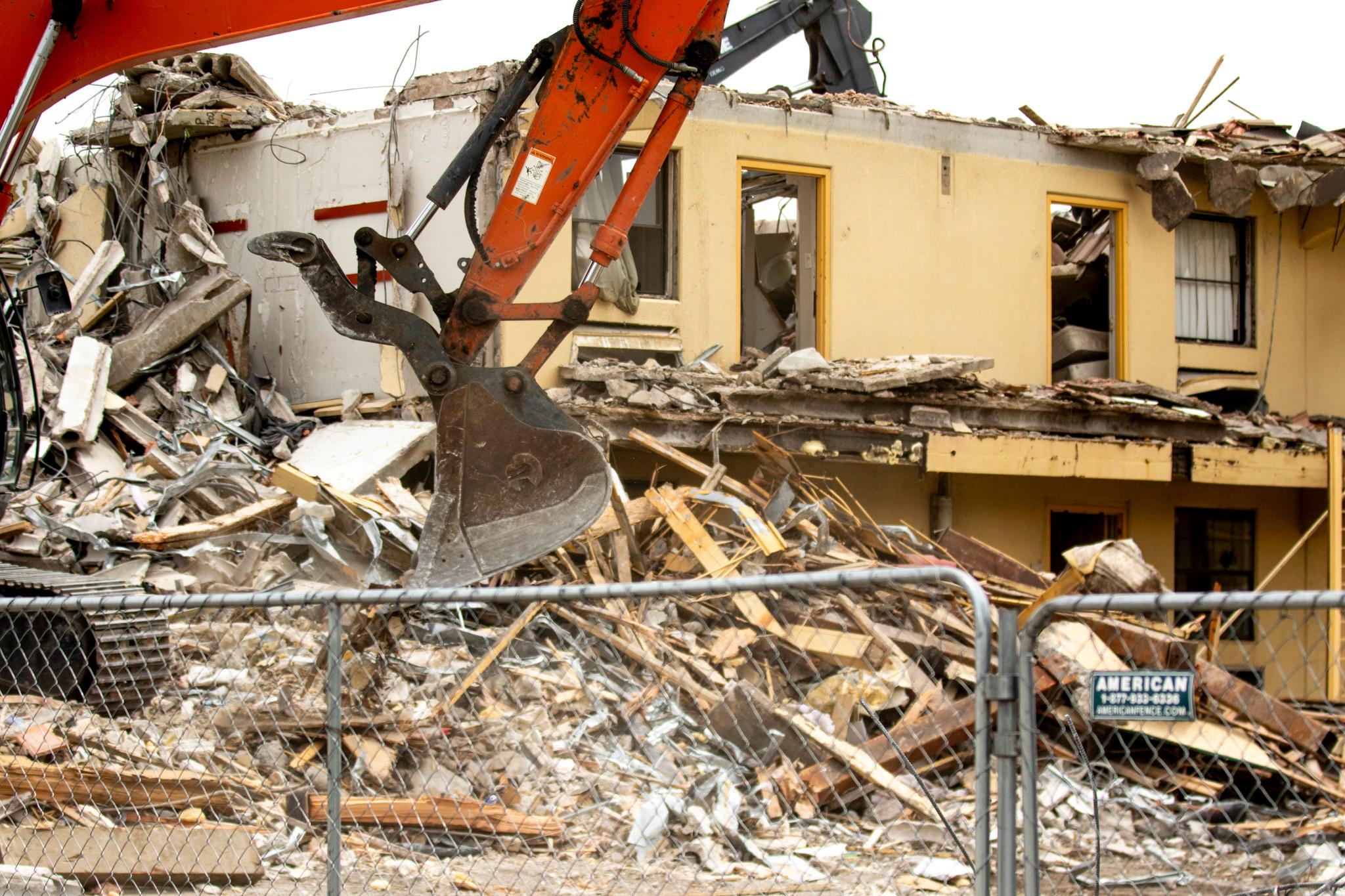
In response, developers have started taking drastic measures, like demolishing commercial space and turning it into housing. The Denver Downtown Development Authority has been dangling hundreds of millions to reinvent the city's core. Mayor Mike Johnston has talked about bringing daycares, nonprofits and, yes, artists into these cubes in the sky.
Getting inside, however, was a different story.
Serendipity and an open invitation
Back in September, Pope’s band, Nathaniel Rateliff and the Night Sweats, played a show in a park in Taos, N.M. The next morning, they went out to breakfast and met a baker — a chance encounter that would shape their next six months of work.
They got to talking about their creative aspirations with the man, how they wanted to find a big, empty space and create an installation rich with sound, light and music.
The baker picked up his phone mid-conversation and connected them with Luzzatto.
The developer had just purchased four downtown Denver office buildings at deep discounts. With the office market in shambles, he paid just $3.2 million for the tower that later hosted the party, as well as its twin next door. They were once known as the First Interstate towers.
He had big plans to convert the paired towers and his other acquisitions into 1,000-plus units of housing, a bodega, galleries, reading rooms, meditation and yoga rooms, gardens and a children’s museum. The 17th Street project alone could total $300 million, he estimates. In an interview with Denverite, Luzzatto said he hopes to host as much art and music as possible.
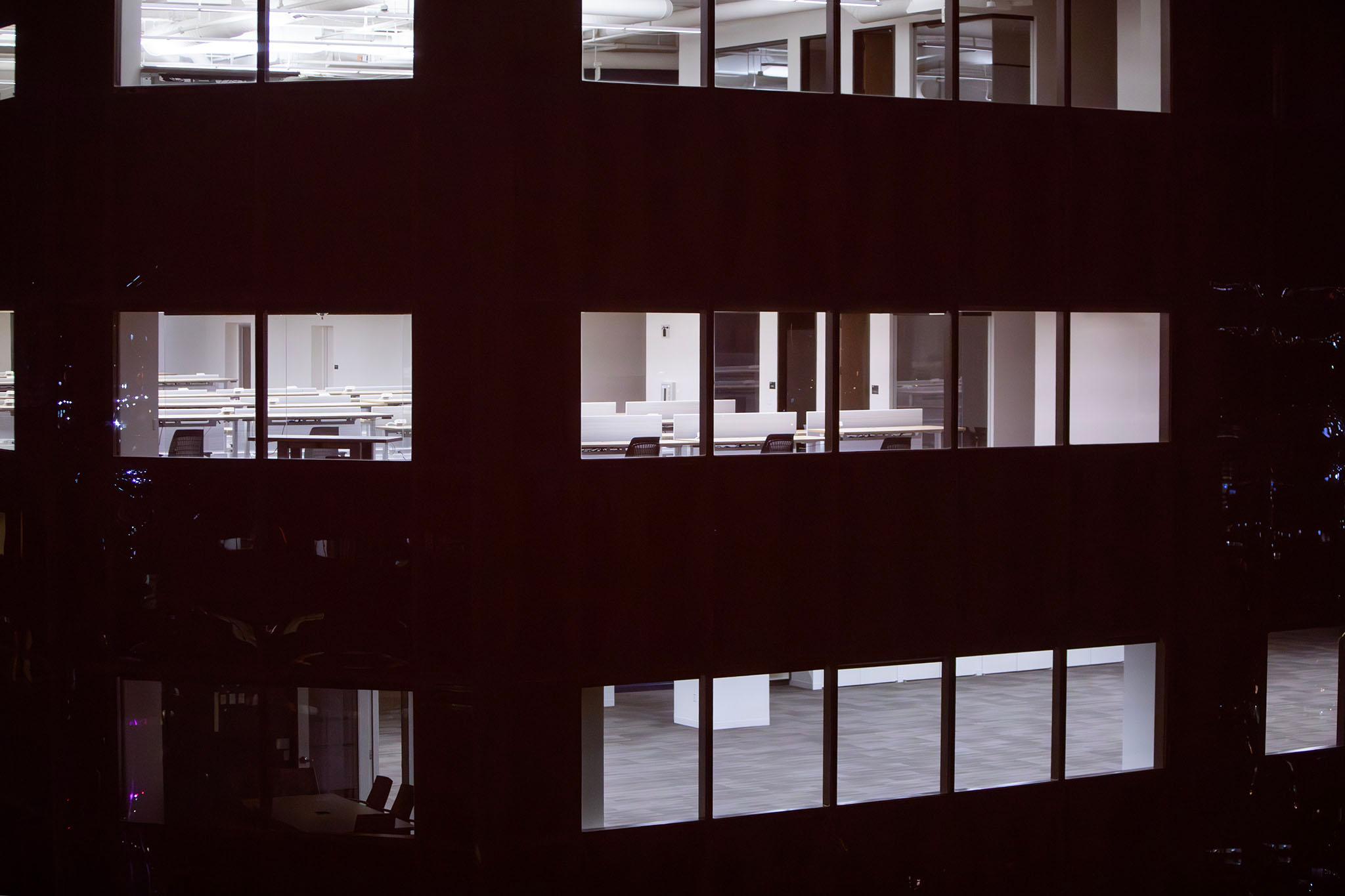
“I think there is a natural cycle of death and rebirth in anything in this world,” Luzzatto said. “And I think that Denver is fortunate to actually be going through a true natural cycle of death and rebirth, and there is basically nothing propping it up.”
The office workers would never return, he said. The idea of a Central Business District — the official name for the downtown neighborhood — should be abandoned.
If downtown is to thrive, it needs more than offices and chains. It needs all the amenities of a neighborhood and culture to enjoy.
Luzzatto and Pope bonded fast, and the developer handed over the coolest space he had for the couple to do something extraordinary: the 30th floor.
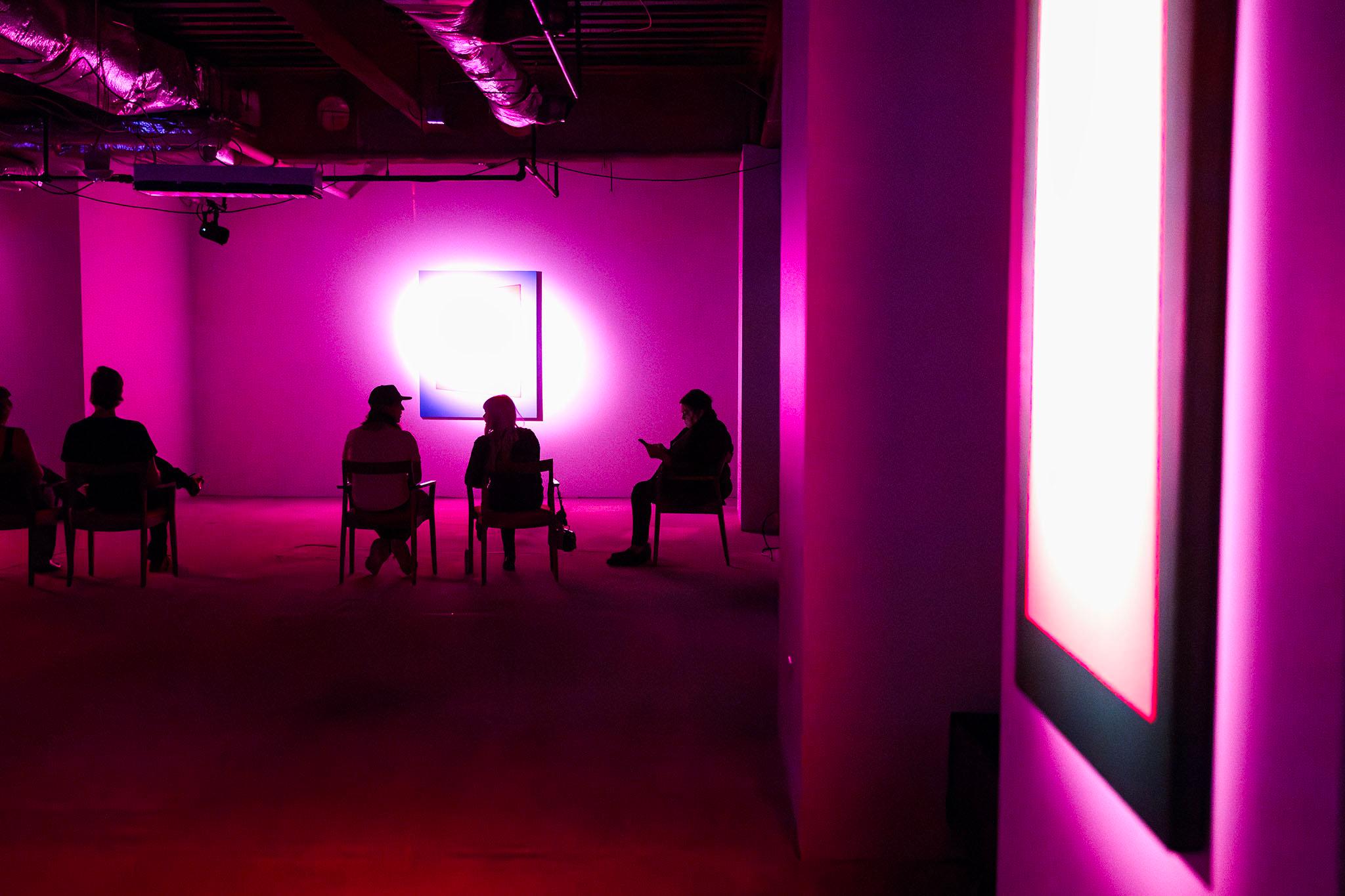
Abandoned downtown
Pope and Davis returned again and again to the high-rise from their home in Baker, admiring how the light spread across the empty floors. They carted lamps and screens and paintings, sound gear and white paper to craft a shell for a stage.
It took weeks and thousands of dollars. They planned the party for the last Saturday in February, only announcing the location days before the event.
Bands would play music. Artists would display their work. Friends would dance.
The people lucky enough to be at the event would enjoy a building generally off-limits to the public, caught between its past life as an office space and a potential future as apartments, with views of the skyline once coveted by the corporate elite who abandoned their corner offices and brought their work home.
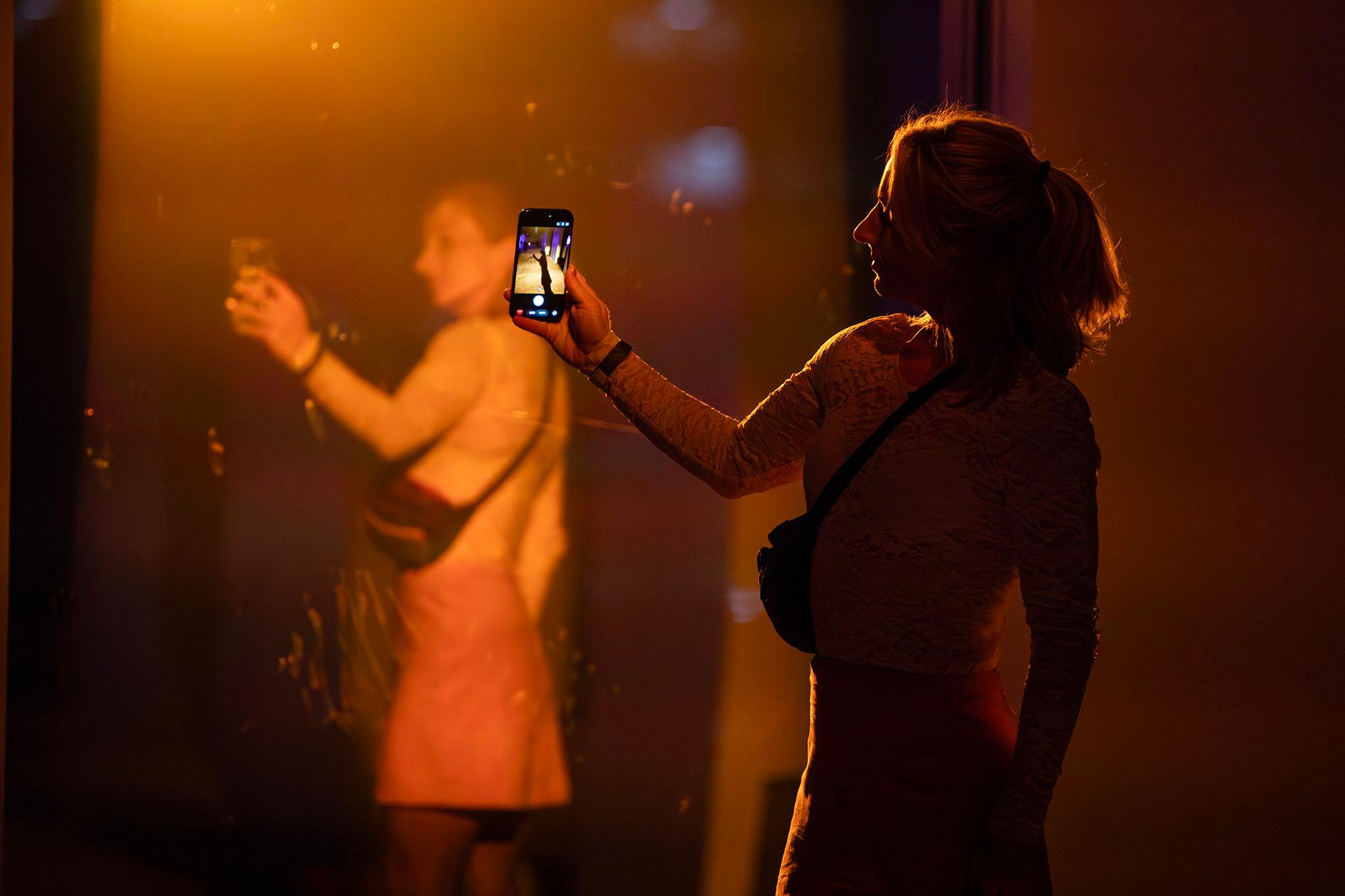
A renaissance
The night of the event, red light seeped from the 30th floor of the darkened tower as people lost themselves in art, music and vertigo-inducing views of downtown.
Bluebook, often mournful, played an upbeat set. Then people flooded out, and Davis and Pope enjoyed a dance party with their friends that lasted long after midnight, until security finally asked them to leave.
Friends told Davis how grateful they were.
“This is old Denver,” people said.
“No,” she replied. “This is new Denver.”
The city has been in mourning for years: missing people lost to the pandemic, artists and musicians who moved on or died, beloved DIY venues and businesses that dissolved, neighborhoods gentrified and an entire downtown corporate economy that collapsed.
“We’ve lost so much,” Davis said. “But we can come back together.”
Perhaps, she thought, this night could be the beginning of a renaissance.
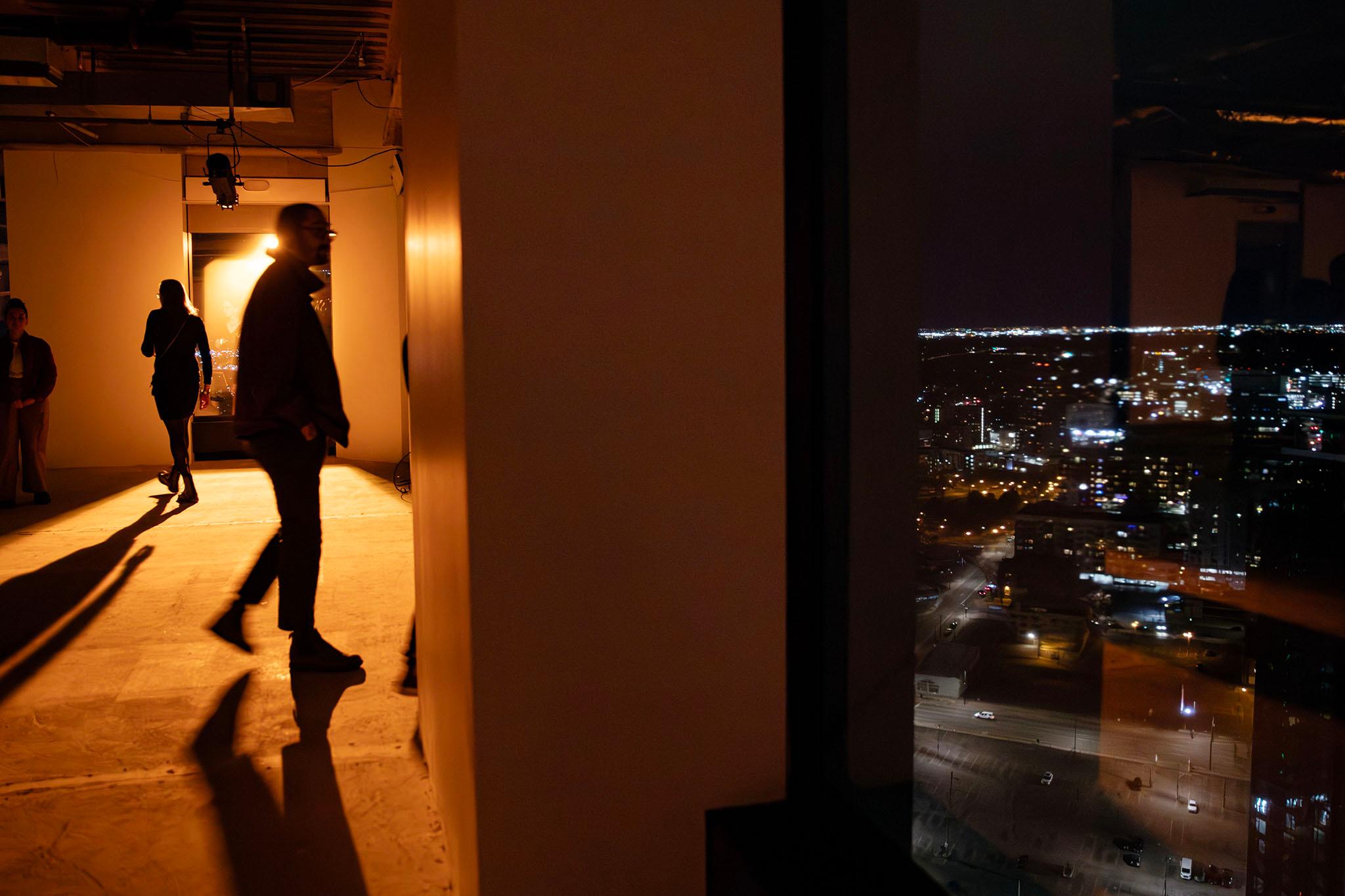
Sound / Sight / Space, a one-night immersive convergence of music and installation inside a vacant 30th-floor office space in downtown. Feb. 28, 2026. McKenzie Lange/CPR News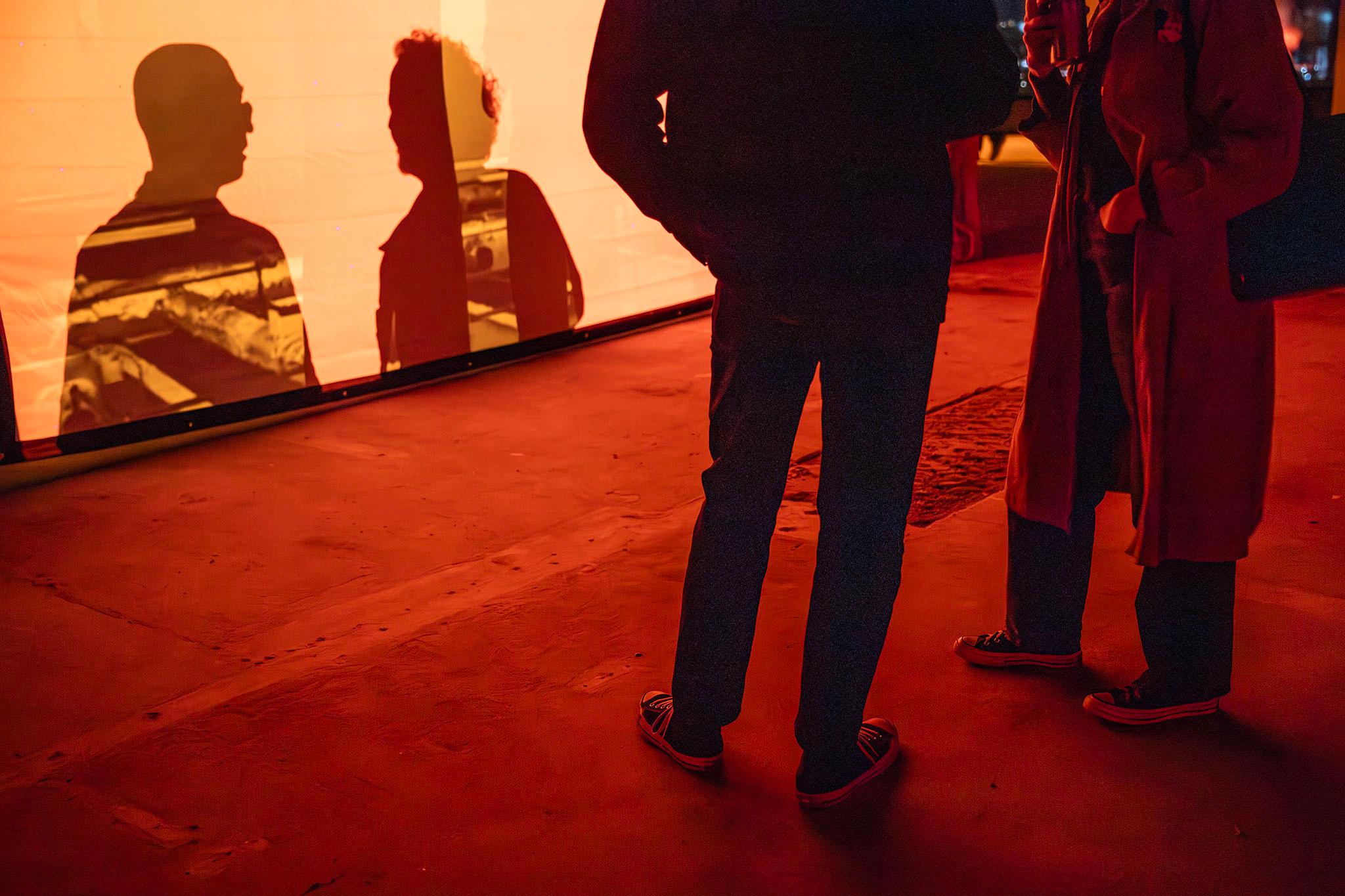
Sound / Sight / Space, a one-night immersive convergence of music and installation inside a vacant 30th-floor office space. Feb. 28, 2026. McKenzie Lange/CPR News