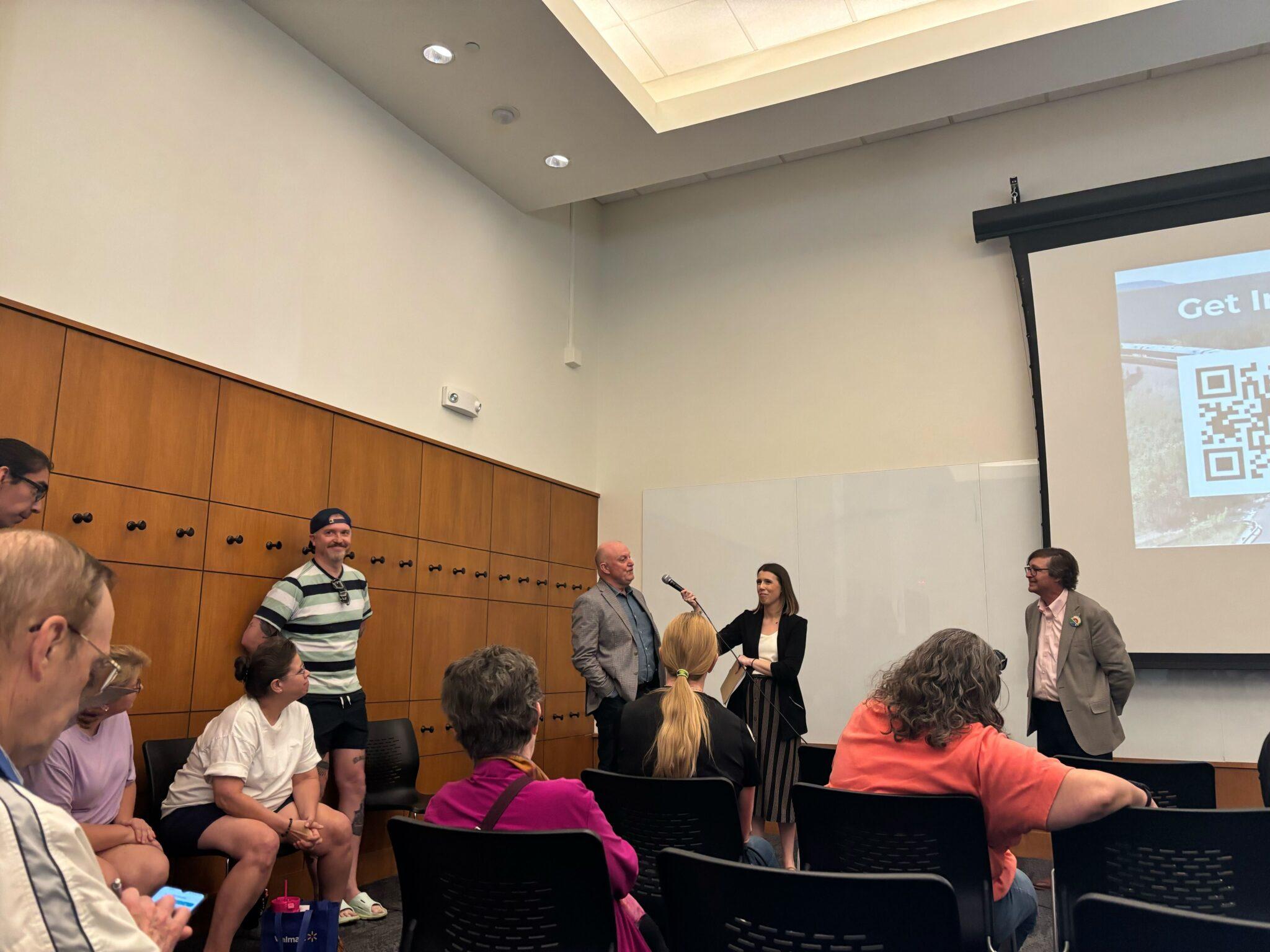
Dozens of people packed a Denver library room on Thursday to hear about plans and offer some ideas for a planned new rail service along Colorado’s Front Range.
The Front Range Passenger Rail project aims to build high-speed intercity rail connecting Pueblo, Colorado Springs, Denver and Fort Collins, as well as smaller cities such as Castle Rock and Longmont in between. The long-term goal is to reach the Wyoming and New Mexico borders.
People raised concerns about safety at rail crossings, funding for the project, how to give feedback and — most fun — the name of the train.
Coloradans can vote on four choices in the state’s naming contest:
- Colorado Connector, or CoCo
- Front Range Express Destinations, or FRED
- Colorado Ranger
- Rangelink
So, who’s paying?
The passenger rail plan would be implemented in two different phases.
The goal is to launch an initial service with three daily round trips from Denver to Fort Collins by 2029. With an estimated cost of $800 million to $900 million, officials say it wouldn’t require a new tax for funding.
The second phase would extend down to Colorado Springs and Pueblo — but only if voters approve a new sales or property tax for funding. State officials have estimated building it out could cost $3 billion to $3.5 billion, while critics argue it will cost much more.
The state legislature created the Front Range Passenger Rail District in 2021.
The project is in its "heavy lift" phase, according to Alex Funderburg, passenger operations manager, with CDOT. The project is in the planning and development phase, and once it's done, the district can introduce a plan for voters to approve.
The district will complete a service development plan this year. Service to Fort Collins could cost $900 million
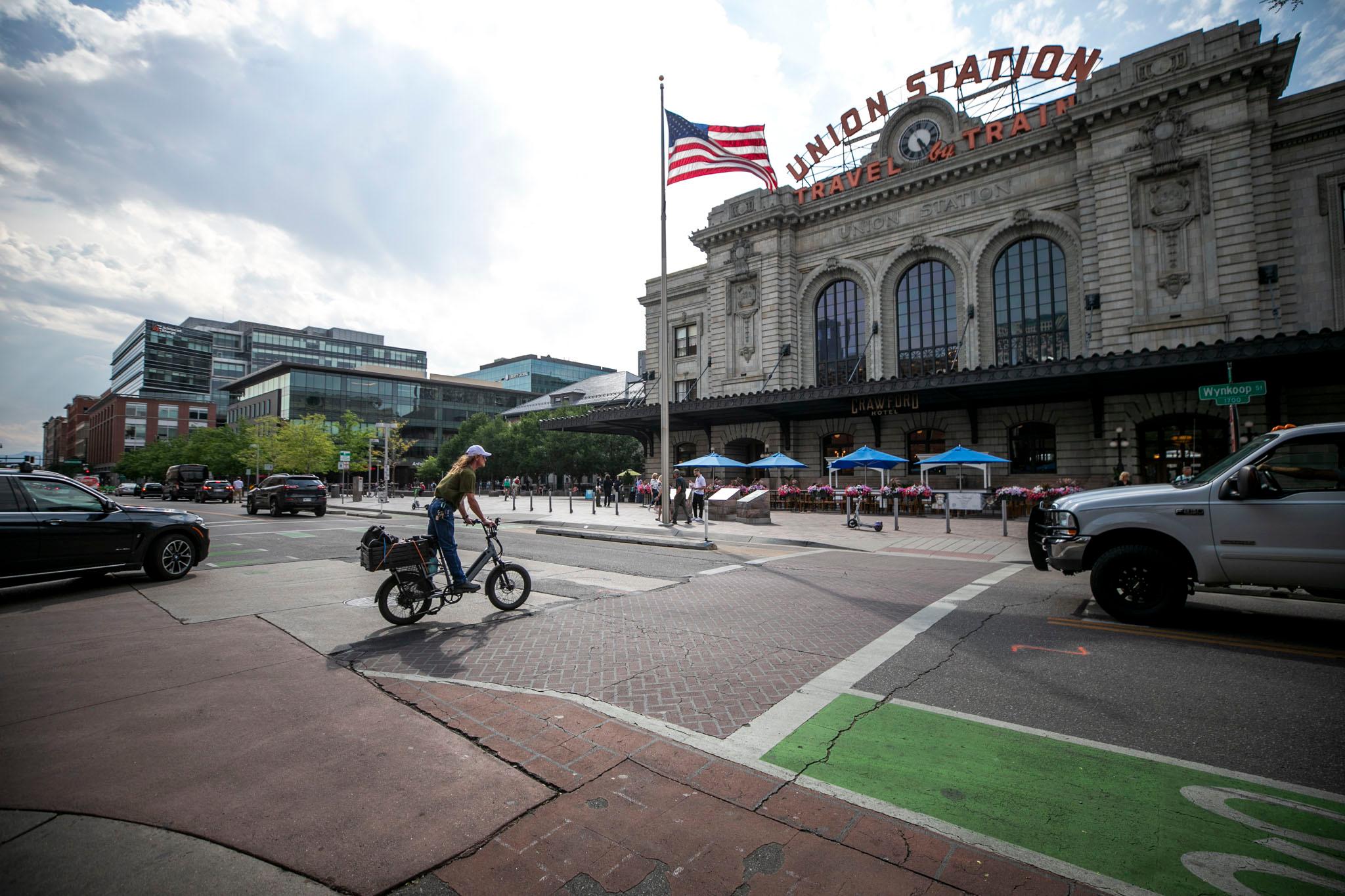
James Flattum, advisory consultant for the service’s Denver station, pointed to a picture of Union Station and asked people to imagine a future with Front Range rail.
“When you stand here, you can kind of visualize what it would look like to be able to stand on this platform and catch a train not just within the Denver metro area to Thornton or the airport, but hop on a train and go all the way up to Boulder, go all the way up to Fort Collins, down to Colorado Springs and Pueblo,” Flattum said.
Community concerns
The meeting was held at Blair-Caldwell African American Research Library. Some were excited about the plans, while many had questions.
One community member present wasn’t happy with the choices and was also concerned about the funding of the train taking away money from health care.
“As far as this being an alternate route for transportation, can we possibly try to stay away from other budgets like Medicaid? Because right now legislation is cutting Medicaid specifically to caregivers for our seniors to stay at home and in the communities and it's much more expensive in institutions or other facilities,” a community member who didn’t share her name said during the Q&A portion of the community meeting.
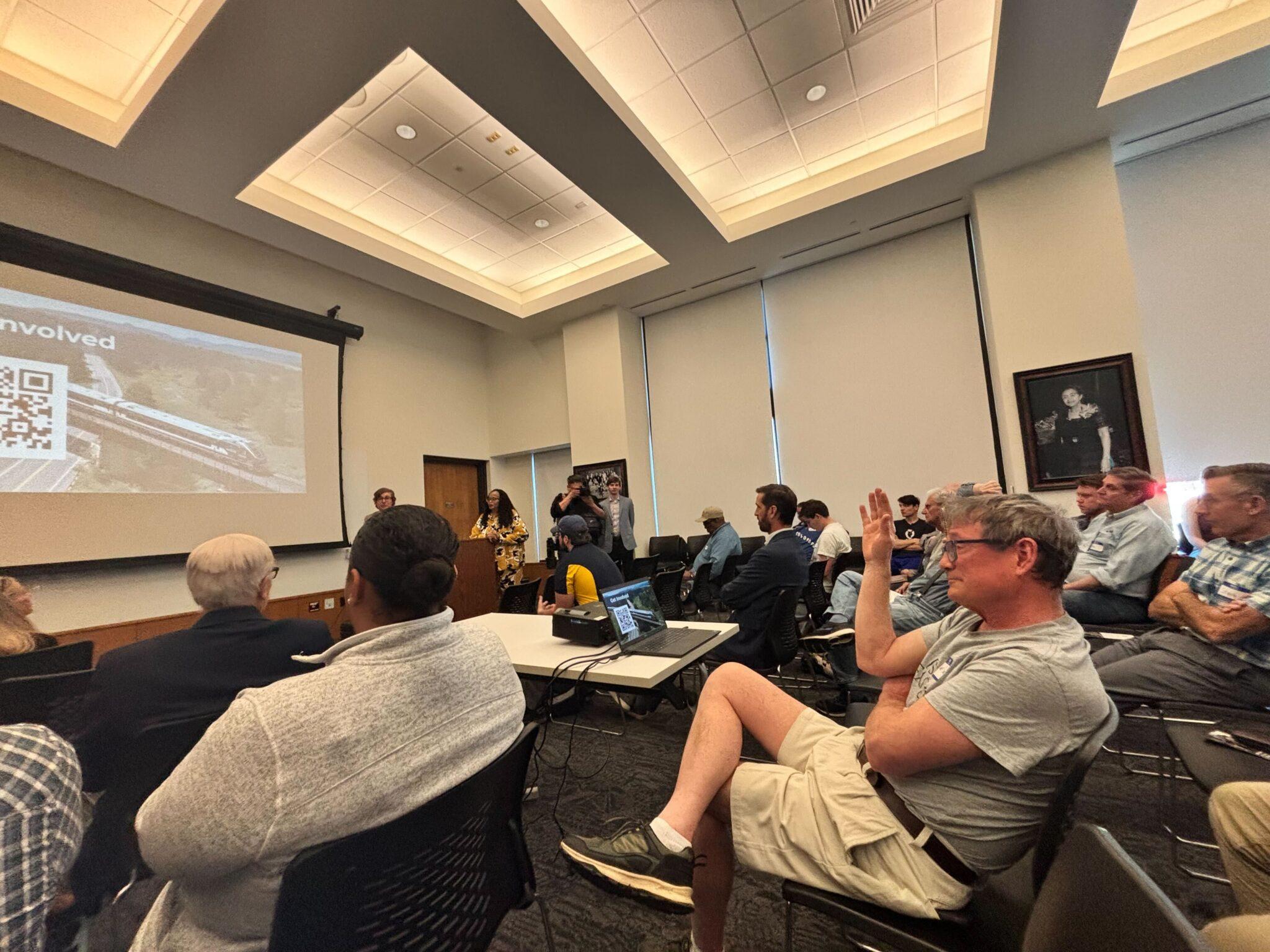
John Putnam, a senior advisor for the Colorado Department of Transportation, said rail funding wouldn’t affect Medicaid or other services like the Regional Transportation District.
Others had similar objections.
“Why should the people in this state pay for another regressive value, which is going to harm lower-class people when we're already in tremendous financial difficulty?” a man asked.
Putnam said rail is a lower-cost alternative — arguing it’s a new option for those who don’t own a car.
“I look forward to hearing more specifics because there are not that many out there now. I like the idea of a passenger rail,” said attendee Robert Chase. “You seem to be suggesting that the run all the way to Fort Collins would be done in two and a half years, building many stations that do not exist, upgrading the track for positive train control. Count me a skeptic."
The next Denver town hall is March 25.