
For the last three months, one of Denver’s most prominent Starbucks locations has been on a partial strike — part of a national movement that was the longest labor action in the chain’s history.
Most days, the store on 16th Street downtown has buzzed along with its usual corporate cheer. But on some days, a picket line assembled out front, with baristas holding signs that encourage people to boycott.
The strike continued from early December until Monday, though it did not close the store. Employees of the Denver location carried on their protest for three months. More than 100 stores participated in the national “Red Cup Rebellion” that began in November.
But the Denver crew still hasn’t achieved its central goal. The organizers hoped to force Starbucks to finally bargain a contract with the store’s workers, who unionized in May 2022.
“When I realized that there really was no difference between a corporate store and a unionized store because of the lack of contract, I realized that I have to fight for the contract,” said Lucille Wayne, a 16th Street employee and strike captain, in January. “We don't have that contract, and so I don't get to see the benefits that come with having that signed contract.”
It wasn’t immediately clear whether other stores also had ended their strikes. The publication The City reported in February that workers in New York returned to work without a contract as well.
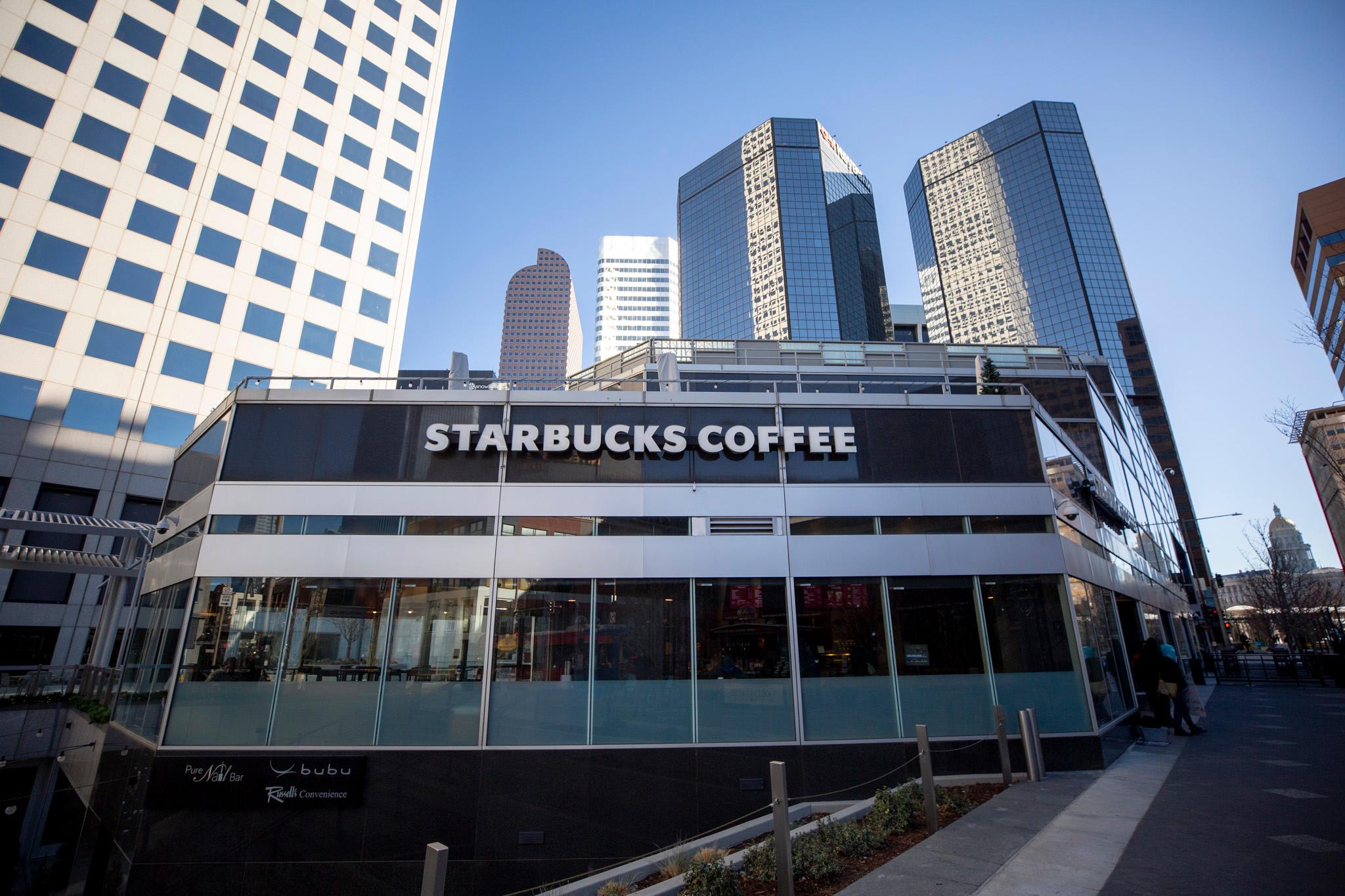
In Denver, some baristas have refused shifts or been off the schedule since early December. Wayne and her colleagues are part of Starbucks Workers United, a campaign under Workers United. The union represents more than 300 Starbucks workers in Colorado.
“They’re stonewalling us and have refused to negotiate a contract that works for both of us,” Wayne said. “Right now what we're focusing on is getting support and getting the company to pay attention to us because we're not going to back down just because they're not acknowledging us.”
Participating workers were able to keep their jobs and health care despite refusing or calling out of shifts because of their union protections, organizers said.
This isn’t the first Denver Starbucks location where management has been accused of union-busting tactics. In 2023, the barn-shaped Starbucks on Colfax fired an employee who was encouraging others to unionize. A judge with the National Labor Relations Board ruled that Starbucks engaged in unfair labor practices. It was one of 11 Colorado stores that closed last year.

Jaci Anderson, a spokesperson for Starbucks, said the company has met with the union several times.
“Since last April, Starbucks and Workers United have held more than nine bargaining sessions over 20 days and three mediation sessions over five days with a federal mediator. We've reached over thirty meaningful agreements on hundreds of topics Workers United delegates told us were important to them,” Anderson wrote in an email. “We are ready to finalize a reasonable contract for represented partners, but we need the union to return to the bargaining table to finish the job.”
According to the union’s website, there are still three unaddressed demands: increased hours, higher take-home pay and resolutions to unfair labor practices.
Customers at the store on Tuesday weren’t eager to talk, but one man said he had brought handwarmers to support picketers throughout the strike. Now that the action was over, he was ready to come back.
Not everyone can afford to strike
Only some of the employees at the 16th Street location could afford to strike, Wayne said.
“We did have people that were not able to join because of financial reasons, and that's kind of a big reason why we're out there,” she said. “The fact that people can't support the strike because they're living paycheck to paycheck really did not sit well with me. And so I definitely wanted to be out there for my coworkers who couldn't.”
Hourly baristas make an average of $30 per hour when they work 20 hours per week, according to Starbucks, though the union did not confirm those numbers.
The workers received support from U.S. Sens. Michael Bennet and John Hickenlooper. In a letter to Starbucks CEO Brian Niccol, they called for an end to union-busting and for Starbucks to move along in contract negotiations.
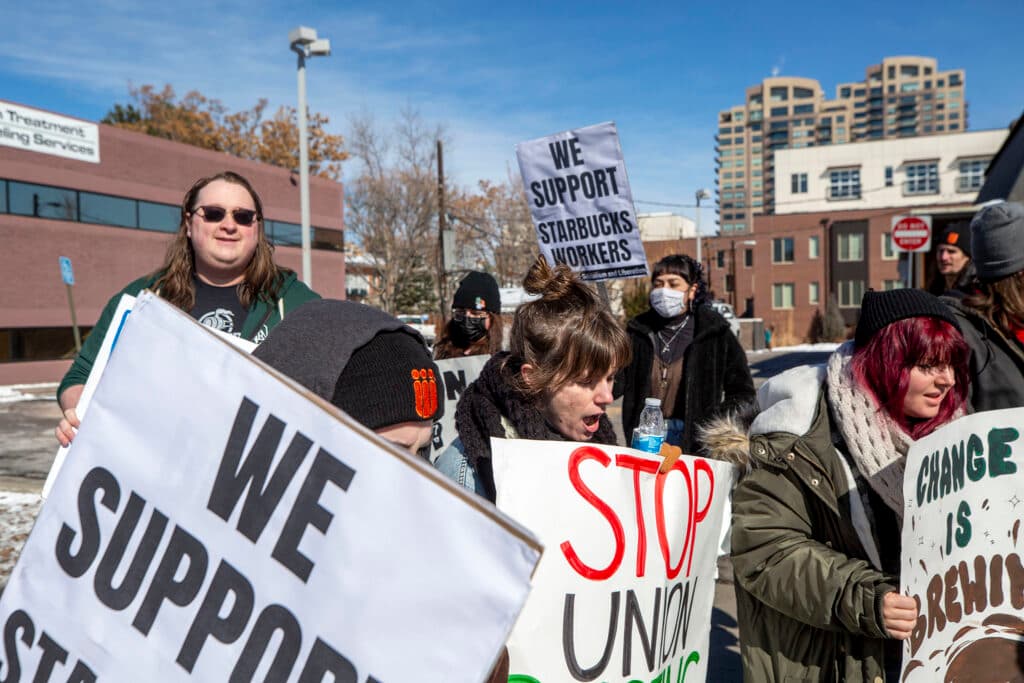
“We are writing to express concern regarding Starbucks’ failure to reach a fair first contract with its baristas,” the letter said. “We are troubled by reports that since you started your role as CEO in September 2024, the company has failed to put forward a serious economic proposal, backtracking on the previously agreed-upon path forward.”
Councilmembers Sarah Parady and Chris Hinds joined the group during the Unite the Unions rally in January at Civic Center Park, as did several state lawmakers.
Niccol was previously CEO of Chipotle and oversaw the decision to move that company’s headquarters from Denver to California.
Health care has kept some employees at the company
Wayne said there’s one reason that she’s kept working at Starbucks for nearly two years.
“I am at Starbucks specifically for gender-affirming care,” she said. “The main reason I have this job is for gender-affirming care through health insurance at Starbucks.”
Beginning in 2013, Starbucks began offering insurance that covers gender-affirming surgeries and in 2018 it expanded the coverage to affirming cosmetic surgeries.
In 2022, Bloomberg reported that Starbucks threatened to pull gender-inclusive health care from stores looking to unionize. Starbucks released a statement denying those claims.
“It's very frustrating because if they can pay their CEO $96 million for four months of work, why can't they give their employees the affirming care, the lifesaving care they need? So yeah, definitely it impacts the cause,” she said. “I always say that trans rights are labor rights and they go hand in hand. Without all of us being free, none of us are free.”
The union confirmed on Monday that the strike had ended, but didn’t comment further.
“The ultimate goal is to get that first contract and for Starbucks to resolve their unfair labor practices,” Wayne said.