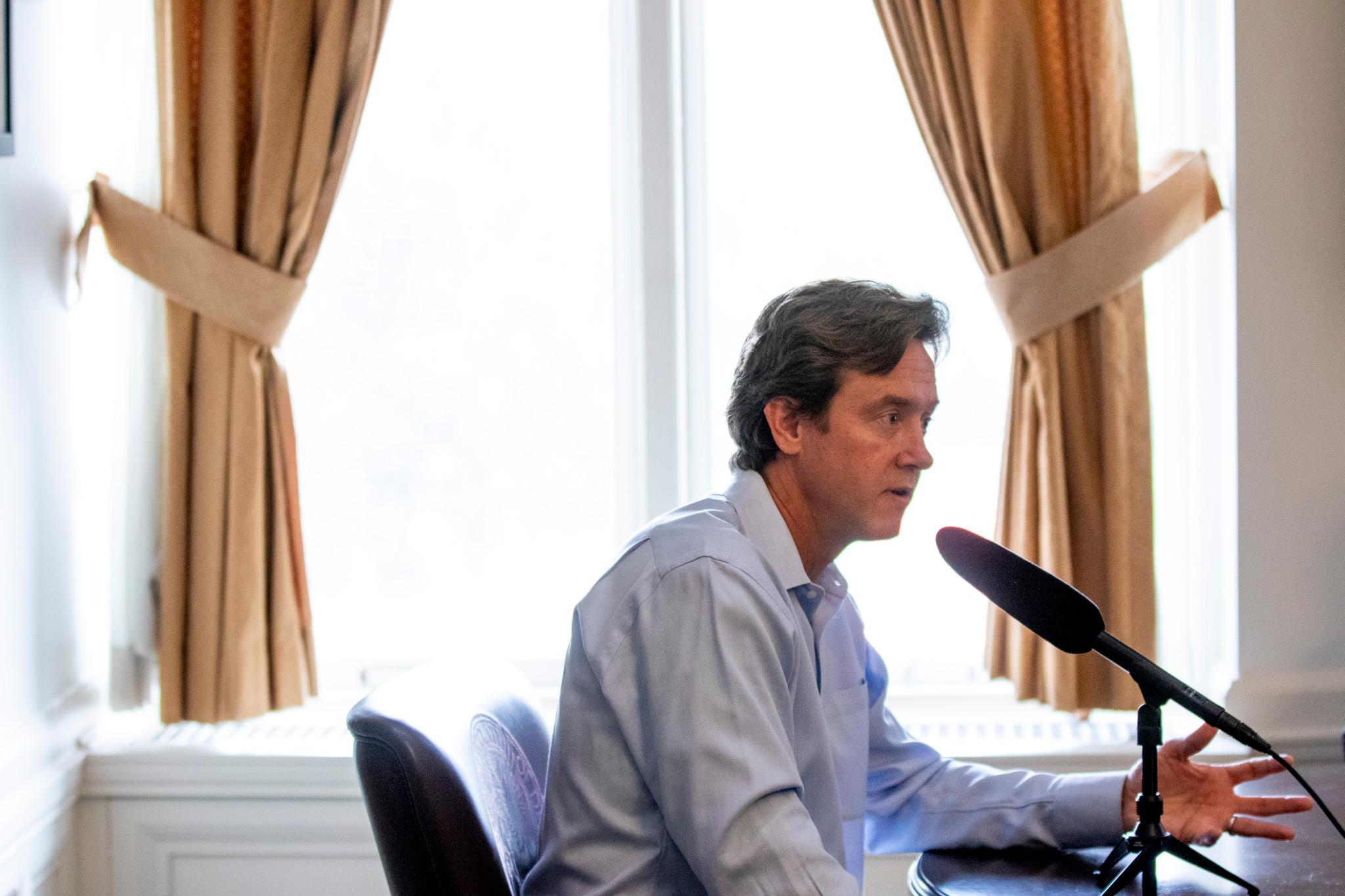
Mayor Mike Johnston says the city of Denver will make some significant changes as it considers future bus rapid transit projects on Colorado Boulevard, Federal Boulevard and other locations around the city.
“I want to make sure we really hear from all the residents on these corridors to know that they're deeply supportive before we go forward, because it does have an impact,” Johnston said in an interview with Denverite and Colorado Matters on Wednesday.
The city’s current blockbuster construction project — bus rapid transit on Colfax Avenue — has drawn criticism for disrupting businesses.
Johnston signaled that the city’s support for those projects would hinge on local feedback. And he also said the city would push for a significant design change compared to the Colfax project, which was planned before Johnston took office.
The Colfax project is placing dedicated bus lanes in the center of the avenue. Center-running lanes are generally seen as the superior choice for speed and reliability, in part because it keeps the buses away from turning vehicles, sidewalk dropoffs and more.
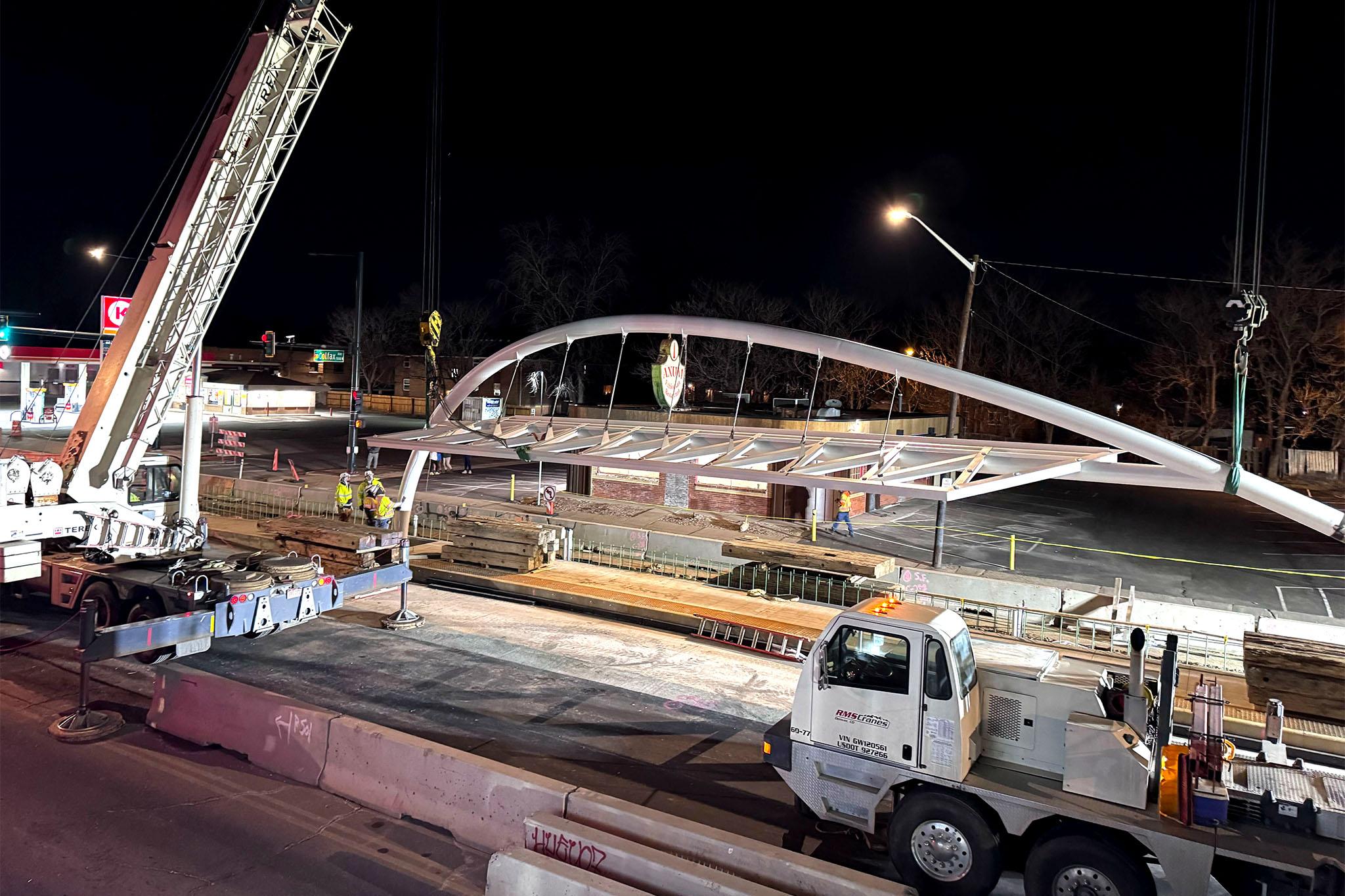
But Johnston said the center-running design has hugely complicated the Colfax project.
“I think there are some lessons we're going to learn from Colfax. I would be surprised if we ever did a center-running bus rapid transit again; that's what's caused the massive impact on construction costs, timing, digging up streets,” he told Ryan Warner, senior host of Colorado Matters.
Johnston suggested that future designs would still have dedicated lanes for buses, but would move them to the side of the road. He argued that careful timing of traffic signals would ensure “it's always green when the bus comes.”
Johnston continued that “the biggest promises of bus rapid transit is reliability, easy loading and continuous movement with the assistance of signal timing. You can do that without having to dig up the middle of the street the way we did on Colfax.”
Colfax, Colorado and Federal are all state highways, meaning their BRT projects are run by the state.
“We're obviously a partner because we got to give them the permits to do it, so we'll certainly have a voice in it. The state's leading conversations about those places,” Johnston said. “I just want to really make sure that the businesses know exactly what the design is, the residents know exactly what the design is and they really want it, and that we can really minimize construction impact as much as possible.”
A transcript of the full interview, including questions about homelessness, police brutality settlements and more is below.
Read the interview
This interview transcript has been edited for clarity.
Ryan Warner: On a night in January, there was a metro-wide count of folks experiencing homelessness. They've just released the results of this annual endeavor: 6,400 people in Denver County. The vast majority, 92%, were in a shelter; the rest were not. Where's the progress in this and where's the potential?
Mayor Mike Johnston: We feel great about the progress. The headline is over the last three years, we've now reduced street homelessness by 64%. That is the largest reduction of any city in American history.
Warner: And that term, street homelessness, means folks who were not in a shelter of any kind.
Johnston: Correct. So I'm glad you asked Ryan, because there's a distinction. Those are people who are literally living on the streets. So this is when you thought of the large encampments we had in the city three years ago, or someone that's sleeping by a riverbank or in a parking lot. What the system called “shelter homelessness” would be if you were either staying in a shelter like Catholic Charities or one of the all-in shelters that we run, those count as sheltered homelessness: the hotels, the tiny home villages. And then once you move into a permanent apartment of your own, you're no longer homeless at all.
And so what we've said is we really started with our focus on street homelessness, where people are the most at risk and where it has the biggest impact on the community.
And we've really targeted that as our first priority … to get folks off the street and indoors, and that's when we've dropped 64%.
Our next step was always to say, “Great, once you get them indoors into one of these locations, then we want to get them mental health support, want to get them addiction support, want to get them a job, and then get them moved into permanent housing.” And we're also now, for the first time in the last nine years, seeing a drop in homelessness in all categories.
Warner: I'm glad you brought up the permanent housing because there could be a scenario where, yes, you have folks sheltered, but essentially you have just created holding pens and folks can't move on. So just talk a little bit more about that next step.
Johnston: Yep. And that's one of the data points we're also very proud of. We've moved almost 9,000 people off the streets and into shelter, but more than 7,700 have now moved into permanent housing. So they're no longer in one of our hotels or tiny home villages. They're in their own permanent unit. And so that's the end goal.
I'd say the more work we have to do, we still have about 518 people on the street. That's not OK. We want to focus on those people, and what we know is many of those folks are some of the hardest to serve individuals. They are the folks with the most acute mental health needs, the most acute addiction needs.
And so I say at once, we're both incredibly proud of the historic progress we've made, and I think the road ahead will be harder than the road we've traveled the last three years just because these are our most acute cases.
Warner: I just want to reiterate that the Point-In-Time Count found the vast majority, 92% of folks experiencing homelessness, were in a shelter. You're talking about this tricky last 8% and you maintain that a city can end unsheltered homelessness.
But I'm also thinking about the administration in Washington, which is not a big fan of your approach, the housing-first approach. So you don't exactly have a partner in the federal government in getting at that tricky 8%.
Johnston: Correct. We're facing real headwinds right now: less federal funding, less federal support, a tougher economy, a population of folks that have a lot of needs, fewer … available vouchers or housing exits.
So those are all challenges for us, but what we know is working is moving folks from the street into these transitional housing sites or shelters where they get services, then moving them up into permanent housing and getting them stabilized and successful there. And that's where we're really focusing our energy.
Warner: So you're recommitting to that?
Johnston: We're recommitting to that. We also have launched a program called Roads to Recovery, which is focused directly on people that have addiction and mental health needs.
The court system here has launched a recovery court we're really excited about, which we'll have people that are getting involved in the criminal justice system, but their major needs are mental health or addiction where they can be supervised, supported to get services.
Warner: And what are the reasons they're in that court in the first place? Is this a little soft on crime?
Johnston: No, this is actually a way that we identify people that come in with drug-related charges. So if you are using or selling drugs as your primary charge, they route you automatically for consideration. They do a screen to see if you're someone that is eligible for services and then the individual can choose if they want to go to traditional court or to this recovery court route. But what we find is they have far better services and support.
And even if you find someone that gets sentenced for a crime, if you get sentenced to 30 or 60 days for drug distribution, we have inside our county jails treatment-based pods where you could get either mental health or addiction support. We can help connect you to a job on the outside, to housing options.
And so we've tried to really make it easier for folks to get their lives back together, whether they're in court supervision, whether they're even in a county jail to make sure they don't return to the street. I'll tell you one of the things we're most excited about today, Ryan, is we've also seen huge success in preventing folks from entering homelessness. That's down about 30%.
Warner: But evictions are still crazy high…
Johnston: Well, let's come back to that in a second. The other one is we also, you mentioned, you don't want someone to be stuck in a hotel and then return to the streets, and so we've also seen the 30% drop in chronic homeless folks returning to homelessness. So that means the upstream prevention's working and then the downstream placement into housing is working.
Warner: Evictions are still stubborn, even post-pandemic.
Johnston: They have been very stubborn in the last couple of years. We're actually seeing slight decreases in 2026 so far, which we're encouraged by. That's showing that our programs that we have around rental assistance and others that prevent people from getting evicted are having an impact.
We've actually narrowed the focus of that program. We provided rental assistance if someone couldn't pay their rent because often it's more cost effective to keep them in their unit and pay a month of rent than to have them end up homeless and spend six months trying to get through services to get back to housing, buying them a little time. But we've really narrowed it to focus on people that are at risk of ending up homeless. So there are some folks who might get evicted for other reasons. Maybe it's behavior related, maybe it's you just lost a job, but you do have a safety net like a parent you can live with.
So in focusing on those most at-risk families and most at-risk individuals, we've been more successful and keeping them out of homelessness. That's been working.
Warner: Are there funds, more funds, to commit to eviction prevention or is that belt as tight as it gets?
Johnston: This has been a tough budget investment for us.
We originally had about $20 million that included federal and local funds. We only had about $3 million that was from the city. We've dramatically increased the city's $3 million to closer to $12 million or $13 million. So it's like a 400% increase for us.
Warner: But the federal commitment has dwindled.
Johnston: Federal commitment has dwindled significantly, so we've backfilled, but we know the economy is still struggling. The war in Iran is not helping, all across the country. You're seeing cities and states struggle with tax returns, and so we are preparing to be very conservative on our budget as we were last year and we weren't wrong.
Warner: When you look at the age breakdowns in the Point In Time Count (of homelessness), something remarkable and frankly depressing emerges. The largest segment is folks, 17 or younger, nearly 1,400 people experiencing some form of homelessness in Denver County are teenagers or younger. What's your understanding of what's going on there?
Johnston: The numbers are very concerning. We do know, particularly for kids under age 17, when families struggle and they can't pay the rent or they can't find a job and they have no place to go, they have to take their kids with them. And often what we'll see is most of those families are what we would call sheltered homelessness, which means they might be staying in a shelter, they might be staying with friends and double bunking in someone's living room. They might be, in worst case, living in a car.
We have very, very few 4-year-olds that are ever sleeping outside on a street in Denver. As soon as we see that happening, we find them and connect them to short-term services, but we do know that families are struggling. If you can't pay the rent, you’ve got to find someplace to go and you end up in hard places.
Warner: What's your understanding of maybe older kiddos who are on their own in homelessness? Is that a significant portion of this?
Johnston: It is. I worked in the foster care system for a while and in the juvenile, in the youth protective services industry, and we know young people, particularly kids in foster care, are at extreme risk for homelessness when they leave the system. Oftentimes when kids age out of that system, it's very hard to find transition services, so that's been a pipeline into homelessness we're trying to slow down and even stop.
The great thing about young people is you can find someone who's homeless when they're 17 and get them back to housing when they're 17-and-a-half, they don't have the long-term exposure to the trauma that comes from being homeless that creates so much more hardship in their life. They are more resilient, as kids are in many ways. and faster if we can get them housed immediately. So we're really focusing on quick intervention from the street back into housing and in places like Urban Peak, that's really working.
Warner: Did you expect as much of your job as mayor of Denver would be the social safety net?
Johnston: I think I did sign up for that.
Part of it when I ran for mayor was in large part because we saw how profound of a need there was around homelessness and how much that entangles with mental health needs and addiction needs. I had been a school principal before, but also worked in social services, worked with kids that had struggled with addiction or mental health, and so that's not new to me, and so I do know that that's a very difficult yarn to unwind, but I am amazed. We have an incredible group of city employees who do this every day, all day long and support folks in their hardest days. It's quite inspiring to see the progress they're making.
Warner: Denver has settled tens of millions of dollars in police, excessive force and civil liberties cases. In court documents, the city acknowledged its officers violated people's civil rights during the George Floyd protests. Mayor, is this pattern going to continue?
Johnston: No. This pattern has stopped under our administration and we're very proud of that.
In fact, all of these cases we're looking at from George Floyd were obviously previous mayoral administration, previous police chief, and I think what mattered was we learned the lessons from what happened then, and we've made dramatic changes to how we police in the city.
Warner: Name one.
Johnston: We don't shoot pepper balls at people anymore. That was part of the injuries you saw in these cases were from pepper balls.
There are certain types; there’s a 40 millimeter round that was used that’s sort of like a small beanbag that we used to shoot at people in those protests, we don't do them anymore.
I’ll give you a more impressive example: We've had a protest probably every week of the last two or three years. We've hardly had any arrests over the last three years. It's very, very rare. We had maybe a couple of events where we've had to do that. and one of the reasons why is we see ourselves as partners to people that want to peacefully protest.
So in the old days, if people wanted to have a protest, you would come up and put a skirmish line of officers in front of the protest and say, “You can't walk down Broadway. We’re closing Broadway.” We now organize with those folks in advance. We create expectations and then we allow the protesters to decide where they choose to walk and then our officers follow to keep them safe. So we're not going to pick a power struggle whether you go down Broadway or Lincoln. If you decide you're going to take 8,000 people down Broadway, we will make Broadway safe for pedestrians.
That's completely changed the nature of the relationship. We have officers who had a lot of deescalation training. We celebrate and reward officers that effectively deescalate. Chief Thomas has dramatically changed the culture of the police department and you see that both in the fact that public trust in our officers is at an all-time high at the same time that homicides are at historic reductions and historic lows, and so we're both seeing crime go down; property crime, auto theft, violent crime and trust go up.
That shows that we've changed these practices and these new practices are working.
Warner: After last year's drop in gun violence, it does seem that trends shifted again in April. Do you want to comment on that?
Johnston: We had one hard month in April and we had a string of murders that were tragic that we’re working hard on. We have not had one since then. (Ed. note: This conversation was recorded Wednesday. Since then, two people have been shot and killed, according to the Denver Police Department.)
We've put back in place additional patrols, additional interventions. We have prevention happening through our Office of Neighborhood Safety. We're intervening with families that were victims so they don't retaliate against those that might have been involved. That was our worst month in the last three years, but overall, we are still seeing the city is at dramatic historical lows in terms of violent crime and we'll keep that going.
Keep in mind, we were at about, I think 94 homicides in 2022. We were at 37 last year, so last year was an all-time low, and so in generally all cities, when they hit that low, they rebound, it's just sort of natural human behavior. We're still about on par with where we were last year, give or take a couple of homicides at this time in the year, so even if we can stay close to last year's all-time low, we would like to make that the new normal in the city. We are consistently one of the safest big cities in the country and that's because we've gotten better and better at how to intervene and how to prevent and how to respond when you have shootings like these.
Warner: I'm fascinated by the one intervention you mentioned. So, a family loses a loved one to a shooting and then the police department intervenes and tries to talk them off the ledge of wanting retribution. Is that what you're saying?
Johnston: Absolutely. We call these folks, “Violence Interrupters,” and what they are is, they're not officers; they're generally people that work out of our Office of Neighborhood Safety, because yeah, if you have an 18-year-old son who got shot at a party, there's someone that shot that 18-year-old, and his dad and cousin and uncle are all very mad about that and they want to find that person and could potentially go and try to get retribution, and so one of the most important things we do is to try to stop the chain of violence that comes from a single violent act.
That's a lot of what we do on intervention. We do the same on prevention. We're watching social media posts. We're watching what people are saying on the streets. If we know there are threats coming from one kid to another or one adult to another, one group to another.
Warner: Intervention is one word. Surveillance is another. Do you have concerns that some communities are being over-surveilled?
Johnston: No, I don't at all. When we talk about social media, these are places where people do make public threats. They post themselves with a gun and say, “I'm planning to come for X and Y person, or Z location.” That's a credible threat as much as someone calling in a bomb threat to a school is or someone calling into our office with information. We respond to them.
We never overreact until we have confirmation, but that is one of the major ways in which violence happens in cities these days, and you have to be savvy to try to prevent it.
Warner: On the subject of guns, the federal government is demanding that Denver repeal its assault weapons ban. The argument is that it undermines the Second Amendment. Where do things stand with that case?
Johnston: We're filing a brief in that case. We think this argument is preposterous. First of all, we've had this ordinance for 37 years in Denver. Ordinances like it have been challenged in 10 different federal courts across the country, and our side has prevailed in every single one.
Warner: Has this one ever gone to the Supreme Court?
Johnston: This one went to the court in Colorado. It hasn't gone up to the U.S. Supreme Court.
Warner: But I mean the issue at large though, because you said there are tests.
Johnston: So the assault weapon ban has not gone to the Supreme Court before. There is a relevant case called the Heller case, which was about a handgun ban in Washington, D.C., and some Second Amendment advocates will say that shows that you can't do this because the Supreme Court did overturn that, but handgun is an entire body of firearm that is in common use.
That's the term that the Supreme Court uses. The great majority of folks who carry guns carry handguns, and whether you do it because you're a domestic violence survivor and you have a concealed carry permit or you do it because it's part of your job or you do it for home defense, those are all acceptable uses for different forms of handguns.
Warner: But you’re saying the ban in Denver is on a different sort of weapon?
Johnston: Yes. This ban is on assault weapons.
In Colorado, we've specified this. What we specified both at the state legislature and here is what the major criteria we're referring to is the high-capacity magazines, the 30-round magazines we saw at Columbine, the 100-round magazines that (the assailant) walked into the Aurora theater shooting with. The magazine is what holds the bullets. That means you have 100 bullets you can shoot immediately without stopping. Those are meant to commit mass murder. They do not serve any purpose for you to go hunting deer with or for you to shoot skeet with or even to defend your home with, and so we think there's no acceptable common use for an assault weapon. That means it should be protected by the Second Amendment. We don't debate whether or not you can own a bazooka or an RPG or an M1 tank. Those are not acceptable uses within the Second Amendment. Neither should assault weapons be.
Warner: On the subject of the council, there are several members calling for an outright ban on data centers, not just the year moratorium in place while you all figure out zoning. Can you imagine a blanket moratorium, a blanket ban?
Johnston: I don't think a permanent ban would make sense for the city. We have data centers operating in downtown right now that people walk by every day and don't know are there. There is a way to do this right to make sure it doesn't strain our electricity supply, that it doesn't overuse the water that we need to preserve in a drought, that it doesn't drive up people's rates, that we put them in the right neighborhoods in the right context. Those are all things we have to figure out. That's why I supported the moratorium; we need time to make sure we do this the right way that matches our values.
Warner: How do you make them less thirsty. When you say that there's a way to do this right, I mean, they need water, so what do you mean?
Johnston: There are what are called closed-loop systems, which recycle the water from within one loop so you can be able to bring water in, cool it, you use essentially a geothermal system. You bring water in, it cools those facilities, you run the water back out, the water gets chilled again. Then it comes back and recools the facility. So there are closed loop systems that dramatically reduce the amount of water that's used.
There are a lot of people in the AI space who've publicly committed to saying any new data center should either pay for or build enough new energy to supply whatever that energy is needed for the data center. So there are models around the country and around the world where folks are saying, “We want to do both. We want to have responsible data centers, but only if they don't strain our energy and our water systems.” So we want to talk to community members, hear from residents, talk to small businesses and partners and see what they think the right path forward is.
Warner: We sit here in your office. If I look out that window, I see another building, the state capitol where there's an office that belongs to one Jared Polis, the governor.
He has made a rather controversial decision around former Mesa County clerk, Tina Peters. The reason I bring this up is because I want your take on something. Denver wants to host the 2028 Democratic National Convention. That's your party. Do you think Governor Polis’ decision makes Denver less attractive as a host city for the DNC?
Johnston: I don't think so. I think they're going to evaluate Denver based on the merits of what kind of convention can we host? Do we have a great arena? Do we have great hotel rooms, great transit?
And what has the city done to show that you can deliver results on issues people care about with the largest reduction in homelessness of any city, largest reduction in violent crime, real reinvestments in downtown, success in making rent more affordable in the city. Those are things that not just Democrats around the country care about, but all Americans care about, and we think we're a real example of success.
Warner: But wouldn't it be a good way to punish Colorado to not have the convention here? The Democrats are pretty upset.
Johnston: I choose to believe that they wouldn't make decisions on that metric. I think we have a great story to tell about what Denver's done, and we still are very confident of our ability to tell it.
Warner: Are you upset?
Johnston: I disagreed with the decision. I told the governor that. I said it publicly and for me, I think it is about people's trust in fair elections. This is about the individuals who work everyday to prove that elections are fair and reliable and trustworthy, and in a time when you have the president making wild accusations about all the elections that have been stolen or rigged or falsified. We pride ourselves intensely on being able to show every single election is fair, and I think if you break that public trust, you're fair to be held accountable.
Warner: The husband and wife duo Jill and Frank Locantore, she leads the Denver Streets Partnership, he's head of the Colfax Business Improvement District.
They together penned a Westword op-ed, and they write, “Anytime the topic of Colfax Bus Rapid Transit comes up, inevitably someone laments the devastating impact on local businesses.
While construction impacts are a fair concern, they write, misinformation on this topic abounds and is causing real harm.” Mayor, what's your bead on the progress of dedicated bus lanes, which may spread or in other eyes metastasize?
Johnston: We are pushing hard to get Colfax done quickly because we do want more and more foot traffic, car traffic and bus traffic to get our businesses supported.
Warner: Is it something you can actually effectuate speeding up with?
Johnston: Yeah, we have already. We're actually on path now for the entire project up through Colorado Boulevard to be done by the end of this year. So, Colorado by Christmas … Colorado Boulevard hopefully we'll be done by Christmas is our goal.
So we think that's making progress. We do know it's had an impact on businesses. I've talked to businesses there who've been struggling because people just stay away from Colfax during the construction. It was the same thing that happened on 16th Street. We also know after the construction, we think it will be much, much better, more people on foot, more people on bike, more people on bus, more people that will be able to come and enjoy Colfax.
Warner: Where does it make you land on BRT elsewhere, Federal or Colorado?
Johnston: I think I want to make sure we really hear from all the residents on these corridors to know that they're deeply supportive before we go forward because it does have an impact.
I think there are some lessons we're going to learn from Colfax. I would be surprised if we ever did a center-running bus rapid transit again; that's what's caused the massive impact on construction costs, timing, digging up streets. You can have a bus rapid transit that is just a bus with a dedicated lane that runs along the side of the street and has signal timing.
Signal timing allows us to change the timing of the lights, so it's always green when the bus comes. You can have buses that come every five or 10 minutes that brings the reliability people want the most. Those are the biggest promises of bus rapid transit is reliability, easy loading and continuous movement with the assistance of signal timing. You can do that without having to dig up the middle of the street the way we did on Colfax, but these are, as some people know, Colfax, Colorado and Federal, these are all technically state highways, even though they're in the City and County of Denver.
So they are run and overseen by the state. So these are technically state-led projects. We're obviously a partner because we got to give them the permits to do it, so we'll certainly have a voice in it. The state's leading conversations about those places. I just want to really make sure that the businesses know exactly what the design is, the residents know exactly what the design is and they really want it, and that we can really minimize construction impact as much as possible.