By Chase Bierenkoven for Denverite
Last August and September, demand for electric vehicles skyrocketed as customers rushed to take advantage of federal subsidies before they expired.
The federal perks, which were eliminated under President Donald Trump, had offered up to $7,500 off the purchase price of EVs.
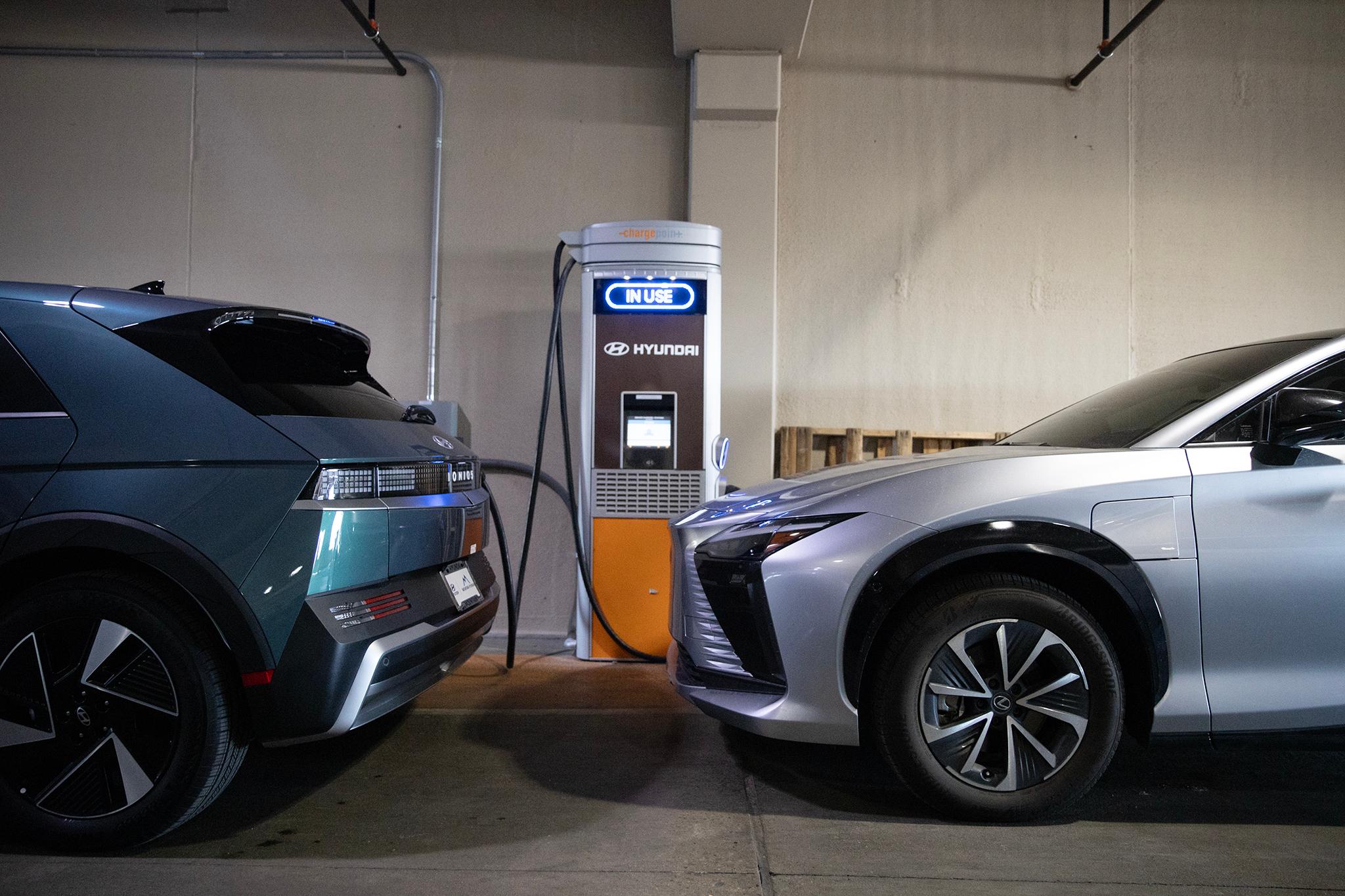
The effects were dramatic: Nationally, the floor has fallen out of demand for EVs. But Colorado continues to offer its own incentives.
So we wanted to know: Is it a good time to buy an EV in Colorado? We spoke to recent buyers and dealers to find out.
What EV incentives are available in Colorado?
Currently, just about 4% of vehicles on the road in Colorado are EVs or plug-in hybrids (PHEVs). And, overall, new EV registrations have plunged by 64% compared to early 2025, The Colorado Sun reported.
But the state still offers a few incentives, hoping to entice a larger share of buyers into EVs
All Colorado residents can claim:
- Up to $3,250 in tax credits for vehicles with a list price up to $35,000.
- Up to $750 in credits for more expensive cars — those with MSRPs up to $80,000.
There are other incentives for cheaper used EVs and for people looking to ditch their old gas car for a newer EV, too. The state’s Vehicle Exchange Program (VXC) received an update shortly after federal subsidies ended last year. The program allows lower-income residents to trade in old gas cars for EV discounts.
The rules for VXC:
- Buyers must be Colorado residents who either participate in a government assistance program or earn less than 80% of their county’s median income.
- Buyers must trade in a gas car that is at least 12 years old.
- The program offers a $6,000 rebate for leasing or buying a used EV, or $9,000 for new ones.
State budget constraints have led to a reduction in some incentives, however. The $750 credit for more expensive EVs used to be as much as $5,000.
Still, Colorado is one of the leading states in EV incentives. Of the more than 30 states still offering incentives, Colorado’s VXC program is among the most generous.
What do EVs cost in Colorado now?
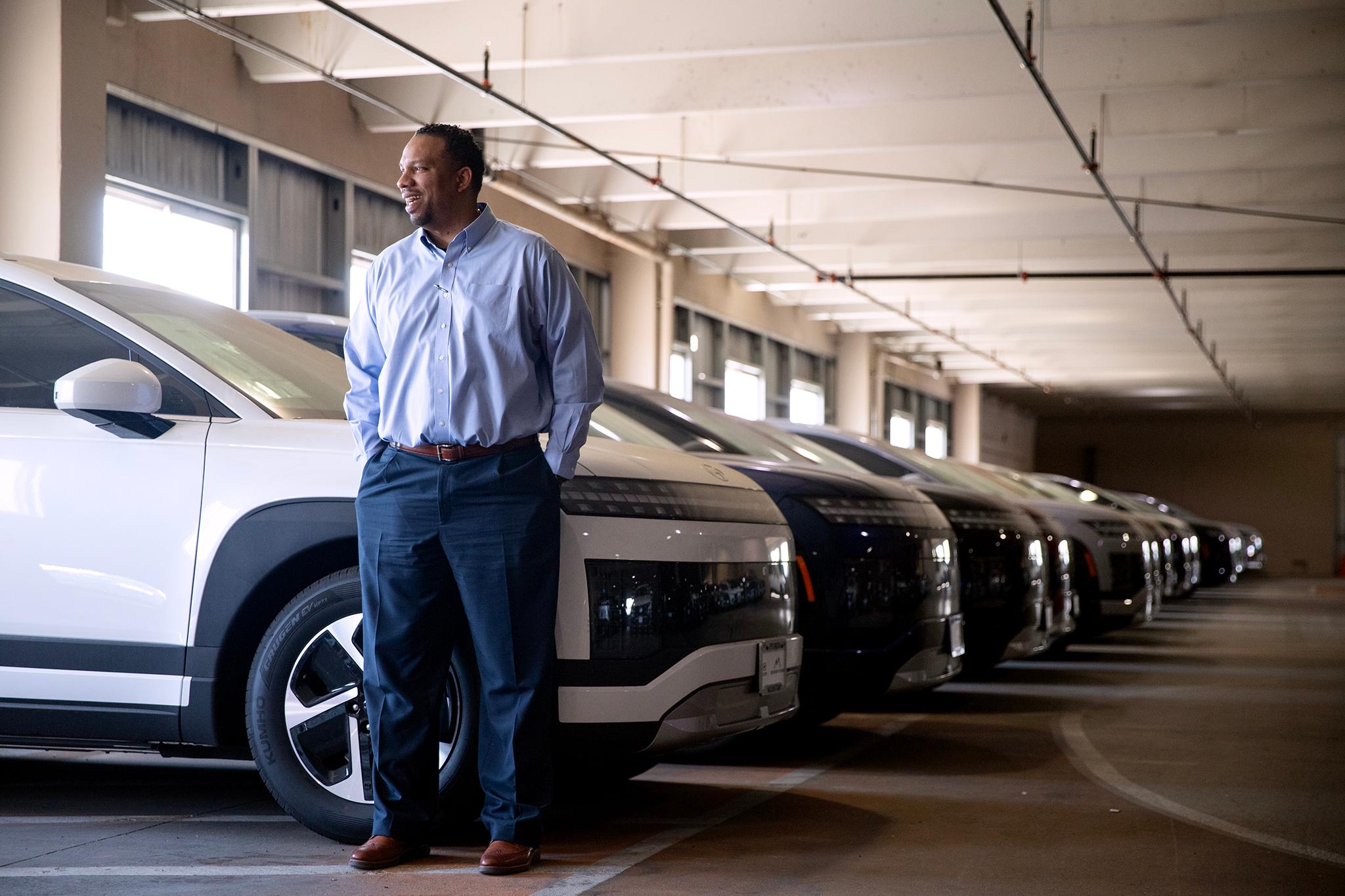
Lionel Farr, a sales manager at Mountain Hyundai in Denver, said he still sees a wide variety of buyers coming in for new and used EVs and plug-in hybrids.
Gas-powered buyers still outnumber those buying electrified vehicles — but manufacturers like Hyundai, which have stuck with EVs, have been rewarded.
Dealers are combating the gap in federal subsidies with incentives of their own, both on new and used EVs. Several EVs on the dealer’s website feature $2,500 cash incentives on top of other incentives, like $10,000 in “retail bonus cash.” Mountain Hyundai’s website also features a page dedicated to Colorado state incentives.
In all, a buyer might expect to pay close to $45,000 for a new Hyundai Ioniq 5, which compares poorly with a similarly sized new gas-powered Hyundai Tucson crossover. Gas engines are still cheaper to make, leading to the Tucson’s more appetizing $33,000 price point.
Climb down the ladder to something more affordable, like Nissan’s Leaf, and new EVs become appetizing thanks to lower prices and incentives. Empire Nissan in Lakewood features scores of Leaf EVs listed for under $27,000 thanks to dealer discounts and the VXC program.
Consumers shopping for EVs should also consider the used market. Incentives still apply, and depreciation means EVs cost the same or less than similar gas-powered cars. In the case of the Ioniq 5, used models just a year or two old are available either through dealers or private parties for less than $30,000, and that’s before buyers factor in the state’s VXC program.
What are buyers saying?
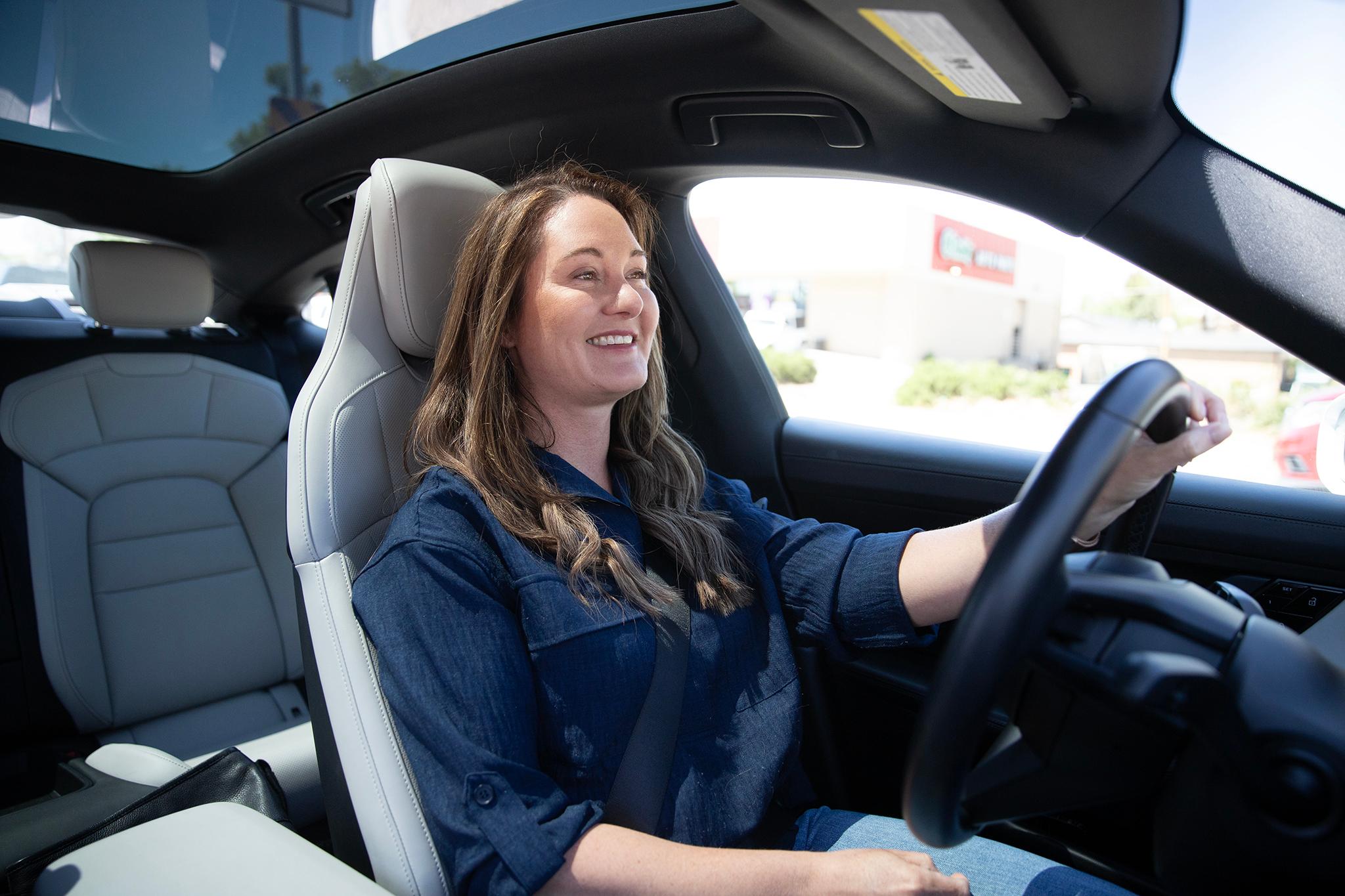
Janell Bartlett and Dave Barnes bought their EVs for different reasons. “I’m a bit of a car snob,” said Bartlett, 45, who bought three EVs in succession because she likes the instant power and torque.
Most recently, she bought a 2021 Porsche Taycan 4S several weeks ago. Depreciation was on her side. With MSRP on new models easily clearing $129,500 after options, she saved herself a bundle, paying just $67,000 for her certified pre-owned car with a warranty at Porsche Littleton. She doesn’t think she got any subsidies.
Bartlett, a resident of Denver’s Park Hill neighborhood, says her first EV, a Tesla, didn’t get any subsidies “because it was used.” Her second purchase, a used Polestar, qualified for $6,000 in state subsidies at the time. Those incentives have since declined, both at the state level and federally.
The nation’s high prices weren’t top-of-mind when she bought the Porsche, but she told us she likes that “the price to charge up the car doesn’t change depending on what’s happening in the world.”
Dave Barnes, a 77-year-old Denver resident living in the Berkeley neighborhood, enjoys his Volkswagen ID.4 simply because it’s electric, and because he and his wife have always had a thing for German cars, having owned an Audi previously.
They bought back in 2022, but a lapse in federal subsidies meant they paid retail price — $51,000 for Barnes’ Volkswagen ID.4 Pro S.
Both are worried about depreciation. Most cars lose value over time, but it’s especially pronounced for EVs. Barnes said his ID.4 has lost about 50% of its resale value in four years. Bartlett’s solution is to shop used, but even she is worried about her Taycan losing further value.
And that depreciation may soon accelerate.
Nationwide, hundreds of thousands of leases are expiring on relatively recent EVs. Some 300,000 could be coming back to dealers this year, and another 600,000 in 2027, according to Cox Automotive data cited by The New York Times.
A glut of new vehicles entering the used market, plus low demand, means now may be a good time to buy, and later may be even better.
Are you in the market? Let us know how it’s going.
Editor's note: This article was updated to correct a vehicle identification in a photo caption.