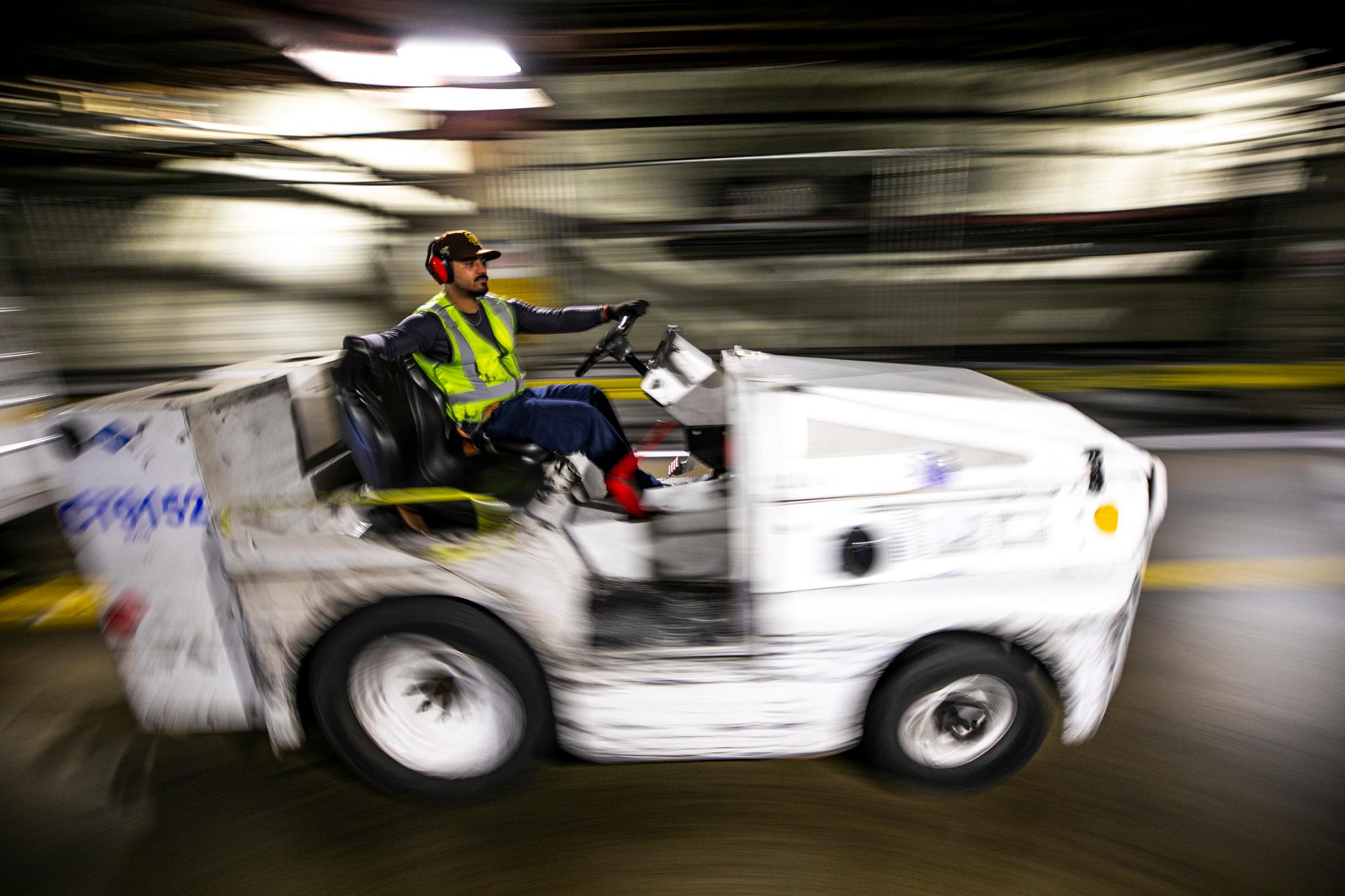
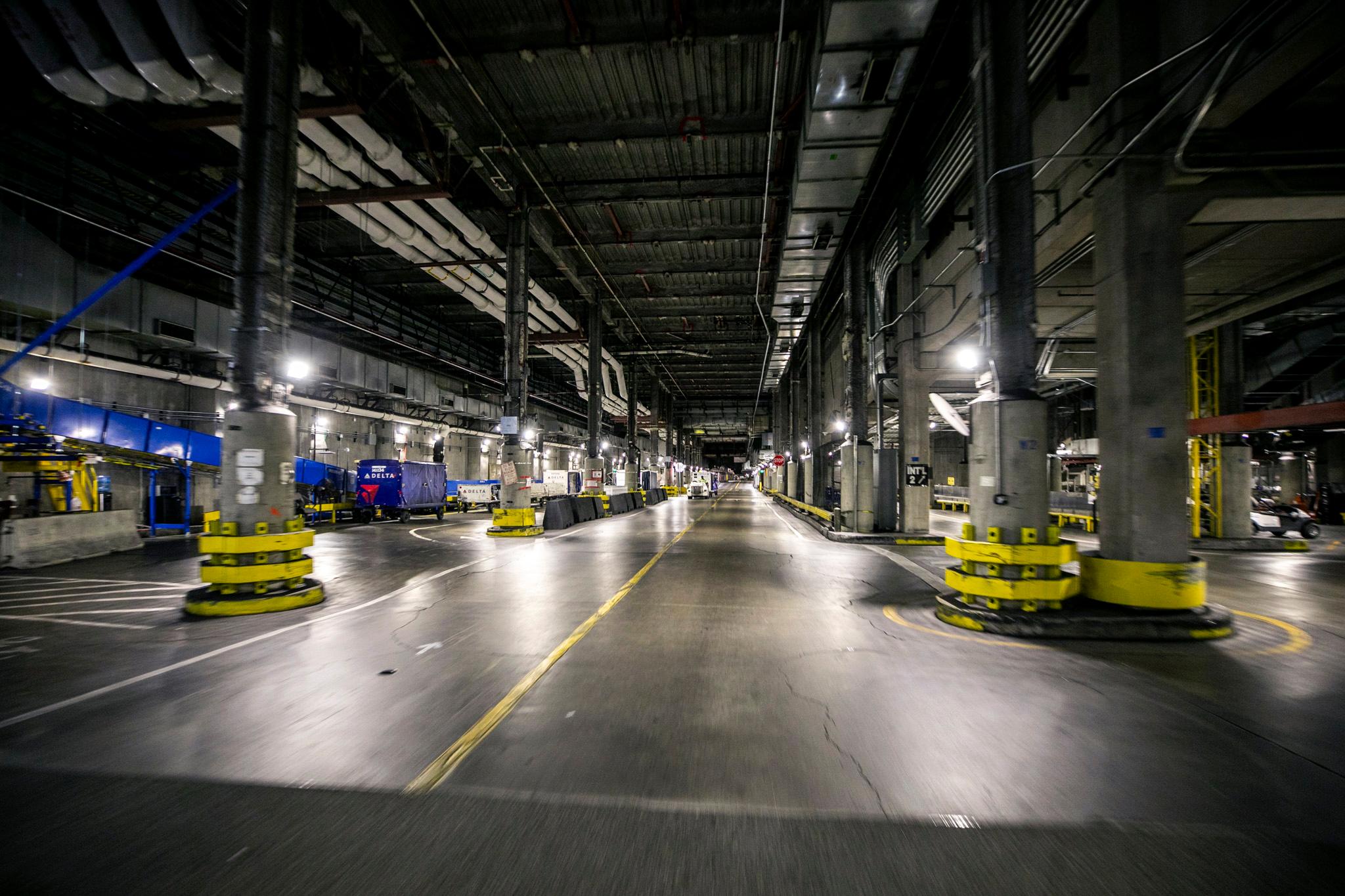
The tunnels under Denver International Airport are loud, hot and grimy — great for baggage transportation and mythical lizard people, but not much else.
But by 2029, the airport hopes to repurpose part of those tunnels to create new pedestrian walkways and solve one of the airport’s biggest problems. When the project is finished, passengers will finally be able to walk to the B and C concourses instead of waiting on a train.
“I often say that the lack of redundancy for the trains is the original sin of DEN,” said CEO Phil Washington, using the airport’s official abbreviation. “It's like eating the apple, I guess.”
To atone for that sin, the airport recently announced that it will spend between $300 million and $700 million to create the passenger tunnels. Washington outlined his vision for the tunnel conversion in an interview with Colorado Matters and Denverite.
A “signature” addition to DIA.
Under Washington’s leadership, DIA has dreamed big for its many capital projects. The tunnels will be no different.
“We want it to be signature,” Washington said. “We want it to be Colorado-centric. We want these tunnels to be aesthetically beautiful.”
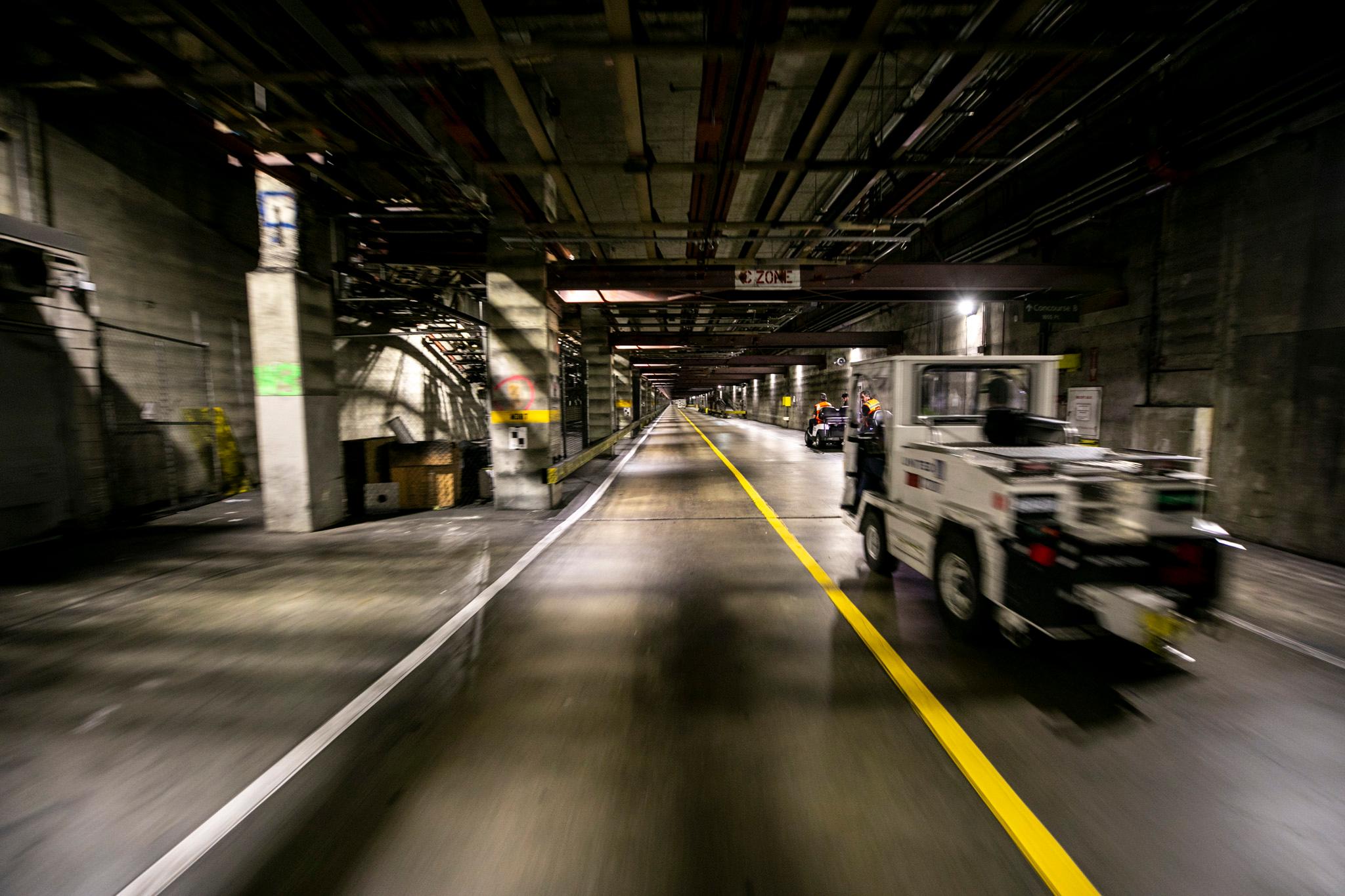
It would be a stark difference from the present. Unlike the airport’s airy above-ground spaces, the tunnels are dimly lit and noisy, with industrial vehicles whisking staff and luggage along narrow roads. The 3.5 million-square-foot network is so sprawling that there are even intersections with stop signs.
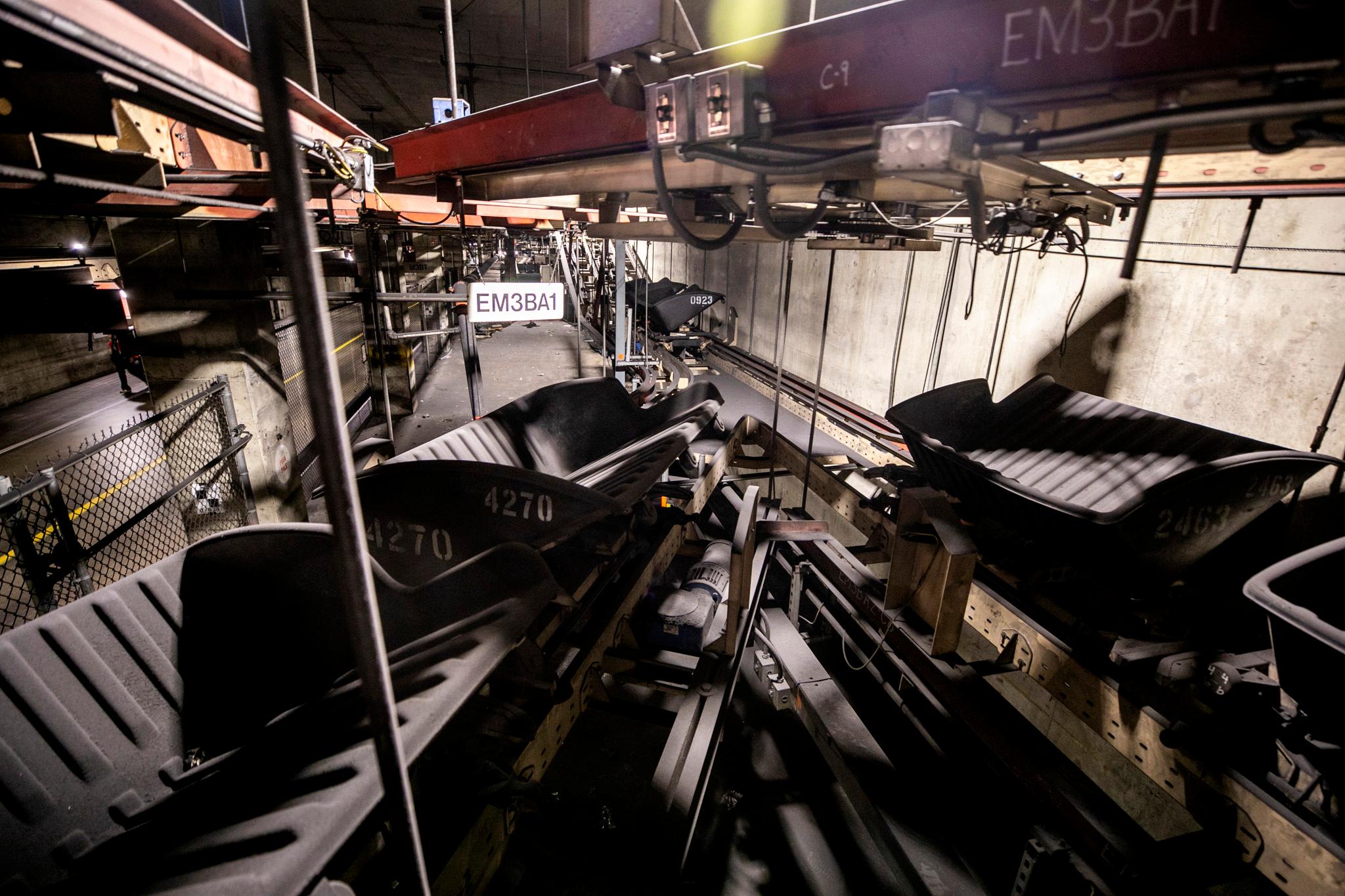
The tunnels were originally meant to host a complex and groundbreaking luggage transportation system. But that never really worked; its machinery chewed up luggage during a media demonstration in the ‘90s and became a case study in infrastructure mishaps.
Now, Washington wants to turn two wrongs into a right.
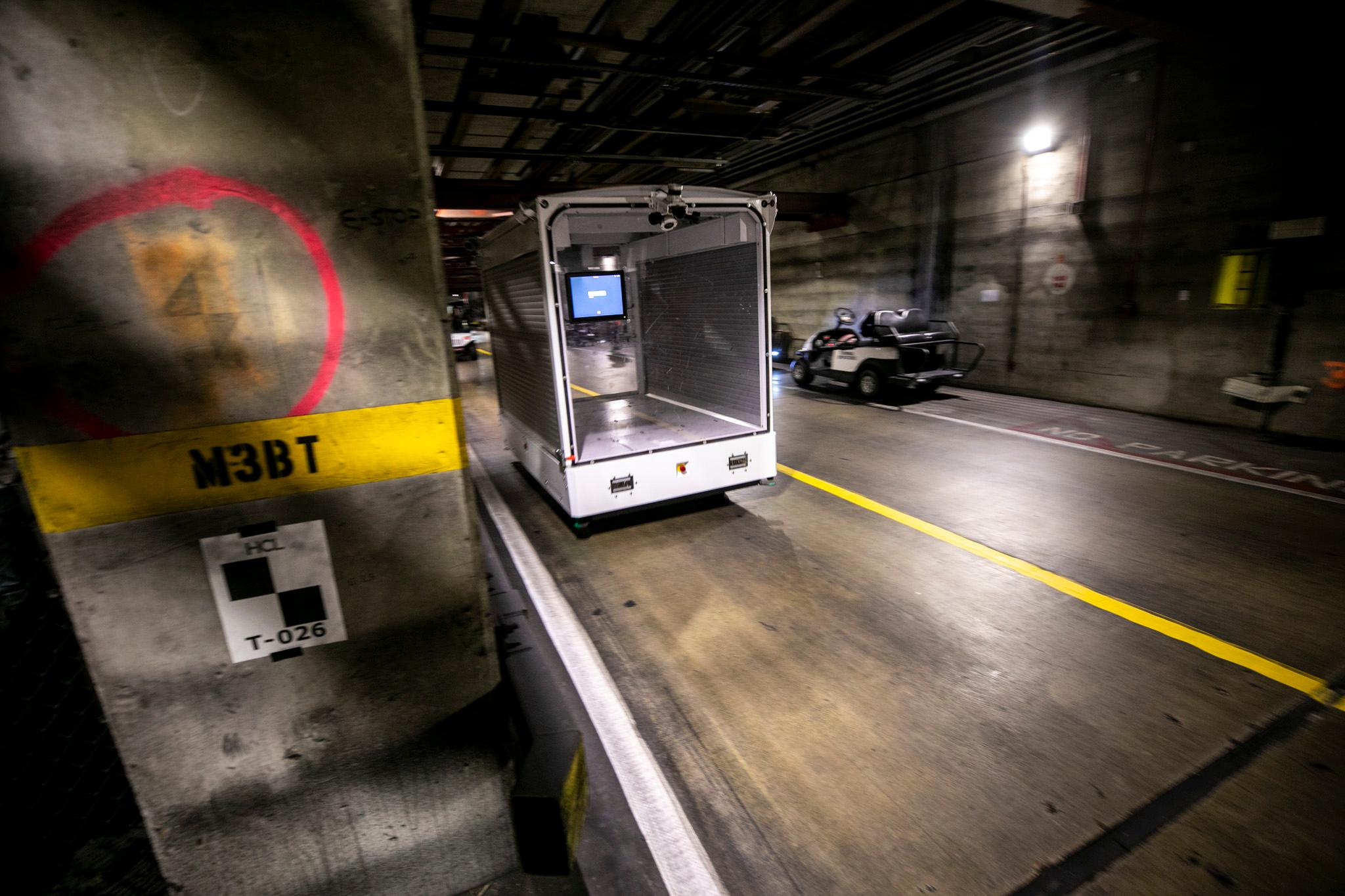
The tunnels left over by the failed luggage system will be used to provide an alternative to the train system. Because there’s no redundancy for the trains at present, any failure in the system results in huge crowds.
Washington said it made more sense to put the walkways in an existing space, rather than building something new and more disruptive like a bridge across the tarmac.
“We decided after looking at all those things that bridges were likely one too expensive and a little bit too impactful for our passengers,” Washington said.
Washington said the pedestrian routes will have to be aesthetically pleasing, though he isn’t detailing how yet.
“We want this, again, to be sort of beautiful — not sort of beautiful, but beautiful,” he said.
He’d also like to see concessions in the underground — at the very least, pit stops for a cup of coffee — and potentially include moving sidewalks for quicker walks. The walk from concourse to concourse is roughly a third of a mile.
Long walkways are common at other large airports, like Chicago O'Hare International Airport or Los Angeles International Airport. Washington sees those places as competition.
“We want our tunnels to look better than those,” he said.
Construction is set to start next year, after Washington retires. The exact price of the tunnels will become more clear as the airport gets closer to finalizing a design.
And if you’re curious what happened to the luggage system: The airport found other ways to make it work. DIA has about 10 miles of baggage conveyors and screens up to 2 million bags each month, a spokesperson said.