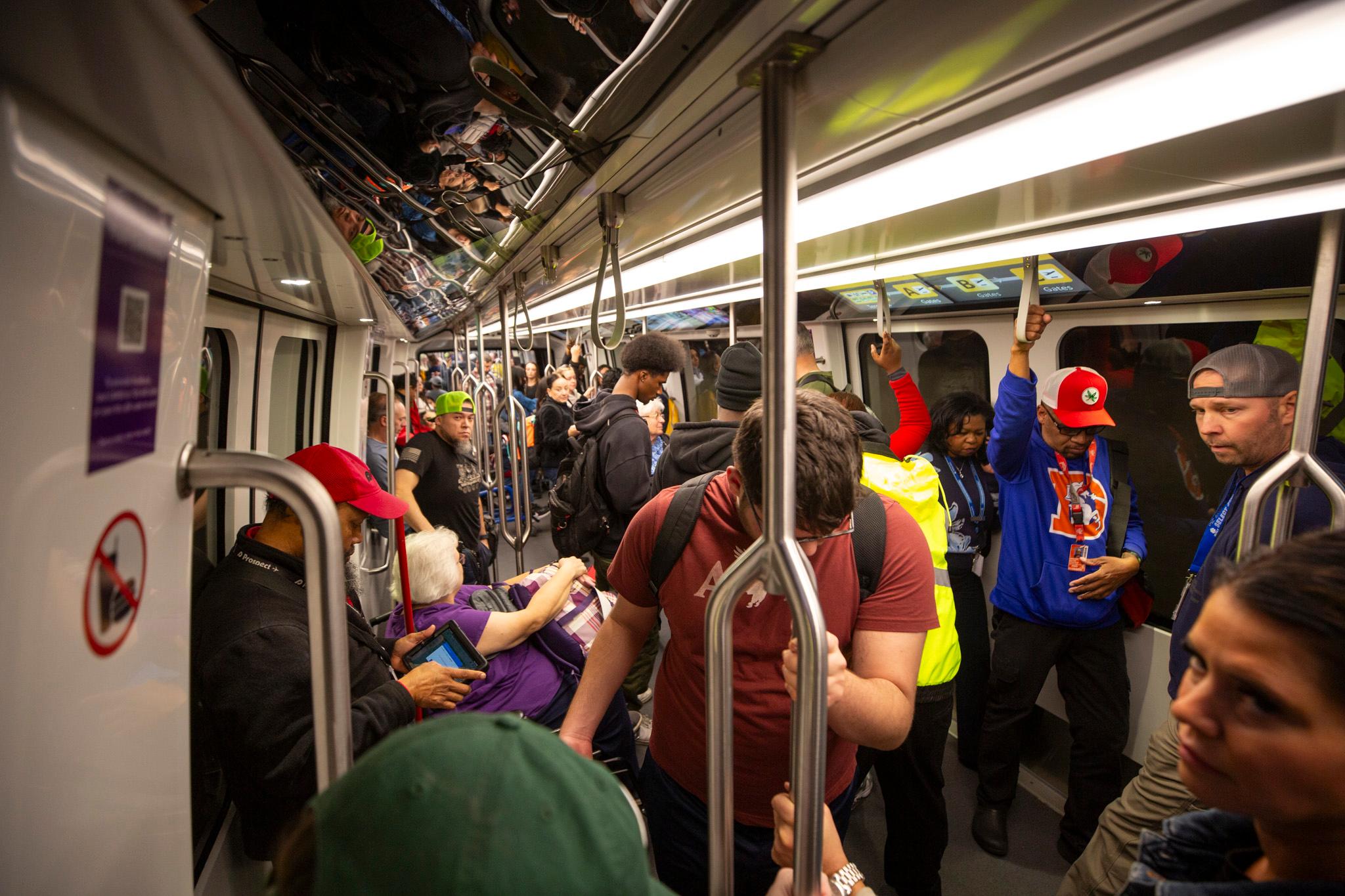
Travelers have been baffled for years by a fateful design choice at Denver International Airport: Two of its departure areas can only be reached by riding the airport’s internal train system.
When those trains have problems, huge crowds congregate at the stations and the main terminal. People panic. Maybe they miss flights.
“First of all, the train is up and operating about 99% of the time, but when it goes down, it's complete chaos. We get that,” airport CEO Phil Washington told CPR News in an earlier interview.
Now, city leaders say they have a solution: The airport will build walkways to connect the B and C concourses to the rest of the airport.
The walkways will repurpose space from the “existing underground baggage tunnels,” which I assume means the lizard people will move to the Frontier concourse instead. (Kidding, I think.) The tunnels are original to the airport but are no longer in use, a spokesperson said.
Construction is expected to begin in 2027 and finish in 2028 or 2029. While the design hasn't been finalized, it's expected to cost between $300 million and $700 million, said spokesperson Courtney Law. The new walkways won’t affect the current baggage transportation system.
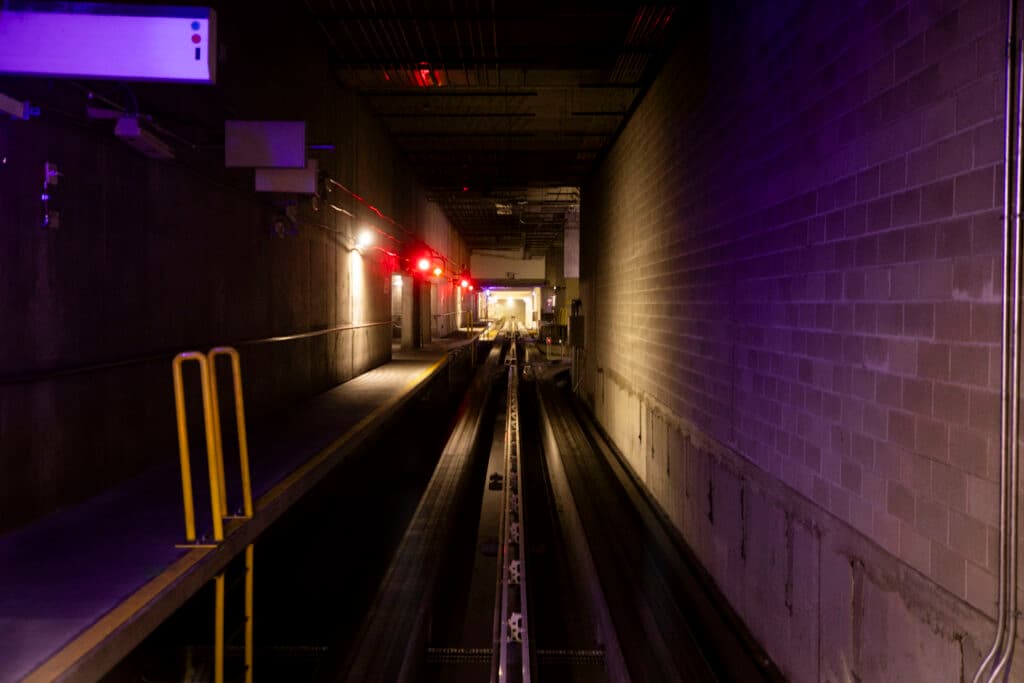
In a written statement, Mayor Mike Johnston said the new walkways would give people “more flexibility while we continue building one of the best-connected airports in the world.”
The airport has also spent more than $75 million on new trains and has other upgrade plans for that system, too.
Washington told Ryan Warner, senior host of Colorado Matters, about the pedestrian plans nearly three years ago. He described an alternative idea: building big bridges.
“We asked for ideas. We received some extraordinary, innovative ideas, like pedestrian bridges from concourse A to B, concourse B to C. These are massive spans. Planes would have to go under them. They’d have to be long and high, with the possibility for concessions on those bridges,” Washington said.
Shuttle buses wouldn’t have enough capacity, he said. And new tunnels would be too expensive. But it appears that in the years since, the airport found a way to work with what it’s got.
Concourse A is already connected to the Great Hall by a bridge, though it’s unclear if the planned tunnel walkway will also connect those two areas.
Editor's note: This article was updated to clarify which concourses will be most affected.