
This story discusses suicide and mental illness.
If you need help, dial 988 to reach the Suicide and Crisis Lifeline. You can also reach the Colorado Crisis Services hotline at 1-844-493-8255 or text "TALK" to 38255 to speak with a trained counselor or professional. Counselors are also available at walk-in locations or online to chat.
By Maggie Donahue for Denverite
It is April 10, 2026, and I am back in Denver.
It has been nearly four years since I left this town, four years since I left my role as Denverite’s arts reporter. And here I am, back in the city to attend one more exhibition: “Love, Anything: 28 Expressions for 28 Luminous Years,” staged at the Fulginiti Gallery at the CU Anschutz Medical Campus.
But I am not here to cover it as a reporter.
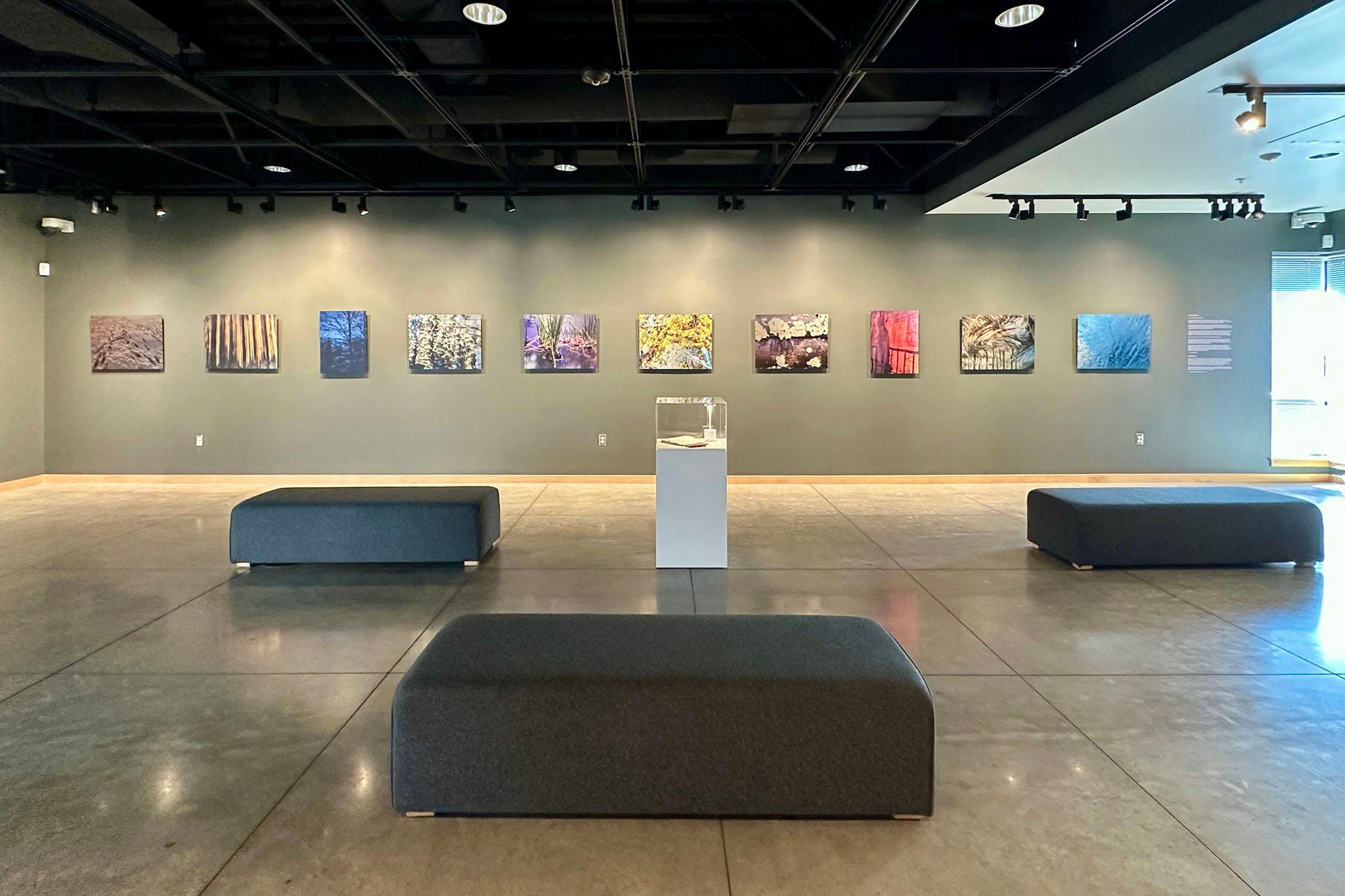
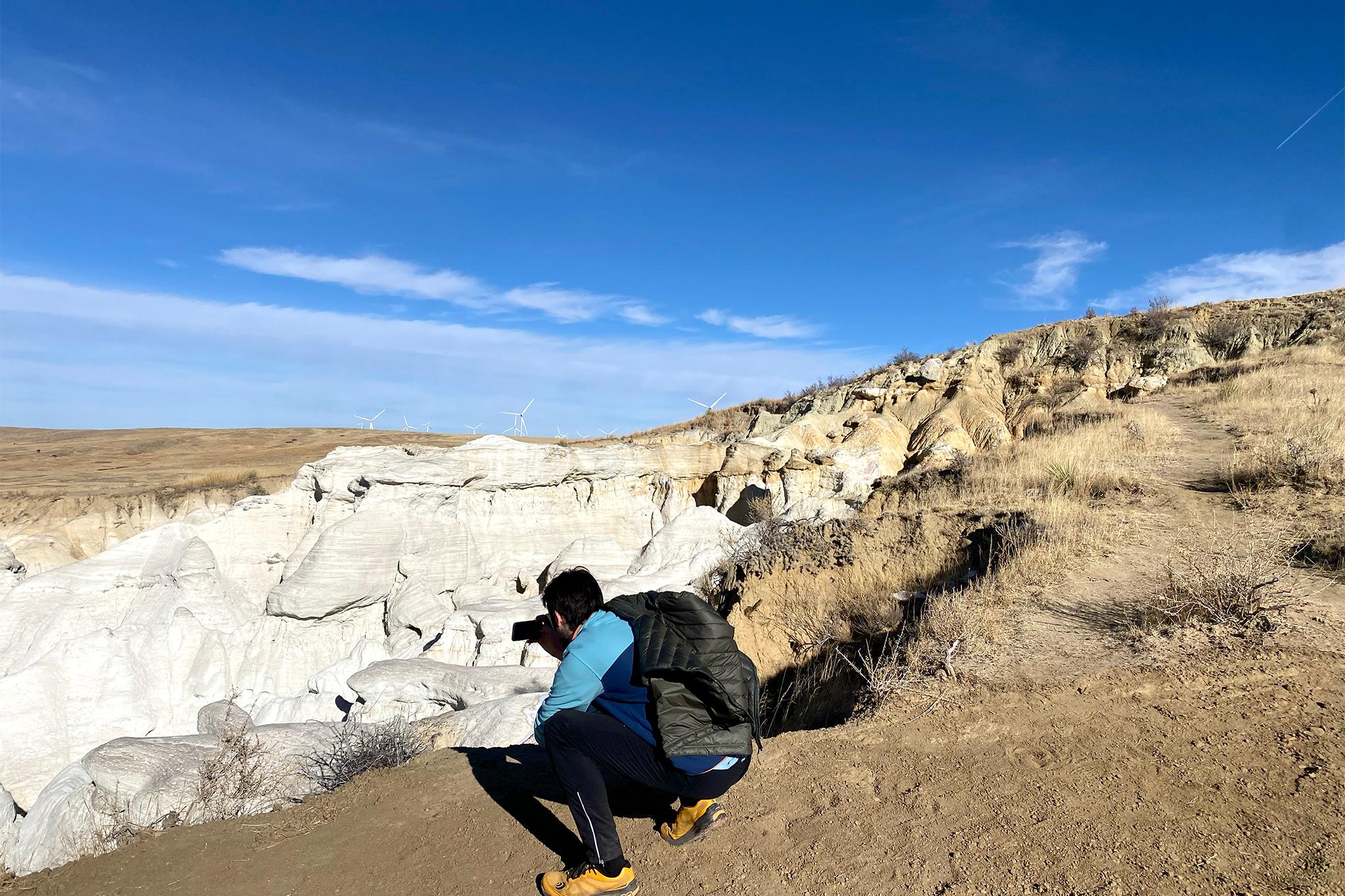
Lining the gallery walls are 28 photos snapped by my late friend and former partner, Ryyan Chacra, printed on large-format brushed aluminum panels. As I move through the gallery, I find myself poring over every detail, trying to see through the photographer’s eyes, to imagine what he might have been seeing when he took these photos. I knew Ryyan. But these images are inscrutable to me.
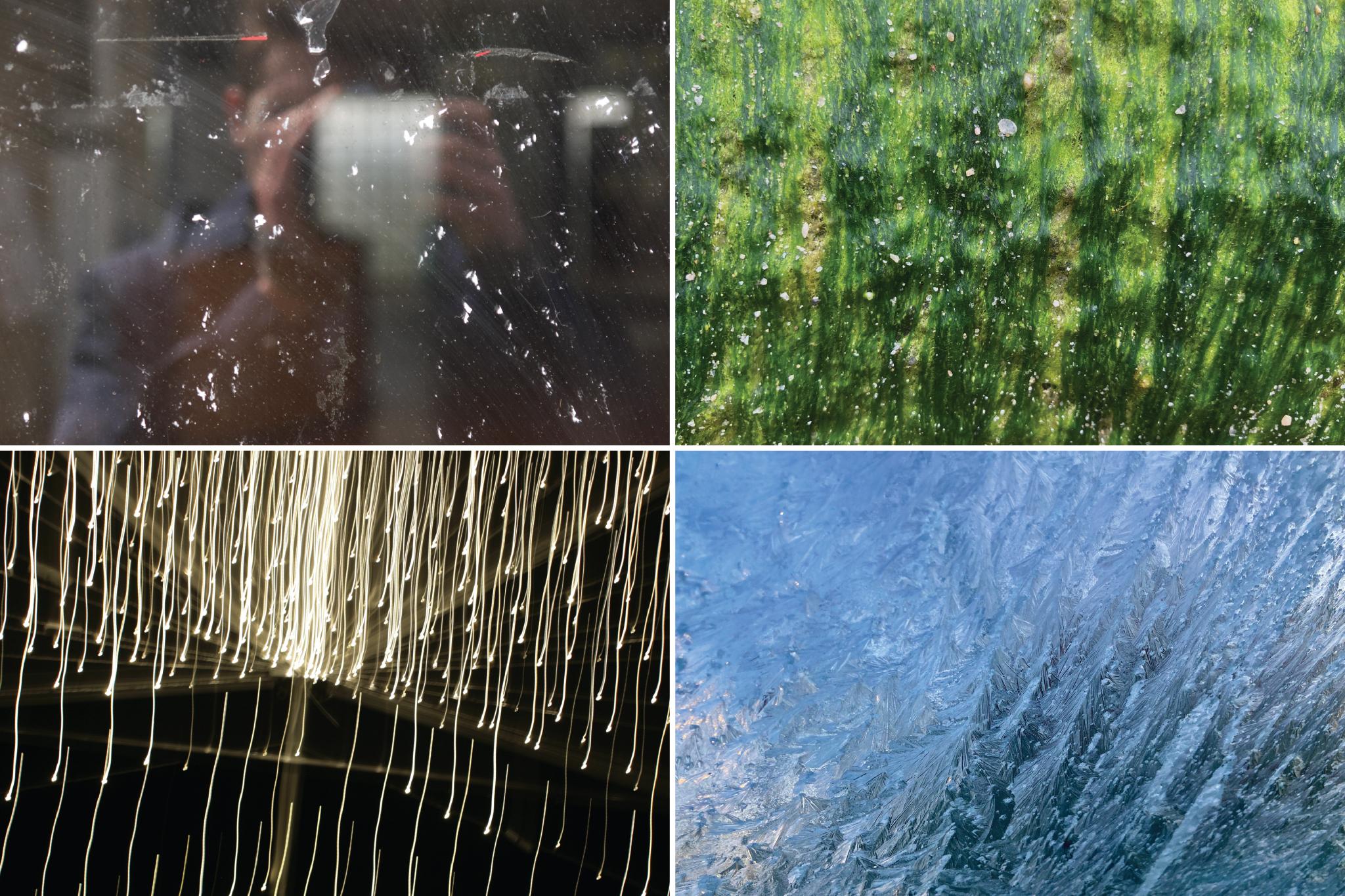
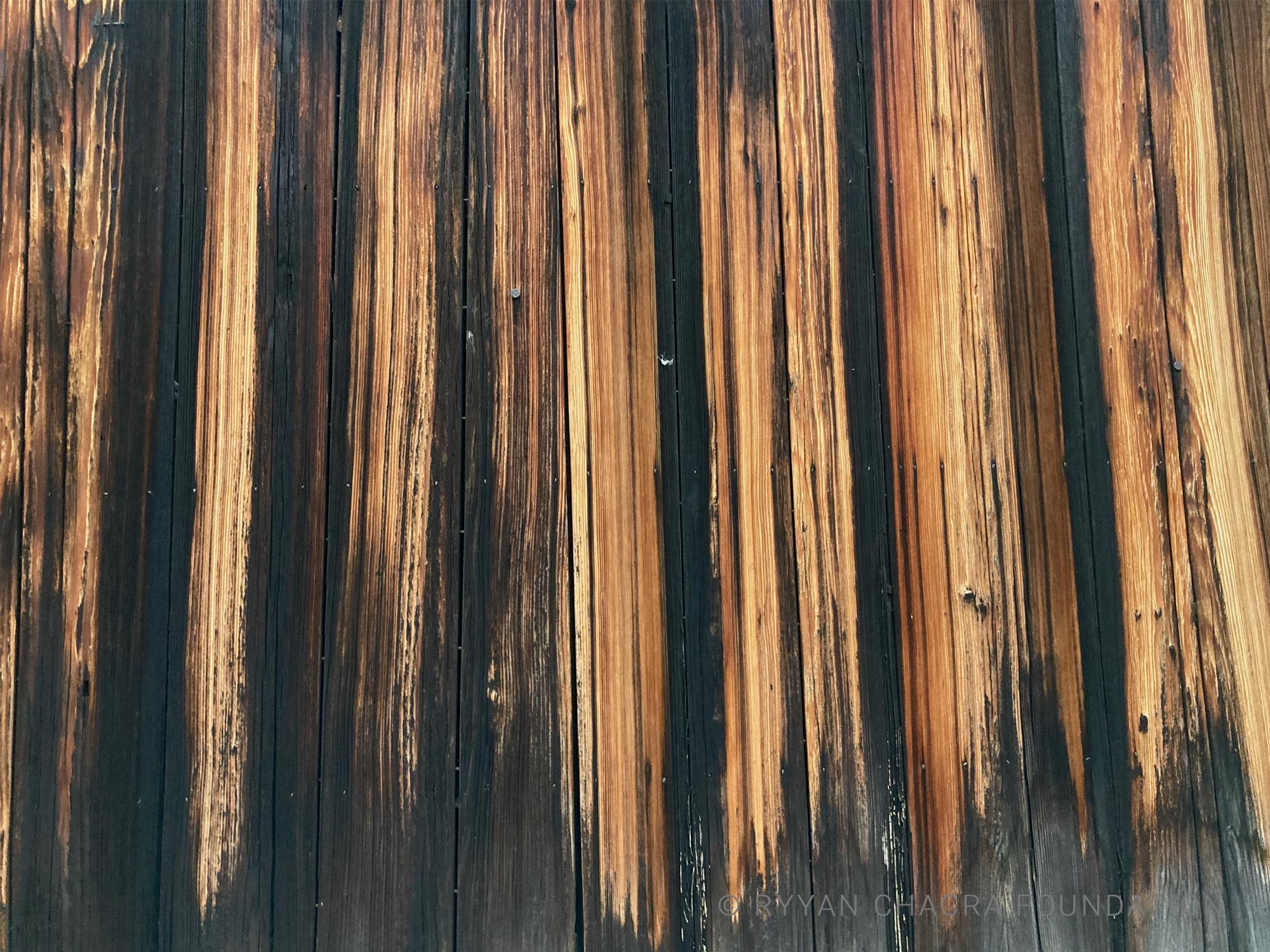
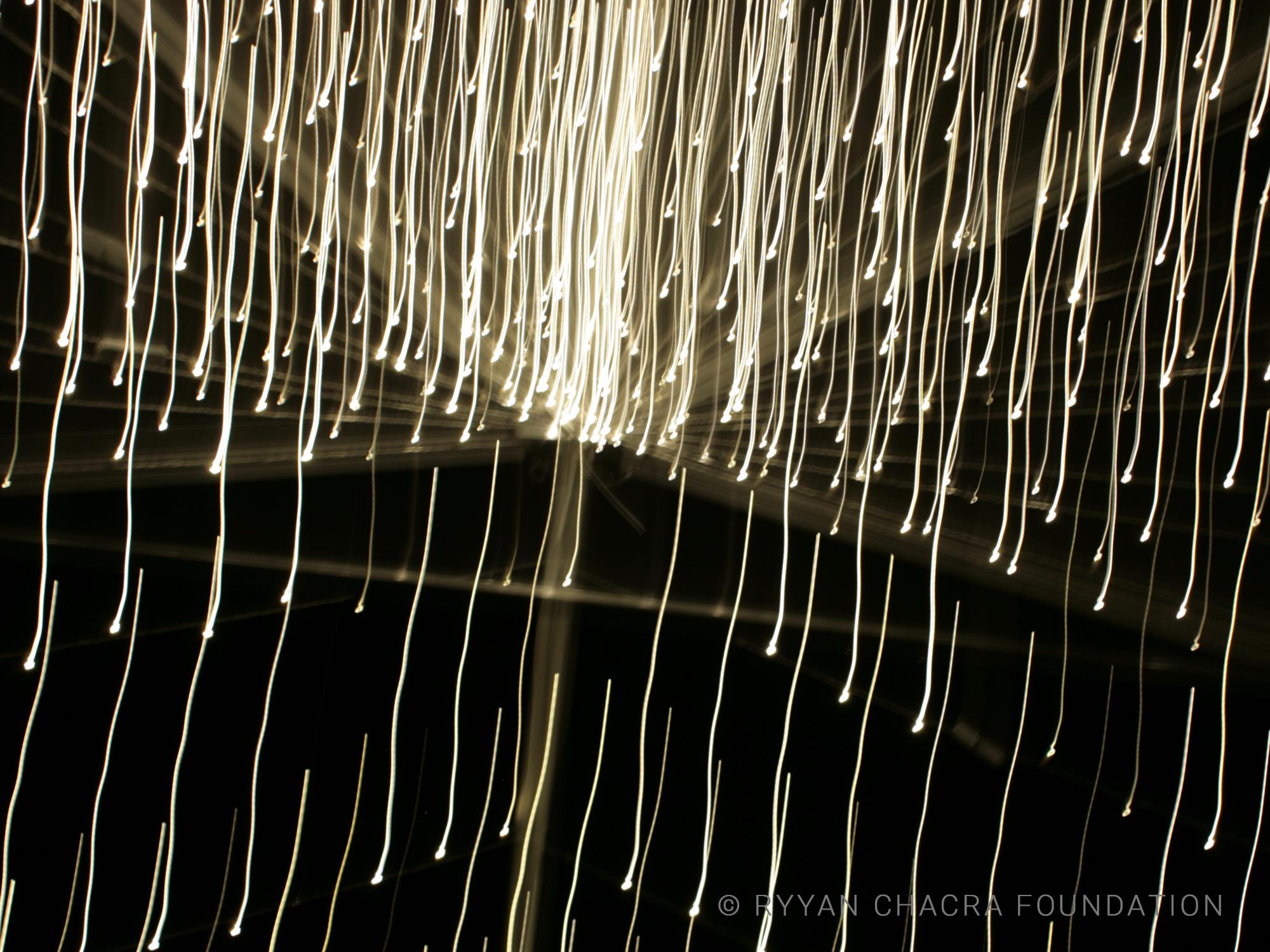
Many are snapshots of familiar urban and natural scenes, but taken from unexpected angles. Some are geometric: repeating patterns in nature, vertical lines formed by tree trunks or sidewalk cracks or streaks of light.
Some home in on a tiny detail, recontextualizing quotidian sights — a tangle of fishing net, a single black ladybug — as something beautiful. Many of the compositions are so tight that it’s difficult to tell what exactly you’re looking at, or even the scale.
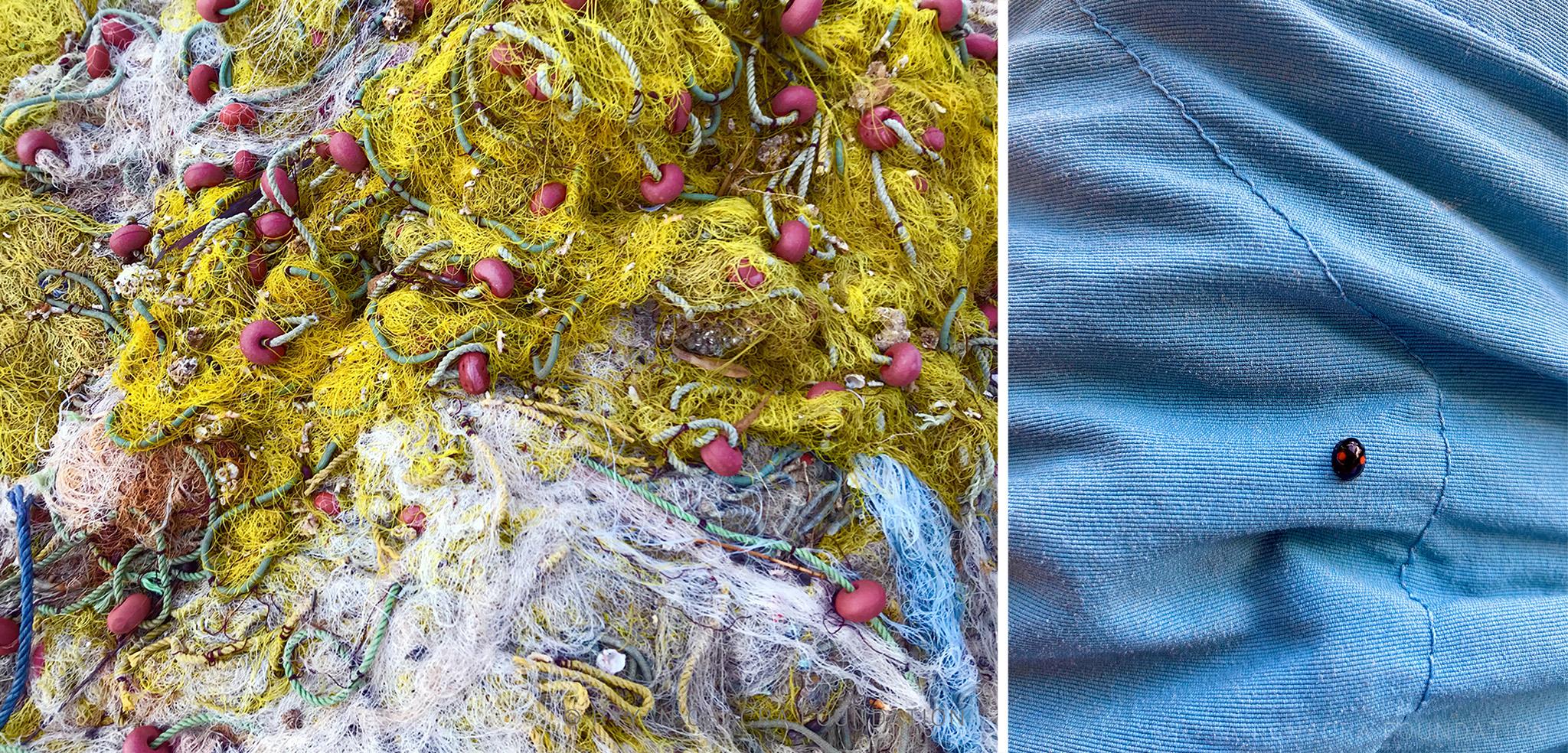
May 2018 (left) and a ladybug in Denver in August 2020.
But some images, I can place — because I was with Ryyan when he took them. Here, the gnarled tree from that shimmering, golden September hike near Idaho Springs.
There, a shot from our Valentine’s Day trip to the Dillon Ice Castles, when Ryyan zoomed in on a random spot on the ceiling I hadn’t even noticed and captured a glowing nebula of icy blue.

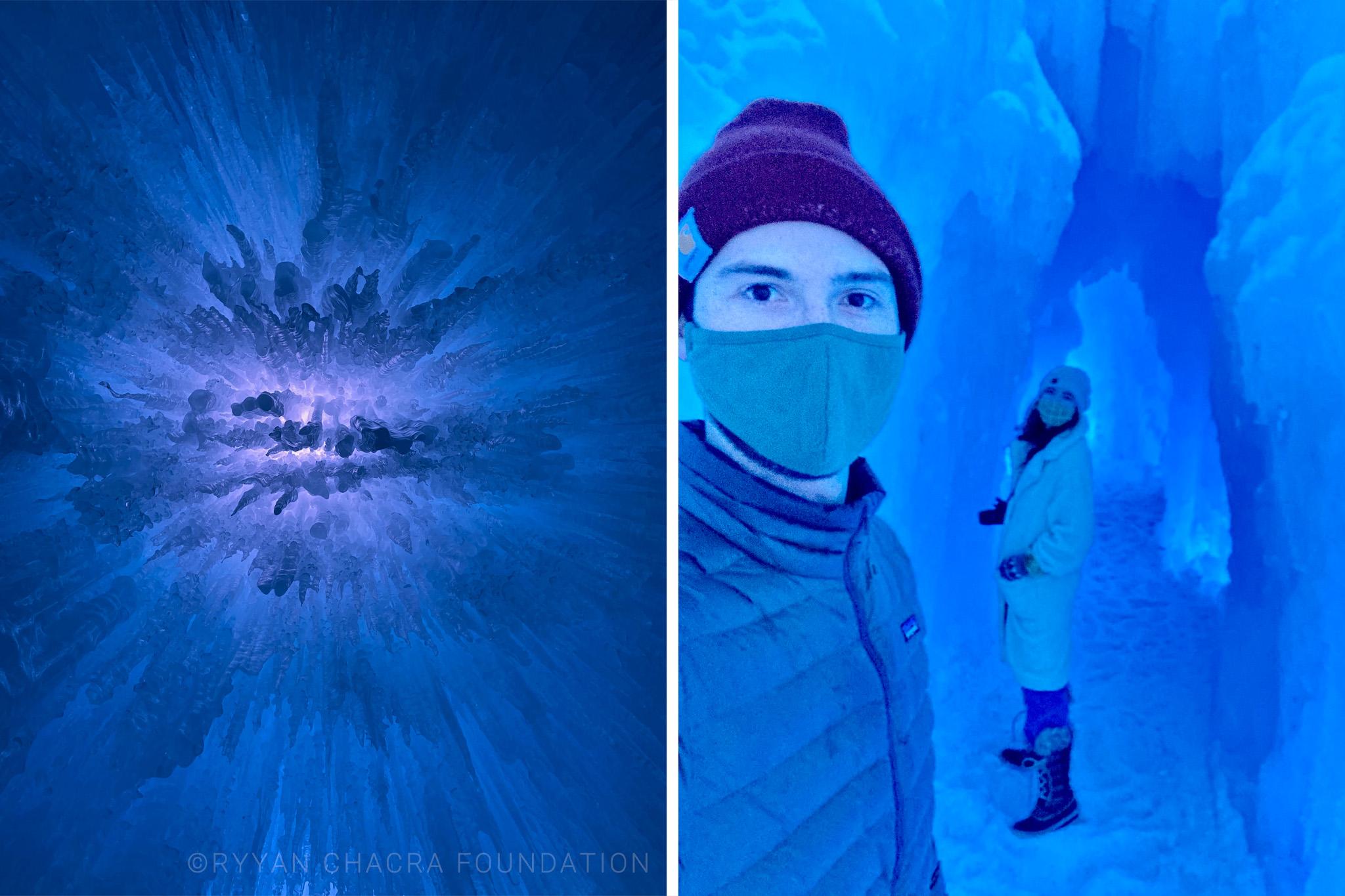
The brushed aluminum brings textured details into greater relief, enhancing contrast so that the photographs seem almost three-dimensional. As I walk, the light catches the images in different places, lending them a sense of movement. Nearby, I hear a woman say: “I wish I knew more about the process.”
I do, too. But I cannot ask Ryyan how he did it.
On May 5, 2024, Ryyan died by suicide after a years-long struggle with obsessive-compulsive disorder (OCD). He was 28 years old.
For those who knew Ryyan, it is difficult to reconcile how he died with who he had been. Ryyan was vibrant, goofy, creative, ambitious, loving, and endearingly stubborn. He was intelligent — even brilliant — and found joy and beauty in unexpected places. He had endless support from those who loved him, and an exciting future ahead of him as a newly admitted MBA candidate at Oxford.
How could this have happened?
“Never had we ever worried about Ryyan,” his father told me. “I never, ever thought he would even contemplate harming himself. I thought that was not part of the mix.”
After Ryyan died, his parents, Tarek and Elizabeth, found nearly 10,000 of Ryyan’s photos on the family’s desktop computer, sorted into different albums: Texture, Nightcrawling, The Garden, Red Velvet, The Wall. They hadn’t known they were there.
These works provide a window into the way Ryyan saw the world, illuminating his gift for seeing things in ways most people could not. Even in the earliest days of grief, Tarek and Elizabeth felt they had to do something with the photos, to finish the work that Ryyan had started.
Two years later, they’ve found a meaningful way to share Ryyan’s art with the world. Through the Ryyan Chacra Foundation, the nonprofit they established in his name, they’ve partnered with the OCD research department at CU Anschutz to stage a speaker series and photography exhibition featuring 28 of Ryyan’s photos — one for each year of his life — alongside excerpts from his journal entries.
The goal: to keep Ryyan’s story alive while also shedding light on the complexities of OCD — how, far from being a personality quirk or preference for cleanliness and order, OCD is a tormenting condition of fear and uncertainty.
Dr. Rachel Davis, director of the OCD Program at CU Anschutz and keynote speaker in the series, notes that people with OCD have a different way of seeing, interpreting, and responding to the world — what she calls the lens of OCD.
“The lens of OCD is both brilliant and burdensome, sometimes one or the other, sometimes both at once,” she said in her April 10 lecture to a hall of about 140 people. “This lens doesn't just change what comes into focus. It widens what we see, intensifies what we notice, and makes it hard to filter anything out. It can feel like seeing everything, every risk, every possibility, every person in need, every way something could go wrong. Sometimes, every way something could go right.”
That’s what “Love, Anything” is trying to explore — the burden, brilliance, beauty, pain that can come from seeing everything.
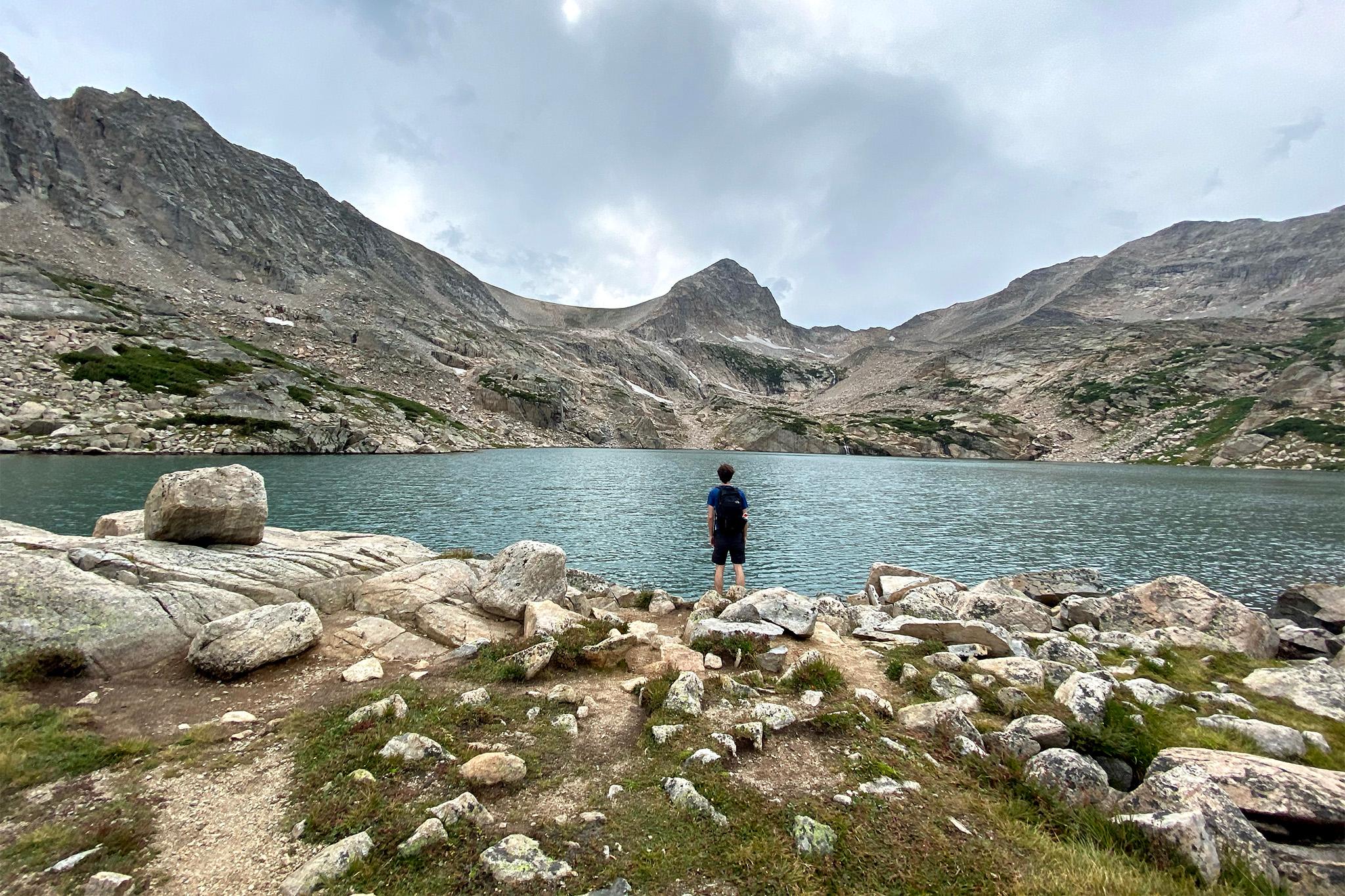
I matched with Ryyan on Hinge in the summer of 2020, shortly after I moved to Denver. We were both 24. Like me, Ryyan had been living in New York until the pandemic hit; that March, he moved back home to Denver, where he grew up and where his parents still lived.
We met for the first time at The Thin Man on 17th Avenue. I remember exactly how he looked as he stumbled clumsily toward me, this tall lanky guy in a blue polo shirt and glasses, his fine dark hair — grown out during the pandemic — flopping in the wind; his nervous laugh as we awkwardly hugged hello.
We sat at a picnic table on the back patio, and he told me about his childhood in Denver. As a high schooler, he’d loved studying in Denver coffee shops like St. Mark’s. He chose to attend college in New York in large part because of the coffee shop culture depicted in TV shows like “Friends,” only to come to the conclusion that the coffee shops in Denver were far superior.
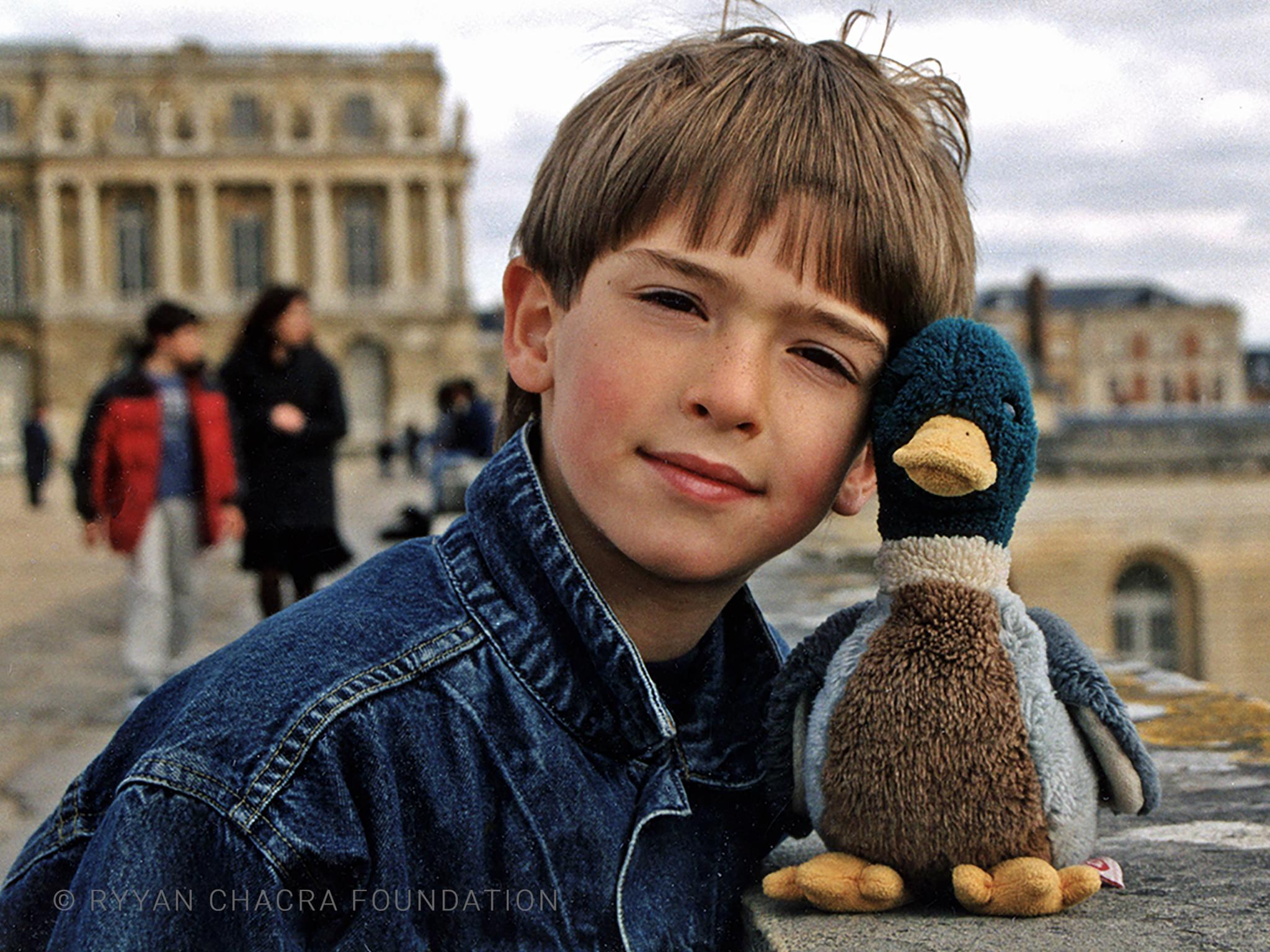
He told me he’d loved being an only child because of how close he was with his parents, how he talked to them every day, told them everything, and regularly went to them for advice. He told me how proud he was of his mixed Lebanese and Colorado heritage, how he’d grown up speaking French and English fluently and later learned Spanish and Arabic. He talked about his love for British humor, his eclectic music taste, how he’d played in a band at a music hall I loved in New York, and that his favorite animal was a mallard duck because he loved the drakes’ distinctive iridescent plumage.
We talked so long, we didn’t even realize the bar had closed and everyone else had left. We had to let ourselves out the side gate.
Ryyan had converted an office space connected to his parents' Hilltop home into a makeshift studio bedroom with its own private entrance. The first time I visited, he led me through the space, excited to show me how he’d decorated it — the elaborate Lego builds of ships and whimsical scenes he’d constructed in the earliest days of the pandemic, the stacks of old books and magazines piled up on the floor, prints of industrial landscapes he’d photographed himself, a framed drawing of a duck his mother had made, the glass bottles he kept by the bathroom window because he liked how they looked with the sunlight shining through them.
He told me he had initially felt bitter about having to leave New York, but was now becoming excited about this new life in Denver, rediscovering this city he’d been away from for so long. He was reflecting on turning 25. The lyrics of a song by his favorite band, the Morningsiders, had taken on new meaning for him as he decorated his room:
I'm not going back
I'm not gonna unpack my mistakes anymore
Is it a mistake if it leaves you better off than before?
I'm decorating my walls
With pictures of the things I want most of all
Maybe this time
I'll get it right
Those were still the early days of the pandemic. I had moved to a city where I knew practically no one, to work a job that turned out to be mostly remote. In a time of social distance, that should have been an incredibly lonely and isolating period. Because of Ryyan, those were some of the happiest days of my life.
Ryyan wore his heart on his sleeve, moving through life with a touching earnestness, a vulnerability I couldn’t help but admire. Just a few dates in, he suggested we go on a "romantic getaway" to Telluride. To most people, it might seem absurd to plan a weekend trip just a few weeks after meeting someone. To me, it made complete sense.
“What are you going to talk about for six hours?” my roommate said when I told her how long the car ride was going to be.
We never ran out of things to say.
As everyone’s worlds became smaller, Ryyan became my entire world, and somehow that was enough, because he contained worlds within himself. He was brimming with joy and curiosity and creativity — always taking on new artistic projects, going down new rabbit holes, delighting in some new word or turn of phrase that he could work into his distinct, playful, and ever-expanding vocabulary, sometimes even making up new words or phrases to express what he was feeling. “Oitcha,” for instance, was at once a friendly greeting, an affirmative, and a term of endearment. “Squeezed lemon,” something he’d say when he felt drained after a long workday.
Those were days filled with endless mountain adventures, with hikes and paddles and cross-country skiing trips. But even the most mundane pandemic activities — walking Ryyan’s English cocker spaniel Winston, singing along in the car to his eclectic playlists, dancing in our pajamas, playing video games into the night — felt magical when I experienced them through Ryyan’s eyes.
This was a person who could find inordinate delight in things many people took for granted — snowy mornings, long car rides, a cup of strong coffee, a Chipotle burrito. The things he loved, he really loved, without restraint or qualification. He would rewatch and rewatch his favorite TV shows just because he wanted you to experience and love them, too. He could talk endlessly about what was so great about an obscure French artist, a beautiful piece of machinery, the way the sky looked on a certain day — to the point where you couldn't help but agree with him. He had convinced you of their greatness.
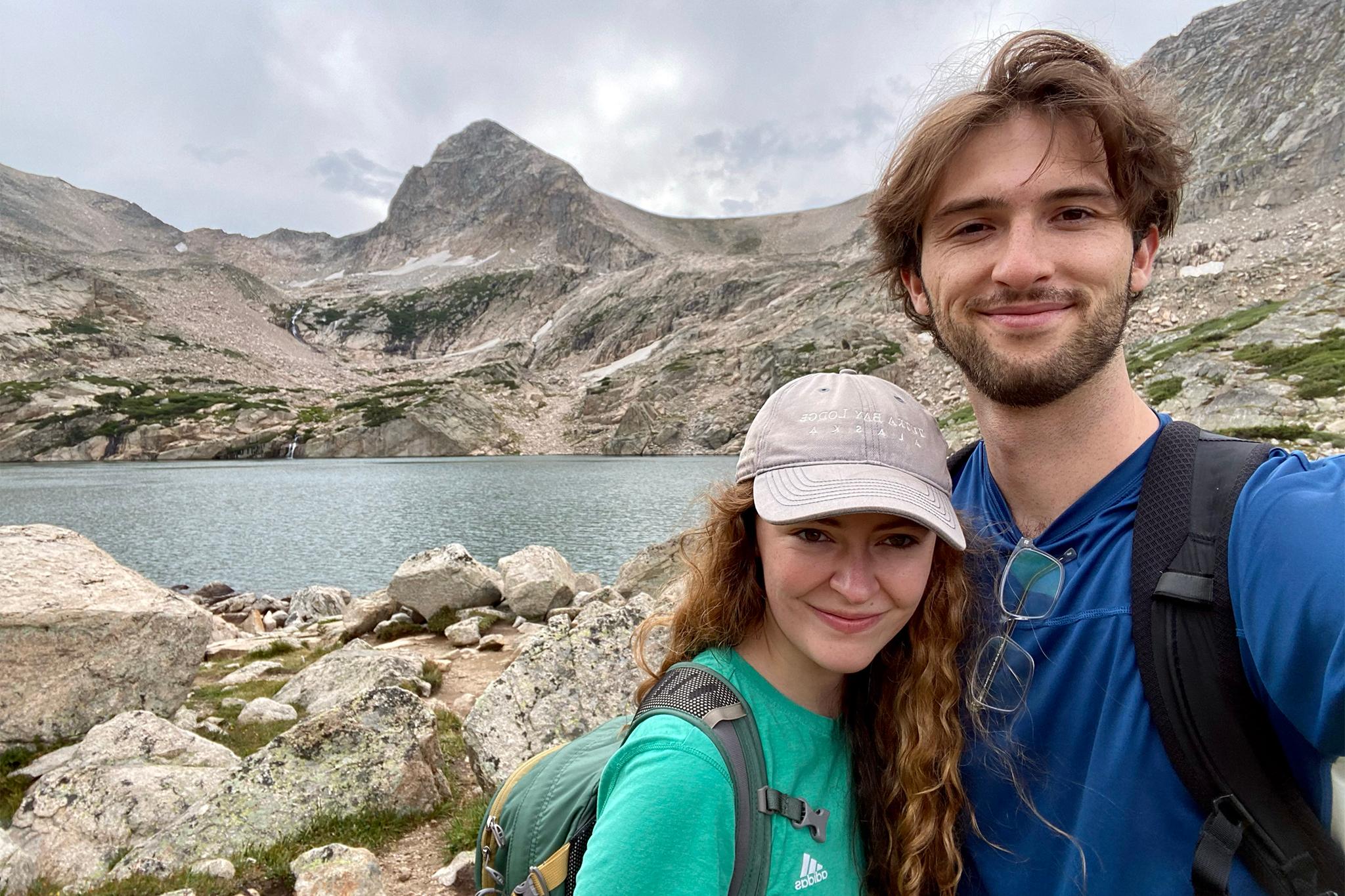
This also applied to the people in his life. Ryyan loved deeply and wholeheartedly, making sure you knew how much he cared about you, the lengths to which he would go to protect you.
I have not always been good at taking care of myself. Ryyan helped me see the value in doing so, just by caring for me himself. Always worried about my safety, he encouraged me to change my car tires for the Colorado winter and brought me to a good car mechanic he trusted. When I started experiencing pain and swelling in my hands, he pushed me to see a doctor, something I probably wouldn’t have done on my own.
It turned out to be rheumatoid arthritis, and after I got my diagnosis, Ryyan researched it extensively. He connected me with a rheumatologist his mom recommended, suggested we eat more anti-inflammatory foods, and bought me things he thought might ease my joint pain — an ergonomic computer mouse, Epsom salt, a food processor to make cooking easier on my hands.
Later, when I found myself in a bad living situation, making myself smaller and smaller in an attempt to appease a mean roommate, he reminded me that I had a right to take up space and feel at ease in my own home, that I was paying to be there, too. You are a very sweet person, Mig, but you have to stand up for yourself, he would tell me. You deserve better. Later, he helped me find and move into a new apartment.
I have heard love described as someone holding a mirror to you, reflecting back to you all that you are and all that you are not. Initially, the intensity of Ryyan’s love overwhelmed me. I did not feel equal to it. What did this brilliant person see in me? But as time went by, I noticed a change in myself. I found myself becoming better through his eyes — warmer, kinder, braver, smarter, more generous, more self-assured. I wanted to be the person that he saw.
Ryyan tried to teach me French. I did not come to it naturally. On some winter morning, I tried to express to him that I loved him very much: “Je t’aime très beaucoup.” That made Ryyan smile. What I had actually said, as he patiently explained, was effectively, “I love you very a lot.” The “très” was redundant. But “je t’aime beaucoup” alone did not feel strong enough to me. The words were far too small.
We assume tragedies happen to other people. Never to the people we know and love. When someone dies by suicide, people make all kinds of assumptions about the sort of person they were — that they were troubled, they were depressed for a long time, someone who felt all alone in the world.
But Ryyan was a living, breathing person, teeming with energy and presence and enthusiasm and life. He stood over 6’3”, lanky and a bit clumsy, with long arms and legs he was always tripping over. He was hungry all the time, and he seemed to be always making noise. His footfall was heavy, his deep voice carried, his jaw clicked when he chewed, he was always playing music or podcasts or audiobooks, even when he slept. He told me that in his old brownstone apartment in NYC, he used to play Clair de lune on the piano so loudly that his landlord downstairs complained — which only made him play more insistently.
And, he was deeply loved.
“He was brilliant, and funny, and creative, and incredibly kind and empathetic. And really felt for other people,” Elizabeth, Ryyan’s mom, told me. “I can hardly remember a time when Ryyan was mad. If he was, he internalized it, and it probably was at himself, not at somebody else.”
“Think of the best person you know,” said Ryyan’s friend Nate Newman. “Like, the happiest person.” That was Ryyan.
Nate and Ryyan became friends around age 10, when they were both students at Graland Country Day School. Nate doesn’t remember exactly when he met Ryyan, but he remembers being drawn to his goofy laugh. Over time, they developed a close friendship founded on deep, open conversations.
“The inspiring thing about Ryyan's approach to conversation was that he could share his weaknesses without feeling shame, and you could do the same with him without feeling embarrassment,“ Nate told me. “I feel like, especially for male friendships, that is something that is sort of rare. For some reason, men have a hard time building relationships where you can feel trust and share your thoughts or feelings.”
Ryyan had a strict set of principles and held himself to a high standard of character from a very young age. He told me that when he was young he aspired to be a senator, that he’d gone door-to-door campaigning for Obama in 2008 — five years before he was old enough to vote. In elementary school, Elizabeth recalls, Ryyan and Nate co-founded an environmental group dedicated to banning plastic bags. Later, as a student at Kent High School, Ryyan co-chaired a seminar on the ethics of foreign aid with a senior member of the African sector of USAID. From Kent, he went on to Columbia University and then Gartner, Inc., where he often worked weekends and late nights, quickly rising to the role of product management director. Former coworkers noted how he had been a friend to everyone, the sort of person who would organize team socials or invite a new coworker to lunch to make sure they felt welcome.
More than anything, Ryyan valued community and lifting up those around him. He could be selective about who he gave his time to, but if you were one of those people, you had the greatest friend.
“He would provide honesty and authenticity. And he would insist on it in return,” Nate told me.
“In normal friendships, I think people have identities that you kind of assume to protect yourself. There are ways that you behave that may not be authentic. They're socially expected, or just the norm. But friendship with Ryyan was like those things sort of stripped away … You could just come as you are and not feel any shame or need to be anyone else.”
Among Ryyan’s defining traits was his sense of joy. Most of my clearest memories of Ryyan were times when he was viscerally, breathlessly happy. Nate observes that Ryyan could be “kind of like a puppy.” He recalls one rafting trip they took together in 2022, when Ryyan had elected to hang from his raft rather than sit on top of it, taking in the scenery as he dragged himself through the water.
“He spent hours just holding on to the underside of his boat and looking up at the canyon,” Nate said. “There are these funny pictures of him, in a kind of uncoordinated way, holding onto this boat and just enjoying the water. I think a lot of my memories are sort of in that joyous state.”
He did not seem like someone marked for an early death. If anything, the Ryyan I knew was inordinately preoccupied with staying alive. It was important to him to be safe, he once told me, because he was an only child. He needed to stick around, to be there to take care of his parents when they were older. I’m their only shot, he’d said.
He would schedule several doctor's appointments to make absolutely sure a little bump on his skin wasn’t cancer. For a long time, he refused to fly. He avoided movie theaters and crowded spaces because of the threat of mass shootings. He was afraid of stray bullets, home intruders, carbon monoxide poisoning.
But in the end, it wasn’t any of those things that killed him.
When people think of obsessive-compulsive disorder, they may picture the quirky, stereotypical portrayal often seen on television — someone preoccupied with germs, order, or perfection. But many of these onscreen representations of “OCD” are based on a different condition called Obsessive-Compulsive Personality Disorder (OCPD), a disorder that actually does involve a rigid preoccupation with perfection and orderliness — though these depictions are also a poor representation of life with OCPD. And though their names sound similar, OCD has a different set of symptoms and treatments.
“It's not the ‘cute’ OCD that's portrayed in the media,” Davis said.
Davis is an interventional psychiatrist, professor, and medical director of the OCD Program at CU Anschutz. She also has OCD herself.
OCD is a chronic, disabling brain disorder, she explains. People with OCD are tormented by distressing intrusive thoughts and images, or “obsessions,” that are incredibly difficult to shut off. They then enact rituals, or “compulsions,” in an attempt to alleviate the anxiety their obsessions cause them.
“Everybody has intrusive thoughts, but people with OCD have trouble letting them go,” Davis told me.
These thoughts are usually less logical than typical anxiety.
“OCD obsessions are usually the most horrifying, gross, disgusting, shameful, vicious thoughts that you can imagine,” Davis explained in her April 10 lecture at CU Anschutz. “OCD latches onto what we value most, and it tells us we're the opposite of that person, or that we might act in ways that violate what we believe is right. We can fear that we'll harm others and that we're immoral, or that we’re dangerous in ways that feel horrifying and out of character.”
Obsessions may revolve around contamination, safety, taboo acts, existential thoughts, or a range of other themes. Someone with OCD may be afraid they will contract a horrible disease or spread it to a loved one. They may fear they’ll be responsible for a deadly fire or a car accident. They may become excessively preoccupied with their partner’s shortcomings, their own purpose in the world, or the accuracy of their memories or sense of reality. They may fear they will break the law, violate their religious beliefs, or be cruel to animals. A new parent may fear they will harm their own infant child.
It’s important to note that people with OCD do not actually want to do these things.
“The reason it's so painful to the people who have it is because those things go against their values. They're absolutely not in line with who they are as a person,” Davis said.
Say you’re watching TV, and you hear mention of the sexual assault of a child. Most people will watch the scene, feel disturbed, and then move on. But someone with OCD may continue to ruminate over it, worrying, What if I’m a pedophile?
“They get that in their mind — ‘Oh no, I don't want that to be me.’ And then once that's in their mind, they give it a lot of meaning … They get stuck on it. But the reason they get stuck on it is because it's very important to them that they're not that person.”
People with OCD move through life frequently getting caught in these anxiety loops, experiencing their worst fears as though they are immediate and present while simultaneously knowing, logically, that they are not. “Perhaps the most painful part is that we usually know these thoughts and fears don't make sense, but they feel so real anyway,” Davis explained in her lecture. “This disconnect breeds guilt, shame and often depression. It can be incredibly isolating.”
Compulsions are the rituals people with OCD perform to try to turn off their fears. They can be humiliating and exhausting, sometimes taking up several hours of the day. Because they are sometimes more visible than obsessions, they’re often what people think of when they think of OCD. For example, some people with OCD do compulsively wash their hands if their obsessions involve contamination. Some people do feel the need to check things repeatedly or count out loud to prevent their fears from happening.
OCD latches onto what we value most, and it tells us we're the opposite of that person, or that we might act in ways that violate what we believe is right.Dr. Rachel Davis
“They often hide their tortured thoughts from the rest of the world because they are ashamed or embarrassed,” Davis told me. “So all the world sees are the odd behaviors, not the suffering behind the behaviors.”
But many compulsions are not obvious. People with OCD may compulsively replay events and conversations in their heads, excessively research things they’re worried about, mentally recite mantras over and over again, repeatedly seek reassurance from loved ones that their fears aren’t real, or avoid anxiety triggers to the point that it impedes their ability to function or experience the things they enjoy doing.
People with OCD often feel that their compulsions are the only thing standing in the way of their fears becoming reality — If I perform this action in just the right way, my parents won’t get cancer. If I recite this prayer seven times, I won’t be a bad person. And while enacting compulsions may temporarily ease the anxiety caused by obsessions, that relief is brief and ultimately reinforces the cycle.
“I like to think of OCD as a monster,” said Shala Nicely, a licensed therapist specializing in OCD who lives with OCD herself. “People have a sense of self, their own inner voice. The monster has its own voice, and it is — for people with OCD — louder than their sense of self.
“Every time you do something to try to appease the monster's demands, it just makes the monster louder,” Nicely told me. “And you get into this cycle, where all you're doing is waking up in the morning and dreading, what is it going to be today? What have I done wrong today? What disaster that's happening in my mind am I going to have to deal with today?”
Because most people are only aware of the stereotypical representations of OCD, it can be difficult for people to realize that the tormenting patterns they are experiencing are signs of OCD. In fact, it takes the average person 14-17 years to get a diagnosis after the onset of symptoms. And unfortunately, OCD can become more severe over time if it goes untreated.
“You're basically reinforcing patterns over and over and over. And if you do that for years, they're going to be harder to break,” Davis said during the Q&A following her lecture. “There's a saying: cobwebs at first, chains at last. The longer you do something a certain way, the harder it is going to be to break.”
Ryyan wasn’t diagnosed until he was 28, four months before he died.
While Ryyan had countless creative hobbies — painting, writing, various musical instruments — photography was the one that really stuck. He had formal instruction in school, learning the art of darkroom film photography, followed by DSLRs and digital editing. Ultimately, he landed on the iPhone as his preferred form, appreciating its mobility and responsiveness. Many of the photos in Love, Anything were taken on iPhone SE.
“He took it seriously. He understood principles of photography. He understood depth, and he understood composition, and he understood light,” Tarek said. “He came to it with full understanding of what it means to take a pleasing photograph, a photograph with some meaning. But he used that device because it's so available.”
In his final years, Ryyan decided his photos were “ready to see the light.” He built a website, Clementine & Sphynx, with the hopes of selling his work and eventually making a coffee table book. In Ryyan’s words, the project was “focused on the surreal sightings of daily and nightly life.”
In late 2023, he started showing his work in coffee shops, printed on brushed aluminum panels.
“This rust resistant, recyclable, feather-light material enshrines the image, creating an enduring centerpiece for indoor or outdoor display,” he wrote on his website. “Brush marks add depth, capture details with etching-like precision, and bathe the photo in an illusory silver-tone shimmer.”
“The more we looked at them, the more I started seeing how photography sometimes can come so close to becoming almost like paint on canvas, particularly with the brushed metal look,” Tarek said. “It has that ability at once to diffuse yet to reflect.”
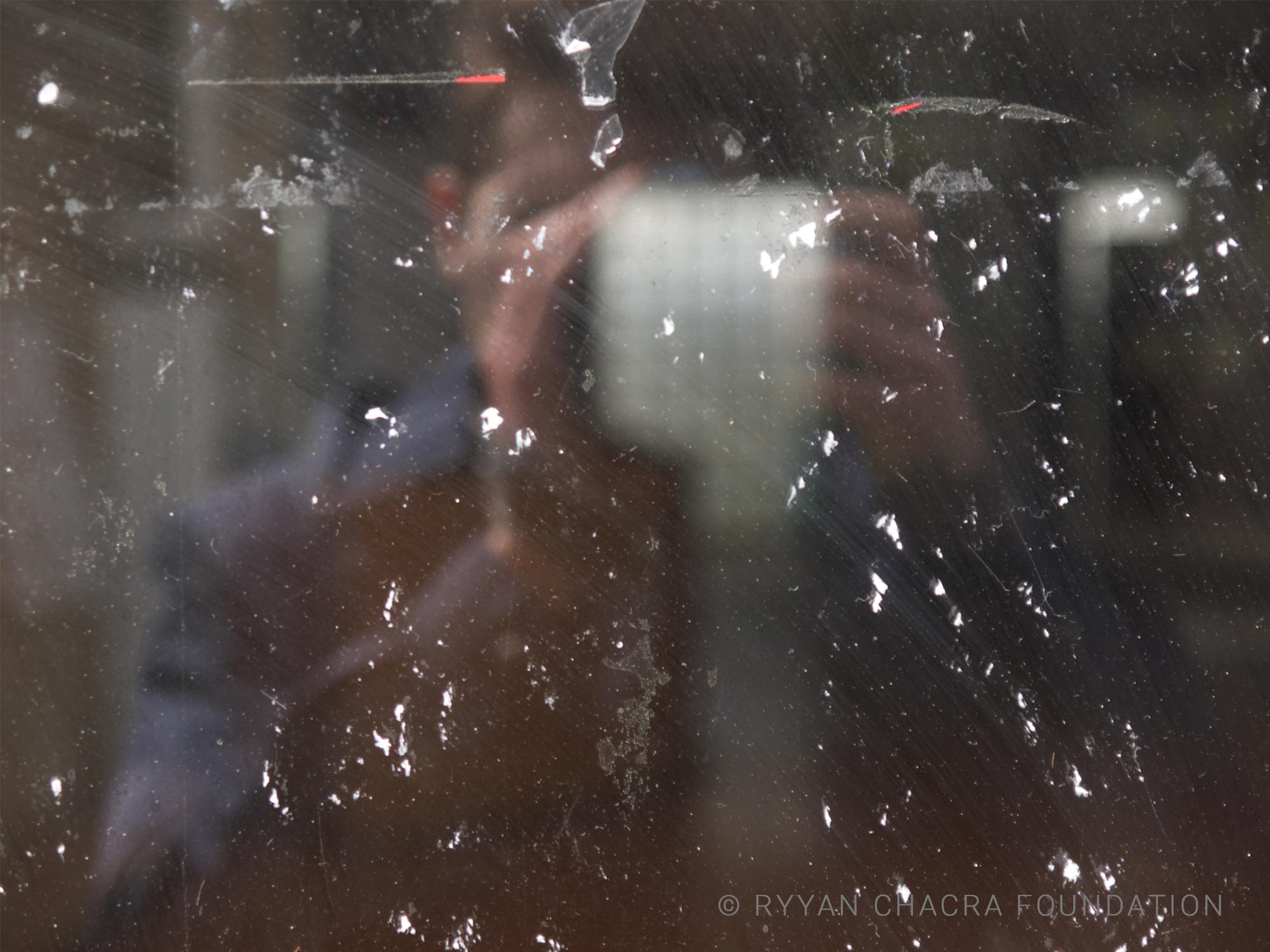
Ryyan’s special way of seeing the world was particularly conspicuous in his photography. On the many hikes and mountain town strolls we took together, his photos always turned out far more interesting than mine. We would be looking at the same thing — say, a building. I would take a picture of the building. But Ryyan would walk right up to it, focusing in on some detail — a textured wall, a frosted window — and capture something truly astounding.
How did you see that? I would think to myself. What was he seeing that I wasn’t?
“Sometimes it would appear like almost another feed,” Tarek said. “He would get an extra feed from the reality around us.”
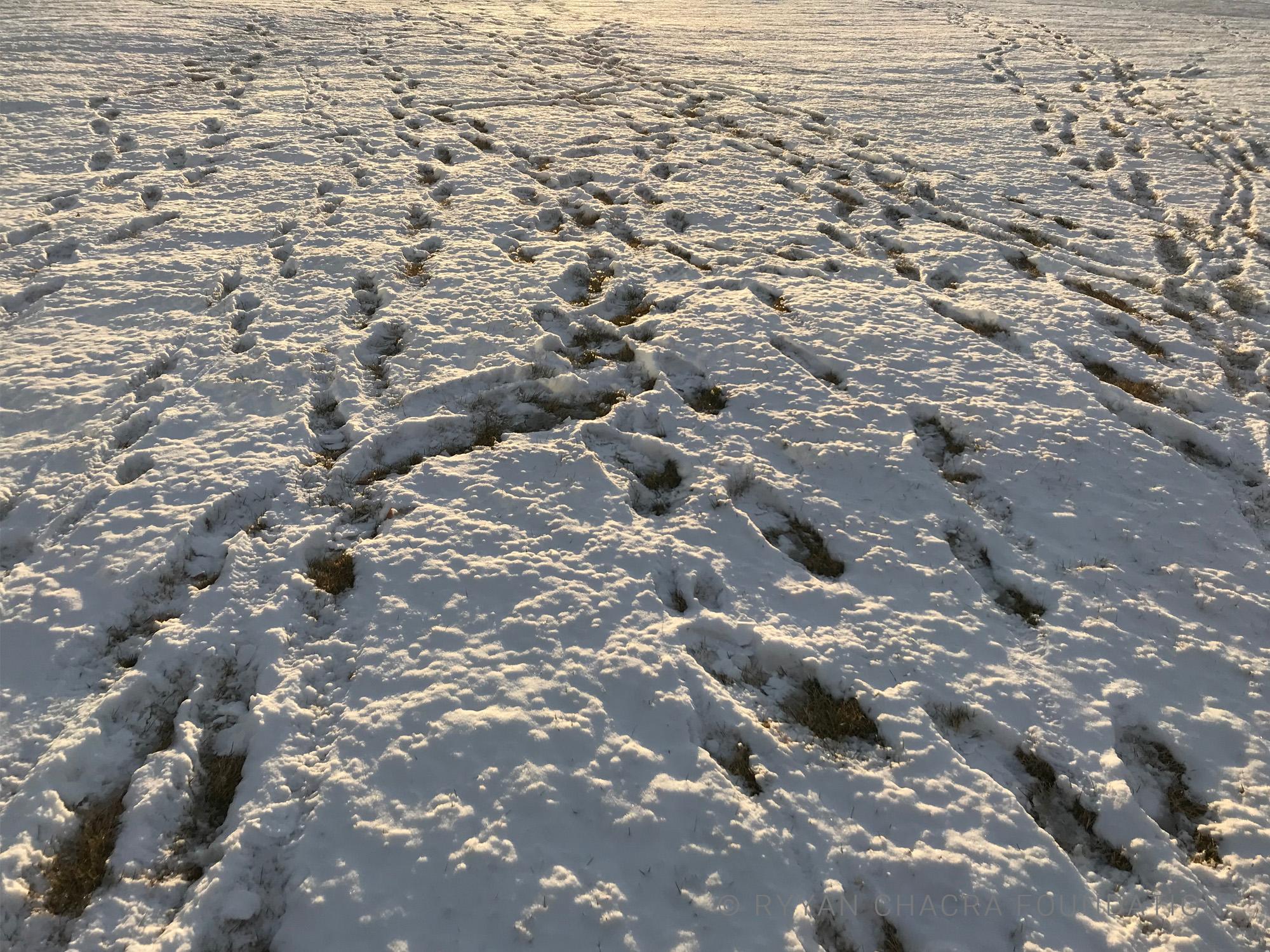
One image on display in the "Love, Anything" exhibition, a stack of yellow and grey horizontal lines, seems to pop off the page in a pattern of textured grooves and ridges — as though, if you were to touch it, it would be soft and bumpy, like a rug. Ryyan’s parents tell me it’s a stack of newspapers he zeroed in on during a family trip to Japan in the spring of 2024, days before he died. Elizabeth remembers asking Ryyan what made him take the photo.
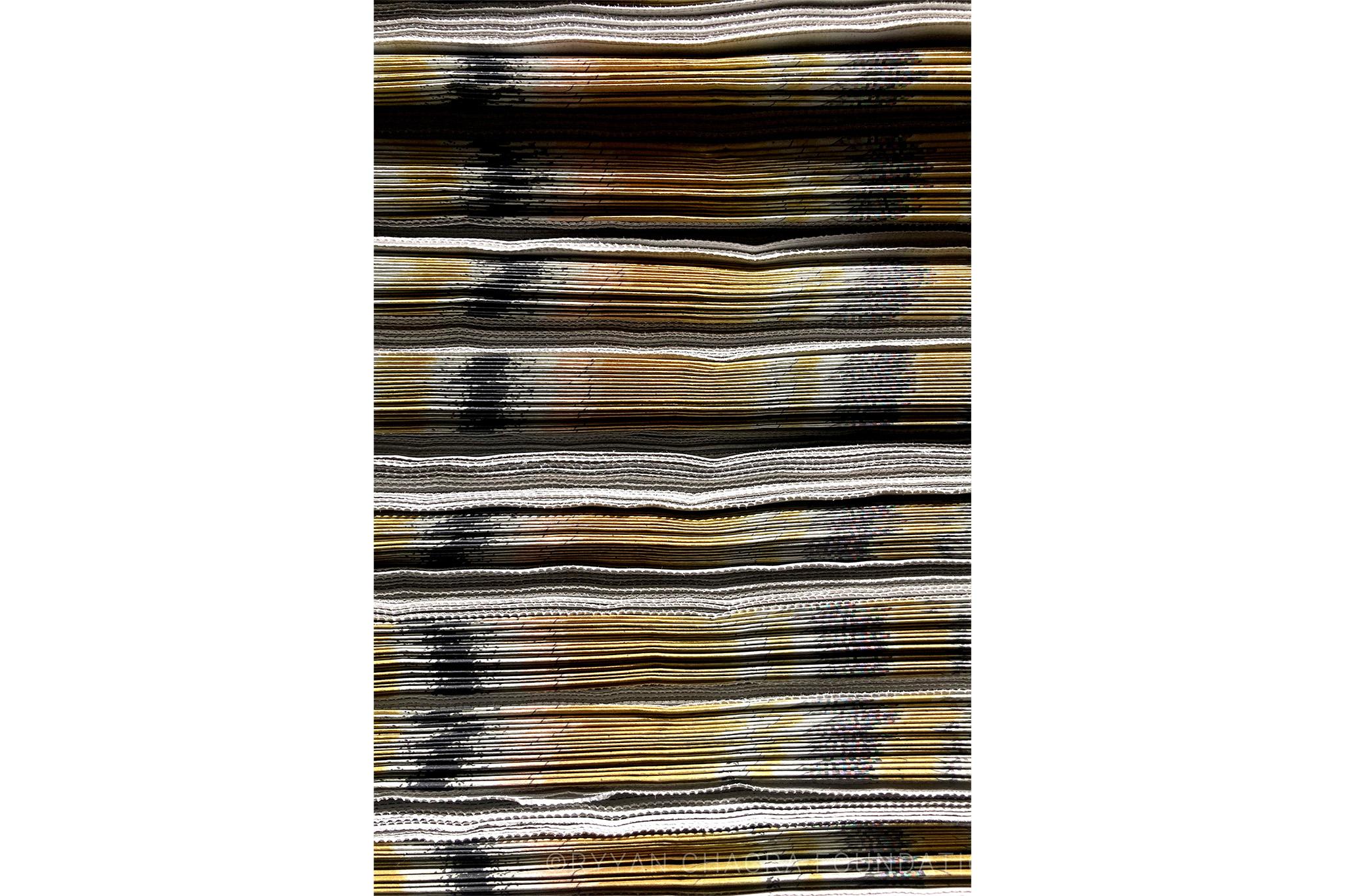
“He said he wanted people to notice things in everyday life, and see things that you might not normally see, and appreciate those things,” she told me. “I thought it was a very unique perspective.”
I thought about Davis’ notion of the “lens of OCD,” how OCD can feel like seeing everything — every risk, every possibility — and intensify the things you notice, lending them importance. I asked her how she interprets Ryyan’s approach to photography.
People with OCD are “detail-inclusive,” Davis told me, often zooming in on details and giving them meaning and significance. “We notice patterns. We notice how things connect,” she said. “I think that's something that people with OCD are very good at, is noticing something and ‘capturing’ it — expanding on it and supporting it and emphasizing it.”
Talking to Davis, I recalled one day in 2020, standing with Ryyan in the lofty attic bedroom where I lived at the time. I had been running around reporting earlier that week and, at two different times, purchased a water bottle while out in the field. I am an absent-minded and sometimes messy person, and those two half-full plastic water bottles now sat side-by-side on a ledge in my room. I saw Ryyan notice them, saw him tense up, saw the wheels begin to spin. I knew what he was thinking. Why are there two water bottles here? Had someone else been in the room with her?
Ryyan had previously told me he had fears of me cheating on him. When this came up, it never felt as though he were trying to control me, or even that these fears were really about me, specifically. I had always attributed them to trauma from past relationships. Now, I recognize there was more to it than that.
There were other signs.
Ryyan could be tense and hypervigilant in crowded public spaces. He regularly brought his own carbon monoxide detector on overnight trips to the mountains. After cooking together, Ryyan would ask me if I had turned off the stove, and even if I had, he’d go back to check it. At times, I would go to use an electronic device — a lamp, the TV — only to find that it had been mysteriously unplugged. He had a nervous habit of picking his skin, sometimes to the point where he bled. While driving, he’d often abruptly become convinced he’d run someone over; on one occasion, he got out and checked the car for signs of blood or damage. We never hit anyone, nor did I ever see or feel anything that would cast doubt on that. And yet this became a refrain at the end of practically every drive we took together: “I didn’t hit anyone, did I?” he would ask me, usually with a shy, sheepish grin. He knew it was silly. But he had to be sure.
These moments, though perplexing to me, didn’t initially spark any real concern, in part because Ryyan often made light of them. When he checked and re-checked the locks, when he suggested we stop hanging out in a popular Denver neighborhood because he saw a news report of a fatal stabbing there, when he said that he would only go to the movies with me if it was a matinee and if we sat by the exit, it was always with that sheepish, self-deprecating, half-apologetic smile.
“I feel like I was blinded by things that I chalked up as just being quirks of Ryyan,” Nate told me. “There were times where I felt I couldn't understand his worries. I could accept them, but they weren't things that I worried about.”
That’s how I felt, too. I accepted Ryyan’s fears and anxious habits as one small part of all that he was.
But as our relationship progressed, I caught some glimpses into how much the fear could impact him.
I appreciated Ryyan’s protective instincts, but there were times when it was clear it was causing him unnecessary stress. He worried about me when I was driving. He bought me a little keychain pepper spray from the local Army Surplus store. When we were about to cross the street, he’d grip my hand tightly. I remember him researching crime maps in my Denver neighborhood, and doing so again each time I moved apartments. If I were out reporting, he’d check his phone repeatedly to make sure I got home safely, double and triple-texting if I didn't respond right away. “Be safe,” became another refrain whenever we parted ways.
Whether he was happy, sad, or scared, Ryyan’s emotions were tangible; I could feel them radiating off of him, to the point where at times it felt almost like I could read his mind. But even when I knew something was troubling him, it wasn’t always apparent what might have triggered his anxiety. In those moments, Ryyan would tense up, fold his body in on itself, a faraway look in his eyes. It was hard to know how to help him then. I wanted so badly to know what thoughts were playing in his head, what he was seeing that I couldn’t. But for how brilliant and thoughtful and eloquent as Ryyan was, in those moments, he could hardly speak.
Davis said people with OCD often struggle to translate what’s going on in their heads.
“We understand that our symptoms don't make sense, and we're usually ashamed by them or embarrassed by them, so we're not going to volunteer them to anybody,” she said. “Unless someone directly asks you, Are you having violent, gory, horrific, sexual, perverted thoughts that you don't really want to be having, and we don't think you're crazy for having these thoughts. We think you might have OCD, people are going to really keep that tight.”
A few times, I asked Ryyan if he would ever consider seeing a mental health professional to help him manage his anxiety. But Ryyan told me emphatically that he didn’t want a diagnosis. He didn’t want to be medicated. He had tried therapy years ago, but hadn’t found it helpful. He felt he could manage on his own.
Ryyan was one of the gentlest people I’ve ever known. The only thing he really ever did to hurt me was to die.Maggie Donahue
One night, sitting at Ryyan’s desk and scrolling Instagram, I stumbled across an infographic on little-known signs and symptoms of OCD. Something clicked in my brain. I remembered how, years ago, a close friend with OCD had described it as being quite different from the stereotype — how for him, it was more like anxiety that’s impossible to turn off.
Tentatively, I showed the Instagram post to Ryyan. I shared with him what my friend had said, and asked Ryyan what he thought about it. I could see the wheels turning. But he didn’t say anything. He wasn’t ready to face it.
Ryyan would also sometimes speak importantly about harm. I never want to harm. I only want to protect, he once told me. When we first started dating, I was surprised to learn that he didn't really know how to cook; I had figured the easiest way to teach him was to delegate tasks. I remember asking him to cut a potato and observing that he seemed uncomfortable holding the knife. Elizabeth later told me that when he was in college, she had offered to buy Ryyan a nice set of kitchen knives. For years, he had refused. He didn’t want them around.
It is not uncommon for people with OCD, upon seeing a knife, to worry they will stab a loved one with it. While I cannot say for certain whether Ryyan had these kinds of fears, I do know this: Ryyan was one of the gentlest people I’ve ever known. The only thing he really ever did to hurt me was to die.
In the center of the “Love, Anything” exhibition stands a display case. Beneath the glass, Ryyan’s iPhone SE and his journal, open to a page in the middle of the book. As I move through the exhibition with some of Ryyan’s friends, we stop at the journal and read silently. There’s not much we can say.

Processing Ryyan’s death has felt a bit like trying to solve a mystery. How could a person who could find such beauty in everyday life want to die? How could someone who saw so much good in the people he loved not see that there was hope for him?
He left behind some clues — in the small stack of letters he had left behind for loved ones, in the notes-to-self scattered among his things, and in this journal.
Ryyan’s approach to journaling was singular. He did not write linearly, left to right, tracking down the page, but in small bursts of text, the passages arranged patchwork-style all over the page.
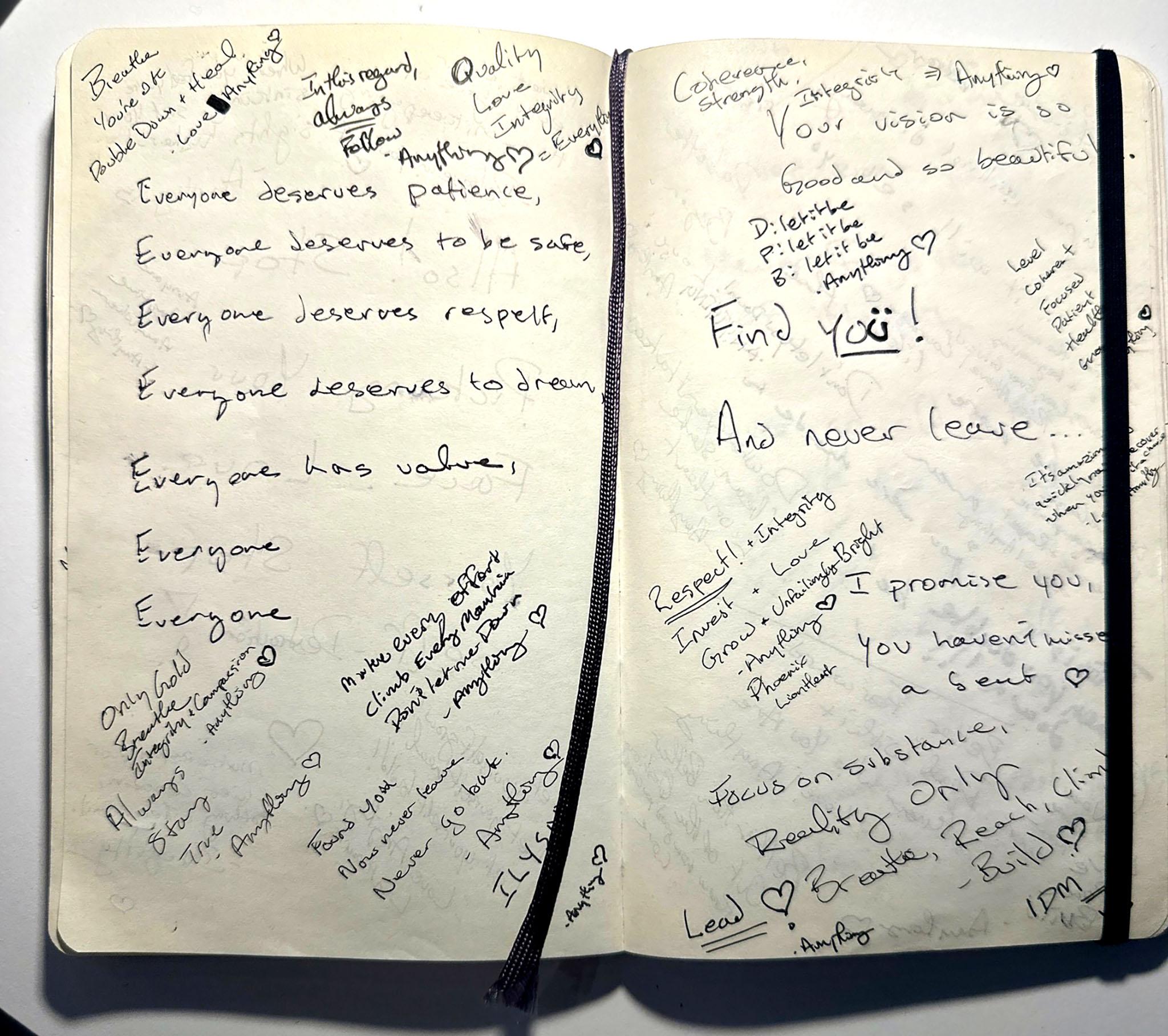
Elizabeth has done the difficult work of reading through Ryyan’s notes, trying to understand. She said some of his journal entries are indecipherable — abbreviations she cannot decode, repeated numbered sequences that may be evidence of hidden compulsions.
“He liked creating language and playing with language. He also liked having things almost be secrets,” she said
Perhaps most intriguingly of all, Ryyan ends many of these passages with a cryptic signature: Anything ♡.
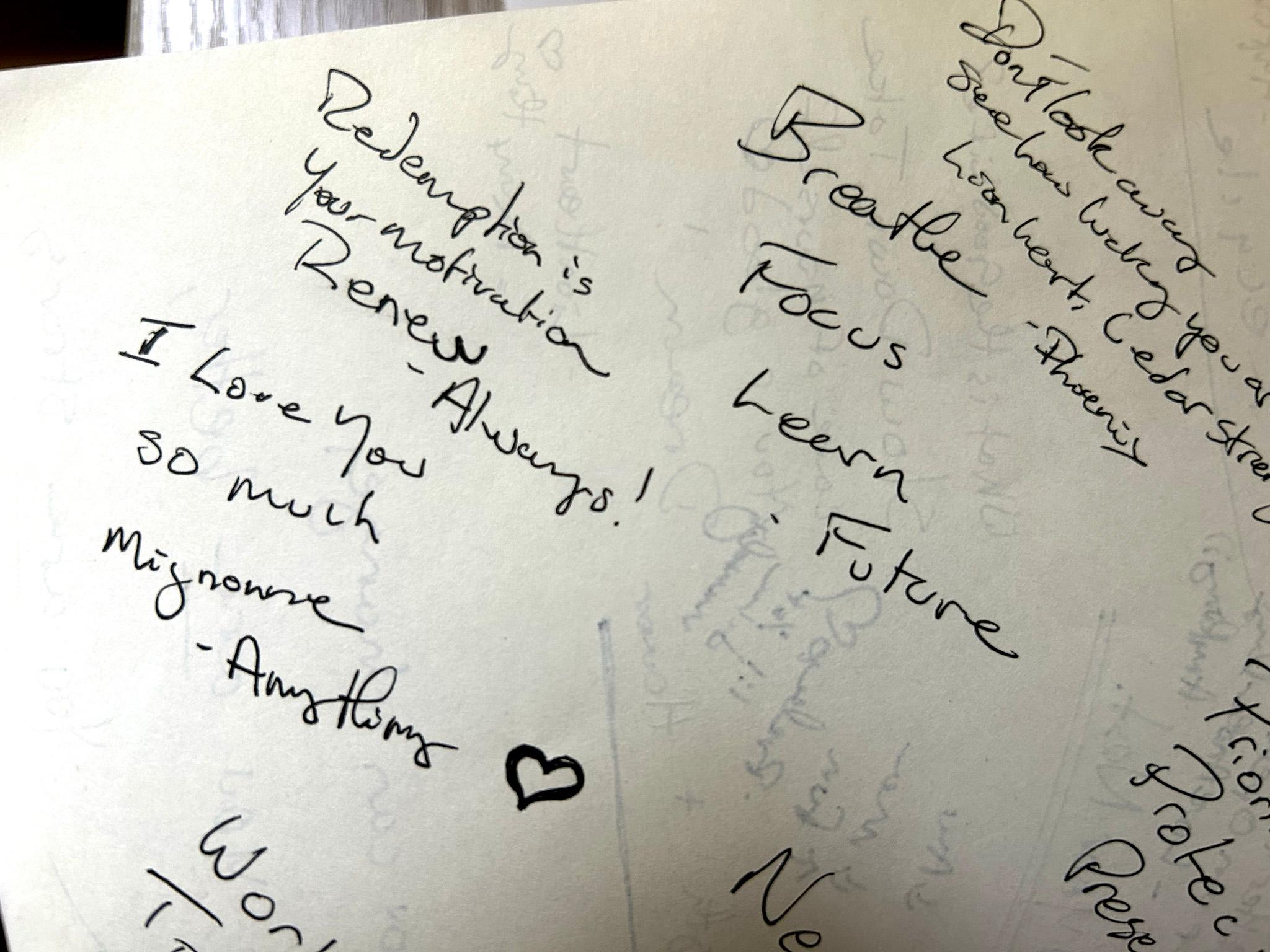
What exactly did “Anything” mean to Ryyan? Was it a pseudonym he assumed simply to remain anonymous? A persona? A character he was trying to channel? Ryyan loved to name things. He called his parents Mo and Bo. He called me Mignonne (deliberately mispronounced “mig-known”). He named his first car Oscar, and his second car Lancelot. It wouldn’t be altogether out of character for him to name himself.
Some people with OCD describe it as being a separate entity, another voice in their heads. Was “Anything” Ryyan’s OCD voice?
Where did Ryyan end and Anything begin?
We cannot ask him.
By 2022, the world was starting to open up. As Ryyan and I emerged from our bubble, we found that we had to re-learn how to function in the outside world.
I have always been a socially anxious person, and the isolation of COVID had heightened those anxieties. While as a reporter I interviewed people for a living, I now found myself hopelessly tense and awkward in less structured social settings in which I was not in my element. With Ryyan, I could be wholly myself, but I did not feel safe to do so among strangers. After years of moving around for work and school, I was starting to feel lonely and homesick, so far away from my friends and family. I came to realize I needed to live somewhere where I had a broader community. I also dreamed of becoming a magazine editor, and felt New York was the place to do it.
For Ryyan, COVID had been a safe, cozy, happy time. He told me he had been “nesting,” building a protective bubble here around himself, his parents, his dog Winston, and me. But as the world opened up, he realized that “nesting” had made it harder to function in the real world; now, he faced the anxiety triggers he’d avoided for nearly two years. Meanwhile, his company was pushing employees to return to the office. Ryyan didn’t think he could move back to New York, with its crowds and noise and chaos. He was excited about the idea of transferring to another office and starting fresh somewhere new, exploring a new city for a year while he applied to graduate schools in the UK.
It seemed our lives were moving in different directions. But we agreed that we’d always be there for each other. “We are family,” Ryyan had said. He told me that I was someone he’d like to see grow old.
We broke up in the spring of 2022. I stayed behind in Denver and started applying to jobs out East. Ryyan moved to Arlington, Virginia, but he kept his end of our promise.

As I dealt with increasing feelings of isolation in Denver, Ryyan continued calling to check in and make sure I was OK. When he came back to visit home that summer, and when we both coincidentally planned trips to visit friends in Boston that fall, we spent time catching up and recontextualizing our relationship as a friendship. Later, he cheered me on from afar when I moved to New York in early 2023 and started building a happy life there.
But for as much support as Ryyan offered me in the months after our breakup, he never let on that he, himself, was struggling.
Initially, I worried how the move to Arlington would affect Ryyan — worried that throwing himself into a new environment so quickly, somewhere he didn't have a strong support system, would be detrimental to his anxiety. But in all of our text conversations throughout 2023, he made it seem like he was doing well. He was liking Arlington and exploring DC. He was having fun visiting his friends all over the country. He had narrowed down his list of grad schools. He was even getting on planes again.
Against my better judgment, I took for granted that the danger for Ryyan had passed, that he would be OK.
When a few months passed in early 2024 without hearing from him, I figured he was moving on, or trying to give me the space to do so. I wanted to give him the same.
Then, in May 2024, I got the call from his parents. He was gone.
Looking back, things probably started to fall apart around the time he moved to Arlington, Ryyan’s parents told me.
Ryyan made a few friends in the area, but struggled to build a real sense of community — something he valued more than anything. “DC’s transient reputation is real,” he told me in a text in October 2023. Meanwhile, his fears were getting worse.
Ryyan had always loved soccer. He joined an intramural league, but around Thanksgiving 2023, he accidentally kicked the goalie in the head. The player wasn’t hurt, but it rattled Ryyan. After that, he stopped playing but continued to show up at games just to make sure the goalie was OK.
Around this time, Ryyan made multiple doctor appointments to get an EKG, complaining about pain in his chest. He was worried he was having a heart attack. Each time, he was dismissed.
“Now we know that he should have been told, ‘This is anxiety. You're having a panic attack,’” Elizabeth told me. “But nobody said that.”
Ryyan came home to Denver on Dec. 21, 2023, with plans to return to Virginia after the holidays. That didn't happen. In early January, he saw his primary care physician in Denver and walked out in tears.
He had been diagnosed with OCD.
“I rarely saw Ryyan cry as an adult,” Tarek told me. “That either confirmed his worst fears, or maybe they were tears of some relief. But then started a new spiraling of sorts.”
Days after Ryyan’s diagnosis, he abruptly ended a relationship with someone he’d been dating in Arlington. He decided to quit his job, to stay home in Denver rather than return to Arlington, so he could focus on interviewing for grad schools.
At the age of 28, Ryyan finally began treatment. He read up on OCD. He saw several doctors, therapists, and psychiatrists. He insisted on paying for everything himself, and took a job at a coffee shop to cover his medical bills.
In March, Ryyan took the Yale-Brown Obsessive-Compulsive Scale (Y-BOCS), the standard assessment for OCD. He scored 27/40, meaning his OCD symptoms were classified as “Severe.” At the time, he noted that he was spending 3-8 hours a day on obsessive thoughts, and 1-3 hours a day performing compulsive rituals. Later, he wrote that those numbers had increased. His fears were keeping him up at night, preventing him from sleep.
“When we don't have enough sleep, emotional regulation is really hard. It's hard to have intrusive thoughts come in and have the willpower and the energy to deal with them in a constructive way,” Nicely told me. “If OCD can keep you in a victimized position where you don't recognize your power, it wins.”
That spring, Ryyan was accepted into an MBA program at Oxford. This was Ryyan’s dream school. For years, he had dreamed of living in the UK. But when he got the news, his parents told me, he didn’t even seem excited about it.
Ryyan’s parents had done everything in their power to help him. They found him doctors, therapists, and psychiatrists. They spent every day with him, cheering him on and supporting him through every decision he made. They never imagined that Ryyan — this capable, successful, self-assured person, their only child, who had never given them reason to worry — would take his own life.
“This is what hurts me,” Tarek told me. “That just being there physically, telling him we love him, telling him you have nothing to worry about — you have nothing to fear, no one will harm you here, you're safe — didn't change the outcome. Didn't move the needle. Because we were completely outside that space, that prison. He was inside a prison, and we didn't see it, and he wasn't able to break out of it.”
If Ryyan had the tools to open up and access treatment sooner, it's possible he could have found a way out of that prison.
The standard first-line treatment for OCD typically involves a combination of Selective Serotonin Reuptake Inhibitors (SSRIs) — often at higher doses than what is prescribed for depression — and a form of cognitive-behavioral therapy called Exposure Response Prevention (ERP).
“ERP involves facing your fears and not doing a compulsive response,” Nicely told me.
Specialists work with OCD patients to build a list of their fears and anxiety triggers, and then help them expose themselves to those fears gradually, in a controlled manner, encouraging them to sit in their anxiety rather than giving in to their compulsions.
“OCD is really a pathological intolerance of uncertainty, and the ERP process has been shown through lots and lots of research over the years to help our brains learn that it can tolerate that uncertainty,” Nicely said.
We were completely outside that space, that prison. He was inside a prison, and we didn't see it, and he wasn't able to break out of it.Tarek Chacra
In severe cases, or ones where patients don’t respond to therapy and medication, providers may recommend advanced treatments such as Transcranial Magnetic Stimulation (TMS), Deep Brain Stimulation (DBS), or surgeries targeting areas of the brain associated with OCD.
Ryyan had started seeing an OCD specialist in the weeks leading up to his death. Still, it can take time to find the right mental health care — a good therapist you feel safe with, a psychiatrist who listens, medications you respond well to. Ryyan didn’t have that kind of time.
“He slipped away before we even knew what we were dealing with,” Tarek said.
By the time Ryyan finally accepted help and began treatment, he was already spinning out of control.
If Ryyan’s struggles were invisible to the people who loved him, they are apparent in the private writings he never intended anyone to see.
Many of Ryyan’s notes from those final months are words of encouragement, pushing himself to be brave, to keep going — Breathe. Hold on. Focus. Design your calm. Never, ever, ever give up. Never deviate from the virtuous path. Stay the course and love completely. Be braver. Climb higher.
Over and over again, Ryyan reminds himself of his values: Respect, integrity, honor, strength, dignity, patience, authenticity, empathy, discipline, love, compassion, strong sense of self worth. With these mantras, he seems to be holding himself to an impossible standard of excellence, unable to see that these qualities he was trying to nurture were ones his friends and family already saw in him.
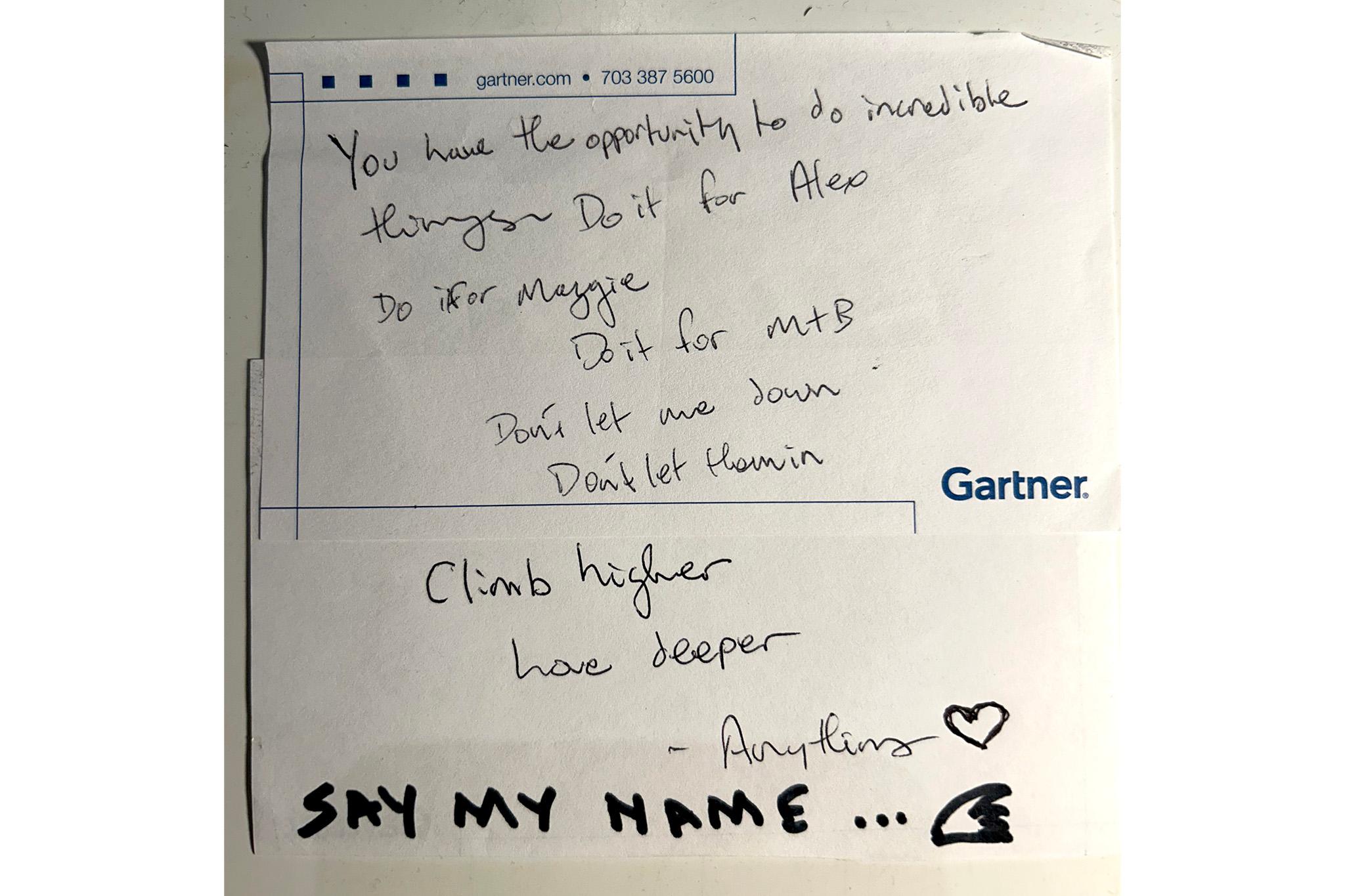
Back at home in Colorado, Ryyan was safe from the external threats he had feared for so long. But his OCD, it seemed, needed something else to latch onto. And so it turned inward.
Elizabeth observed that Ryyan’s fears during those final months largely revolved around failure — a belief that he had made irreparable errors in judgment, a sense that he was a disappointment to his loved ones, a profound uncertainty about what to do with his future. In some pages, he seems to chastise himself for his perceived shortcomings, for decisions he’d made “for wrong reasons,” for losing sight of what’s important.
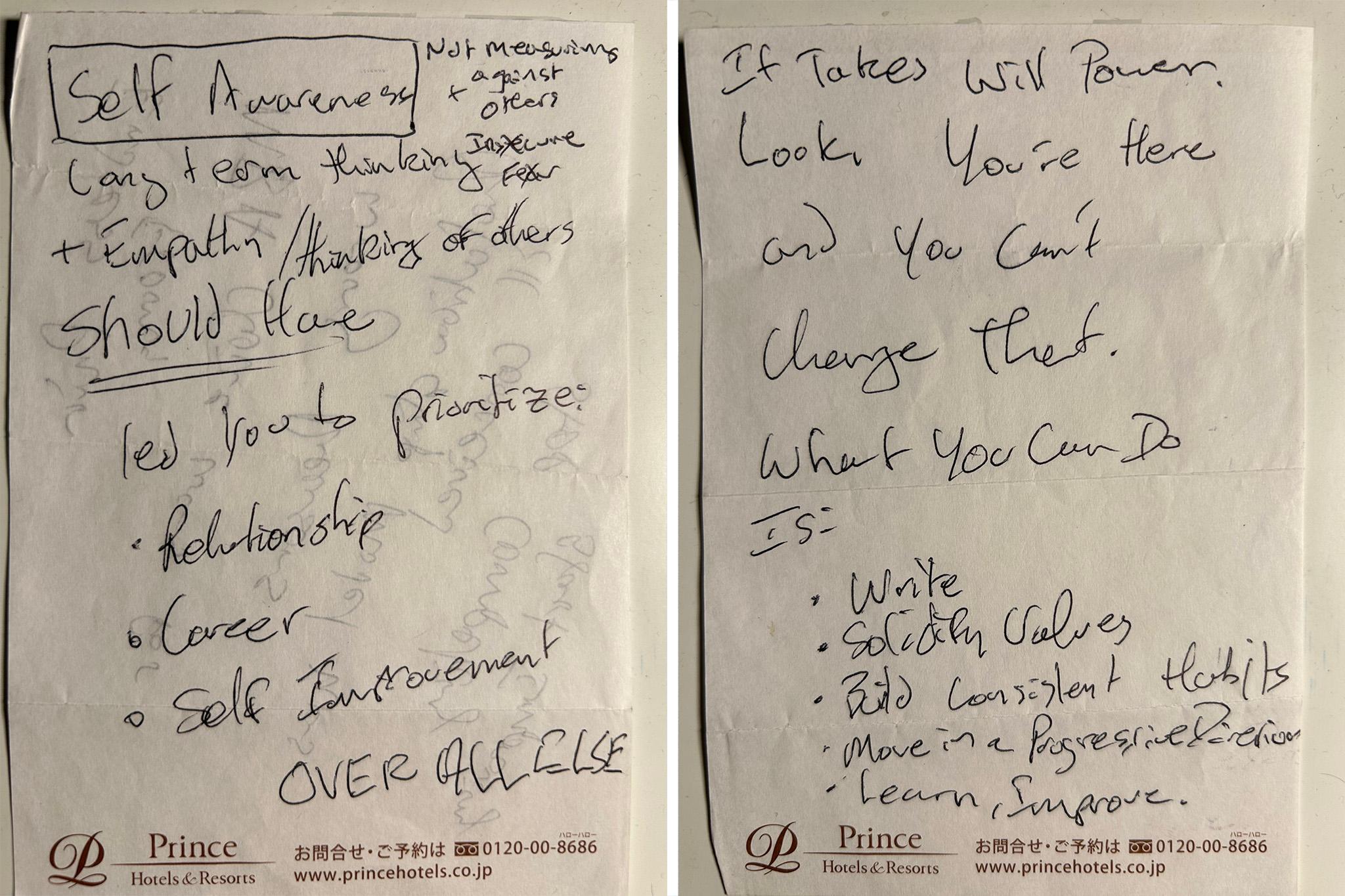
Ryyan had apparently been making big decisions out of fear, out of insecurity, out of a “fixation on being on track.” Within the span of about four years, he’d gone through three cross-country moves, started and ended two relationships, and quit a job he’d loved. Now, he was preparing for yet another major life change that he could no longer bring himself to feel excited about — or perhaps did not feel ready for. But he believed there was no going back.
“He would make a decision because he needed certainty, but it wasn't always the decision he really wanted to make, I don't think. But he wouldn't go back on it,” Elizabeth told me. “He just would regret some of his decisions, and then go through this period of being depressed.”
In her memoir, Nicely explains that OCD can drive you to sacrifice your life to maintain a sense of control, losing all sense of identity and connection to pleasure:
OCD makes you afraid to love anyone or anything, because the worry that accompanies love is more a punishment than the love is a reward … I’m not quite sure of the point of my life, since I have to give up so much to maintain my sanity … I had to shut down my heart to control my world.
The paradox of OCD, she told me, is that it uses the things you care about, and gives you rules about how to protect those things. The compulsions then become so all-consuming, and the OCD voice gets so loud, that in the end, what you truly want no longer matters — “You just want to make that voice quiet.”
If you need help, dial 988 to reach the Suicide and Crisis Lifeline. You can also reach the Colorado Crisis Services hotline at 1-844-493-8255 or text "TALK" to 38255.
Ryyan loved so many things so intensely. If OCD goes after the things you care about, and turns them into fears, it stands that he would want to turn away from the things he loved — his career, relationships, communities he valued.
“If somebody really is in danger, everything that they care about is put to the side to try to make sure they can safely get out of danger,” Nicely told me. “OCD creates a false sense of danger, but it feels incredibly real. It feels like it's happening, and so all you care about is trying to stay safe, or trying to keep other people safe. And the interests and the hobbies and the goals and the passions — none of that matters when you're running away from a tiger.”
Ryyan’s actual name almost never appears in the journal. But in one note, scribbled on loose slips of hotel paper just days before he died, he wrote:
Leave a light on for yourself. If you can’t trust and be accountable to yourself, you can’t get anywhere. This pain fundamentally means you care. Say no and don’t look back. Keep to the code and grow. No matter the ending this will be worth it. I love you but I’m starting not to know you. Come back. Please. If anything means anything to you you’ll pivot now and permanently. Love (not) Lost. Ryyan.
If Anything means Anything to you. Ryyan.
Why had he chosen to invert the names here?
Where did Anything go?
Historically, OCD has not been viewed as a risk factor for suicide. Recent research paints a different picture.
A 2020 systematic review of 61 independent studies found that 13% of patients with OCD attempt suicide during their lifetime, and about 50% experience suicidal ideation. A 2017 review involving tens of thousands of OCD patients over 40 years found that people with OCD were 10 times more likely to die by suicide than the general population, and five times more likely to attempt suicide.
When someone dies by suicide, people often assume it was the result of a long struggle with depression. Ryyan was never diagnosed with depression — though his parents believe he became depressed after struggling with OCD for so long.
“A majority of people with OCD end up with depression secondary to the OCD, because the OCD is so exhausting and demoralizing and debilitating,” Nicely told me. Research suggests that more than 50% of people with OCD develop major or persistent depressive disorder in their lifetime; Davis says most estimates are even higher, with around 63 - 78% OCD patients developing major depression in their lifetime — roughly triple or quadruple the rates in the general population.
Regardless, some research indicates that OCD on its own may significantly increase suicide risk. The 2017 review found that 43% of OCD patients who died by suicide did not have any other known psychiatric comorbidity.
In the letter Ryyan left for me, he seems to indicate that it was the fear, more than anything else, that drove him to suicide. He begins the note: “I wish this weren’t the next life update but it seems my fears ultimately got the better of me.”
Whatever put the final nail in the coffin, OCD, it seems, was the thing that got him there.
“We have a responsibility to live incredible lives,” Ryyan’s friend Nate told me recently.
I am trying to do that.
It has been two years since Ryyan died. I am trying to carry the gifts he gave me, to live a life of joy. I’m pursuing a new relationship with a wonderful person, investing time in supportive friendships, filling my life with good things. I want to love expansively, to find beauty in the everyday, to see myself the way Ryyan did — to be strong and brave and kind and generous.
I still want so badly to see through his eyes.
In these last two years, I have read countless books and articles about suicide, grief and OCD. I’ve read and re-read my old texts with Ryyan, spent time with his parents, mined my brain for memories that might help fill in the gaps of my understanding. I’ve helped Tarek and Elizabeth build the website for the Ryyan Chacra Foundation, hoping to contribute in any way I can to awareness and research efforts related to OCD and suicide.

One of the books I read last year encourages suicide loss survivors to embrace the mystery of their loved one’s death rather than trying to understand it. Frustrated, I wrote in the margins: “But isn’t it an act of love to try to understand him and how he was feeling?”
I know that I cannot save Ryyan. But turning away from this grief feels like a waste of the energy he put into the world, and of the pain of his loss.
“When we participated in support group gatherings, we were given writings on loss, suicide, and grief. In those writings, the notion of a ‘rescue fantasy’ stood out for us — that feeling that we could have done something to save him,” Ryyan’s parents said at the opening of Love, Anything. “Over time, we slowly came to re-interpret this ‘rescue fantasy,’ not as a burdensome admission of failure, but as an opportunity to render Ryyan’s name, contribution, and legacy as a consequential force in our lives, and in the life of the community to which he belongs.”
Suicide is the 10th leading cause of death in the United States. And yet, there is still so much we don’t understand about why people die by suicide — and therefore, how to prevent it. In order to provide better support for those struggling, we need to explore the intricacies of suicidality, to look at it from different angles, to explore risks and patterns we may have historically overlooked.
There is so much I will never understand about Ryyan. But there are things we can do. By learning about OCD, we can at least understand the beast he was facing. We can look at parallel experiences, note patterns, support research, and spread awareness so that we can find ways to intervene sooner.
Because: If we cannot learn to see through Ryyan’s eyes, more people like him will slip through the cracks.
As Nate and I walk through the gallery, taking in Ryyan’s photography, trying to decode what we’re seeing, he notes the way the light glints off the brightest areas of the photos, whitening them so that they almost become negative space.
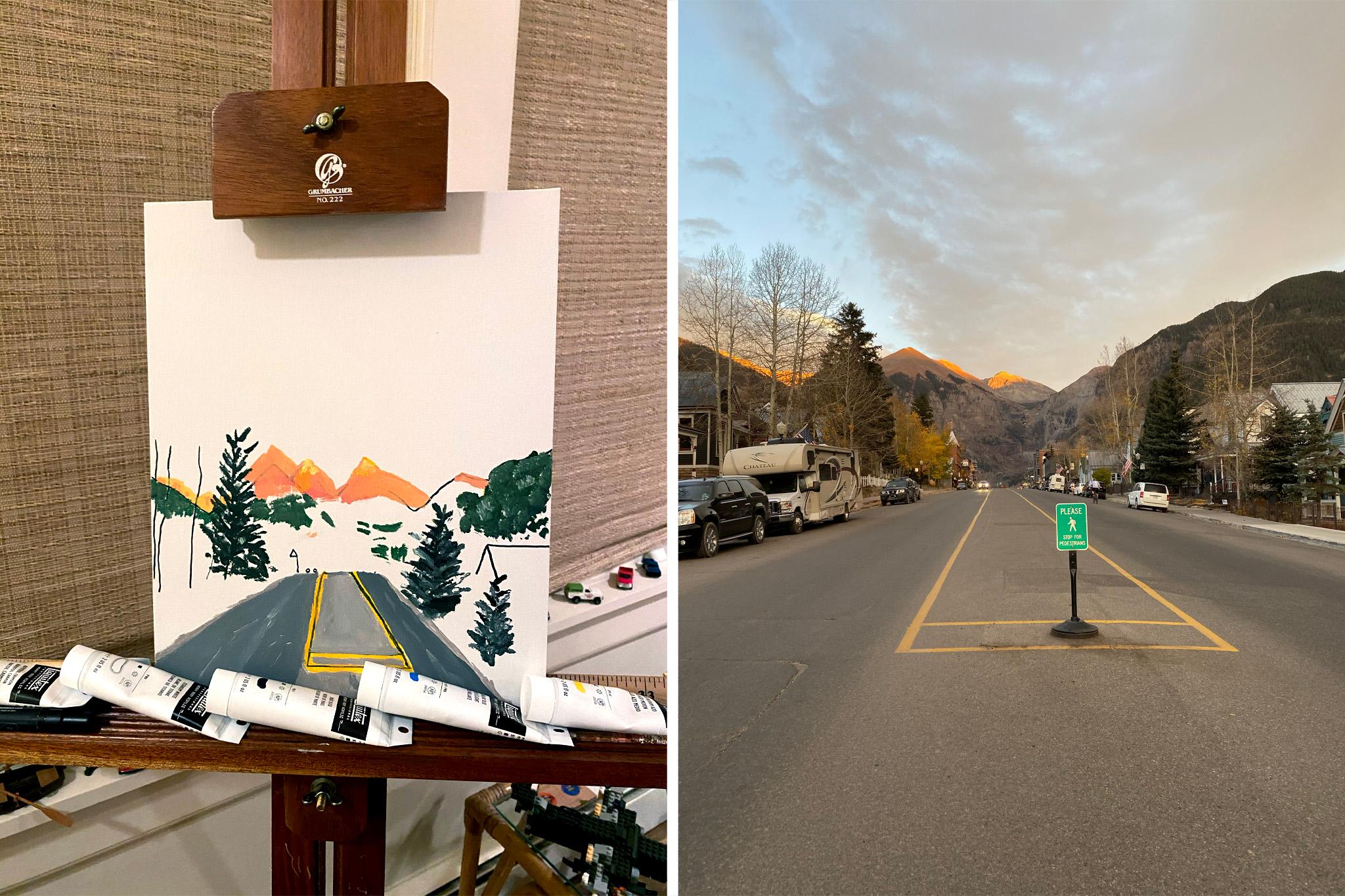
It reminds me of a cold night in late 2020, when, trying to make the most of the pandemic, Ryyan and I decided to have a DIY wine and paint night. We chose to recreate a scene from a trip we’d taken to Telluride earlier that fall, taking turns adding brushstrokes to the canvas.
At one point, Ryyan declared that it was finished. The canvas was still mostly blank, save for the road, some trees, some outlines yet to be filled in, the mountains rising above an invisible town, washed in alpenglow. There was so much left unpainted. A good artist knows when to stop, he told me.
I wanted to keep painting.
"Love, Anything" is free and open to the public. Ryyan’s photos will be displayed through June 26, 2026, at CU Anschutz’s Fulginiti Gallery and Gossard Forum, Center for Bioethics and Humanities. Additional information can be found here.
The final talk in the Love, Anything speaker series, featuring Lissa Soep, PhD, will be presented this Thursday, June 18, at 6:30 p.m. RSVP here.