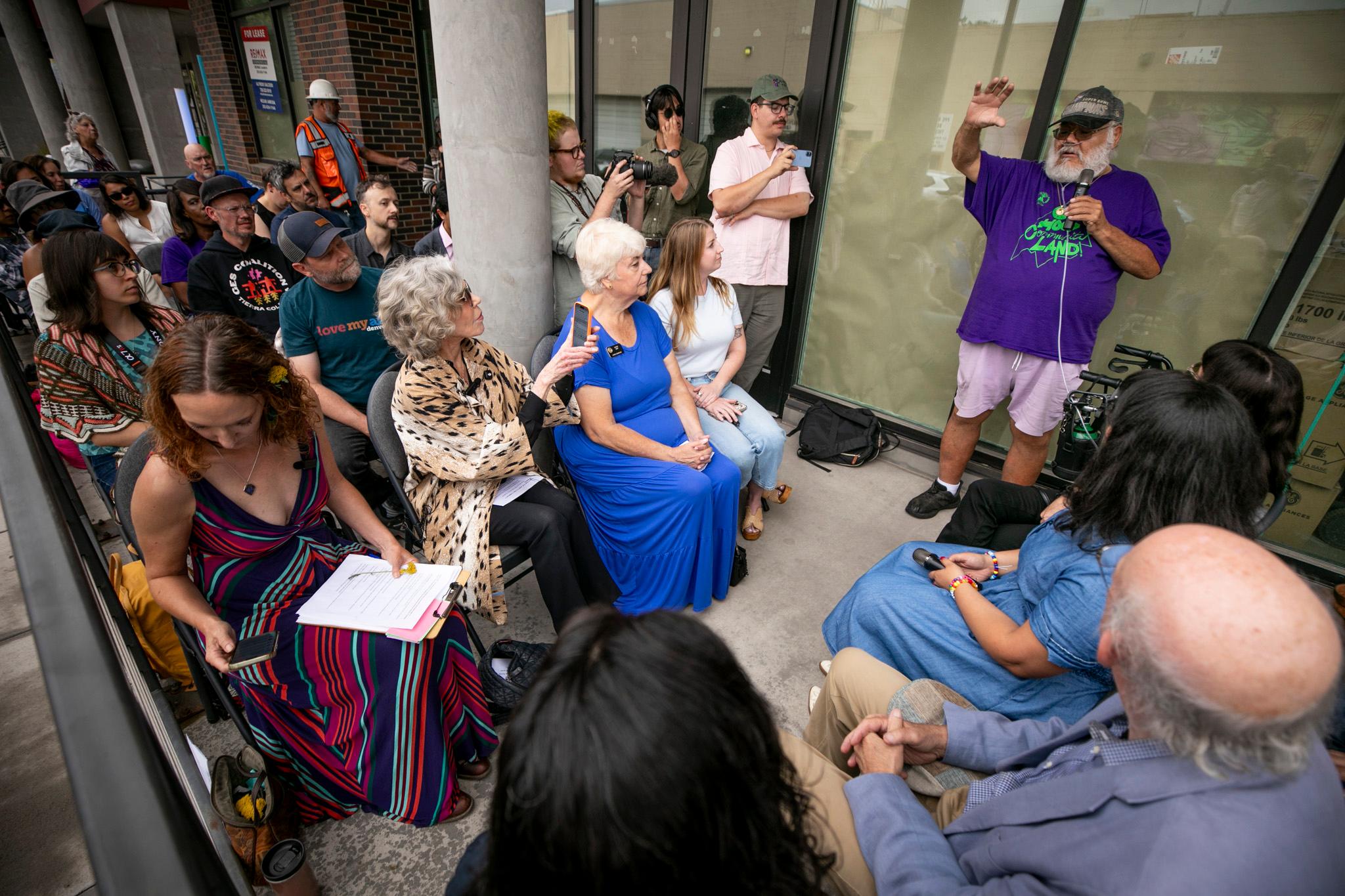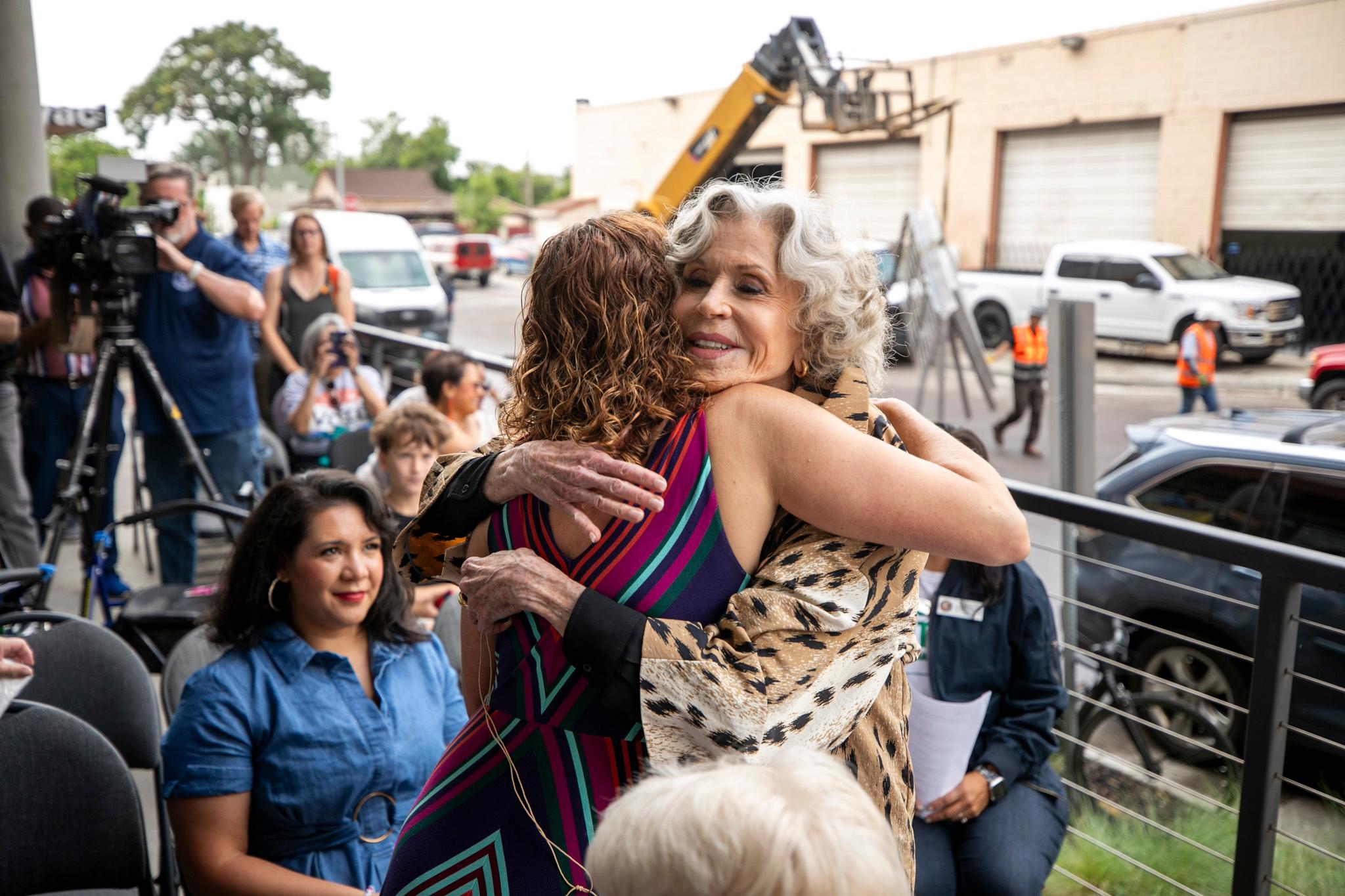
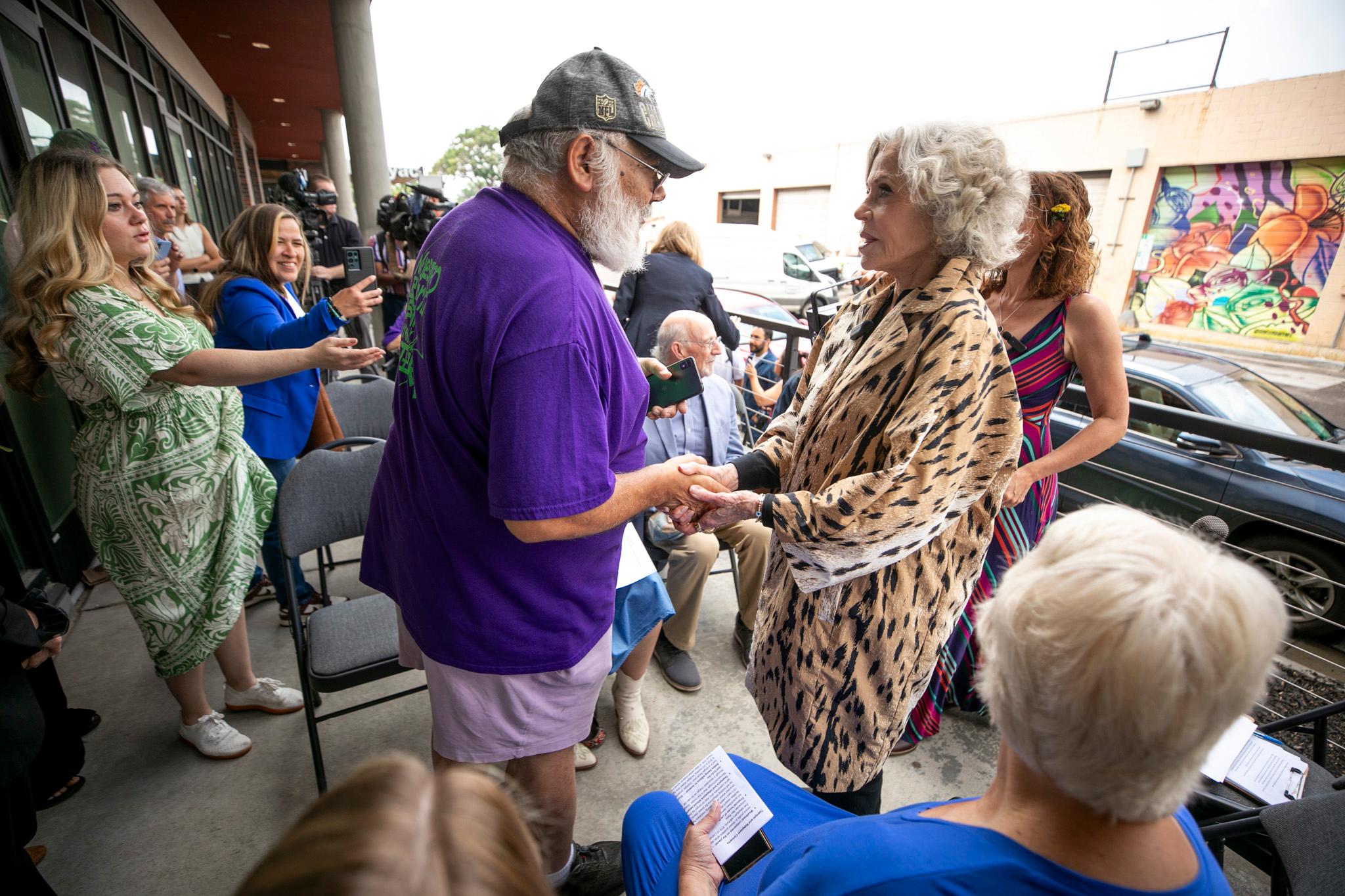
A narrow patio in front of Tepeyac Community Health Center strained to hold a crowd on a gloomy Thursday morning in north Denver.
At the center of the gathering sat actress and activist Jane Fonda. After two previous visits focused on environmental struggles in north Denver, the 88-year-old returned to learn how the community is confronting a massive data center towering over the clinic.
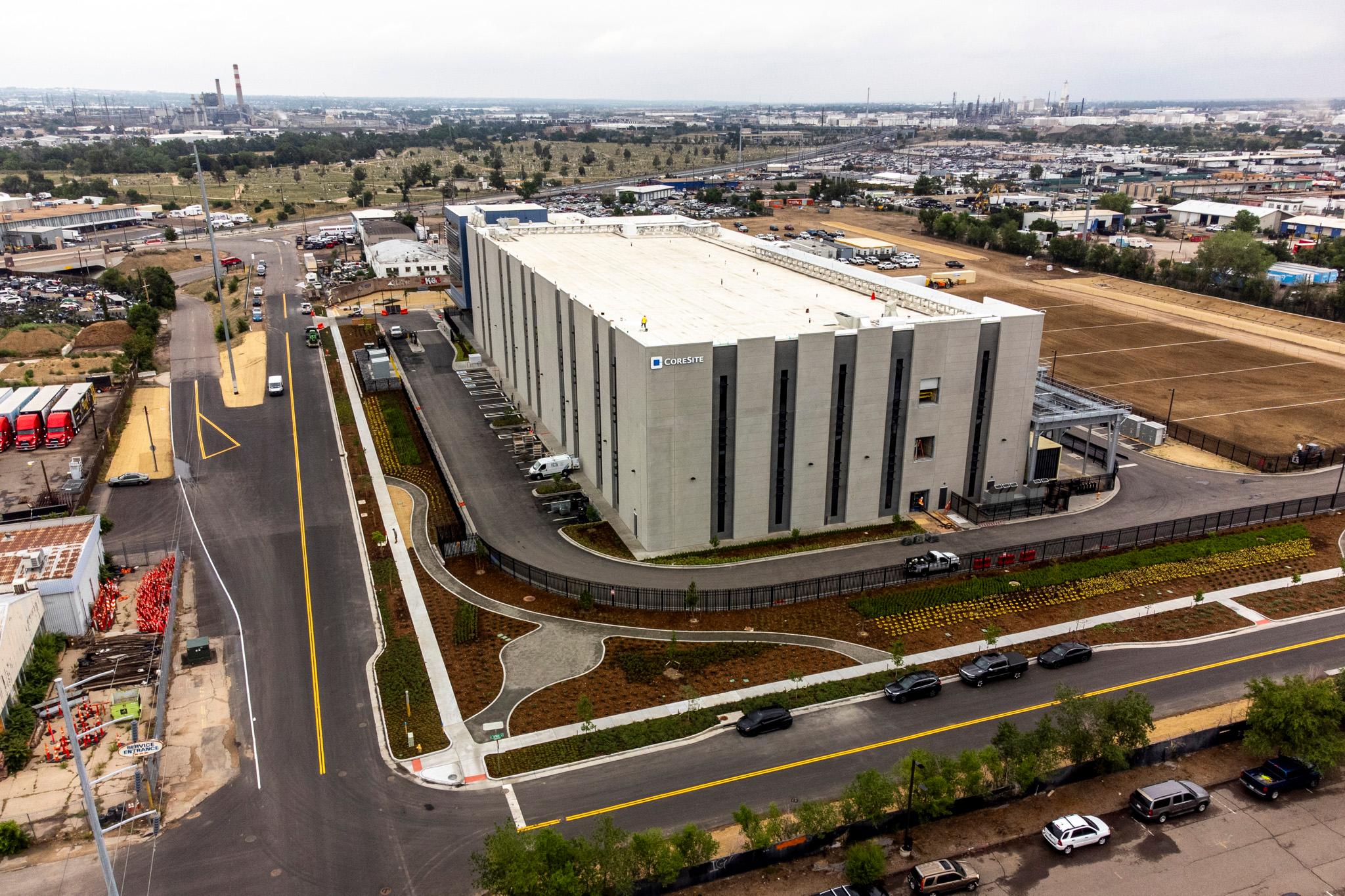
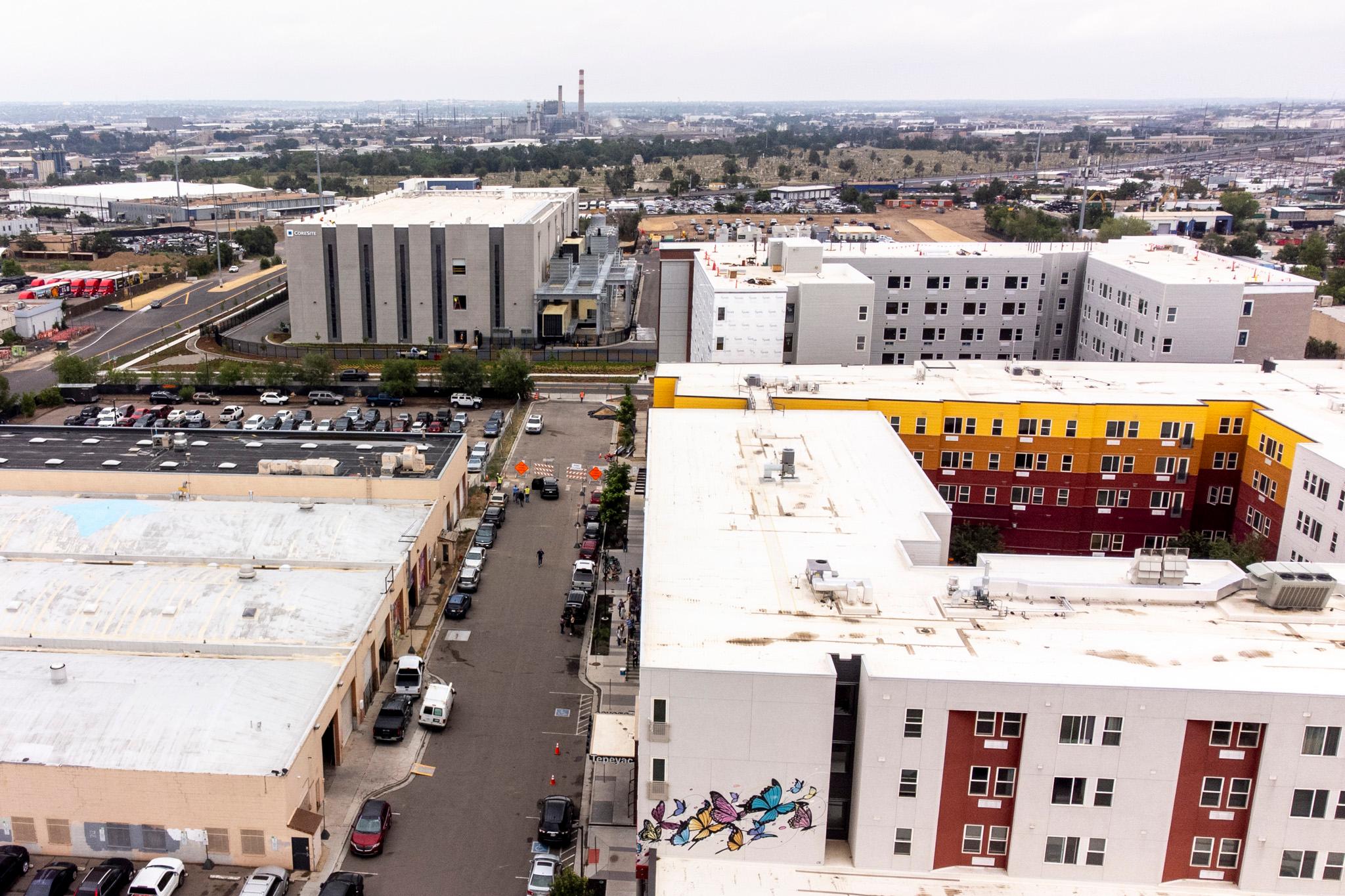
CoreSite, a Denver-based data center developer, is behind the new project. Once complete, the campus known as DE3 will rely on 14 backup diesel generators, ready to flip on less than a block from the low-income health clinic, plus a park, recreation center, an affordable apartment complex and an upcoming senior living center.
The project’s scale was clear as Fonda spent an hour and a half listening to a series of short speeches. After more than a year of construction, CoreSite has affixed a gigantic sign with its name on the 600,000-square-foot building in the heart of Elyria-Swansea, a largely Latino neighborhood already surrounded by major air pollution sources such as Interstate 70 and the Suncor refinery.
Harmony Cummings, a local activist with the Green House Connection Center, an education nonprofit, arranged the program to highlight recent wins in the push against the project. She said the work shows that “the society that the richest, most unethical tech assholes are trying to push upon us is not inevitable.”
That opposition movement gained its footing months after construction began in early 2025.
Since then, residents and organizers have pushed the company to abandon its plans to build two additional data centers on the same property. Community groups are also preparing to enter negotiations over an agreement they hope will force the company to curb its expected air pollution and water usage.
That work has already notched one major win: In May, the Denver City Council voted unanimously to impose a one-year moratorium on new data center development. The decision means CoreSite can’t proceed with its expansion plans until city leaders hammer out new regulations for the hulking facilities behind the AI boom.
“We're putting together a working group to look at all the issues concerned to see if we can welcome additional data centers to Denver,” said Councilperson Paul Kashmann at the listening session. “If we can, what type of regulations would have to be in place to make that happen?”
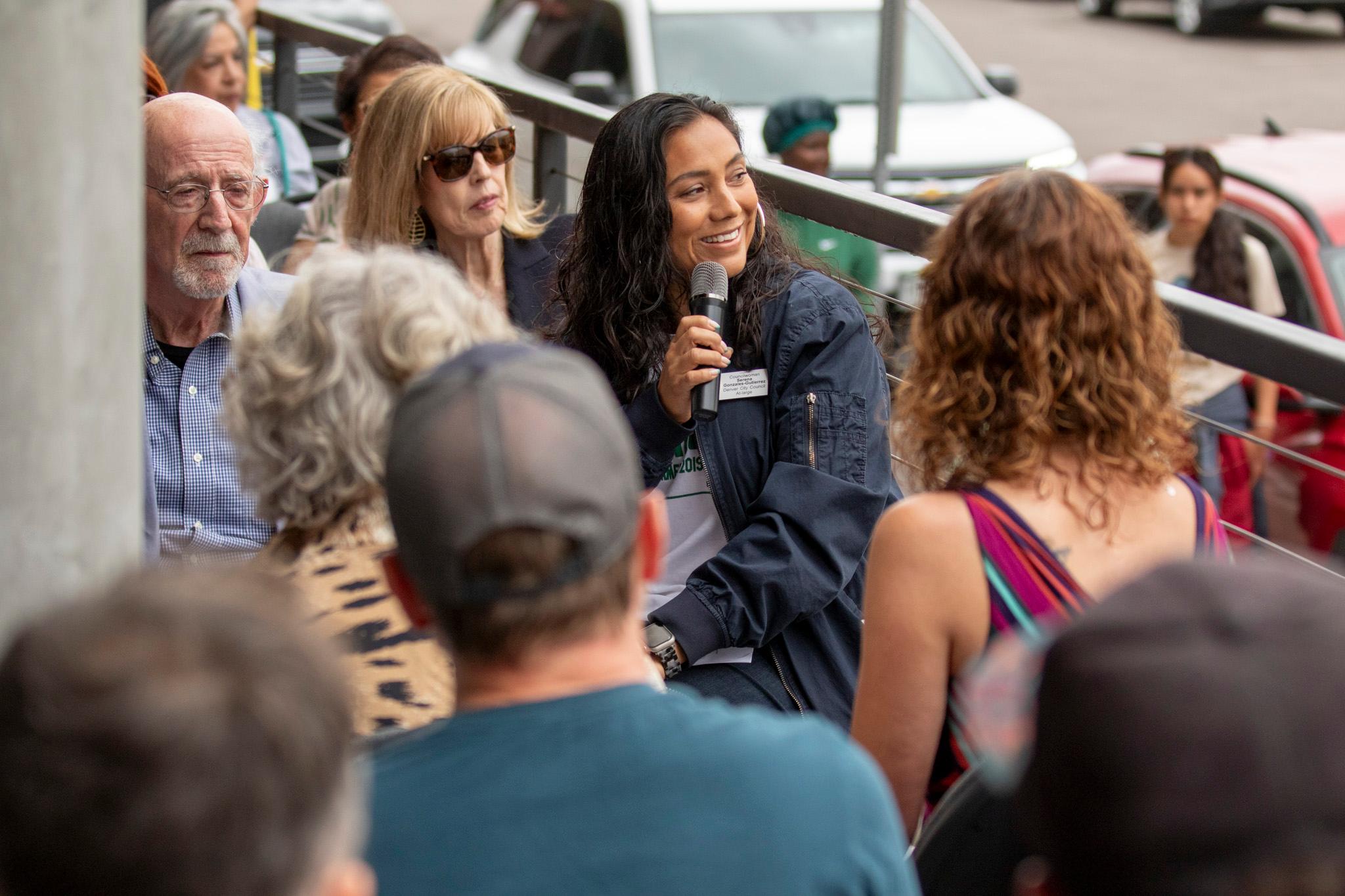
Organizers, however, aren’t ready to declare victory. Robin Reichhardt, a co-founder of the GES Coalition, a leading neighborhood opposition group, said a moratorium is purely symbolic. Over the next few months, he’s hopeful Denver will limit future data centers — and CoreSite will agree to make major changes at its nearly finished facility.
“That means that there needs to be a real conversation about those diesel generators. It is unacceptable to put that much pollution back in one of the most polluted ZIP codes in the country,” Reichhardt said.
Others went further with their demands. Gil Herrera, a longtime north Denver resident who relies on supplemental oxygen, was forced to leave his original home to make room for the recent expansion of Interstate 70. Beyond a local moratorium, he said Colorado should simply ban all future data centers.
“We still got lives in us,” Herrera said. “We want to see our grandchildren, our great-grandchildren, and not be a part of this destruction.”
Fonda listened — and called for a more considered approach.
The calls for an outright ban won cheers from the crowd, but some in attendance explained their efforts to impose strict rules statewide.
In the last legislative session, State Sen. Cathy Kipp, a Democrat representing Fort Collins, sponsored a data center regulation backed by environmental groups. If passed, it would have required the tech companies to purchase renewable energy for electricity-hungry data centers, install water-efficient cooling, and provide greater transparency to local communities.
The push failed amid opposition from data center lobbyists and labor groups in May, but Kipp said she’s already working on a revision. Her main goal is to find a compromise that protects residents against rising energy costs and prepares for the possibility that the “financial house of cards” behind the data centers could collapse in the near future.
Fonda seemed to endorse the general approach in a concluding speech. Rather than stopping the construction boom, she called on residents to push for tough regulations to ensure data centers use clean energy resources.
“We will not be able to put AI back in the bottle. AI is here, and it's going to stay here. What we have to do is be sure that it's regulated,” Fonda said.