The Denver City Council voted unanimously on Monday evening to temporarily halt the development of future data centers in city limits — with some council members calling for the city to ban the construction of cloud processing facilities altogether.
“Denver is definitely no longer open for unregulated businesses,” said Councilmember Paul Kashmann, if they “present a real and significant threat to the health and welfare of the community.”
The one-year moratorium comes in response to the construction of a 600,000-square-foot data center in the Elyria-Swansea neighborhood. That project has drawn hundreds of angry residents to meetings, in part because of its threat to air quality in a long-suffering community. The project will include a set of large diesel backup generators that could be deployed during blackouts and at other times.
The city council had shut down a proposal to grant tax credits to the project, but didn’t move to stop the construction itself.
But Monday’s meeting showed the backlash to the north Denver data center has sparked a much larger — and more intense — conversation: Is the construction of data centers simply too energy- and water-intensive to sustain? And is artificial intelligence so bad for society that the city of Denver should oppose the development of AI infrastructure altogether?
The Johnston administration hopes to use the pause to update the city’s laws, allowing development to continue under a new set of rules. But several council members want to go further, banning data centers from the city altogether.
“I hugely regret that we didn’t do this sooner,” said Councilmember Sarah Parady, calling for an “immediate” move toward a ban.
“Killing massive data centers might cut off the hypercharged growth of AI — that would be fine with me. Our pre-AI data needs have been served without these kinds of data centers, so it’s not like Zoom and the entire internet is going to go away,” she continued. “However, we will stop enabling this incredibly destructive and rapacious new industry and that to me is actually an argument in favor of this kind of a ban, not an argument against it.”
The CoreSite project could use 300 million gallons of water per year, growing the usage of the entire Denver Water system by 0.5%, Parady said. Council members Shontel Lewis and Stacie Gilmore also expressed support for a ban, with Gilmore asking whether the hum of data centers could disrupt plants and mycelia.
Other council members described middle paths, like requiring the use of closed-loop cooling systems that waste less water, or a ban on “hyperscale” projects, as Councilmember Chris Hinds suggested.
The moratorium is set to expire in May 2027, with options for the city council to extend or shorten it as needed. Meanwhile, the city will convene a working group of city officials, subject matter experts, utility companies, developers and community members, which will draft policy recommendations about data centers.
“There is much knowledge to be gained about data centers through this working group. There are different types, sizes, construction, their functioning, their impacts on the environment and the communities that they're constructed in,” said Councilmember Serena Gonzales-Gutierrez.
“Everything should be on the table for discussion,” she added, including a ban.
The moratorium won’t affect data centers that are already permitted for construction. An initial phase of the Elyria-Swansea data center, under development by local company CoreSite, is already well underway. In recent weeks, the state has pushed the company to hold a public meeting to explain its project to residents.
Council passed the moratorium unanimously. Just before the vote, Council President Amanda Sandoval called Dr. Seuss’ “The Lorax” to mind, saying that the world was barreling toward an ecological collapse that requires action now.
The public was largely supportive of the moratorium
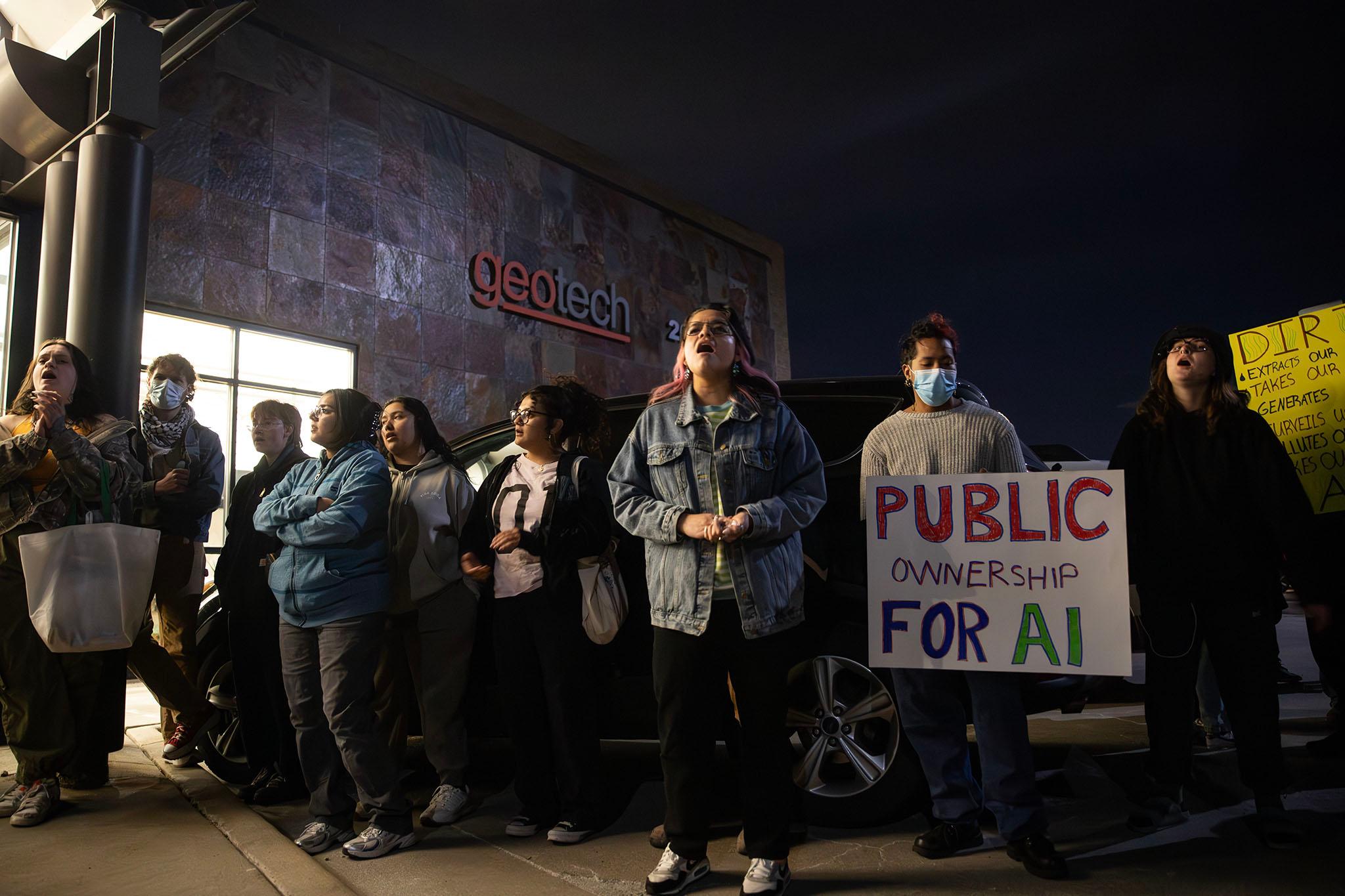
Before the vote, community members and activists gathered on the steps of the City and County Building to demand that the city treat large data centers as major infrastructure projects, requiring more steps in the approval process, including an emphasis on community outreach.
The groups also called for strict regulations about building data centers in disadvantaged communities, the use of diesel generators, and more.
During public comment, a vast majority of the 58 speakers signed up were supportive of the moratorium. Benjamin Xie, a professor at the University of Denver’s computer science department, said he has been researching the economic, environmental and health impacts of data centers.
“A moratorium on data centers affords the city crucial time to consider short-term economic gains against long-term energy, health and water concerns,” Xie said.
Many speakers called for the city to ban data centers outright. Other states and cities have been weighing permanent bans as the tech industry has raced to develop cloud computing and generative AI.
“This is a start, but we must build community, not data centers,” said Pierce Fernander.
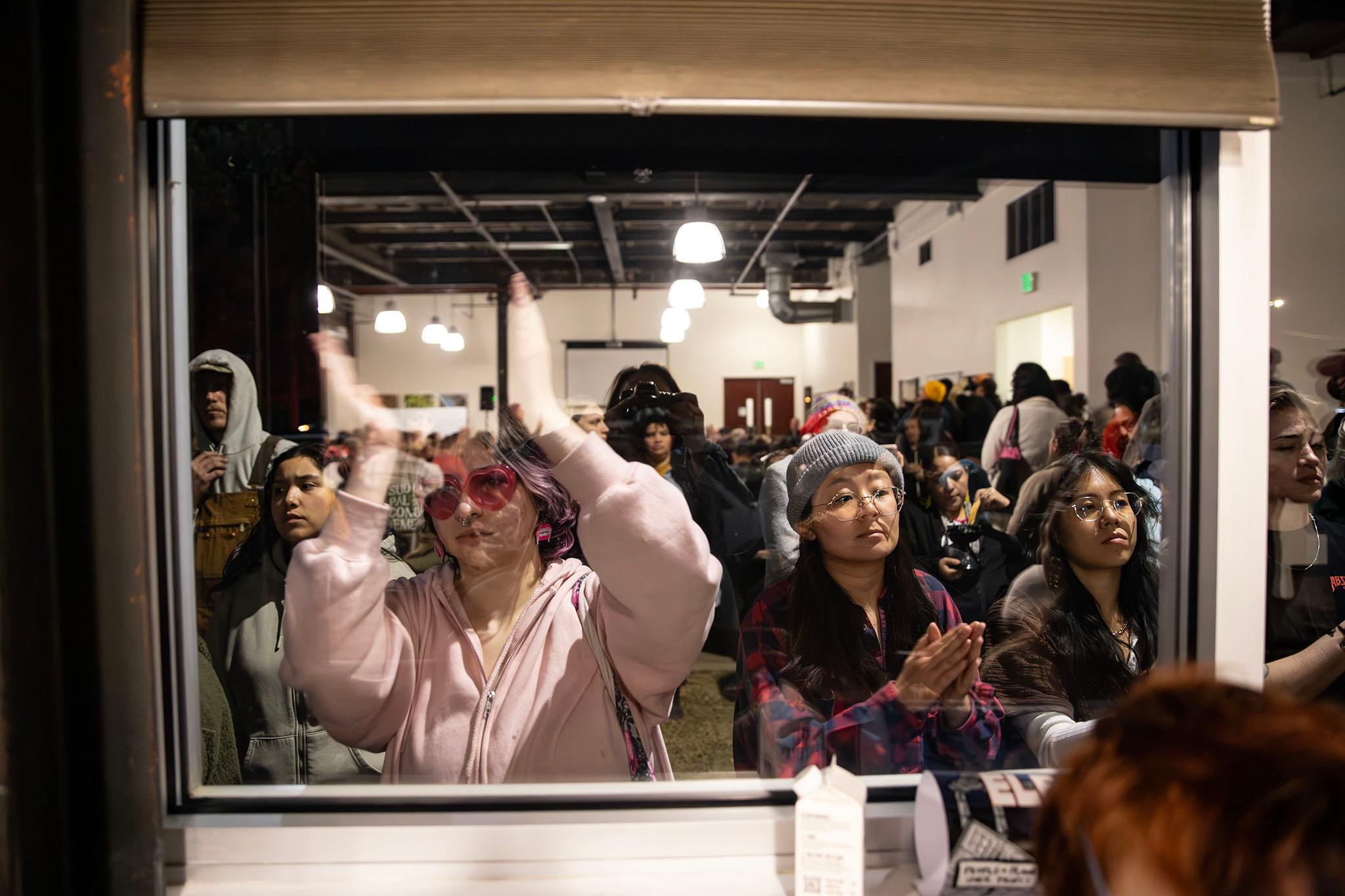
Opponents to the moratorium were few and far between, focusing mostly on the potential business impacts.
“When the city announces it’s halting an entire industry, even temporarily, businesses take note, site selectors take note, investors take note, and they begin to ask whether Denver is actually truly open for business or whether the next industry that draws community concern will face the same blunt response,” said Daniel Ryley, the vice president of corporate attraction at the Denver Metro Chamber of Commerce.
Julian Aguilar, who spoke on behalf of the International Brotherhood of Electrical Workers Local Union 68, said data centers have created consistent work for the union, but nonetheless called for a compromise to “keep our economic opportunities for our members while not impacting (utility) ratepayers and the communities they are built in.”
Hinds said it was an ideal time to pass the moratorium because there were not any upcoming data center proposals besides the CoreSite project.
Councilmember Kevin Flynn said the city’s land-use laws simply aren’t ready for modern data centers.
“The facility that’s under construction now, I think, was approved under the general category of storage and trade facilities, which really doesn’t hew to what this facility is,” he said. While data centers have been around for decades, Flynn added, “the type, the technology and the resources that are required have accelerated at a … superhuman pace.”
“Without regulation, I think we are in a tough spot,” said Councilmember Darrell Watson.
The moratorium comes after the failure of proposed state regulations.
State lawmakers were also paying attention to the data center matter during the recently ended legislative session.
But the statehouse failed to approve proposed data center regulations. One bill, which died at the last minute, would have required data center companies to pay the full cost for the power needed to run their facilities.
An industry-backed bill, which also failed, would have offered tax exemptions for data center companies that invested a certain amount in energy infrastructure.
The failure of both bills leaves Colorado without any data center incentives or industry-specific state environmental protections.
“I’m glad we’re not waiting for the state to figure this out for us,” said Councilmember Diana Romero Campbell.