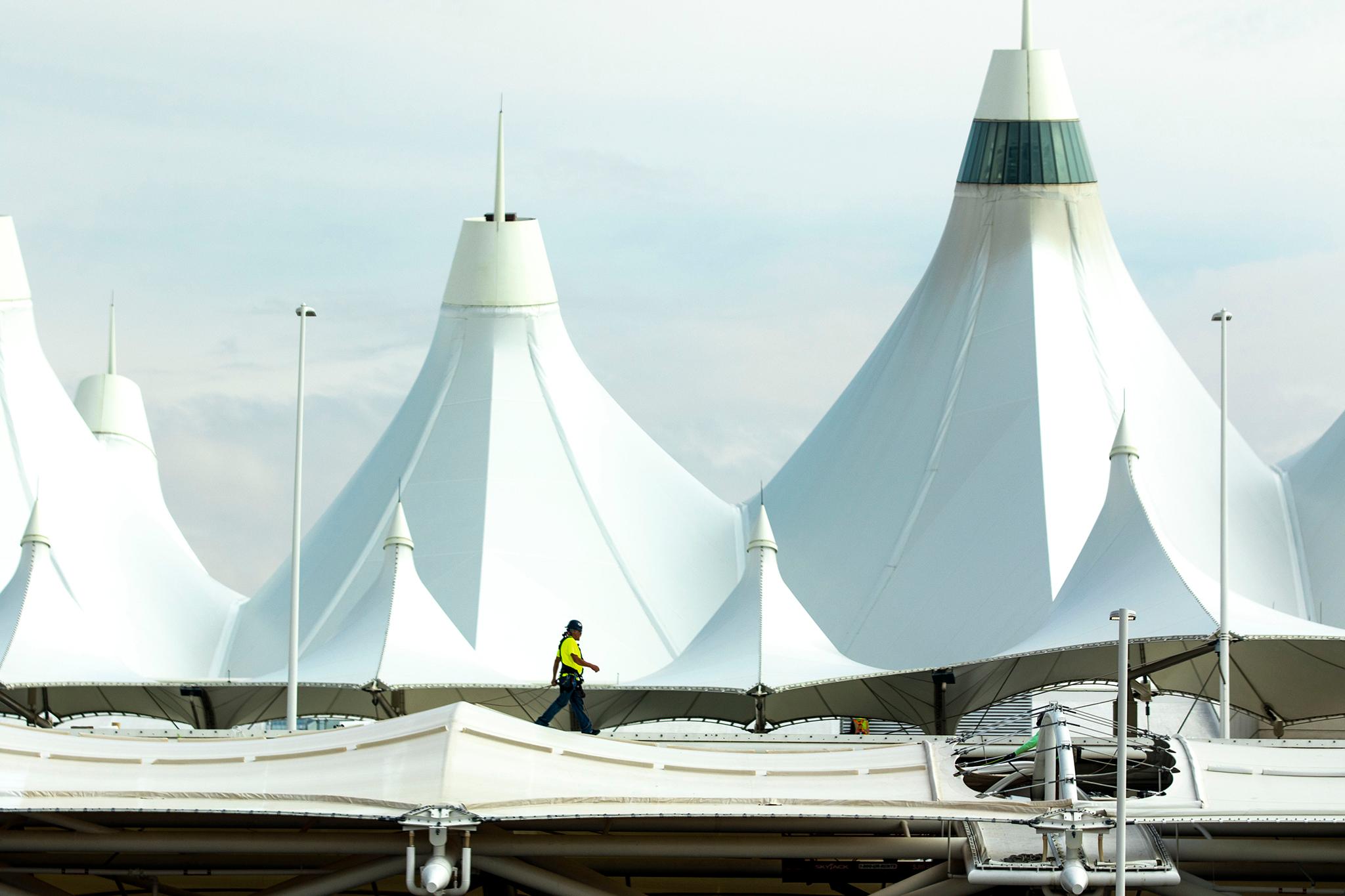
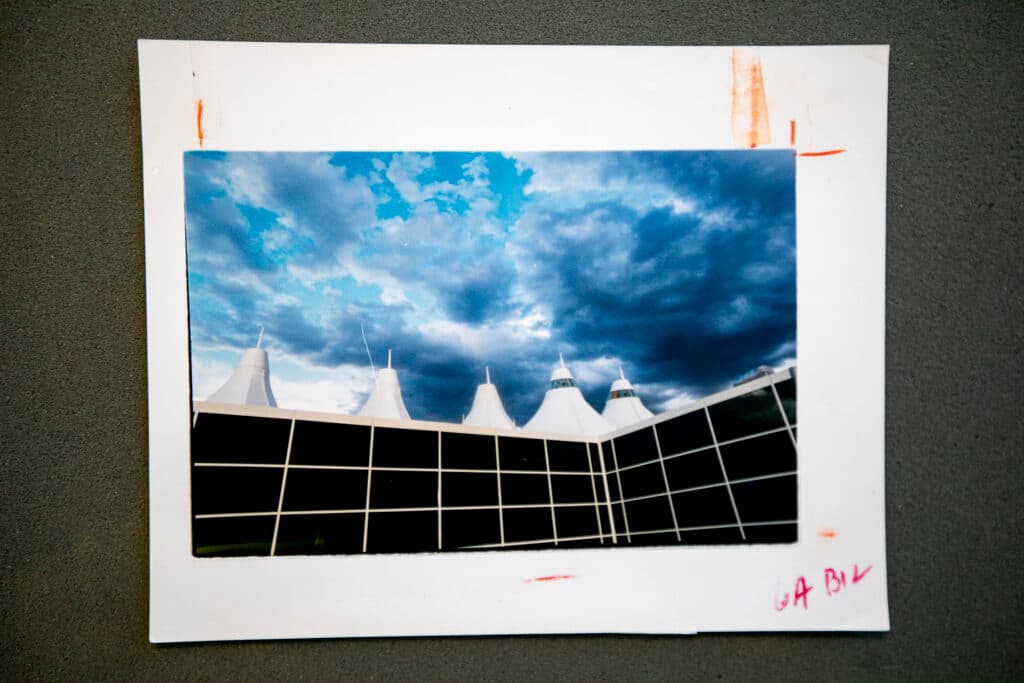
Most people who have traveled through Denver International Airport will remember the tent-like structure that envelops the Great Hall, with white fabric stretched over the roof’s distinctive peaks and light flooding in.
The structure was the brainchild of two architects: Curtis Fentress and the late Jim Bradburn, who died recently, just as the airport marked its 30th year.
Colorado Matters recently interviewed Fentress about his collaboration with Bradburn and, in particular, how the design came to be after the original architects were fired due to budget overruns.
Here’s what we learned.
On sketching the initial design:
Fentress and Bradburn sketched out the initial design while sitting at the bar of the Warwick hotel in downtown Denver. Bradburn was on the “technical side,” while Fentress was the “design side of the firm.”
“So I was just talking about expressing the concept of bringing the mountains into it and relating it to Denver, relating it to this place,” he said.
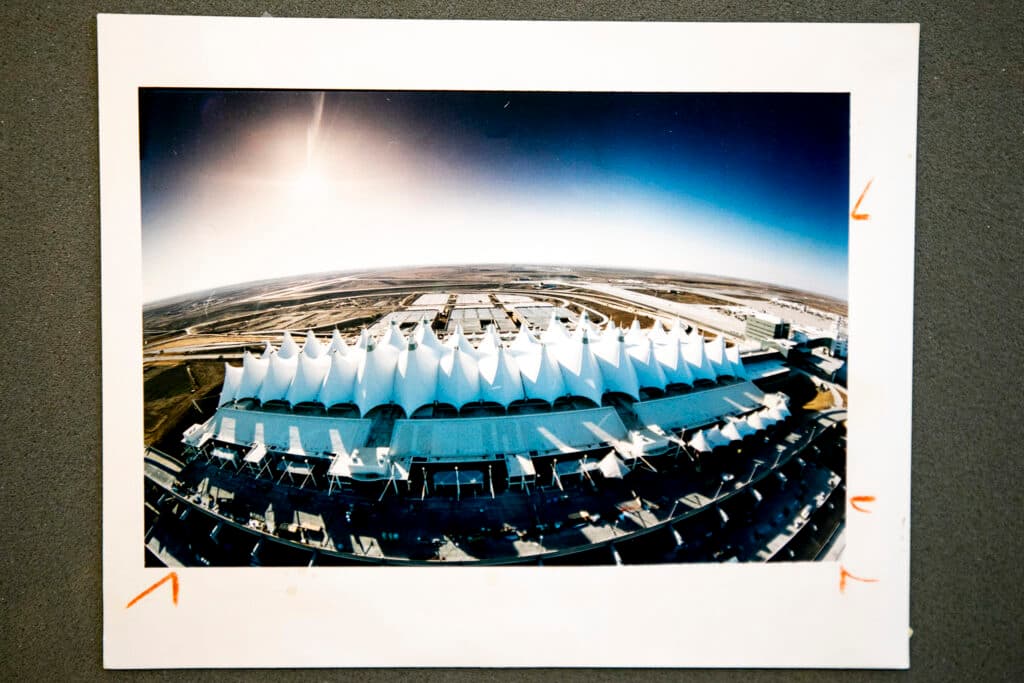
Part of the inspiration was the city’s mountain views and copious sunshine. But the tent design also was meant to bring costs down.
The previous design was expensive, mostly because it was a “primarily steel and glass structure, and it had a lot of steps in it. It was more of a ziggurat-type form for the building,” Fentress said. The mechanical system would have sat on top of the structure — requiring both a lot of steel and a lot of time.
The new architects wanted to move the mechanical system to the basement and remove one floor. Once they realized that a fabric structure could work, they built several models of the roof, terming the structure the “Great Hall” — “and that name seems to still be the name today.”
On the architects’ previous experience:
Fentress hadn’t worked on an airport, but it had long been an interest.
“The only experience we had is I took a class in college while I was completing my architecture degree where I could come up with the subject I wanted to study. And I studied airports for a year and got two semesters’ credits towards being an architect for that,” he said.
“So, serendipitously, it was me with that experience and background and knowledge.” Bradburn, meanwhile, had done most of his work on theaters, including the Helen Bonfils Theater in Denver.
On reactions to the fabric roof design:
“People were not familiar with fabric structures and how durable it was. So, immediately they were negative [about] it. So it took a lot of explaining…to people to get a final approval,” Fentress said.
They figured then-mayor Federico Peña would like the idea, given his motto: to “Imagine a great city.” But they also had to convince the Denver City Council.
“The one precedent that we looked at was an inflated structure, and those had been used since the Olympics, maybe in the decade before. And that was a fabric structure that was tied down by cables and they pumped air into the building to make it rise,” Fentress said.
Among other examples, Los Angeles International Airport added inflatable terminal buildings ahead of the 1984 Olympics. Air-supported domes were also popular for sports venues in the 1970s and ‘80s, but Fentress noted they had a questionable reputation after the collapse of the Pontiac Silverdome in Michigan 1985.
“And so we had to convince everyone that this material was a good material,” Fentress said.
On the high-tech fabric that makes up the roof:
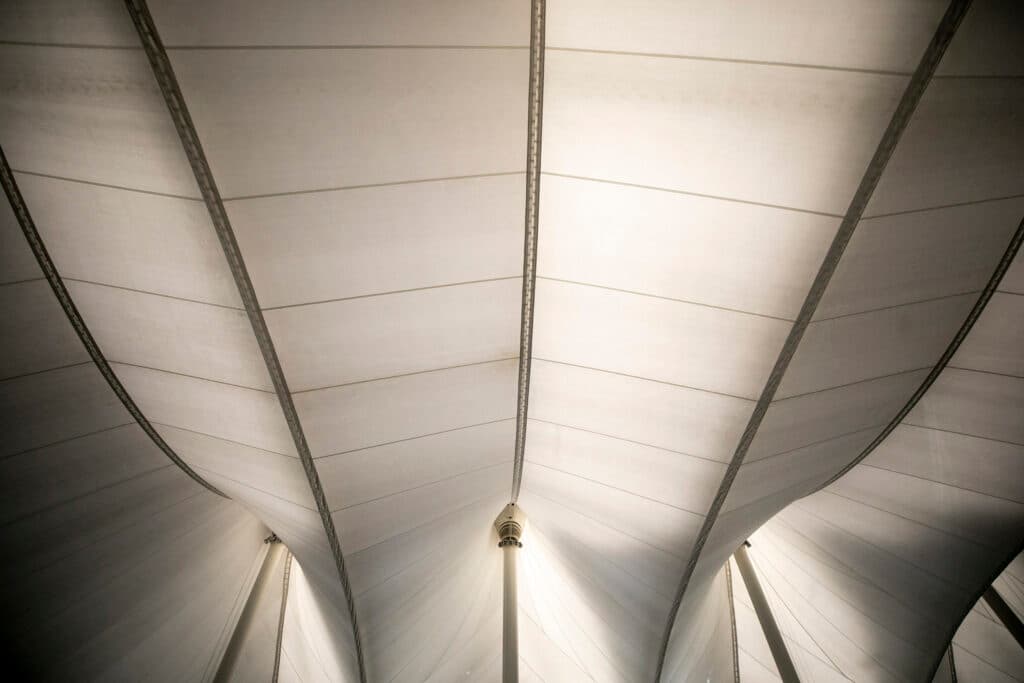
“It's a very high-tech material. It's a Teflon coated fiberglass,” Fentress said. “It was developed to cover radar installations during the Cold War across the North Pole and Canada.”
One of its chief benefits: “Everything slides off of it, as it did off of the pans we all bought many years ago. Nothing sticks to it, so the material is highly durable. There are some examples of that here at the Buckley air base, still covering the radar installations,” Fentress added.
But he wanted to add one key distinction: “It's not a tent. Everybody calls it the tent or the tents at the airport. It's a cable-supported system that is underneath that white roof that holds it down and holds it up.”
On the power of Denver’s light:
“The original design was predicated on how wonderful the light is in Denver by the previous architects. And we thought that's true. We have virtually Mediterranean light here and we're at a mile high and the light is six times stronger than it is at sea level,” he said.
Besides letting the light in, the roof has proved durable.
“We took all that into consideration and checked the fabric to see how long they thought it would last — and they don't know, but it's been up for 30 years and it's never really been a problem. I think the only incident was about a 4-inch tear in the roof during about a 5-foot pileup of snow in one area on the roof, but [it] was easily patched.”
On the airport’s opening in 1995:
“It certainly made a lot of news around the world and as architects, it made our careers. It opened up a series of opportunities for us that we were glad to have, but never thought that one building would generate it,” Fentress said.
“People would come here and see that airport and they'd come and find us, and then they would say, we want a building like the one in Denver. So after that airport, we won a competition to do the Bangkok airport. We won a competition to do the airport in South Korea. And since that time we've done around 35 projects that are huge and international in nature.”
On how Fentress thinks about the work he and Bradburn did together:
“I think I have the same feeling a lot of people do when they're driving to the airport, and you look out, and you see the sun coming up behind the fabric roof structure or bouncing off of it. It's exciting, it's beautiful. When we land ... I see people looking out the window, going, ‘Wow, that's something different. Wow.’”