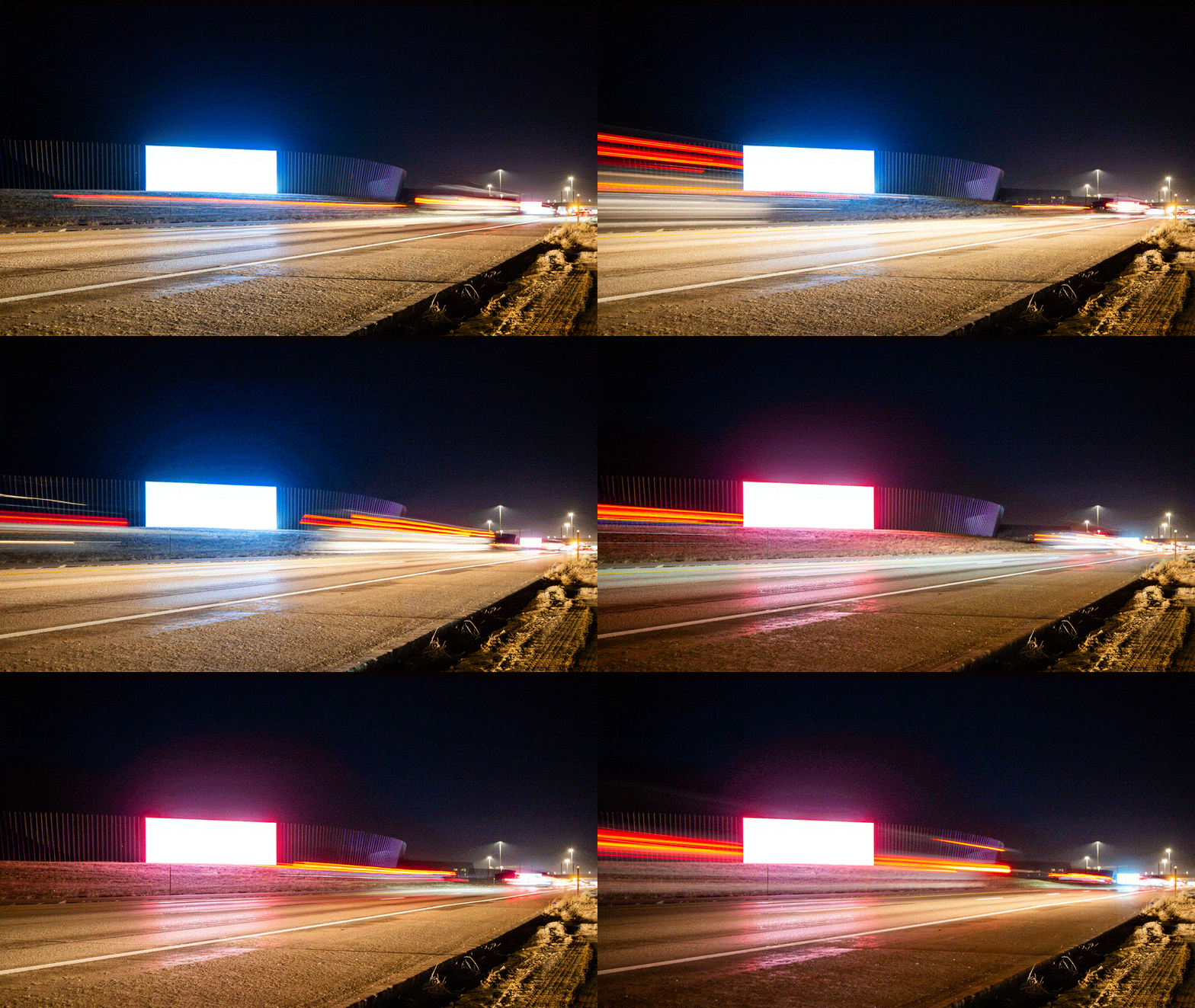
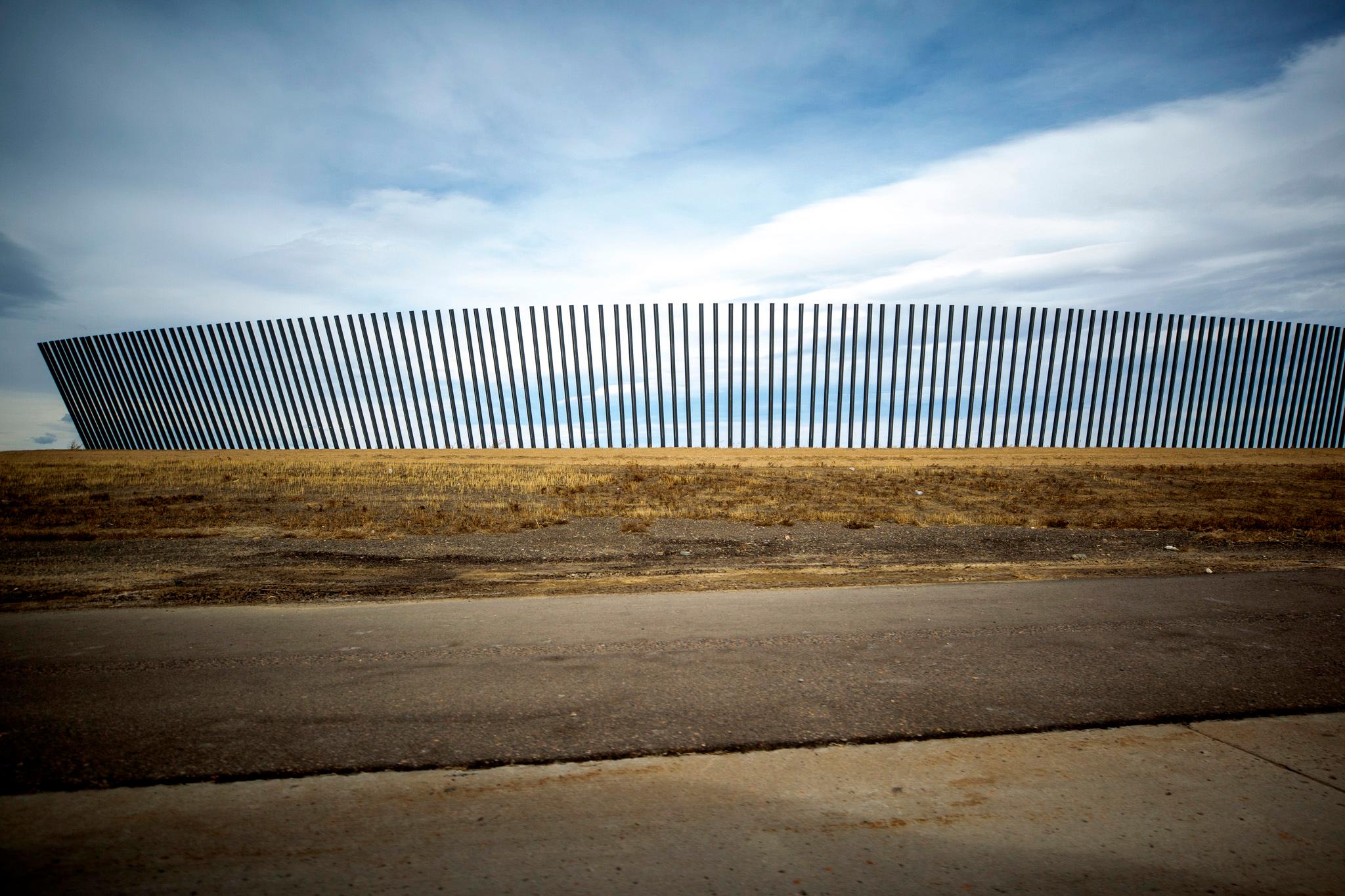
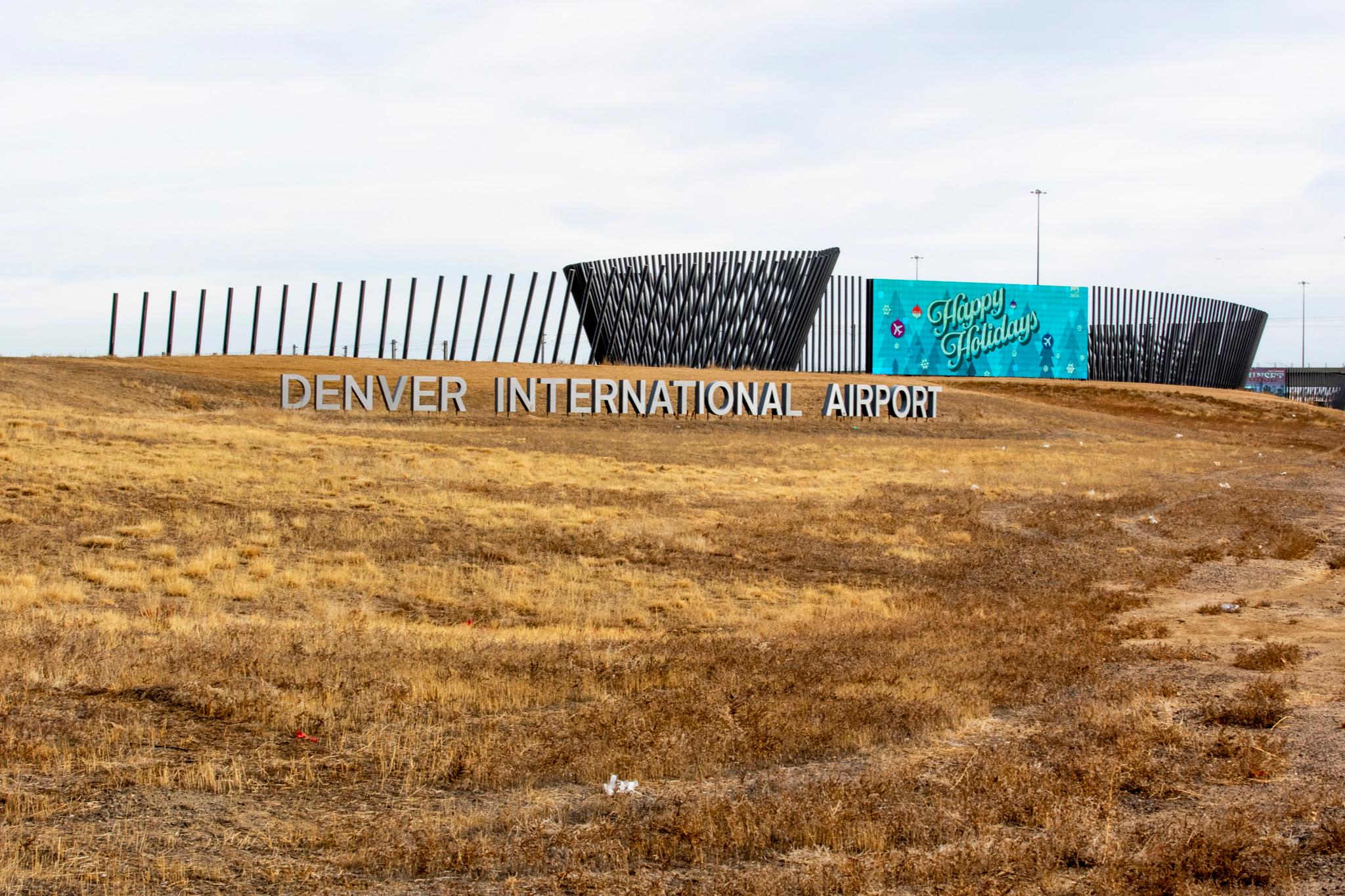
The welcome sign at Denver International Airport was billed as a technologically groundbreaking LED display with almost 1,000 brightly colored rods — a piece of art befitting one of the busiest airports in the world.
Instead, a decade after it was first proposed, the sign has been nothing but problems for the airport, with malfunctioning lights, cheap-looking screens, and disappointing ad sales.
"That sign hasn't worked a day in its life. I mean in the entirety of its existence. I don't think there's a single day where every piece of that sign has functioned the way it was designed," said Nathan Gulash, an architect who regularly drives his husband to the airport for work travel.
“It has honestly become a running game with us. What will be wrong with the sign?”
Gulash submitted a question to Colorado Wonders, asking who is being held to account for the constantly malfunctioning sign at an airport noted for its landmark architecture: "I have a love for that building. I have a love for the facility. And just a question: Why can't you fix your sign?"
To answer the question, Denverite reviewed the contract with Panasonic for construction and maintenance of the sign. We also requested records related to the sign’s advertising revenue and maintenance from the airport, an arm of the Denver city government.
Problems from the start
The problems with the sign can be traced back to the original idea to replace the small, old welcome sign.
“So at the time, the airport really wanted something that had a little bit more of a ‘wow’ factor, something that could welcome guests,” said Stacey Stegman, a longtime spokesperson for the airport. “I would say at times the sign has really had a ‘wow’ factor, but it has not come without its share of challenges, and that's something that we have struggled with to make sure that the sign is left in good condition.”
Denver’s sign was inspired by the LED columns at Los Angeles International Airport. Kim Day, Denver’s former airport CEO, is an architect by training, and she worked at LAX when those columns were installed.
“She's very big on having sort of those beautiful entry moments,” Stegman said. “But yeah, I'm sure she's probably bummed out that it hasn't worked.”
A call to a number listed for Kim Day was not returned.
The original proposal to Denver City Council in 2016 was complex. The airport and the mayor’s office wanted to enter into a $14.5 million public-private partnership with Panasonic — the company would share the cost of construction with the city in return for a cut of future advertising revenue on the sign — a deal that eventually fell apart.
An early sign skeptic
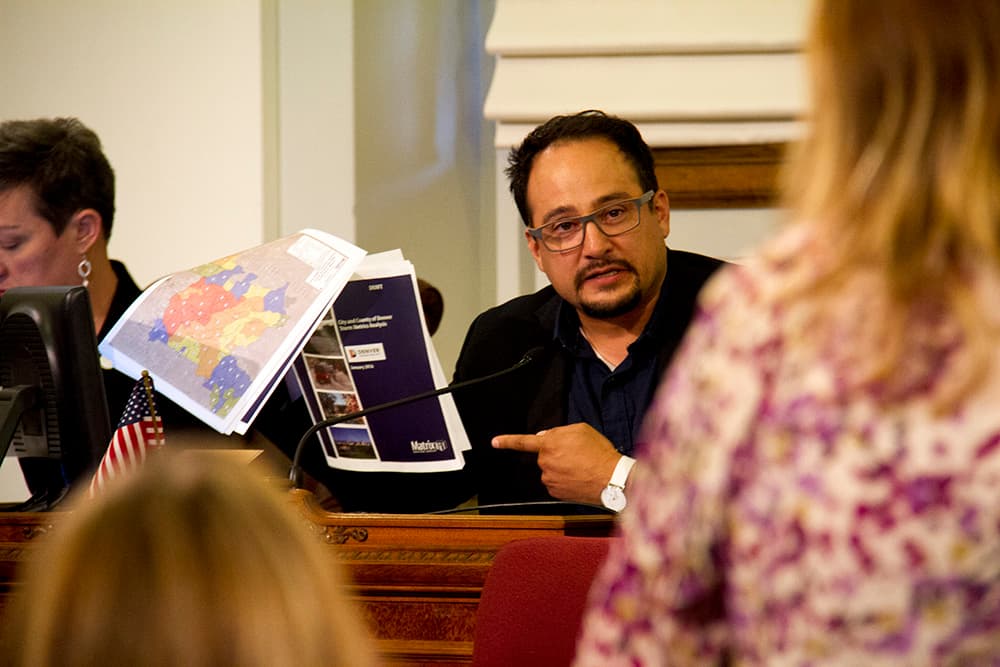
Rafael Espinoza was the only city council member to vote against the sign.
“It sucks to be able to say I told you so, but there's a lot of ‘I told you so!’” said Espinoza, who only served one term on the city council before declining to run again.
Espinoza is also an architect, and he admitted he wasn’t well-suited to council politics. At the time, the airport was actively pushing pricey projects, and he couldn’t convince his colleagues that the plans were flawed. He was one of the two "no" votes on the Great Hall project that later resulted in acrimony, with the contractor paid $184 million to leave the job, delaying construction.
With the sign, he was immediately skeptical of the airport’s lofty pitch that it would be “a signature gateway to mark the airport’s ‘front door’ and create a memorable experience that allows dynamic messaging and showcases LED technology.”
In 2016, Stegman told the media: “What this airport is doing is really putting ourselves on the scale of some of the best airports in the world.”
Espinoza called that “flowery language,” and added, “it doesn't change the reality, which is these are just children's toys that are permanently stuck in the ground at great expense.”
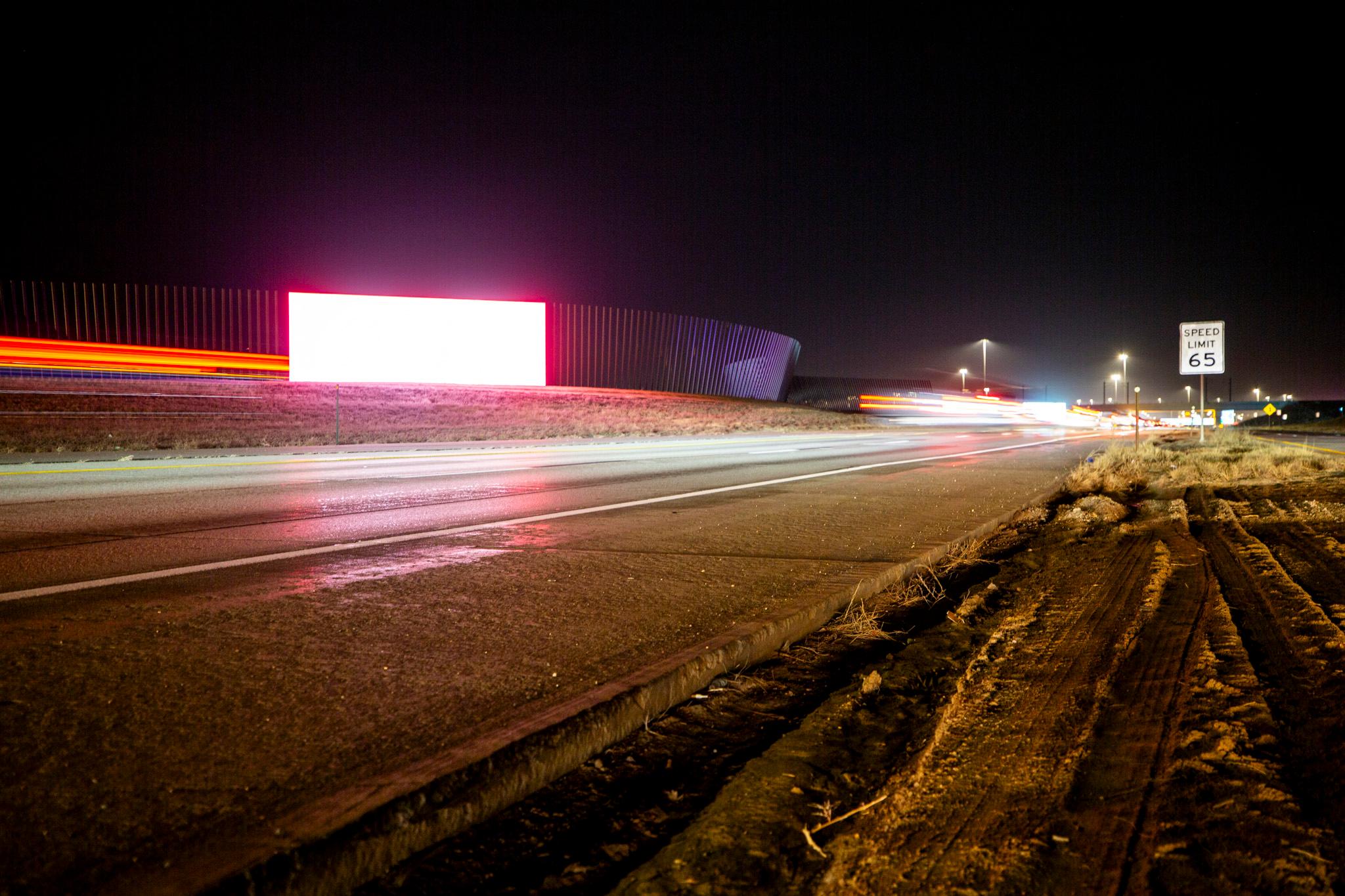
He opposed it primarily because he thought the sign would be distracting to drivers.
But there were larger politics at play.
Panasonic was expanding operations near the airport, and the company was a major part of then-Mayor Michael Hancock’s plans for an “Aerotropolis,” a large business zone near the airport, that has yet to really materialize.
The problems at first were legal. Eight months after the sign was approved and the contract signed, the airport was back in front of the city council.
Airport officials had learned that it was against federal highway regulations to fully advertise along Peña Boulevard, which would limit the revenue Panasonic could collect on the sign. The contract had to be altered: The airport would foot the full $14.5 million bill for the sign, collecting what ad revenue they could. Panasonic would still build and maintain the sign.
An engineering firm, Jacobs, with offices in Denver, would consult on the sign’s design.
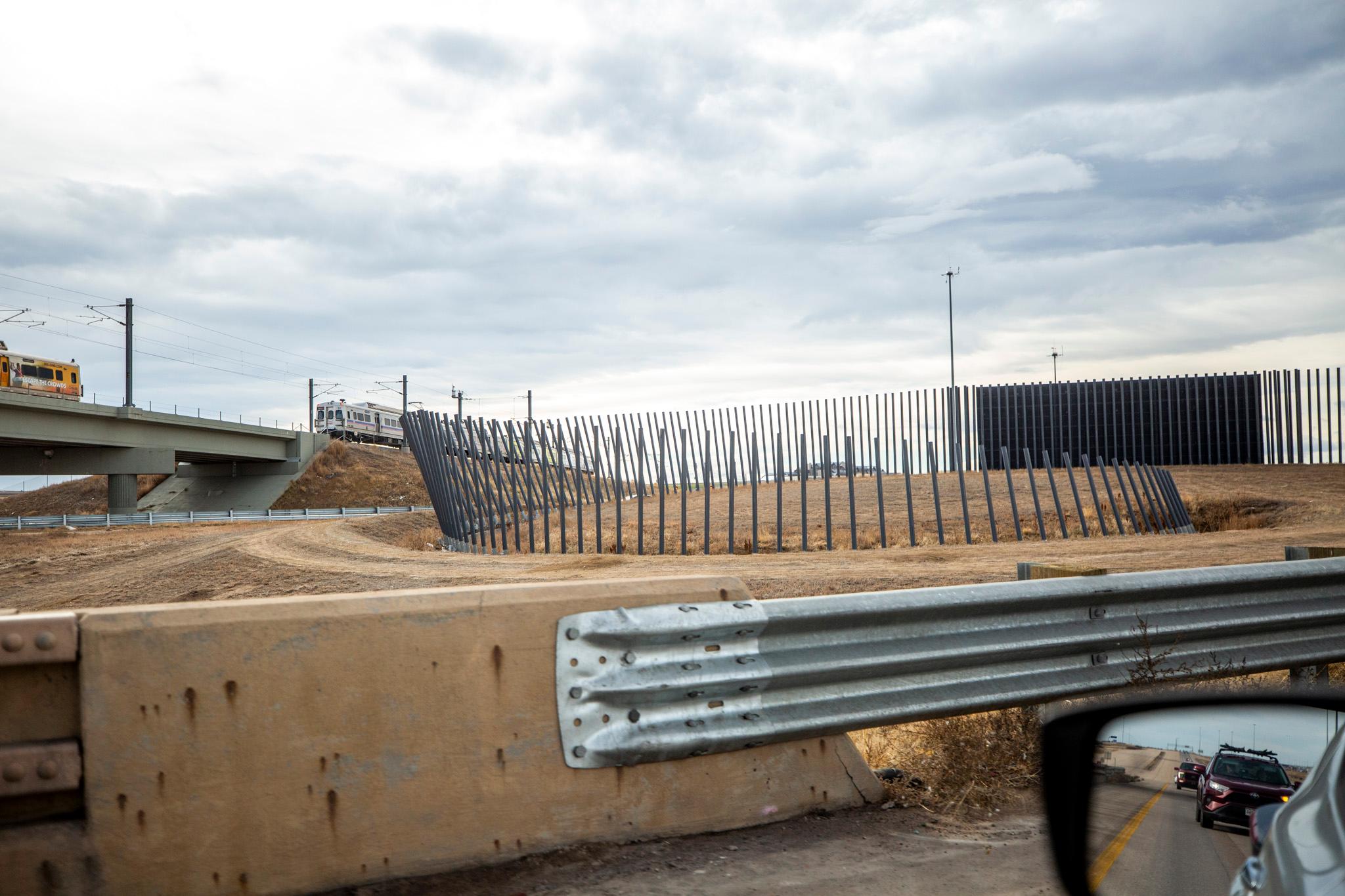
“It was a really interesting, great design, and in theory, if it would've worked correctly, that would've been amazing,” said Stegman. “But when you put a sign out there on a site like this, there were some challenges. There's issues with rodents in those areas, and they were getting at the wiring. There's a lot of vibration from the extreme winds you get out here and because of traffic in that location. So there's been a host of things.”
Jacobs did not respond to a request for comment.
As the wind and rodents played havoc on the sign, light sticks started to go dark. Stegman said that if even one of the hundreds of LED sticks is out, it looks bad, so the airport has taken to shutting down all the LED sticks at times.
Panasonic’s contract to maintain the sign requires regular monthly reports and “aim to achieve a target of 99.5% of system availability.” CPR News asked for copies of those maintenance reports, which the airport said do not exist. Stegman said instead the airport meets with Panasonic weekly, and sometimes daily, and does not need those reports.
The contract with Panasonic requires credits back to the airport if the sign is not operational for periods of time. Stegman said instead of calculating that every month, Panasonic has given the airport a 25% across-the-board discount on the maintenance of the sign — the airport pays Panasonic about $6,000 per month to maintain the sign, according to airport invoice records.
What's breaking the sign?
There are 908 individual poles with six LED light sticks per pole that make up the sign. Stegman credited Panasonic for doing the best they can to keep them on. In the last two years, Panasonic has “maintained the sticks 5,317 times. So that gives you an idea of how often they're out there dealing with problems with the sticks.”
The poles the lights sit on are solid, said Tom Carroll, an engineer with Panasonic. He said if an asteroid hit earth, the poles would still be standing.
The lights and wiring are the problem.
Back in 2019, the wind damage was so bad that Panasonic removed all the LED light sticks from the poles and reworked them off-site.
“We did that at our expense,” said Carroll, a director at Panasonic who has worked on the airport sign. “We did not seek any compensation for that and it was costly.”
Carroll said the rodent issue has been solved with mesh sheathing on the cables. “Rodents chewing the cables, that one really came out of left field,” he said.
What's next for the future of the sign?
Panasonic’s contract with the airport for maintenance of the sign ends in about two years, and given the costs of remediation and maintenance on the sign, it seems likely that Panasonic has lost money on this deal.
Carroll wouldn’t confirm that, but said that the company doesn’t “run from challenges. When there are issues, we work through them and figure out solutions.”
Carroll was not part of the original design team; his job is to deal with the sign as it is.
“This is not uncommon in projects of this scope and scale. I think there's a vision and then people start trying to design to the vision, and I think there's a lot of excitement to move things forward,” said Carroll. “Could there have been some checkpoints where someone could have said, we should look into this more deeply? Possibly. But I think you'll find that in almost any large project.”
Stegman said that the airport is focused on making sure the advertising screens, which generate revenue, stay operational, even when the LED sticks are turned off.
The airport originally told the city council that the advertising would pay for the full cost of the $14.5 million sign, but records from the airport show ad revenue of only $6.5 million over six years, and an ad sales company, Outfront, takes a portion of that money.
The airport contends on its website that the advertising screens are “spectacular,” but they too are showing their age.
Nathan Gulash, who asked the question about the sign, noted that sports stadiums are able to keep their large LED screens looking sharp. “Those are open-air, exposed-to-the-elements environments. There's no reason why you wouldn't be able to perform the same type of maintenance for the sign at the airport,” he said.
Despite the problems, Stegman was confident that the sign would still be a sound investment. But the current rate of ad sales would not cover the costs of construction and maintenance for another 10 years.
Stegman acknowledged that the airport would have to consider some major changes.
“The sign will not be staying in its current condition. We also know that the technology is reaching its lifespan. And so right now we're sort of brainstorming and working on a plan of what we're going to do with the sign going forward. We're not going to just leave it in its current state.”
“Looking back, yeah, there's some things we would've done differently,” admitted Stegman.