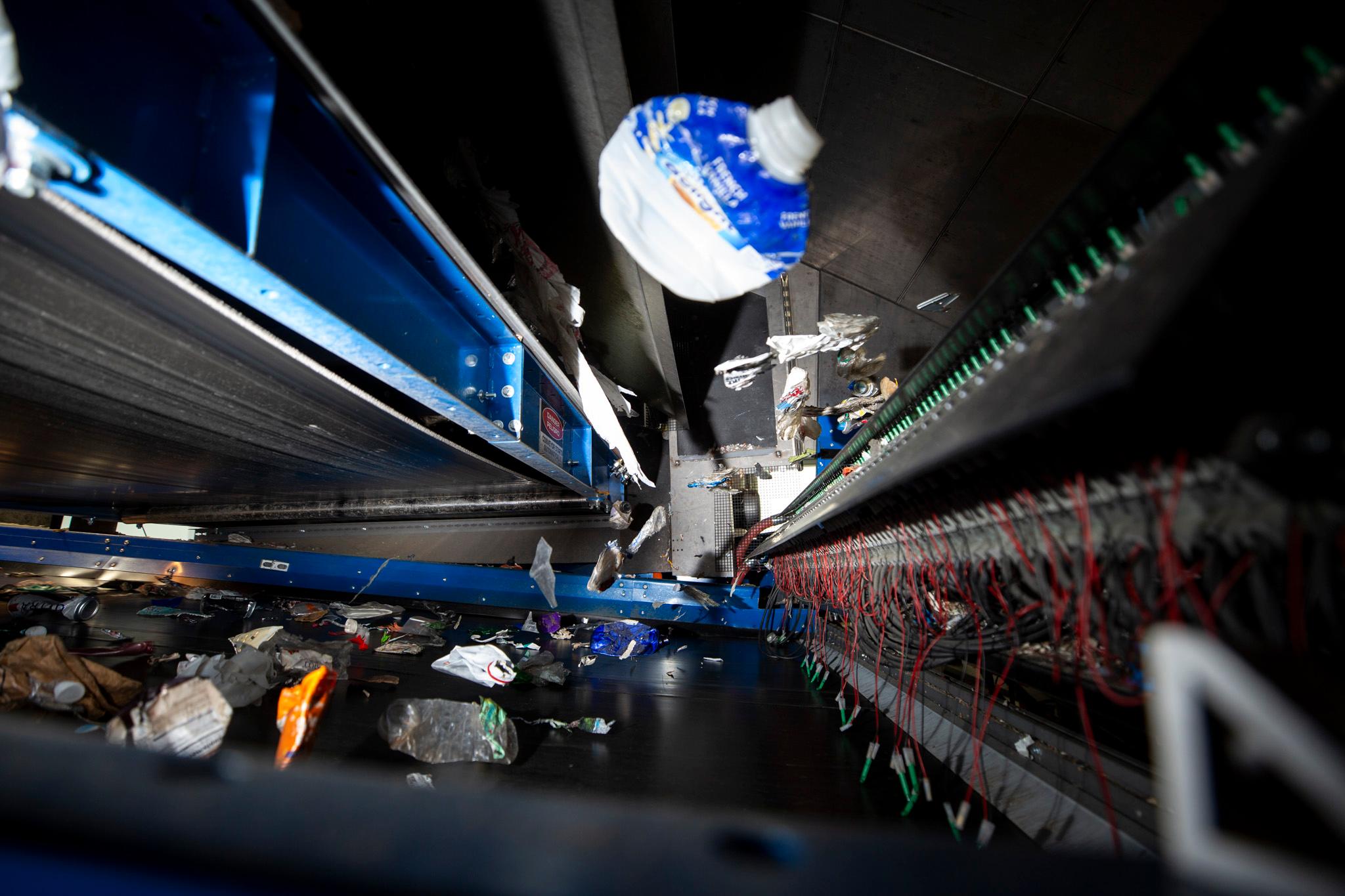
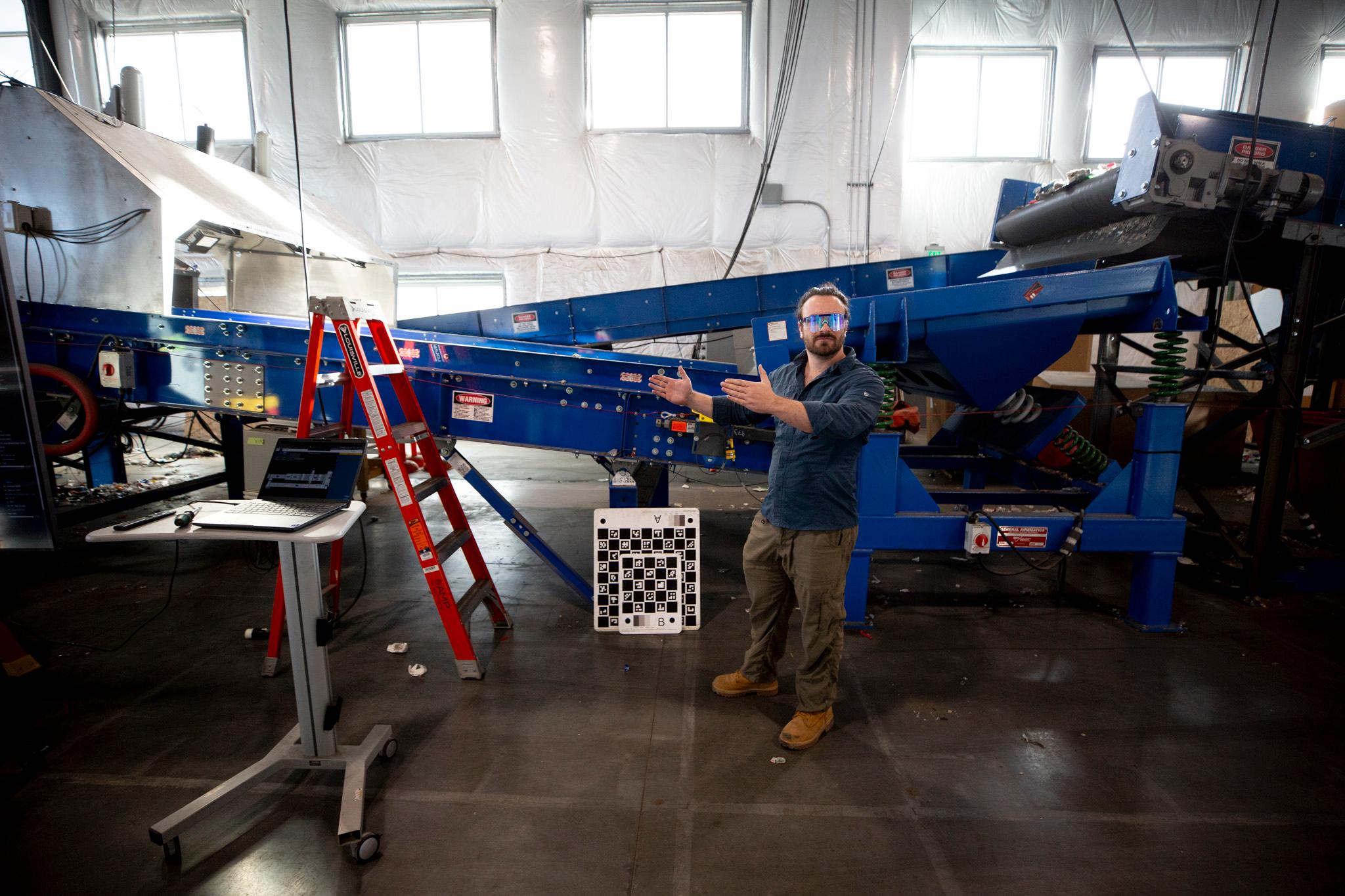
AMP’s office in Louisville looks like any tech headquarters, filled with people typing away in cubicled pods — until you get to the endless loop of garbage in the back.
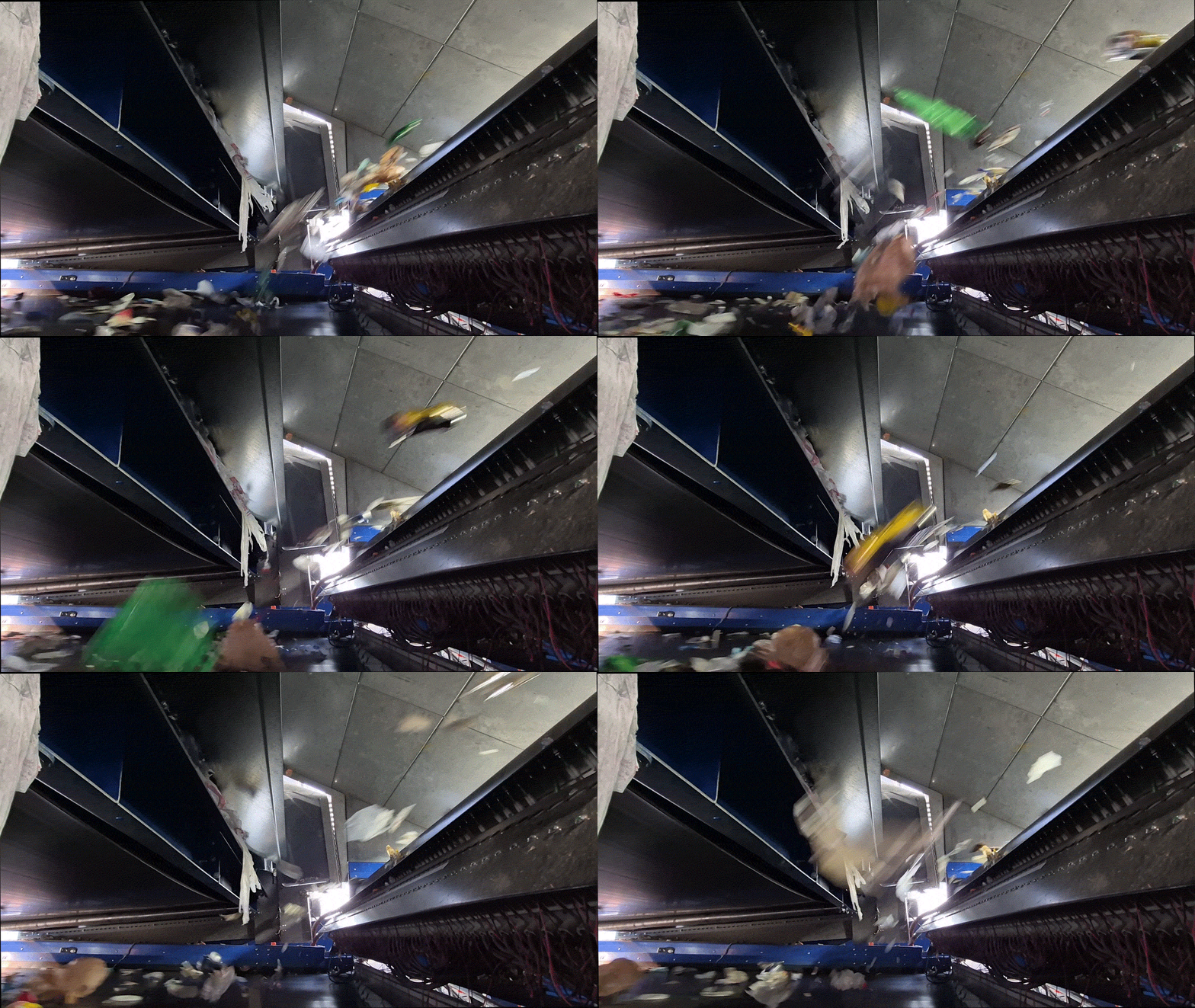
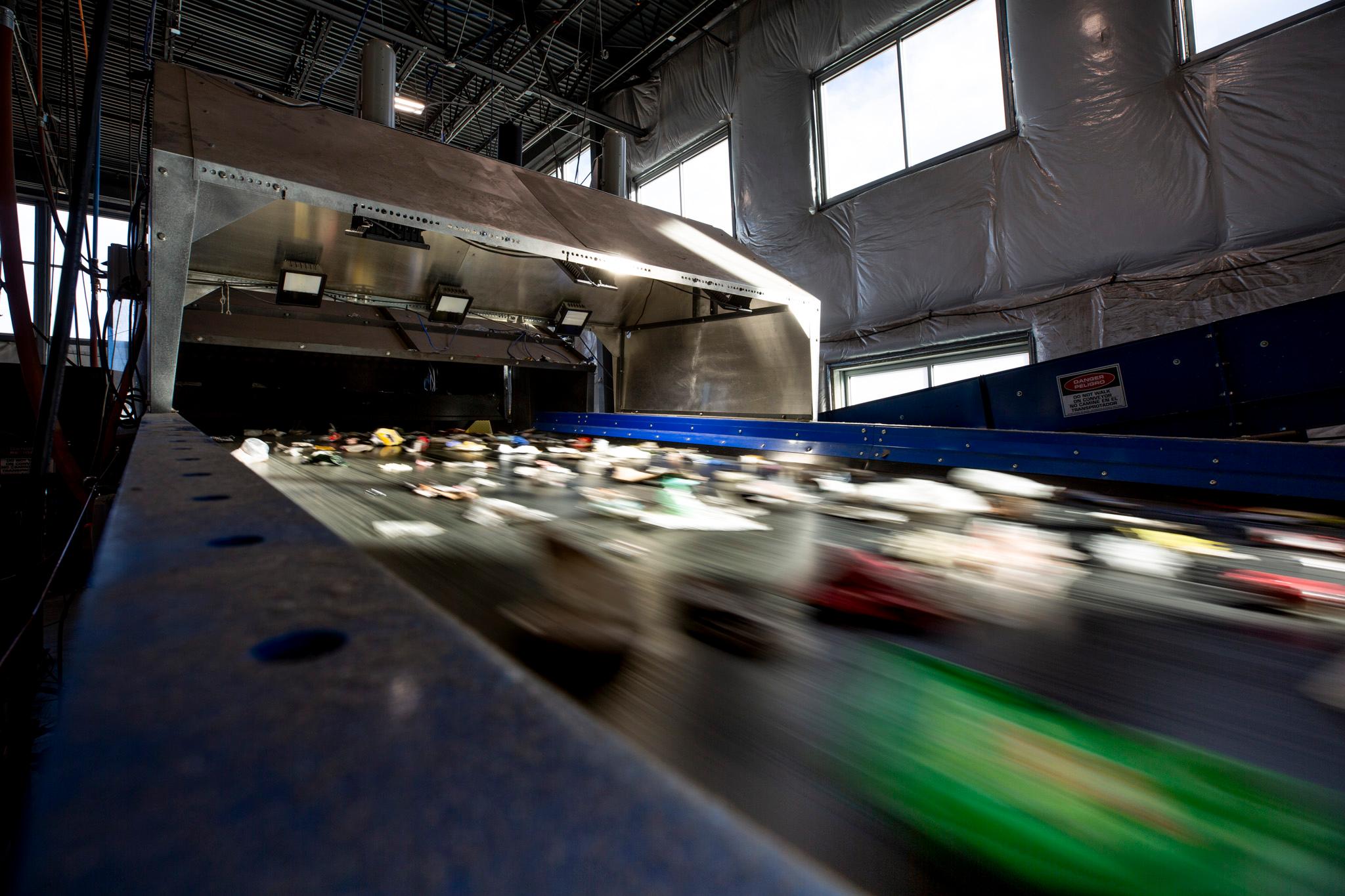
There you’ll find a stream of crushed cans, plastic bottles and thin wrappers rushing through a series of conveyor belts. The trash speeds past cameras and through giant machines at 60 feet per second.
This is the main research and development hub for a company bent on revolutionizing the business of waste. For years, the company has sold robotic sorting arms across the nation, with AI-powered cameras and vacuums to pluck specific recyclable materials out of waste streams.
But AMP has been working on something more ambitious: trash-sorting facilities that are fully built around AI-powered tech. AMP is planning to open its newest site this year in Commerce City.
The company says its AI represents a new era of efficiency.
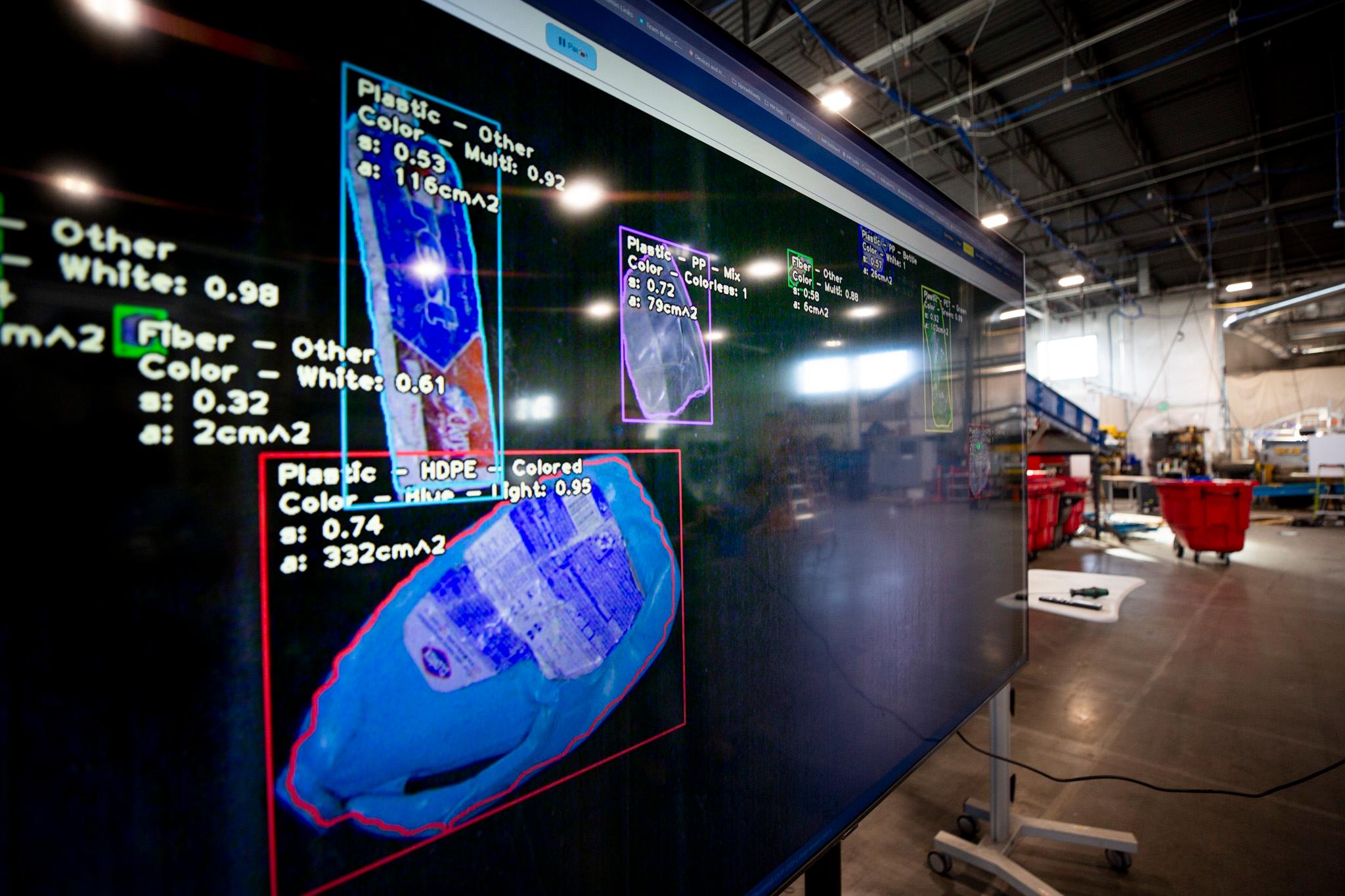
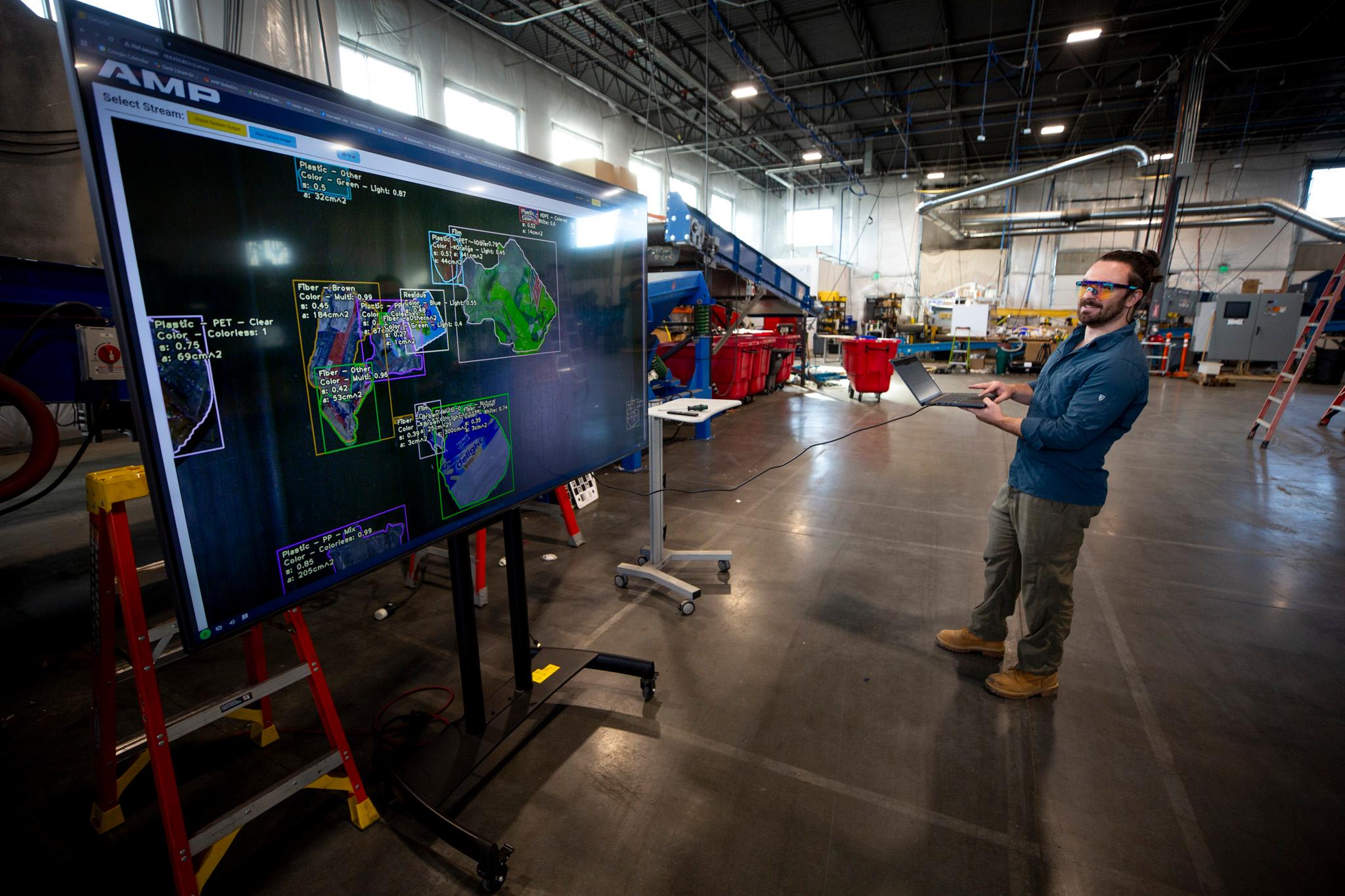
Joe Castagneri, a one-time intern who became AMP’s head of software, showed us a video feed that watches each and every object on the line. Thin, computer-generated rectangles tracked their movement as hundreds of items blurred through the frame. Each bit of refuse was labeled with a material and color: white plastic, green fibers.
This, he said, is the core of the company’s work over the last decade: smart systems that can identify different types of recyclables — very quickly — and sort them without human interaction.
“Our various software teams write code that does everything from build the neural networks that see the trash and tell us where it is, to the robots that then sort the trash, to the facilities that run the robots,” Castagneri said.
These systems underpinned AMP’s first offering to local recyclers, the robotic arms that could squeeze into existing warehouses. We saw it in action last year during our visit to Republic Services’ materials recovery facility north of town.

Castagneri said the Commerce City facility won’t need any robot arms at all. It’s being built from scratch as a largely unmanned operation, which means there’s room for a different kind of tech.
“We build entire facilities that look fundamentally different than the existing facilities out there, so that they can achieve a higher recovery rate of target materials,” he said.
Instead, AMP’s new project will rely on puffs of air. Optical-sorting AI software tracks video from cameras mounted above the system, guiding the air jets to launch individual items off the conveyor belts and into sorted chambers. The technology underpinning this system is not new, but Castagneri said AMP is treading new ground by putting it all together in a unified, purpose-built plant. AMP has one running already in Virginia.
It’s less flashy than a row of mechanical arms, Castagneri said, but more efficient. AMP’s robots can scoop up about 80 pieces of trash per minute; this air system can move as many as 2,000 items in the same timeframe.
“It's a fast belt, a whole bunch of material,” he said. “When you're building a facility and you're trying to do tons per hour, this is what you need.”
These innovations aim to replace humans as demand for recycling grows.
Supporters of this new automation technology say it could make sustainability cheaper, especially as a new state law is expected to drive demand for recycling.
It was something we heard at Republic Services’ processing center a few months ago.
“Robots work cheaper than people. We don't have to pay them as much over time. So we're going to start using robots to replace people. They do a better job sometimes,” Republic Services general manager told us in November.
AMP will operate the fully automated facility coming to Commerce City this year, but the project will be owned by Waste Connections, a national processor.
Waste Connections has long planned to expand on the Front Range. But Mark Ceresa, a vice president, expects Colorado’s new law to drive up demand. More nonrecyclable items will probably end up at facilities as a result, so it will become more urgent for processors to sort quickly and accurately.
Ceresa said AMP’s technology will allow his company to meet that demand, but he said there are more reasons Waste Connections is eager to remove humans from this process. This is dangerous work, and big recyclers would like to shed that liability.
“There’s definitely a safety factor and a human factor,” he told us. “It’s a very low-skill, high-injury job.”
Castagneri said AMP has an existing AI-powered plant operating in Ohio that diverts about 90% of its material from landfills. For comparison, the mostly human-powered facility we visited last year tops out around 75 percent.
AMP’s newer projects still need technicians to monitor systems, keeping tabs on sensors and hardware. The company’s AI recycling centers contain server rooms that run its software, though Castagneri said the narrow scope of his robots’ knowledge requires far less power and space than giant data centers that have sparked fights in Denver and across the country.
Better technology could build economies of scale.
Our reporting on recycling has been inspired by readers who wanted to be sure their recycling efforts did something.
But sorting waste is only the first step. Recycling only works if someone is willing to buy the material once it’s been sorted and consolidated.
“The big part is we need markets on the backend,” said Joel Hartter, a professor who teaches about circular economies at CU Boulder. “If we cannot make any money, then it's not going to work.”
Recycled plastics, paper and metal tend to be more expensive than new material, he said, which is why some products that use them are marketed as luxury goods — like Patagonia coats. That’s due, in part, to the work it takes to transform trash into something useful.
Hartter said AI’s ability to supercharge sorting should make reused materials cheaper and thus more attractive to manufacturers, who will in turn demand more recycling.
“A successful system creates positive feedback — and I don't mean positive meaning, ‘Hey, everybody’s happy.’ I mean, it continues to grow. And that's really good because as we begin to grow markets, we begin to grow opportunities,” he said.
One opportunity, he said, is for facilities to accept more kinds of junk. Plastic bags, styrofoam and wrapping paper — the stuff your local processor rejects — can be recycled, he said, it’s just not always cost effective to do so.
“We can create economies of scale,” Hartter said.
Castagneri, with AMP, said his company is already heading in that direction. As garbage whirred past on the conveyors behind him, he grabbed a little black ball of tar to show us. It was once thin plastic, some of the most difficult stuff to recycle.
“Basically it's a crude oil replacement,” he said.
Someday, tech like AMP’s might help recycling to become so efficient that it becomes economically viable to make this on a large scale, and finally create incentive to divert baggies and wrappers from landfills. It will never replace the oil Americans consume each year, but it represents an incremental step toward greater sustainability.
“Sorting operations are doing everything they can to get the aluminum cans and the milk jugs and the water bottles and the cardboard — and then not really much else. If you have a fundamentally more efficient system that can, at a profit, sort a lower value mix of plastics, then you should,” he said. “And that's what we're trying to do, enable new markets.”