
Updated Dec. 17, 2025, at 11 a.m.
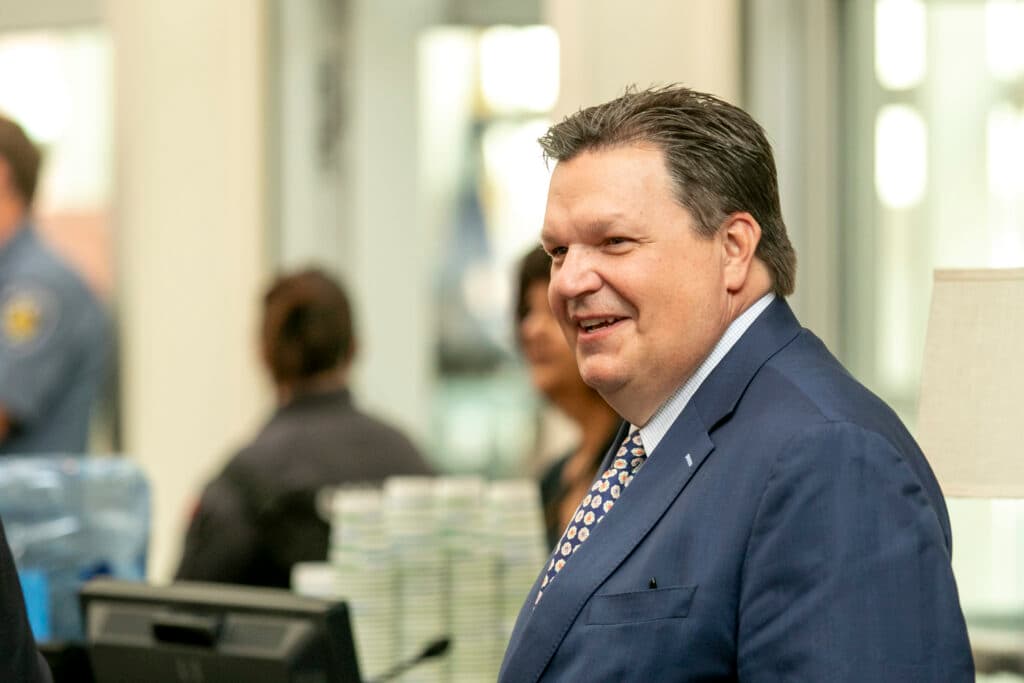
J.J. Ament was socializing at the end of a holiday party at Stanley Marketplace when he made a comment that shocked some of his employees at the Denver Metro Chamber of Commerce, witnesses said.
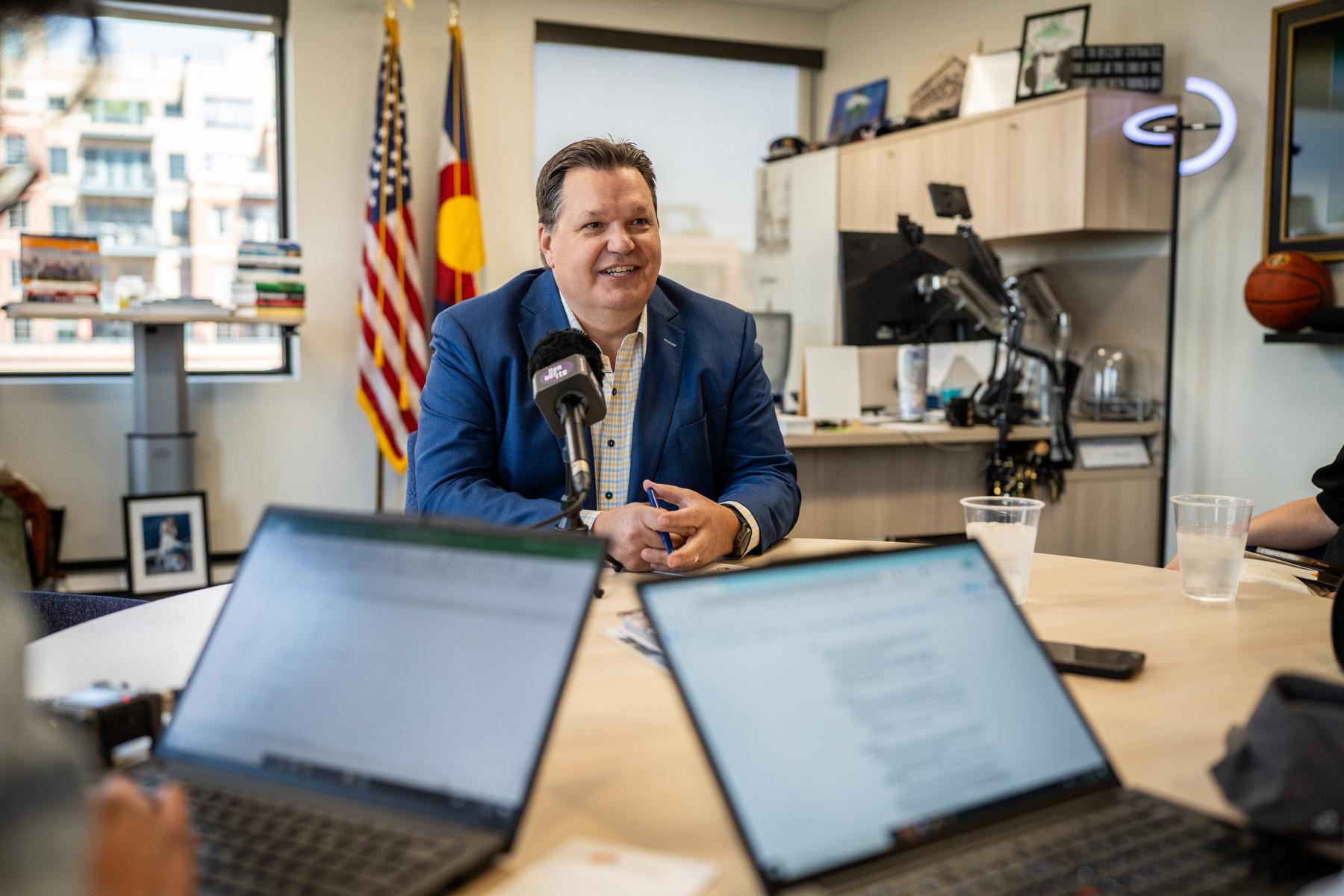
Ament is the president and chief executive officer of the nonprofit, one of the most prominent voices of business and industry in the state’s capital.
He had been talking privately with his chief economist, Meredith Moon, as the December 2023 party wound down. When they rejoined the stragglers at the open bar, she told the group: “J.J. just told me he doesn’t like me.”
Ament then corrected Moon: He actually didn’t “care for” her, he allegedly said. In the same conversation, according to witnesses, Ament told another female staffer: “The adults are talking. You can see yourself out.”
“I left feeling very uncomfortable,” an observer recalled. “I just knew it was not appropriate, comfortable, or even respectful.”
In an interview, Ament said he couldn’t remember the incident and that he would not have acted that way. For some current and former employees, though, Moon's story became a symbol of problems at the venerable organization.
Within a matter of months, Moon would join about 70 employees who have been fired, laid off or quit since Ament took over in 2021. The departures have spiked in the last year. The organization, which is meant to represent and promote the region’s industries and economy, has lost half its staff of about 60 people since summer 2024, including through layoffs, departures and firings.
Denverite interviewed 25 current and former employees, as well as people close to the Chamber and members of its board, to learn what was driving its turnover rate.
Many blamed a toxic culture under Ament, saying he had harshly criticized and undermined staffers like Moon. Eighteen of the current and former employees were unhappy and critical of their time at the Chamber, while the others were neutral or positive. Several said that they felt especially targeted for criticism — or even termination — because they were women.
“The environment was hostile, and it felt like an abusive relationship. If you ignore people or shut them down over and over and over again, people’s confidence starts to wane,” said China Califf, who was director of the Small Business Development Center and left the Chamber.

She said she experienced bullying and rude behavior by Ament, while others described him yelling or threatening to fire people.
Those stories are leaking out into the tight-knit world of Colorado’s policymakers and business leaders, stirring concerns about the state of the organization — just as Colorado’s economic woes are mounting and many businesses are struggling.
But Chamber leaders have pushed back strongly on any suggestion of a toxic culture, and especially against the idea that women were subject to unfair criticism or discipline.
The environment was hostile, and it felt like an abusive relationship.China CaliffFormer director of the Small Business Development Center at the Chamber
“Certainly it would be out of character for me to talk like that to anybody,” Ament said of the Moon story. “That's not how we want to behave. That's not part of the culture around here.”
Instead, Chamber leaders say employee discontent and recent turnover is partially a result of changes Ament has made as CEO, such as requiring employees to come to the office five days a week. They described him as a supportive leader with high expectations — noting significantly improved financial results — and said the Chamber’s turnover rate is under control.
Moon declined to comment. But at the time, she told several colleagues she was disturbed by the conversation, they said. Several months later, she was demoted beneath a male colleague and subsequently fired for “insubordination” when she expressed concern about the change, her colleagues said. (The Chamber denied that Moon was demoted, saying her title and long-term “reporting structure” didn’t change.)
The story of the holiday party was recounted to Denverite by two direct witnesses, one of whom also described the incident in contemporaneous text messages reviewed by Denverite. Both asked for anonymity for fear of professional reprisals. One other potential witness — who still works at the organization — said he couldn't remember the incident.
In a statement to Denverite, the organization’s board chair, Mowa Haile, strongly defended Ament’s record, saying that while “change can be challenging,” the executive was serving the business community well.
Why the Chamber — and its issues — matter to Denver
Changes at the Chamber have started to stir public attention. Three board members resigned from the Chamber’s Leadership Foundation as staff were pushed out of its renowned leadership program, Leadership Denver.
Meanwhile, some former employees and local policymakers have suggested the organization’s influence with Democratic leaders has eroded, which the Chamber denies. And a former employee, Califf, said her complaints led the Polis administration to move the region’s Small Business Development Center out from under the Chamber’s management. State officials neither confirmed nor denied that.
That's not how we want to behave. That's not part of the culture around here.CEO of the Denver Metro Chamber of Commerce
It’s an unusual situation for this kind of institution, said Paul Teske, former dean of the School of Public Affairs at the University of Colorado Denver.
“Chambers are kind of ‘small c,’ conservative, stable pillars in the community. You don't often hear about them having internal issues and controversy,” Teske said.
Across the U.S., large chambers of commerce are consistently shown to be among the most influential advocacy groups, alongside groups like teachers unions and real-estate associations, Teske said. And the Denver Chamber has historically seemed even stronger and more influential than its statewide counterpart, the Colorado Chamber of Commerce, he noted.
“It’s theoretically all of business speaking with one voice to affect government policy. Some, like the Denver one, have also tried to take on a bigger civic mission,” he explained.
“It’s definitely one of the most important players (in policy debates),” Teske added.

The Chamber’s membership ranges from the state’s largest companies to individual craftspeople, all of them paying from hundreds to tens of thousands of dollars in dues. It counts about 1,200 businesses as members, though previous leaders have claimed a much higher number through different counting methods.
Chamber leaders have acknowledged the organization is changing fast, leaving some employees unhappy. They argue Ament had to unify an organization that was overly complex and hard to navigate.
“Recent member surveys have repeatedly shown the DMCC structure made it difficult for members to navigate our services,” wrote Cayti Stein, the organization’s senior vice president for customer experience, in an email on behalf of the Chamber's leadership. “These realignment efforts have all been made in response to member feedback and supported by the Board.”
But as that plan plays out, some civic leaders are going public with their concerns about the organization’s direction after four years under Ament.
“One has to ask the question, does this metro Chamber reflect the values of the businesses that do business in the city of Denver and in the Denver metro area? And I think that's a question that has to be asked of J.J. as well as the board,” said former mayor Wellington Webb, who said he was concerned by reports of turnover as well as the Chamber’s perceived shift away from diversity, equity and inclusion policies. (The Chamber has denied that shift.)
“How is it that all of a sudden you have a large segment of your staff that … disappears either through resignation or termination? That's not the way many businesses are run. So why would the Chamber be run any different?” asked Webb, a Chamber member and alumnus of its leadership program.
What are employees saying about the Chamber?
In interviews, former and current employees said the culture has curdled in the years since Ament became chief executive.
“You always felt like you could have been the next one, when you knew he didn’t like you and the way he treated you,” one woman leader said, describing harsh criticism by Ament. She and other sources asked for anonymity for fear they could lose their jobs or be denied future opportunities if they spoke out.
“In a post-Me Too era, I thought this type of blatant misogyny in the workplace was behind us, especially at an organization that once had a reputation for its deep involvement, effectiveness, and advocacy for the Denver community and for sound business practices,” a senior staffer who quit texted to Denverite.
She defined "misogyny" as Ament’s practice of allegedly coming down “hard on any missteps or bad behavior from women” but not for men, among other criticisms.

The Chamber's leaders described allegations of misogyny as “a very large leap in judgment,” saying that none of the comments shared in this article reflected “an environment where women were targeted because they were women.”
Stein wrote: “It was not misogyny. Is every criticism or concern in a female-majority workplace by a male CEO automatically misogyny or toxic?”
She noted the Chamber’s leadership and staff are still predominantly women under Ament, though Denverite found the organization’s gender balance has changed.
When Ament arrived, women made up about 74 percent of the organization. Today, it’s about 60 percent, according to staff directories.
Under Ament, the organization has continued hiring mostly women — about 60 percent. But it hasn’t hired enough to make up for the number leaving. Among the employees who have departed during Ament’s tenure, 77 percent were women, according to Denverite’s analysis of staff directories. Chamber leaders say that’s in line with previous years at the predominantly female organization.

For his part, Ament describes himself as a collaborative leader who’s trying to guide a big, diverse group of business interests.
“We all get together, and we put all those cards on the table, and we figure out the best way to move forward,” he said. “And then my job as the CEO is ultimately to take all of those inputs and make the best decision … for the best of the organization and the community.”
The executive’s defenders say his style is merely jocular friendliness. It’s “just his way of saying he likes you,” Loren Faye, the Chamber’s director of marketing, communications and events, said of the idea that Ament could be cutting or dismissive.
Ryan Pedretti, who was said to have witnessed the holiday party conversation with Moon, said he couldn’t remember Ament saying anything hurtful.
“I do know that J.J. enjoys talking with everybody at our events and I don't remember him saying anything hurtful to anyone. J.J. is a friendly and fun guy and I can't picture him intentionally hurting anyone's feelings,” he wrote in a LinkedIn direct message.
Is every criticism or concern in a female-majority workplace by a male CEO automatically misogyny or toxic?Cayti SteinThe Chamber's senior vice president for customer experience, on behalf of leadership
Haile, the board chair, responded to Denverite’s reporting in a statement last Wednesday.
“Denver’s dynamic economy demands an equally responsive Chamber of Commerce that adapts to better anticipate and meet the needs of its members. While we appreciate that change can be challenging for some inside and outside the organization, it is essential to keep Colorado competitive – particularly at a time of rapid global change and uncertainty,” he wrote.
“The Board has confidence that the direction charted by J. J. and the leadership team best serves our members and the entire Metro Denver business community, as evidenced by the significant growth in membership over the past four years.”
An organization in crisis or a needed transformation?
From August 2024 to October 2025, about half the Chamber’s staff left amid firings, restructuring and voluntary departures, according to interviews and a review of public staff listings.
“They’re leaving because of the toxic environment,” said a male employee who quit, adding that he had witnessed Ament threatening to fire people at least five times. “And it’s specifically targeted at the female VPs.”
Chamber officials said they had “no record” of a complaint about firing threats, and that it would have been duly handled if it were reported. But a former human resources employee said she heard complaints about Ament often.
“A lot of the women came to me just saying he was very unprofessional, he yells, he diminishes you in front of people,” the former HR employee said, referring to what she described as put-downs, a lack of respect and cursing by Ament.
“The bitterness and, honestly, the sadness that was just stuck in that building at the time that I left was just awful,” said Olivia Barrows, a former Chamber employee who was disappointed in the organization’s response to an incident in which she was exposed to a nude photograph of a male coworker.
“The people who are in leadership positions are the ones setting the tone for the Chamber overall and how things are handled,” she said.
Barrows left the Chamber after two years without another job lined up.

Chamber officials said the nudity incident was handled appropriately, including through disciplinary action.
More broadly, they rejected the idea that the organization is experiencing unusual turnover, or that its culture is to blame.
Ament said many staffers had left because they got more lucrative job offers, or that they lost their jobs because the organization was making strategic changes.
“There's no question that we've been in a time of transition with the turnover of all three of the key business unit heads at the same time, and we're heading in a new direction in many ways,” he said. “So the turnover has been higher as we've implemented that.”
Stein said that a full-time return-to-office mandate was a major driver of departures, but it was necessary because it showed the organization’s commitment to downtown Denver.
“That was not a popular decision and prompted a number of staff members to leave — many for organizations with more flexible remote work arrangements. If personnel changes were made, it was because of concern about performance, unwillingness to be in the office five days a week, or part of a broader restructuring,” she wrote on behalf of Chamber leaders.
More broadly, she argued that while turnover accelerated in the last year, it hasn’t increased much when examining Ament’s full tenure. An average of 15 employees departed each year from 2015 to 2020, while that number grew to about 17 in Ament’s tenure, Stein wrote.
It was not possible to precisely calculate the Chamber’s turnover rate from the public-facing snapshots that Denverite analyzed. But by comparing employee directories captured on a roughly annual basis, Denverite found the rate of departures swung up and down under Ament.
From 2021 to 2022, during a nationwide trend of high turnover rates known popularly as the Great Resignation, about 41 percent of one staff cohort departed. The departures then slowed, with only about 17 percent leaving from 2023 to 2024. But the rate spiked again in the last year, with about 50 percent of the summer 2024 staff now departed.
The Chamber maintains that its turnover rate in recent years is below the 30 percent average for nonprofits cited in a 2021 study by the Society for Human Resource Management. (The median turnover rate was 15 percent.)
The Chamber hasn’t provided detailed data on its turnover rate or the reasons for recent departures.
Teske said high turnover could be damaging in a tumultuous time: Downtown vacancies are running high, businesses are calling for change, and the economy is teetering.
“In that period of time, you would want the image of a pretty stable, ongoing, resilient chamber that’s working hard on those issues and being a good partner with the legislature,” Teske said.
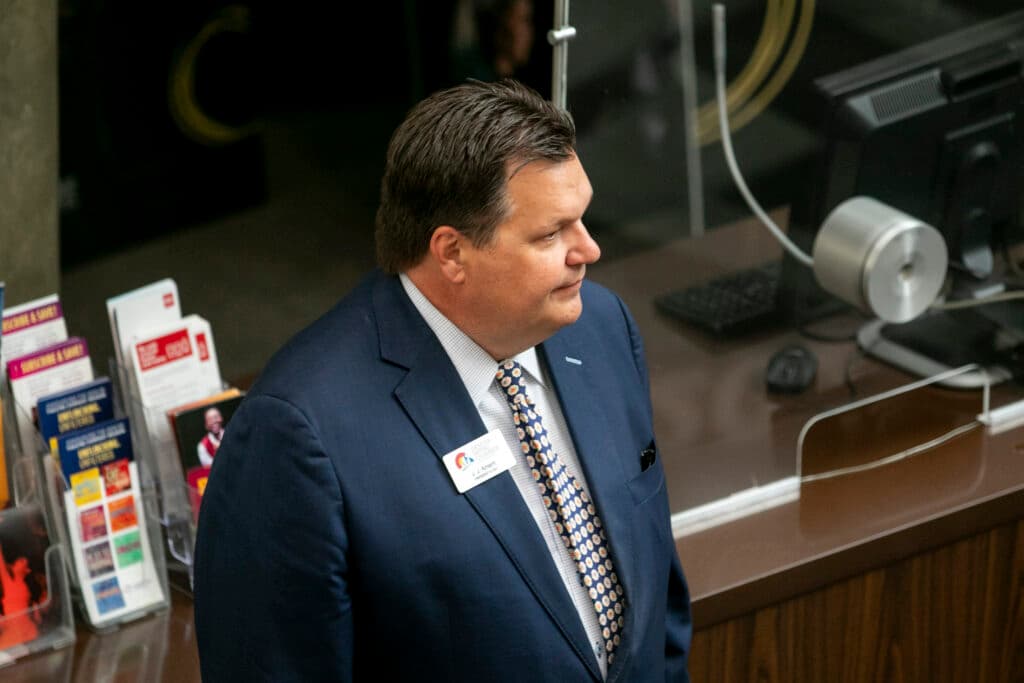
The board’s current and previous chairs, Haile and Maureen Tarrant, say they’re aware of complaints about workplace culture, but don't believe the sentiment is universal among staff.
“Having been a CEO for as long as I have, I usually have a pretty good sense if there's a healthy work environment, if people are happy, if they feel heard, and I believe that. I really believe that here to be true,” said Tarrant, whose resume includes executive positions at two major Denver health-care companies.
Still, the board chairs acknowledged that they were concerned about some of Denverite’s findings. They had already made recommendations to decrease attrition rates, they said, with an expectation that it improves in the next year.
“So I expect, I'll say it right now, that those numbers will improve,” Haile said.
The Chamber also has been the subject of several complaints to state officials. A set of complaints alleged the organization had violated the Equal Pay for Equal Work Act by hiring friends and allies of leadership by failing to post jobs and other tactics.
“The Denver Metro Chamber of Commerce has an established pattern in terms of failing to meet the requirements of the equal pay (law). This includes the absence of a process that ensures open positions are posted, in some cases at all and internal promotions are not posted internally for existing employees,” one dismissed complaint stated.
Those complaints were dismissed because too much time had passed. Several others remain open; their contents will be confidential until they are closed. The Chamber declined to comment on pending legal matters.
A turbulent time for business
In September 2021, the Denver Metro Chamber of Commerce began a new era with its new leader. Ament would be taking over as CEO — the venerable nonprofit’s first new chief executive in more than a decade.
Ament originally worked at the Chamber as the head of public affairs in the 1990s. He later worked around Denver as an investment banker for RBC and other institutions. He also ran unsuccessfully for state treasurer in 2010, narrowly losing the Republican primary to Walker Stapleton.
“I tell people, with 49.2 percent of the vote, I was re-elected to my job in banking, and my consolation, even though it turned out to be a great thing, was to be appointed to the state's Economic Development Commission,” he said.
He joined the Chamber again in 2017 to lead the Metro Denver Economic Development Corporation. He was generally well-regarded, according to Califf and several other employees and board members. And within a few years, he was ascending to the top.
Ament became CEO of the Chamber in 2021, after former leader Kelly Brough left and later ran for mayor of Denver. (Brough declined to comment for this story.)
The new CEO faced an economy rocked by pandemic-era shutdowns and a shifting business landscape. And he aimed to bring “harmony and alignment” to an organization with numerous brands and teams.

“How do we come in and address [Colorado’s economic challenges] and how do we use all of the diversity of the Chamber to align not as one note, but in a harmony so that we have different lanes that we're running in with our various brands, but that we're all running in the same direction?” Ament said in the interview in his office.
In the four years since, Ament says the Chamber has won policy victories — one of its core roles is promoting a pro-business agenda in state and local government — while growing its membership.
“Colorado had been a really top 10 state perennially [for business] and now has seen significant competitive disadvantages,” he said.
Along the way, he has thoroughly remade the organization, which began in 1867 as the Denver Board of Trade and has existed for 90 years in its current corporate form.
His emphasis is “white glove” service for the organization’s members. He has a sharp eye for detail, once holding a meeting to see if employees could identify problems like misaligned window blinds or a misplaced flag, multiple sources said. Employees at all levels can expect a sharp email if they miss small details.
“J.J. does have high expectations of this organization, and J.J. has very high expectations of himself,” Stein said in an interview.
She also noted via email that “details matter,” especially for flags and official symbols, since the Chamber hosts not just regular business meetings but also international delegations.
Ament’s supporters say that his high expectations helped them grow.
“They gave me a lot of opportunity. They gave me a really big assignment. They really opened doors,” said Amy Guttmann, a former employee who was contacted independently by Denverite.
Inside one of Ament’s most significant overhauls – the Leadership Foundation.
The Chamber's Leadership Foundation, formed in 1987, offers a prestigious one-year program, Leadership Denver, that is meant to turn “engaged civic leaders into community champions through in-depth experiences.”
It had been led in recent years by Jerome Davis, a well-respected business leader who previously was a top executive at Xcel Energy, one of the Chamber’s key supporters.
Davis left the organization in October 2024, despite plans to stay until the end of 2025. Several close relations said he had grown concerned about its culture. Davis declined to comment or to say whether he is under a nondisclosure agreement.

His replacement, Kristen Blessman, soon laid off the program’s two directors and a long-time administrative assistant.
Ament said it was a difficult but necessary change, one that Chamber officials said had been in the works for years.
“Kristen [Blessman] has a vision for how she wants to achieve the goals and objectives of the Leadership Foundation, and that did include some changes to how we were structured,” Ament said.
The terminations were a shock to participants and supporters of the program. Alumni and current enrollees, some of whom were midway through the program, sent letters and posted to social media after the layoffs. Some noted that the organization had been posting solid financial returns.
“This city’s leaders, myself included, will not forget this decision … Right now, trust is fractured,” wrote MiDian Holmes, who recently participated in the leadership program.
Holmes works as a consultant focused on Black excellence.
“This makes me beyond torn. This makes me believe this is not a person-centered organization and (is one) that holds different values than my own,” another participant, Chiara Spavieri, wrote in an email chain among alumni.
Some former employees contended that Ament targeted the program because it seemed too liberal. That’s why former mayor Webb was “very disturbed” to hear that Davis had departed, he said.
Davis "had a view of America that was inclusive of minorities, of women in strategic positions. And for Jerome to leave abruptly and then all of his staff leave after that is certainly suspect at the best,” Webb said.

Stein denied that Davis’s departure had anything to do with his or Ament's views.
“Mr. Ament supports efforts to ensure organizations are welcoming and inclusive, and has hired and convened one of the most diverse senior leadership teams in the history of the DMCC,” Stein wrote on behalf of the organization.
The changes also led to resignations from the Leadership Foundation board, including that of Paul Lhevine, the then-chair of the board and a prominent figure in Denver’s philanthropy world.
In a resignation letter obtained by Denverite, Lhevine acknowledged that Leadership Denver had its struggles, and had perhaps even begun to “lose its edge.”
(Jerome Davis) had a view of America that was inclusive of minorities, of women in strategic positions. And for Jerome to leave abruptly and then all of his staff leave after that is certainly suspect at the best.Wellington WebbThe former Denver mayor who is a current Chamber member and an alumnus of its leadership program
But Lhevine, who had been involved with Leadership Denver for some 15 years, objected to the way the Chamber was trying to change the Leadership Foundation’s culture. The program seemed to have changed from incorporating “the diverse perspectives of nonprofit, public, and private sector leaders” to focusing “solely” on training business leaders.
“These changes have altered the Foundation's culture in ways I believe are not in its best interest or honor the mission we have been fulfilling for decades,” the March 14 letter continued.
Lhevine confirmed the contents of the letter but declined to comment further. In all, three of the 50 members of the Leadership Foundation’s board resigned over the matter, Chamber officials said.
Ament faces a mixed relationship with state officials.
One of the Chamber’s primary functions is lobbying for business priorities before state and local officials.
This year, Ament campaigned hard against a proposed change to the Labor Peace Act, which would have made it easier for unions to require that all covered workers pay union fees. It passed the legislature, but Gov. Jared Polis vetoed it.
Ament’s approach left some statehouse Democrats feeling frustrated, they said. But the CEO had worked in “good faith” on potential compromises, Stein wrote to Denverite.
At the same time, a former Chamber executive says the organization has faced friction with the Polis administration over the region’s Small Business Development Center (SBDC), which had been hosted by the Chamber for nearly 40 years.

The SBDC, until recently, was jointly overseen by the Chamber and the state Office of Economic Development and International Trade (OEDIT), with core funding from the federal government. China Califf was its leader, working at the Chamber and in partnership with state officials.
Disgusted by changes at the Chamber, Califf said, she decided to quit in 2023. But first, she told OEDIT leaders about her concerns about the Chamber’s culture. After hearing Califf’s concerns, the state officials offered to make a dramatic move, she said.
“They approached me a couple days later and said OEDIT’s senior team had been alerted to the fact that there were issues over at the Chamber that were directly impacting the center,” Califf told Denverite.
An OEDIT official then suggested moving the center out of the Chamber and finding a new host, Califf said.
In the recent interview, Ament said that he had not wanted to lose the SBDC — “not at all” — noting that the center had been with the Chamber for decades. Nonetheless, Chamber leaders agreed in late 2023 to help with the change. By late 2025, state officials had finally found a new home for the center at Red Rocks Community College.
OEDIT officials declined interview requests and didn’t directly answer emailed questions about what keyed the change, instead releasing a short statement focused on the move to Red Rocks.
A CORA request showed some high-ranking state staffers had a distaste for Ament: “He’s always like that. He’s terrible,” wrote Laura Rodriguez, chief strategy officer for OEDIT and a former Chamber employee, in a text message from August 2023.
Rodriguez was responding to a text from Michelle Hadwiger, the state’s director of global business development. Hadwiger had said that Ament gave her an icy reception — he “wasn’t that nice” — at an event.
The records provided to Denverite did not confirm the reason that OEDIT moved the SBDC away from the Chamber. (Califf said that neither Rodriguez nor Hadwiger was responsible for the decision to move the business development center.)
Chamber officials said the state moved the center because other SBDCs are similarly hosted by higher-learning institutions.
“In support, we worked with them collaboratively for months to ensure no small businesses were impacted during the transition,” Stein wrote on behalf of the organization.
Overall, she continued, the Chamber has a “strong and productive” relationship with the legislature and the Polis administration.
Ament says he is growing the organization.
The Chamber is mostly funded by memberships, including from some of the state’s highest-profile organizations, and Ament said he’s overseen significant progress on that front.
Memberships run from $500 to $150,000 per year. Higher-paying members can become “trustees” and get influence over the Chamber’s agenda, appointments to Chamber-led councils and access to influential public figures.
High-profile members include the Denver Broncos, Denver International Airport and the University of Colorado system. Executives from major members also serve on the Chamber’s board.
Under Ament’s leadership, the Chamber has boasted significant growth among its highest-paying contributors. The number of “trustees” — organizations that give $100,000 a year to the Chamber — has grown from seven to 21. The Chamber’s membership also includes hundreds of small companies, from roofers to restaurants.
That has added up to significant gains in membership under Ament, according to the Chamber. After tumbling during the pandemic, the main Chamber organization’s revenue recently surpassed 2019 levels.
“We're bucking the trend nationally among chambers of commerce, because we're growing,” Ament said.
But its expenses have been growing, too. As a result, the main Chamber organization lost nearly $570,000 in 2022-23, and about $100,000 in the most recent fiscal year for which records were available.
The organization hadn’t previously run a deficit since fiscal year 2006.
We're bucking the trend nationally among chambers of commerce, because we're growing.J. J. AmentCEO of the Denver Metro Chamber of Commerce
Ament said the individual 990s don’t paint a clear picture of the financial health of the Chamber. He said he’s made big investments that skew the numbers, like updating the salary scale across the organization, that will bring benefits in the long run.
“Making that investment in staff is going to provide some lean years, but if you look at total revenue, where we come as an entire organization, we're positive,” he said.
Ament argued that the main Chamber organization shouldn’t be viewed in isolation. Instead, he said, the full picture should include the Leadership Foundation, which has posted positive returns lately. The full set of Chamber organizations are expected to post a combined surplus of $800,000 or more for fiscal year 2025, Stein said.
The Chamber also has reported accounting losses on its Market Street building, driven by declining tenant income in a tough market and rising depreciation.
The Chamber’s powerful board has supported Ament.
Several people Denverite spoke with tried to alert board members to a toxic work environment and recent turnover rate, they said, with few results.
“The board is never going to hold them accountable — I don’t know why, I can’t understand it — if I'm a board member looking at what’s going on, I have huge concerns about turnover and culture, and it feels like there’s no accountability,” a former legislative affairs staffer said.
In an interview, the board’s current and former board chairs said they were trying to reduce turnover and promised to take complaints seriously.
“Our goal is to improve the attrition, right? And so, no, [I’m] never satisfied with it,” Haile told Denverite in August. “But you also expect it.”
So far, the board has recommended strategies like conducting more employee surveys, providing options for anonymous feedback and ensuring employees can speak to HR and board members. Haile, who is Black, added that neither he nor Tarrant would allow discrimination or biased behavior at the organization.
“We're very cognizant of it here at the Chamber. And so, one, we would not allow any of that to happen here. And I hope that the staff here understands that, because they could see that we've got our own personal experiences,” he said.
“I'd love to hear their concerns, and if they're actionable, we'll address them.”
Denverite is a member-supported, local news organization. Learn more about how you can support Denverite's reporting.
To share information or feedback, contact the reporters.
Editor’s note: This article was updated to correct the spelling of Ryan Pedretti and Amy Guttmann’s last names and an erroneous description of a Society for Human Resource Management study. The update also included additional comment from the Denver Metro Chamber of Commerce and clarifications and additional information about the Colorado Labor Peace Act; the Chamber’s founding date and real-estate financial returns; and China Califf’s role.