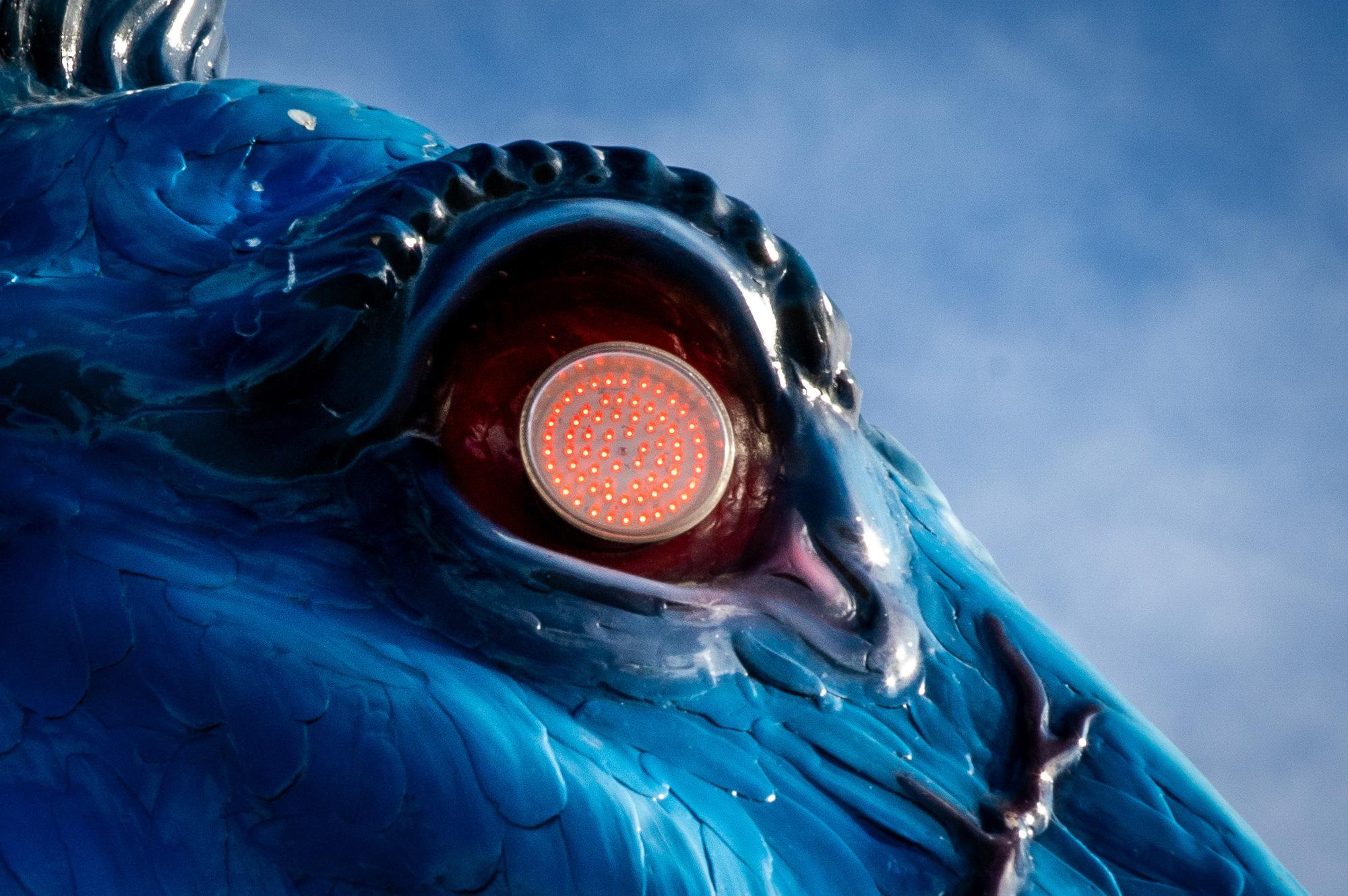
A 32-foot-tall Denver icon had a spa day recently. Mustang, who is more commonly known as Blucifer, got shined, washed and even its insides checked, to keep the big blue horse as striking as always.
Mustang is one of the most famous pieces of art in the city. The massive blue horse with red glaring eyes has stood guard at the Denver International Airport since 2008. And while he may frighten some visitors, he also needs to be cared for.
“It can be a very harsh environment here. Out at the airport, we experience really high winds. We experience extreme temperature fluctuations even within a single day. Sunshine 300 days a year, we have the elements, birds, rabbits, hail, snowstorms,” said Samantha Weston, the public art and exhibitions manager at DIA, at the base of the Mustang. “So we do a lot to keep an eye on the sculpture and make sure that it's in great shape.”
The horse gets an exterior wash once a year as part of an ongoing maintenance initiative to keep the airport’s artwork intact.
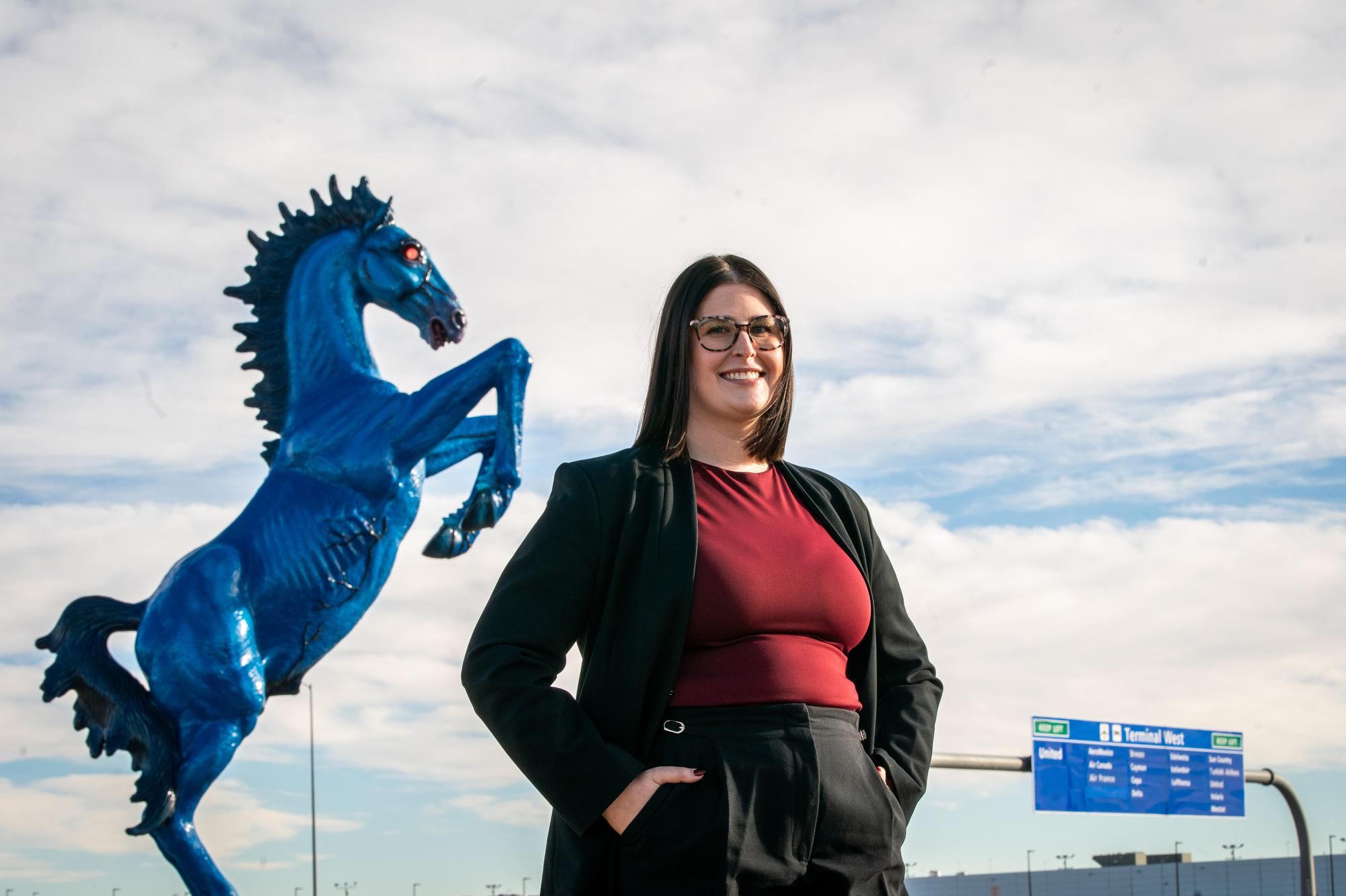
Maintaining Mustang means not just washing the exterior but actually crawling inside the horse through a removable chest plate. A local firm called Pacific Coast Conservation cleaned the horse’s fiberglass exterior and inspected the interior, including its supportive steel frame.
“It's pretty small. Hopefully you're not claustrophobic if you're climbing inside, but that entire porthole or chest plate is removable and that's how we service the interior,” she said. “We do interior condition reporting to make sure we don't have any moisture or water pooling inside that could cause corrosion.”
The sculpture is not only a striking piece of art, but also an engineering accomplishment, according to Weston.
“A sculpture like this at a tilt, (jutting) out towards you, is really an engineering feat,” she said.
The sculpture’s two hind legs are anchored to the ground by a steel frame. The steel is surrounded by 400 pounds of magnesium that prevents the frame from deteriorating.
“If you leave steel or metal in dirt, naturally, just alone over time, it will start to corrode. So the magnesium buried in the area helps prevent that,” Weston said.
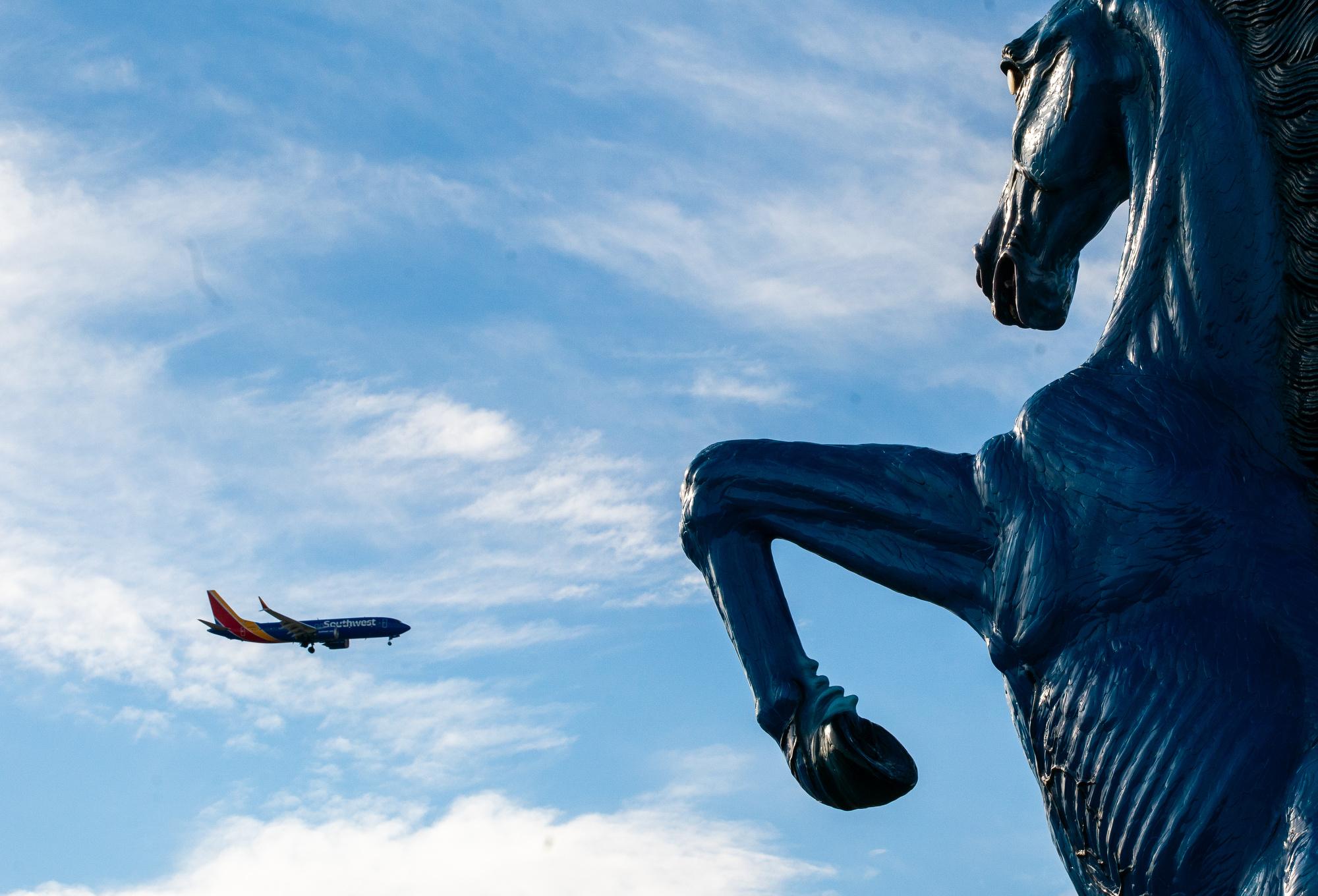
Mustang wasn’t shown to the public until 2008.
The airport has become infamous for its art. Throughout the airport, there are 230 pieces that make up about 36 installations. Many of the pieces were commissioned in the ‘90s around the opening of the airport.
Mustang was commissioned in 1992 as part of the portfolio originally planned for the airport, but its completion was delayed for years, including by a tragic accident.
“This was a part of the (airport’s) design as much as our murals throughout the terminal, our gargoyles and baggage claim,” Weston said. “It was just a little late on arrival.”
Luis Jimenez, the artist behind the sculpture, died in 2006, after a part of the horse came loose while he was working on it. The loose piece pinned him to a support beam and severed one of his arteries.
His studio later finished the work, and the sculpture finally made its way to the airport.
“From what I have read from interviews of Jimenez and the estate, Jimenez really wanted this to be a very striking, strong presence and symbolism of the strength of the West,” she said. “And that's something that is very apparent here in the Mustang.”
The sculpture ultimately cost $650,000, though the original commission was for $300,000.
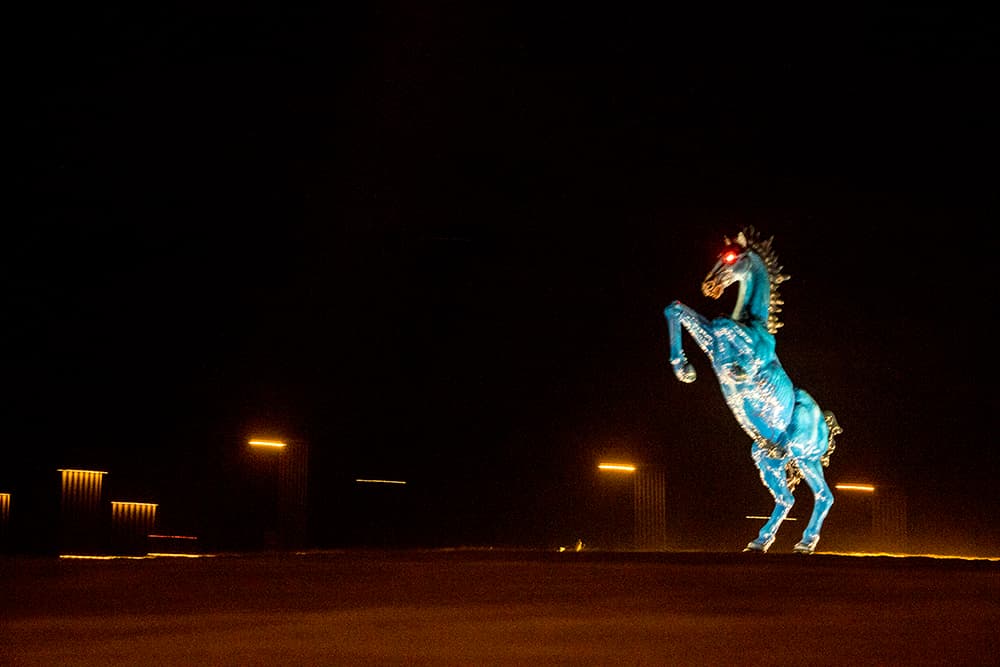
The sculpture’s popular nickname, Blucifer, is partly due to the glowing red eyes, but also the fact that it killed its creator.
“I don't like at times that (the nickname) is rooted in a very negative connotation. I think some people use it just because it's the colloquial term and that's just what they've heard,” Weston said. “But I always like to refer to the Mustang sculpture as Mustang. It was the title and the name given by the artist, and I really want us to honor that.”
But what about the eyes?
The glowing red eyes are an homage to Jimenez’s dad, who owned a neon sign store.
“I think that's a really beautiful note,” Weston said. “And Jimenez also talked about in an interview once on the ranch that he could see his horses kind of out there at night and you could see the subtle glow from their eyes and that he found that very comforting.”
The airport hasn’t had to service the burning red jewels just yet, Weston said
When they do, it will be just one more unusual task in the “huge undertaking” of maintaining the airport’s art collection. Weston has learned it all since taking the job in 2020. She is part of a small coalition of airport art managers throughout the U.S., with almost all major airports hosting a similar position. It’s a fascinating niche within the broader art world.
“I've learned quite a bit just from being on the job and really learning from our conservators and the artists themselves,” she said. “So it takes some time to really become immersed in each artwork, but every year I learn a little more in how to better protect the collection.”