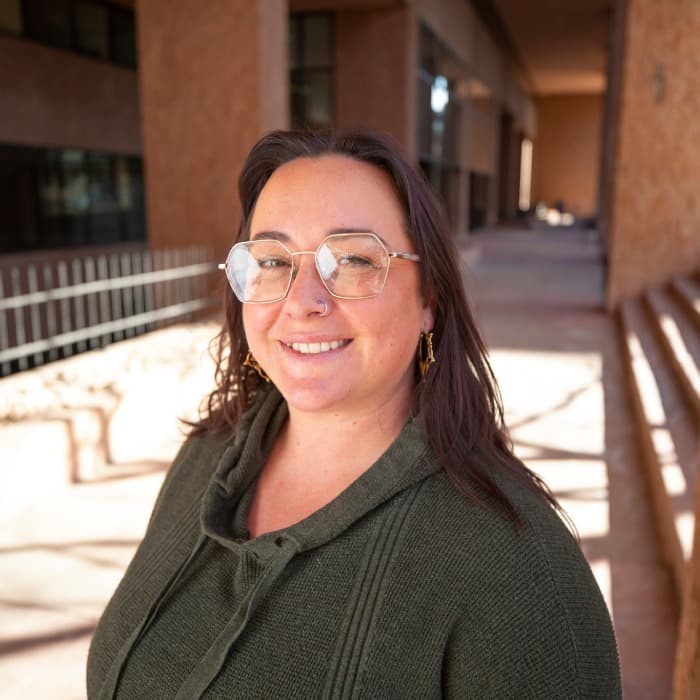
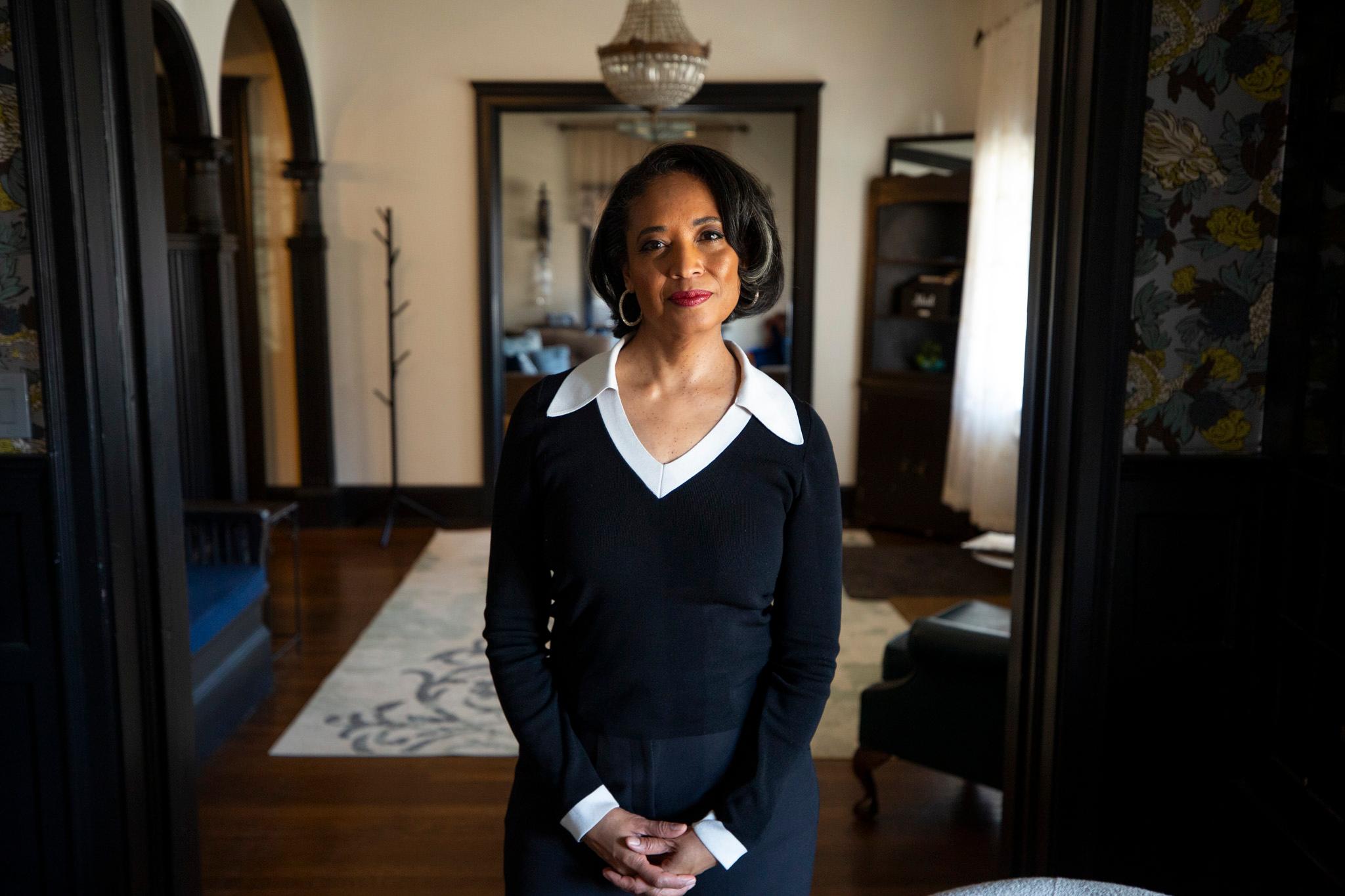
After months of hinting at a mayoral run, community activist and former city worker Lisa Calderón is betting that third time’s the charm in her bid to become the city of Denver’s most powerful politician.
On Tuesday, Calderón plans to file her election paperwork and kick off her “We Love Denver” campaign for the 2027 mayoral election. Among her campaign pledges: renaming 16th Street to the “16th Street Mall” once more, and restoring hundreds of jobs cut by Mayor Mike Johnston.
Her campaign slogan: “We love Denver — and we’re building a city that loves us back with safety, affordable housing and good jobs.”
Calderón took third place in the 2023 municipal election with 18 percent of the vote in the first round of the election, narrowly missing out on the runoff election between Kelly Brough and now-mayor Johnston.
She will be the third candidate to enter the race, following Aurelio Martinez and Robert Treta, both of whom declared their candidacy in 2024, shortly after Johnston took office. Johnston has already said he will seek reelection, though he had not filed paperwork as of Monday afternoon
Calderón told Denverite her focus would be defeating Mayor Mike Johnston at the end of his first term.
Calderón, 57, has been a longtime justice advocate in the city. She ran the city’s reentry program for people leaving incarceration and currently works as the executive director of Women Uprising, a nonprofit that trains progressive women to win campaigns.
She also teaches in Regis University’s criminology department and works as a political and legal consultant. She currently lives between Cheesman Park and Colfax Avenue.
“Increasingly, people are asking for me to run,” Calderón said in an interview. “Everywhere I go across this city, people are saying how hard it is and that he hasn't kept his promises. And I would say I'm probably the first one that he broke his promises to.”
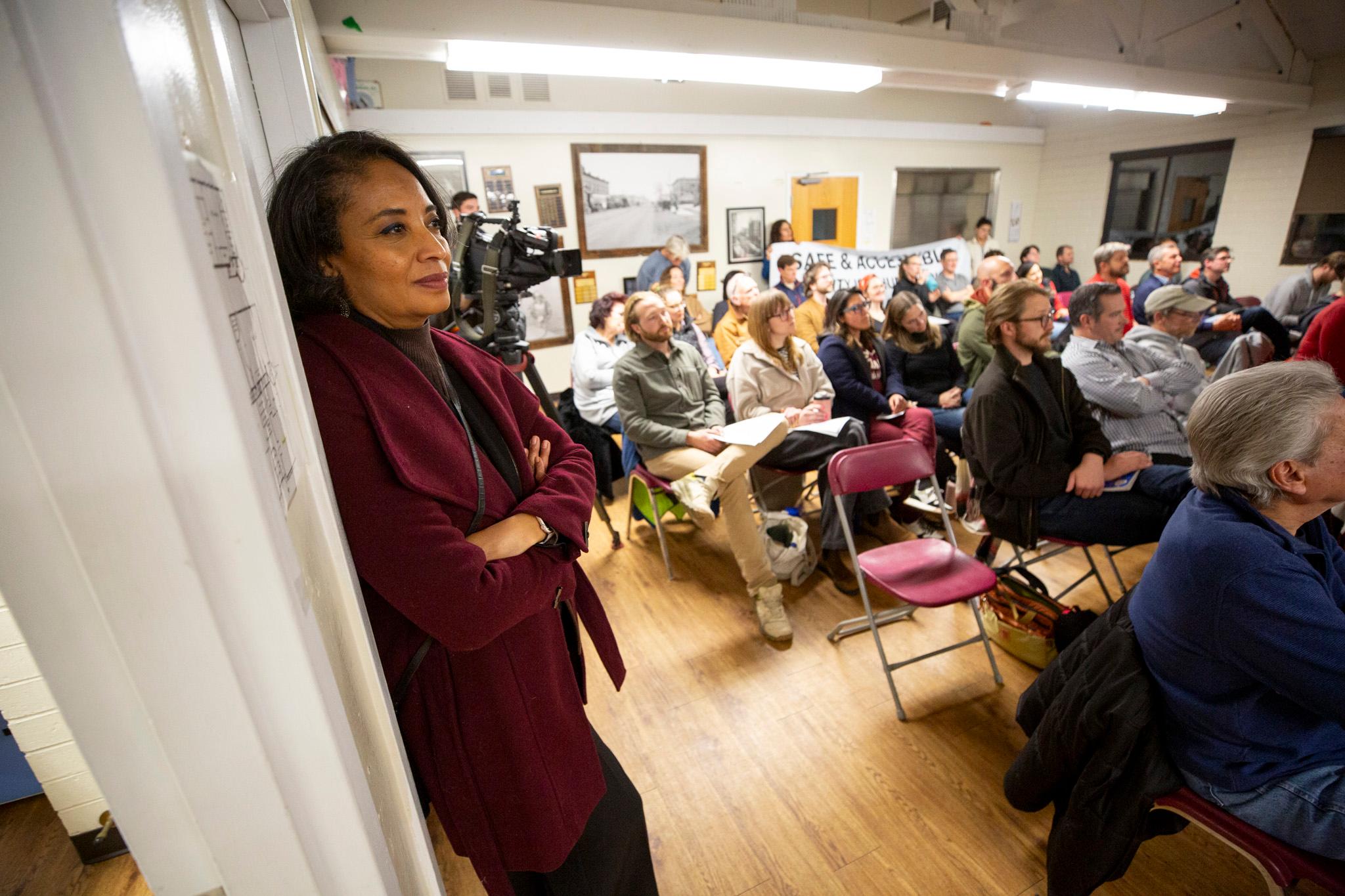
She’s referring to more than 70 promises Johnston made to her group, the Latino United Neighborhood Association, before she endorsed him.
Now, Calderón said, Johnston has broken most of those, including prioritizing the elimination of childhood homelessness and restructuring the Department of Public Safety.
Johnston has maintained that eliminating childhood homelessness is a priority, though families are still living outside and in cars and recently tapped Al Gardner to lead the safety department.
Calderón is frustrated Johnston kept some Mayor Michael Hancock appointees in their roles. And she argued he’s botched his homelessness resolution strategy, which has included breaking up encampments and encouraging people to move into hotels that have been converted to shelters.
Johnston maintains he’s made nationally significant strides addressing homelessness, pointing to the elimination of encampments in the city center.
“We’re going backwards,” Calderón said. “The fact that you don’t see as many unhoused people downtown doesn’t reflect the rest of the city, where these folks are being pushed to or disappeared behind shelters without services. He’s hiding a problem.”
She also promised to reopen nearly 1,000 jobs that Johnston eliminated through layoffs and vacancy closures. The cuts reduced city spending by just over $100 million in response to a budget deficit.
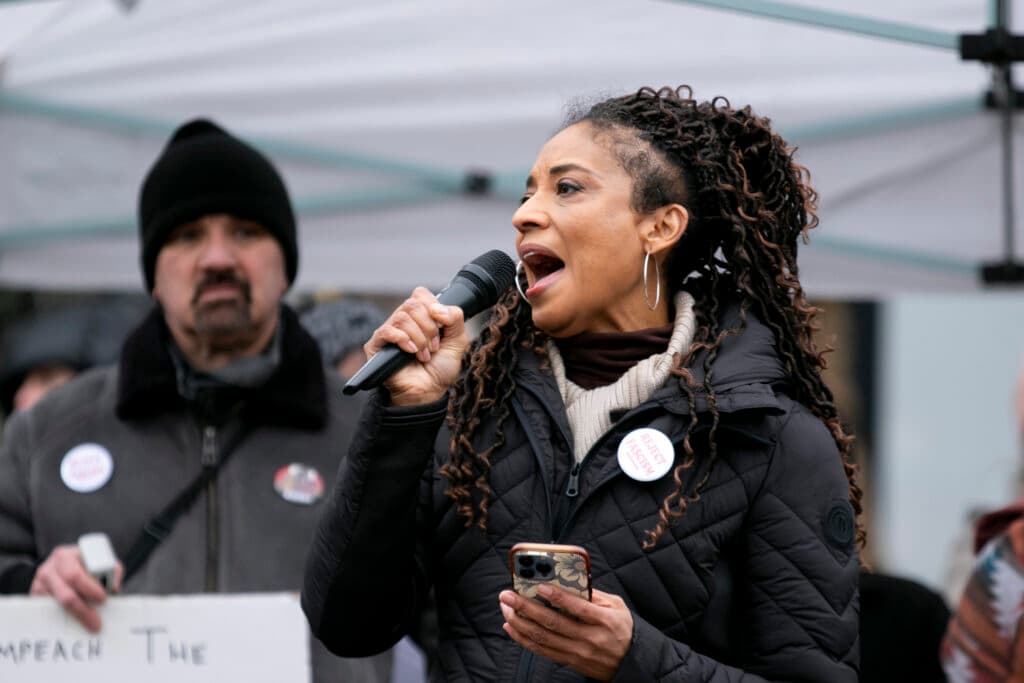
Calderón plans to bring in more revenue to the city by increasing taxes on people making more than $1 million annually, pushing to raise Colorado’s corporate tax rate, and boosting the local economy. Raising tax rates would require voter approval under the Taxpayer’s Bill of Rights.
Calderón also pledged to restore seniority protections for city workers.
Denver has lost its energy, Calderón said, and she wants to bring it back.
She pledged to rename 16th Street the 16th Street Mall, which she says is rooted in the longstanding commercial strip’s history, and make downtown feel more like a neighborhood.
“Our neighborhoods aren't even feeling like neighborhoods when you have these mass closures of small businesses,” she said.
Calderón lives off Colfax Avenue in a mansion once owned by a railroad baron. She and her family purchased the building together, and now three generations live in a shared living space in the Cheesman Park neighborhood.
She is outraged by how many businesses along the strip have closed amid construction of the Colfax bus-rapid transit project. She said the city hasn’t done enough to support them.
“One of the things that we are proposing is a tax holiday for burdened businesses that are closed as a result of ongoing construction,” she said.
Denver has offered limited funding to businesses on the corridor, among other support. The BRT project is expected to wrap up in 2027.
Calderón also promised changes to the city’s homeless response. She would focus on providing services in the hotel shelters, investing in staff and ensuring the shelters aren’t a revolving door of people.
Johnston says his strategy has worked and that the city is moving people into housing quickly. He maintains the city is on track to largely end unsheltered homelessness by the end of his second term and while he acknowledges the city’s response is a work in progress, he says people are receiving services and support by coming inside.
Separately, Calderón said she opposes mass surveillance and pledged, if elected, to eliminate the city’s contract with Flock Safety, the surveillance company that has provided license-plate tracking cameras for the city. The company’s network has been used elsewhere by immigration agents and has come under criticism as a violation of due process and the right to privacy.
Johnston has said the use of Flock has helped reduce auto theft and other crimes. He maintains Denver has adequately protected the city’s data from immigration authorities.
Housing is about more than buildings for Calderón.
For Calderón, fixing the affordability crisis is about more than just building new housing.
“Even though rents have dropped a little bit, the cost of living has increased, and so it cancels that out,” she said. “People are still struggling.”
She points to eviction case rates that have risen from pre-pandemic norms and stayed high over the past two years. Under her leadership, she said, the city would invest more in eviction prevention.

For Calderón, the fix to housing is investing in master leasing and a social housing bond initiative where people of all income levels can live in units — some in newly built buildings and others in repurposed large-scale single-family homes. She hopes to pass voter-approved social housing and infrastructure bonds.
“We really do need to prioritize partnerships with public housing developers to keep public housing permanently affordable, public housing off of the speculative market, and instead say, ‘No, this will be affordable now, when you are living in it and in the future,’” she said.
She points to her own Cheesman Park community as an example of what neighborhoods can look like — a mix of dense new construction, repurposed historic buildings and other forms as well.
Calderón will launch her campaign on Wednesday, Feb. 11, at Su Teatro Cultural and Performing Arts Center.