
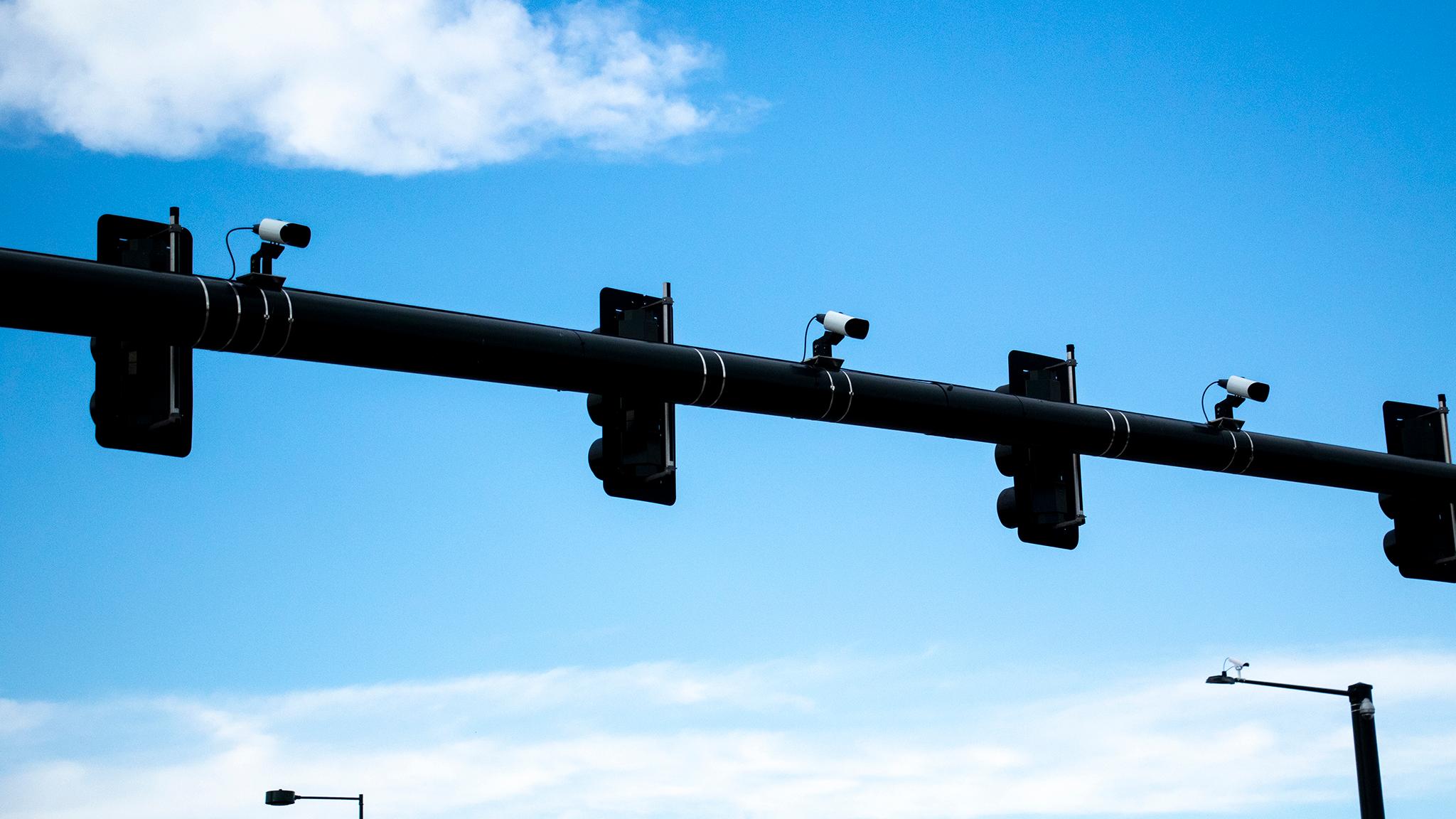
A controversial $150,000, one-year contract with the surveillance camera company replacing Flock Safety will be fast-tracked for a full Denver City Council vote next Monday.
The automatic license plate reading technology from Axon would replace some of the 100-plus cameras from Flock, a company that came under fire over how the information it collected was used in federal immigration investigations. (Flock still has a presence in Denver through a network of private cameras.)
Members of the council’s Health and Safety Committee grilled the mayor’s office, the police department and Axon about the technology, and whether the city could prevent data collected from being abused by the federal government.
On the one hand, Denver council members want to regulate and limit the use of automated license plate cameras in ways the Denver Police Department says will make the technology less effective in solving crime.
On the other hand, several council members also acknowledged that whatever legal limits they impose would likely be ineffective in stopping the federal government from just overriding local law and accessing the information.
The mayor’s office and DPD assured council members the contract and associated police policies would be complete by the time the full body votes.
The committee sent the Axon contract to the full council on a 5-2 vote.
How would Axon work? How is it different from Flock?
The Axon contract would bring 50 automated licensed plate readers to the city — half of what Flock provided. They would be attached to poles, trailers and buildings, and powered by the sun. The cameras could only film public roads and would be pointed away from private spaces.
Unlike Flock, Axon has no national database, and law enforcement agencies cannot review each other’s information. The company boasts having the highest security and privacy standards.
Denver would own and control its data. Access would be limited to Denver safety employees, mostly police officers, as well as arson investigators with the Denver Fire Department.
License plate information would be retained for just 21 days, down from 30. Anyone accessing the technology would be required to log in. Access would be audited.
If Axon were subpoenaed, the company pledged to fight it in court. Generally, subpoenas, warrants and public record requests would be handled by Denver.
Employees would be required to be trained on the Axon software and prohibited from violating First Amendment rights and committing harassment or intimidation. They could also not use the data for parking and traffic enforcement.
The debate over the Axon contract:
Several committee members raised concerns about whether the information collected could be protected from federal abuse.
“I think it’s a dream to think we can protect our information,” Councilmember Paul Kashmann said.
The mayor’s office acknowledged that no data is inherently safe.
Councilmember Sarah Parady was one of two votes against moving the Axon contract to a full council vote. She said she had lost confidence in the mayor’s integrity over how the administration handled Flock. She also cited the way Denver’s data was available for immigration enforcement cases, despite the Johnston administration saying otherwise.
“We're creating data that allows anybody to be tracked around the city, not just a plate that we're looking for because of a crime, but anybody, and there has never been an authoritarian government in history that had access to that kind of data,” Parady said. “And I am just terrified about the uses to which that is eventually going to be put.”
Council members also had significant concerns about how quickly Axon would handle data breaches. A 48-hour notice seemed too short to Sandoval, though city officials argued that was “industry standard.”
Others — including at-large member Serena Gonzales-Gutierrez, who was the second no vote, and Council President Amanda Sandoval — said they had not had adequate time to review the contract in depth. They were provided the draft contract on Friday.
Meanwhile, law enforcement has raised concerns about the reduction in the number of cameras and the number of days data would be retained. Fewer cameras could reduce their effectiveness in solving crimes, said Commander Cliff Barnes of the DPD Cyber Bureau at a committee hearing last week.
“We do know that their reducing the number of ALPR devices will have some sort of impact,” he said in last week’s committee hearing. “We're not exactly sure where that impact will land, but we're definitely going to be collecting data as much as possible in that regard.”
The council will hold a one-hour courtesy public hearing ahead of a full vote next Monday.