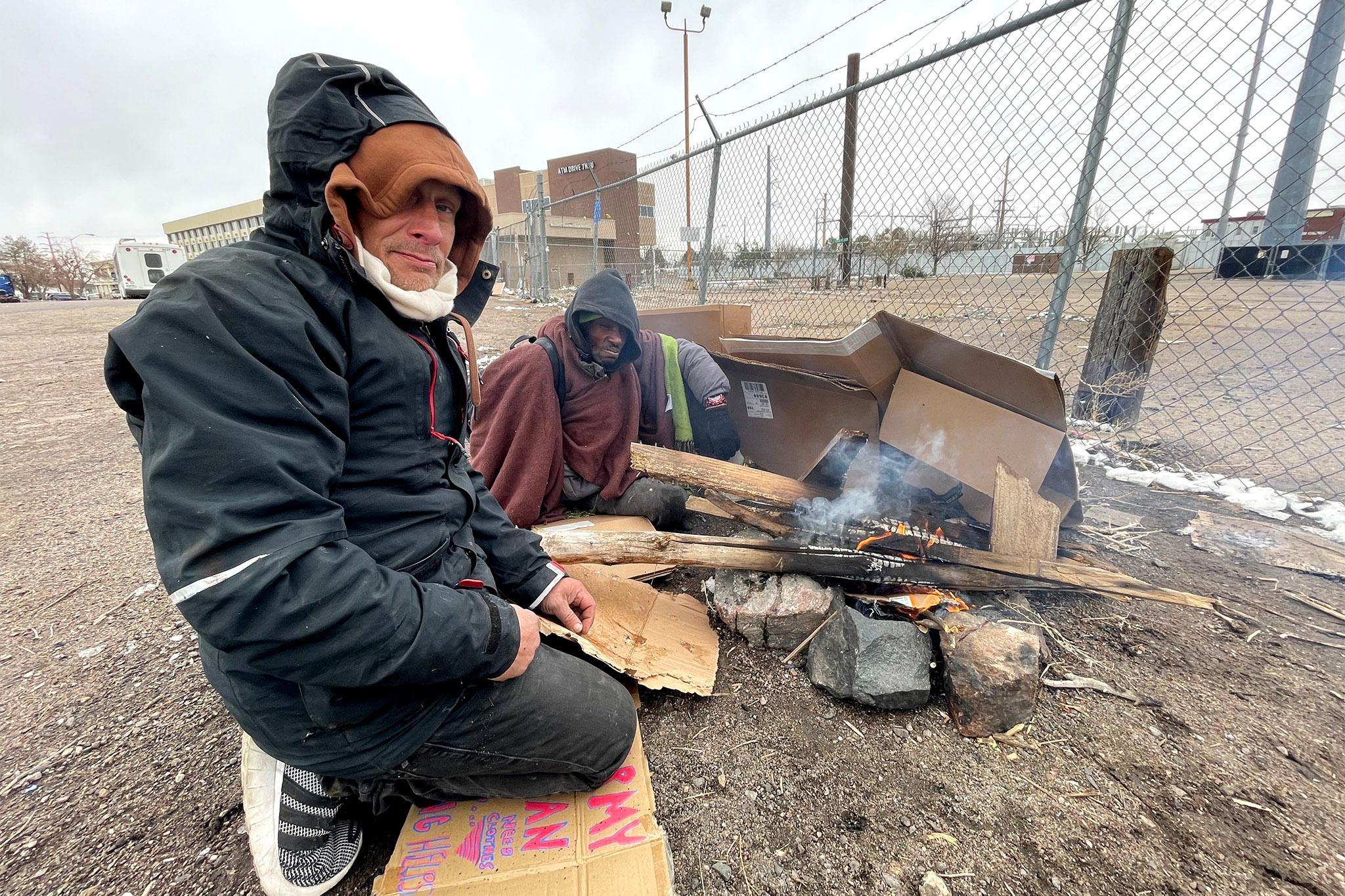
Veteran Daniel Scray and his friend PJ Johnson sat on snowy gravel, warming themselves with a cardboard-and-twig fire as temperatures plummeted toward single digits.
The men were only a short walk from The Aspen, a former DoubleTree hotel turned long-term homeless shelter. Until recently, the city also offered emergency cold-weather shelter there, providing respite during winter storms like the one last weekend.
Scray and Johnson would have happily put out the fire, walked down the hill and gone inside — if the emergency shelter were still open.
“Somebody shut it down,” Scray said.
Denver had opened cold-weather shelters in Montbello, Sun Valley and Athmar Park for the storm. But the city was keeping The Aspen’s emergency shelter section and several other spots closed.
The decision to keep the ballroom of The Aspen locked followed criticism from local leaders, who said the mayor had concentrated homeless services in northeast Denver. In contrast, homelessness advocates — and people living on the streets — said that closing The Aspen’s ballroom left people in the cold.
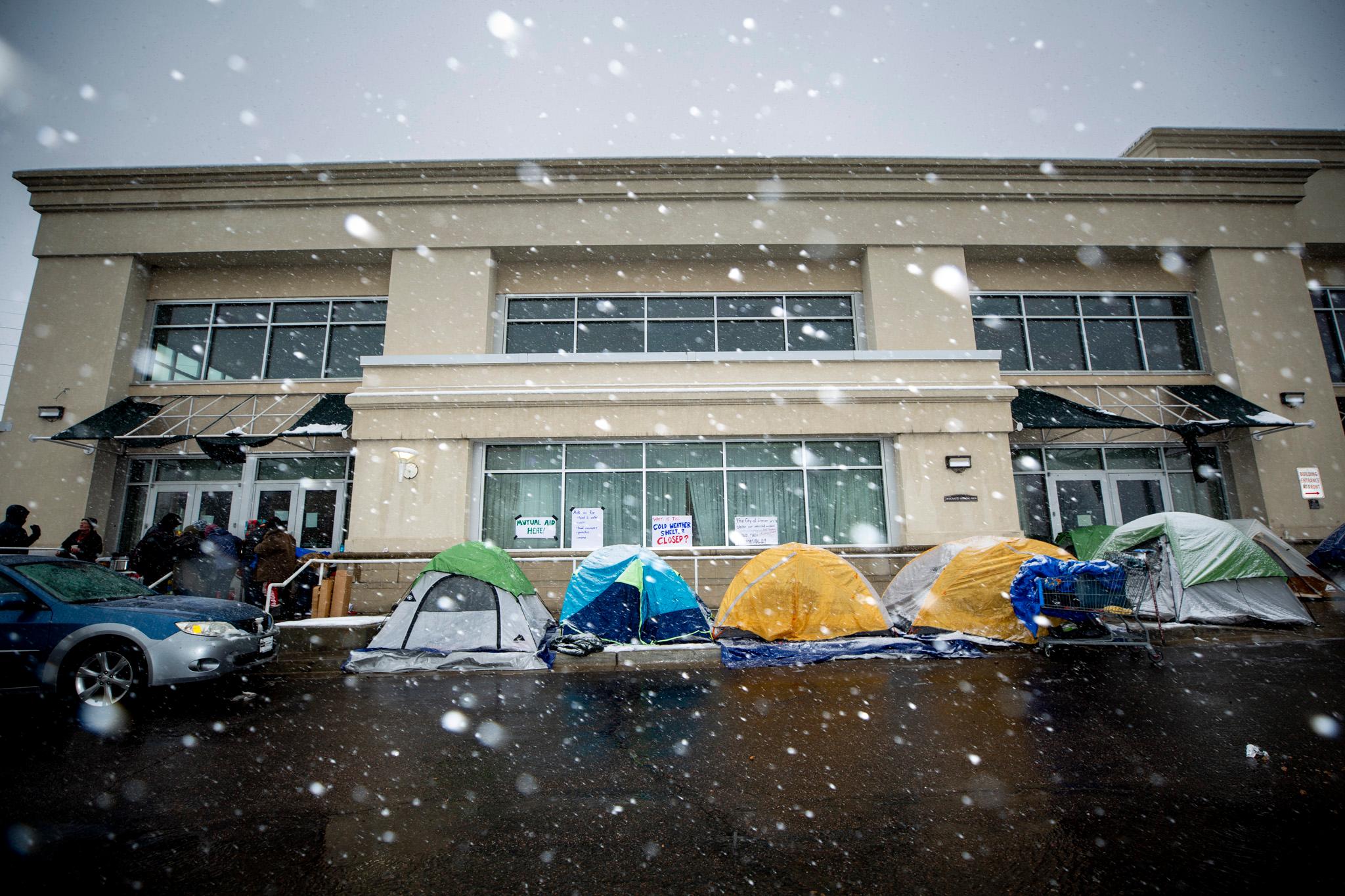
The previous week, advocates had protested by setting up tents outside The Aspen and handing out food, sleeping bags and blankets. During this Sunday afternoon snowstorm, there were no protests, just people struggling to stay alive.
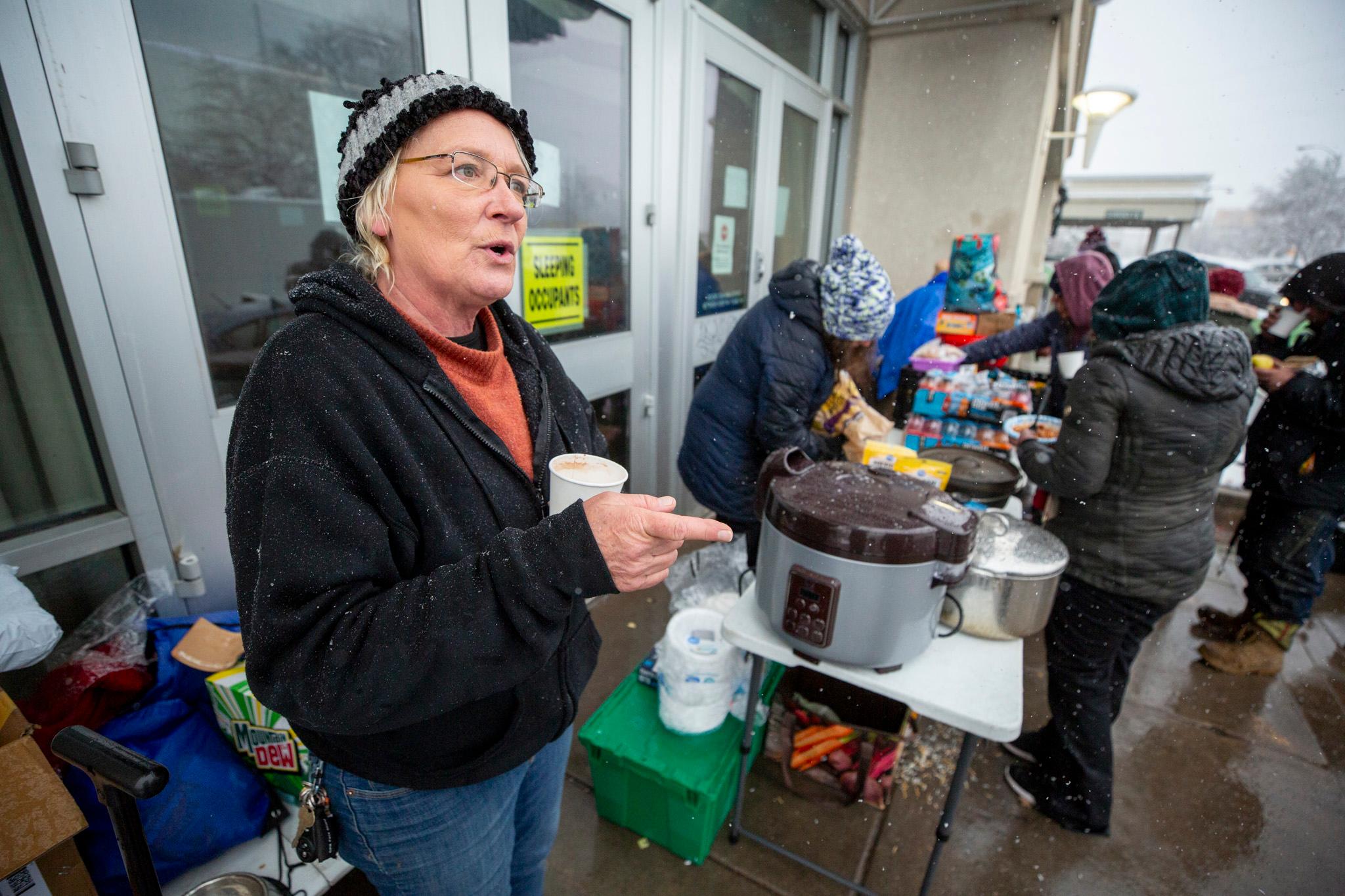
Temperatures had dropped into the 20s after a warm spell. By early morning, they’d dip to 5 degrees. Scray and Johnson, perfumed by smoke, were dressed to survive, along with dozens of others who camp near Sand Creek and in Northeast Park Hill and Central Park.
Scray and Johnson could have caught a shuttle bus to one of the shelters elsewhere in the city. But they didn’t know the shuttles were running, and walking to a shelter felt like too much of a risk.
Clothes, condiments, food, blankets, tents — the basics for surviving outside — could all be stolen if they left them behind in northeast Denver. City officials said people could bring their belongings on the bus, but the men were skeptical that would work out.
“You can’t pick up and take everything with you,” Johnson said. “Emergencies happen, and you just don’t have the availability or the means to just grab all of your contents and take them with you. And so you got to choose what to give up and what to lose.”
So they blocked the wind with cardboard, stoked the fire and staved off frostbite, hoping the police wouldn’t show up to extinguish the flames.
The cold-weather shelter at The Aspen has been a hot debate.
When Mayor Mike Johnston first pitched his strategy of ending street homelessness, he talked about building shelters in every neighborhood. Councilmember Shontel Lewis eagerly joined him in that effort, supporting new shelters at former DoubleTree, Best Western and Comfort Inn hotels in her district.
But Lewis now believes the city relied too much on the hospitality of northeast Denver. Shortly after Johnston’s House1000 campaign began, Lewis criticized the way the city has clustered homeless services, including The Aspen, along the border of Northeast Park Hill and Central Park, in District 8.
“To figure out how you move folks from unsheltered homelessness to shelter, we are the leaders when it comes to that,” she said of District 8. “Now we're extending an invitation to the rest of the city to continue in that leadership, to step into their own leadership. We're not saying get rid of these [shelters]. We're saying, let's add some additional ones, but not concentrated in District 8.”
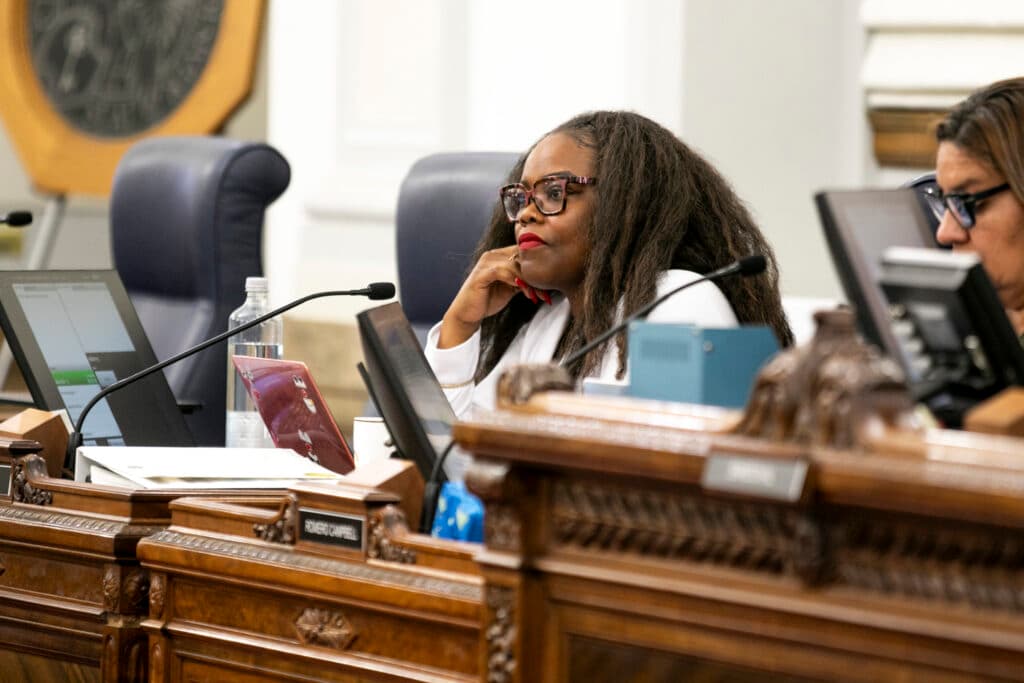
Lewis and other council members have also argued that hosting a cold-weather shelter for temporary guests at The Aspen could undermine long-term residents. They shot down a contract for the emergency weather shelter to continue to operate at The Aspen.
Johnston’s administration reopened the shelter anyhow for a storm in January, arguing that doing so was necessary and would save lives. But this month, the city kept the ballroom closed.
The mayor has agreed to try to spread cold-weather shelters more equitably across the city, Lewis said.
The mayor’s spokesperson Jon Ewing did not directly answer whether the closure had to do with Lewis’ criticisms. But he said it’s possible the cold-weather shelter could be opened at The Aspen again.
“If it is a matter of life and death and (we) need to use the Quebec site we will, as we did earlier this year,” Ewing wrote. “The one-night activations have not necessitated its opening, nor the openings of other sites around the city.”
The city has significantly expanded its cold-weather shelter program and planned for it to be open around 80 days a year — but with this year’s unseasonably warm weather, the emergency shelters have opened just 38 times.
Officials also have said that keeping The Aspen closed made sense logistically. Opening the ballroom at The Aspen would have required staffing and cleanup — and city officials said it was simply not necessary. Hundreds of beds were open at other cold-weather shelters around the city during recent cold weather, and the city had hotel vouchers available.
“We had sufficient capacity at the activated sites, and we work to balance immediate needs with responsible use of limited resources,” Department of Housing Stability spokesperson Julia Marvin wrote Denverite. “Our goal is always to open the right spaces at the right time while being good stewards of public funds and responsive to our unhoused neighbors.”
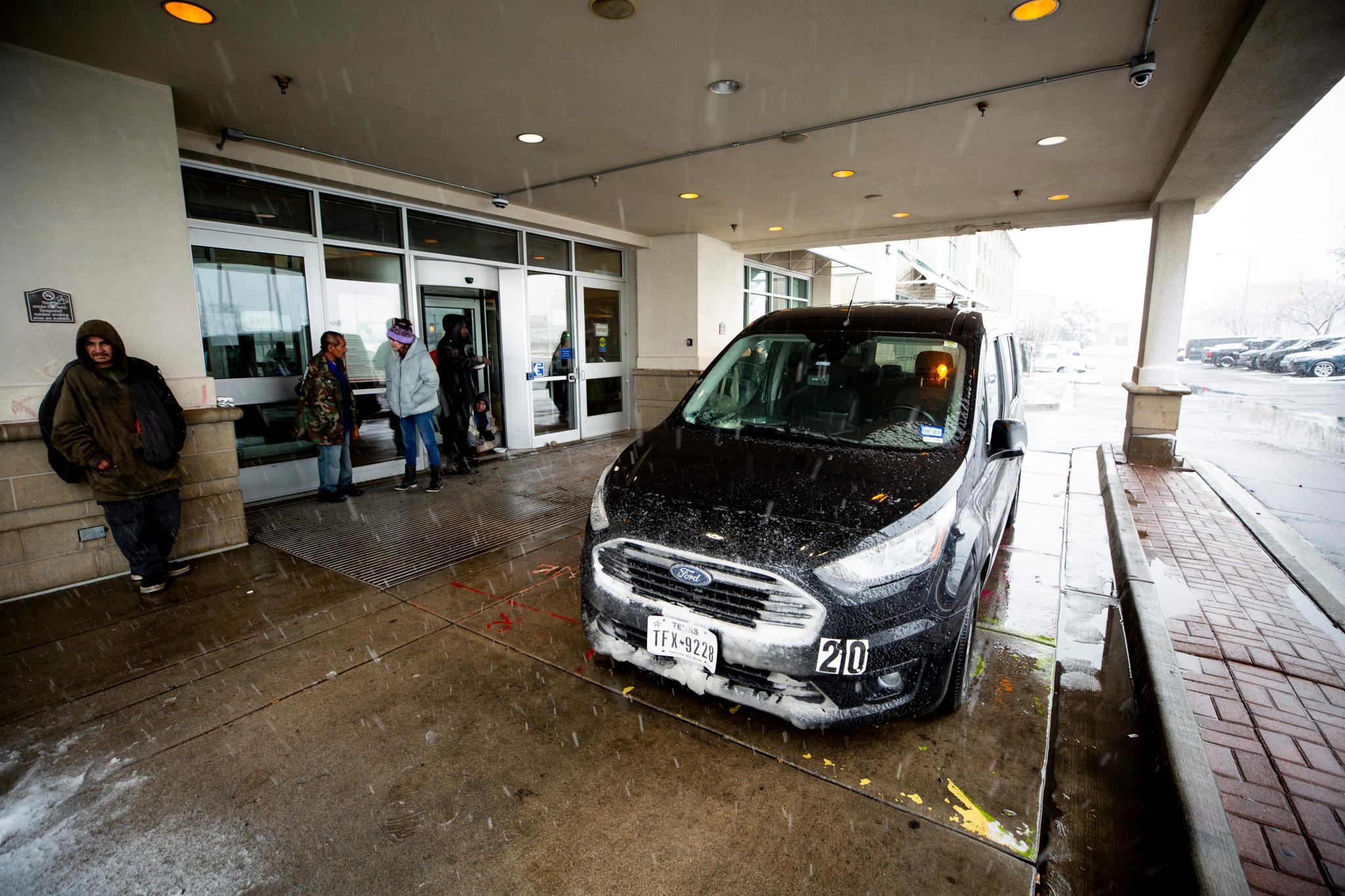
Marvin noted that the city communicated about transportation between The Aspen and other emergency shelters ahead of cold weather.
But several people, including Scray and Johnson, hadn’t heard the news.
Stories of survival around the fire.
Scray and his wife were among the hundreds of people Mayor Mike Johnston brought to northeast Denver as part of his All in Mile High homelessness plan to end street homelessness – and he was among those who ended up back on the streets, while his wife stayed indoors.
“I was wrongfully kicked out,” he said. The city declined to comment on an individual case like his.
Since losing shelter, he’s been camping by Sand Creek, dodging police and park rangers, and cycling in and out of jail.
Jail is the worst place to go if you're homeless, Scray said.
“It's not going to help you one bit,” he explained. “It's just going to make it worse. All you're going to do is figure out how to do crime better so you don't end up back in there.”
Scray hadn’t used drugs before losing his housing two years ago. But now he does. They help him cope with the trauma. Every day, he and Johnson have one priority: survival. Sometimes city officials help, they said, and sometimes they get in the way.
Johnson recalled how on one of the coldest nights of the year, he and others had built a fire.
A Denver Police Department commander drove by and told them as long as the fire was small, they could keep burning it.
Firefighters also drove by and said much the same, advising them to properly contain the fire in the city’s drought conditions.
“Stay warm,” one firefighter said.
Then another police officer drove by. He told them to extinguish the fire. Johnson and his friends were left outside, shivering, trying to avoid frostbite.
On Sunday, as the two men remembered hard times by the fire, others walked up to catch some warmth.
One woman wore a sleeping bag draped over her shoulders. Ashes blew into the cuff of her gym pants, briefly catching fire. Johnson told her to pay attention, and she kicked the flame out.
Another man lumbered up, irate. Somebody had stolen his backpack, and he pledged to beat up the thief.
Everybody was too cold to pay him much mind, so the man quickly changed the subject and told Johnson and Scray about the shuttle running between The Aspen and cold-weather shelters.
“They’re taking people right now, if you want to go,” the man said.
Scray and Johnson were still concerned about losing their belongings — but with the cold setting in, they felt more ready to risk it for a night indoors.
But first, they warmed themselves a few minutes more by the fire.