
Denver will continue to use a surveillance network of cameras to track vehicles across the city for criminal investigations.
On a 7-6 vote, the Denver City Council approved a $150,000, yearlong license-plate camera contract with the company Axon Enterprise, maker of the Taser – after weeks of debate and delays.
The Axon cameras will replace the city's previous system, made by Flock Safety, which had drawn intense public backlash.
The technology helps the Denver Police Department quickly solve crimes and boost public safety, supporters said. They argued that the contract has sufficient guardrails to protect residents from government overreach and privacy violations.
Opponents argued that the city lacks laws to adequately regulate surveillance and feared the technology could be weaponized by the Trump administration, though the city’s contract with Axon states Denver will maintain control of the data.
Automated license plate readers capture images of vehicles as they cross the city, recording where and when individual vehicles are spotted. The systems can identify vehicles by their license plates as well as other physical characteristics. The city first installed its earlier Flock system in May 2024.
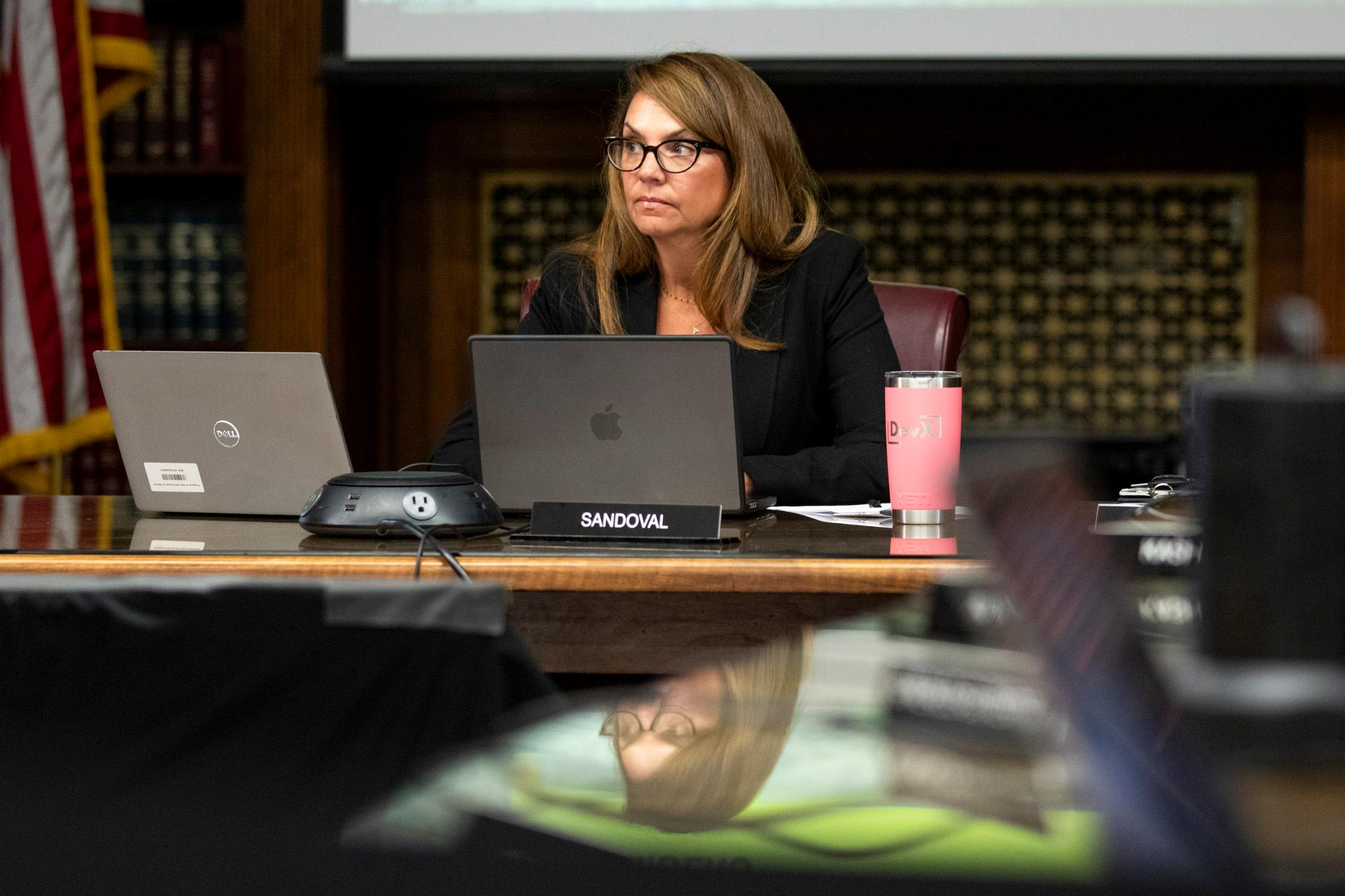
City Council President Amanda Sandoval cast the final “yes” vote, expressing her support for both sides and admitting she was undecided.
In her comments, she did not indicate which way she would ultimately vote, creating a reality TV-like moment – a move she said was unique in all her years on the council.
Ultimately, she resented being asked to vote on something well below the normal $500,000 threshold for council consideration.
“I don't like the fact that this came to us,” she said. “I don't appreciate it. I really don't. I've never voted on a contract for $150,000. I think it sets a bad precedent.”
Meanwhile, Mayor Mike Johnston touted his staff’s months of engagement with the council about the contract.
“We’re proud to have Council’s support to move forward with this common-sense technology that has helped drive historic reductions in crime while protecting residents’ privacy,” Johnston said in a statement. “And with these strengthened privacy and data protections, we are ensuring that no federal agency or federal agent can access this data—now or ever.”
The debate was fierce – and will be ongoing
Throughout the night, council members debated whether it was responsible to enter into a contract with Axon without first enacting legislation defining how surveillance technologies can – and cannot – be used.
The city has a surveillance task force that has been working on the issue for the past year and has yet to create a proposal.
“I think our fundamental mistake here is in continuing to add more surveillance technology to the city before we regulate it,” Councilmember Sarah Parady said at the meeting.
Several opponents of the contract expressed their lack of trust in Mayor Mike Johnston’s administration.
“There’s no way we can trust the mayor, the police department or this council if we don’t craft a law that enforces people’s constitutional rights,” said Councilmember Stacie Gilmore, who opposed the contract.
But Councilmember Kevin Flynn pointed to the contract between Axon and the city and argued that an ordinance regulating the technology was unnecessary, since the agreement itself provided clear guidelines and legal consequences for violating them.
“We have the guardrails on this,” he said.
Councilmember Amanda Sawyer said her constituents' top priority was public safety. While she acknowledged privacy concerns, she ultimately voted in favor of the contract.
“I am supportive of this technology,” said Sawyer. “This is a very well-written contract.”
What’s the context?
The decision was made amid an ongoing national debate between license-plate-camera opponents like the American Civil Liberties Union, who believe the technology could violate civil liberties and privacy, and proponents, who believe the cameras make residents safer.
Both the mayor’s office and the Denver Police Department say vehicle tracking helps officers solve more crimes, from gun theft and homicide to car theft and more.
Officials argue the tech has been a significant factor in the city’s drop in crime.

The cameras do not directly prevent crime. Instead, they are used to investigate it.
Earlier this week, three mayors — Federico Peña, Wellington Webb and Michael Hancock — published an opinion article in the Denver Post, pleading with the council to renew the contract in the interest of public safety and arguing that the contract had sufficient privacy measures.
Police have their own concerns
The previous vendor, Flock, offered twice as many cameras as Axon will provide and a more sophisticated, AI-powered search tool that worked across jurisdictions – raising concerns about how the information could be used.
As the contract made its way through the council, officers expressed some uncertainty about how fewer cameras and reduced data sharing would affect public safety.
The decision to cut ties with Flock came after a year of debate over how collected data was shared with other law enforcement, including federal immigration investigators, potentially violating state and local laws.
Trust in both the police department and the mayor took a hit, as both wrongly claimed that the city's data was safe from federal immigration authorities.
In fact, thousands of agencies around the nation had access to Denver data through the “national search” function — which DPD officials said they didn’t know until April 2025, when they deactivated the function. The city did not share its full dataset, but it was regularly pinged in immigration-related searches. Additionally, Denver previously data with Loveland police, who in turn granted access to U.S. Border Patrol.
“Fool me once, shame on you,” said Councilmember Jamie Torres, about why she voted against the contract. “Fool me twice, shame on me.”
The city maintains there is no evidence that Denver’s Flock data has been used for immigration enforcement. Flock’s contract with the city expired on Tuesday, and its 100-plus public cameras are already gone, said Tim Hoffman with the mayor’s office.
Private Flock cameras remain in operation throughout Denver.
The 50 Axon cameras will be installed in the coming weeks. Meanwhile, the city’s surveillance task force will continue to work on legislation to regulate the technology over the coming months.