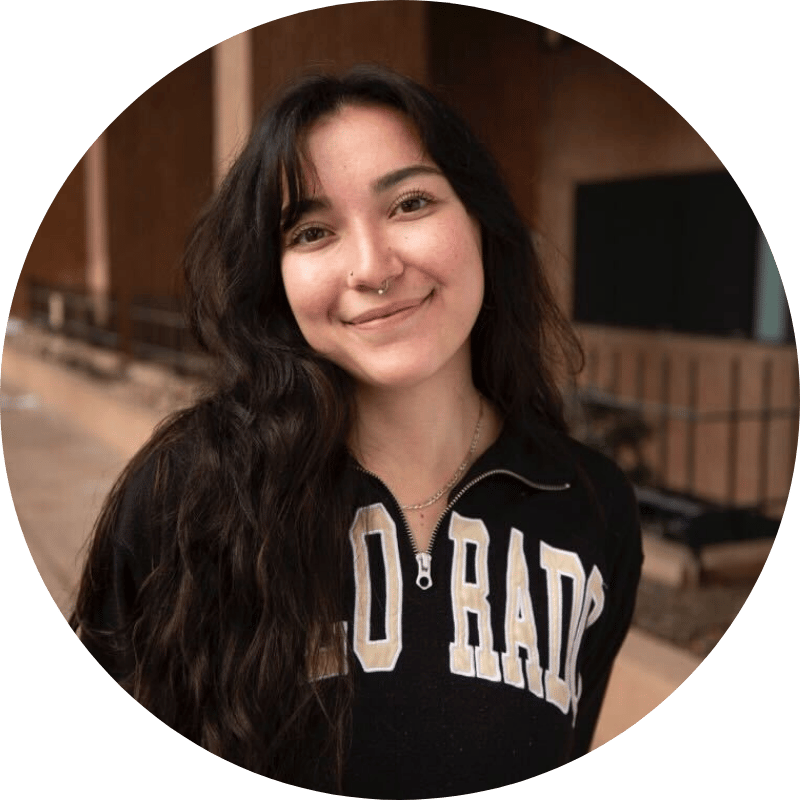
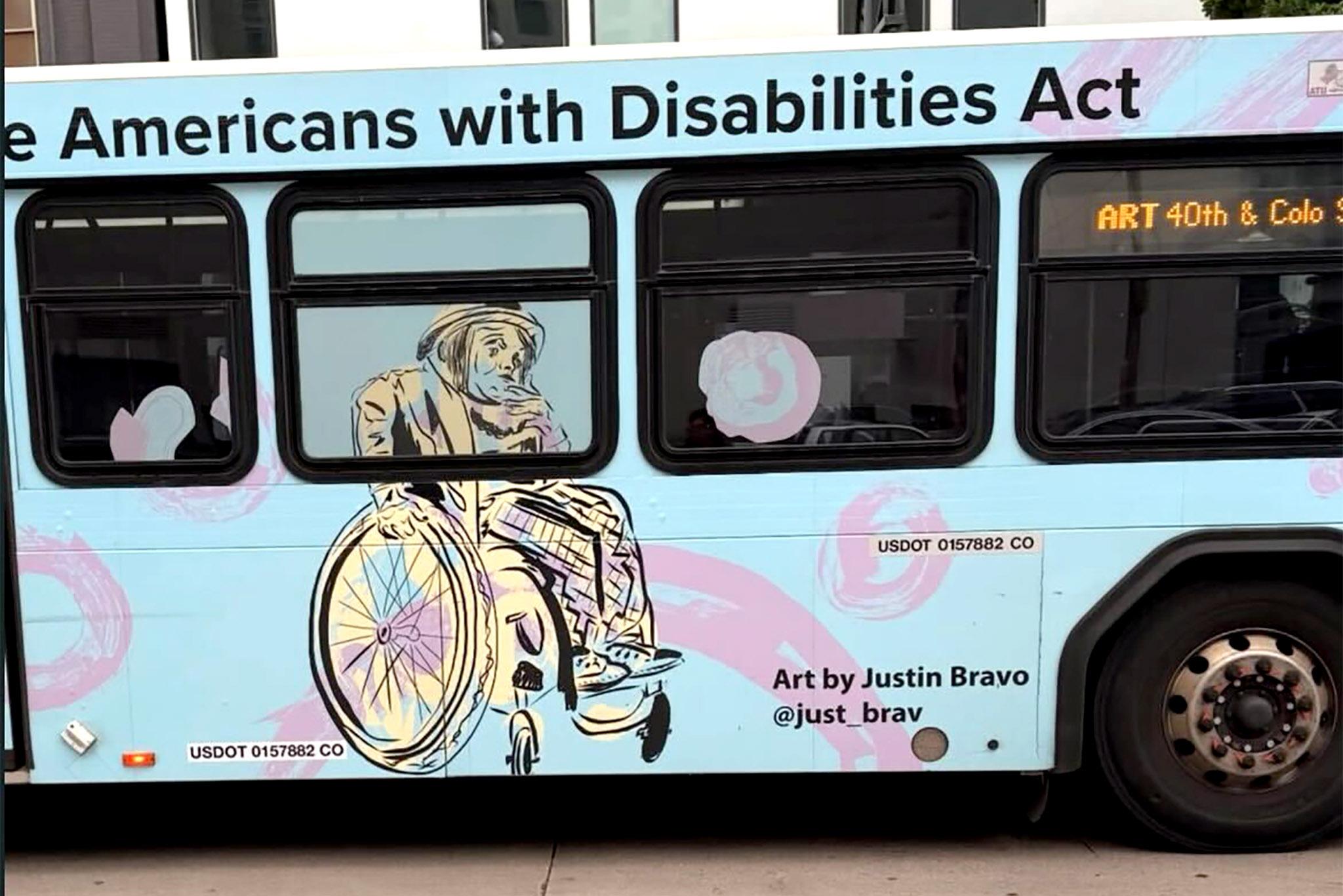
Kalyn Heffernan didn’t know her picture was on the side of a bus. She only found out when a friend had sent her pictures on Monday.
“I was just instantly so pissed off,” Heffernan said. She had no idea that the Regional Transportation District was using a portrait of her to promote its services for riders with disabilities, she said.
One reason she was angry: RTD has recently enacted controversial changes to its services for people with disabilities. It raised costs for Access-on-Demand, a flexible transportation service, saying it was a financial necessity.
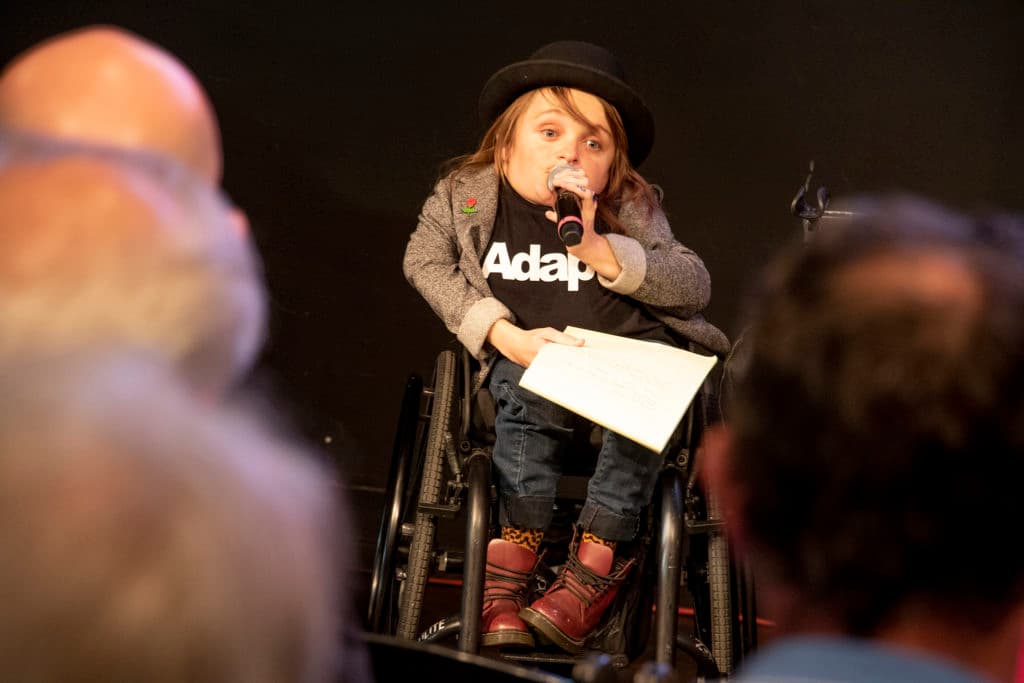
“I don't even know how long it's been on the bus. I don't know if it's one bus. I don't know if it's multiple buses. I haven't seen the bus, which is also wild. I ride the bus and live right across from a bus stop,” she said. “So I don't know how I haven't seen it, but it's out there and without my permission, and celebrating and tokenizing disabled people without actually acting on that.”
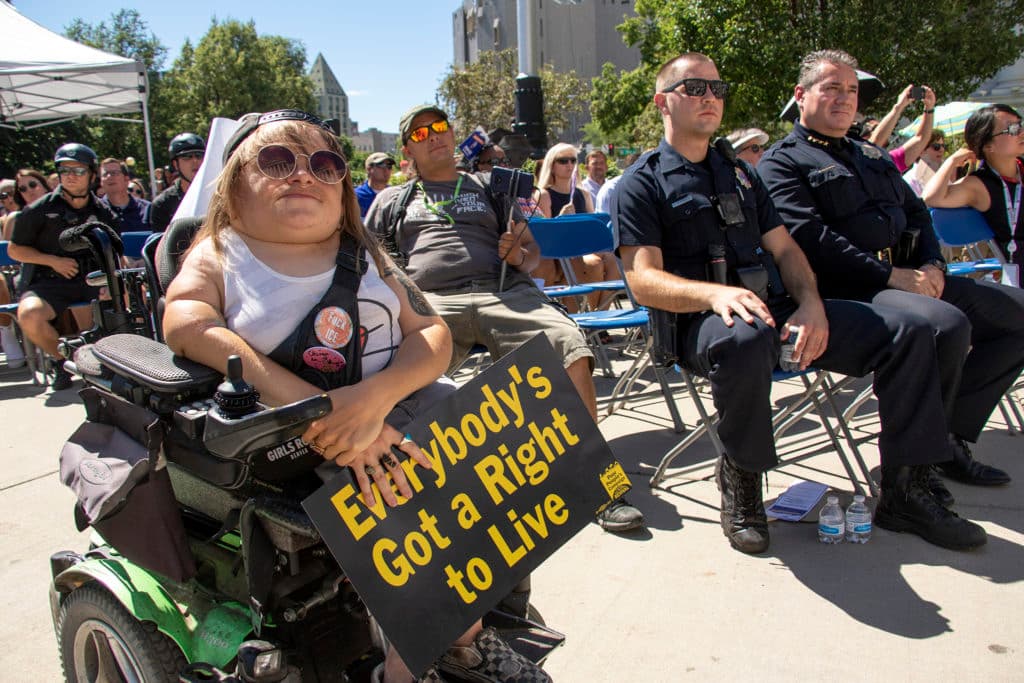
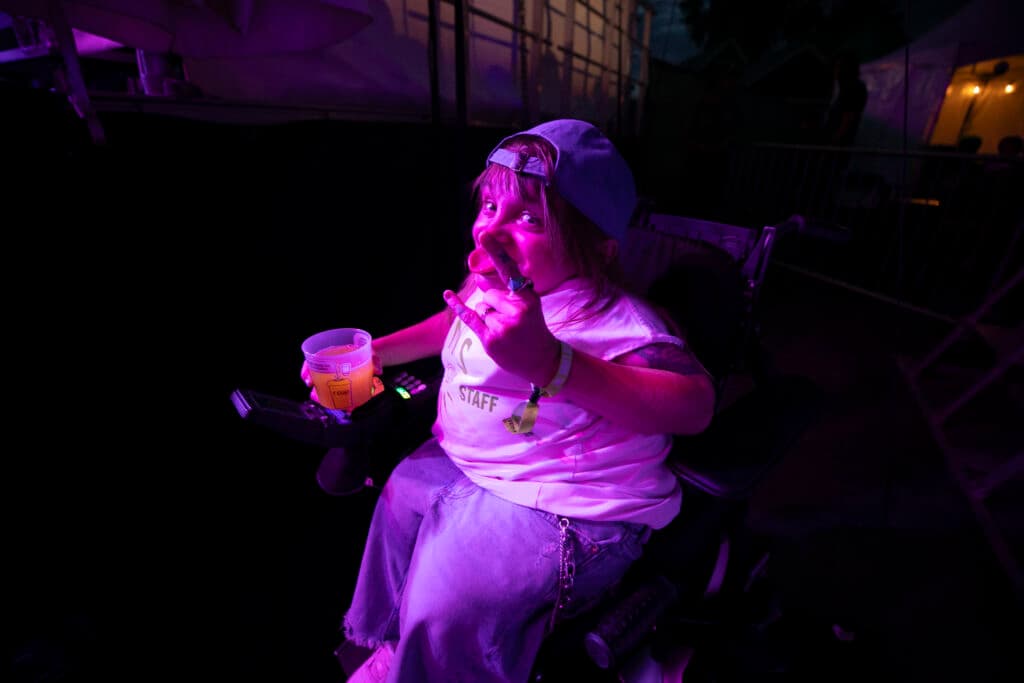
Heffernan, a wheelchair user, is a Denver legend. She’s the frontman of Wheelchair Sportscamp, an activist and a former mayoral candidate. During her run for mayor, she pushed for transit to be free and accessible.
“I'm a regular rider and I've been my whole life,” Heffernan said. “Our service isn’t great as it is. I’ve been disappointed for a long time how RTD isn’t still the most accessible and affordable.”
Recent changes drew anger
The Access-on-Demand program is a partnership between rideshare companies and RTD, allowing riders with disabilities to call a ride from services like Uber at a discounted rate.
RTD’s Board of Directors approved the changes to Access-on-Demand (AoD) in late September in a 10-5 vote. The service will continue, but RTD is now covering only $20 of each ride’s cost, down from a maximum of $25 currently. Riders also will pay a base fare of $4.50 per ride, or $2.25 for those who qualify for RTD’s income-based discount program.
Atlantis ADAPT and two disability rights activists sued RTD over the changes in December, citing federal disability law. The lawsuit was ultimately dropped after a judge ruled against the suit, doubting it would succeed.
More recently, RTD’s management has suggested broader service reductions as the agency struggles with a large financial deficit. The board of directors is considering cutting entire routes and scaling back others.
Access-on-Demand has grown sharply in popularity, and so have its costs, RTD officials have said.
“The Access-on-Demand and Uber partnership I think was smart and was wildly popular — so much that they decided to cut that, which is just like, they throw us a bone and then they're like, actually, we're going to cut (down) services,” Heffernan said. “I think RTD’s been a mess for a while, and with these budget cuts, they're even more of a mess. I think they're pretending to take notes and they're pretending to celebrate us when it feels right. But I think it feels pretty empty and hollow.”
RTD had “only recently” learned that the picture was of Heffernan, according to RTD spokesperson Marta Sipeki.
The design was a part of a community contest to celebrate the 35th anniversary of the Americans with Disabilities Act. Submissions were evaluated by a 10-member panel with representatives from disability advocacy groups, arts groups and others.
Controversial 'publicity stunts'
Heffernan isn’t the only one who didn’t know they were being used for promotion. An image of Robin Stephens, an early member of ADAPT Colorado, is featured on a bus alongside an image of Rev. Wade Blank — both disability rights activists who fought for transit access.
“RTD should have reached out to those they were going to use on the bus wrap,” Stephens said in a text. “It’s just weird.”
ADAPT has a rich history of protest. The Gang of 19, a group of people with disabilities, blocked the intersection of Broadway and Colfax in July 1978. They successfully halted RTD buses for about 24 hours. Blank joined them as a supporter and organizer. It was part of a successful movement to make Denver’s bus fleet accessible for wheelchairs.
The group was a driving force in demonstrations at the U.S. Capitol in 1990, urging federal lawmakers to pass the Americans with Disabilities Act.
RTD also has taken fire for renaming the downtown civic center station to the Wade Blank Civic Center Station in January, against the wishes of members of Blank’s family and ADAPT.
Heffernan said she is trying to figure out what her next steps are. She had posted about the bus on Instagram and the artist reached out to apologize.
“Ultimately, I'm not trying to drag this artist. RTD is the one with the power and the responsibility and the state funding and the decades-long service,” she said. “I don't want RTD to pass the blame on this artist because it's their responsibility.”
Heffernan said someone from RTD reached out to talk.
“I think another big frustrating part of this is I'm not hard to find, and a lot of these people clearly know who I am or I wouldn't be on the bus,” Heffernan said. “And so it's like to have zero communication with me is just so offensive. I'm the easiest person to find in this town.”
Editor's note: This article was updated with comment from RTD.