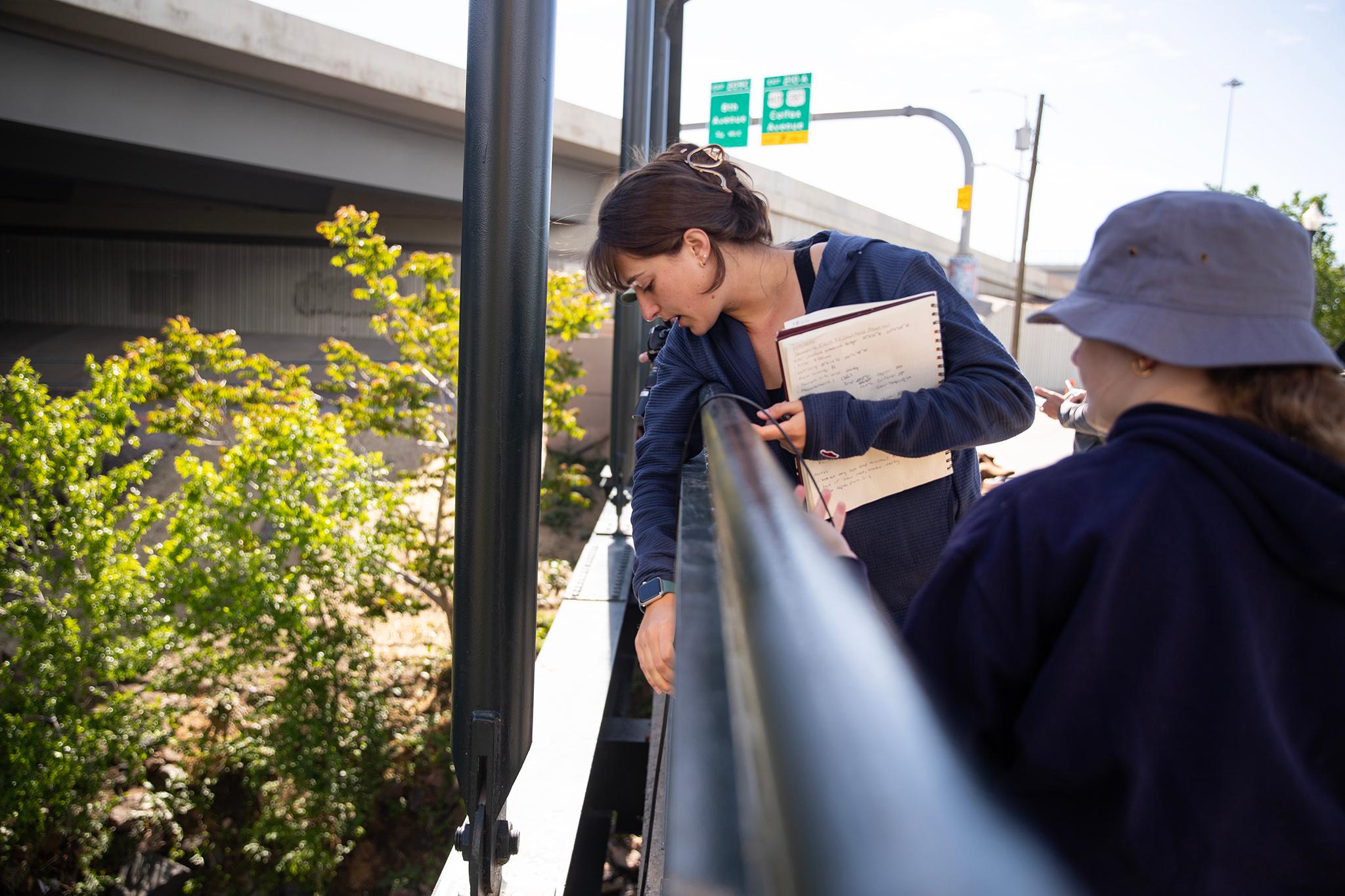
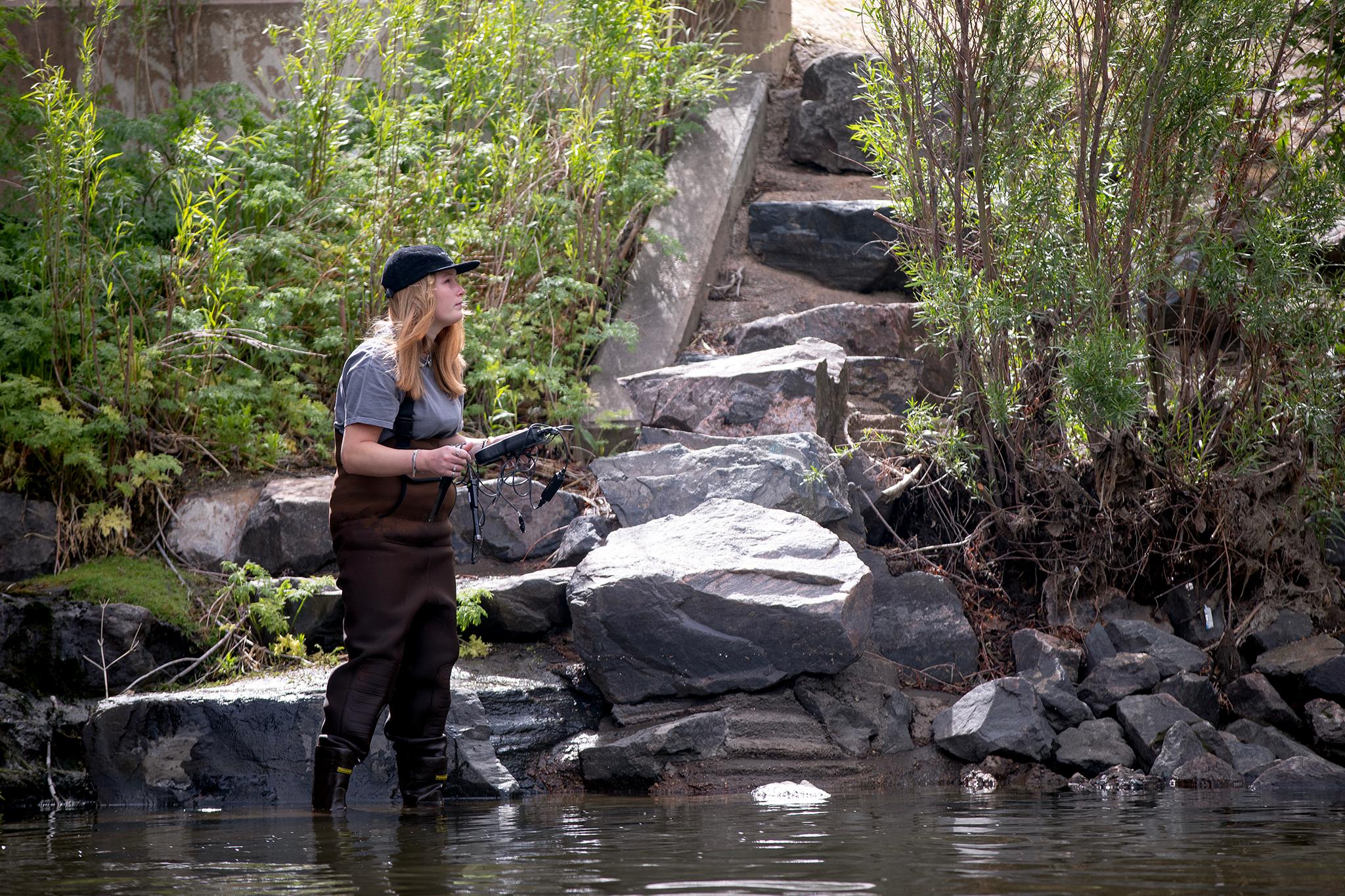
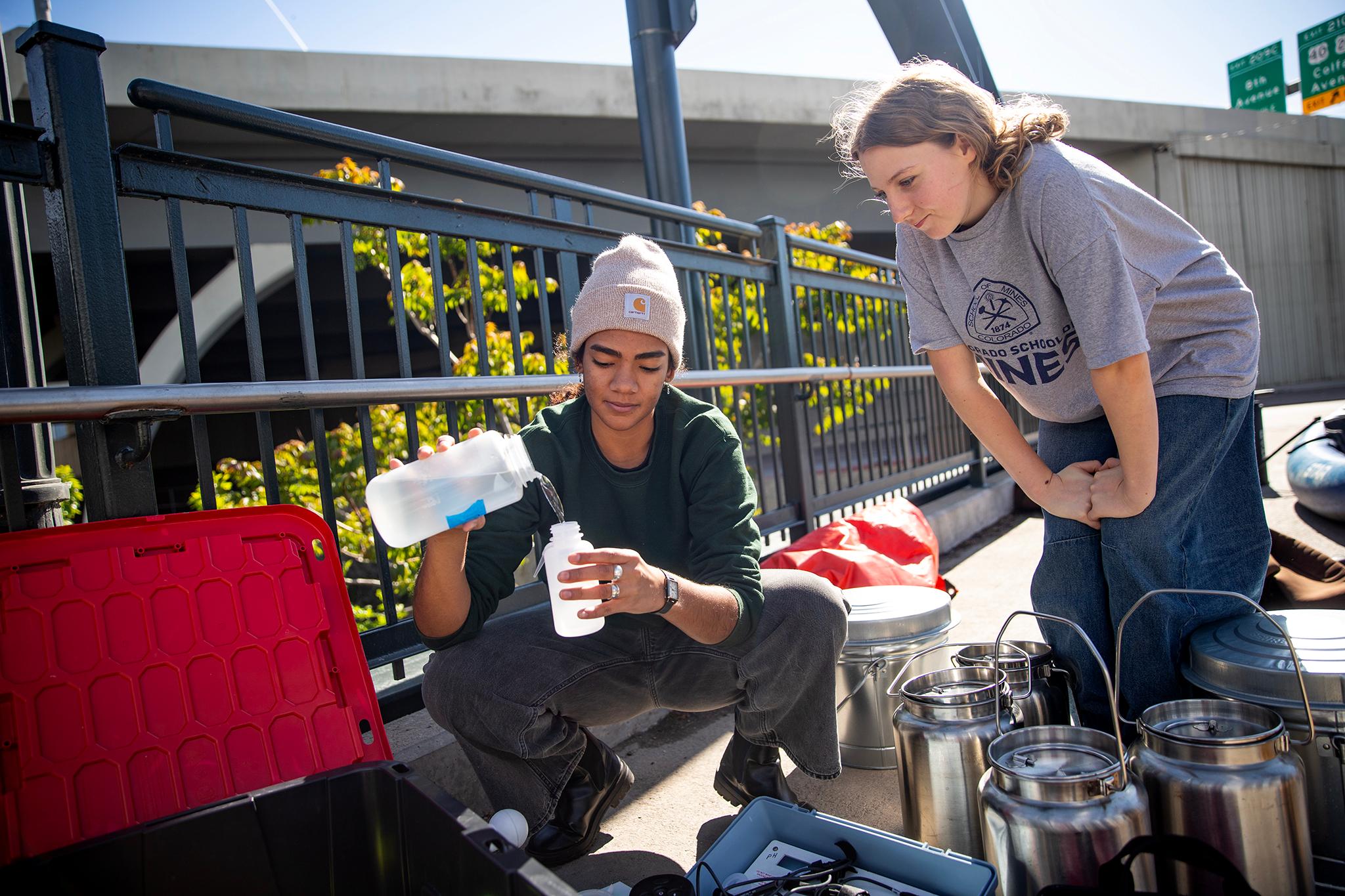
We all know that the South Platte River is teeming with E. coli. Now Colorado School of Mines Ph.D candidate Anne Marie Mozrall is hoping to find out if it’s also full of microplastics. She and a team of Mines students have embarked on a three-day trip up and down the South Platte to collect samples of water from the river to test.
Microplastics are a relatively new problem for the human species. The use of synthetic plastics exploded with World War II and now, they’re everywhere — in your clothes, vehicles, cookware and more.
With the proliferation of plastics also came the explosion of microplastics. The term was coined in 2004 by British scientist Richard Thompson. Basically, it refers to micro-sized bits of plastic smaller than about a pencil eraser. These smaller-sized plastics then break down but don’t fully degrade.
“We are starting to see more and more research come out about microplastics in our body, potentially affecting different aspects of our health,” Mozrall said at a portion of the South Platte near Empower Field. “We also are predicting that they're having a huge impact on ecosystem health as well. And there's just still not enough data.”

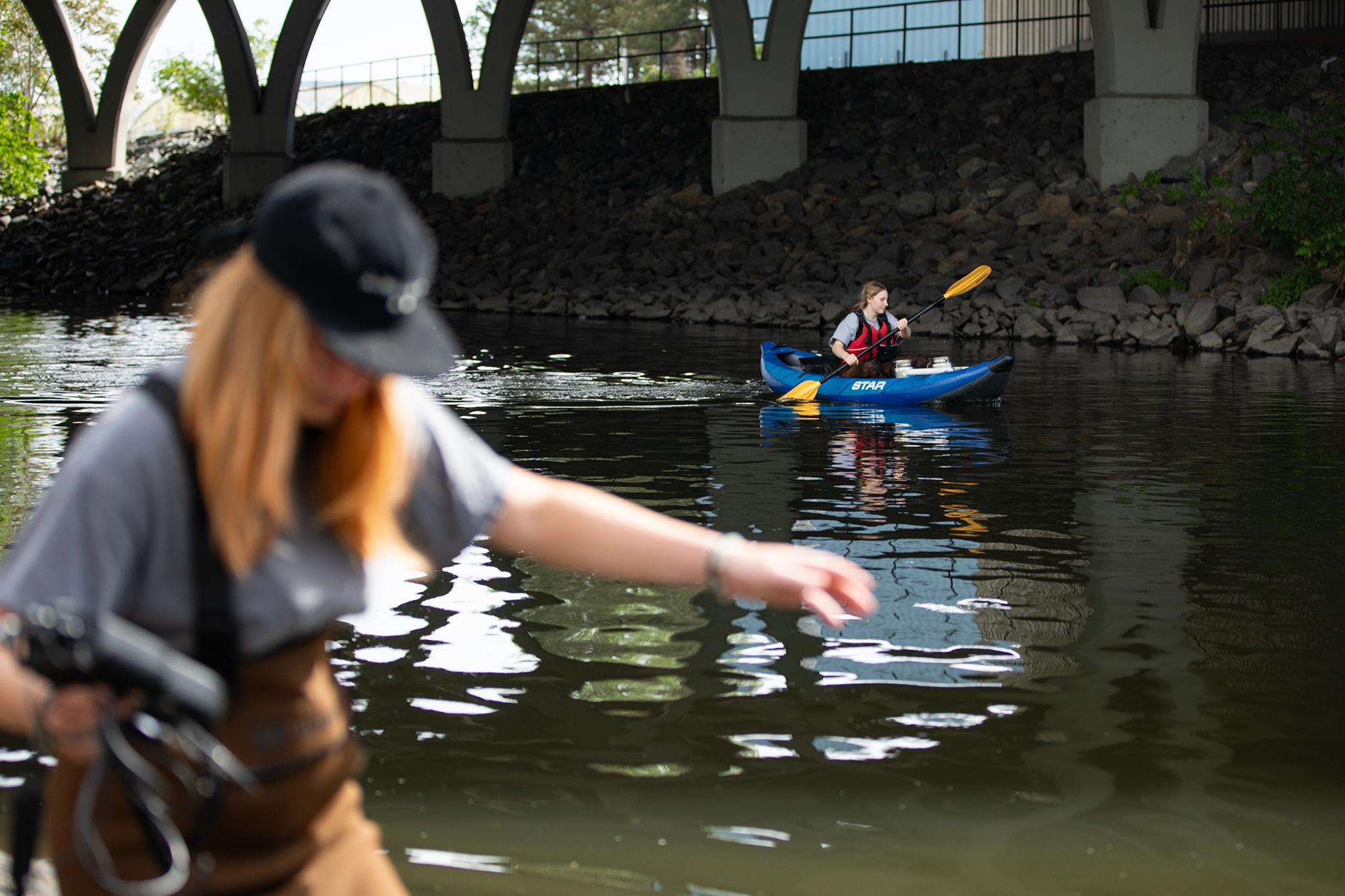
Much of the existing research focuses on how people consume microplastics via food or water, but Mozrall said there’s a gap in research on how it’s introduced to bodies through other ways — like water entering the ears or eyes.
The testing process will take a few months.
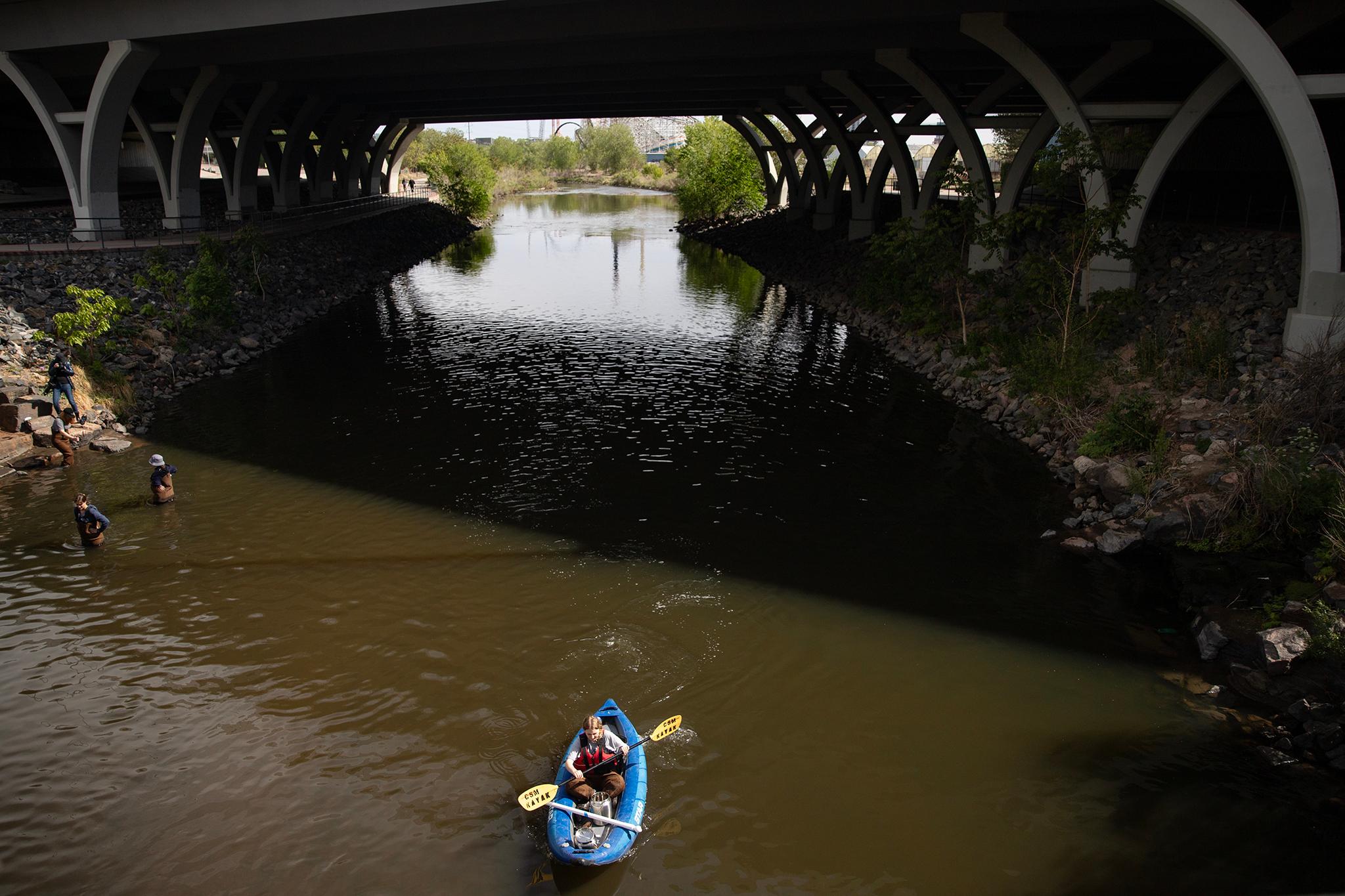
As Denver’s brief and final snowstorm of the season melted away on Thursday, Mozrall and other Mines students braved an especially cold Platte River to collect samples for their study.
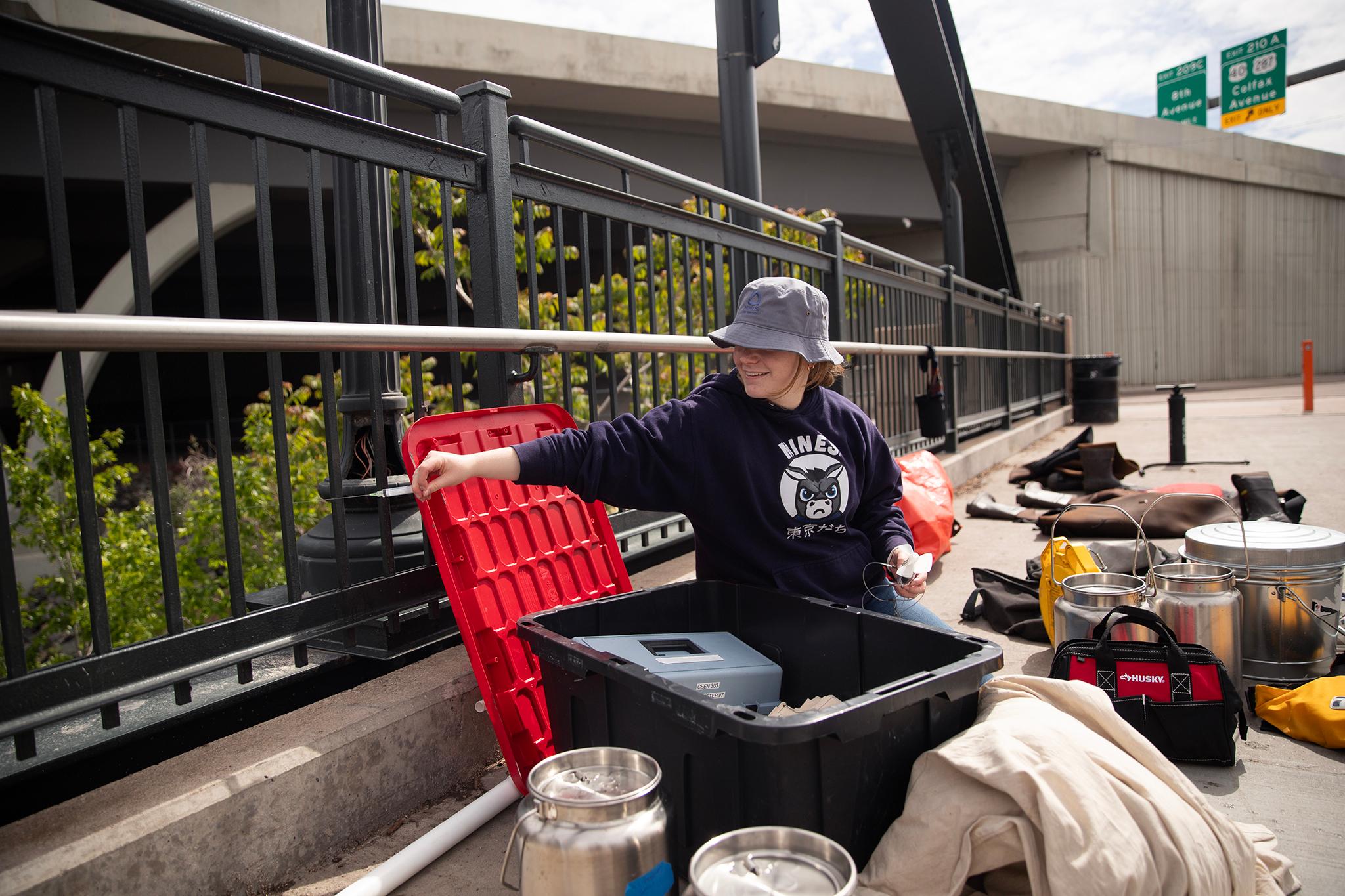
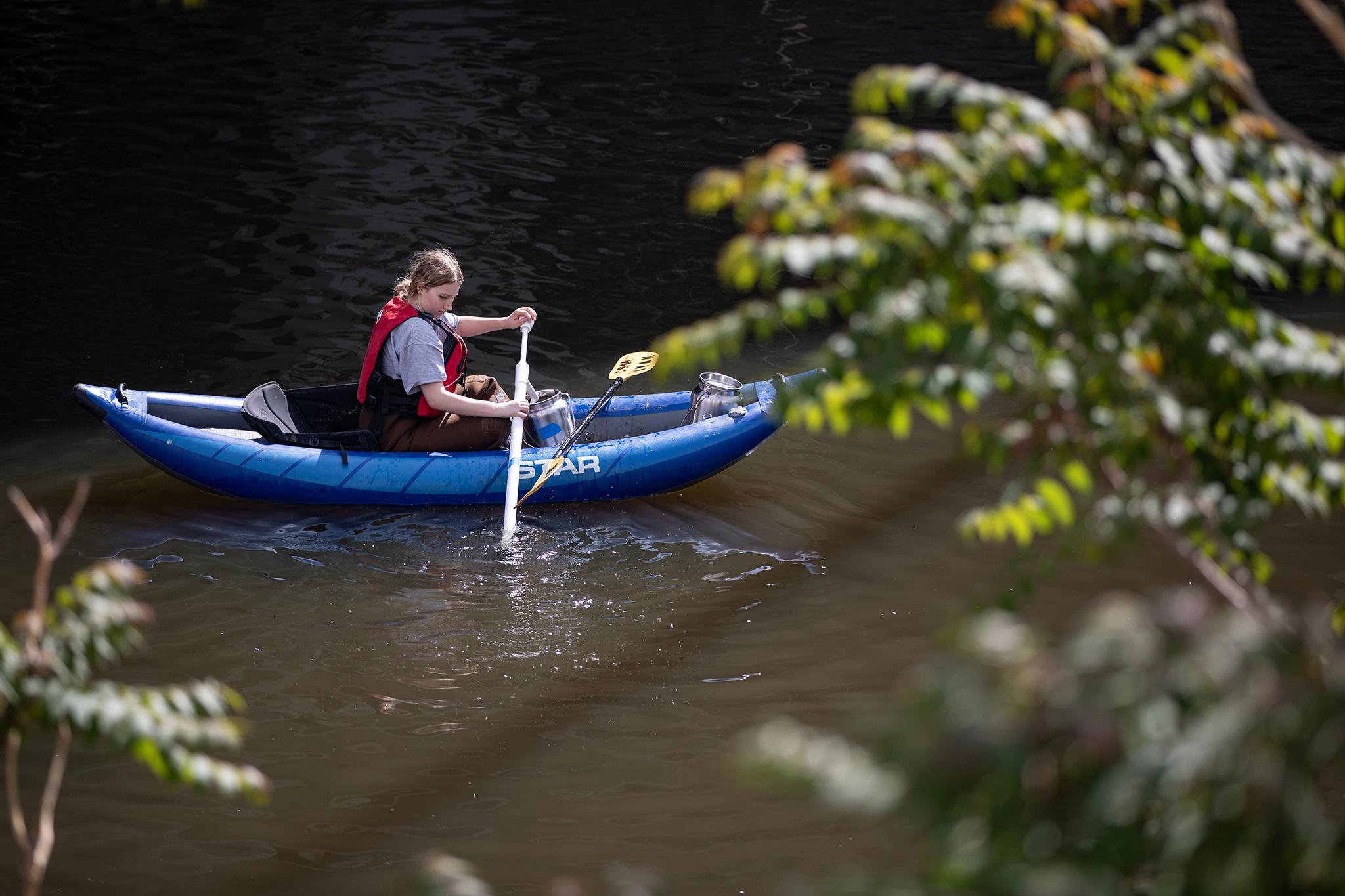
They used two methods — first, undergraduate student Reese Erwin piloted a kayak and collected several samples with a pump that’s meant to collect smaller microplastics that have settled to the surface. Then, the five-person team deployed a net with a hand-sewn filter to collect larger microplastics through flowing water.
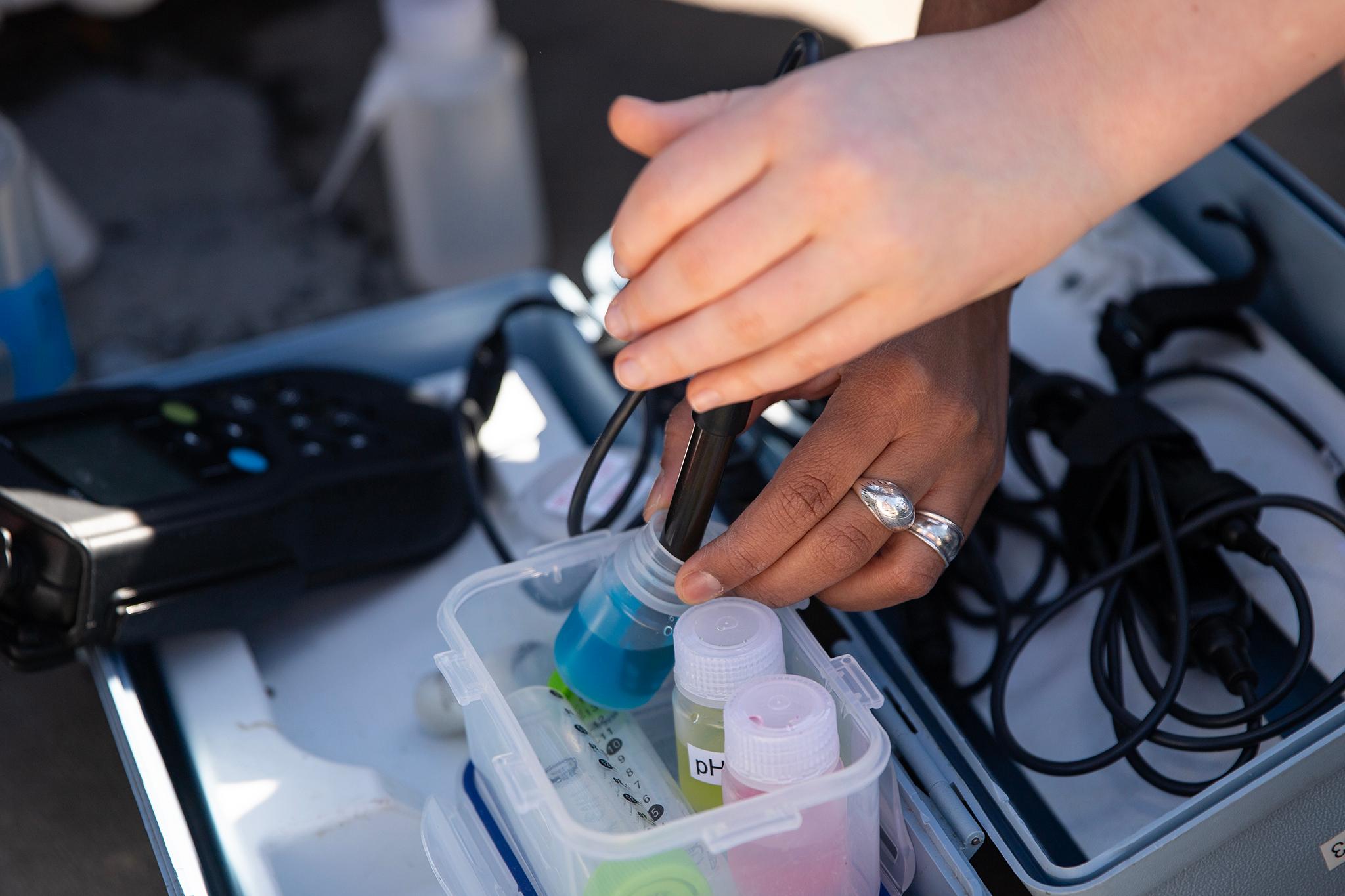
Some of their tools were homemade.
“I mean that's the nature of funding and doing things, right?” joked graduate student Elsa Scherzinger.
They’re collecting samples from other sites, like City of Cuernavaca Park and the Chatfield Reservoir.
After their collections are made, the team will bring it back to the lab at the School of Mines campus in Golden and run a series of tests. Mozrall said the analysis time takes a bit long to ensure they’re just looking at microplastics, so results won’t be ready until summer.
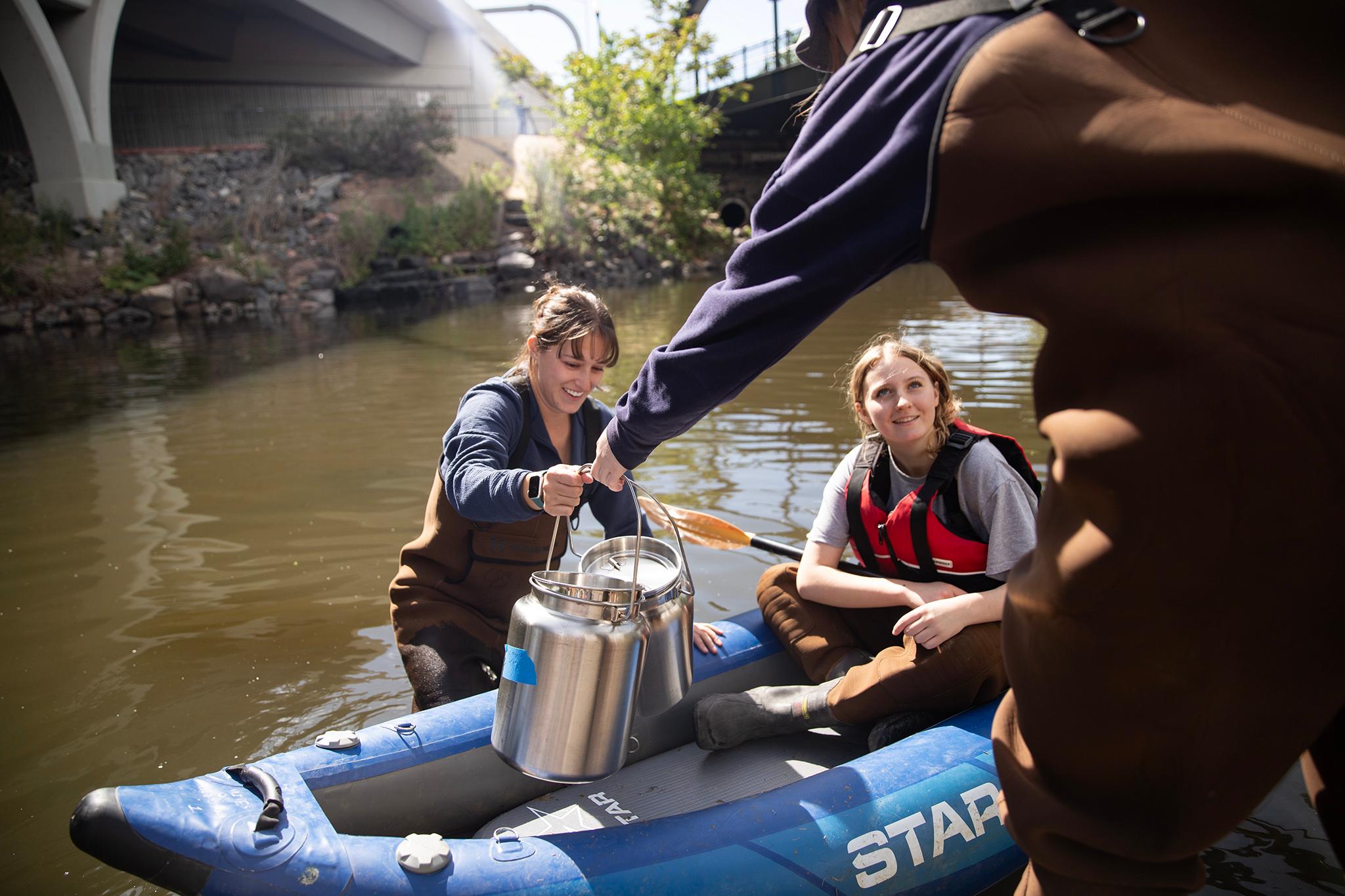
Once finished, Mozrall said it would be the first time someone has definitively measured the quantity of microplastics in the Platte.
“To my knowledge, I have not seen other studies with the actual quantity of microplastics in the South Platte,” Mozrall said.
If the study finds there is indeed a high level of microplastics in the Platte, Mozrall said the next steps would be to research the impacts to Denverites.
“We can hopefully try to understand what the risks to people, maybe swimming and being around the river, is,” she said. “And we can also start to try to identify ways to keep the microplastics from getting into the river or try to target possible remediation strategies.”