Tensions are rising between the city of Denver and Mutual Aid Monday, the long-running weekly gathering that gives out food and other services to hundreds of people each week.
Mutual Aid Monday has met outside the City and County Building for nearly six years.
In recent weeks, the city has asked organizers to find a new location, perhaps near the jail, they told Denverite.
The activists fear they are being pushed out of the only space they have used for half a decade. They worry that if they move to another location, longtime participants in their weekly meal will no longer be able to find them.
On Monday, Denver officials changed course.
“They’re welcome to use Civic Center Park,” Mayor Mike Johnston’s spokesperson Jon Ewing said.
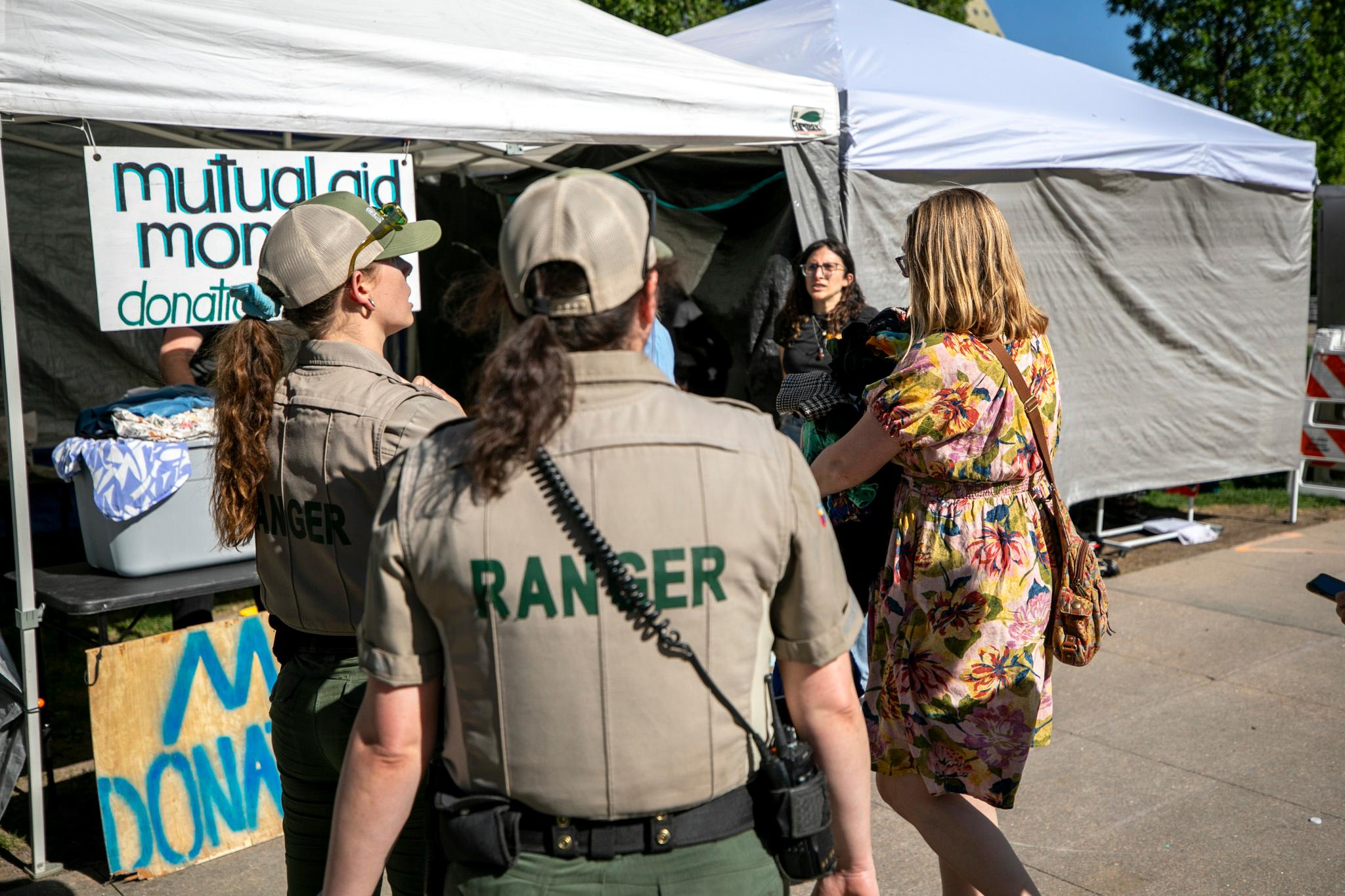
But to do so, they need a permit, he added. The city will waive the fee and create a one-time application for the ongoing event.
One problem: Mutual Aid Monday refuses to apply for a permit, fee or not.
Under a permit, the organizers would need to abide by city rules and regulations. (Of course, they have to do that anyhow.)
“What difference would a permit make?” said longtime volunteer Kimberly Miller. “If we have a permit, then they own us. Then if one thing goes sideways, they can kick us out. And we don't want them to have that kind of control over us.”
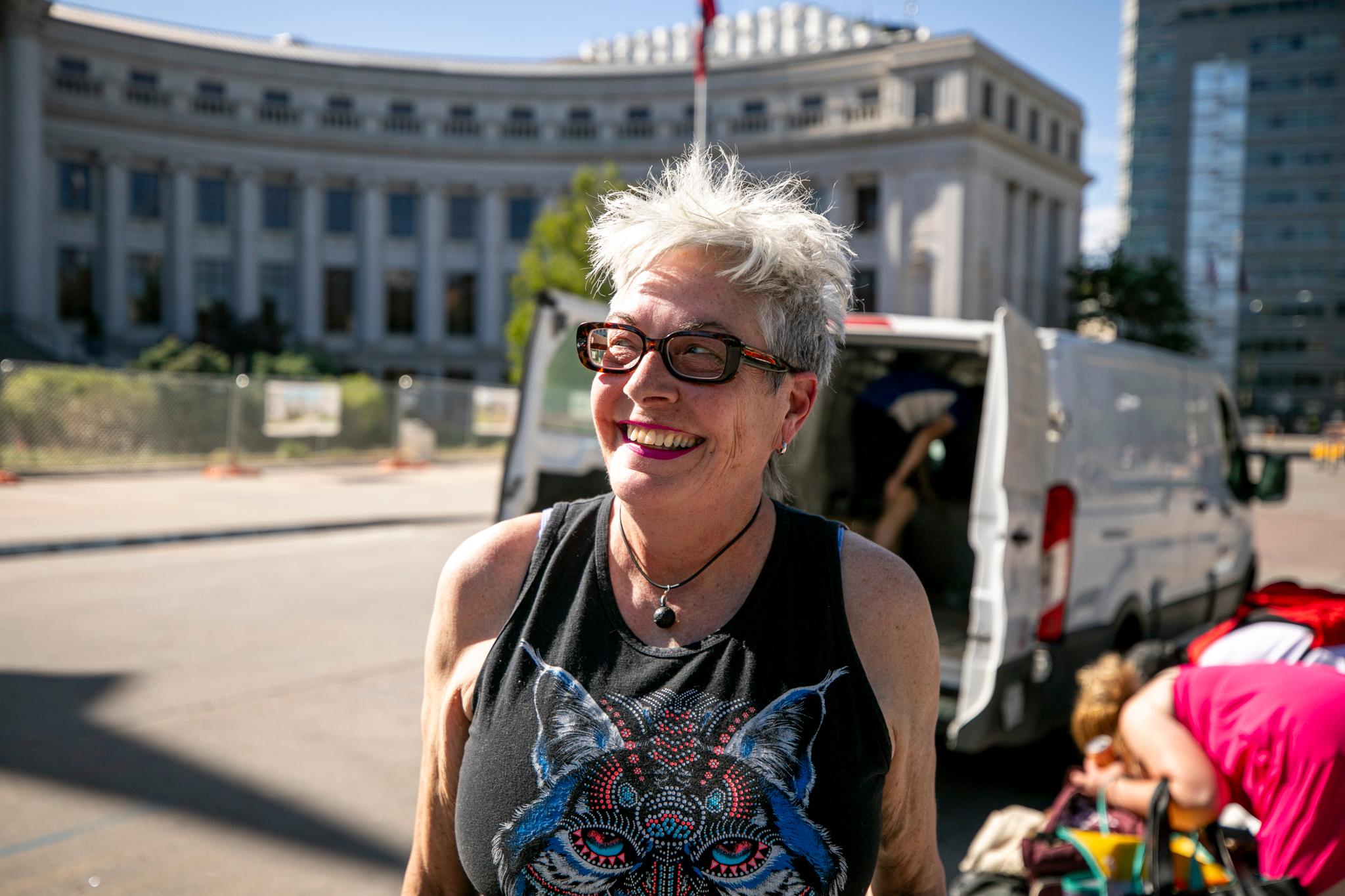
Mutual Aid Monday volunteers maintain they do not legally require a permit, as their event is a demonstration protected by the First Amendment.
“We are a protest,” said activist Jess Wiederholt — a characterization of the gathering that city officials dispute.
And the more the city demands a permit, the louder the protest could become, organizers told Denverite.
A joyful gathering, a poignant protest
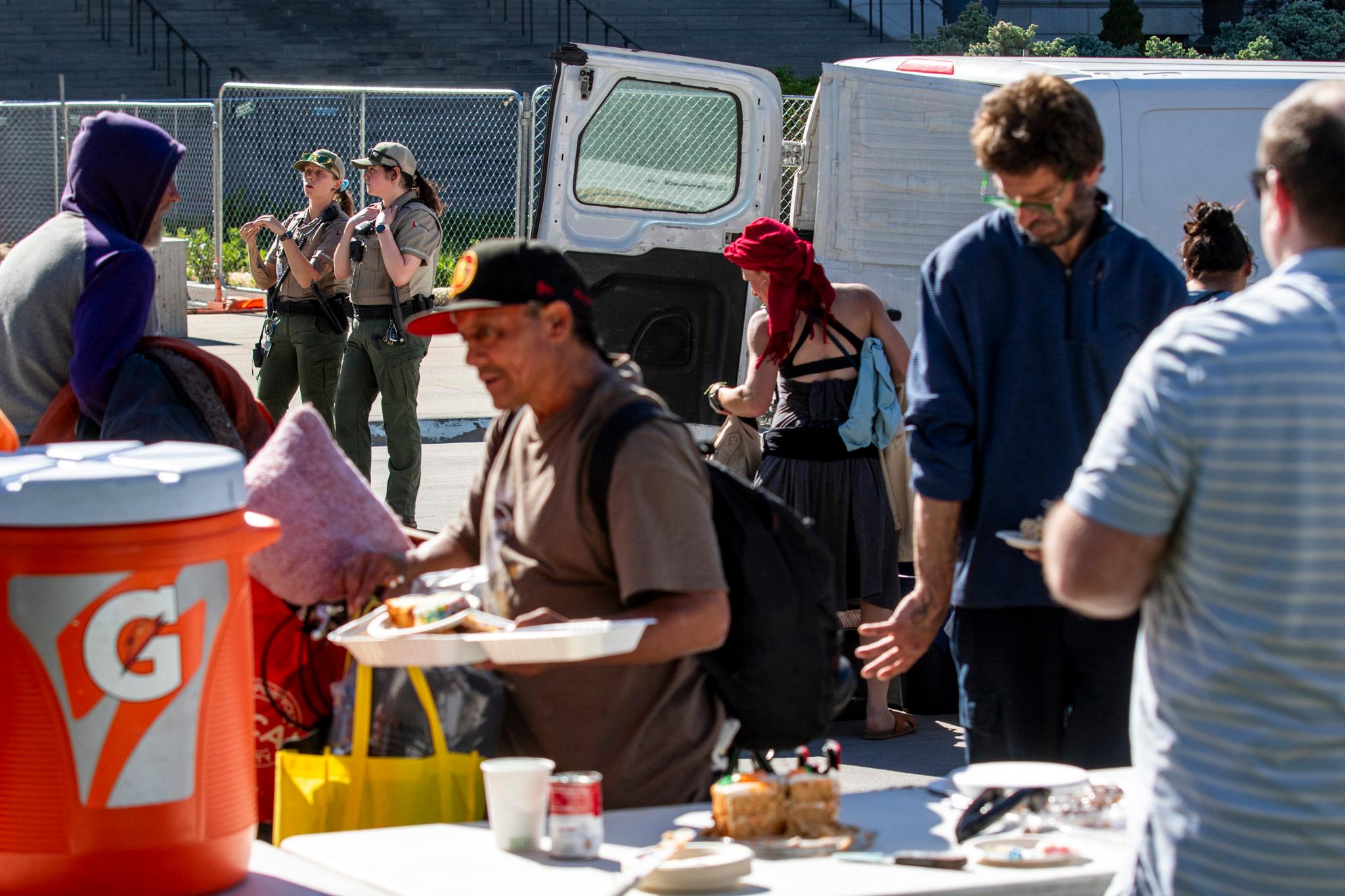
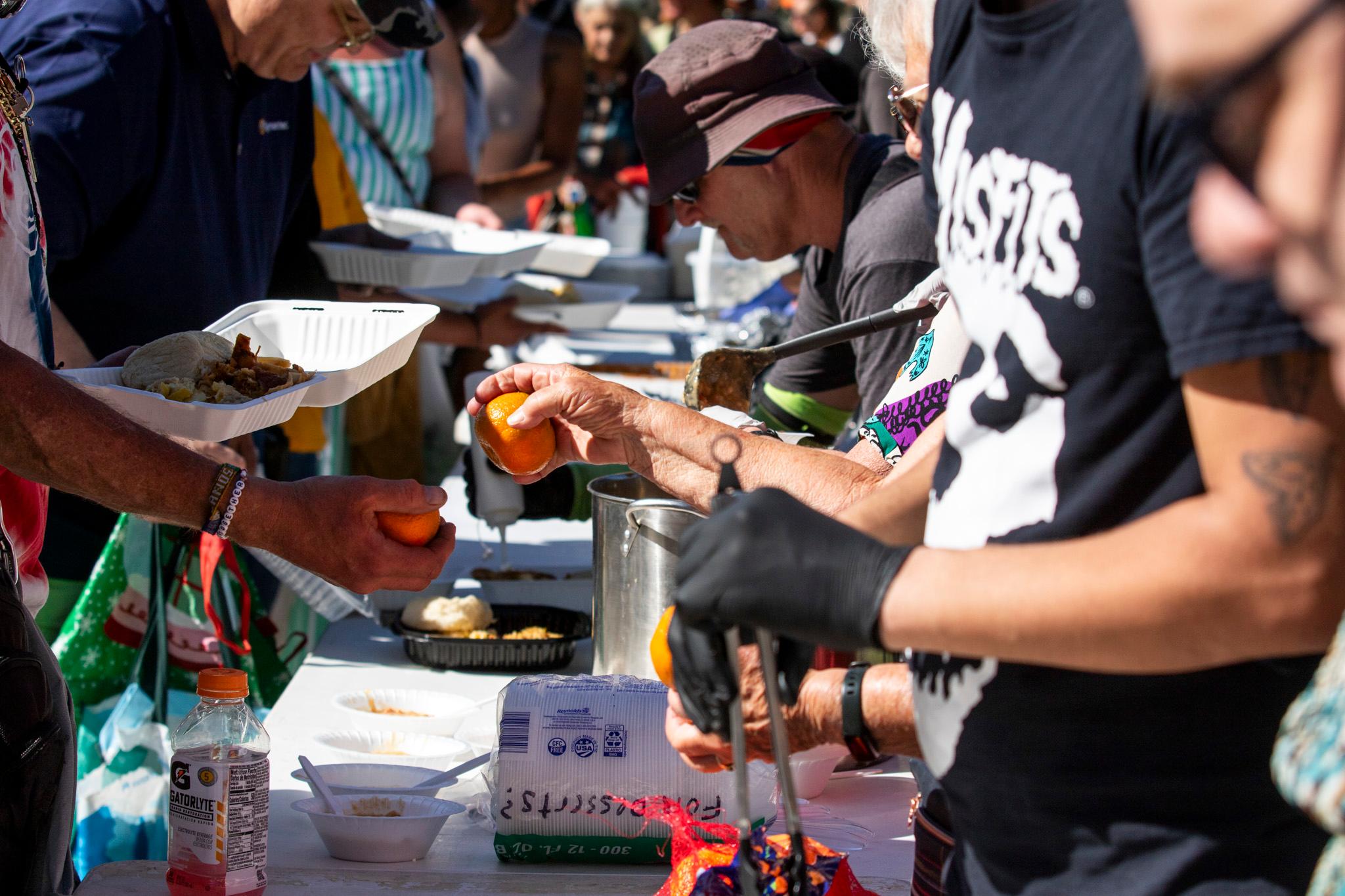
Once a week outside city hall, Mutual Aid Monday hosts a largely joyful afternoon gathering.
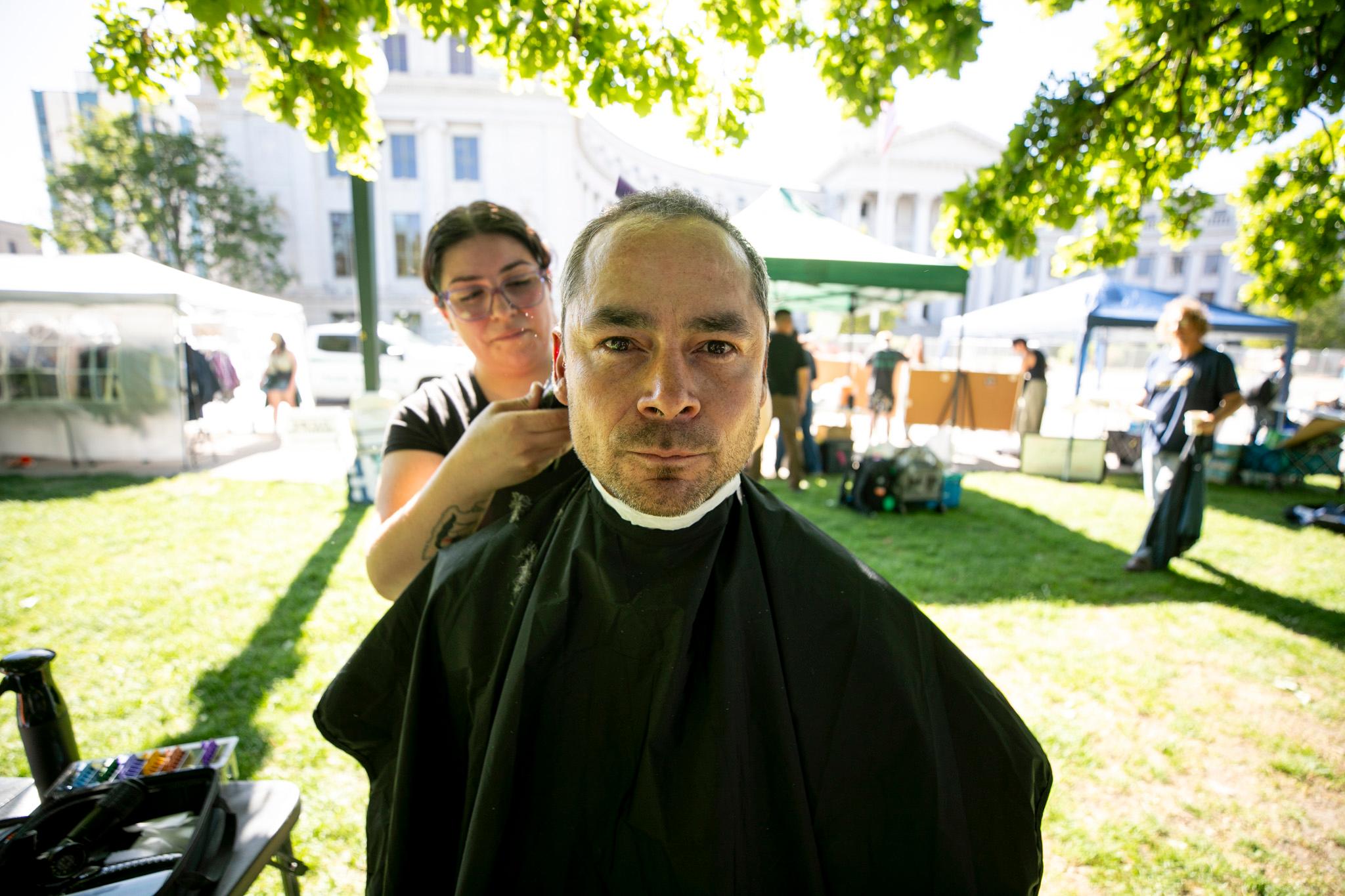
Hundreds of people come together for food, health resources, massages, haircuts, cold-weather gear and more.
“People know us from being in this location,” Miller said. “And we've never missed a single Monday in over five years, regardless of weather or holiday. Our consistency and reliability is very important to us.”
For years, the event has largely not taken an adversarial approach to the city and instead demonstrated through direct action: people helping each other. In fact, Mayor Mike Johnston used to visit with people at the meal, though he has not been around for the past couple of years, organizers said.
The event takes place during Denver City Council’s main weekly meeting. Unhoused people can take a break from the gathering to go inside and speak their minds to council members about their struggles and what the city can do about them.
At the most recent Mutual Aid Monday, organizers even added a new element: a soapbox, a microphone and an amplifier, where people stood and railed against the city’s handling of homelessness from outside, too.
“It's a protest against racism, economic and social inequality and the poor treatment of the unhoused that goes on in the city,” Miller said. “And we will stand in solidarity with our neighbors and we're not going anywhere.”
City worries about trash, and recently, slashed tires
Ewing said trash is a big issue. Miller disputed that, noting volunteers work hard to clean up the area after each Monday supper and return on Tuesday morning to ensure the organization’s high standards of cleanliness remain.
While there are occasional squabbles, the organizers are expert at de-escalating them, Wiederholt said.
Last week, a city truck’s tires were slashed while Mutual Aid Monday took place, Ewing said.
The Denver Police Department declined to provide reports related to the incident, as it’s under investigation. Neither Ewing nor DPD could provide evidence that the incident was related to Mutual Aid Monday.
Still, the city is citing the tire slashing as a reason the group needs a permit.
Visible homelessness
Wiederholt suspects the mayor is more concerned with how Mutual Aid Monday reminds city officials — and the public at large — that unsheltered homelessness is a problem that hasn’t yet been solved.
Organizers say the event’s growth indicates unsheltered homelessness, itself, is growing — a bad look for the mayor, who can see the event from his office.
But that increase in attendees is part of the problem for the city.
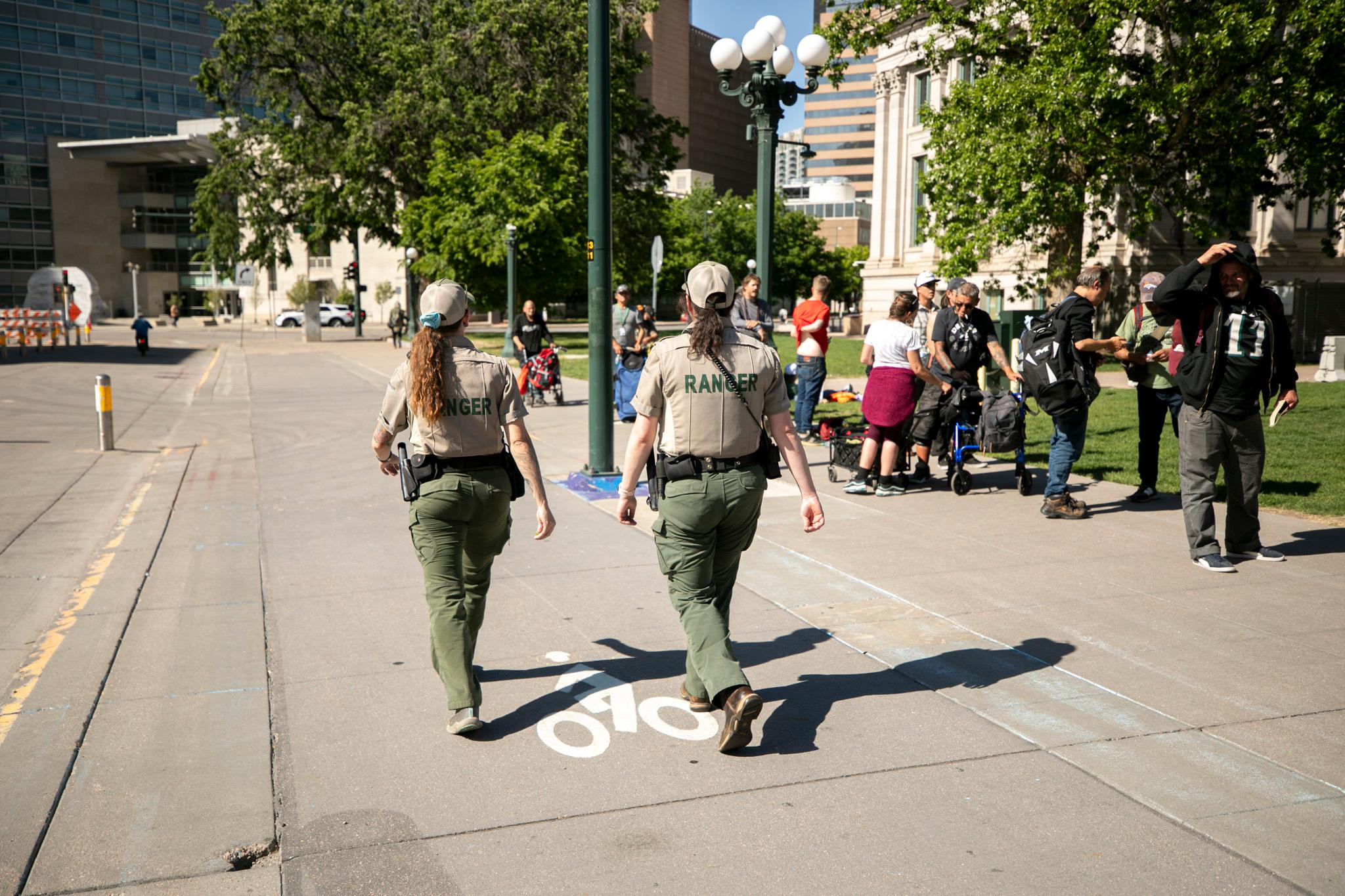
“It’s gotten bigger,” mayor spokesperson Ewing said. “It’s gotten a little more out of hand. We’re trying to reel it back in to something we can all get behind.”
But organizers say the event doesn’t aim to be something the mayor gets behind.
They want Mutual Aid Monday to be a living critique of Denver’s enforcement-heavy handling of street homelessness — like by handing out sleeping bags and tents to ensure people living on the streets stay safe, defying the city’s camping ban and its practice of discarding the cold-weather gear.
A ‘reasonable’ request
Ewing maintains that asking the organizers to file for a permit is a “reasonable” request and consistent with how the city treats other event organizers.
“The only thing is they have to abide by all rules, laws and regulations of the city like anyone else,” he said. “We’ll be good partners if they’re good partners.”
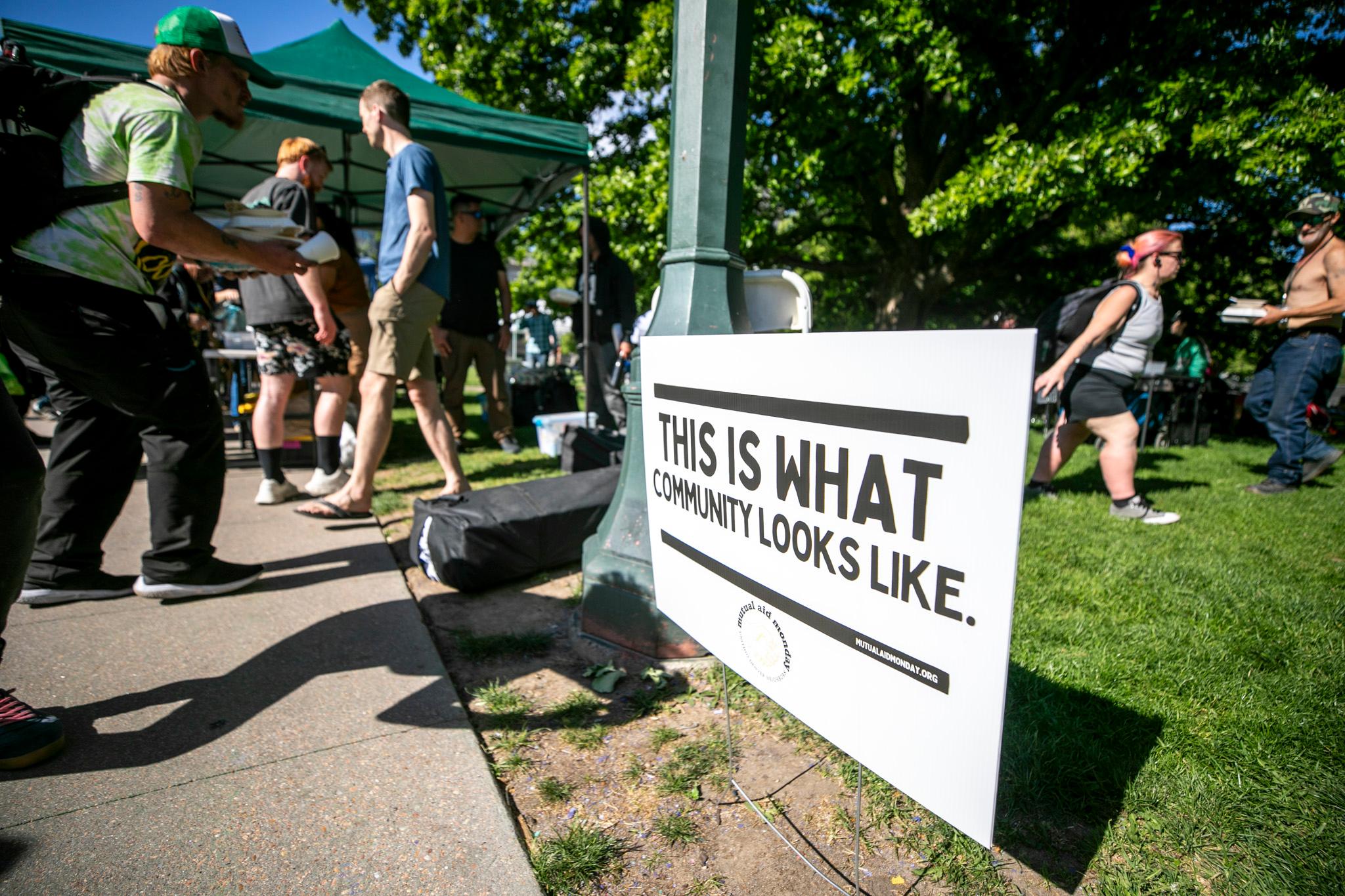
Ewing questions whether the event can actually be described as a protest. And even if it is, he argues that protests require permits when they happen in city parks.
Lately, since a big landscaping project is dominating the courtyard in front of city hall, Mutual Aid Monday has moved across Bannock Street into Civic Center Park, where park rules apply.
But the permit push may just lead to a bigger fight
By trying to force Mutual Aid Monday to get a permit, the city may be triggering a confrontation with advocates that it was not expecting.
“We will stand in solidarity with our neighbors,” Miller said. “And we're not going anywhere.”
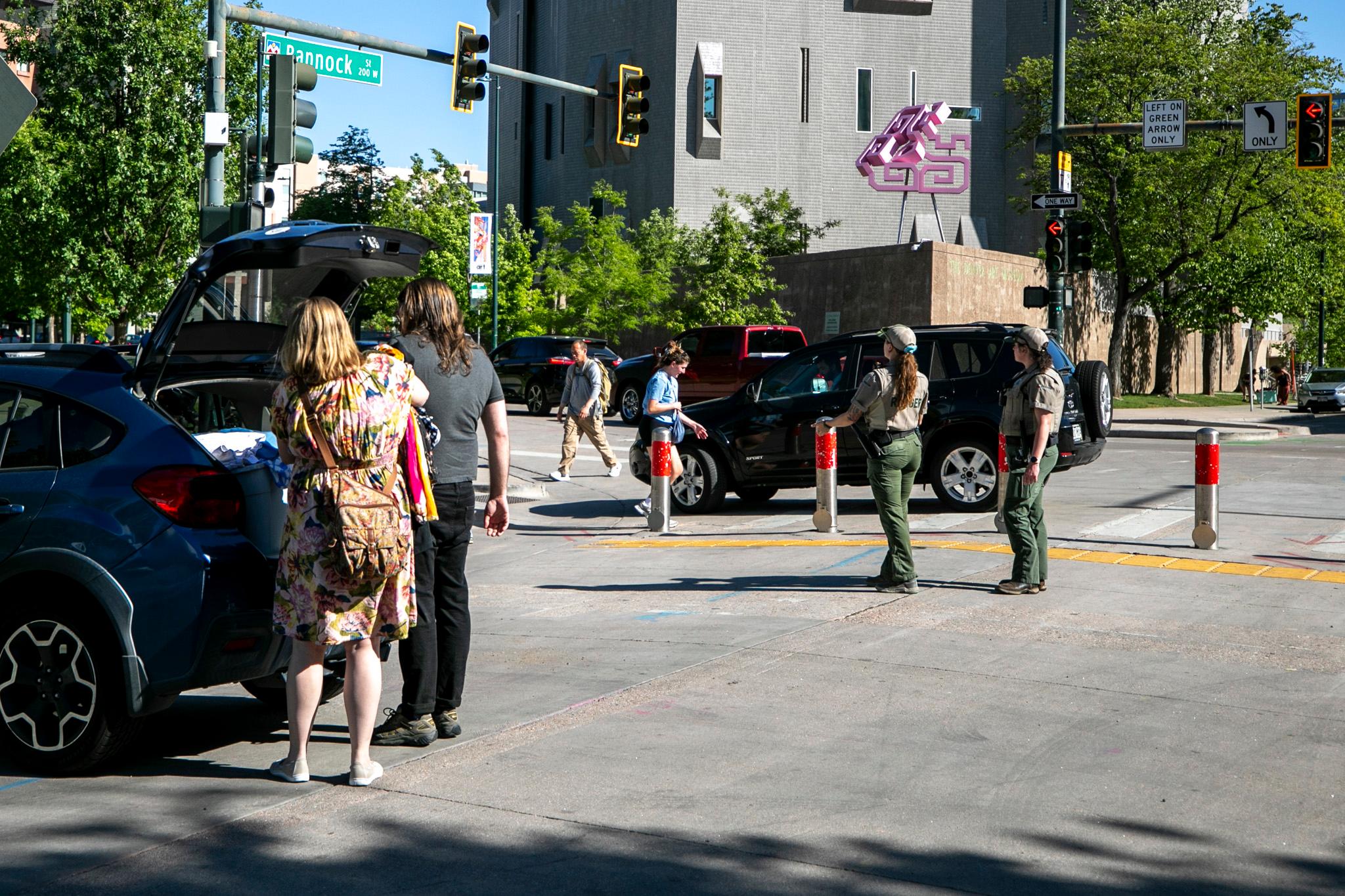
If they refuse to ask for a permit, Ewing said the city will have to “go back to the drawing board.”
“We know they’re trying to help people,” Ewing said. “As long as that remains the intention, we’re more than willing to work with them.”
What that could look like is unclear.