When city staff fanned out to count unhoused people on a single night in January, they found fewer people sleeping on the streets and in shelters.
A total of 518 people were counted on the streets, while about 5,900 were in shelters around the city. It was the lowest count of unsheltered homelessness in Denver since 2017.
Sheltered homelessness, which has risen mightily over the past decade, finally started dropping, too, as more people were housed.
But the annual Point-in-Time Count also found more evidence for a troubling trend: the number of unhoused people under 18 has hit a 10-year high. Family homelessness has climbed, too.
In a press conference and subsequent interview, Mayor Mike Johnston said the numbers showed his administration was making progress on homelessness.
“The headline is over the last three years, we've now reduced street homelessness by 64%,” Johnston said in an interview. “So it's almost two-thirds from where we started three years ago. That is the largest reduction of any city in American history.”

A family and youth crisis is growing.
Denver’s count of overall child homelessness has spiked over the past 10 years.
In 2017, there were 259 homeless children counted on a single January night. By 2026, there were at least 1,380 homeless minors — most with families who were also homeless but living in shelters.
All those numbers come from Denver County data from the Metro Denver Homeless Initiative’s annual Point-in-Time Count for the federal Department of Housing and Urban Development. The PIT, which takes place each January, is famously an undercount of unsheltered homelessness, influenced by changing factors each year — but it’s also Johnston’s primary tool for measuring his homelessness goals, as it is for many other mayors.
Cathy Alderman, a spokesperson for the Colorado Coalition for the Homeless, estimates the actual number of unhoused children in Denver, on any given night, could be as much as 2.5 times higher than the PIT count documented.
The city opened the Tamarac family shelter in 2023, but the 205 rooms are often insufficient to meet demand. The city has prioritized sheltering and housing people living on the streets with infants and young children, but family shelters have long waitlists.
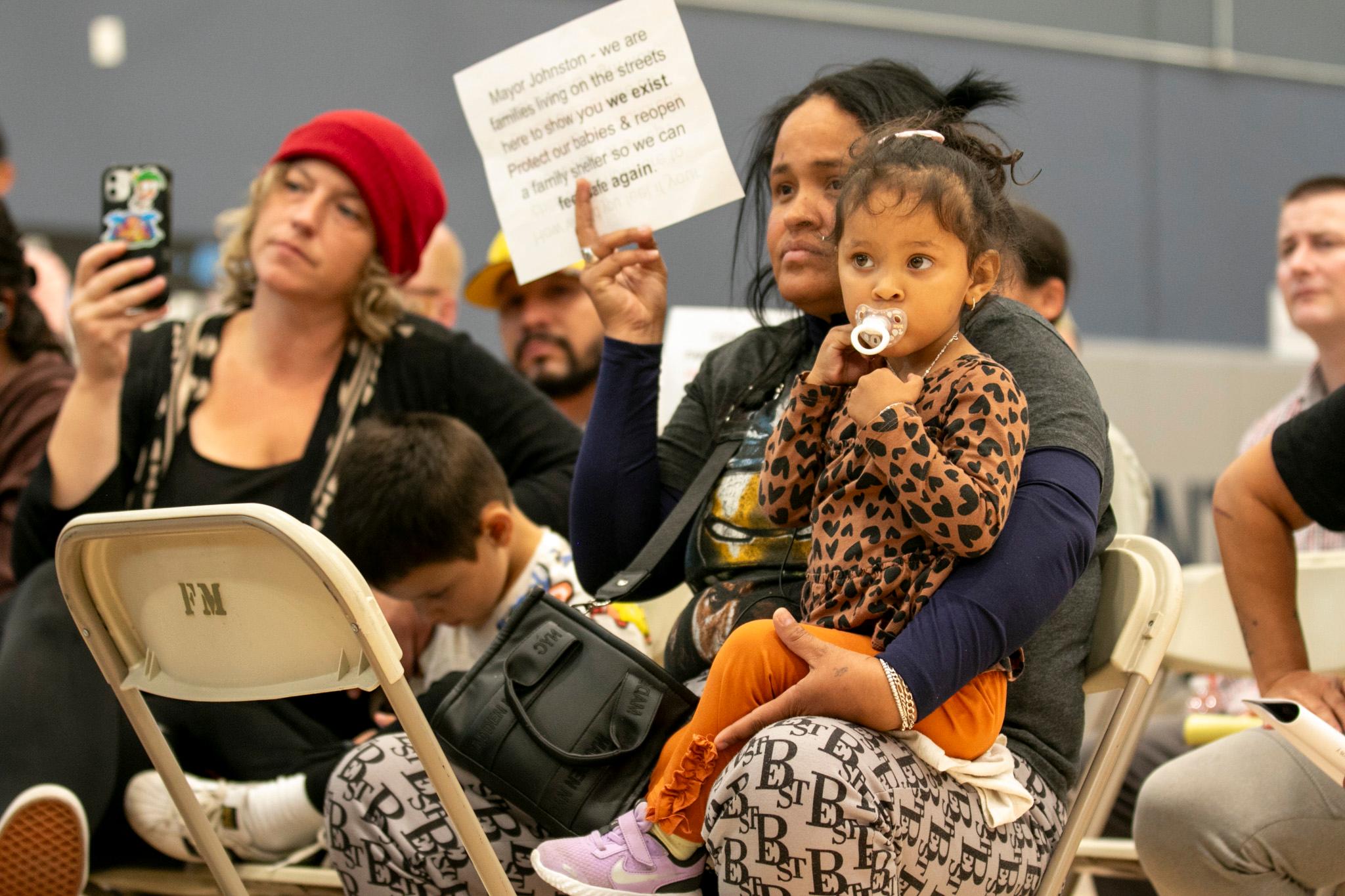
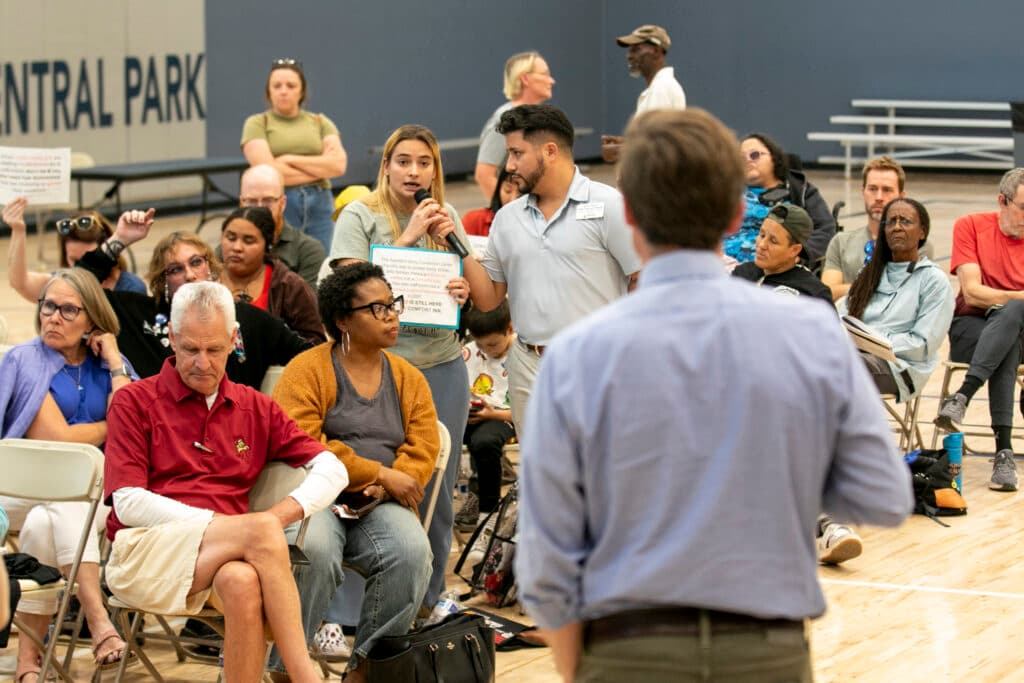
The city’s Department of Housing Stability and nonprofits have been working on the issue. And the mayor has met with a coalition of homeless families who demanded more shelter and housing. Those same families have also been pushing the Denver City Council for change.
Deraja Barbour-Brown, 21, has been in and out of homeless shelters and living in a car since she was 15. In March, she was stuck on a waitlist for the mothers’ community at Urban Peak and sleeping in her one-year-old child’s great-grandmother’s garage.
She was among several families who met with the mayor in March.
“I’m here to speak to the mayor about opening more welcoming shelters and making sure that we have our own privacy,” she said.
The mayor listened to her story and those of other families.
The Colorado Coalition for the Homeless has been creating more income-restricted housing for families making under 50% of the area median income.
But funding that is a tough proposition in a city and state facing budget cuts and under a federal government that wants to prioritize addiction and mental health treatment and short-term shelter over long-term housing solutions.
“We can’t get families into that stabilizing environment at the level we need to,” Alderman said.
Competing data
The PIT was one of two homelessness reports this week. MDHI also released its State of Homelessness report, which looks at the seven-county metro area for all of 2025.
That report also found that unsheltered homelessness has dropped and overall homelessness has declined slightly, though these trends could reverse as new data come in. It also found an increase in family and child homelessness, at a rate higher than the PIT showed.
“I do think the family trend is alarming,” Alderman said.
Children experiencing homelessness likely face serious intellectual and developmental consequences from the trauma and are more likely to be unhoused as adults.
“Kids can only really thrive and grow to their potential in supportive environments,” Alderman said. “And homelessness isn’t that.”
Alderman acknowledges visible homelessness tends to drive public will — and children and families are often out of sight, out of mind.
“If people started seeing parents with their kids out on the street, would that raise the level of awareness and demand to respond?” she asked. “ I think so. But I don’t want that to happen. We have to be smart and look at what the numbers are telling us. Let’s not reach the crisis of visibility.”