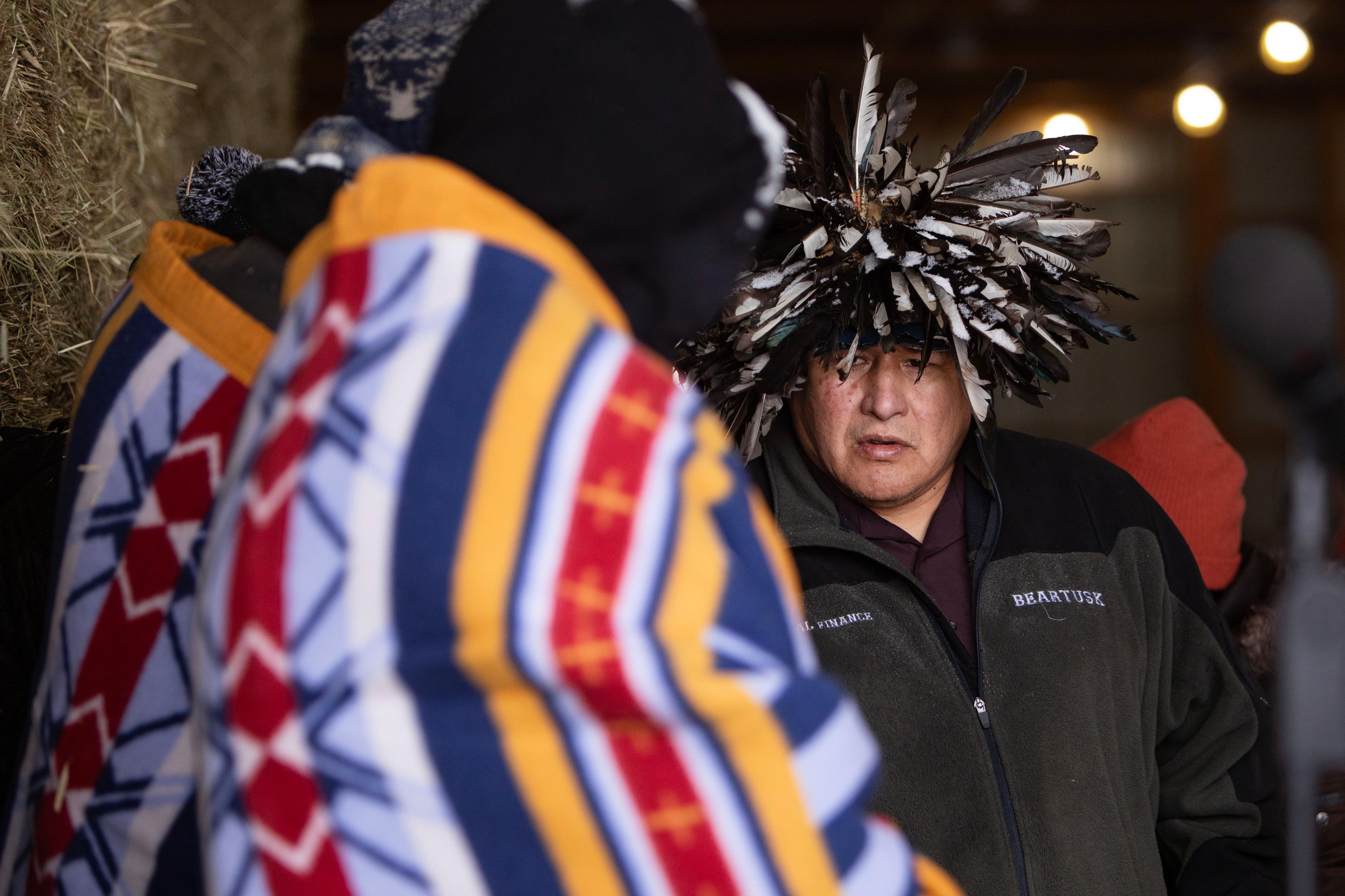

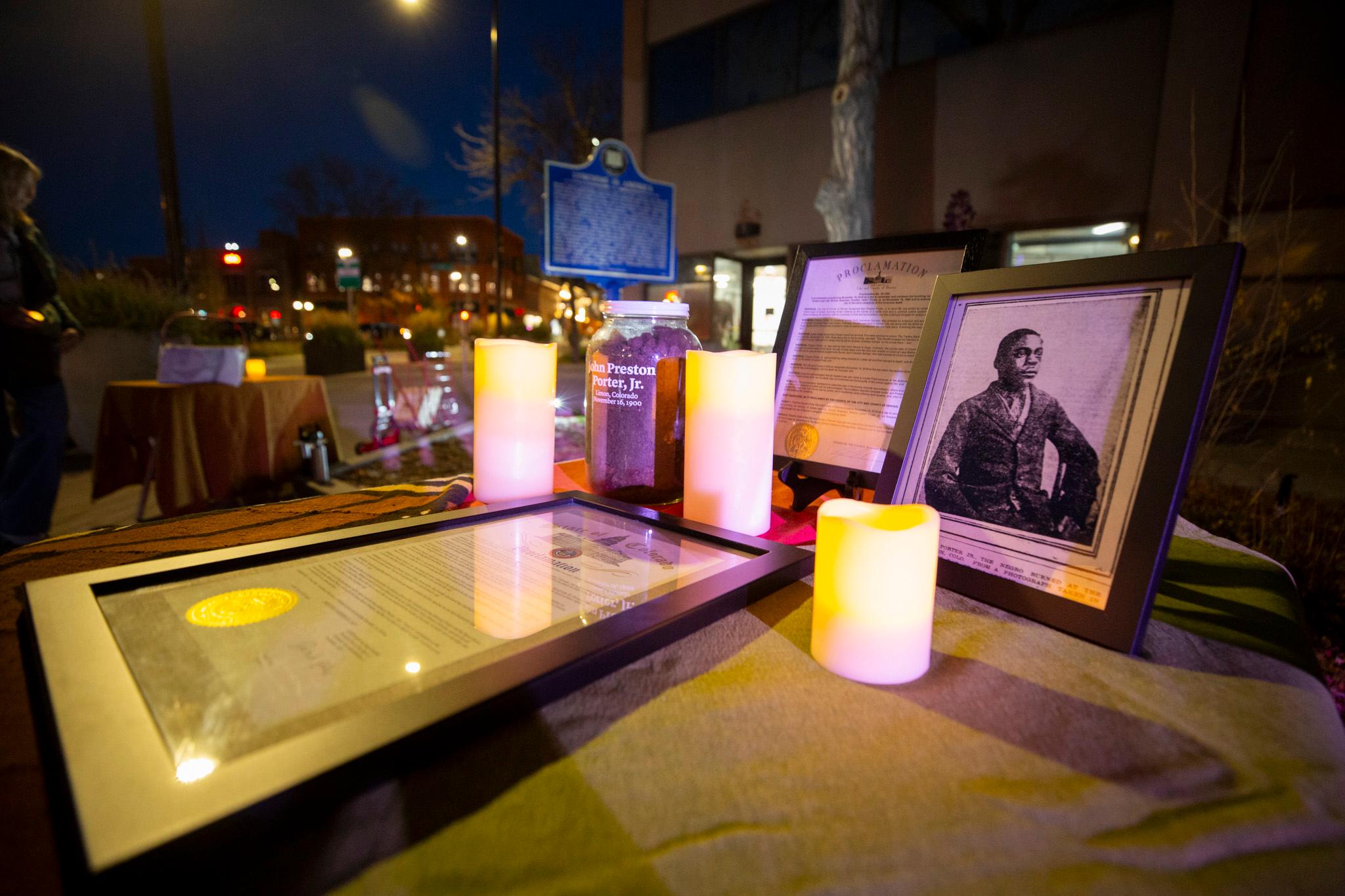
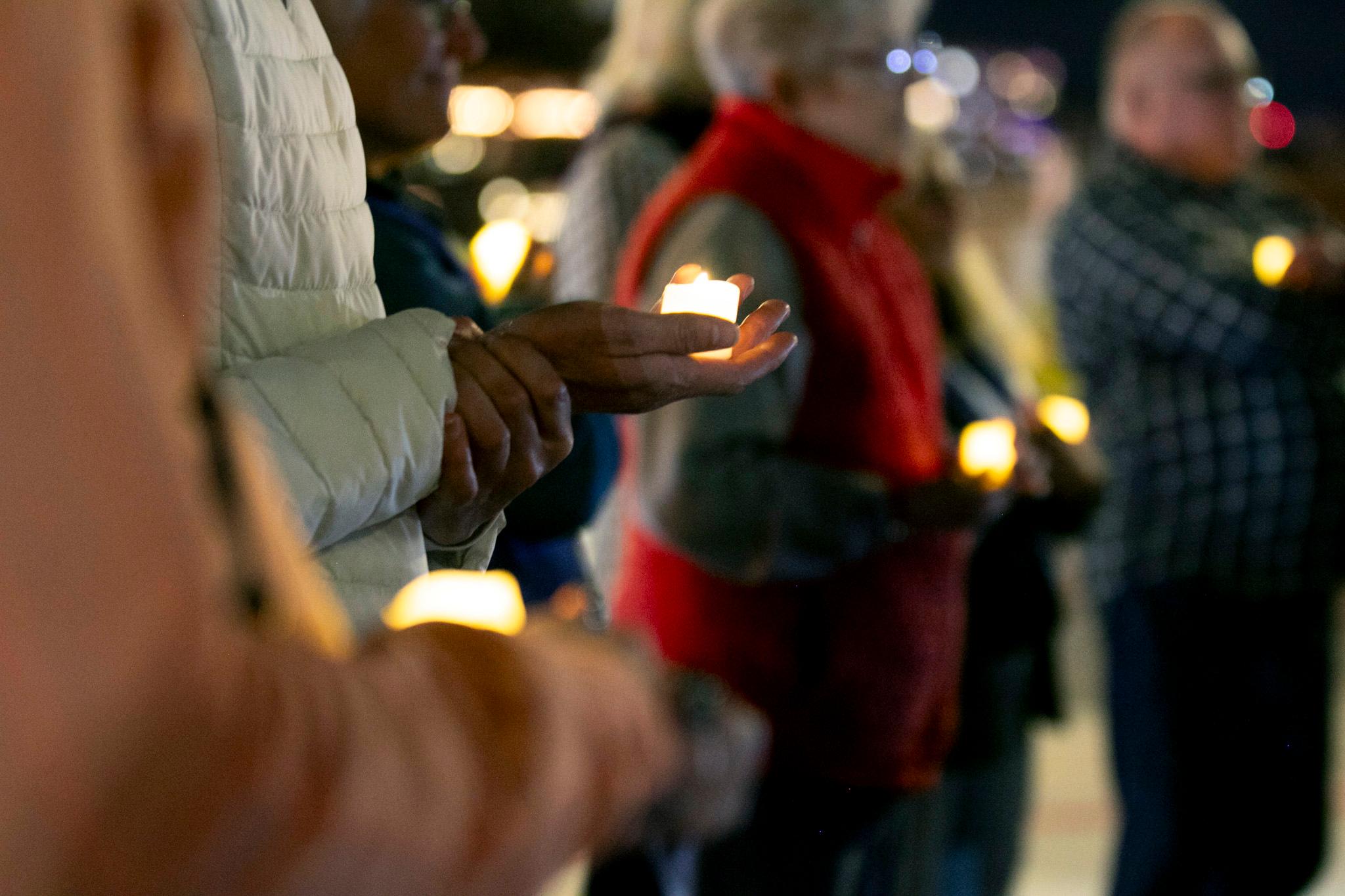
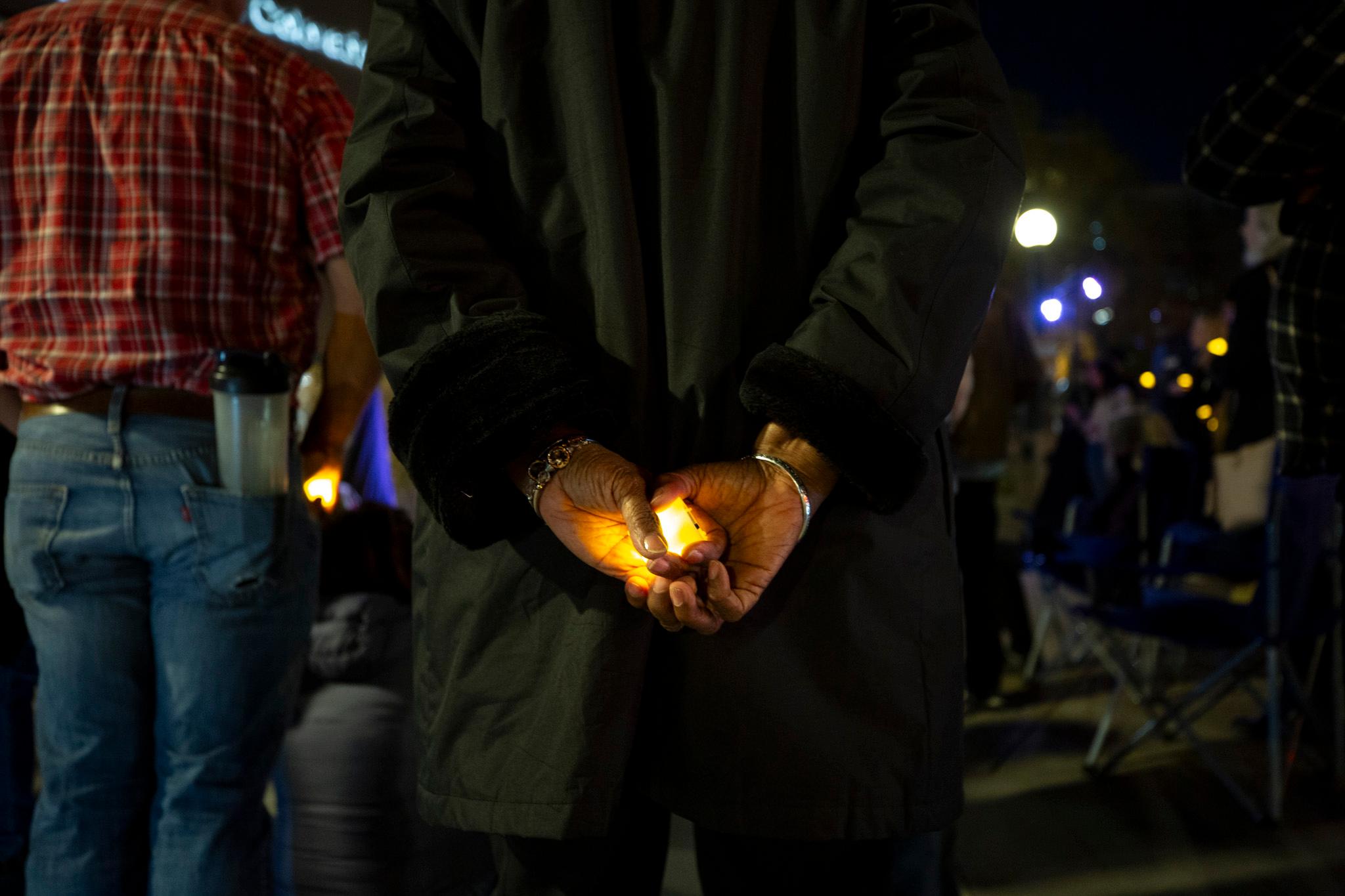
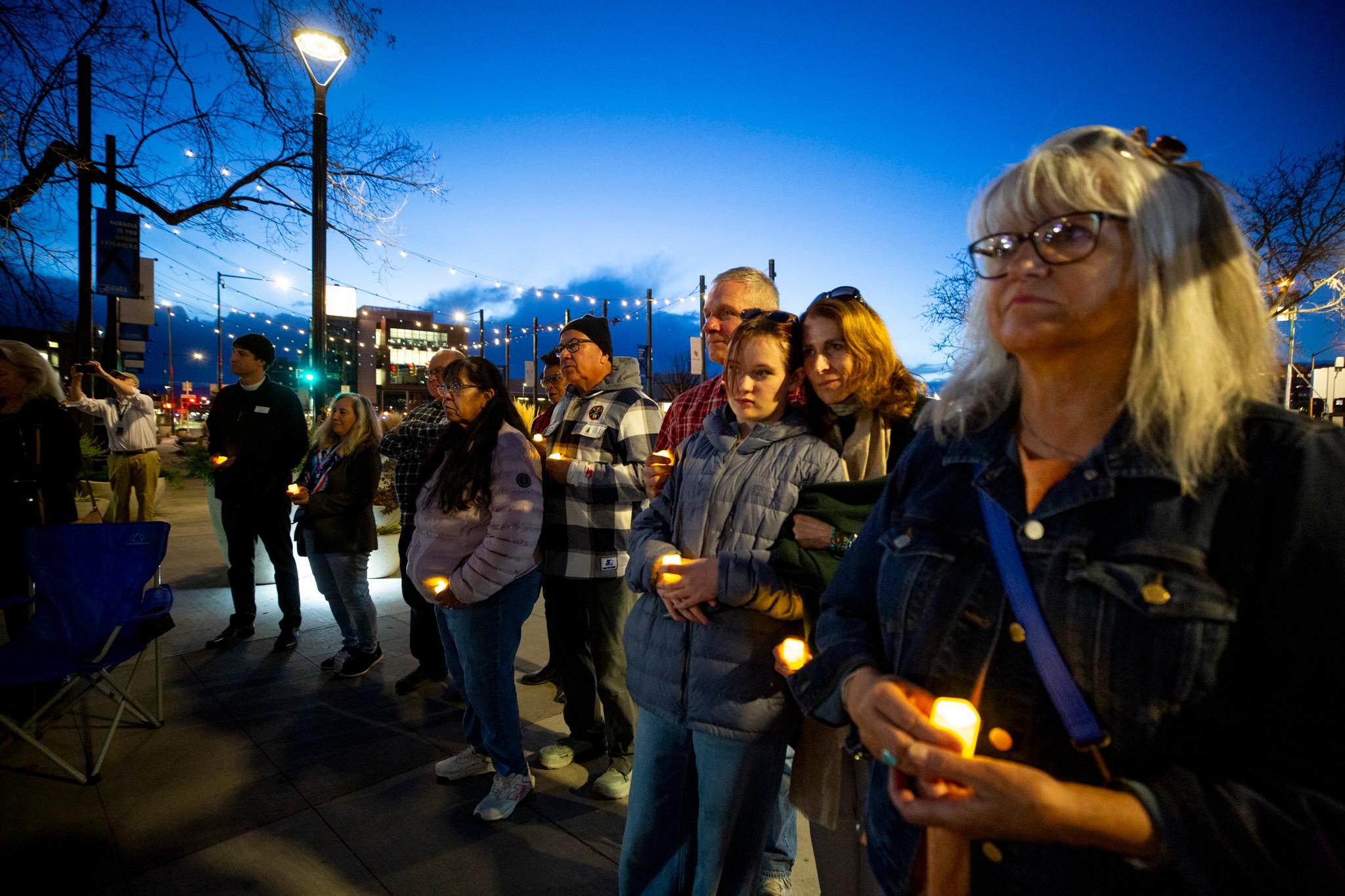
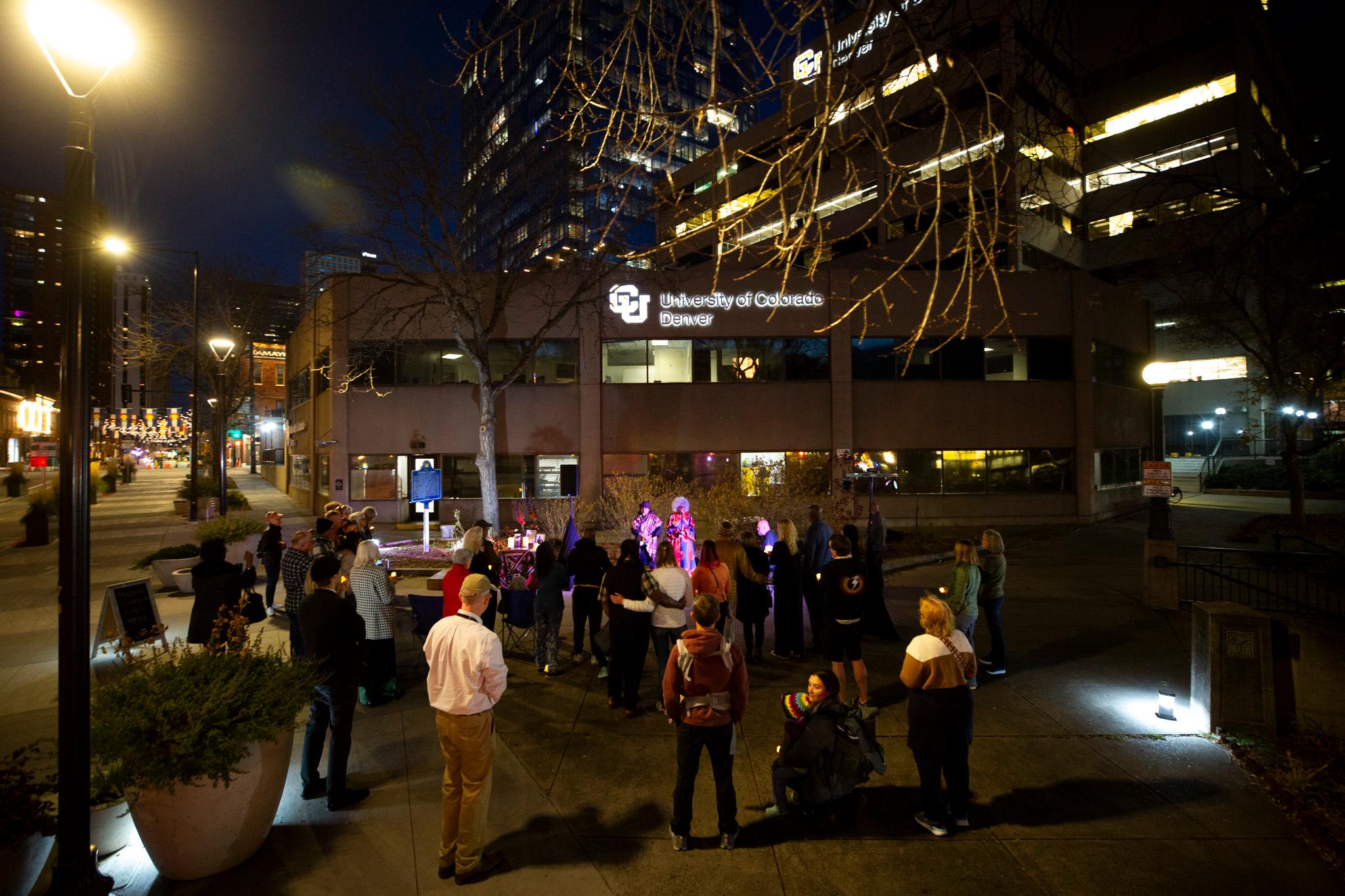
On Sunday, around 30 people gathered in Denver to remember a young boy they had never met: Preston John Porter Jr., who was lynched in a small Colorado town exactly 125 years earlier.
“We're honoring Preston Porter Jr., a 15-year-old who was beaten and lynched, accused unjustly. It happened here in Colorado, right here,” said Vivienne Burrell, who attended the vigil on the University of Colorado Denver campus. “It's like he's my cousin. It's good that the truth is coming out, even though that's hard to swallow, it's the truth.”
Porter Jr. was one victim of a reign of racist terror in which mobs killed thousands of Black people over several decades. The group on Sunday gathered both to honor Porter’s life and to ensure his horrific killing is not forgotten. He was burned alive before a mob of 300 people in Limon — a town 75 miles southeast of Denver — after being held in Denver.
“I feel a very strong sense of responsibility with Preston to protect him and protect the story that we've helped people see,” said Jovan Mays, the former Aurora poet laureate and a teacher at William Smith High School.
Mays is part of the Colorado Lynching Memorial Project (CLMP), which has been memorializing Porter Jr. through community events and working to tell the stories of other people lynched in Colorado.
Lynching is the killing of a person by a mob, often without a trial. It was rampant in the American South for decades after the Civil War, but anti-Black mob killings happened in the West, too. There were at least seven confirmed anti-Black lynchings in Colorado.
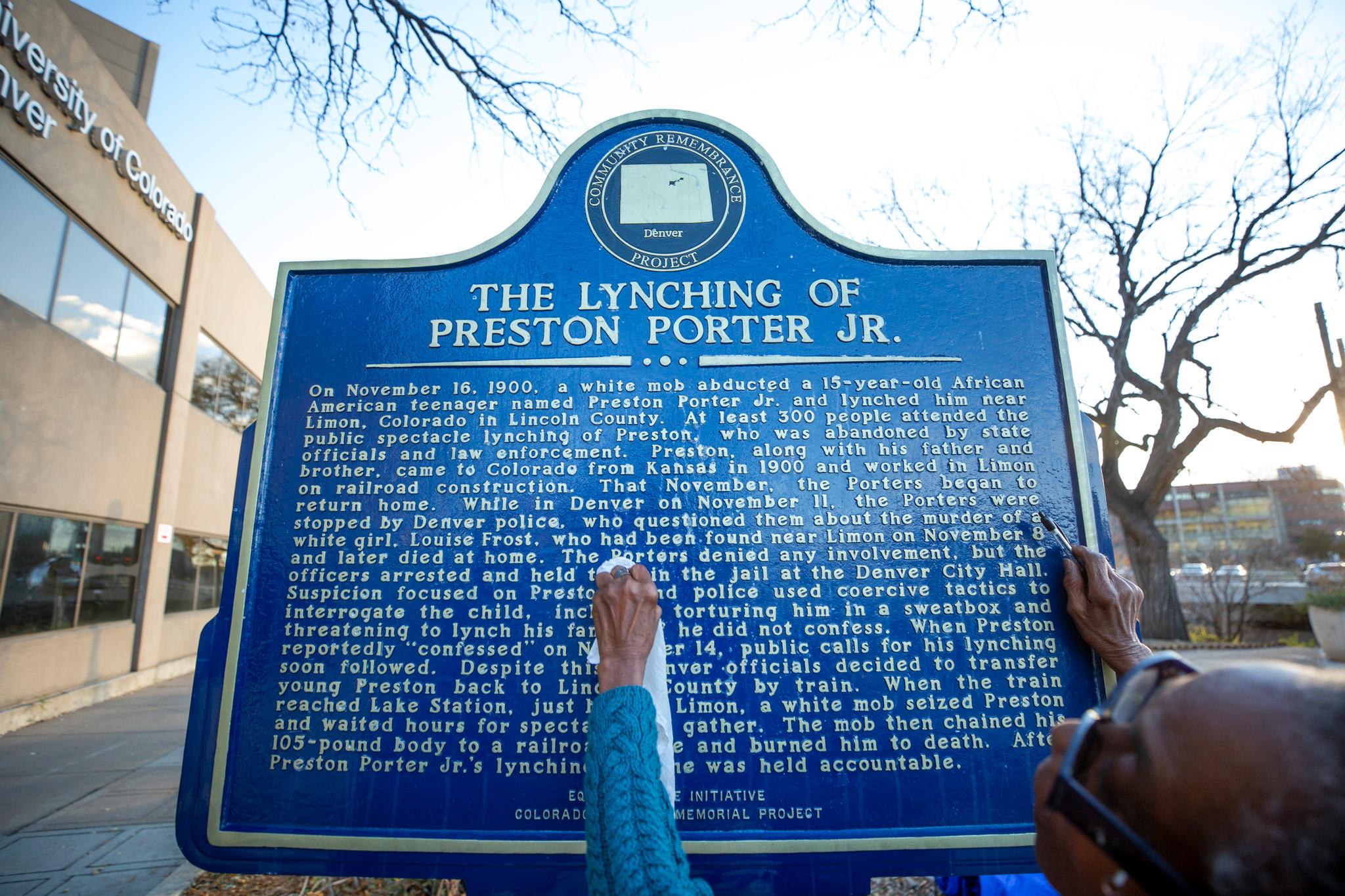
Porter Jr. and his family worked on the railroad in Limon but moved to Denver in November 1900. On Nov. 11, they were stopped by police and questioned about the killing of Louise Frost, a young white girl in Limon.
They denied any involvement and there was no evidence, but Porter Jr., his father and his uncle were held in the jail at Denver’s city hall. The three family members were tortured — held in solitary confinement in a sweatbox — until Porter Jr. confessed under extreme duress on Nov. 14.
Though numerous publications predicted he would be lynched, Porter Jr. was transferred from Denver back to Limon, where an angry mob stopped his train car.
“I just think about trains and train rides and distance and the coldness of November, and the passage of all these faces that are holding your welfare, and you don't know what they're going to do with it,” Mays said. “And ultimately, they imagine something worse than you could ever imagine. Imagine watching them build your death scene, and these families coming to see you.”
The mob tied Porter Jr. to a railroad stake and burned him alive at Lake Station in Lincoln County, outside Limon, on Nov. 16, 1900. Porter Jr. read from a Bible and called out to God while he was lynched, with hundreds of people looking on.
History Colorado reports that it was common for lynch mob participants to take “souvenirs” at lynchings. The souvenirs at Porter Jr.’s lynching included pages from the Bible he was reading. Participants made him sign pages and hand them out before they set him on fire.
“How the (expletive) did these people know how to do this? Or who the (expletive) taught them? Where did anyone learn this?” Mays said. “That's the stuff that always sticks to my bones.”
He was 105 pounds
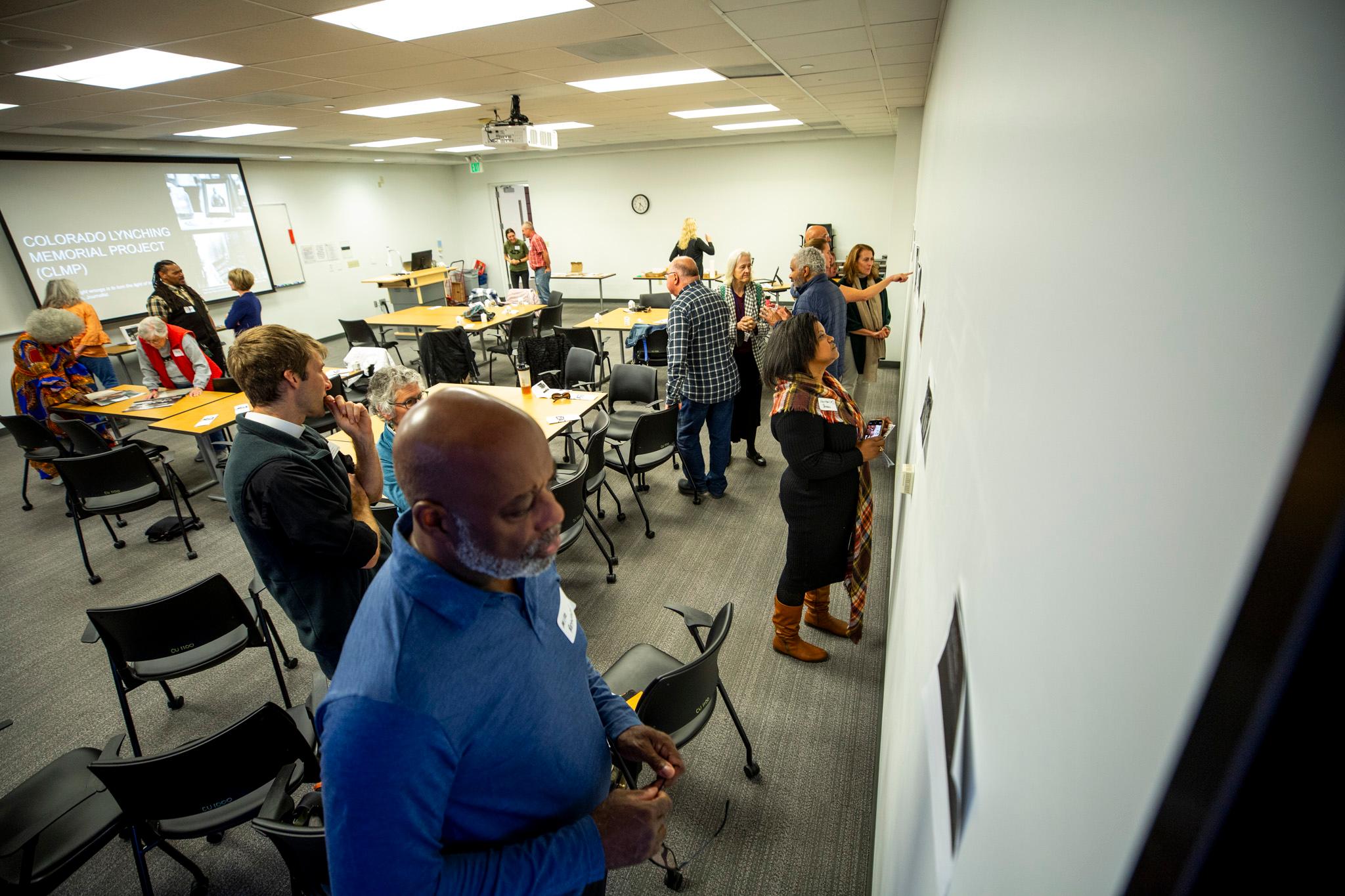
CLMP’s vigil on Sunday included a walkthrough gallery documenting mob attacks throughout the country, as well as a group discussion and performances from local artists. The gallery walk also detailed the history of the Amache internment camp and the Sand Creek Massacre.
Burrell, a member of CLMP, said understanding the broader violent history of humanity can unite people from different communities.
“It brings us together. If we know the history, if we know why certain things are happening (or) whether there's a reason why, it brings us together with an understanding of each other,” Burrell said. “That's what this whole thing is about. That's what the world is about. We're human. We cannot, I don't care what you do, we will not get away from each other. It's not going to work.”
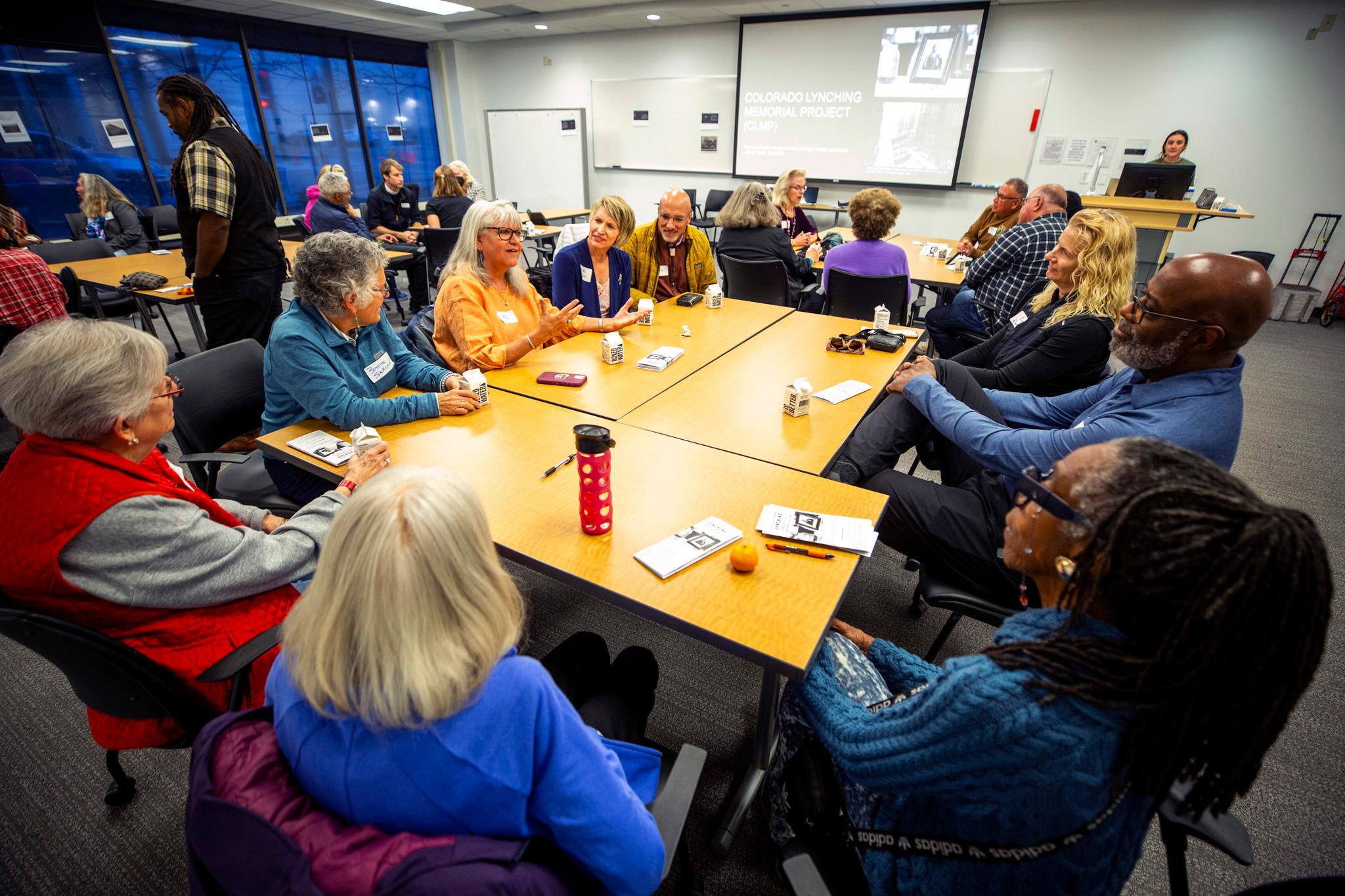
The discussion portion of the event focused on the “forgive and forget” model of history, which discourages the teaching and sharing of stories about injustice, cruelty, repression, racism and hate. Many advocates say this model is favored by the Trump administration.
As the discussion concluded, one participant said America embraces amnesia, to which the room agreed.
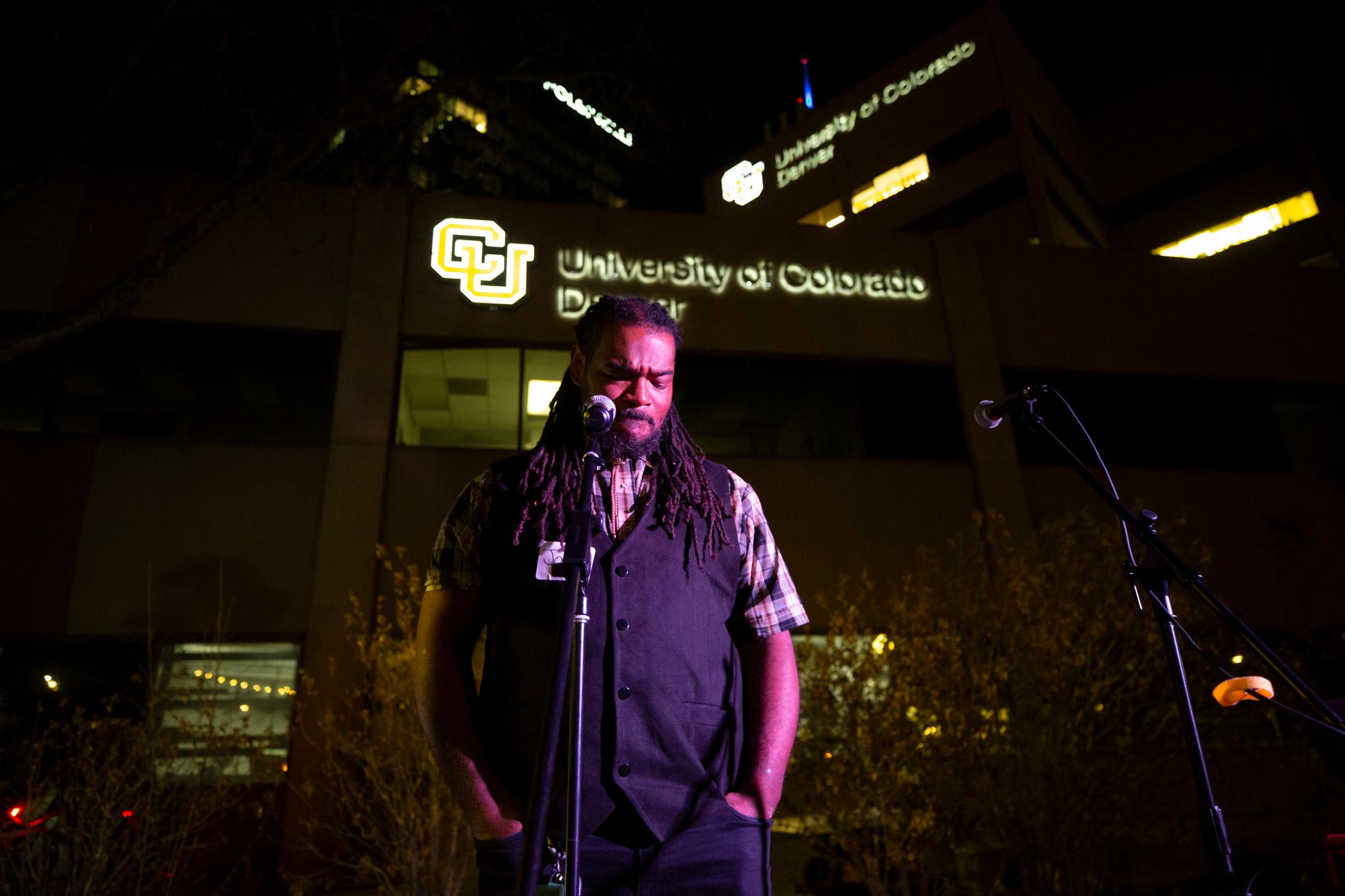
Then, the vigil continued outside in front of the Porter Jr. memorial plaque at CU Denver’s College of Architecture and Planning building. The plaque tells the story of the lynching, noting that Porter Jr. was only 105 pounds when he was murdered.
“He got completely robbed of his innocence, and not just from a justice standpoint, from a nurture standpoint,” Mays said. “You're just like, ‘My goodness, what point, where does humanity click in here? Where does it find its moment to stand up for this kid?’”
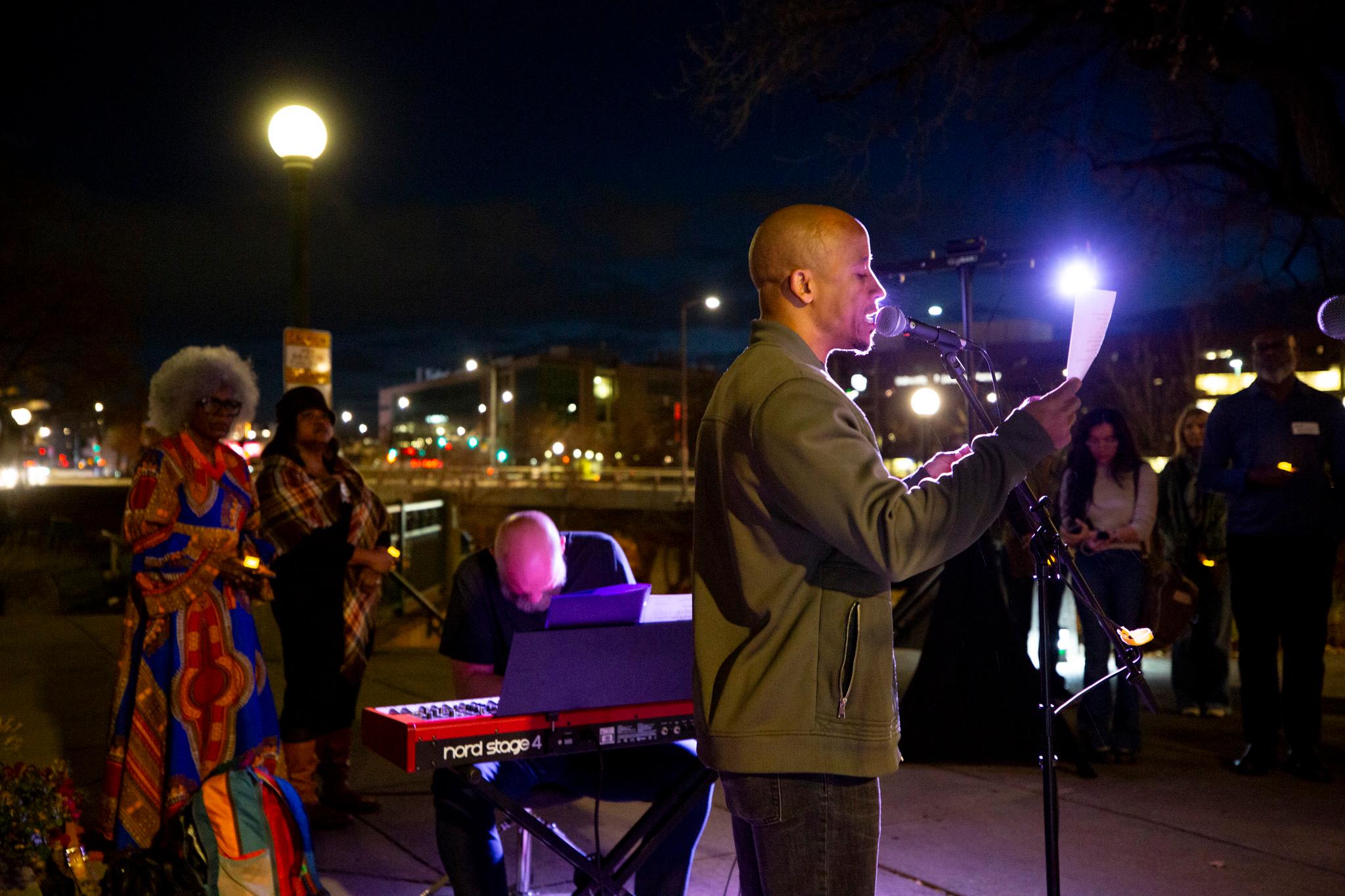
The vigil included performances by Erica Brown, Merrian Johnson and Ayinde Russell. Russell is a pastor at the Colorado Community Church and spoke to the crowd of over 30 people.
“One of the things that I've wrestled with as we kind of explore the history of lynching here in this country, specifically the story of Preston Porter, is sort of the dynamics of faith that got mixed into the story,” Russell said.
“His murderers presented him with a Bible while he was being held, and that is a wildly disorienting thing. It calls up for me a legacy that we've kind of been offered since being displaced from the African continent and brought to the Americas. The same sort of agency or medium used to kind of foster control and to make enslavement happen on a spiritual and psychological level.”
‘Evil like this’
Many people at the vigil struggled to understand the celebration of the violence inherent in a lynching — to understand how people watched someone die and cheered while it happened.
“I think it's so hard to wrap your head around evil like this, that it's conducted itself in this type of situation,” Mays said. “And I hope everyone here knows what we're doing here. We're combating that by calling attention to the love that lives here.”
The CLMP is Colorado's branch of the Equal Justice Initiative (EJI) which is working to create a national memorial to promote racial reconciliation.
Montana Stevenson, a member of the CLMP team, said the goal of retelling the story of Porter Jr. is to honor his life but also to understand the true violent nature of mob violence.
EJI is showing how lynching was “a spectacle that creates terror — that amount of violence, and then a bunch of people coming to watch it,” Stevenson said. “It's designed to terrorize other people, other Black people, and it is hard to understand.”
Mays has written poems about the lynching of Porter Jr. One titled “I Don’t Know Mary Louis’s Father,” tells the story of a family getting ready to go to a lynching.
The poem draws a parallel between young boys’ neckties and a young boy being tied to a state.
“I imagined the delegation, how the wives dressed the children, stood the sons on chairs and tied their ties, stood the daughters on chairs and bouqueted their bows, fixed their bonnets for the grand spectacle. I imagined their excitement, and this is just their heritage, their hermitage, their heirlooms,” part of the poem reads.
‘Protecting Preston’s ghost’
CLMP wants to continue and expand the teaching of Porter Jr.'s story.
“It's to the point that we're literally protecting Preston's ghost — to that level of hope that just by protecting his ghost, more people will be provided some grace,” Mays said.
Mays connected Porter Jr.’s story to some of his other work and to the stories of other young Black boys who have been killed in the modern day.
“When you listen to the police video with Elijah McClain, did he deserve grace? You hear him clamoring for his own grace. When you watch the police videos of Ahmaud Arbery, does this kid not get grace to run through this area? And that reciprocal, this loop that continues to happen,” Mays said. “If it weren’t for Tamir Rice, Michael Brown Jr. or Trayvon Martin, I don’t know if I’d dive into this project of Preston’s story the same way.”
Mays said he feels like an uncle to Porter Jr. and that wants to protect his soul the way he wants to protect his actual nephews.
“The work I'm doing is certainly for Preston, but it is also to try to hopefully set the table for white America to take off the blinders in their rear view and grasp the range, this wide range of illness and how it plays out into our society to this day,” Mays said. “And the thing is, you don't have to do anything here to make that evocative. You just have to tell the truth.”