Updated Friday at 4:38 p.m.
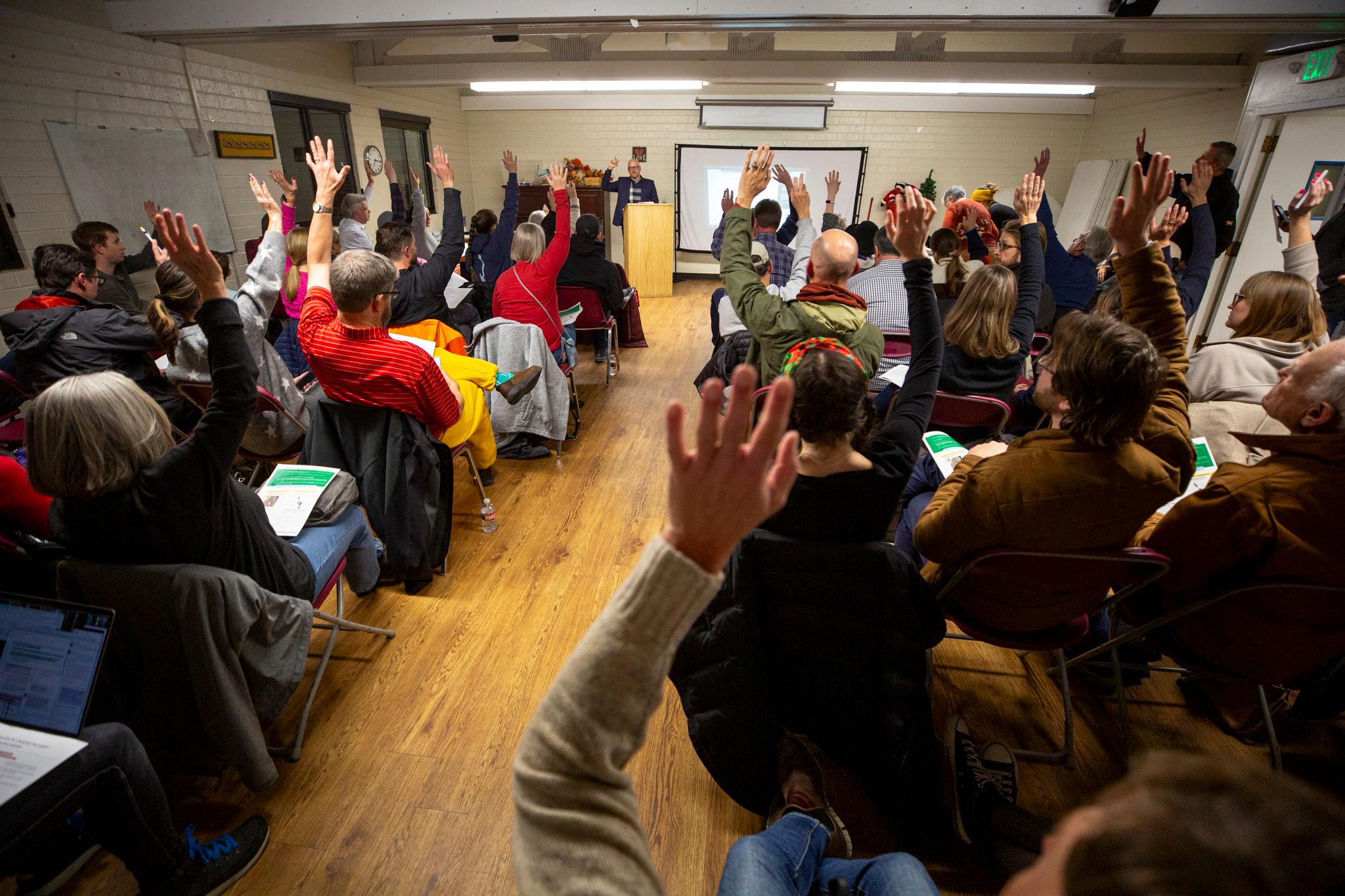
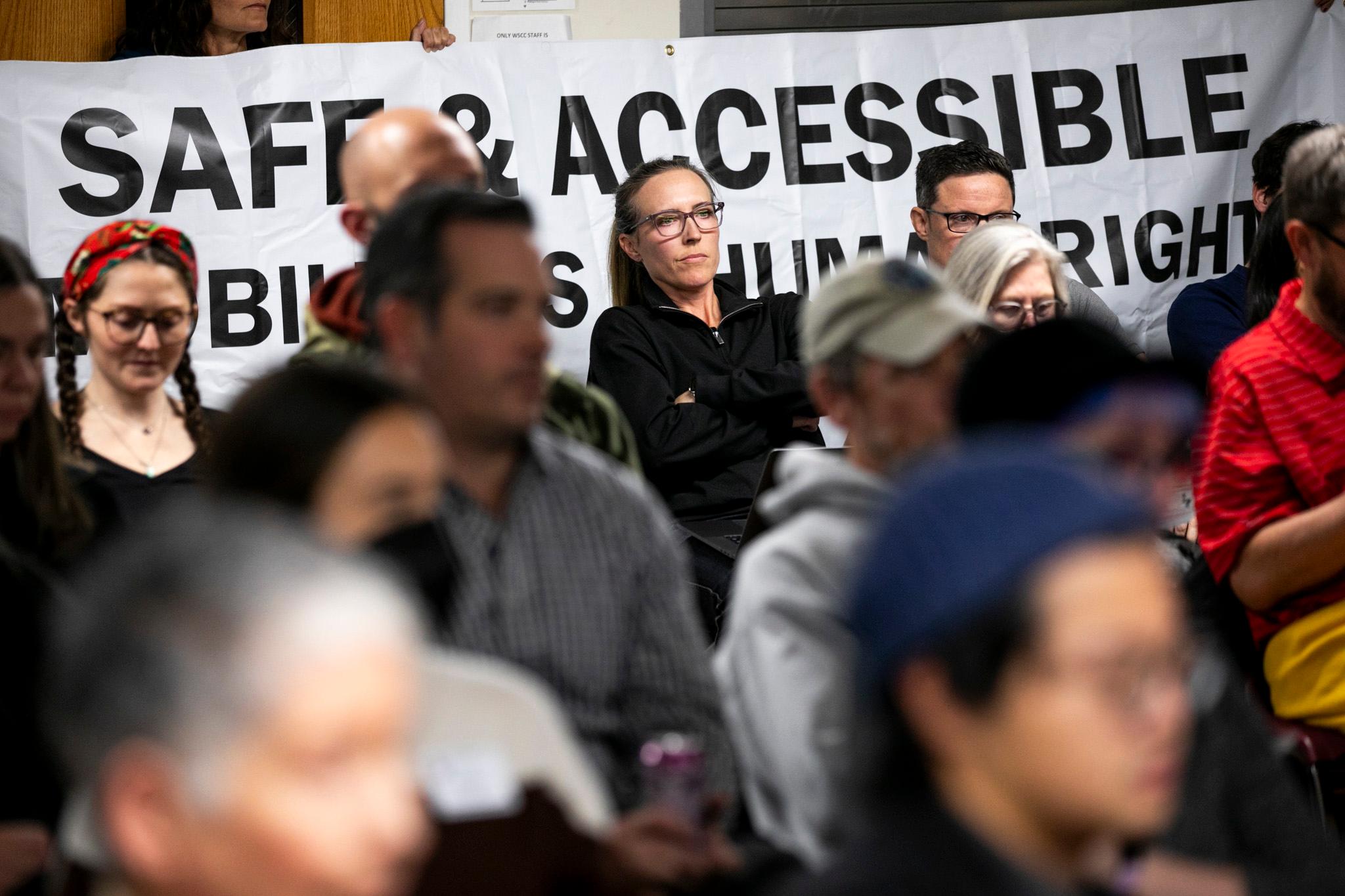
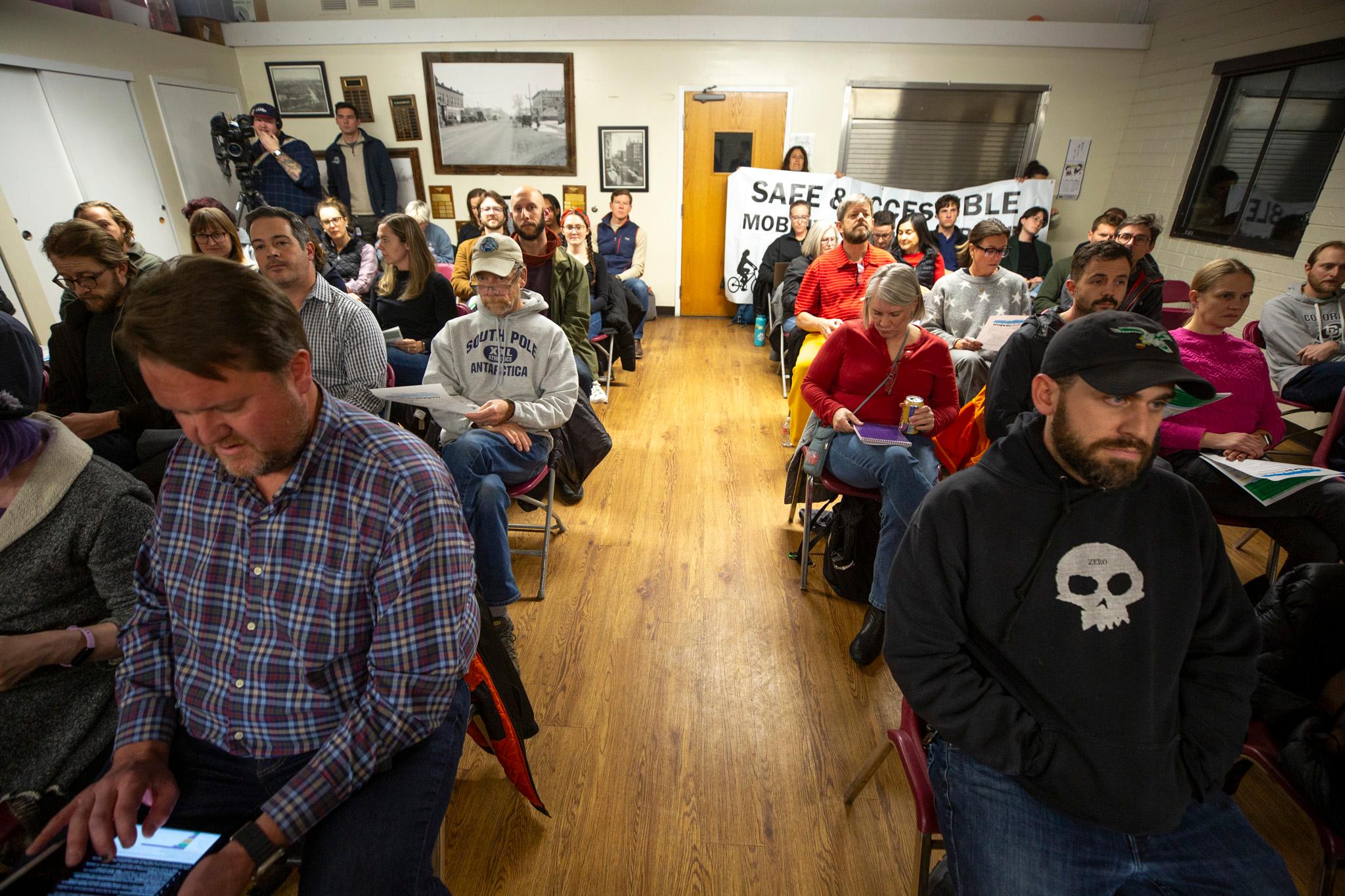
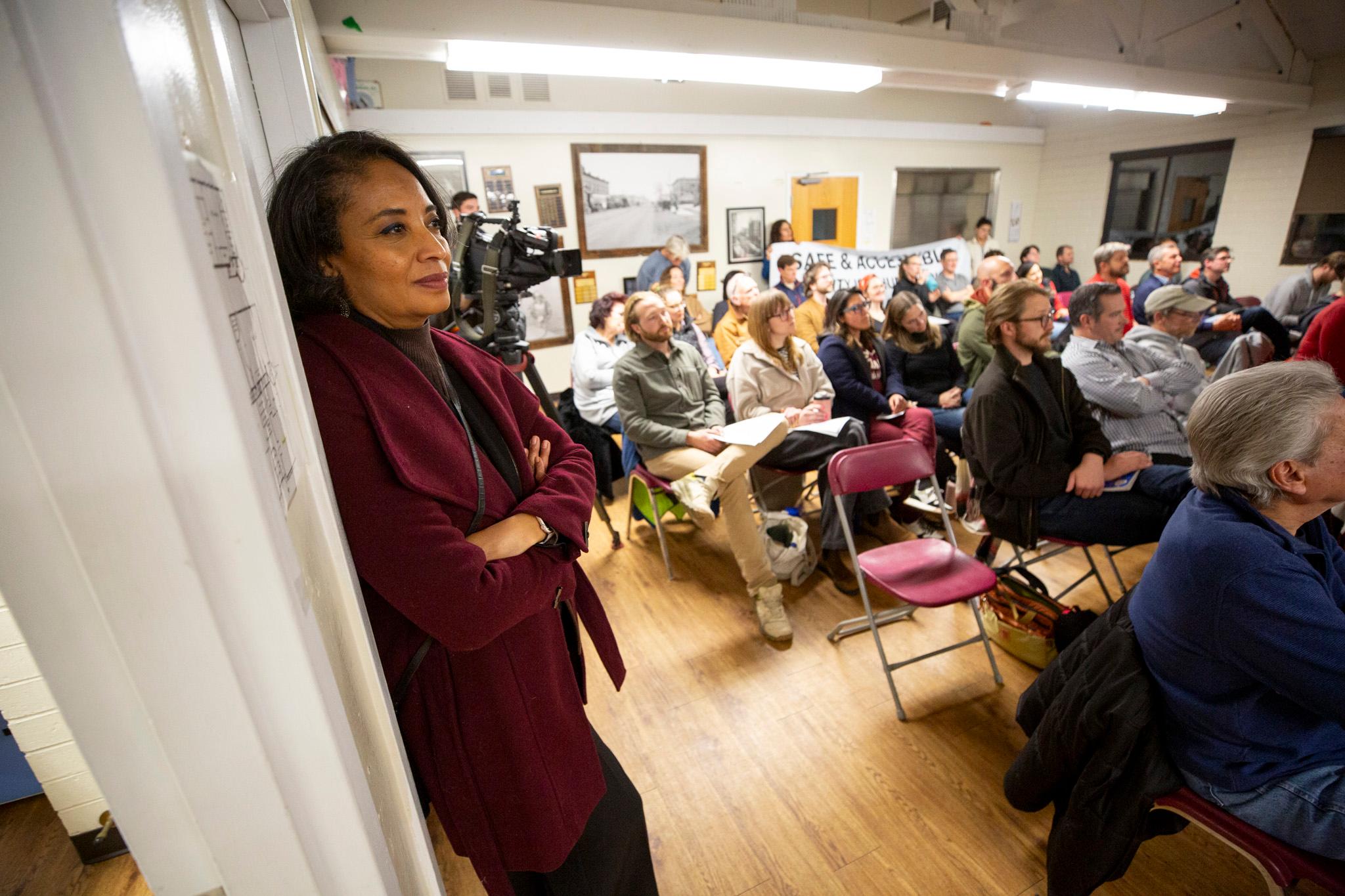
In a cozy room of the Washington Street Community Center, Denver transportation officials sat in a corner as neighbors vented their frustrations over the revised plan for Alameda Avenue.
“When you ask us to trust you, but then you make these decisions that go against everything, that feels like a betrayal to us,” said Bryant Denning, whose home borders Alameda.
Tuesday evening was a regular meeting of the West Washington Park Neighborhood Association, the local registered neighborhood organization that has been a vocal supporter of traffic changes to Alameda Avenue.
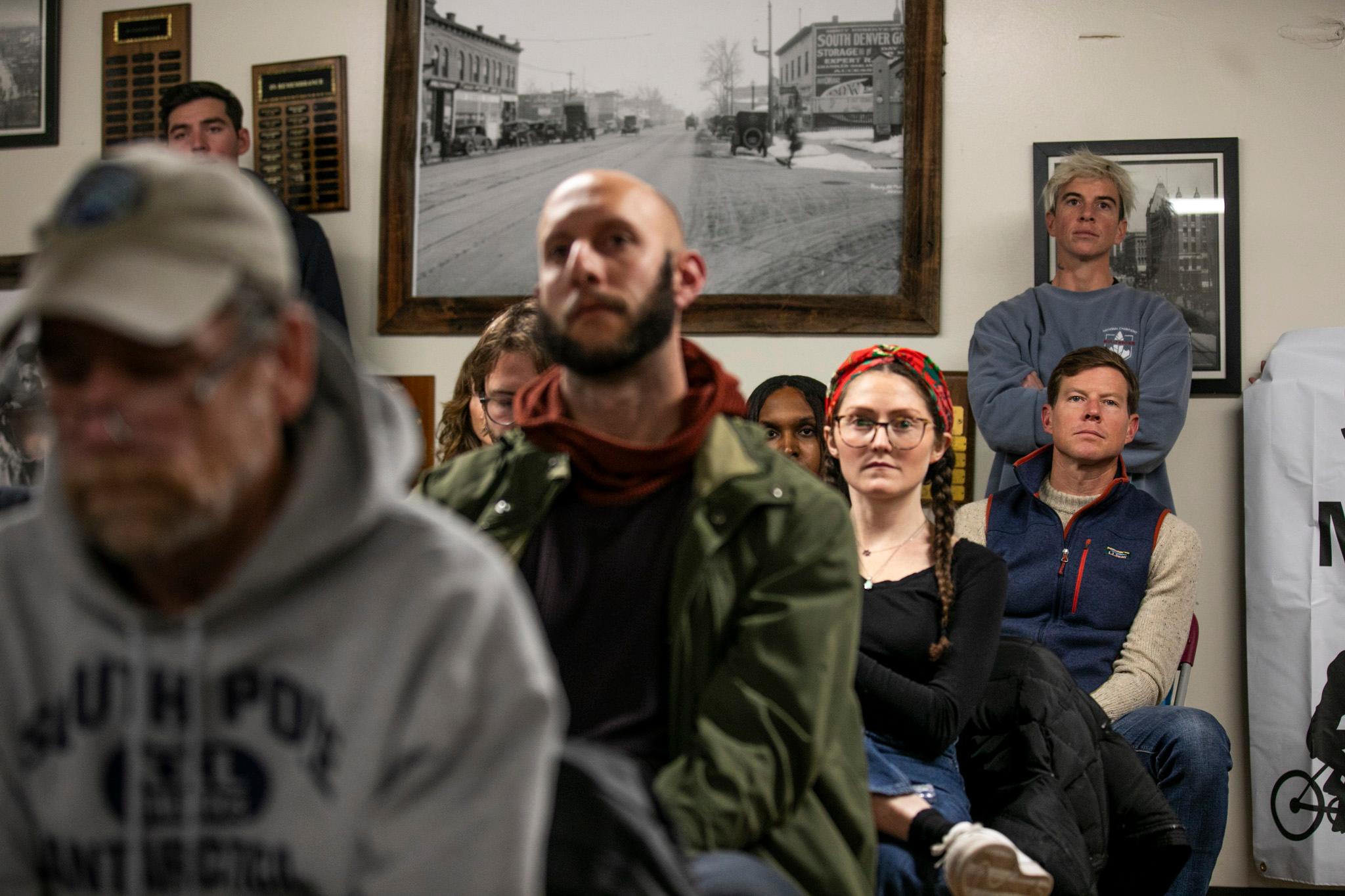
Dozens of neighbors turned out to protest how the city has changed its plans for safety improvements on the street. And they alleged a group of influential neighbors had gained an unfair advantage by hiring a former DOTI staffer to lobby the city.
Neighbors and the city agree that Alameda Avenue is one of the most dangerous roads in the city, saying its current four-lane configuration makes it unsafe for drivers and pedestrians alike. Alameda is part of DOTI’s High Injury Network, which identifies the most dangerous streets in Denver.
The city spent years devising a plan to make the corridor safer through a road diet, but changed course last month, not long before construction was supposed to begin.
On Tuesday night, DOTI leaders argued the new design will still meet the city’s safety goals, while addressing concerns from a group of neighbors who opposed the project.
The original plan would have narrowed the busy road from four lanes of traffic to two directional lanes and a turn lane, along with other changes.
Now, instead of fully eliminating a lane, the agency plans to convert one of the westbound travel lanes into a series of "turn pockets" from Franklin Street to Pearl Street. The road will keep three directional lanes instead of two. DOTI said it hasn't decided how and if it will move traffic away from sidewalks.
The change has angered some residents and transit activists who say it shows the city under Mayor Mike Johnston is losing focus on street safety and Vision Zero. Meanwhile, another group of neighbors has celebrated the change, saying the old plan would have negatively impacted side streets and commute times.
DOTI is on tour to explain the decision.
DOTI and its executive director, Amy Ford, have defended the decision, including in front of the department’s citizen advisory board, which lambasted the sudden shift away from the original plan. Critics said the new plan waters down safety by maintaining two lanes of traffic going eastbound. Road diets are meant to slow drivers and improve safety by eliminating traffic lanes and narrowing roads.
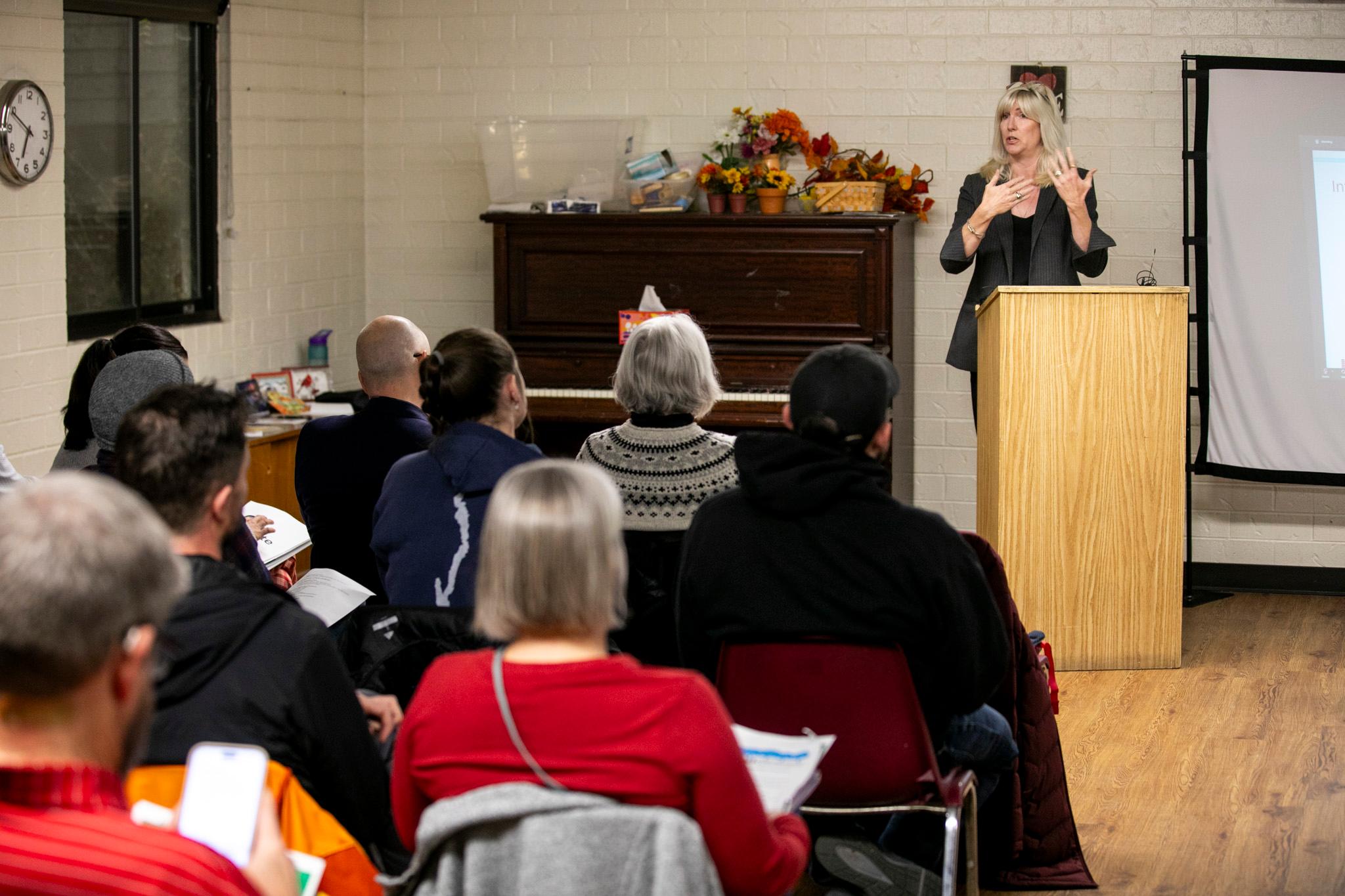
After Tuesday’s meeting, Ford told Denverite there is no material change in safety between the two plans.
“The partial lane repurposing is as safe as the full lane repurposing,” she said.
Ford said the redesign still addresses safety by adding turn pockets — or short, intermittent spaces for turning — along Alameda and improving pedestrian crossings. A DOTI website about the project identified “the current lane setup, which has two travel lanes in each direction but no center turn lane” as the reason for many preventable crashes.
But many in attendance on Tuesday were not sold.
“As a pedestrian, you're saying that crossing four lanes of traffic is the same amount of safe as crossing three lanes of traffic, it just feels less safe?” asked one resident, to which Ford nodded her head silently.
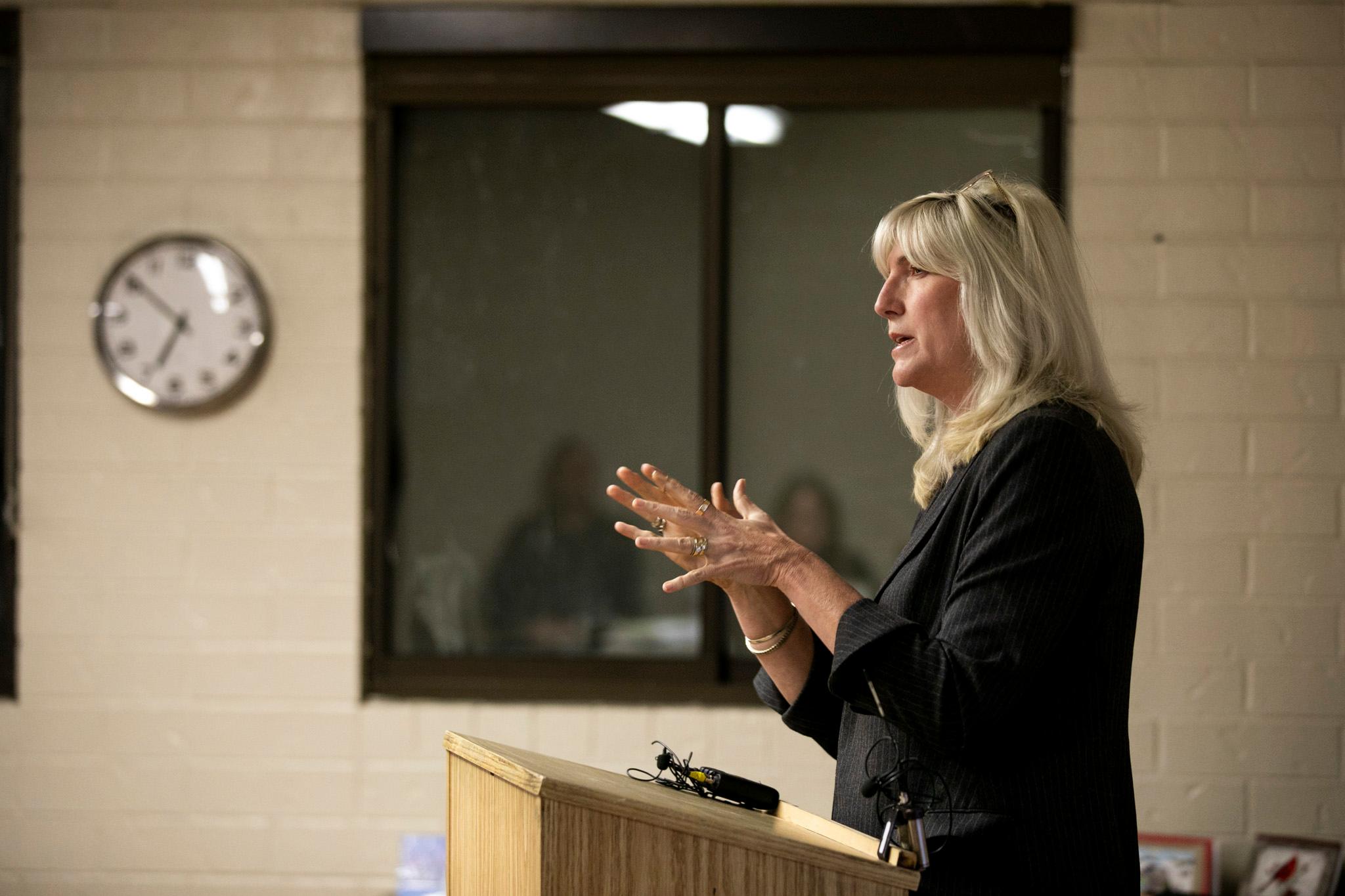
DOTI previously touted data from the U.S. Department of Transportation that found its initial design could reduce crashes by 19 to 47 percent. DOTI said it believes the new design will reduce crashes “well within this range.”
“The key safety benefit of both design versions are the same: introducing a dedicated left-turn lane, which DOTI’s safety study found has the potential to significantly reduce crashes on the corridor by removing turning vehicles from the path of through-traffic,” DOTI spokesperson Nancy Kuhn said in a statement.
But the department also conceded that westbound traffic turning left across two lanes — one of the features of the new design — will not be quite as safe as turning left across one lane.
“When it comes to comparing the partial vs. the full lane repurposing options related to left turns, we have noted there is only a marginal difference in crash risk of [westbound] left turns across two lanes of traffic,” Kuhn said.
Wes Marshall, a professor of civil engineering at University of Colorado Denver who wrote “Killed by a Traffic Engineer”, said that while the new design is an obvious improvement over the current Alameda Avenue, he isn’t convinced it meets the same standard as the original design.
“Given the basic design differences, I really can't see how this new proposal could be as safe as the original plan. To be honest, I don't think the differences in safety would even be all that close, especially for pedestrians and bicyclists,” Marshall told Denverite in an email.
Another group of residents hired a lobbyist to get the original plan changed.
Ford and DOTI said the decision to revisit the design of Alameda came after a petition and meeting with a group of neighbors that opposed the project. The group’s organizers included Jill Anschutz, a member of the influential Anschutz family, and several other neighbors.
Public records obtained by Denverite showed that the group, known as Act for Alameda, hired a former DOTI deputy chief of staff a few months before the city revised the plan.
“We received a request from Jason Gallardo, who is now a lobbyist, to meet with some neighbors who have concerns regarding the Alameda Lane Repurposing project,” an email from DOTI’s Greg Cieciek read.
“They hired Jason to help facilitate a discussion with the City,” another email stated.
Act for Alameda said the original plan threatened “to create substantial and lasting negative impacts on traffic safety, neighborhood livability, and the vitality of local businesses.”
About two months after the city met with Act for Alameda in June, a city engineer wrote that DOTI leadership and community members had concerns with the original design.
“After evaluating different options for moving forward in light of community and leadership concerns, we have decided to move forward with a partial lane reduction (i.e. lane reduction only in the WB direction),” stated an email from Brett Boncore, an engineering supervisor, to contractors with engineering consulting firm Kimley-Horn.
DOTI said the new plan addresses some of Act for Alameda’s concerns — namely, traffic congestion and cars heading down side streets.
During the neighborhood association meeting, DOTI officials said the original plan would have added a “significant increase” of 98 seconds to some commutes along the one-mile stretch.
The skinnier design also would have diverted 10 percent of drivers down to side streets, according to DOTI. The revised plan, they said, would keep travel times the same and send 5 percent of drivers to side streets.
Advocates said the fact that Act for Alameda could hire a consultant shows an inequity.
“Is this your vision of democracy, that the democratic process can be bought by billionaires?” one resident asked Ford. “What can the people in this room take away other than you have been bought?”
It was a constant theme throughout the meeting. Ford downplayed the influence of wealth in the decision-making, saying DOTI simply listened to feedback from the community.
“I think that the community weighed in,” Ford said. “(Anschutz) happened to be an individual who raised a question.”
In an email to Denverite, Anschutz said Gallardo's role was "helping secure a meeting with our coalition and DOTI in June 2025."
Ford didn’t leave much hope for another change.
Many residents asked a similar question: Are the revisions set in stone?
“Is this set in stone, just yes or no?” one neighbor asked.
“We're going back, we're looking at the design,” Ford responded. “We think that the partial lane is the way to go in regards to meeting sort of the safety (goals) as we go back and we finish the design over the next few months. I think that we are going to continue to look at it and the impacts and how we do that.”
“That's really discouraging because it seems like, yeah, there's no real movement at this point,” said Kathy Orellana. “I'm assuming for (DOTI) it would be like having egg on their face to go back and say, ‘Just kidding.’”
Redesigning the road diet will cost $100,000, a fact that some criticized as the city grapples with a budget deficit. The overall project is expected to cost $570,000.
Construction is expected to start late next year, but some elements from the original design, including some pedestrian crossing improvements, could start as early as next month.
The meeting ended with the West Washington Park Neighborhood Association’s president reiterating the organization’s stance on the issue: The city should pursue the original plan. A representative for Denver City Council member Flor Alvidrez also urged the city to stick to its original plan.
Since DOTI announced its revision last month, neighbors have organized a petition to support the original design. As of Tuesday night, it had received over 800 signatures. While the original letter distributed by Anschutz obtained about 300 signatures, Anschutz claimed number of signatories rose to over 800 by December.
Editor's note: This article was updated to include comment from Jill Anschutz and to reflect that Jason Gallardo was a deputy chief of staff, not a chief of staff, at DOTI.