In the years Denverite has asked our (lovely) readers for questions about the city, one curiosity has constantly pinged our inbox: Are the things we recycle actually being recycled?
“Does it really get recycled or just put in the trash?” one person wrote.
“What ACTUALLY gets recycled?” asked another.
“Is it real?” someone existentially cried out.
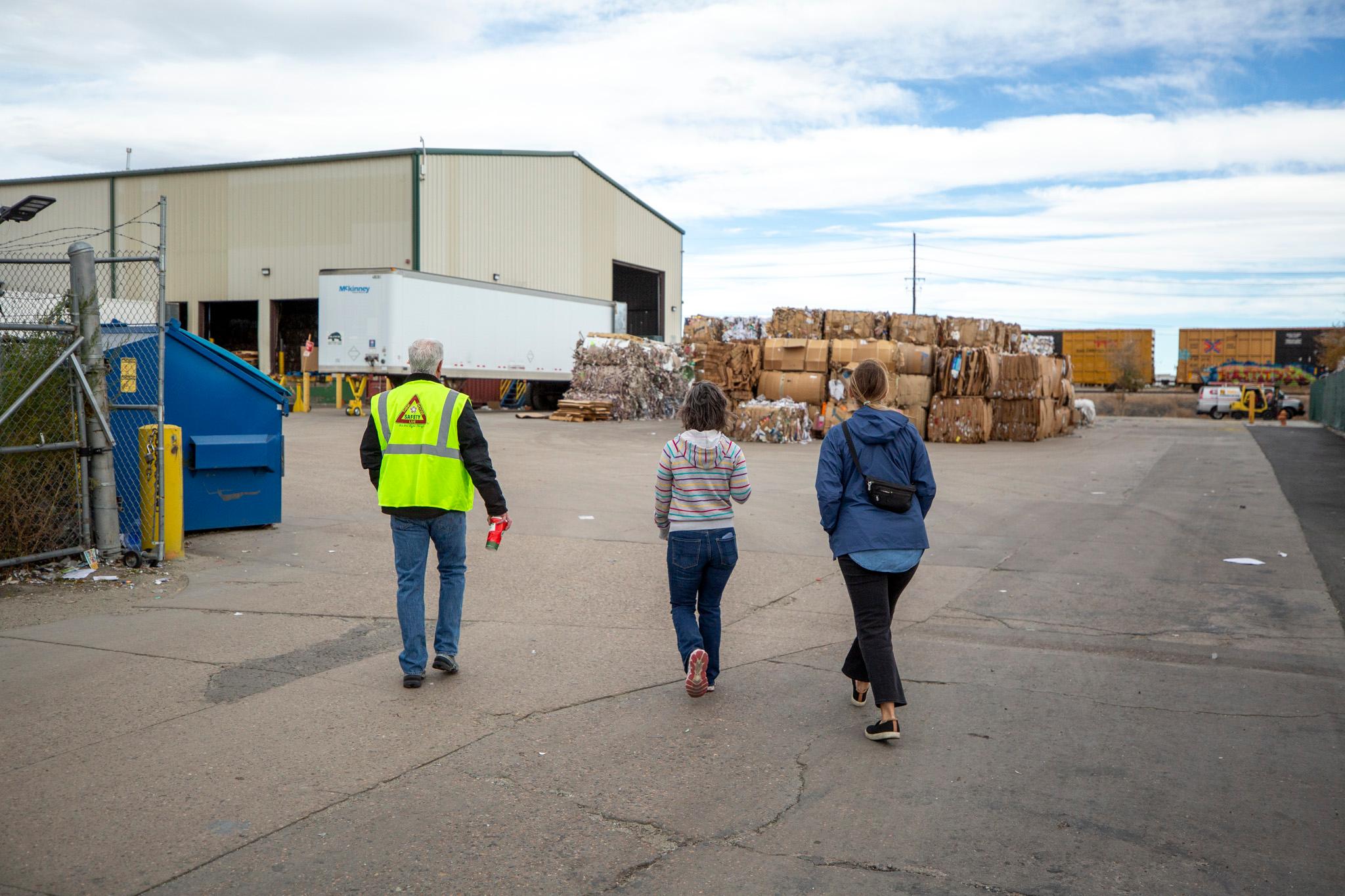
We decided to go see for ourselves — and we invited a few of our inquisitive readers to come along so they could ask their questions directly.
It was a good moment to check in with our local rubbish collectors. A surge of holiday garbage is on the horizon, and a new law will soon expand access to this system across Colorado.
Take a journey with us to a waystation on the road to reuse.
Welcome to the MRF.
Denver’s Department of Transportation and Infrastructure handles the waste bins that people push to their curbs each week, as well as the garbage, compost and recycling trucks that come to empty them.
These services are mostly for residents of single-family homes and smaller apartment buildings; commercial operations and large multifamily buildings must find their own haulers.
The city contracts with third-party companies to get rid of the waste it collects. Trash and compost are taken to a sprawling dump in Aurora that’s owned by Denver and operated by Waste Management.
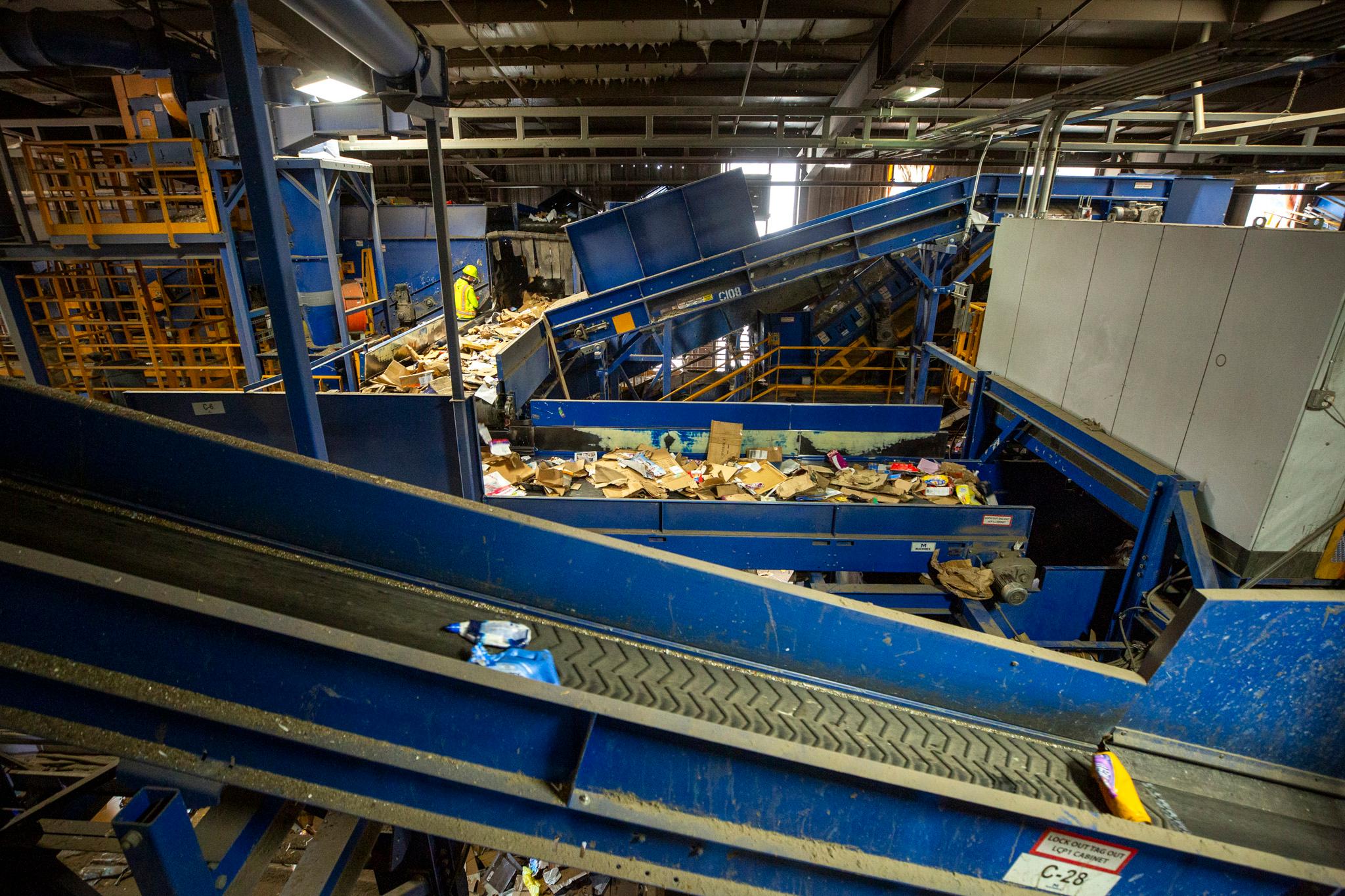
Anything you throw into purple recycling bins ends up at a Materials Recovery Facility in northern Denver owned by Republic Services. Otherwise known as an MRF, or a “murf,” the campus is full of machinery and people who sort plastic recyclables and package them for resale.
That’s where Denverite readers Sarah Garrett, Dani Parsons and Grace Goodman met us for a tour. They were among 130 people who submitted questions about whether to wash out peanut butter jars, what’s shipped overseas and if this process exists at all.
Our guides to those answers were waiting for us at the MRF: Steve Derus, who manages Republic Services’ post-collection facilities, and Nina Waysdorf, who manages outreach for Denver’s waste hauling programs.
To answer the biggest question: Yes, they said, recycling actually happens. Republic Services is a Fortune 200 company, Derus told us. The MRF wouldn’t be here if there weren’t a business to run.
“We are a for-profit company, so we need to make money for what we do. And really, the only revenue we generate for recycling is when we sell the material that we recycle,” he said. “All in all, we put about 12,000 tons a month through here.”
OK, but how much is really recycled?
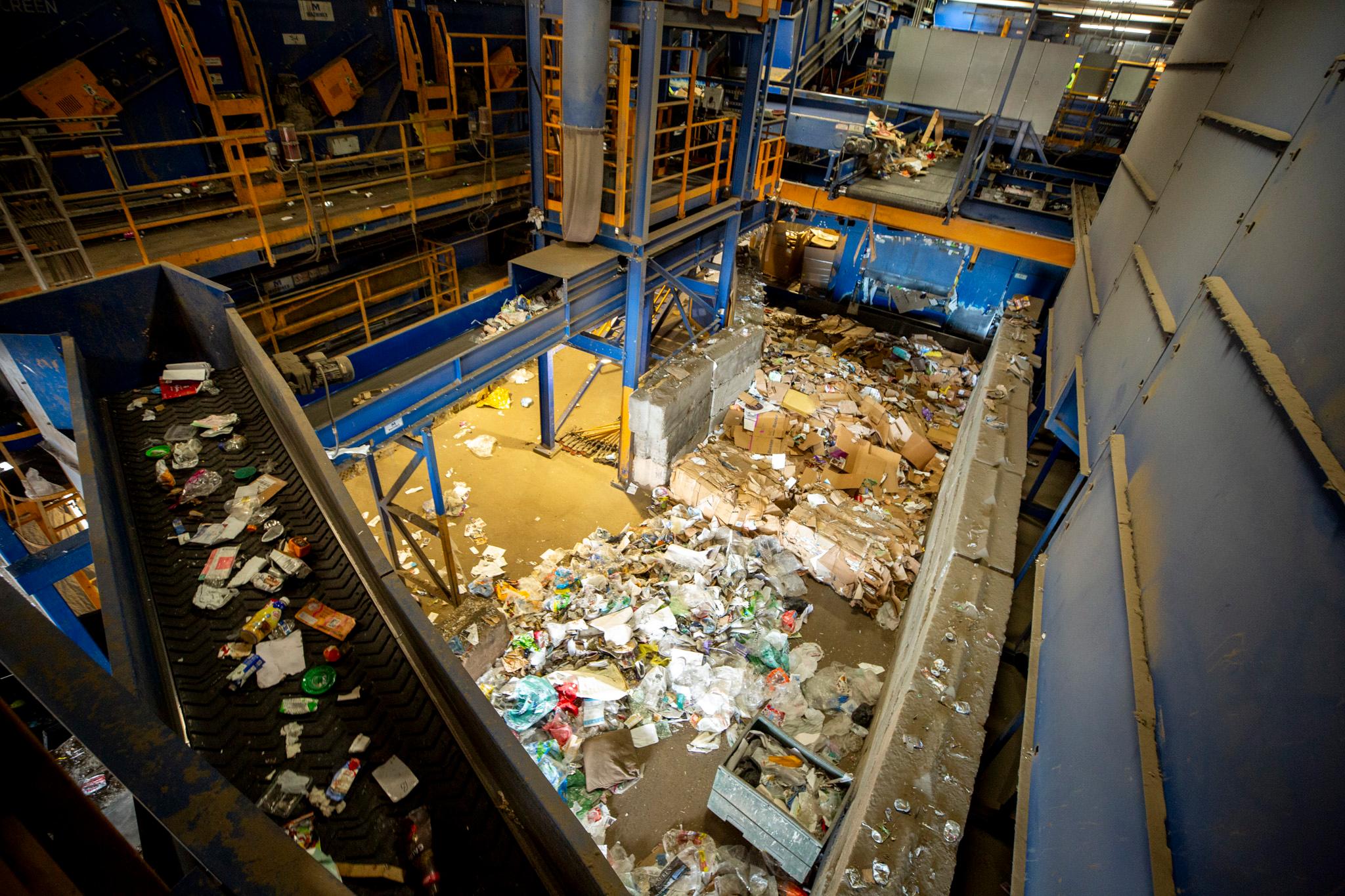
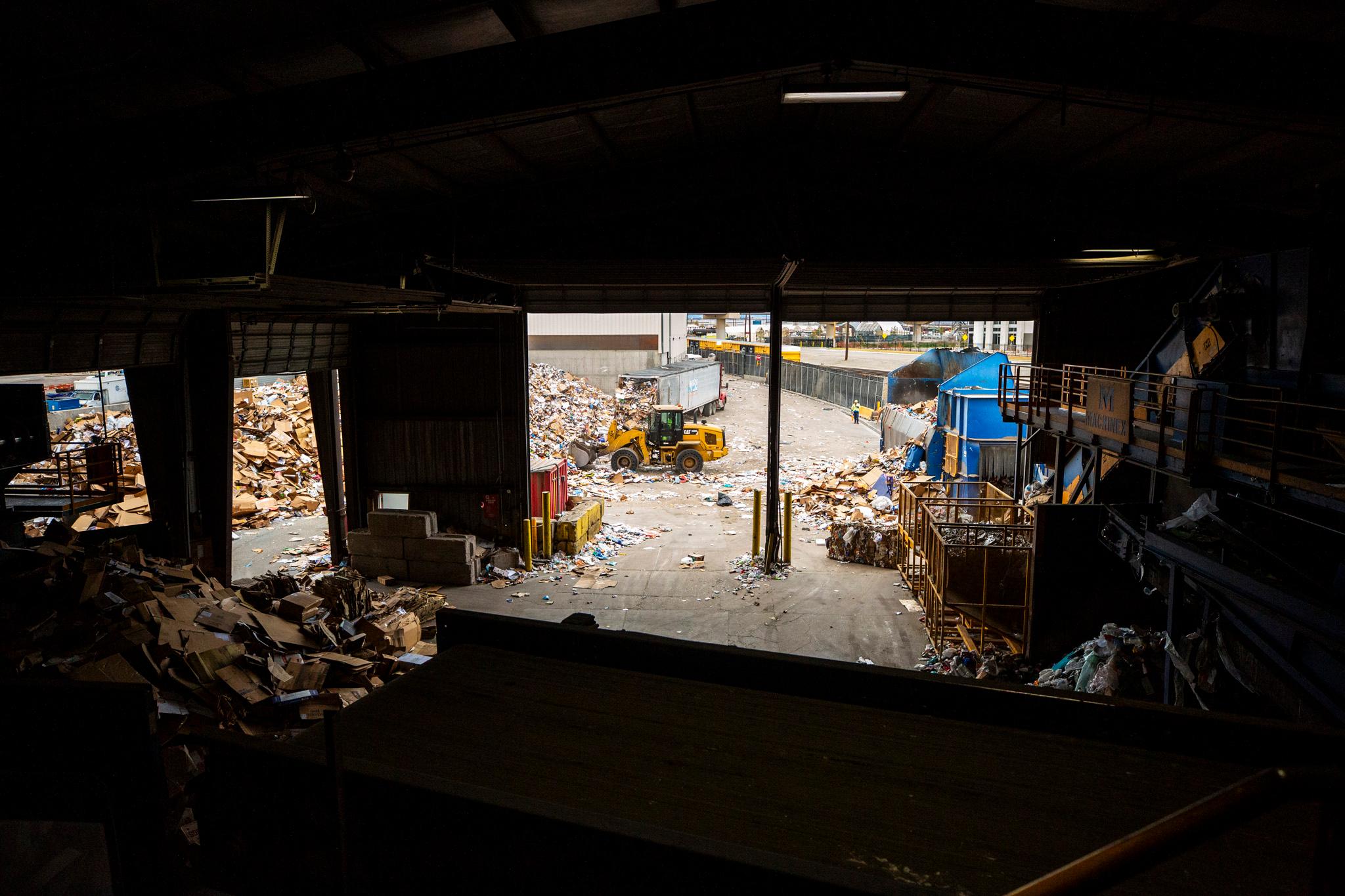
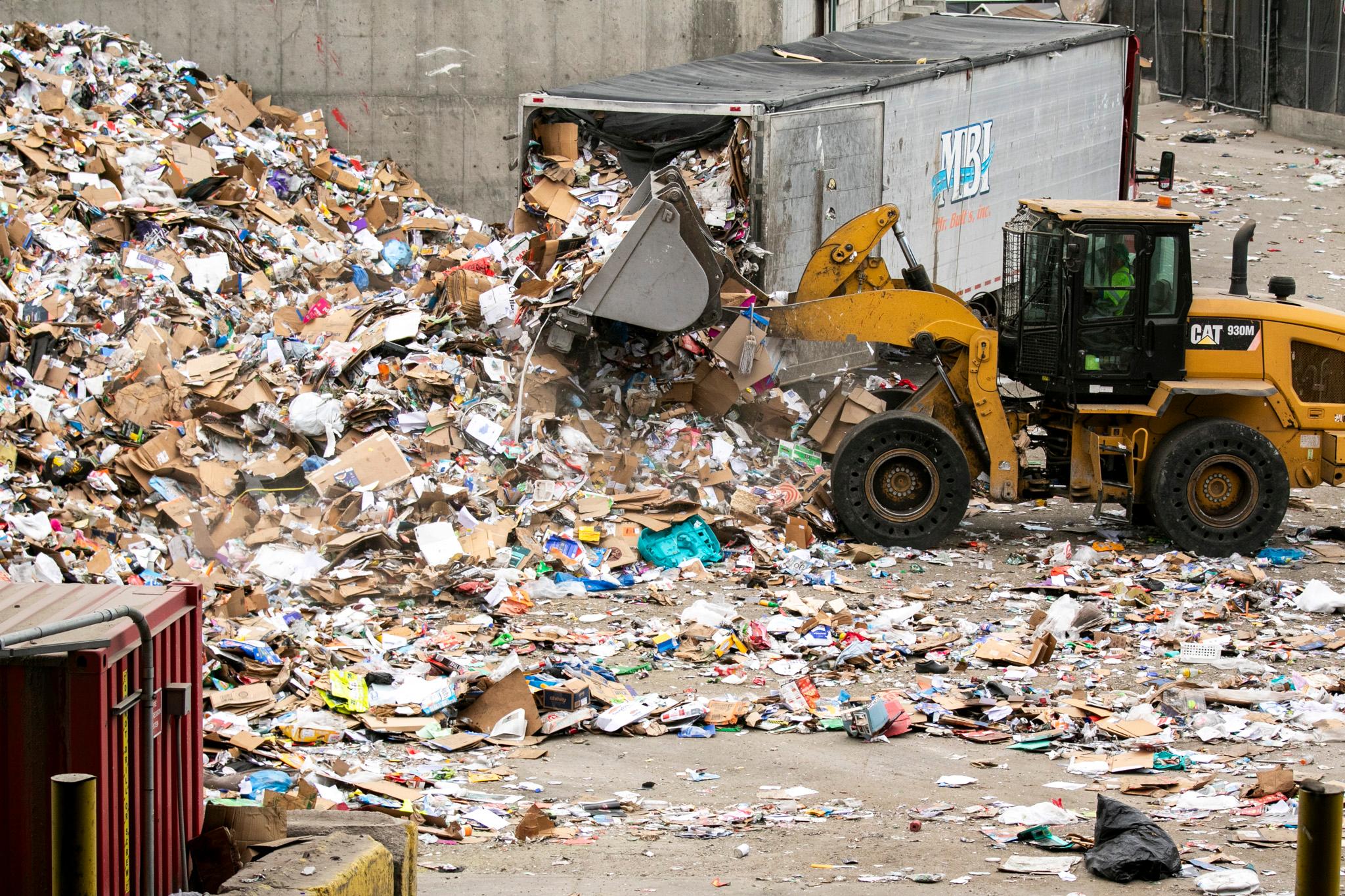
Republic’s MRF runs about 18 hours a day, processing literal truckloads of trash dumped into a loading bay in the back. Derus said a third of the facility’s total volume comes from Denver residents. The rest is sourced from people who live outside the city and big commercial clients, like Amazon and Coca-Cola.
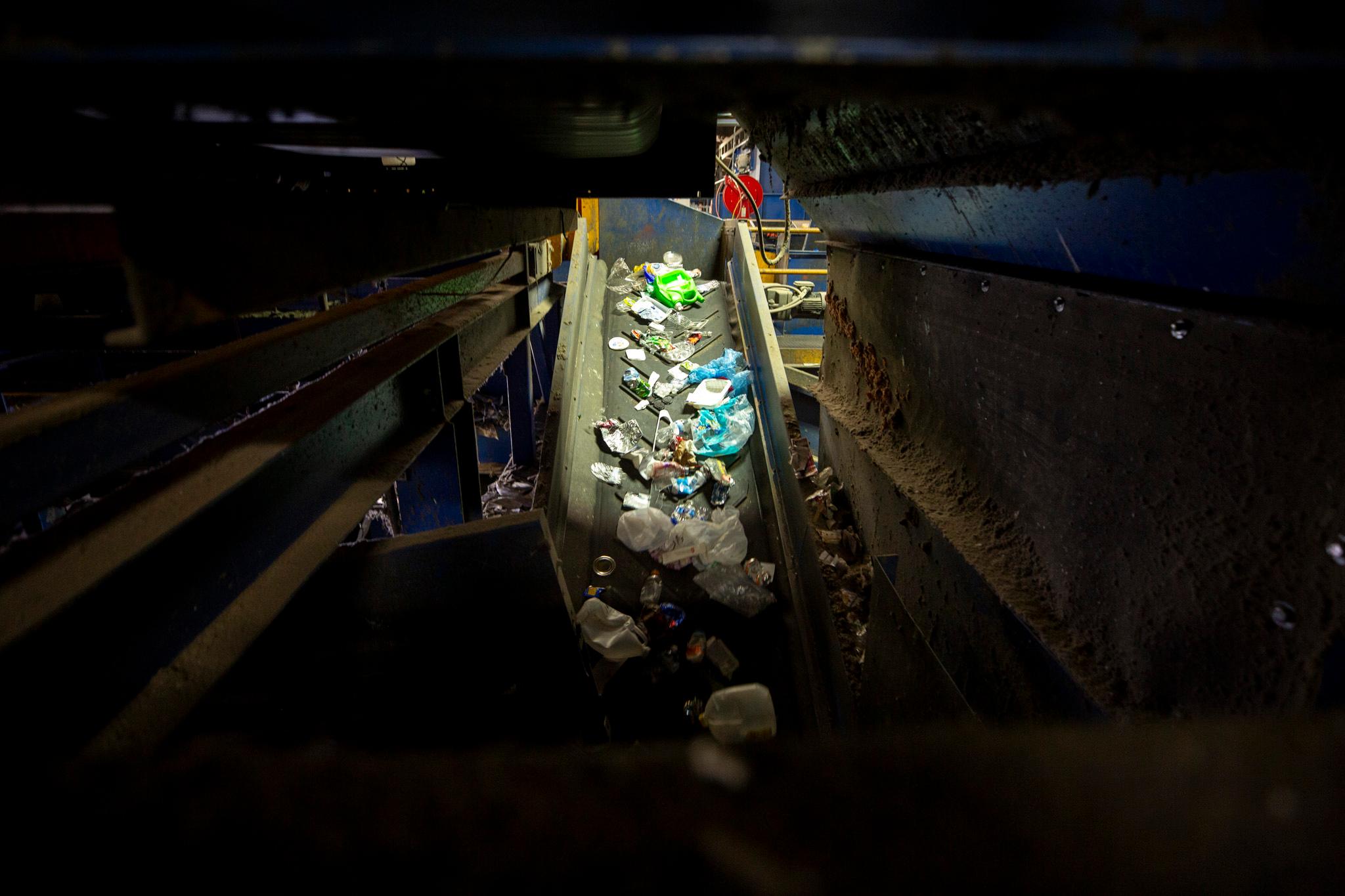
Excavators shovel the never-ending mountain of garbage onto a long series of conveyor belts.
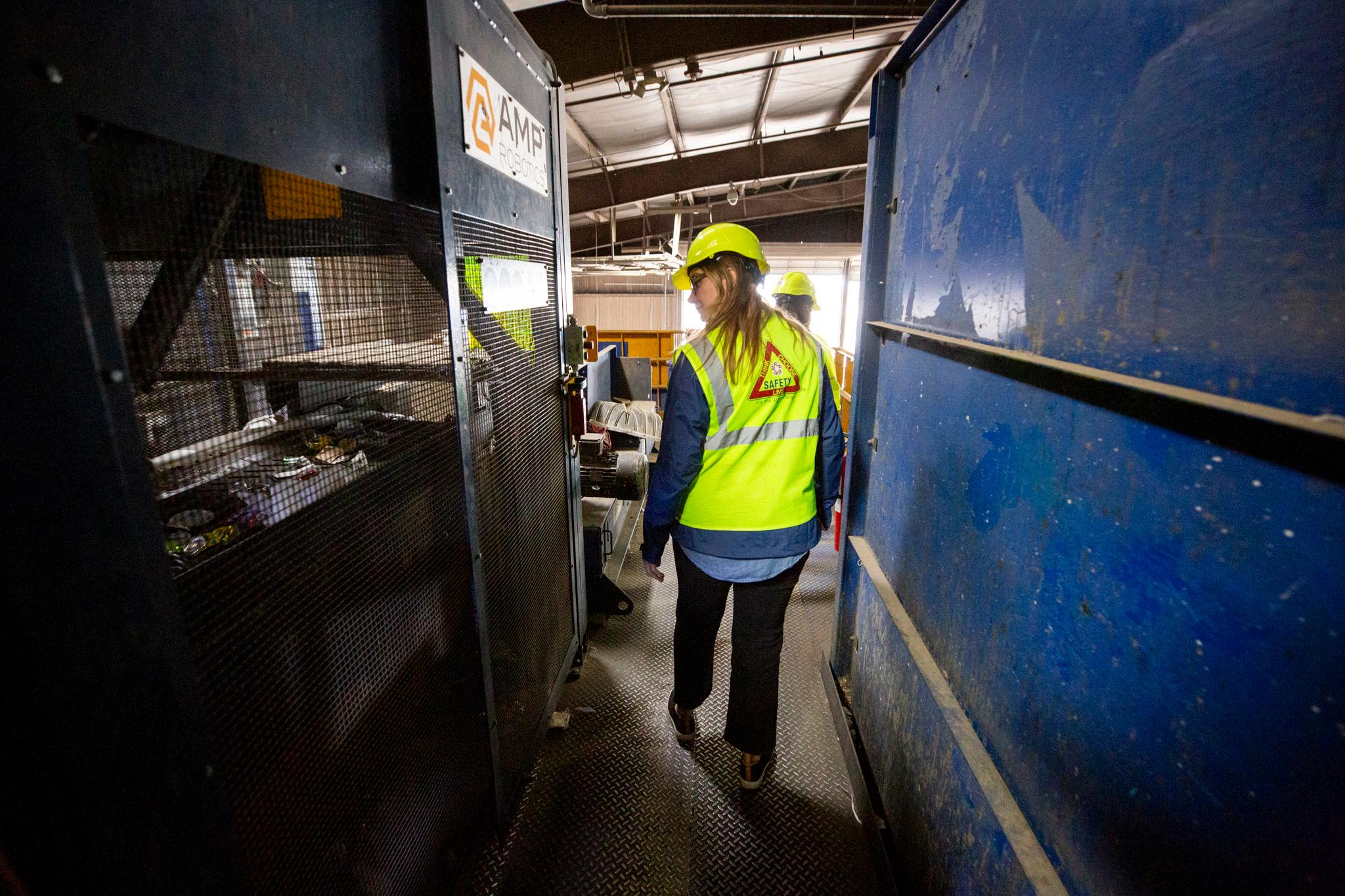
Along the way, an electromagnetic eddy current pushes aluminum cans out of the stream. Other magnets pull ferrous metals into their own bins. AI-powered robots pluck out specific types of plastic containers.
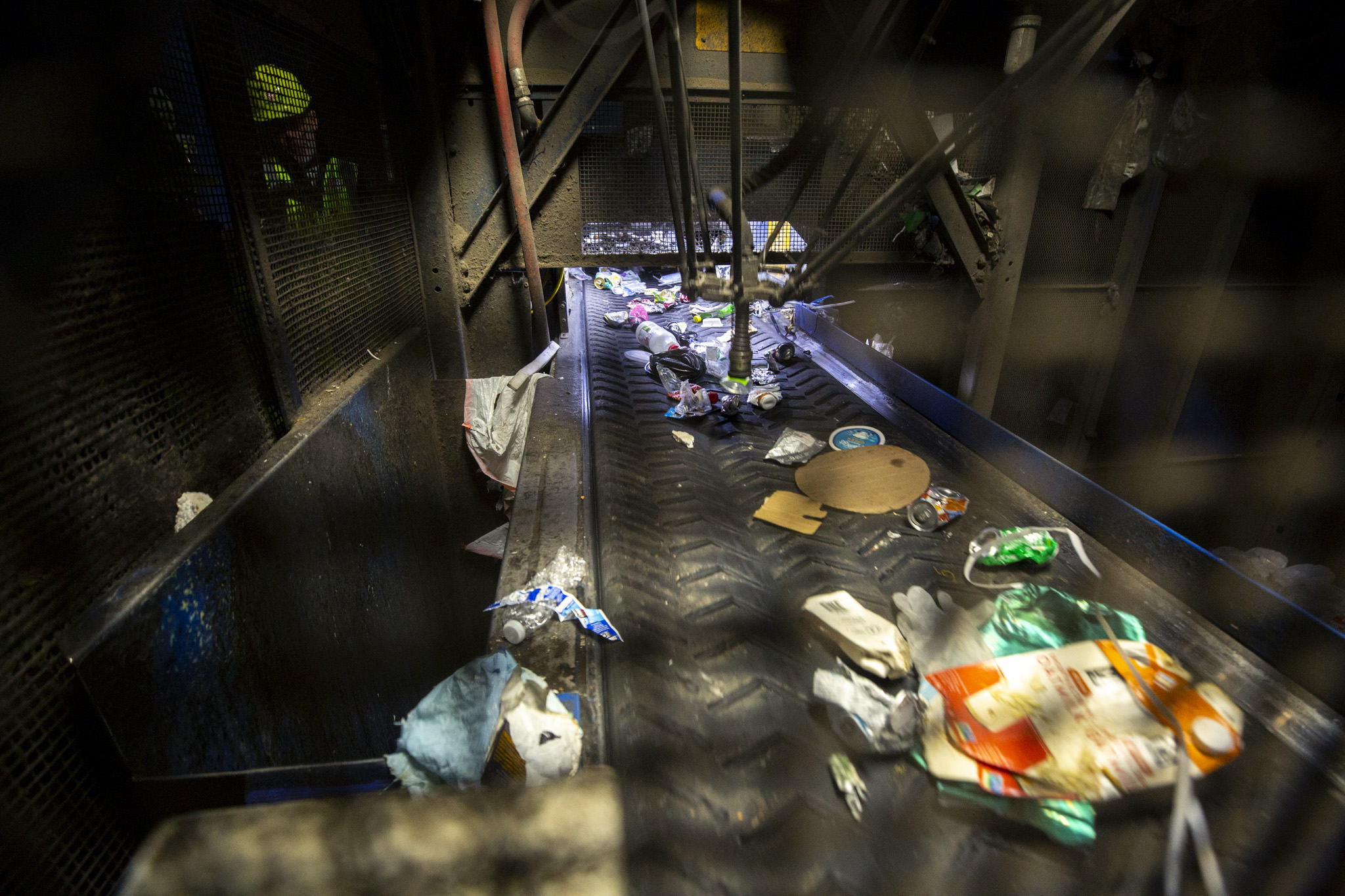
Humans take over downstream, sorting materials by hand. Derus said their work will be increasingly replaced by automation.
Denverite reader Dani Parsons was impressed by the whirring, grinding spectacle.
“Really blown away. I, actually, was very blown away that there wasn't a lot of smell,” she said. “Never seen anything like that in motion.”
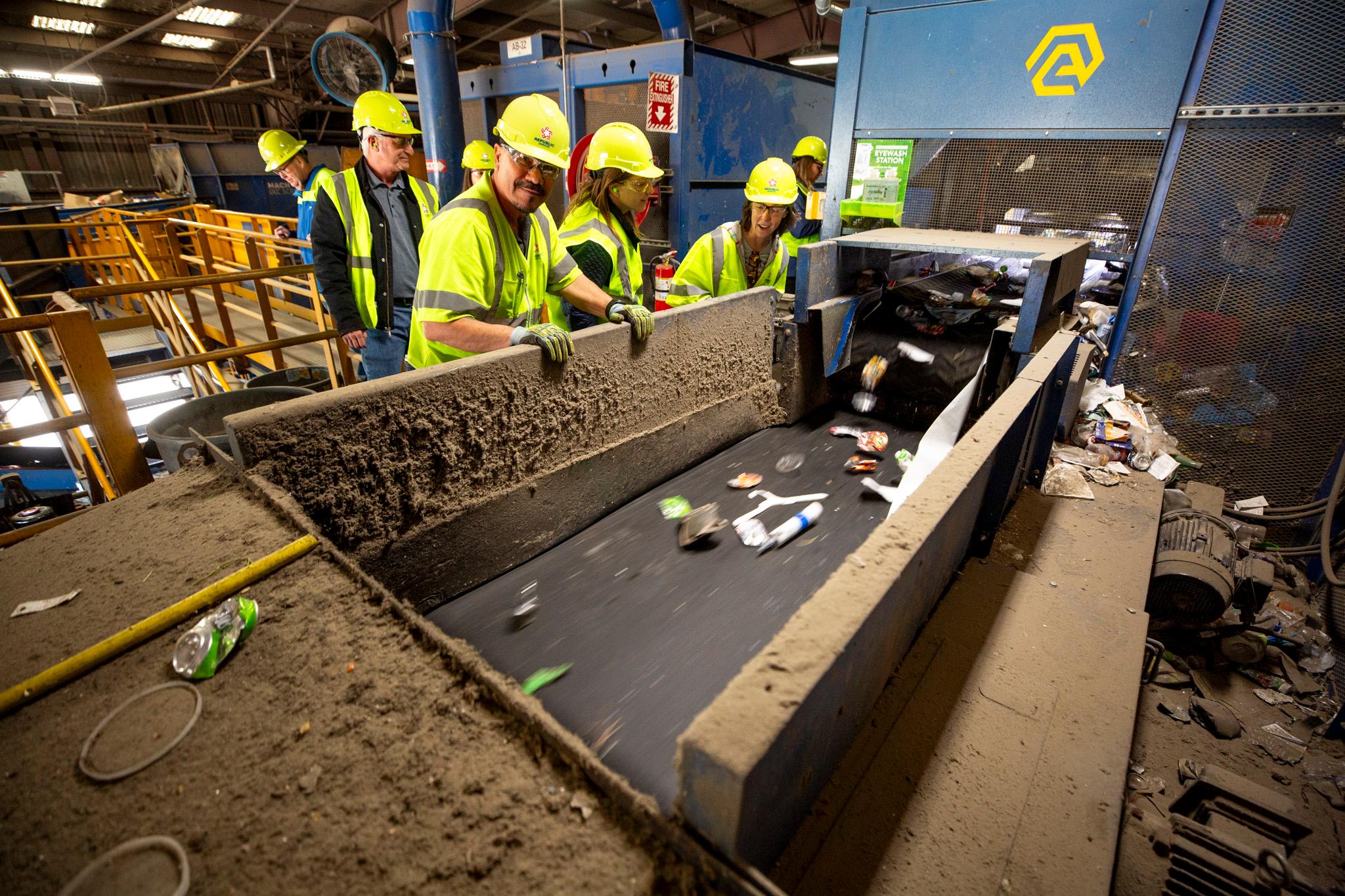
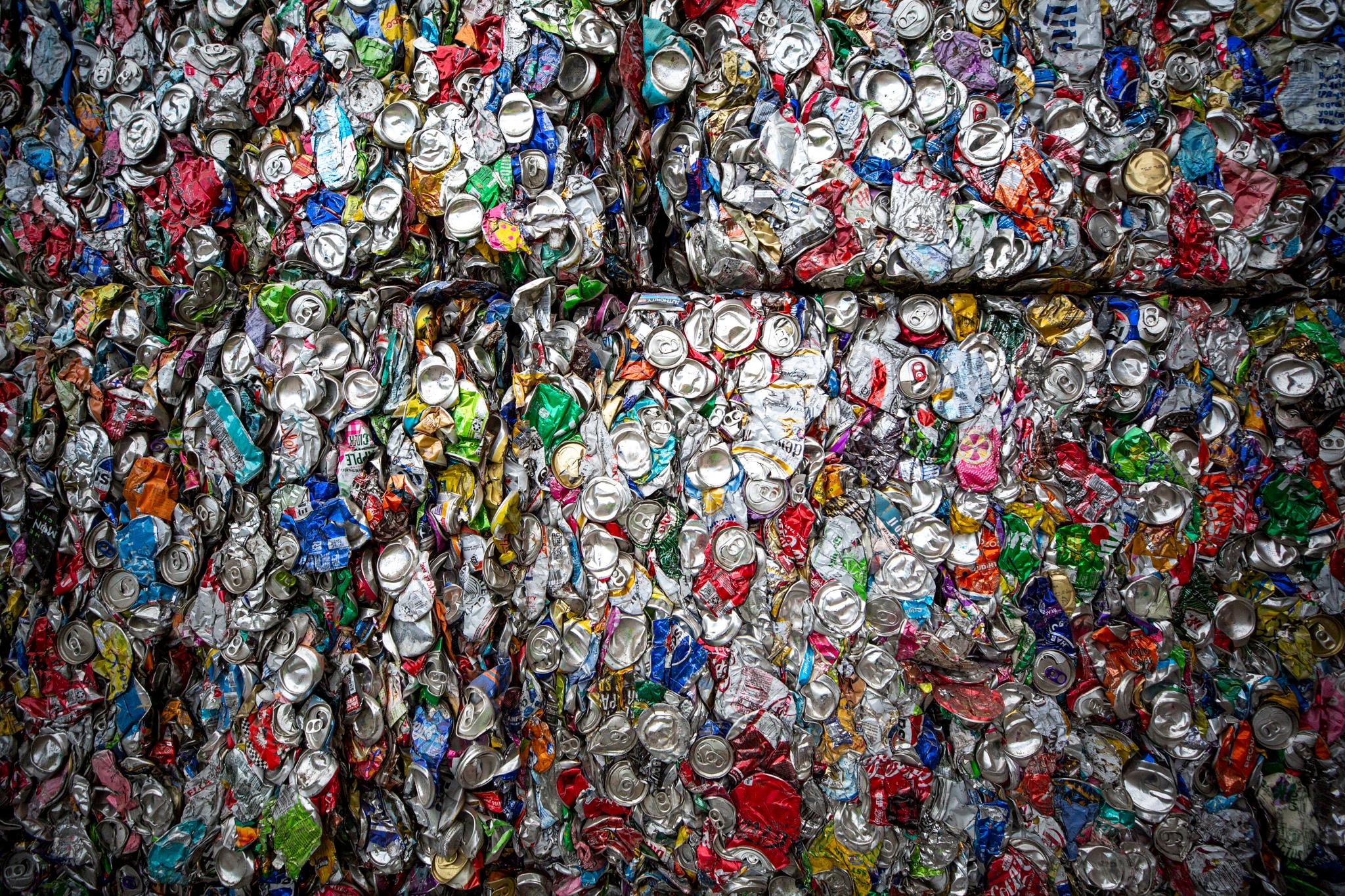
Every facility is different, Derus said, but recycling generally breaks down into five categories: cardboard, paper, plastics, metal and glass.
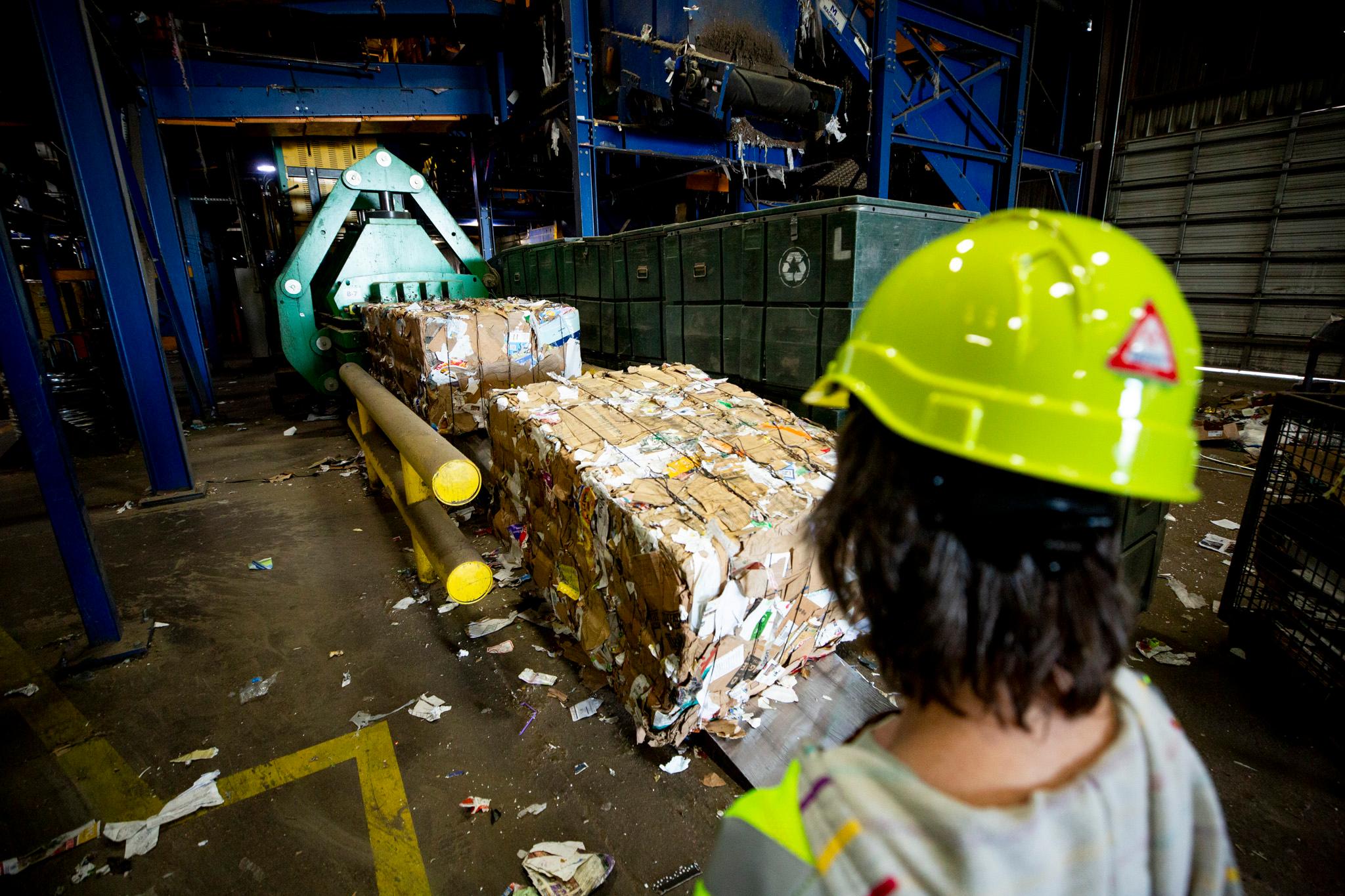
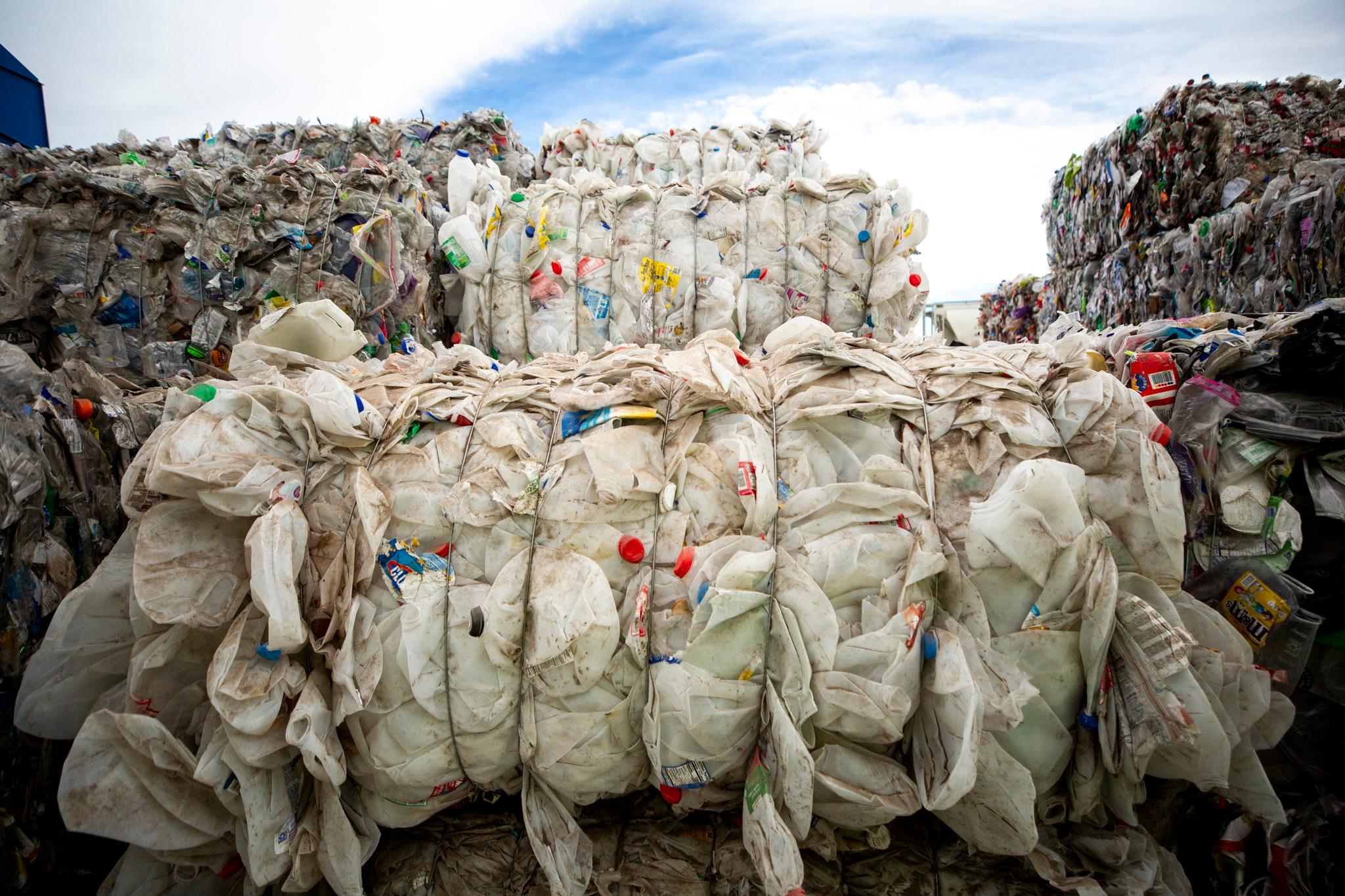
Of the tons processed here each month, he said about three-quarters end up as packed cubes that are sold off to become new material. Everything left over is classified as “residue.”
“Anywhere from 22 to 25 percent is residue that we actually haul off to the landfill,” Derus said. “It's contamination. It's the containers that shouldn't have been here. It's the garden hoses, it's the bags, plastic bags, the metal, the things that aren't acceptable for the program.”
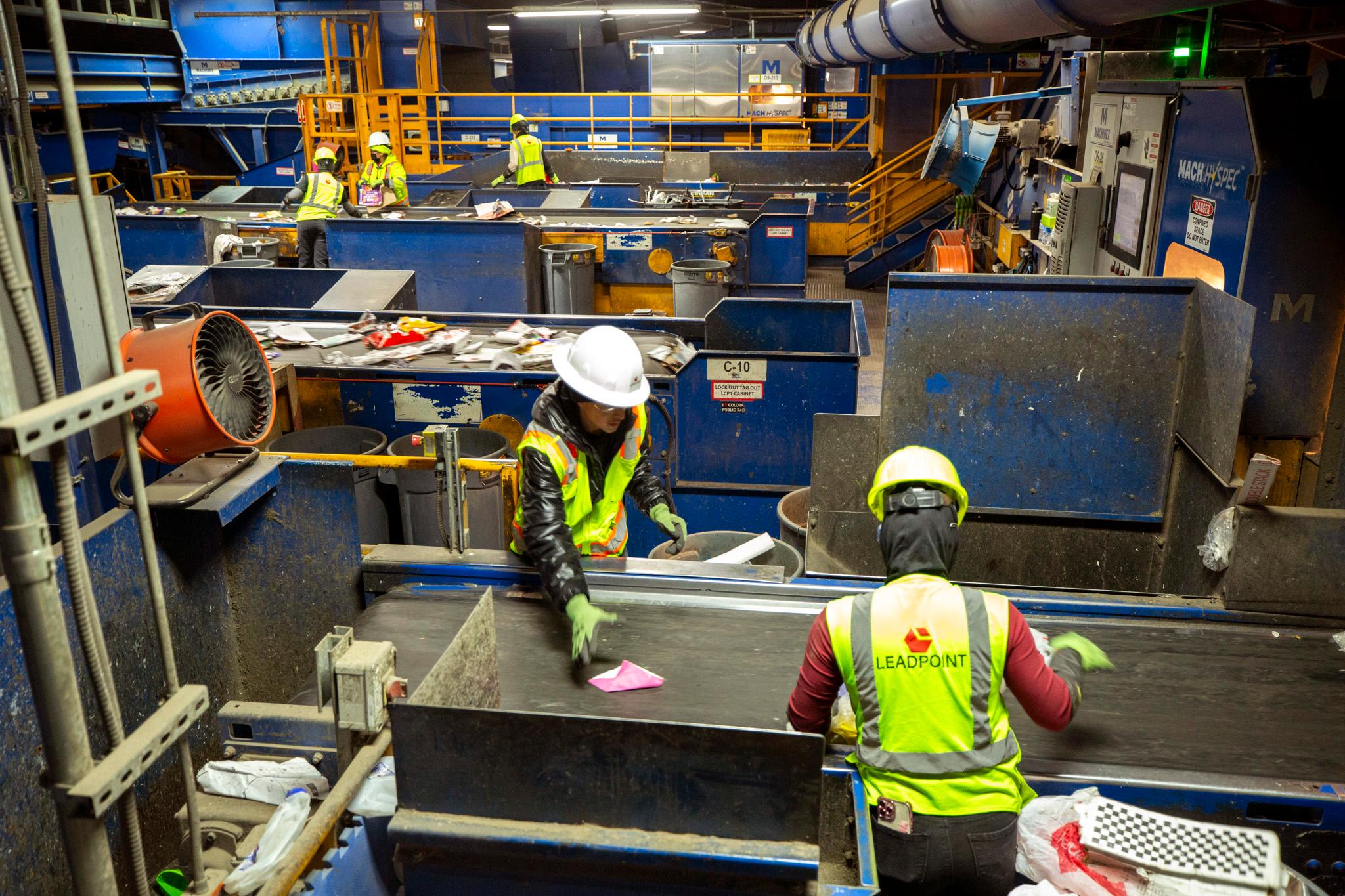
Lower contamination will require customer participation.
Derus said Republic hopes to push the MRF’s residue rate below 20 percent.
Waysdorf, the city outreach manager, said that depends on Denver’s ability to educate people. Even well-meaning recyclers throw normal trash in their purple bins.
“We call that wish-cycling, when you just magically put something in a cart and you just wish and hope that it gets recycled magically. That does not happen,” she said. “We're not magically going to be able to recycle it, because these facilities are set to accept certain materials — because they have a market for them, they can safely process them.”
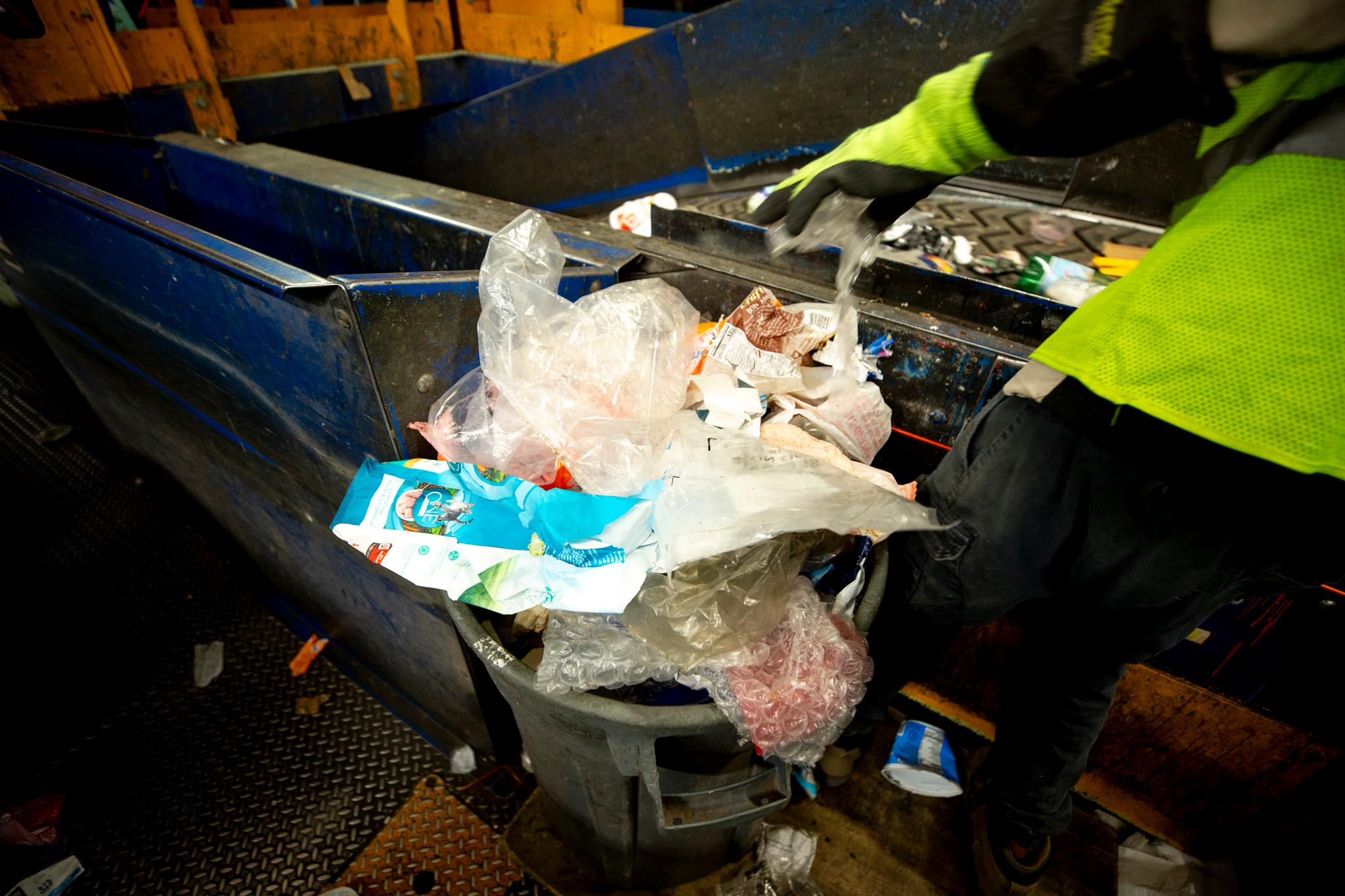
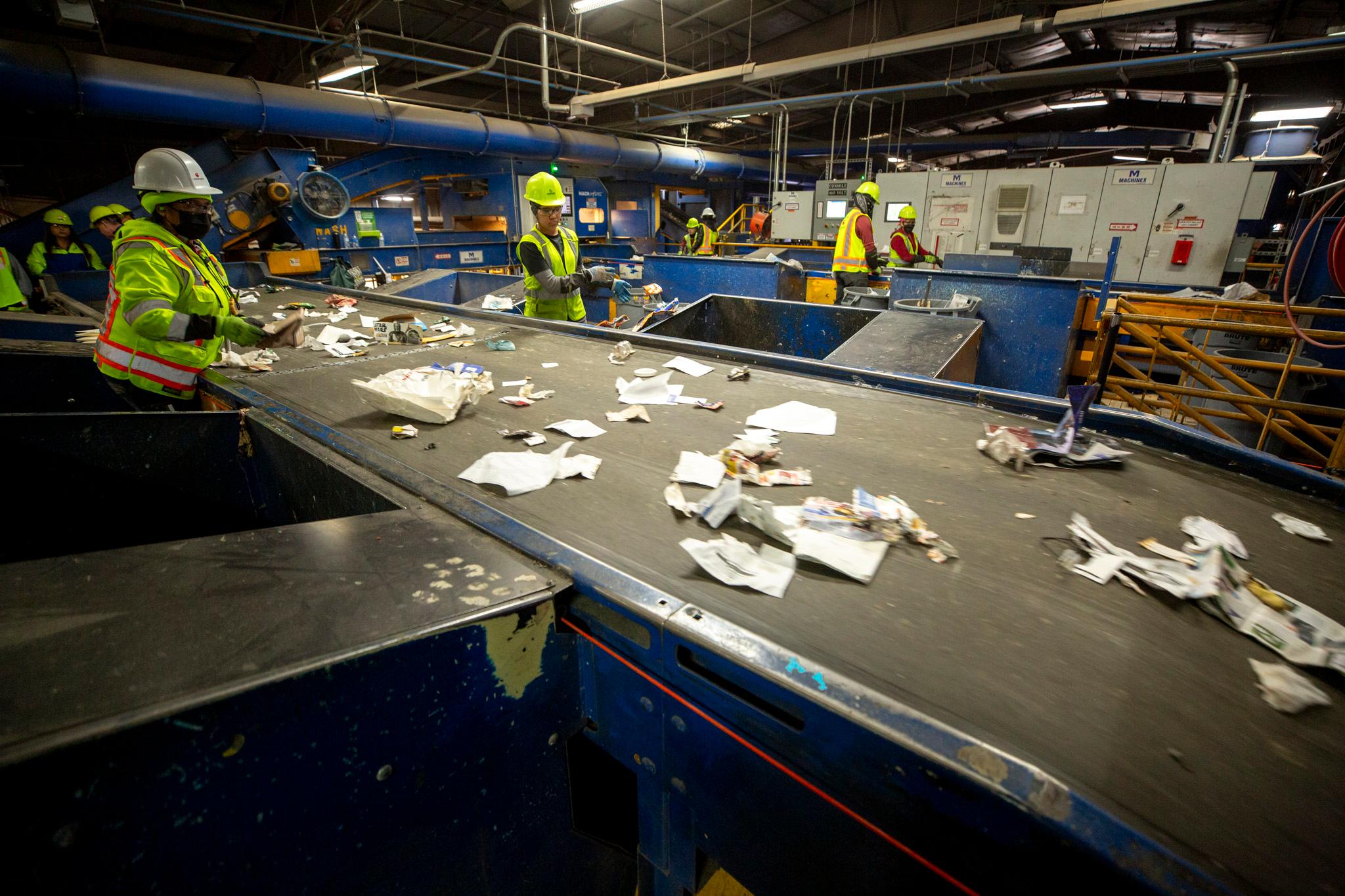
Some of the biggest offenders are plastic kitchen garbage bags, Derus said. That plastic cannot be melted down and reused on its own. A bigger problem is that his workers don’t have time to open them up and see what’s inside. It’s usually nonrecyclable trash, he said, so anything that ends up at his MRF in a plastic bag is automatically sent to the landfill.
Plastic wrap and packing peanuts are also not recyclable. Neither are foil potato chip bags, nor ceramics, nor styrofoam, nor Christmas lights, nor blue jeans.
You can find Denver’s full list of accepted materials on the city’s website.
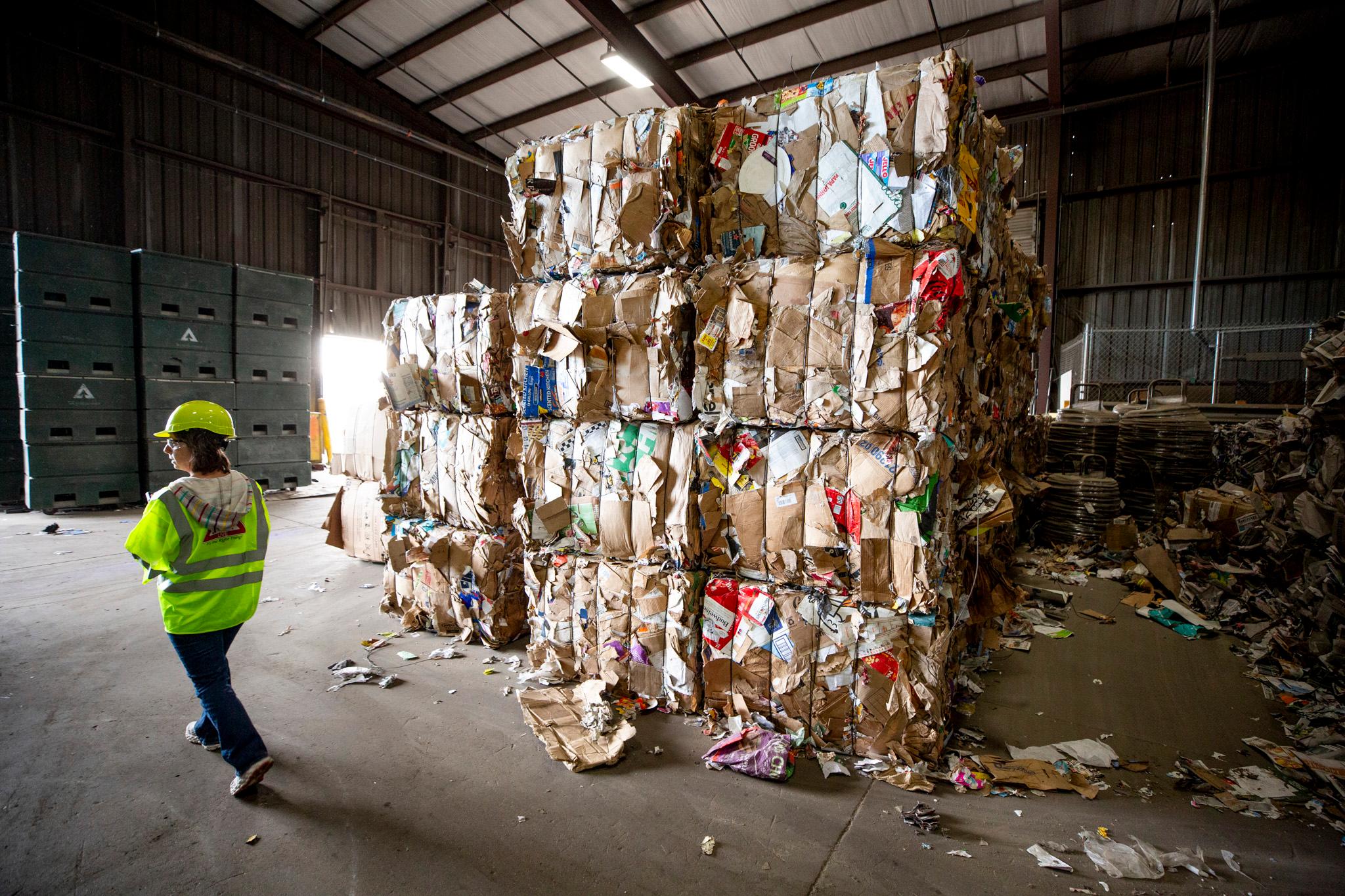
Something to keep in mind ahead of the holidays: Republic doesn’t accept wrapping paper either, in part because it’s not fibrous enough. Color is also a problem, for both paper and plastics, because they can’t be redyed in a future life.
“All Christmas wrapping is fully printed. There's no value to that fiber. We can't color-separate it. No one can do anything with it,” he said.
The holidays are Republic’s busiest season, as the MRF is flooded with its most common product: cardboard. In October, it made up 70 percent of this facility’s output by weight.
Should you prepare your recycling?
This was another common question, one that reader Grace Goodman brought with her to the tour.
“I am very curious about being a good recycler and how to make sure the things that you are putting through the system are being recycled,” she said.
She’d like to help “the tin can live out its big dream,” so to speak.
Yes, Derus and his colleagues said, it would be great if people cleaned up materials before they’re tossed.
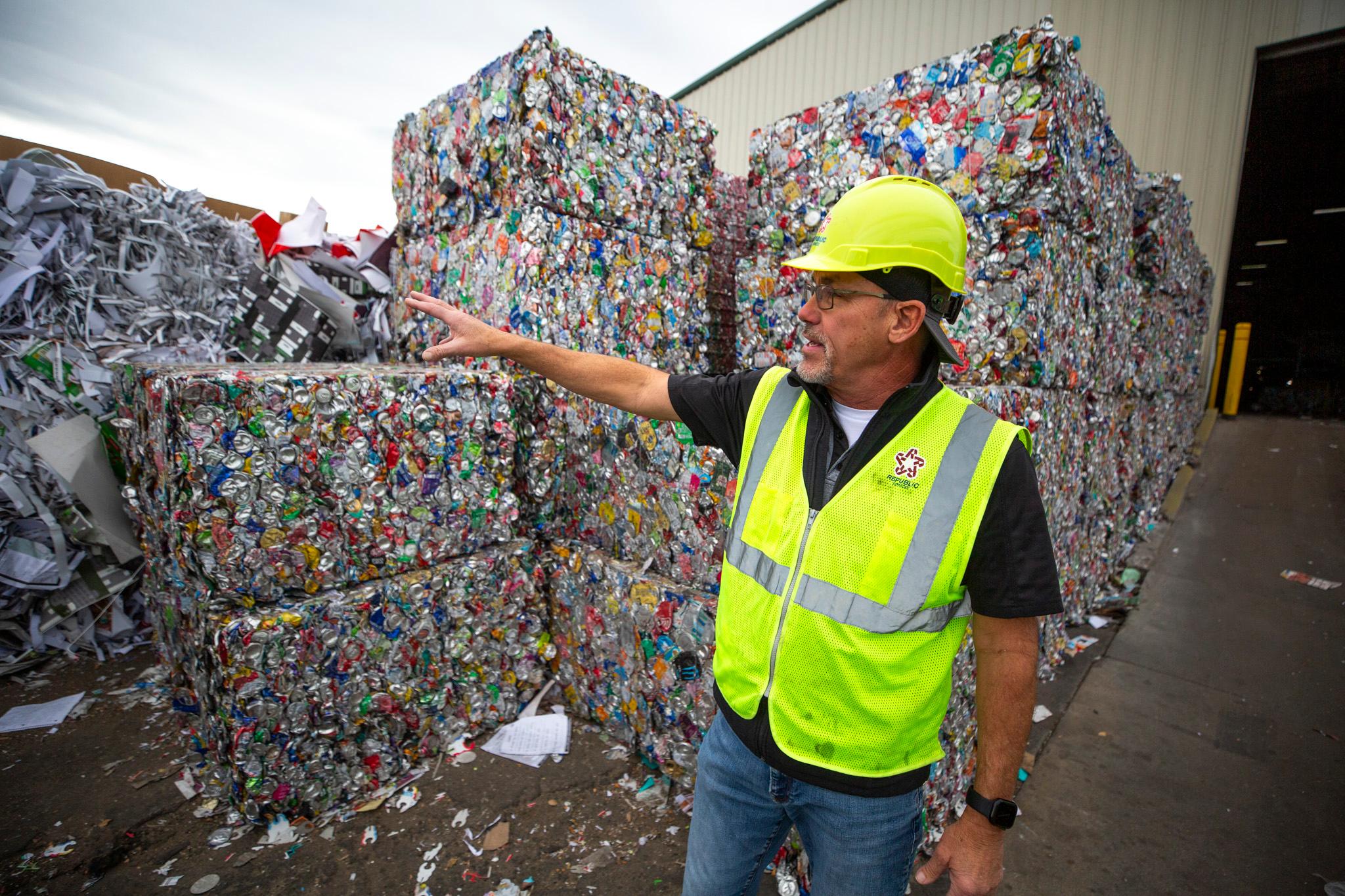
“We ask things to be empty, clean, and dry,” Mark Petrovitch, a regional manager for Republic Services, told us. “So ketchup bottles, rinse 'em out. Peanut butter is the hardest one because it's so oily. You’ve got to put a little soap in it. We don't expect people to scrub their recyclables, but if you have a ketchup bottle, rinse it. … It can contaminate an entire load, with ketchup still in a bottle.”
While people like Goodman are motivated by environmental goals, Derus said this boils down to economics for a business like Republic Services. Its product is sold by weight, so it needs to minimize useless bulk.
“When we try to sell a contaminated product or commodity, they're not going to pay us as much. If you think about a plastic PET, polyethylene peanut butter jar, and half the weight is food product — when we sell that, the person trying to reuse that PET has contamination and they're paying us for something they have no use for,” he said. “So we have very tight limitations on specifications of what is in the material and what we sell.”
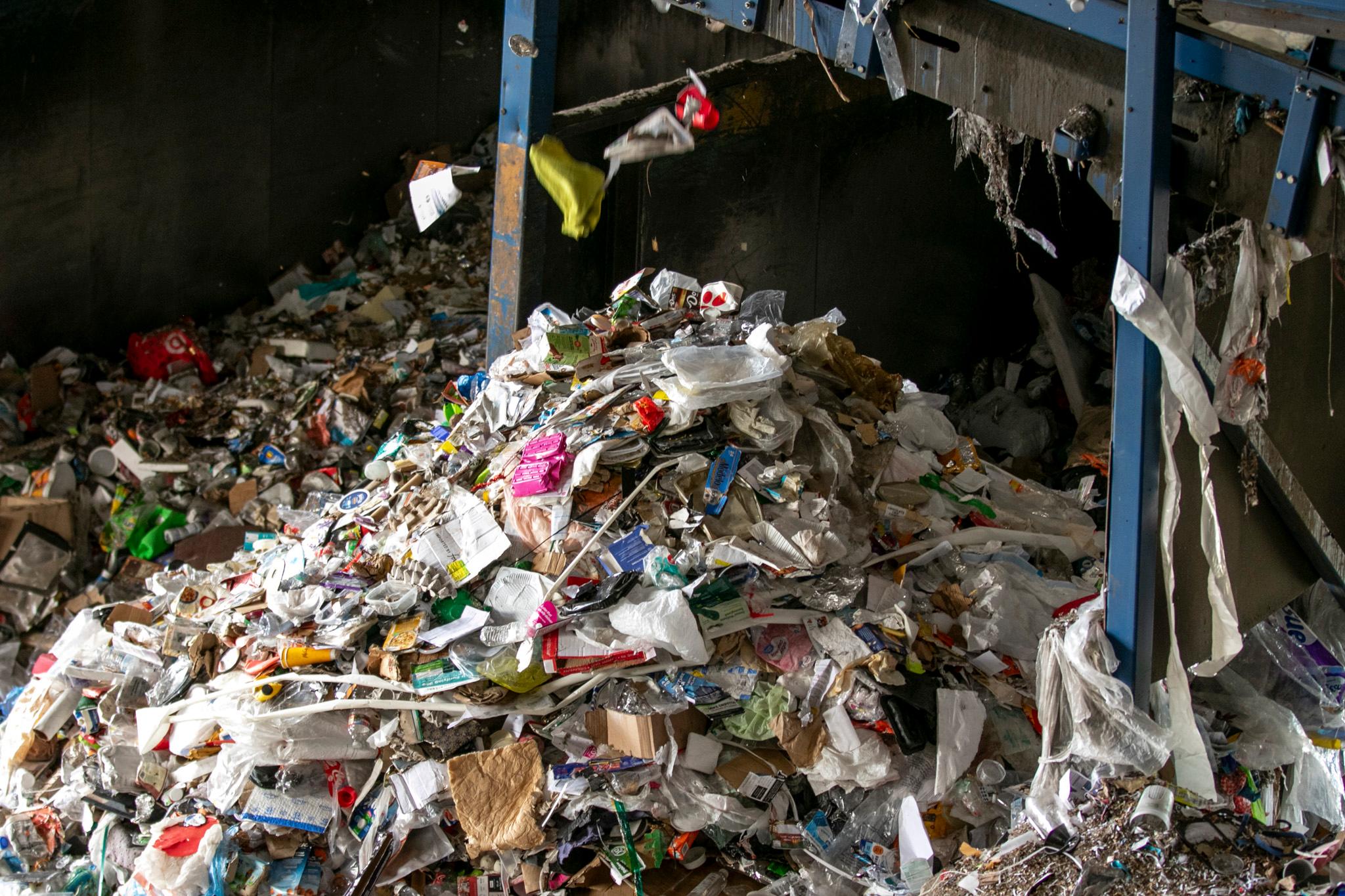
Derus added that it helps to remove labels from containers, particularly those made from plastic, because the MRF’s AI robots are sometimes confused by them.
Republic also does not clean anything that comes to the MRF. Derus said it’s just not cost-effective.
Likewise, he said the economics of recycling and shipping mean most of the waste generated in Denver stays in the region. Shipping overseas is expensive, so there’s an incentive to find buyers nearby.
Things are about to get busier for recyclers.
In 2022, Colorado passed a law requiring any company that sells packaged goods to pay “producer responsibility dues” for the recyclable materials they bring into the state. Sellers were required to register for the program by last July, and they have to start paying fees in January.
The money is meant to help Colorado boost recycling rates in places with little access, and help the state rise beyond an underwhelming performance compared to the nationwide standard.
Denverite reader Sarah Garrett wondered what that would mean for a busy MRF like this:
“If Denver started recycling more, if everybody was recycling 100 percent of whatever they could, would you guys absorb that? Or is there a cap to what Denver can bring here?”
Derus said his industry is still waiting to see how many more recyclables might flood the market as a result of Colorado’s new program. The money it generates should help boost capacity overall, though he said he’s still waiting to see how Republic Services might benefit from that growth.
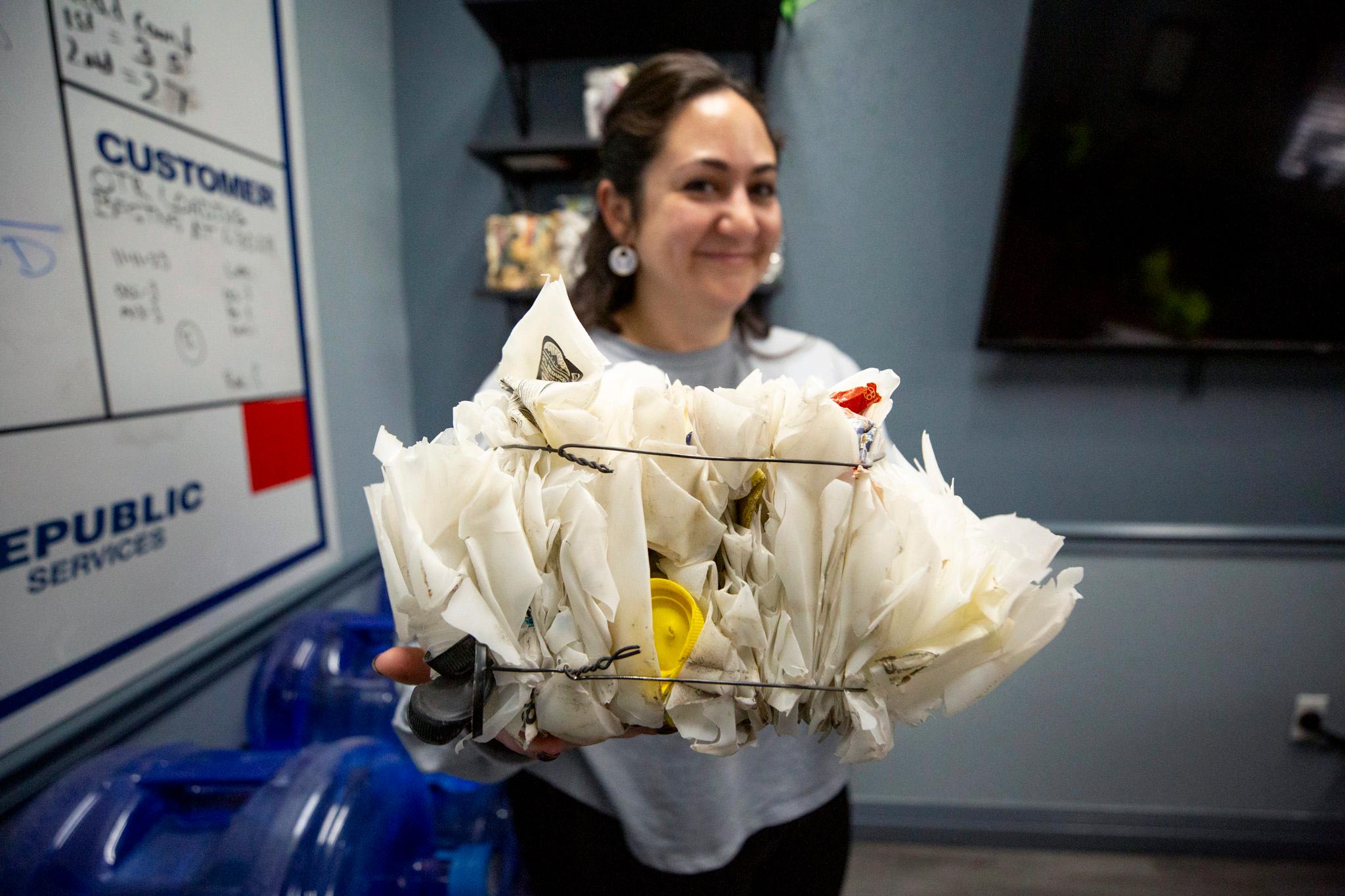
If there is a sudden increase, Waysdorf said Denver residents likely won’t be responsible. The city is already pretty good at recycling.
“We estimate that about 25 percent of Denver's residential waste stream is recyclable, and right now we're at about 17 (percent),” she said. “We're not too far off from what we anticipate as the max.”
That was an inspiring revelation for our readers, adding to the eyefuls of whirring machinery and towers of cubed cardboard.
“I just assumed that if it was contaminated, it all just gets thrown away, and it's all just a big shot in the dark, if anything you recycled actually gets recycled,” Goodman said. “So this just feels so warm and fuzzy to see that it's actually happening — and it's happening enthusiastically. People are trying to make it better. It's not just a black box of trash.”
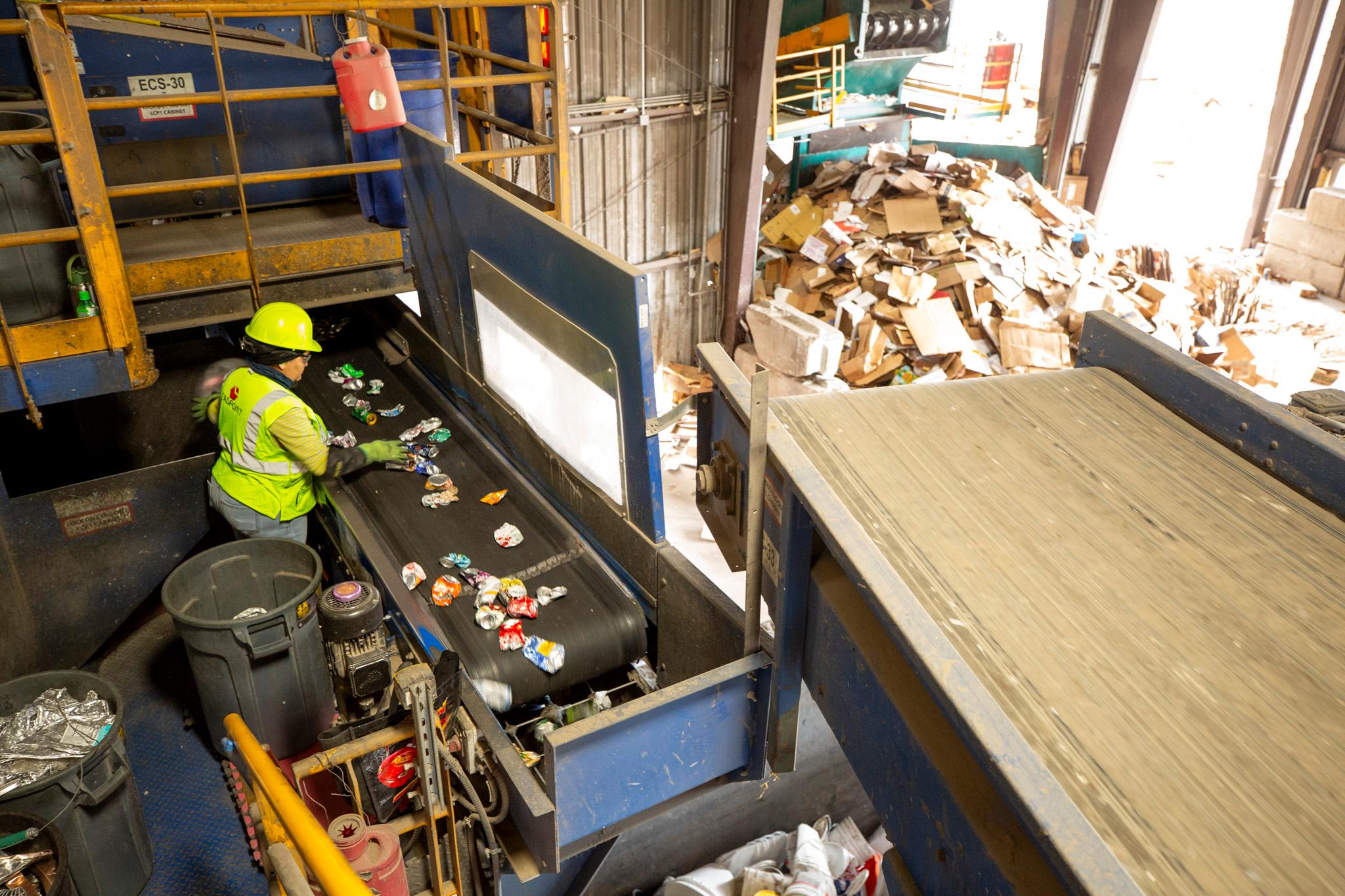
Editor's note: This story has been updated to reflect that aluminum is not ferrous, but that Republic Services still uses electromagnetic eddy currents to separate it from the rest of the recycling stream.