Eighteen plaintiffs won a $10.3 million settlement this week, years after they sued over a vaccine mandate at the University of Colorado.
The settlement marks the end of a legal battle over pandemic-era policies. It came after a federal appeals court found that the university’s Anschutz campus in particular had violated the U.S. Constitution with its COVID-19 vaccine policy.
The policy had allowed members of certain religions to be exempted from the vaccine policy, but not others. It was “hostile toward and discriminatory against certain religions,” a federal appeals court wrote last year in a blistering 55-page ruling on the case.
Starting in April 2021, the university system set a requirement that employees and students get one of the new COVID-19 vaccines. Each campus was permitted to set its own specific requirements.
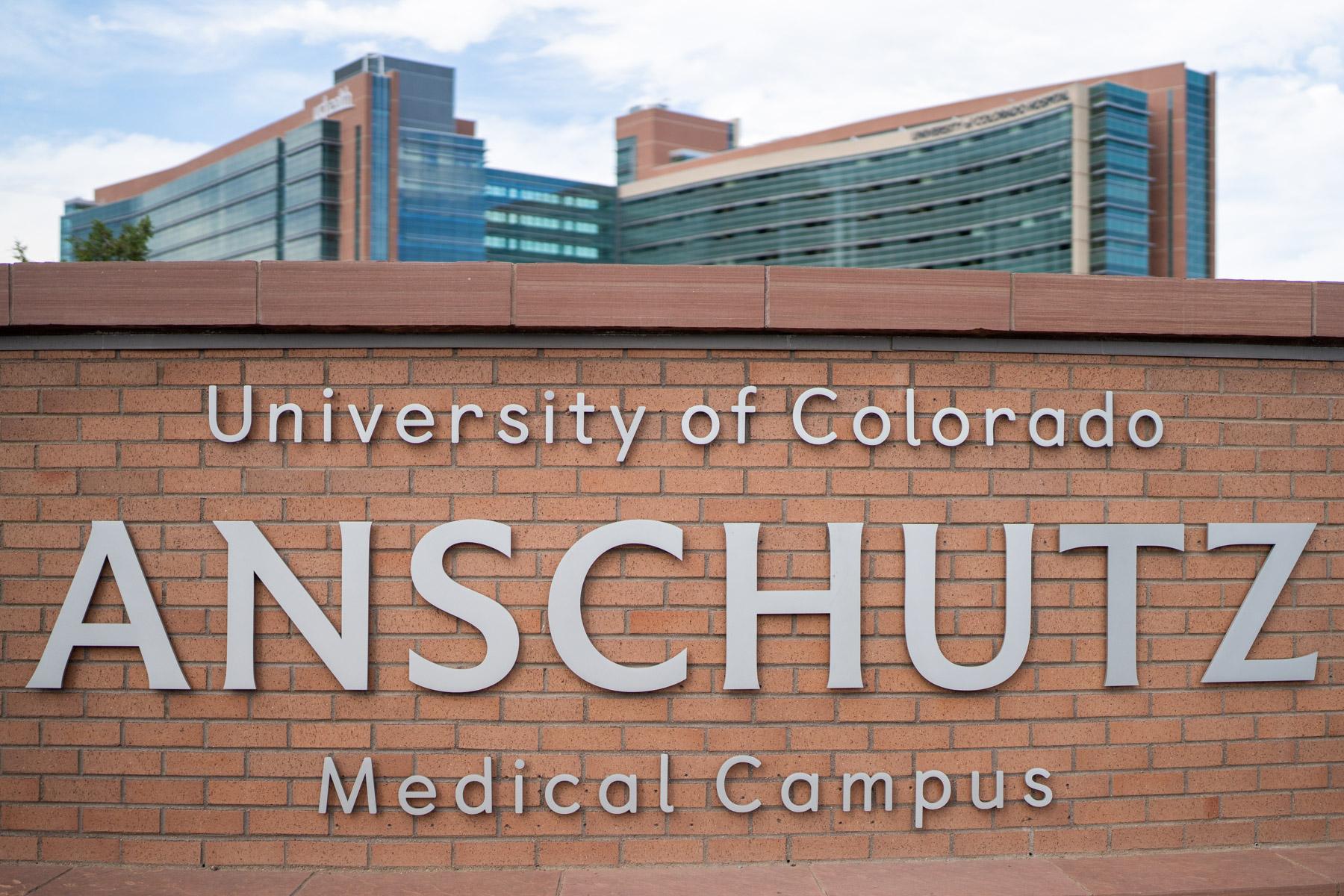
Anschutz — which is the university’s medical campus — introduced a policy that summer. It would allow religious exemptions — but only for those people who could cite the “official doctrine” of an “organized religion” in which “teachings are opposed to all immunizations,” according to a court ruling.
Ultimately, the policy's attempt to distinguish between different religious beliefs is what doomed it.
The CU Anschutz administration stated that Christian Scientists and Jehovah’s Witnesses would qualify for the exemption, but it rejected applications from other religions.
Meanwhile, CU Anschutz stated that Roman Catholics would not be exempted, since it was “morally acceptable” for them to be vaccinated. The school also rejected applications from groups including Buddhists, Evangelical Christians, nondenominational Protestants and members of the Eastern Orthodox Church, not to mention people who didn’t state a particular affiliation.
It’s unclear why the school said that Christian Scientists and Jehovah’s Witnesses would qualify for the exemption when others didn’t. Both faiths describe vaccination as a personal choice, even if most Christian Scientists “normally rely on prayer for healing,” per the religion’s website.
All the plaintiffs in the case had their requests denied. At least three clinical practitioners were fired, while another was placed indefinitely on unpaid leave.
Non-clinical employees were banned from campus, and one had her pay cut by 10 percent. Others were denied exemptions or required to work remotely.
The original plaintiffs — a Catholic doctor and a Buddhist medical student — sued in fall 2021, asking for a preliminary injunction.
A lower-court judge declined that request, saying it “would have no effect in the real world,” and ruled that the policy was neutral because it had not been adopted “with the aim of suppressing religious belief.” The judge also found that pausing the vaccine policy would not benefit the public.
The Tenth Circuit U.S. Court of Appeals in May 2024 found the original policy “categorically” unconstitutional. The court wrote that “an intrusive inquiry into the validity of religious beliefs violates the Establishment Clause regardless of any purported government interest.”
The ruling also found that the policy may have been motivated by “animus toward certain religions because the Policy passes judgment upon and presupposes the illegitimacy of certain religious beliefs.”
Under the policy, the university administration “conducted an intensive inquiry into applicants’ religious beliefs; it sorted the applicants into religious sects; it pronounced the “official doctrine” of each sect; and it rejected applicants whose professed beliefs did not satisfy the Administration’s theological litmus test,” the appeals court ruled.
The campus revised the policy within a few weeks, but the new policy was still unconstitutional because it tried to distinguish whether the exemption request was based on a “sincerely held religious belief” or so-called "personal" beliefs, the appeals court found. And at least some of the plaintiffs continued to suffer harms including unemployment.
“Nobody should be coerced into choosing between their faith and their livelihoods, as I and so many others at CU Anschutz were forced to do at the whim of ideological bureaucrats,” plaintiff Madison Gould said in a press release.
In a statement, CU Anschutz officials defended the organization’s actions during the pandemic, noting that the policy was issued at the height of the pandemic. The policy was meant to protect students, employees and more than 2 million annual patients, the statement noted.
“In addition to being sound public health policy, the COVID-19 vaccination requirement aligned with federal mandates issued by the HHS and CMS for healthcare facilities receiving federal funding. Once the federal mandate was lifted, the university’s vaccination requirement was also rescinded,” the officials wrote.
“While some chose to challenge the policy, the evidence remains clear: vaccination was essential to protecting the vulnerable, keeping hospitals open, and sustaining education and research. We stand by the decisions made in that moment and remain deeply grateful to the healthcare professionals, faculty, staff, and students whose courage and commitment protected our community and advanced our mission when it mattered most.”
The settlement includes $1 million in attorney fees. The plaintiffs were represented by attorneys from the Thomas More Society, a nonprofit law firm that describes itself as “championing life, family, and freedom.”
The plaintiffs have remained largely anonymous, appearing as “Jane Doe” and “John Doe” in court filings. They included students, physicians, nurses, administrative and operations staff, and others, according to Thomas More Society.