Updated at 1:35 p.m. on Monday, Dec. 8, 2025
A disability rights group sued the Regional Transportation District this week over planned changes to a service for people with disabilities.
Starting Jan. 1, it will become more expensive for many people to use Access-on-Demand, an RTD service that offers subsidized, on-demand rides.
The new lawsuit aims to stop those changes. It was filed in federal court by Atlantis ADAPT and two disability rights activists, represented by local civil rights firm Newman and McNulty.
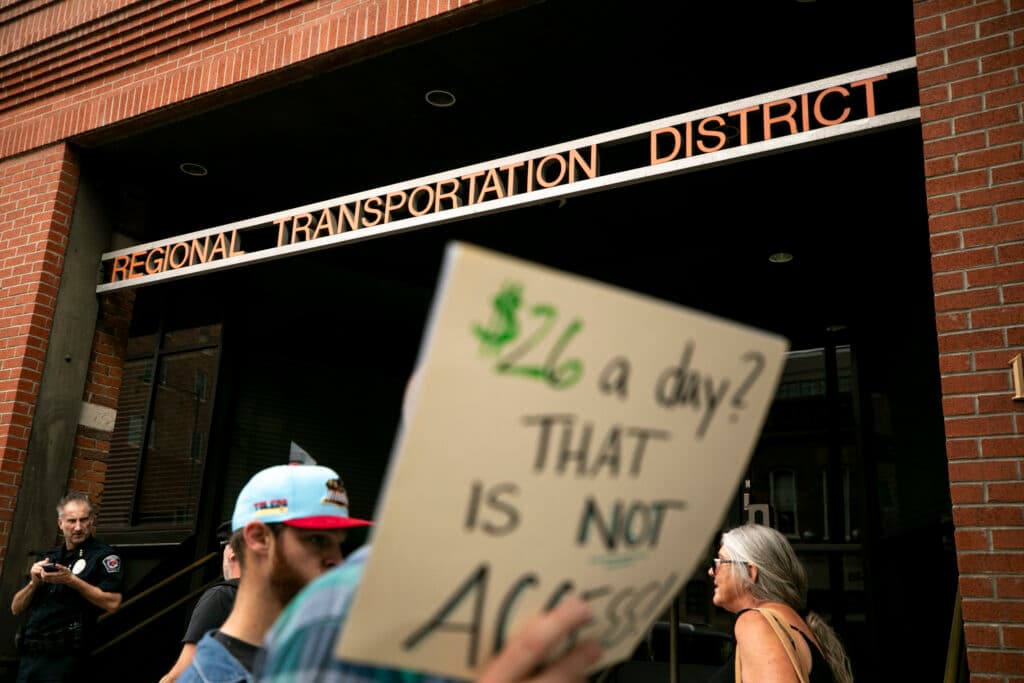
“This is a measure of last resort for Atlantis ADAPT, and these folks have been advocating for over a year to stop these cuts,” Andy McNulty said. “They've said that these cuts violate the law and that they've said that these cuts are going to be really problematic for folks with disabilities, and the RTD board didn't listen to that. So that's why we're here today.”
Since the 1970s, ADAPT has played a crucial role in disability advocacy here and nationwide, successfully pushing for reforms to RTD and the passage of the Americans with Disabilities Act.
What’s changing?
Access-on-Demand allows people to hail rides from cab companies and ride-share platforms like Uber.
RTD’s Board of Directors approved the changes in October, drawing intense pushback. Supporters said the changes are necessary because Access-on-Demand has exploded in popularity.
The service will continue, but RTD will now cover only $20 of each ride’s cost, down from a maximum of $25 currently. RTD is also introducing a base fare of $4.50 per ride, or $2.25 for those who qualify for RTD’s income-based discount program. The final approved proposal also included a limit of 60 rides per month and reduced the service’s availability by a couple hours per day.
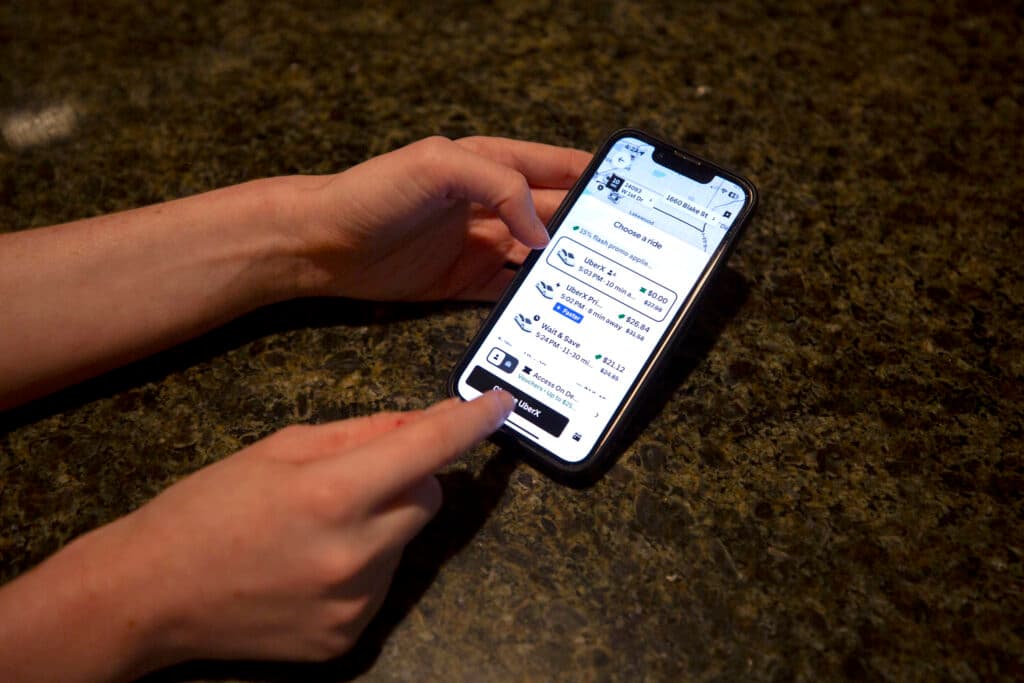
The service is popular in part because of its flexibility, offering curb-to-curb service for riders trying to get to work, run chores and more. The changes are expected to save RTD several million dollars per year, compared to the service’s roughly $15 million budget for 2025.
Overall, RTD is running a record $1.5 billion budget in 2026 but faces a “structural” deficit that could run into the hundreds of millions of dollars for years to come.
In a written response on Monday, RTD said that providing Access-on-Demand is not required by federal law and that the changes aim to support the program's financial sustainability in 2026.
RTD will also continue offering its van-based paratransit service, Access-a-Ride, which requires advance booking and, according to users, can take much longer to reach destinations.
RTD noted that Access-on-Demand now will operate from 3:30 a.m. to 1:30 a.m., rather than 24 hours a day, and that the new hours align with the Americans with Disabilities Act paratransit hours.
Lawsuit alleges Americans with Disabilities Act violation
The lawsuit claims that the funding cuts contradict an RTD funding ballot measure that voters approved overwhelmingly in 2024. It alleges a violation of the Americans with Disabilities Act, making it a federal matter.
“RTD is singling out riders with disabilities by drastically increasing the costs and cutting the services of Access-on-Demand while at the same time enjoying revenue that is supposed to be used to maintain services for disabled riders and even reducing the cost of services for Coloradans without disabilities,” the lawsuit states.
The agency has reduced fares in an effort to get people back on transit after dramatic declines in usage.
Folska, a plaintiff in the lawsuit and a former elected board member for RTD, called this a pivotal moment for RTD
“Today, RTD is killing access on demand for thousands of people with disabilities when in fact it's the best service they've ever had. It's unfair and it's unreasonable and it's unconscionable,” she said. “We need to stop the RTD gravy train. No taxation without transportation.”
Access-on-Demand had about 3,400 users in August, according to the lawsuit.

The executive director of disability housing developer Atlantis Community, Brian Grewe, attended the press conference Monday about the lawsuit.
“These cuts will cost lives disproportionately. Our community is underemployed, about 25.6 percent in Denver live in poverty,” he said. “And we see it day-to-day at our center where people are choosing between things like having a cell phone or buying groceries or being able to go to the doctor, and these cuts are going to make people's lives more difficult.”
Editor's note: The captions in this story have been corrected to reflect that Access-on-Demand has never been totally free for users.