
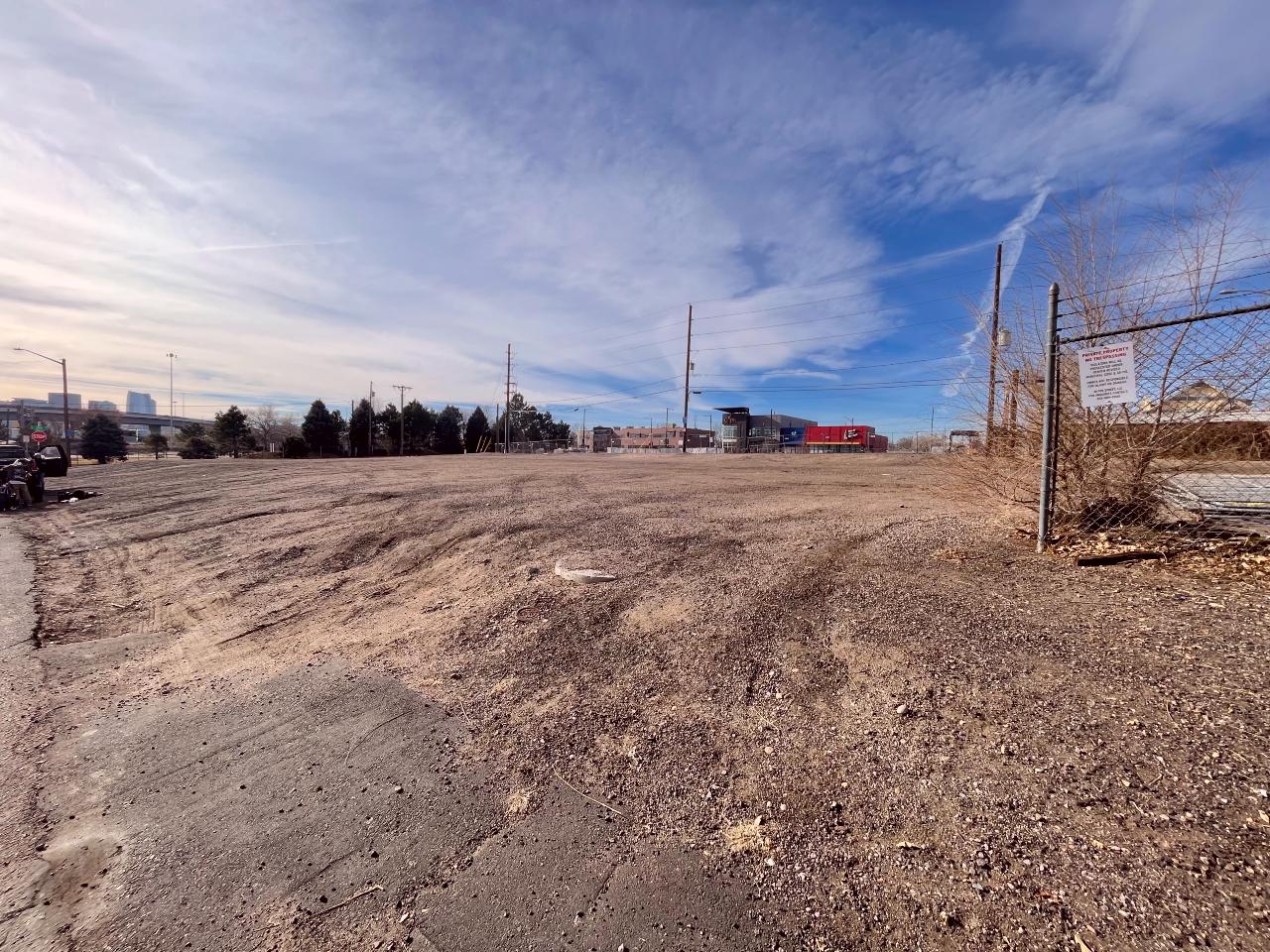
The developer Fox Street Investments spent millions of dollars buying 3901 North Elati Street and designing a 20-story building with 400 apartments in Globeville.
A few years later, the dusty lot sits empty in that slice of Globeville known as Fox Island. The promise of housing has yet to be fulfilled. And the company is suing the city of Denver.
A complaint the company filed in U.S. District Court on Tuesday argues the city is preventing the developer from building much-needed housing on the three-quarters of an acre lot with “arbitrary” rules and mandates.
“For decades, the City has failed to invest in sufficient public traffic infrastructure in the Globeville neighborhood, one of Denver’s most economically disadvantaged neighborhoods,” the complaint states. “Instead, the City adopted development rules within Fox Island … that attempt to completely and unlawfully shift this burden to the last-in-time developers trying to build housing in the neighborhood.”
Denver Community Planning and Development and the City Attorney’s Office declined to answer Denverite’s questions about the complaint since it’s pending litigation.
The requirements for the developer to improve traffic infrastructure are beyond the scope of the project and address needs far beyond what the new development will create, the complaint argues.
“The Rules are unconstitutionally vague and provide unidentified City bureaucrats with apparently unlimited discretion to condition development of the Property on FSI’s agreement to construct public traffic infrastructure improvements that are not directly linked to any resulting impacts from the development of the Property and that are completely disproportionate to such impacts,” the complaint states.
The company estimates that without the rules, the land would be worth $20 million. As is, with current rules, it’s “essentially worthless.”
The city has long negotiated with developers to add amenities that will benefit the public good to their projects: affordable housing, landscaping and more.
But the developer argues the city has gone too far and is interfering with the city’s own goals of increasing housing stock.
The company is asking the court to declare the rules unlawful and for the city to financially compensate the company so it can build the project it has set out to complete.