Editor’s note: Denverite occasionally dives into the archives in search of intriguing stories from the city’s past. Kyle found a doozy this time.
The Denver Rescue Mission, an organization that has made rules about the sexual activities of its staff in recent years, once had a leader with a very different point of view — and a staff member with a colorful criminal past.
In 1920, the Rev. Albert Boler faced high-profile allegations in divorce papers from his wife, Della May Elkins: The Baptist minister used his job at the mission “as a cloak for obtaining money,” and “repeatedly tried to force her into a life of shame.”
Elkins claimed he lived with her outside of marriage – a practice the nonprofit discourages today.
He also allegedly espoused “a doctrine of ‘free love.’”
Before the divorce, Elkins “precipitated a riot in the Rescue mission by declaring that she was the minister’s common law wife and charging him with familiarity with a piano player.”
Familiarity? Probably in the Biblical sense of the word.
Elkins claimed to have funded Boler’s divorce from his first wife and eventually married Boler, through a legal ceremony, in March 1920.
Among the misdeeds the divorce paper cited were cruelty, abuse, cursing at Elkins, and accusing her of immorality.
“On several occasions he has requested and urged her to lead the life of clandestine shame,” the Rocky Mountain News reported.
She even accused him of threatening to kill her if she did not take men to her room to steal their money. When she refused, he allegedly threatened her over several days, including with a butcher knife.
“This defendant pretends to be a religious and moral man and a preacher, whereas, as a matter of fact, he is licentious, given to oaths, and regaled this plaintiff continually with vulgar, indecent and dirty stories; that he used this pretended mission work and so-called rescue work as a cloak to obtain money by solicitation without physical labor,” she wrote.
While Elkins eventually badgered him into a marriage, that was not his original goal.
“Among the tenets of his pretended religious faith and his teachings, the doctrine of free love was prominently advanced, and by his importunities to this plaintiff and his representations that a life together without marriage bonds was justified, he persuaded this plaintiff some two years ago to live with him as his wife without a marriage certificate,” she wrote.
The board of the mission decided to kick him out.
“After all the uproar that has resulted from the false charge made against me, it would be useless for me myself to attempt to continue in charge,” said Mr. Boler.
The state’s charity board even shut the organization down for a time.
An outlaw employee
One of the employees of the Denver Rescue Mission at the time was Alex Adair, who became an evangelical missionary after a notorious career as a train robber and opiate user.
Addair ran away from home at 16 to become a water boy with men who drove oxen wagons and drifted through the West, calling mining camp dances, punching cows on the range, and driving mules.
In 1874, he met the Confederate propagandist and bank robber Jesse James and his gang and helped out with the Munsey train robbery that captivated the nation’s attention and terrorized Kansas and Missouri.
“A companion and myself were ‘thrown in’ for bungling a trick,” Adair told the Rocky. “He broke jail and it was not long after until, thru the influence of my father, who was a prominent attorney, I was given my release on Christmas Eve.”
Once free, he took to stealing horses and kept getting locked up, where he wore the ball and chain on work crews.
“I have been thrown out of Kansas City dozens of times,” Adair told the Rocky. “The policemen used to like me and they would laugh when I reappeared each time and were sorry that they were duty bound to take me back to the ‘jug.’”
Eventually, he headed to Wichita, homeless, and met The Salvation Army, where he embraced Christianity, decided to straighten up and get married.
That didn’t last long.
“Following some trouble with my wife, I came to Denver again and became the worst drunkard in the town,” he said. “I didn’t even have shoes on my feet and slept in the gutter. Opiates as well as liquor got the best of me.”
Hungry and strung out, he met some missionaries who gave him food, prayed for him and helped him get his life under control.
“I heard the call of the Lord and from that time on I have been faithful and worked for Him,” he said.
He married again and began to work with what the Rocky called “the unfortunate wrecks of humanity that frequent the missions.”
He and his wife focused their attention on caring for hundreds of poor children, and he went on to be one of the most feted evangelists in the West.
While the press was captivated with his history of crime, he wanted to preach the gospel.
“It is far better to preach against crime in general than to recount criminal acts as a warning,” he told the Boulder Daily Camera.
The greatest medicine he knew, he wrote in ads, was the gospel.
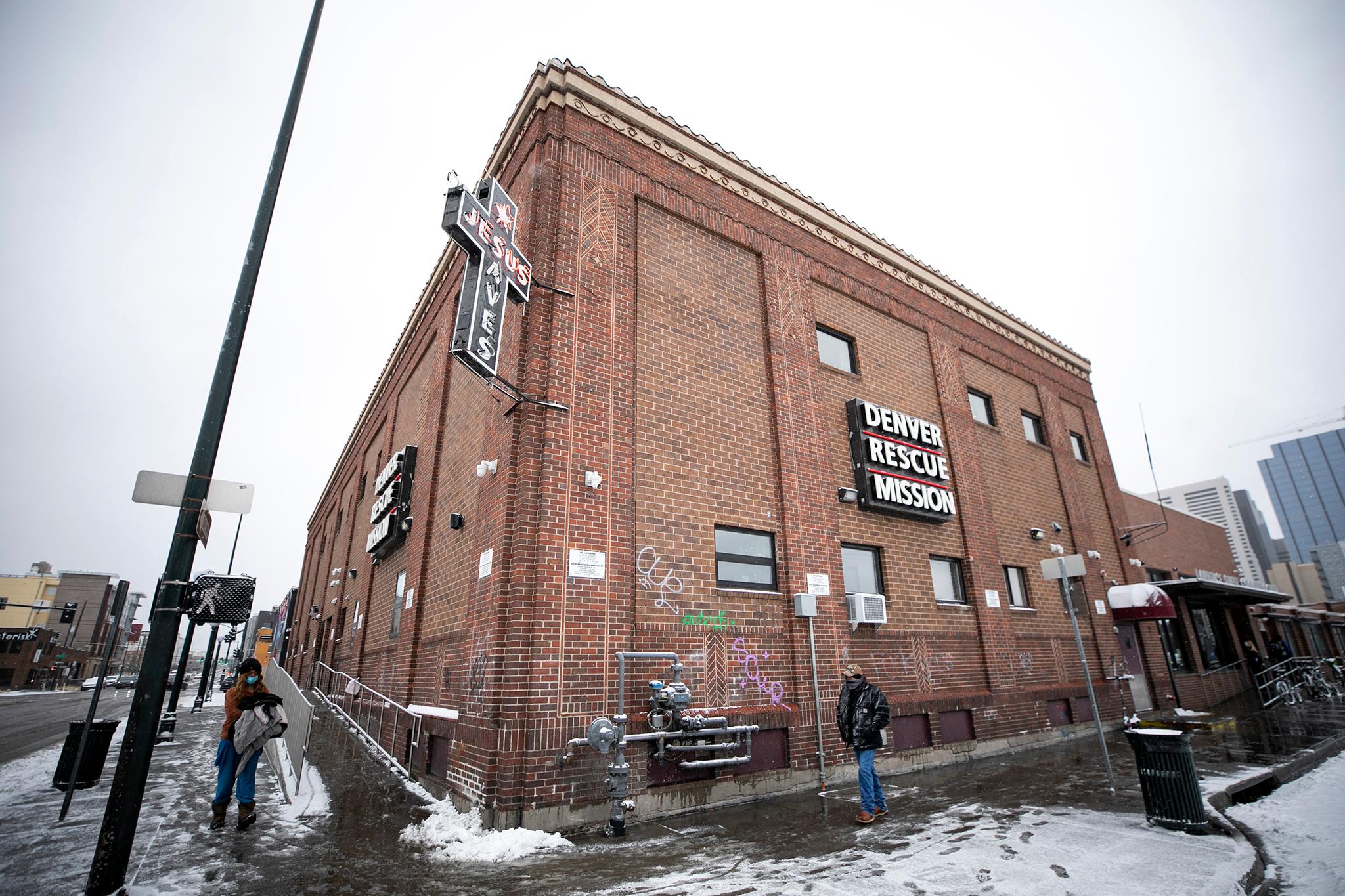
The Denver Rescue Mission continues its mission today — with much less controversy by its leaders — at its historic downtown building and other shelters across the metro.