By Joe Carabello for Denverite
Before Denver’s RiNo neighborhood transformed from an industrial artist community to a high-density hipster scene, before the moniker “RiNo” was known to more than a handful of its neighbors, the Meadowlark opened its quaint bar to aspiring musicians 20 years ago.
Finding the building that became the Meadowlark was a serendipitous entrance into Denver’s indie music scene for Loy Merck, who was 57 years old when the venue hosted its first show on Dec. 27, 2005.
Merck had been a construction manager on a nearby building site before a disagreement with colleagues landed him jobless. While standing on Larimer Street pondering his next move, the presence of a dilapidated building across the street came into focus. This was the genesis of the Meadowlark.
“When I bought the building, I found my element for the first time in my life,” Merck said. “The neighborhood was filled with artists and there was still a rave two blocks away, with a man taking tickets who stood like 6’6” tall and wore a dress. I thought I’d found heaven.”

The Meadowlark wasn’t the first Denver venue to offer open-mic nights, but it soon elevated them to iconic status, drawing local favorites like Esmé Patterson, members of The Lumineers and burgeoning star Nathaniel Rateliff. They were among dozens of musicians who made early appearances at the Meadowlark.
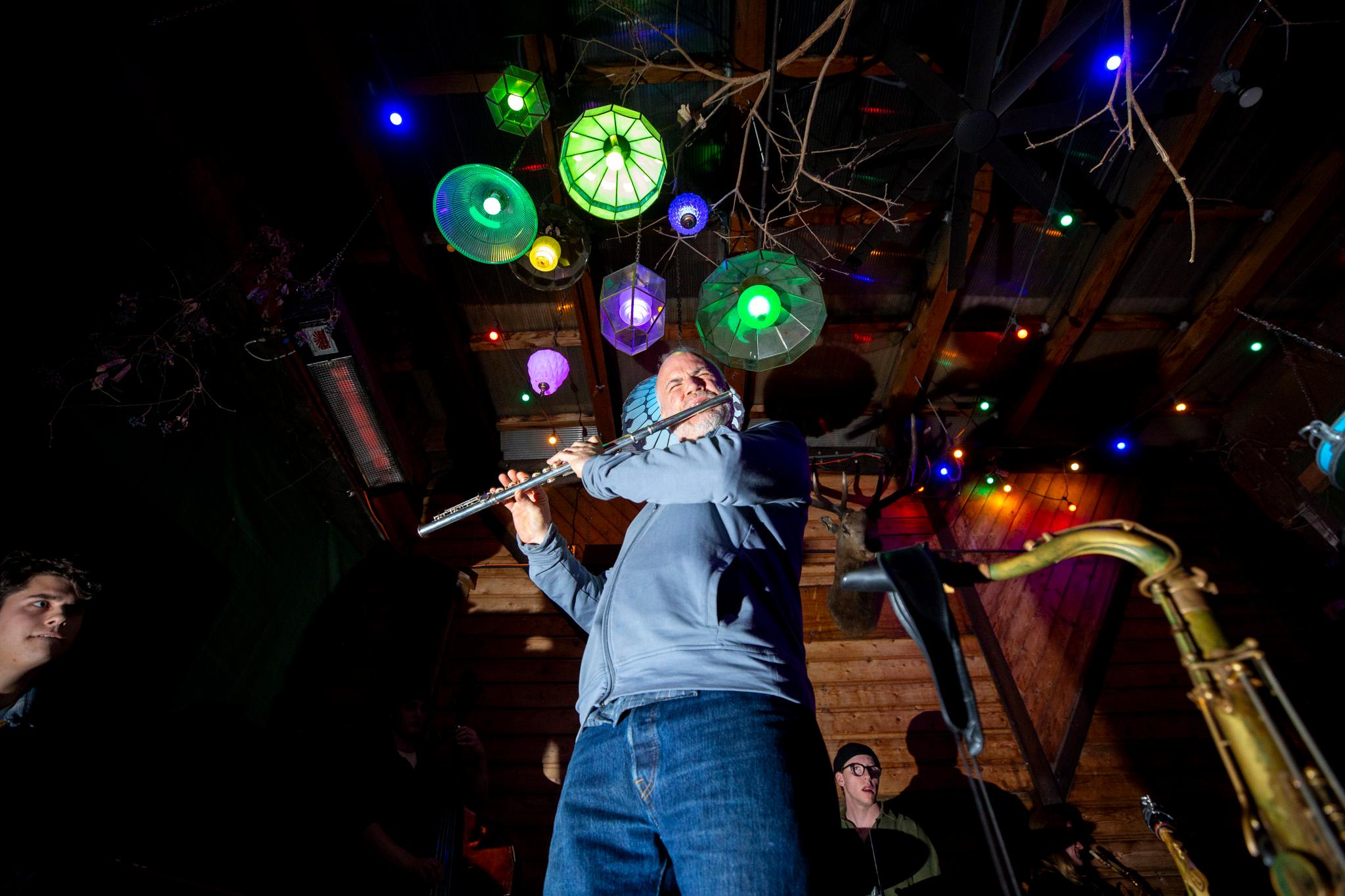
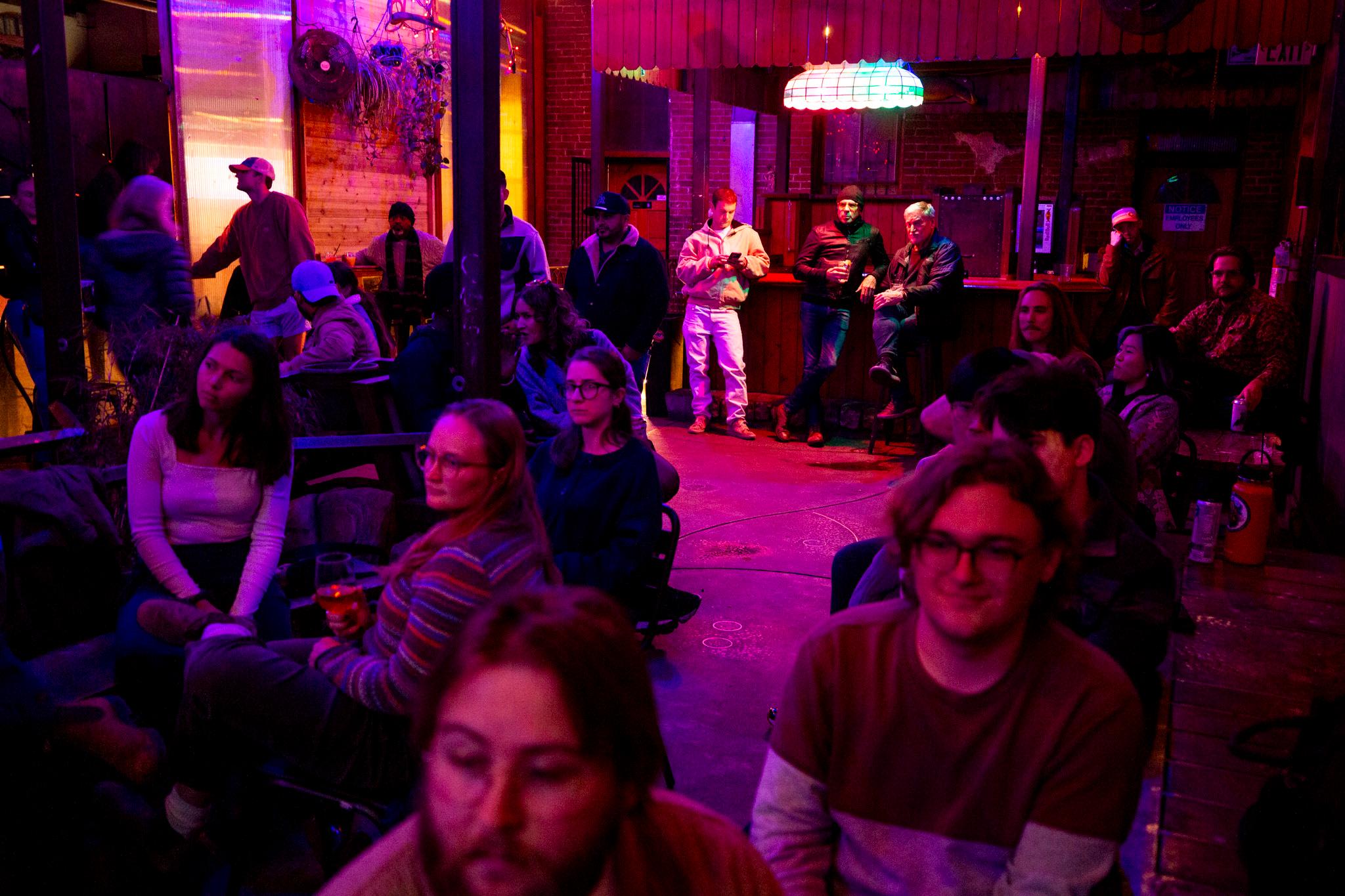
The open-mic energy continues today with the long-standing Monday night jazz jam. It’s an electric scene, drawing upward of 25 players, most of them familiar with one another. And while the music is captivating for fans, witnessing the camaraderie among the musicians is the consummate reward.
“Young musicians challenge and explore themselves in jam sessions,” said popular Denver saxophone player Daryl Gott, who has hosted the jam since 2011. Gott sends the first five songs to the house band, whom he selects weekly, before the stage opens for players to drop in.
The setlist is frequently shared only a short time before play begins, “to keep the players on their toes,” Gott said. He brings a unique influence to the Meadowlark, having experienced renowned jams at Harlem’s fabled St. Nick’s Pub while studying music at The City College of New York.
The array of talent is stellar, including Gabriel Mervine (trumpet and flugelhorn), Alejandro Castaño (drums/percussion), and Daryl Gott himself. Along with these Denver jazz stalwarts, students from the University of Denver, the University of Northern Colorado and the Colorado Conservatory for the Jazz Arts are regular drop-ins. For jazz students, this is the ultimate internship, and an opportunity to play alongside their instructors and mentors.
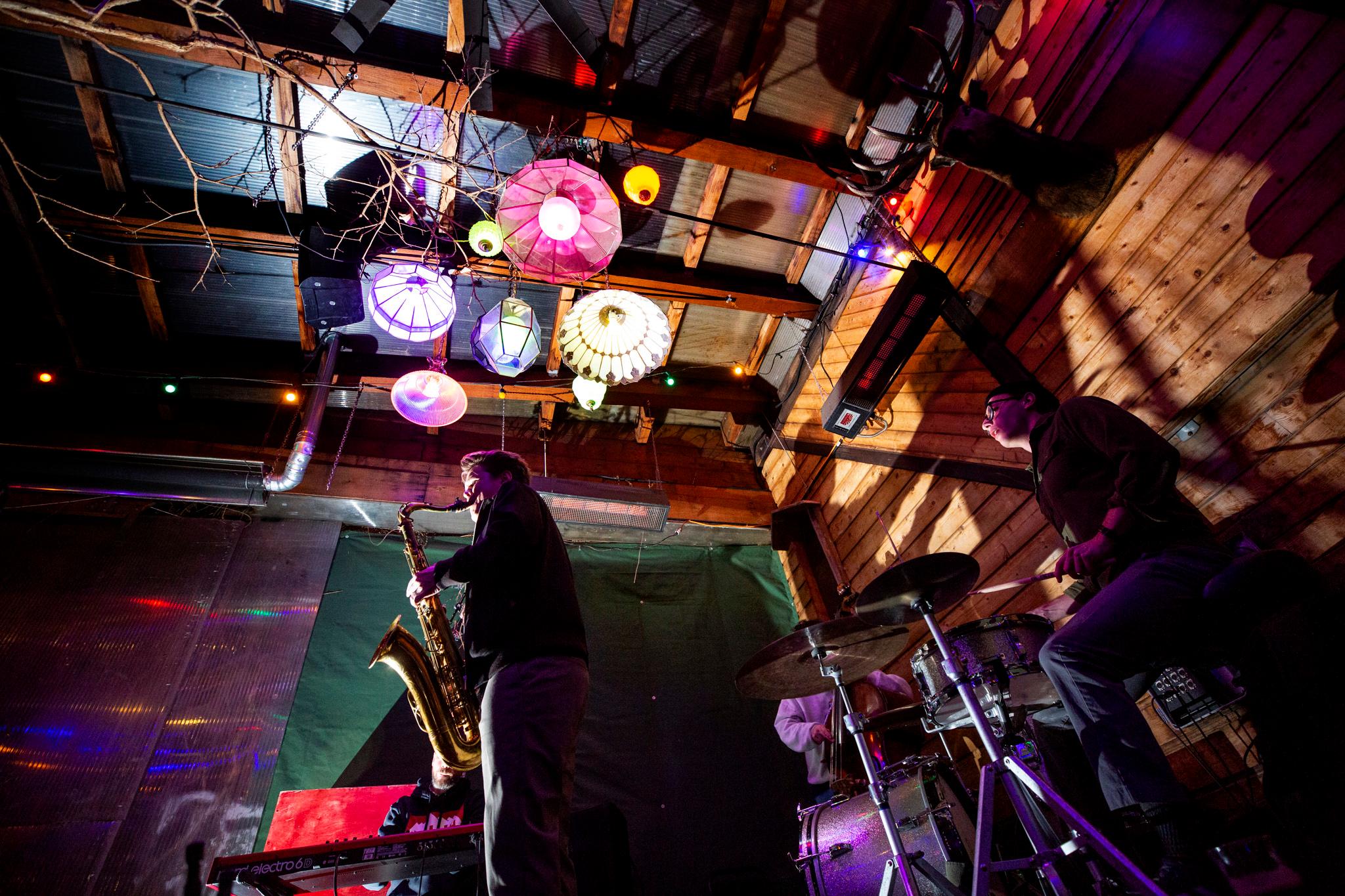
Drummer Mark Emmons recalls playing with Mervine in the nascent years of the Monday jams. “It was just drums and trumpet . . . for three hours. I think we were paid with beer.
“The Meadowlark let us grow up there, eventually we had a steady crowd, negotiated more pay, and it became a legitimate gig. It always maintained the spirit of a house party. Friends just wanting to hang out, play music and have a good time.”
Merck is an unlikely and unconventional promoter of new music.
He was raised in Karlsruhe, N.D., a German heritage farming community, on a 160-acre farm. Following high school, he volunteered for the draft and reported to Fort Polk, La., for basic training in the Army. He left there as a medic and was deployed from Fort Bragg, N.C. to Vietnam with the 82nd Airborne Division in 1968. After his tour of duty in Vietnam, he was dispatched back to the U.S., having earned the highly prestigious Silver Star for valor in combat, two Bronze Stars and a Combat Medical Badge.
Following his discharge, he enrolled at the University of North Dakota. But after a couple of years, he felt the call of adventure, moving to Boulder, and eventually Denver.
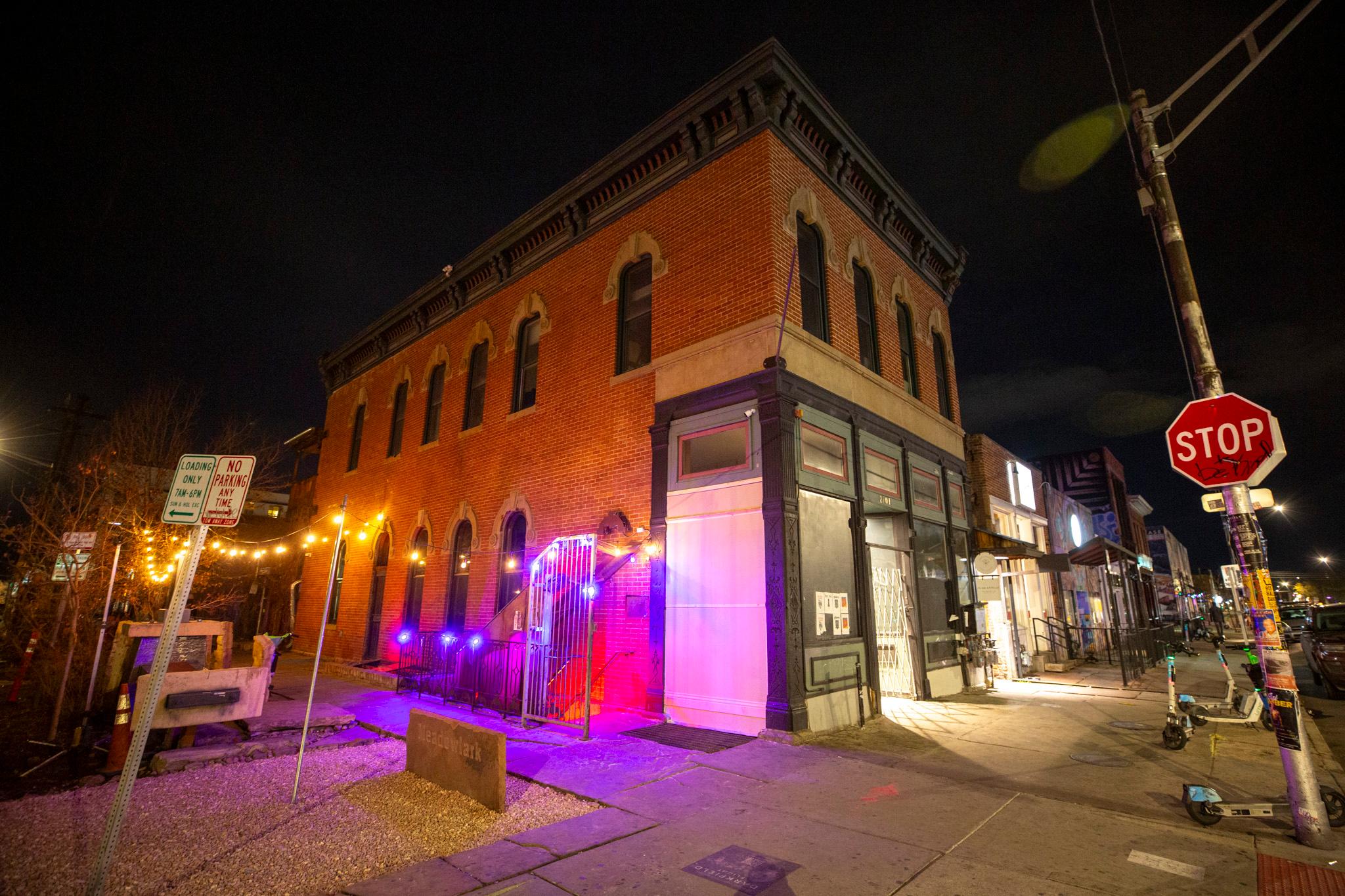
Inspired by Jack Kerouac and the unrest of the 1960s counterculture, Merck found his neglected, two-story brick building — constructed in 1885 — on a raunchy stretch of upper Larimer Street. He sensed his longtime dream of opening a bar and stage to accommodate the colorful characters of a gritty, bohemian neighborhood would fit nicely in this building.
When Merck purchased the building in 2001, there were four bars in the expansive industrial neighborhood northwest of downtown. Today, that number has grown exponentially, with more on the drawing board.
“The Meadowlark was the confluence of Denver’s emerging indie music scene 20 years ago,” said Jamie Laurie, aka ‘Johnny 5’, speaking for Flobots, the experimental rap/rock sensations. “Loy provided more than a stage. The Meadowlark was an incubator for musicians. He employed musicians on his staff and encouraged our jam sessions on his patios. I remember Pirate Signal and Houses playing on the patio, among others. He even provided office space for us, which was critical when we were developing our Youth Media Studio project.”
A few doors up the block, Scott Campbell opened the Larimer Lounge in December 2002, the only venue in the neighborhood offering live music before the Meadowlark opened.
“That was a much different time for our block than today,” said Campbell, owner-operator of three other small music venues in Denver and a vice president with AEG. “The country was in the shadow of 9/11, the economy was not great, the street had tumbleweeds, the neighborhood was desolate and quiet.
“I thought that the two businesses together on the block might help make that part of town a destination for the indie community. He [Merck] has stayed focused on the indie scene for a long time and had many artists who played there and went on to bigger things.”
Guitarist Paul DeHaven is a popular Denver musician whose band Paper Bird (which included Esmé Patterson at one time) sold out venues on the East Coast as well as Denver, before disbanding in 2017. He referred to the Meadowlark as, “. . . ground zero for the Denver folk scene from (the) early aughts. It was the first time I saw Abe Abraham play. Science Partner was a regular. It might have been the first place I saw the Lumineers as well, back when they first moved to town.”
Worried about potential noise complaints by neighbors, Merck also bought the only neighbor of his corner property, a small building at 2705 Larimer St., now home to Redeemer Pizza. Despite that noise control plan, the city of Denver received complaints from some neighbors and eventually dispatched police to enforce a shutdown.
In a 2020 interview, former talent buyer Jonathan Bitz recalled the night uniformed officers showed up.
“Twelve Denver PD stormed in on a noise complaint and told us to turn it [the music] off. So we did. But it was the heralded Houses’ final show. And those dudes played their last songs ever - acoustic,” Bitz said. “Since the music was no longer amplified, those cops couldn’t do anything, but they stood there and glared at us. It was pure f*cking magic. It’s a moment I’ll never forget, like so many in the place Loy built.”
In the basement of the Meadowlark
Merck’s experience as an iron worker for 26 years is visible inside and out of the Meadowlark.
The patio is one of a kind, built with steel I-beams and recycled materials by Merck himself. It’s a synthesis of industrial brawniness and bold artistry, reflecting Merck’s persona. Providing shelter, it simultaneously captures natural light and the muffled sounds of a neighborhood bustling with pedestrians. The 20-foot-tall oak tree growing through an opening in the center of the patio roof softens the industrial vibe and harmonizes music with nature.
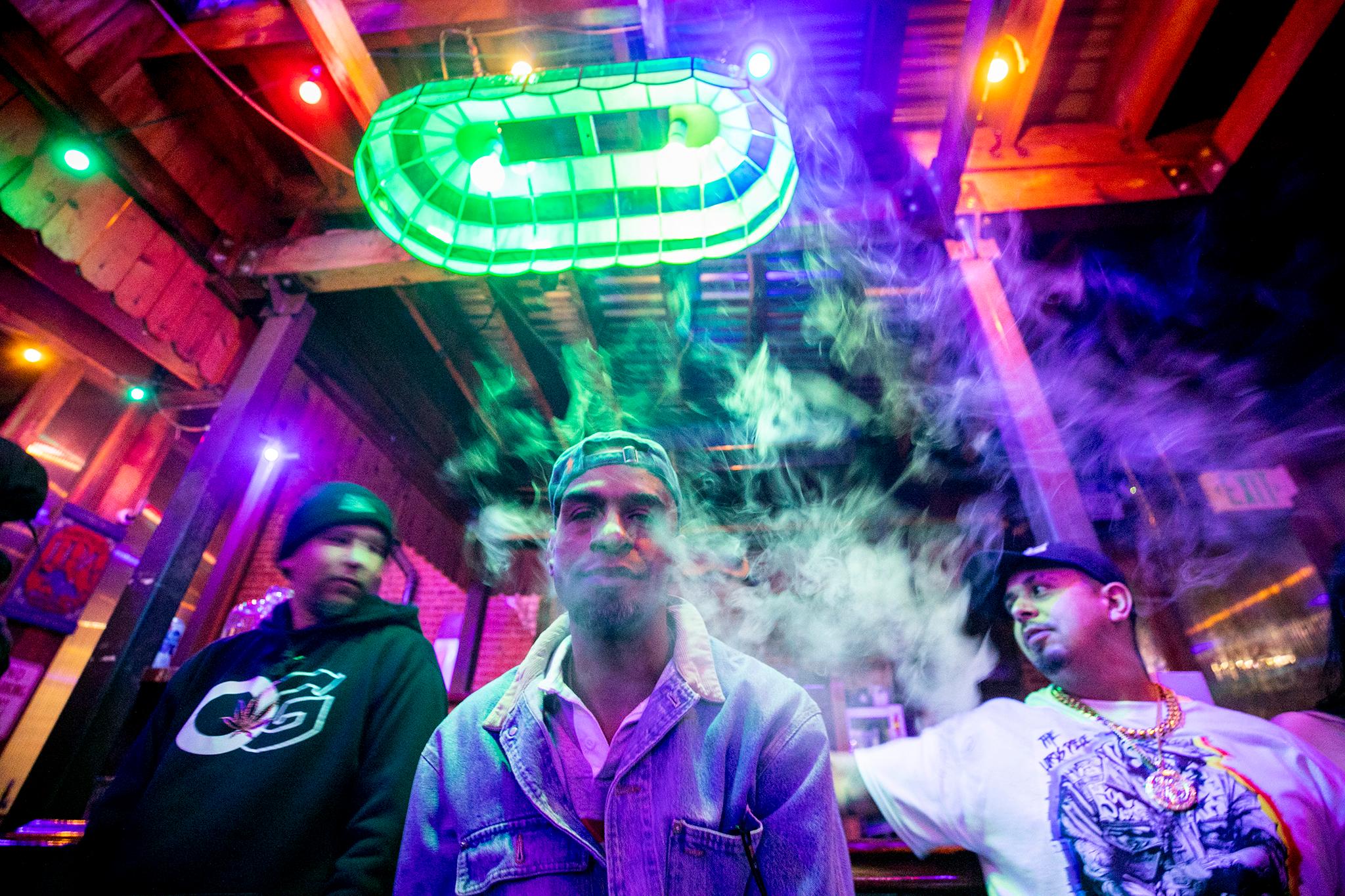
His use of structural and decorative steel created a showcase blend of function and aesthetics, restoring both the exterior and interior of the classic mercantile building. General manager and business partner Erik Ludwig has a craftsman skillset himself, having built unique, rugged stonework, woodwork and steel work finishes on the patio. Even the concrete floors incorporate subtle touches of artistry, with inlaid ribbons of steel and a burnished finish that exposes the aggregate.
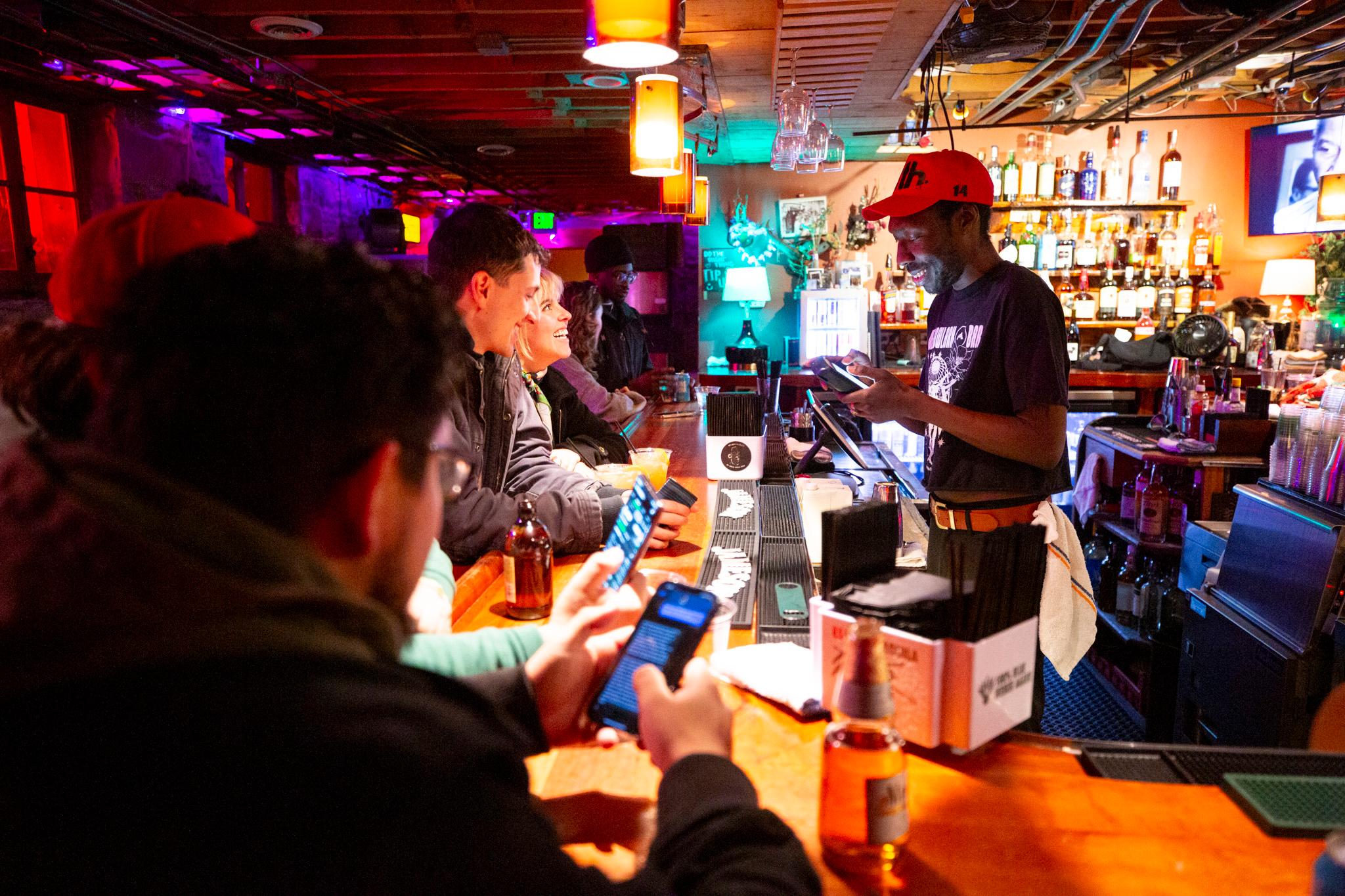
The soul of the Meadowlark is the intimate 72-seat basement bar. The flagstone walls are warm and inviting, and music from the tiny stage creates a listening sanctuary. It evokes a bygone era of Greenwich Village coffeehouses and bars that spawned the folk music scene 65 years ago. Had the Meadowlark opened in the ‘60s, Bob Dylan, Denver native Judy Collins, and other notable folk musicians might have found their way to its stage.
And like legendary clubs in New York City, there is no obvious outdoor signage. Those who are destined to find it … do. The steep, stone staircase leading to the entrance is a narrow, harrowing — yet charming — descent that accommodates patrons arriving or leaving, but not simultaneously.
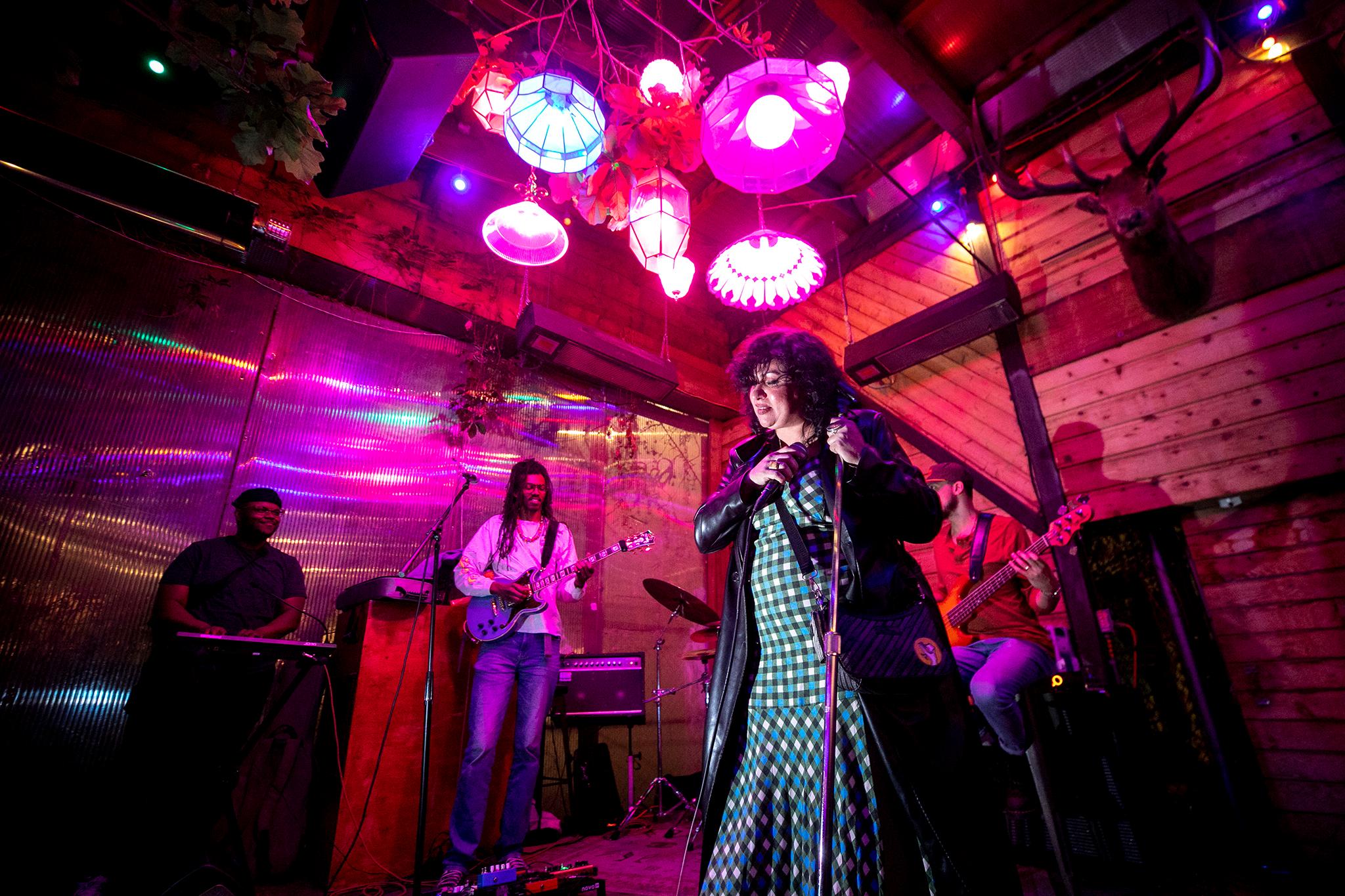
Ludwig, the GM, knows Loy Merck better than anyone, having worked for him since 2012, and incrementally acquiring financial interest in the business since 2016. “Loy’s generous to a fault and his irreverence toward offensive behavior by individuals or institutions is legendary,” Ludwig said.
Merck leaves no doubt about his confidence and trust in Ludwig, having brought him in as a partner and emphatically stating: “There is no Meadowlark without Erik Ludwig.”
Ludwig said the Meadowlark will celebrate its 20th anniversary all weekend, starting Friday, December 26th. Going forward, his business plan will remain much the same — with some improvements to the building and patio.
Whether the next local, national, or even international music prodigy emerges from the Meadowlark is uncertain. But tradition and opportunity await intrepid musicians who have the mettle to descend those narrow steps — and ascend its storied stage.