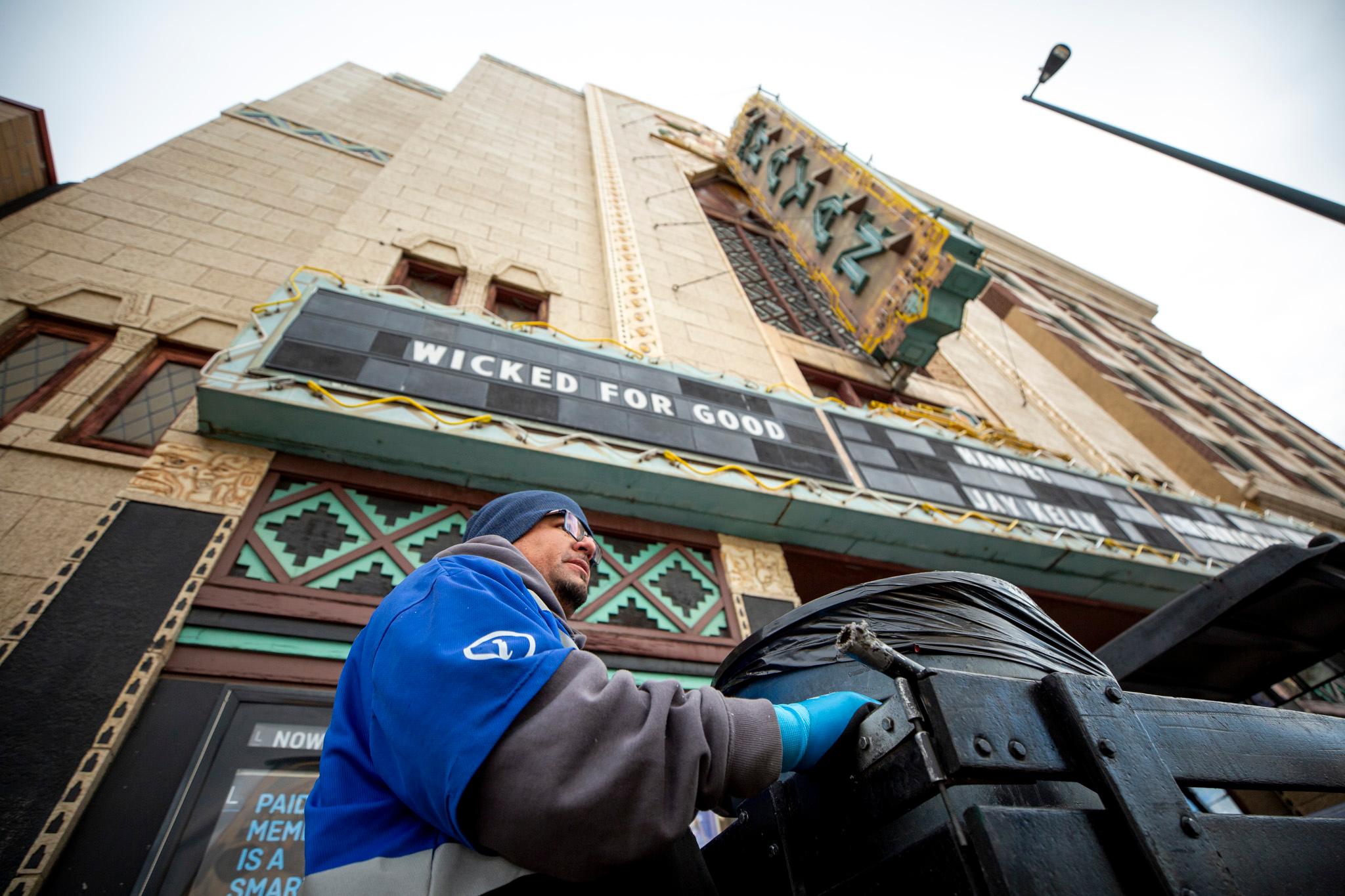
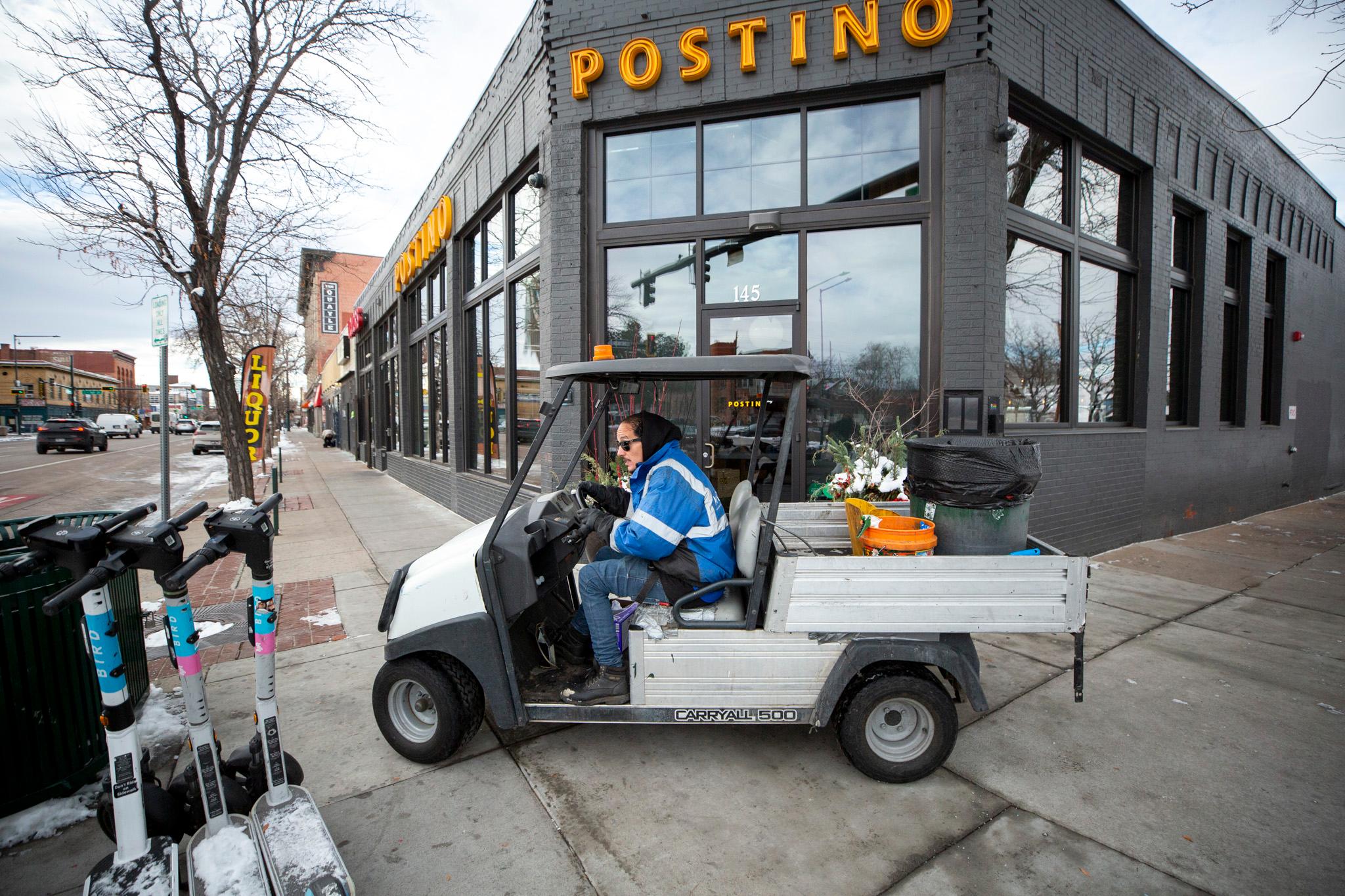
The first snow of the season had just fallen on Denver as Daniel Carbajal boarded his golf cart to scoot across a barren Broadway.
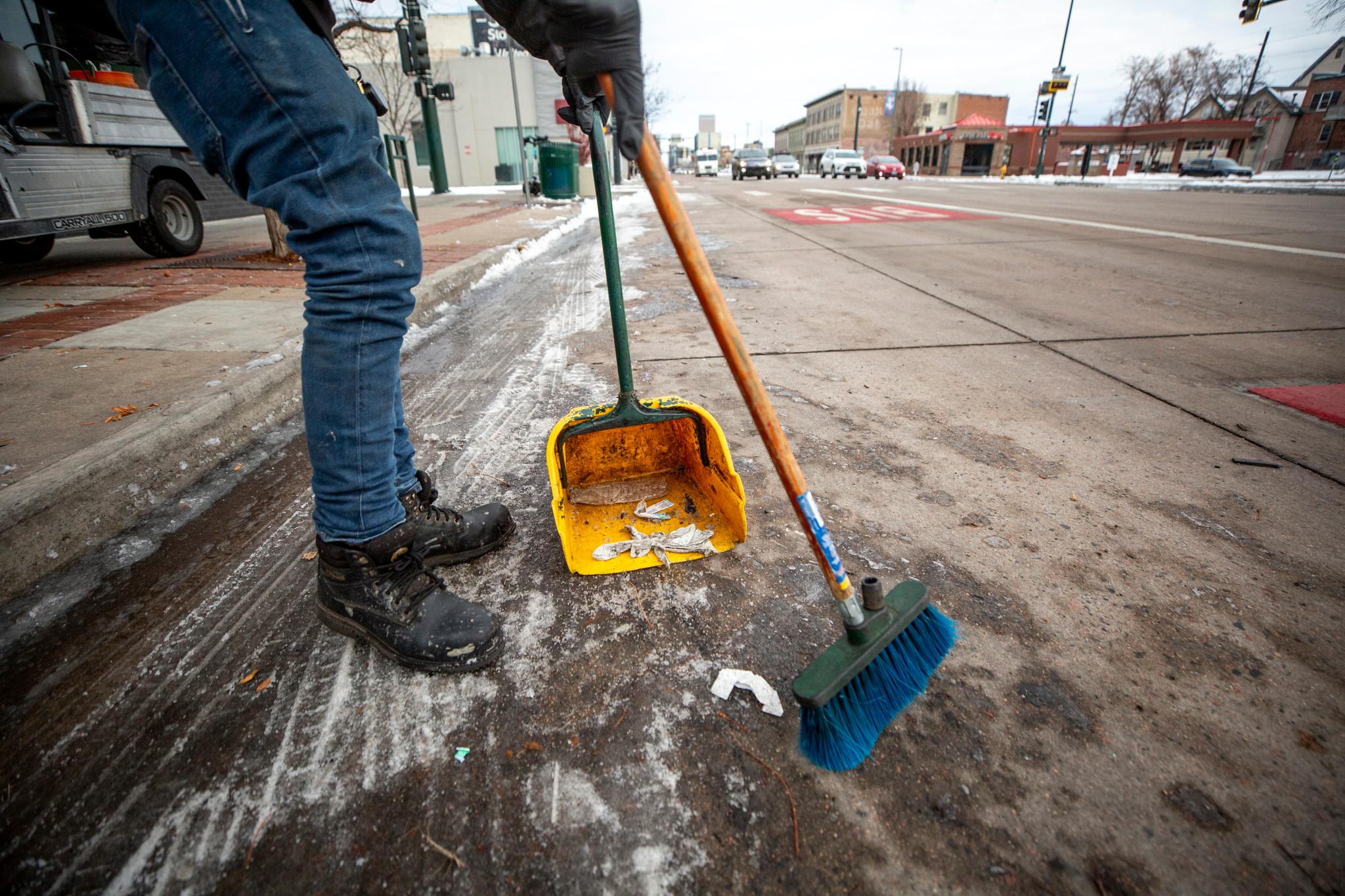
Armed with an arsenal of garbage bags and trash grabbers, Carbajal, an employee of the Metro Denver Local Development Corporation, was starting his daily routine of emptying the dozens of trash cans along the corridor, starting on the east side of Second Avenue. He’s been doing it long enough to develop opinions about the street's receptacles.
“This one, it never fails,” he said. “It's always full of trash around because it's in front of the Walgreens.”
Over two years, he’s seen and cleaned it all — from sloppy leftovers to shattered liquor bottles to human waste to used needles. He’s one of a handful of private-sector employees assigned to clean up some of Denver’s most popular corridors — a model that is evolving with the recent emergence of general improvement districts.
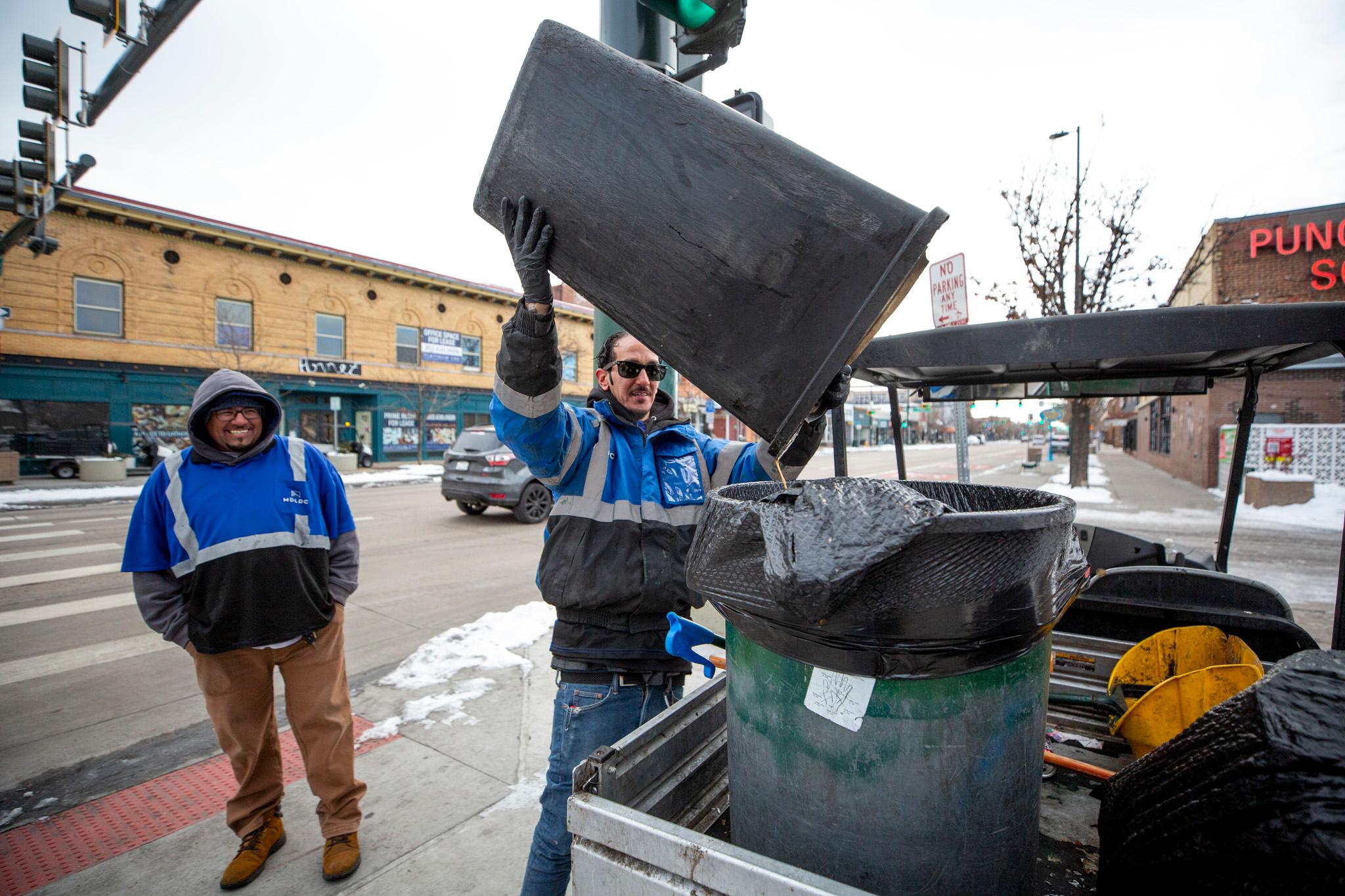
The job can be more than just picking up trash — they often have to deal with Broadway’s human element.
MDLDC was founded in 1978 by business owners on Broadway who were tired of urban blight along the corridor.
Nowadays, they’re funded by two local maintenance districts on the street, which draw from local taxes to maintain public improvements, like sidewalks, trash cans and more. There are several dozen local maintenance districts in the city, many of which employ their own cleaning crew.
Carbajal empties cans, removes debris, scrubs graffiti and more — but sometimes, he deals with the city’s human crises.
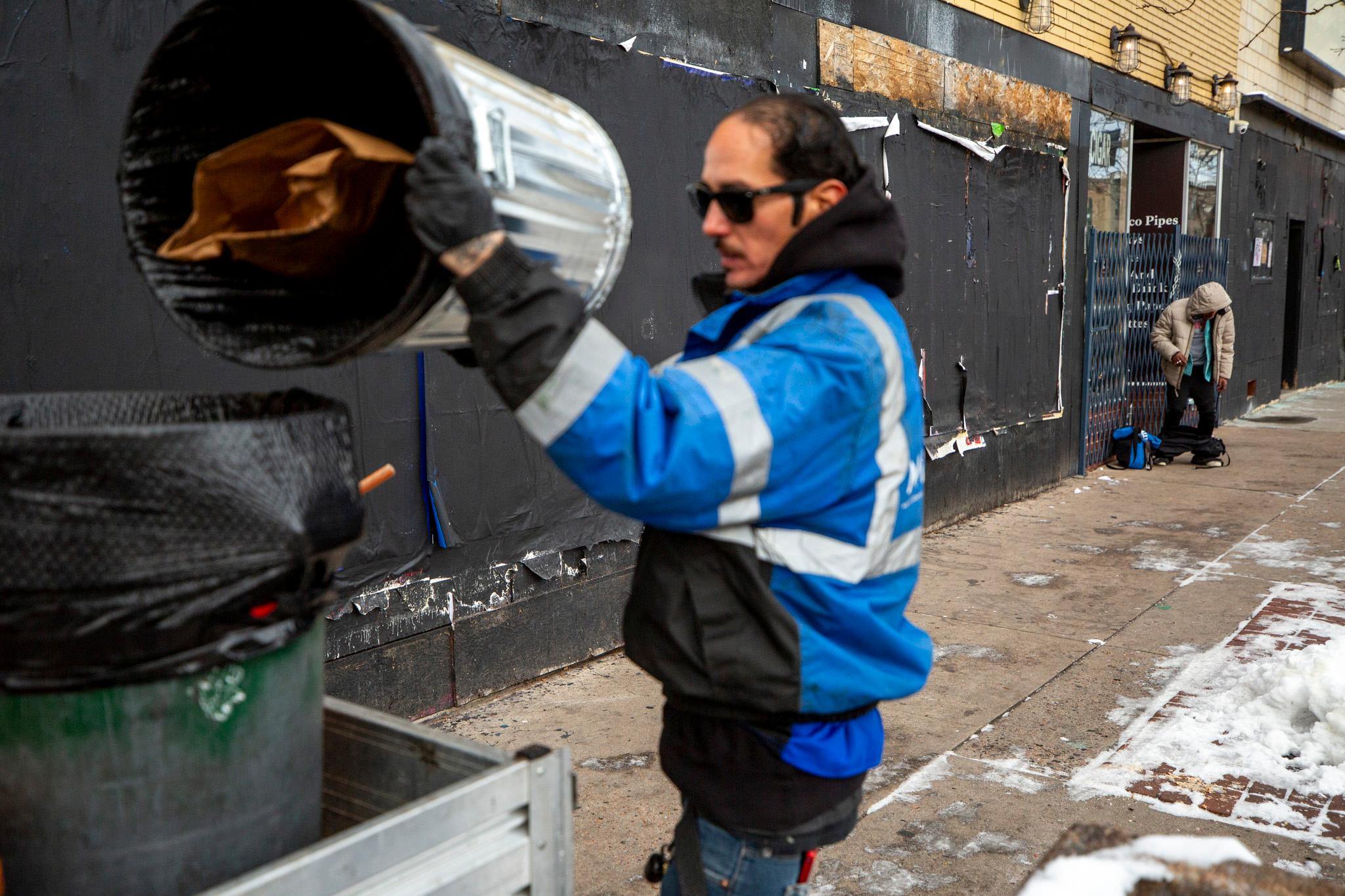
As Carbajal drove down the sidewalk in his golf cart, he passed by a man who was struggling to stand up in front of a closed storefront. The man’s pants were pulled down and it seemed like he was planning to defecate or expose himself. Temperatures were still below freezing.
It was a situation Carbajal is all too familiar with.
“A lot of people oversee 'em, and I try not to do that,” Carbajal said. “I want them to know that, hey, some people still have a heart and still look at you as a person.”
It isn’t in Carbajal’s job description to interact with unhoused people or individuals in crisis — just to clean up trash they and anyone else might leave behind. But Carbajal grew up in the child welfare system and has struggled with addiction to alcohol and drugs. That background means he can’t help but step in to assist when he can.
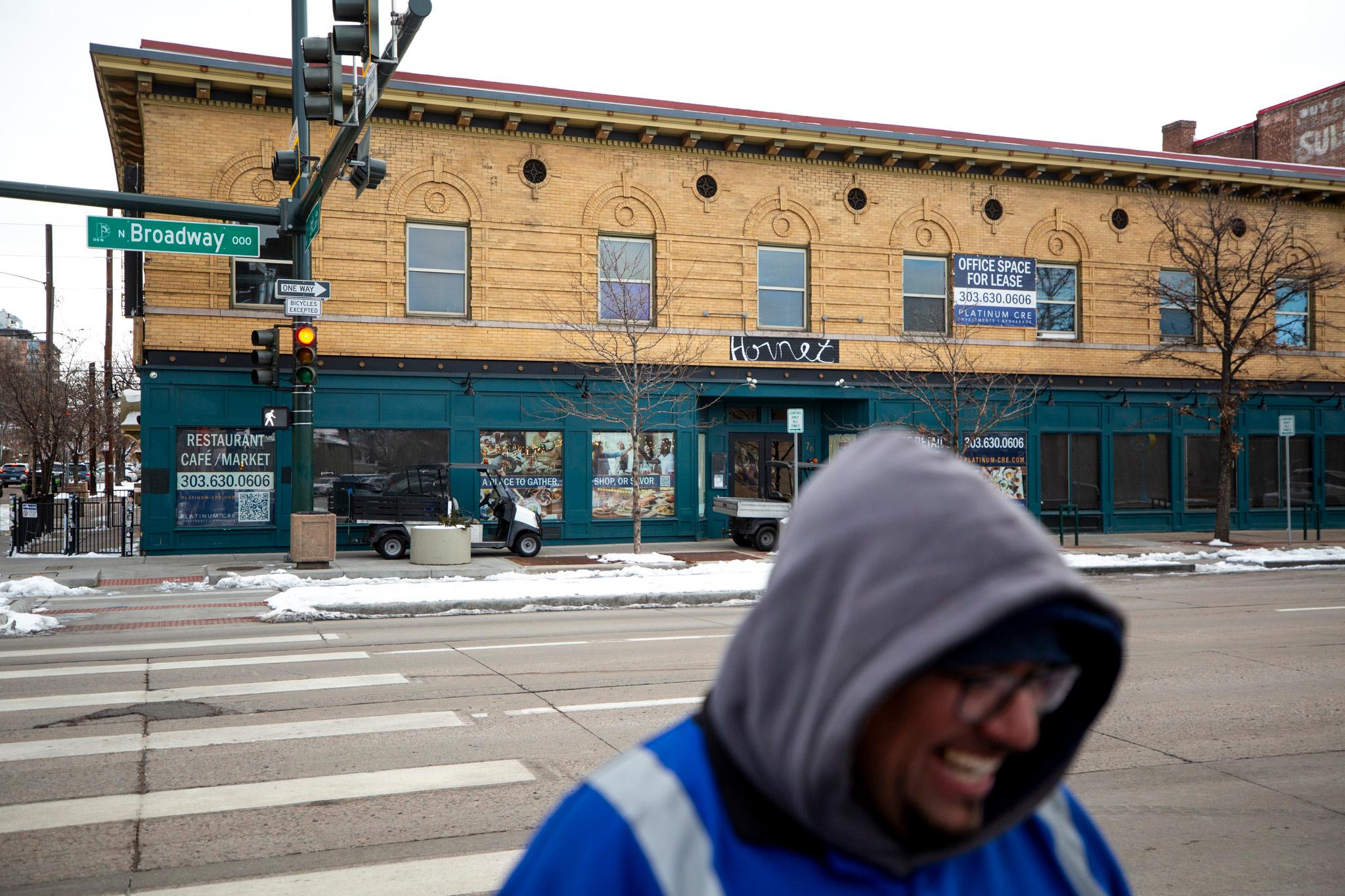
But oftentimes, Carbajal and the rest of his crew can’t do anything. The man wasn’t responding to MDLDC’s gentle questions, so they had to take a different, more traditional approach.
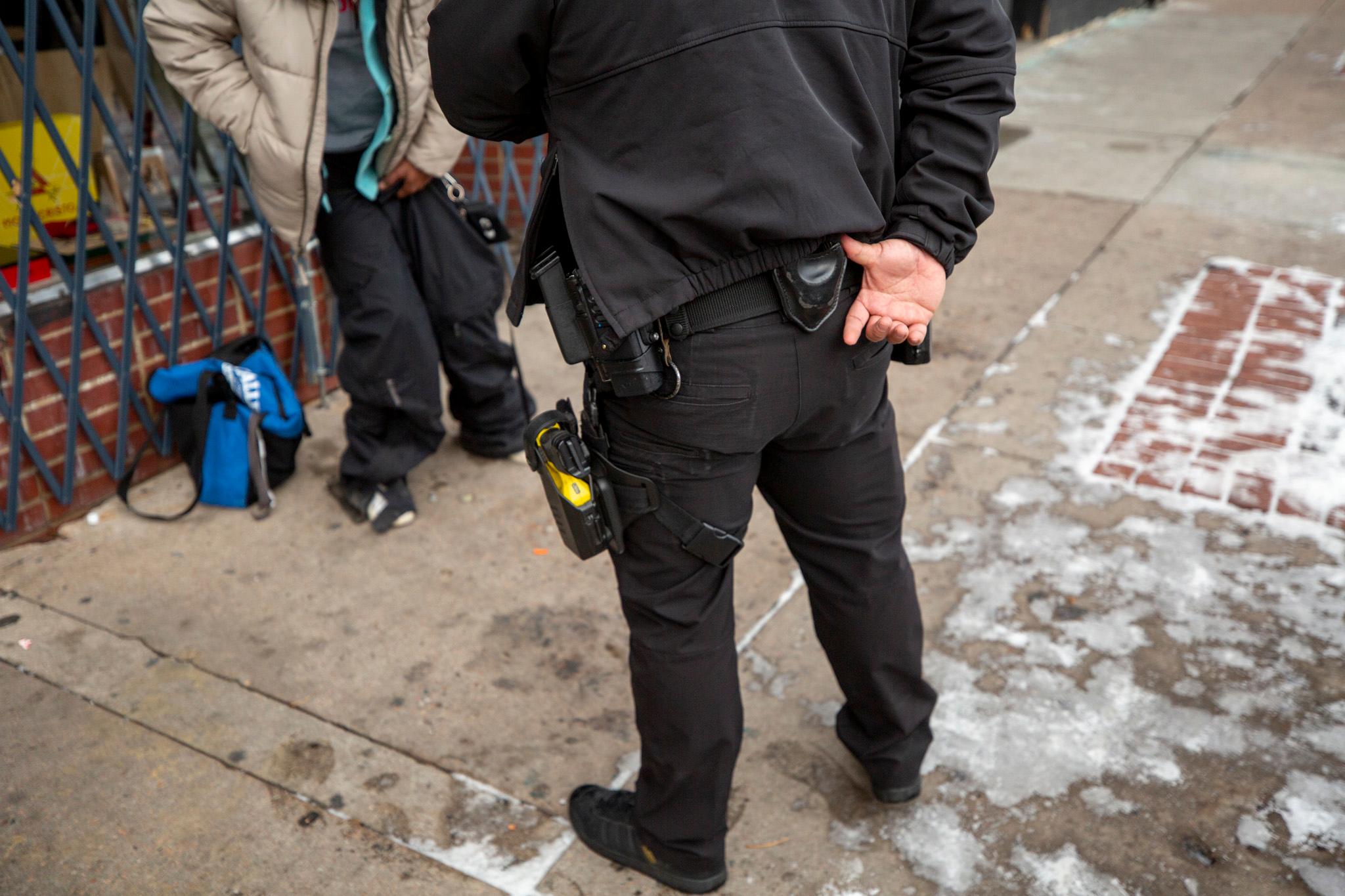
Gabe Fedor, the operations director for MDLDC and Carbajal’s boss, called the commander of the local Denver police unit to report the man who may have been exposing himself to passersby. Within minutes, two DPD officers had arrived and called an ambulance, but the man refused and walked to a bus stop.
Later, after police and medics left the scene, the man walked into incoming traffic, where the driver of a pickup truck blared his horn while narrowly avoiding the man.
“This is that tough situation,” Fedor said. “I texted [the commander], he got someone here quick, but they can't force him to go anywhere, they can't force them to do anything.”
Whether they like it or not, cleaning crews like the MDLDC have become part of Denver’s social work apparatus, Fedor said.
Crew members occasionally break up fights or deal with aggressive people on the street. Sometimes, Fedor and Carbajal said the teams will come across dead bodies.
“It's not part of our jobs, but the need is there,” he said.
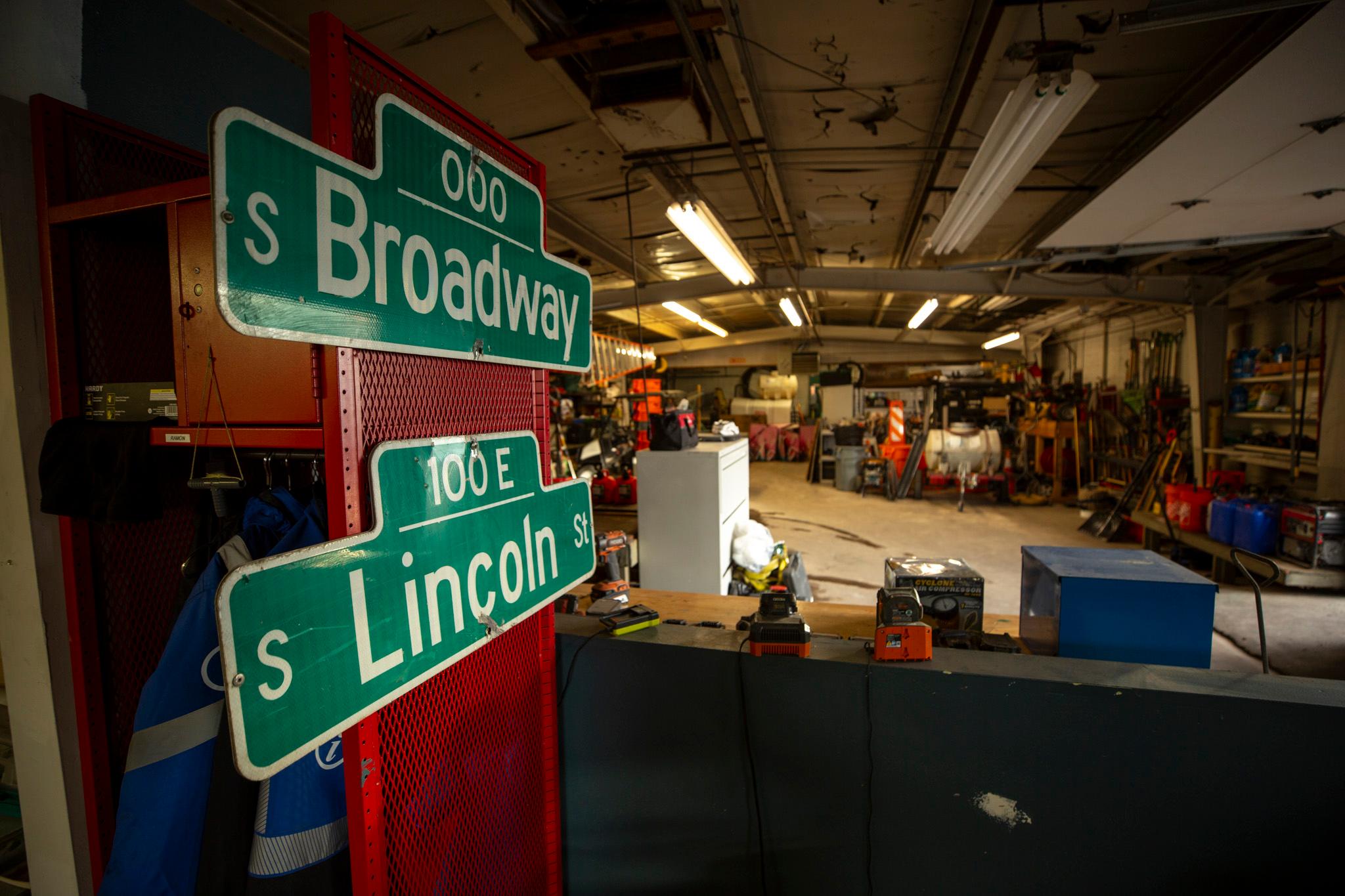
Soon, someone else will step in to do that work.
The local maintenance district that pays MDLDC to clean the corridor will soon dissolve to make way for the new Broadway General Improvement District. The GID will collect a portion of taxes from commercial and residential property owners in its boundaries to fund a number of local improvements, including a new cleaning crew and a private security force.
Luke Johnson, the inaugural president of the incoming GID, said the private security force would be more equipped to respond to situations like the unresponsive man on the street.
Instead of calling DPD, Johnson said the eventual security group will be able to monitor the situation as it unfolds — staying on the scene and trying different avenues to connect people with services.
“When we have the improvement district and service provider in place, they’re legally allowed to interact with that person,” Johnson said. “If that means connecting them to services, then they’re able to do that.”
Johnson said the GID will start taking shape in the spring and has begun taking applications from contractors for its security force and cleaning crew.
Until then, Carbajal will keep walking the block, cleaning up the next mess.