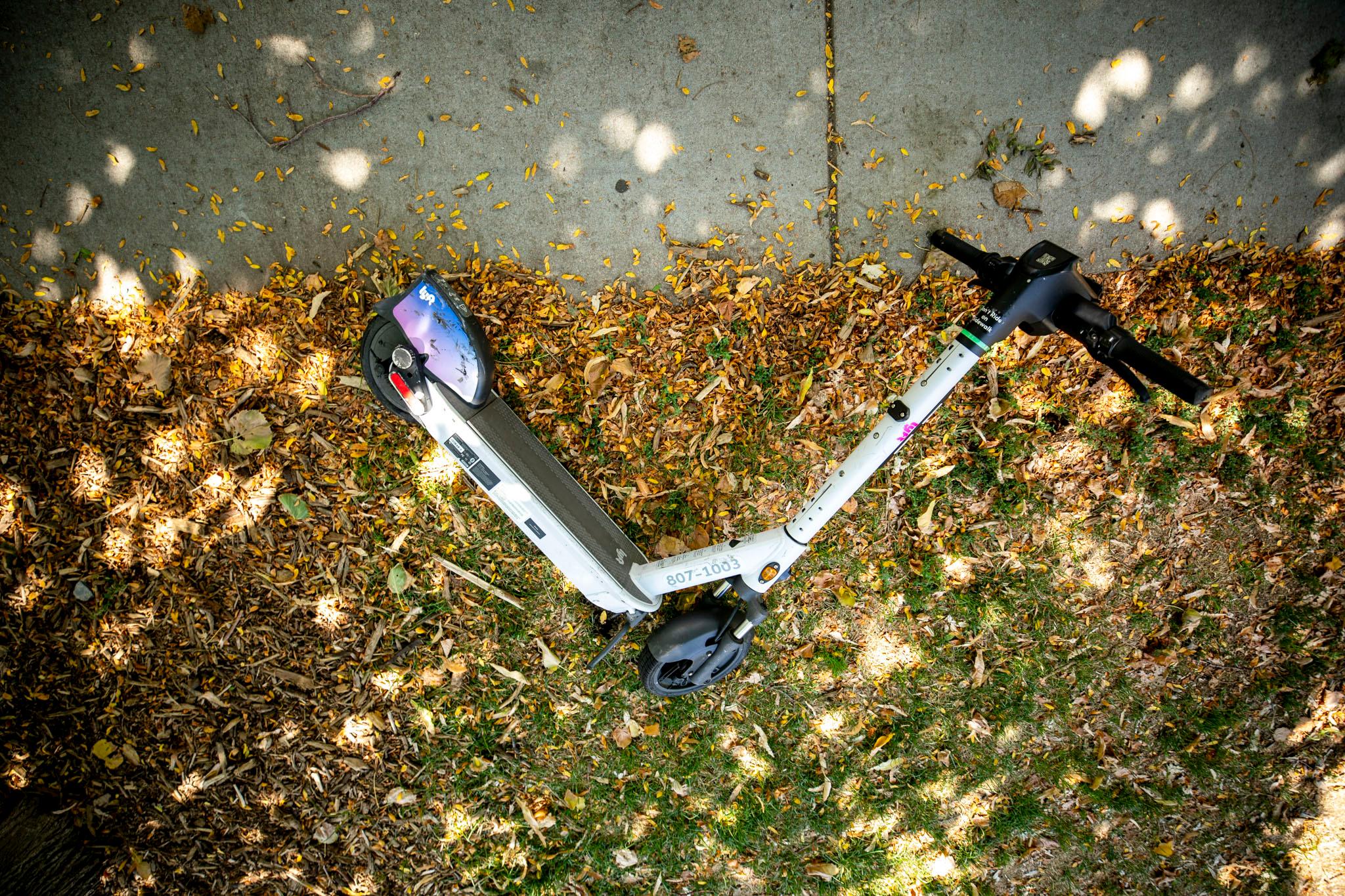

Lime and Bird’s fleets of dockless bikes and scooters will leave Denver next year as the city brings in a new micromobility operator.
Denver’s Department of Transportation and Infrastructure announced an exclusive contract last week with Veo, a micromobility company that launched in 2017 on Purdue University’s campus.
Veo will deploy its scooters and bikes in Denver this spring. Veo currently operates in Washington, New York City and Los Angeles.
Meanwhile, the city’s license agreements with Bird and Lime are set to expire in May.
In a press release, DOTI said it's negotiating a three-year license agreement with Veo, and that people enrolled in programs with Lime and Bird will transfer to Veo in 2026. The negotiations are “likely to last several months,” according to DOTI.
It’s a significant change.
Lime and Bird have offered thousands of scooters and bikes in Denver for years. Lime and Bird first deployed scooter fleets without authorization in 2018, causing an uproar and prompting the city to confiscate hundreds of two-wheelers.
Later, several mobility companies, including Lime and Bird, worked out agreements with the city. Lime and Bird’s agreements were for five years.
“Denver’s micromobility program is one of the most successful and popular in the nation,” said Amy Ford, executive director of DOTI, in a press release. “Our goal is to build on that success with an emphasis on safety for riders and pedestrians, keeping sidewalks clear and organized, and expanding access to micromobility to serve more residents and support the sustainability of our city with convenient, attractive, and affordable transportation options.”
The previous Lime and Bird contracts were non-financial, meaning the city didn’t pay the companies, nor did the companies pay the city. But the agreements required free or subsidized rides for low-income residents and set other rules.
DOTI listed various reasons for choosing Veo, including its “diverse fleet of attractive scooters and bikes with leading safety and accessibility features, its commitment to affordability and its flexible equity program.”
City officials said having a single company would be simpler for riders and the local government.
Lime and Bird have contracts with the city and with RTD to offer various services around Denver, and both companies have different equity programs that allow for low-income or undocumented people to ride the vehicles for free or at a discounted rate. In 2026, the city says it will share information about how people currently enrolled in those programs can transfer over to Veo.
Once the negotiations are done, the Denver City Council will vote on the Veo contract.
Zach Williams, regional head of government relations forLime, said in a statement that the announcement came as a surprise.
“We are Denver's longest-serving shared micromobility provider, strongly preferred by Denverites and Lime Access riders across the city. Equity in particular has always been at the center of Denver’s shared micromobility program, and we’re proud of the last five years we spent in partnership with the city to build one of the largest access programs in the world. As such we were surprised and disappointed by DOTI’s announcement last week,” he wrote.
Micro-mobility scooters and bikes have been controversial since the beginning.
The micromobility vehicles were deployed en masse to major cities over the last decade, drawing criticism that they were dangerous and unregulated.
Denver has been cracking down on the services lately. In May, Denver City Council unanimously approved a new law to keep riders off city sidewalks and to ensure the scooters aren’t left in random or obstructing places.
Under the new law, the city can fine the companies themselves for riders’ behavior. When city officials find a misplaced scooter, they can simply put the fine on the companies’ tab. The law also will require that riders pass a knowledge test before renting a scooter or e-bike.
Meanwhile, the companies will have to make some changes to their vehicles and infrastructure, including sensors that can detect when a vehicle is operating on the sidewalk. When a scooter is on the sidewalk, the companies will have to take action — for example, by increasing the rider’s bill, slowing the scooter or sounding an alarm.
The new law takes effect summer 2026, and Veo says it will follow the requirements, according to DOTI.
Bird and Lime operate more than 4,200 electric bikes and scooters in Denver.