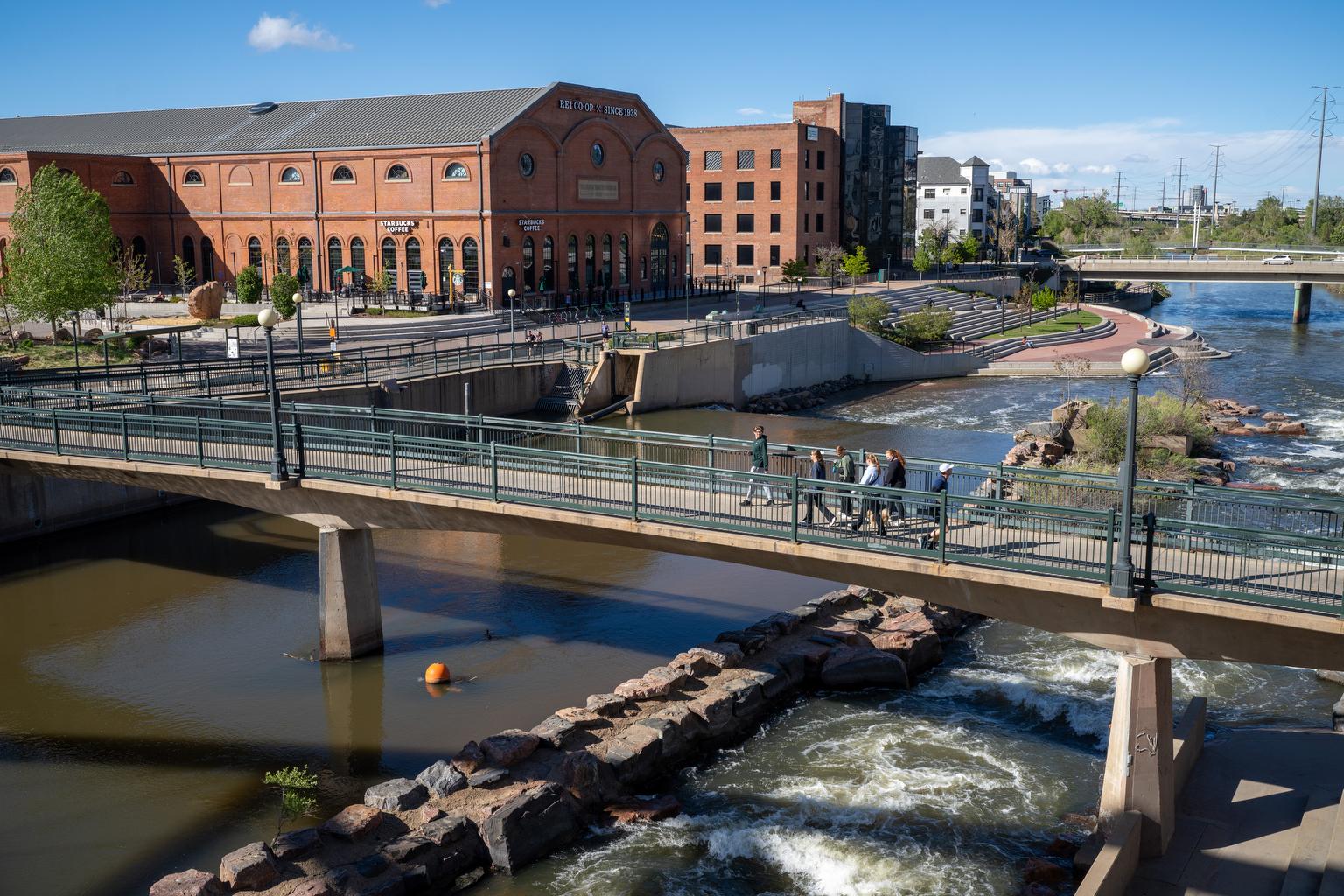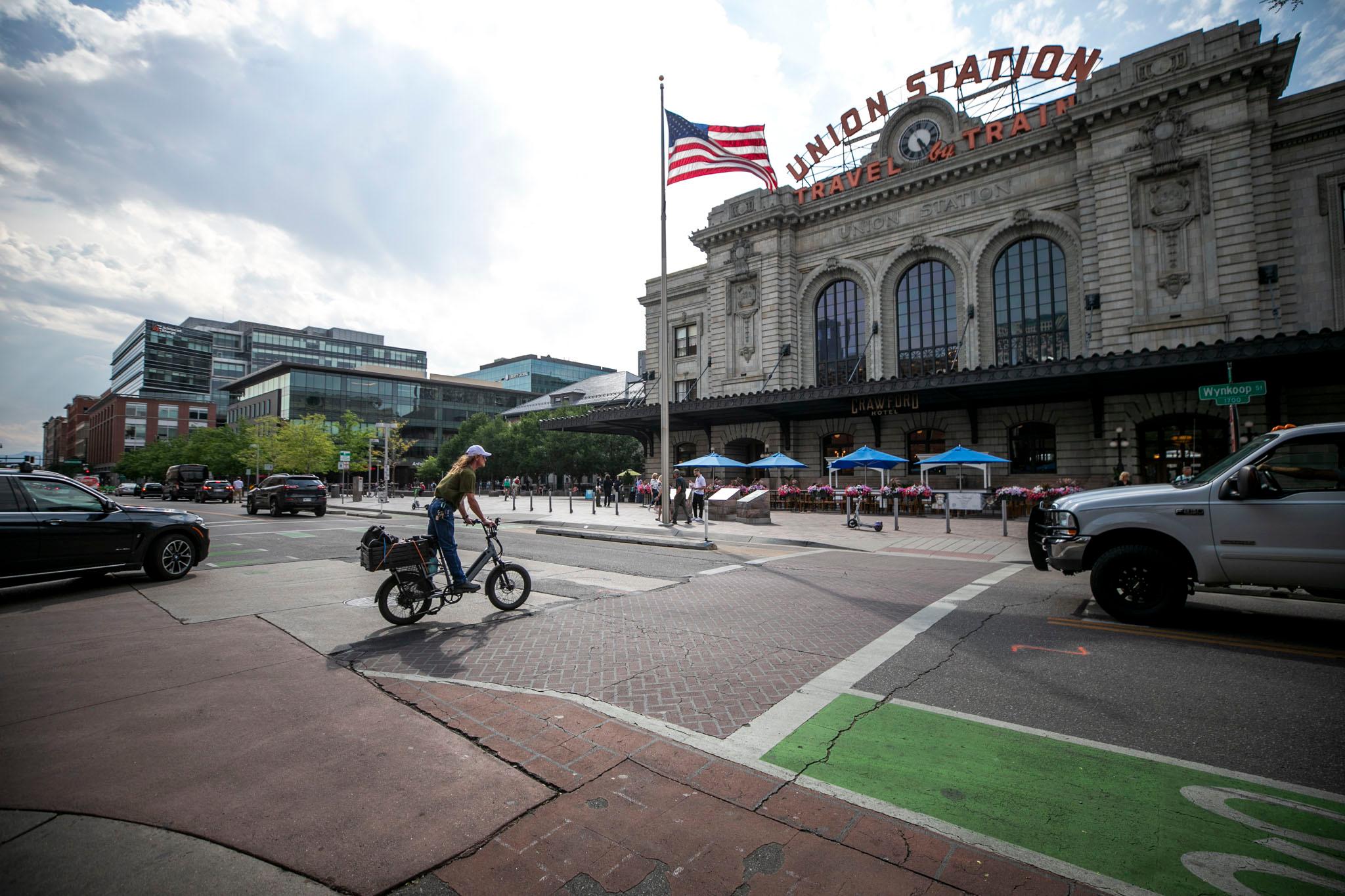
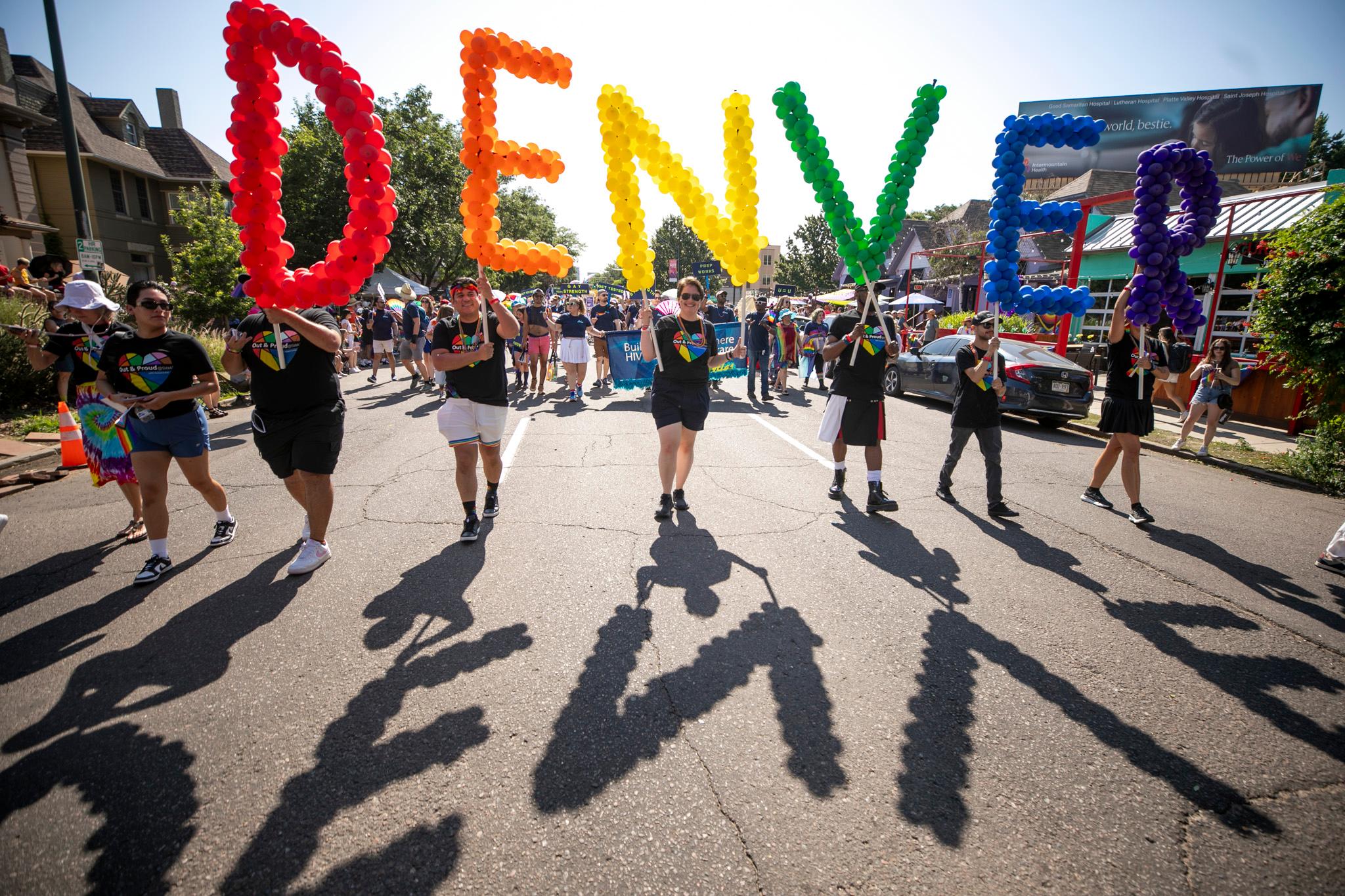
Sixteenth Street will host this year’s Denver PrideFest as the celebration moves from its longtime home in Civic Center Park.
One of the city’s largest and most consistent festivals will also face another change: PrideFest will only be one day this year, rather than the usual two.
The parade and festival will be on Sunday, June 28.
For the second year, the parade will go down 17th Avenue instead of Colfax.
The cause for the changes is construction, said Kim Salvaggio, the director of The Center on Colfax, which puts on PrideFest. With Colfax under construction for Bus Rapid Transit and Civic Center Park breaking ground on major renovations, there was no place that could hold the massive festival for two days.
Salvaggio said that in lieu of a second day of PrideFest, the Center is planning for a “rolling Pride,” with multiple celebrations throughout the month of June, starting June 4.
“The plan is that you need to see yourself at Pride. Pride looks like you. So how can we activate the entire city for the month of all sorts of different queer identities and experiences for people to enjoy,” Salvaggio said.
The exact layout isn’t known yet, but Salvaggio said the festival could stretch from the Daniels & Fisher Clock Tower all the way to Broadway, with some side streets activated for stages.
Despite the physical changes, Salvaggio said it’s important that the festival is as big as possible in light of the political moment.
“Pride is 100% still a protest, and it is also 100% joy. It is both,” she said. “Joy to me is a celebration of riot. Joy to me is one of the ways that I can protest, because it's my just being and unbridled joy in who I am reads as a protest to people, and I love that about it.”
PrideFest, DEI and the political moment
Last year’s Pride was the first of President Donald Trump’s second term. The administration has made significant attacks on DEI policies and the rights of LGBTQ people, especially transgender people.
Salvaggio said several companies pulled out of their sponsorship of the parade to avoid retaliation.
This year, the Center has also changed how it decides whether to accept corporate money. A new employee is working with a committee of three community members to decide who will get to sponsor the festival and parade.
“They have a ranking system. They will look at things like in the last 12 months, what has this corporation’s stance been with DEI and particularly with the LGBTQ+ community,” Salvaggio said. “If this is an organization that is invested in any way in promoting war overseas or funding anything that brings our marginalized communities harm on our borders of our country, we will not be accepting money from them.”
However, queer employees of those companies are still allowed to march in the parade. The headliner has not been announced yet.
The Center has already raised $200,000 through corporate commitments.
“That's a good sign to me, as compared to last year, where at this time we were getting calls from people saying, ‘Hey, we can't sponsor because of the attack on DEI.’ That's a clear shift to me,” Salvaggio said.
Those funds help support work in the community, which is growing as people from states and cities with more hostile laws are moving to Denver and Colorado.
The Center works with the Trans Continental Pipeline, a nonprofit that helps people relocate. Salvaggio said about 1,500 LGBTQ people have moved to Colorado, 70% of whom are transgender or families with a trans child. Salvaggio said a celebration like Denver Pride is important for people who recently moved to Denver for those protections, or for those visiting to feel seen and understood.
“My wife and I are raising a trans daughter together. So, for her to come to a place that's going to have hundreds of thousands of people, whether it's celebrating in joy or celebrating in protest, it is an affirmation of who she is,” Salvaggio said.
Visit denverpride.org to learn more about the festival, the parade and the 5K.
CPR’s Ryan Warner contributed to this article.