Denver Mayor Mike Johnston’s ambitious effort to solve street homelessness cost $20 million more than previously reported, a result of poor planning and documentation, according to a report from the city auditor’s office — an allegation that the mayor’s office pushed back on strongly.
“For a program in its third year and approaching $200 million in costs, not tracking expenses is irresponsible,” Auditor Tim O’Brien said in a written release. “The Mayor’s Office’s unwillingness to share how they are calculating expenses also raises red flags.”
The year-long auditing project found that from July 2023 to June 2025, the effort spent $178.1 million. City staff previously reported that $158 million was spent in that period.

The mayor’s office said the auditor’s claim of overspending was overblown. Some of the difference came down to different definitions of what should be counted as spending for All In Mile High compared to other city programs.
“We disagree with the Auditor’s findings and wholeheartedly stand by the accuracy of the finances we reported. Every penny of our expenses is accounted for and not a dollar has been spent out of or over budget,” wrote mayoral spokesperson Jon Ewing. “The Auditor’s Office does not insist otherwise in this report. Instead, the disagreement appears to lie in which expenses should be counted toward All In Mile High.”
What is All In Mile High?
All In Mile High includes certain city shelters, case management, health care, job training, education and more. In general, the mayor’s office defines it as facilities and programs opened during Johnston’s tenure. The mayor’s office oversees the effort, while it’s funded and executed in large part by the Department of Housing Stability.
Johnston launched his signature homelessness effort on the first full day of his first term in 2023. Initially, he called it House1000 and aimed to bring 1,000 people off the streets by the end of that year. The city reports it has moved about 8,300 people into shelter and 7,300 people into housing.
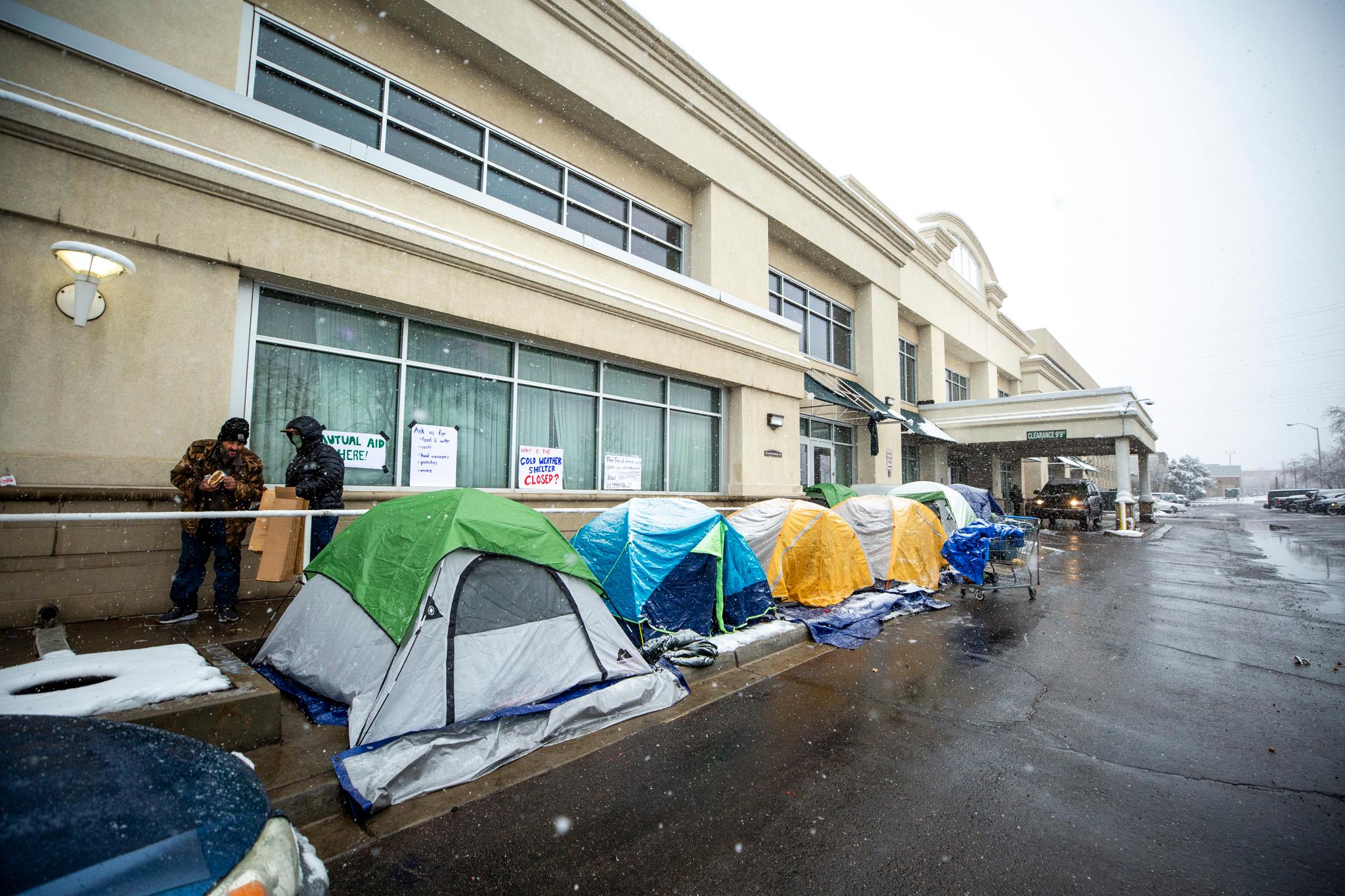
The city center has seen a significant decrease in outdoor camping, and the city has reported a dramatic 45% drop in unsheltered homelessness, based on point-in-time data.
Disputes over spending
The auditor’s report raised questions about some of those statistics, pointing out that city officials don’t track when people return to homelessness, which the city blamed on data limitations.
City officials promised some improvements, but rejected other recommendations from the audit. Overall, the administration defended the homelessness program.
“Thousands of people moved off of the street. Thousands of people moved into housing. Let us not forget the good work this program is doing every single day,” said Evan Dreyer, the mayor’s deputy chief of staff, at an audit committee meeting.
The spending underestimate resulted in part from a failure to tag expenses properly, according to the auditor’s office, but the report noted the city has addressed that problem. The error mostly happened in 2024. The city actually spent less on All In Mile High than it reported in 2025.
The auditor’s office critiqued the management of the homelessness program, finding that clear plans and documentation were often lacking for an effort that sprawls across city agencies.
For example, the audit found city leaders made seemingly conflicting statements about how expenses were tracked. The mayor’s office said the responsibility fell to individual agencies, while city staff said the mayor’s office was handling it.
“Without a formal process in place to track All In Mile High expenses for all city agencies, the city cannot know how much it is truly spending or whether its efforts are cost-effective,” the report stated.
Ewing added that the city’s previous cost report may have been low because certain expenses hadn’t yet been reported.
A fast-moving effort comes with confusion
The auditor’s report also noted confusion and disorganization that resulted from how fast the city has moved and how often its homelessness goals have changed.
“One Housing Stability leader said they do not know what the All In Mile High program means, saying that the name and format of Denver’s homelessness response program has changed ‘roughly 15 times’ since they started working for the city,” the report stated. It’s not clear how long that person had worked at the city.

The report also found issues with how the city selected contractors to run homelessness programs. For example, The Salvation Army and the Colorado Coalition for the Homeless both were awarded “sole source” contracts that did not require a competitive process.
But the city couldn’t properly document why the sole-source contract was necessary, the auditor reported. The mayor’s office said the people with knowledge of the decision didn’t work at the city anymore, and housing leaders ignored questions about it, the audit found. The audit also said the city failed to follow a law that requires records be retained for several years.
“The city followed all procurement processes and has the appropriate documentation,” Ewing responded.
Johnston administration rejects recommendations
The mayor’s office and the Department of Housing Stability agreed with some recommendations but rejected others.
The city is working on or has implemented a program management plan and improved expense tracking, contract monitoring and more.
But other recommendations were more contentious. The auditor’s office said the city should have conducted a needs assessment to guide All In Mile High.
The mayor’s office said that wasn’t necessary, since the problem was obvious. “We do not plan to spend crucial city dollars conducting a needs assessment to determine whether addressing street homelessness is necessary,” the response stated.

But the auditor’s office said the debate wasn’t about the existence of a problem — instead, it was looking at the nature and scope of the homelessness issue.
City homelessness leaders also rejected requests to create a monitoring and evaluation plan; follow and develop policies for sole-source procurement; and document how it selects sites for shelters, saying it had already done so. The auditor’s office often disagreed with those claims.
The mayor’s office also disagreed that the city should reformat its public dashboard that tracks progress on the mayor’s homelessness goals, which the auditor’s office said was confusing and lacking in context.
The city changed the dashboard in April 2025 and quit tracking specific outcomes like how many people died, went to jail or returned to the streets, while also looking at a broader scope of homelessness solutions beyond All In Mile High. As a result, it appeared that the number of people getting help was far higher than on the previous version of the dashboard.
Who is the auditor?
The city auditor is tasked with assessing the efficiency, effectiveness and financial compliance of city agencies. O’Brien is an independent elected official. But ultimately, following through on the recommendations is up to the mayor and other city leaders.