It’s been nearly half a year since Denver city planners found themselves in the middle of a fierce neighborhood dispute about the future of Alameda Avenue.
The city had planned to make the road safer by narrowing it. But at the last minute, planners scrapped that plan, instead switching to a design that would have a smaller impact on automobile traffic.
The decision has reverberated across city politics, growing into a rallying cry for advocates who say the city is sliding backward in its goal to end traffic deaths by 2030. They successfully lobbied the city into changing the design once more, at least for now.
With so many twists and turns, we decided to lay out everything that has happened so far, and what comes next.
How it all started
While the story exploded in November, the Alameda project has been in the works since 2018.
After DOTI completed a traffic project on nearby Corona Street, it started studying Alameda Avenue between Lincoln Street and Franklin Street. The study found “more crashes (sideswipes, rear-end collisions, and turning-related crashes) than expected.”
DOTI determined that the avenue’s current setup — two traffic lanes in both directions with no center turn lane — was the cause of many of the preventable crashes, and set out to redesign the road for safety.
In 2024, DOTI released its long-anticipated solution: a road diet. The proposal would narrow the busy road from four lanes of traffic to two directional lanes and a turn lane, along with other changes.
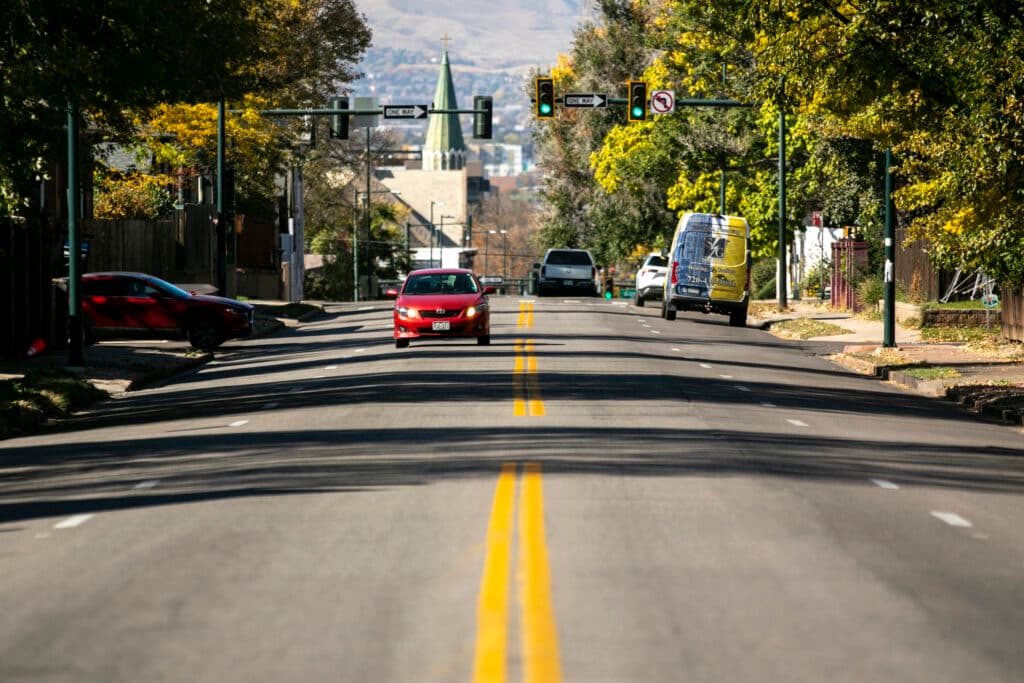
The planned redesign was praised by many neighbors, including the West Washington Park Neighborhood Association. For years, many of its members reported dangerous conditions on Alameda, leading to near misses, car crashes and more.
Road diets — reducing the number of lanes for automobiles on a street — are a proven way to ease speeding and reduce the severity of crashes, making corridors safer for cars, pedestrians and bicyclists.
The city has implemented a series of road diets, even as recently as last month, when it converted a stretch of 13th and 14th avenues into two-way streets. Mississippi Avenue between Eliot and Quivas streets will also undergo a road diet in the coming months.
The change of plans
Construction was set to start last summer but it was delayed.
City officials said construction farther west on Alameda forced them to pause construction right before it was meant to begin. The project was expected to cost $570,000.
But around March 2024 — shortly before DOTI delayed the project — a group of neighbors began to publicly and privately oppose the project. The group’s organizers included Jill Anschutz, a member of the influential Anschutz family, and several other neighbors.
Public records obtained by Denverite showed that the group, known as Act for Alameda, hired a former DOTI deputy chief of staff a few months before the city revised the plan.
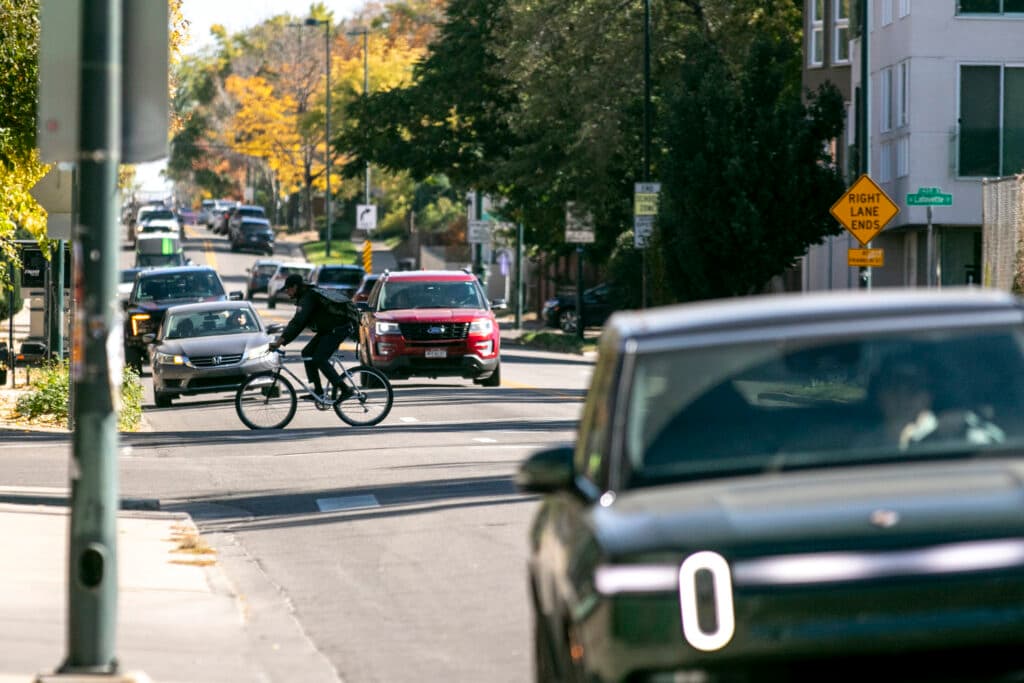
“We received a request from Jason Gallardo, who is now a lobbyist, to meet with some neighbors who have concerns regarding the Alameda Lane Repurposing project,” an email from DOTI’s Greg Cieciek read.
The group was concerned the redesign would negatively impact “traffic congestion and cars heading down side streets,” according to its website and a letter sent to the mayor.
About two months after the city met with Act for Alameda in June, a city engineer wrote that DOTI leadership and community members had concerns with the original design.
“After evaluating different options for moving forward in light of community and leadership concerns, we have decided to move forward with a partial lane reduction (i.e. lane reduction only in the WB direction),” stated an email from Brett Boncore, an engineering supervisor, to contractors with engineering consulting firm Kimley-Horn.
In November, the city made it official: Instead of a full road diet, it intended to pursue a partial redesign. Instead of fully eliminating a lane, the agency said it would convert one of the current westbound travel lanes into a series of "turn pockets" from Franklin Street to Pearl Street.
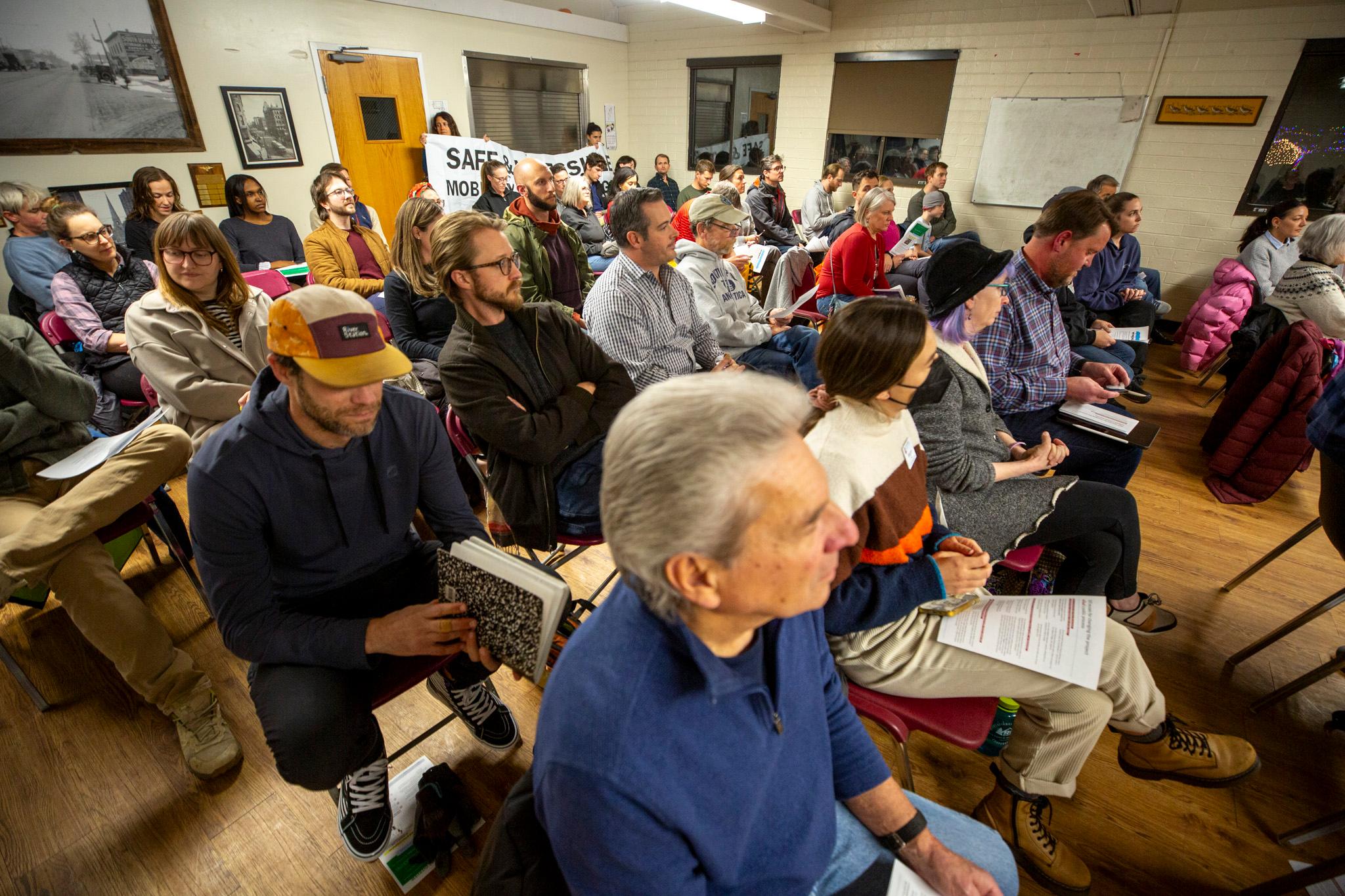
It agreed with the assessment of the opposed neighbors — a review of DOTI’s data found the original plan would have added a “significant increase” of 98 seconds to some commutes along the one-mile stretch and would have diverted 10% of drivers down side streets, according to DOTI. The revised plan, staff said, would keep travel times the same and send 5 percent of drivers to side streets.
The reversal drew strong pushback from neighbors who said the city was compromising safety to cater to automobiles and richer residents. But the city said it would stick to the new plan, with Director Ford even defending the redesign as overall safer than the original plan in subsequent meetings.
But last month, DOTI said it would install a temporary, pilot version of the original plan.
Who supports the full road diet?
Perhaps the road diet’s strongest supporter is the West Washington Park Neighborhood Association, the local registered neighborhood organization. In the lead-up to construction, the RNO wrote a letter expressing strong support for the lane reduction, while also asking for safety measures on surrounding streets in case drivers took detours.
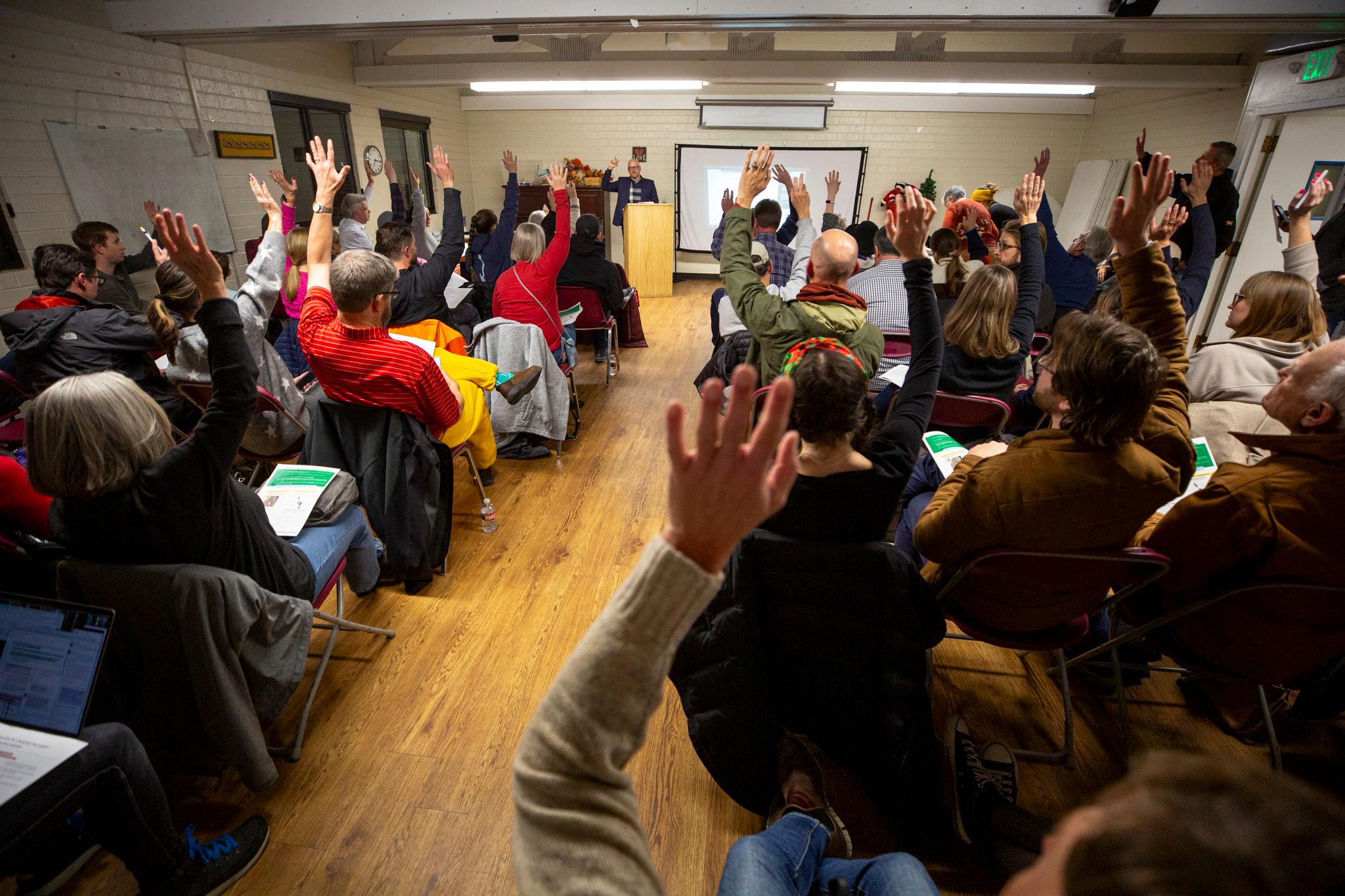
Members of the RNO spoke up at public meetings, distributed neighborhood flyers and filed public records requests after the department changed course in November.
A neighboring RNO, the Washington Park East Neighborhood Association, eventually joined WWPNA in calling for the city to restore the original plan.
Neighbors have said that Alameda needs to undergo a full road diet — many reported witnessing car crashes, near misses and even cars crashing into their homes.
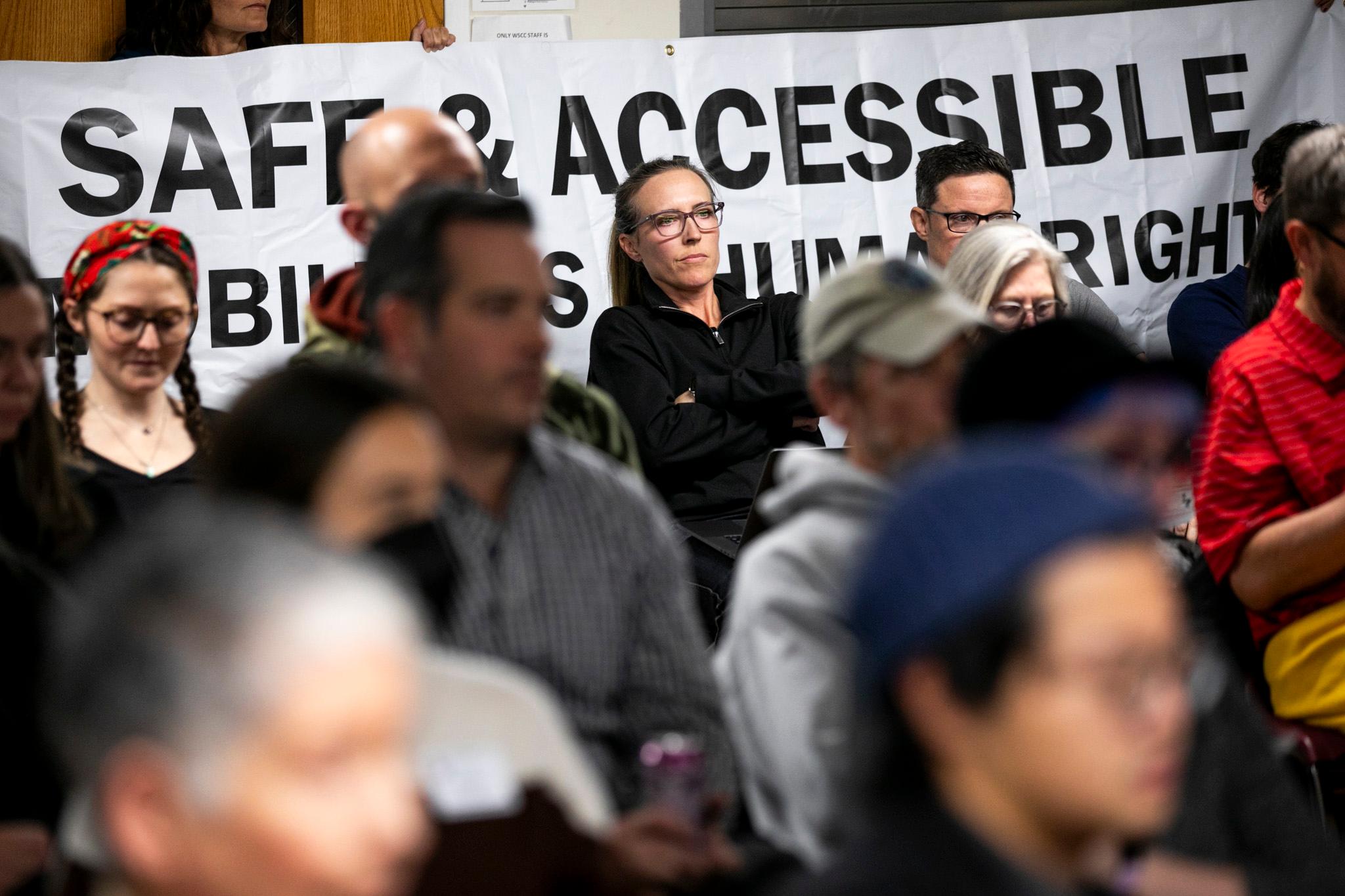
DOTI’s citizen advisory board also fully supported the original plan. After DOTI unveiled its partial lane repurposing, one member, longtime disability rights activist Jaime Lewis, submitted his letter of resignation. He said the Alameda road diet switch-up was the latest decision by DOTI that shook his faith in the department’s commitment to traffic safety.
Recent reporting from The Denver Post has outlined a major “brain drain” at DOTI that has caused dysfunction and complaints of a lack of direction from leadership.
Several Denver City Council members, including Flor Alvidrez and Paul Kashmann, who represent parts of Alameda, have also sided with neighbors, calling for the city to restore the original plan.
Petitions distributed by supportive neighborhood groups have garnered over 1,000 signatures.
Who opposes the original plan?
The Act for Alameda neighborhood group (which is connected to the Morey Hill Homeowners Association, which represents a group of gated-community homes in the Country Club neighborhood) has been the primary organized opposition to the full lane repurposing.
In a letter to the mayor, it said the original plan threatened “to create substantial and lasting negative impacts on traffic safety, neighborhood livability, and the vitality of local businesses.” Emails sent to DOTI also complained about the difficulty of turning onto Alameda.
“I worry that an unintended consequence of that plan is that residents on those cross streets will no longer be able to turn left from their street onto Alameda,” Anschutz wrote in a June 2025 email to DOTI.
A letter distributed by Act for Alameda obtained about 800 signatures by December, according to Anschutz.
What have elected officials been saying?
Eight of Denver’s 13 council members signed a letter in January saying that safety was threatened by DOTI’s decision to water down the original road diet.
“Residents have been fighting diligently for safety protections on Alameda for over a decade,” the letter stated. “They report flipped cars, drivers plowing into houses and children being hit on their way home from school. Their concerns could not be more serious, and we cannot accept their safety being threatened by changes arrived at without community vetting.”
Councilmember Kevin Flynn of District 2 has been more skeptical of the plan. In council meetings about the Alameda design, he brought up the previous time that DOTI attempted to install a road diet along Alameda, in 2012.
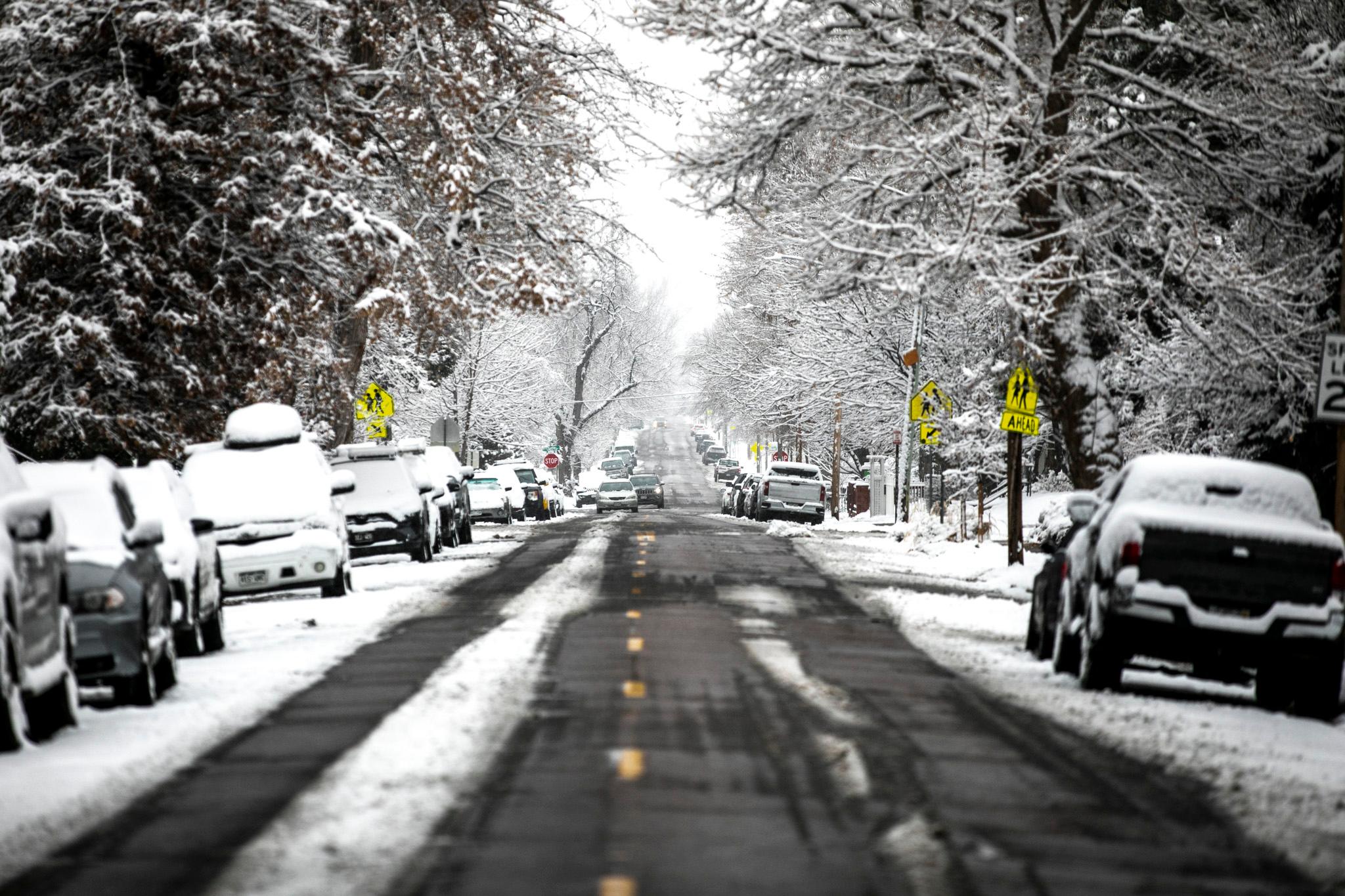
While DOTI reversed that installation shortly after, department leaders said the state of transportation in Denver has changed since then and that recent decreases in traffic along Alameda makes it ripe for a renewed lane repurposing.
Mayor Mike Johnston has chimed in occasionally to defend DOTI and push back against claims that the city is catering to its richest residents. On City Cast Denver, he described pushback against DOTI as “Trumpian.”
“I think a certain side of this debate has been Trumpian in this conversation,” Johnston said on the podcast. “Which is to take what is a traffic engineering question and turn it into a conspiracy story about personal attacks.”
What’s next for the road diet?
In February, DOTI said it would only test the road diet along a half-mile stretch, between Emerson and Franklin streets. However, the city has now indicated it will now install the test project along the entire one-mile stretch from Lincoln to Franklin streets.
The demonstration is set to begin in summer and end early in 2027, but the city council would need to approve funding first. DOTI has not determined how much it would cost, nor has it solicited requests for proposals from potential contractors.
Once approved, a contractor will repaint Alameda, using a type of paint that can easily be removed or changed, allowing DOTI to be “a little more nimble than we normally would be,” according to Molly Lanphier, a community liaison with DOTI.
As things stand, DOTI will only test the original design, known as a full lane repurposing, and not the revised partial diet.
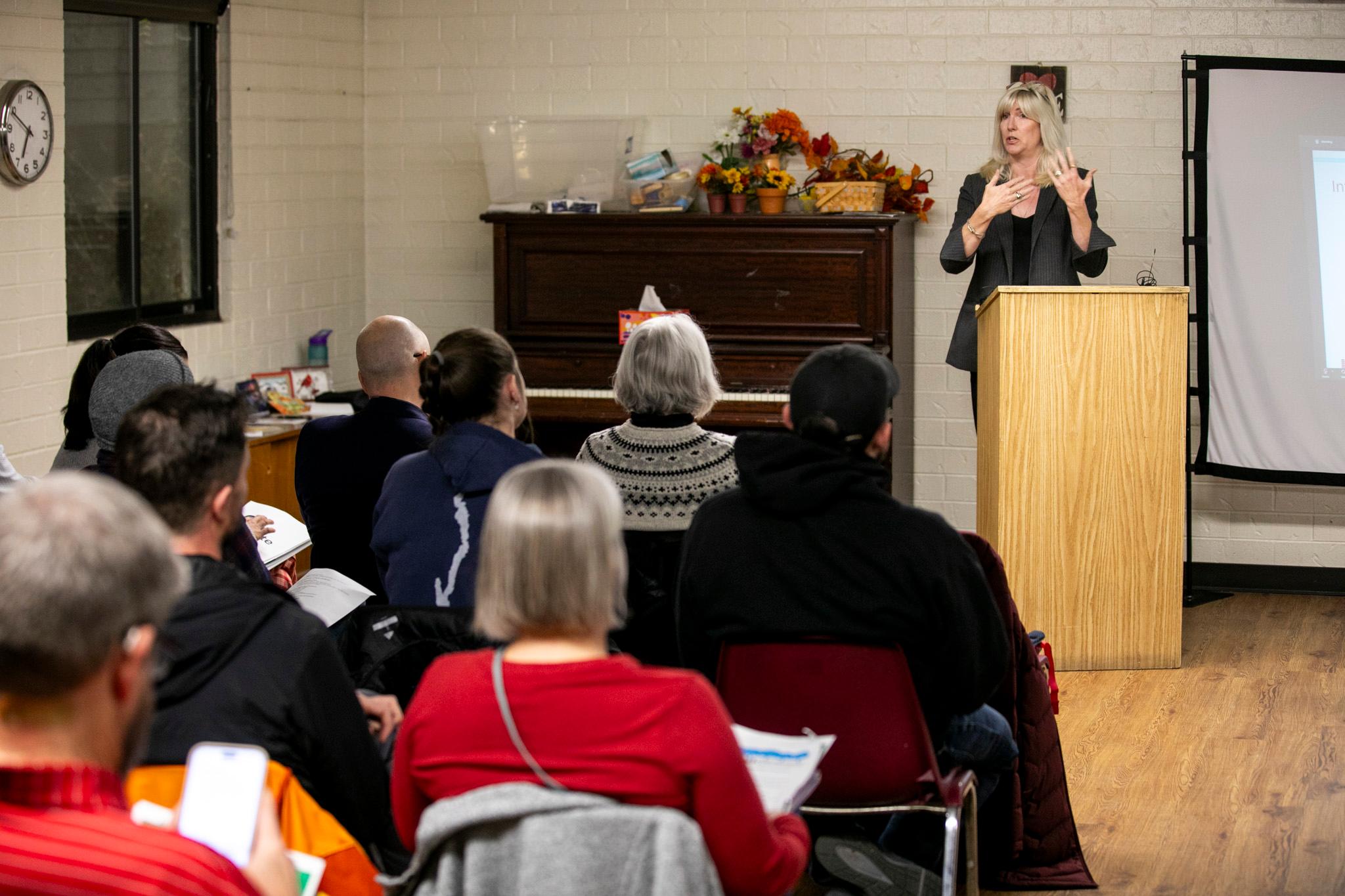
The department has convened a working group including both sides of the debate, which will help determine the factors of success for the pilot. Data collected from the pilot will measure “speeds, volumes, queuing, diversion, crashes, and comfort,” among other factors. Findings from the pilot program will be "applied to a final design."
Members of the working group had asked the city to commit to installing the pilot on the full stretch of Alameda, rather than just a portion. City officials concurred.
“But while many details of the pilot are still to be finalized, we are comfortable saying that, at this point and based on the feedback received through the stakeholder process to date, we concur that moving forward with deployment of the full lane reduction across the project corridor is an appropriate scope for the pilot demonstration,” responded Lanphier, the DOTI community liaison, in an email on March 25.
DOTI will host a public meeting to give updates about Alameda on April 16.
More comments and questions? Drop a line.