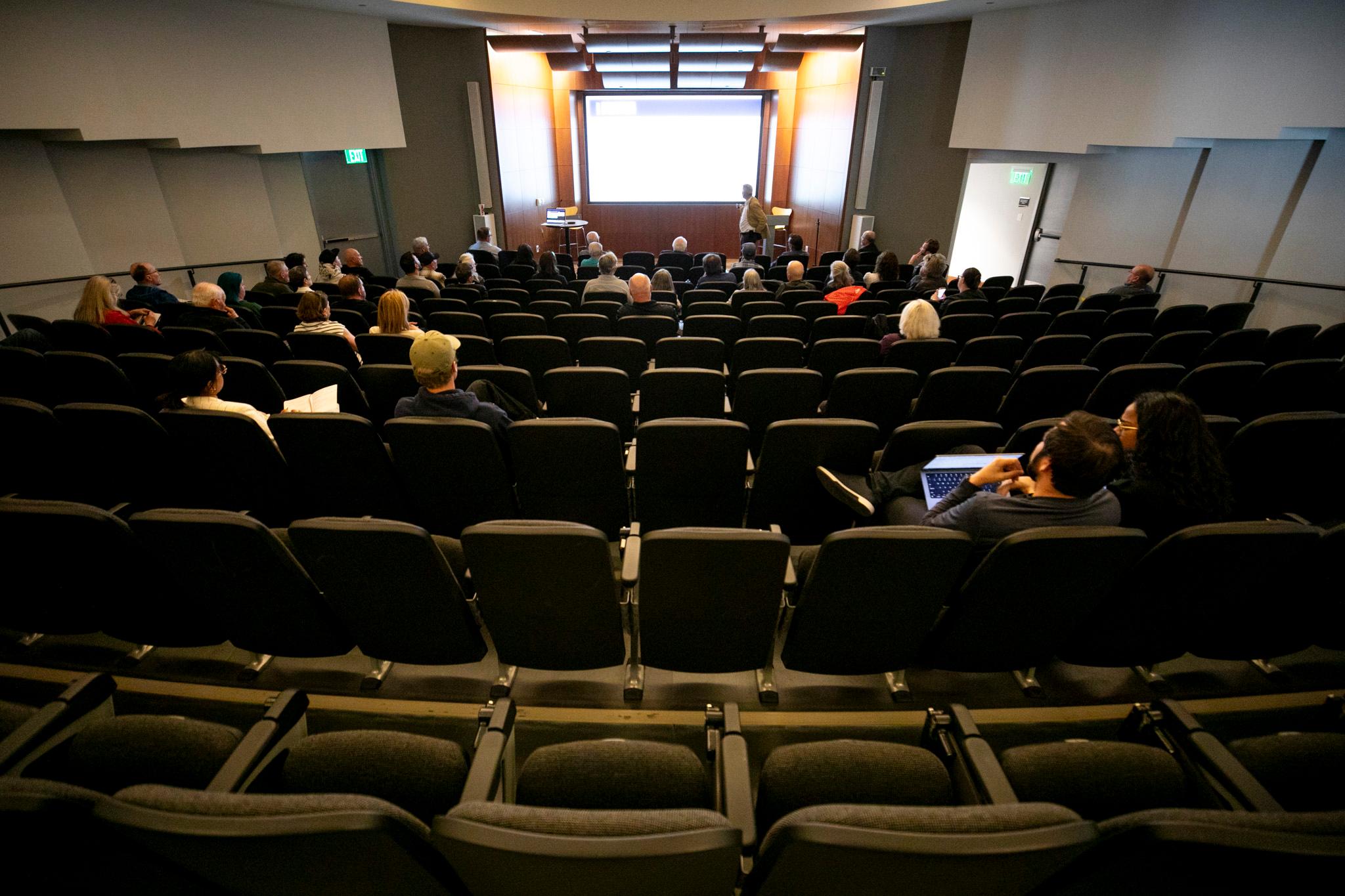
In an auditorium with more empty seats than filled ones, an entrepreneur presented a grand vision of an urban gondola shuttling passengers along miles of cables above downtown Denver.
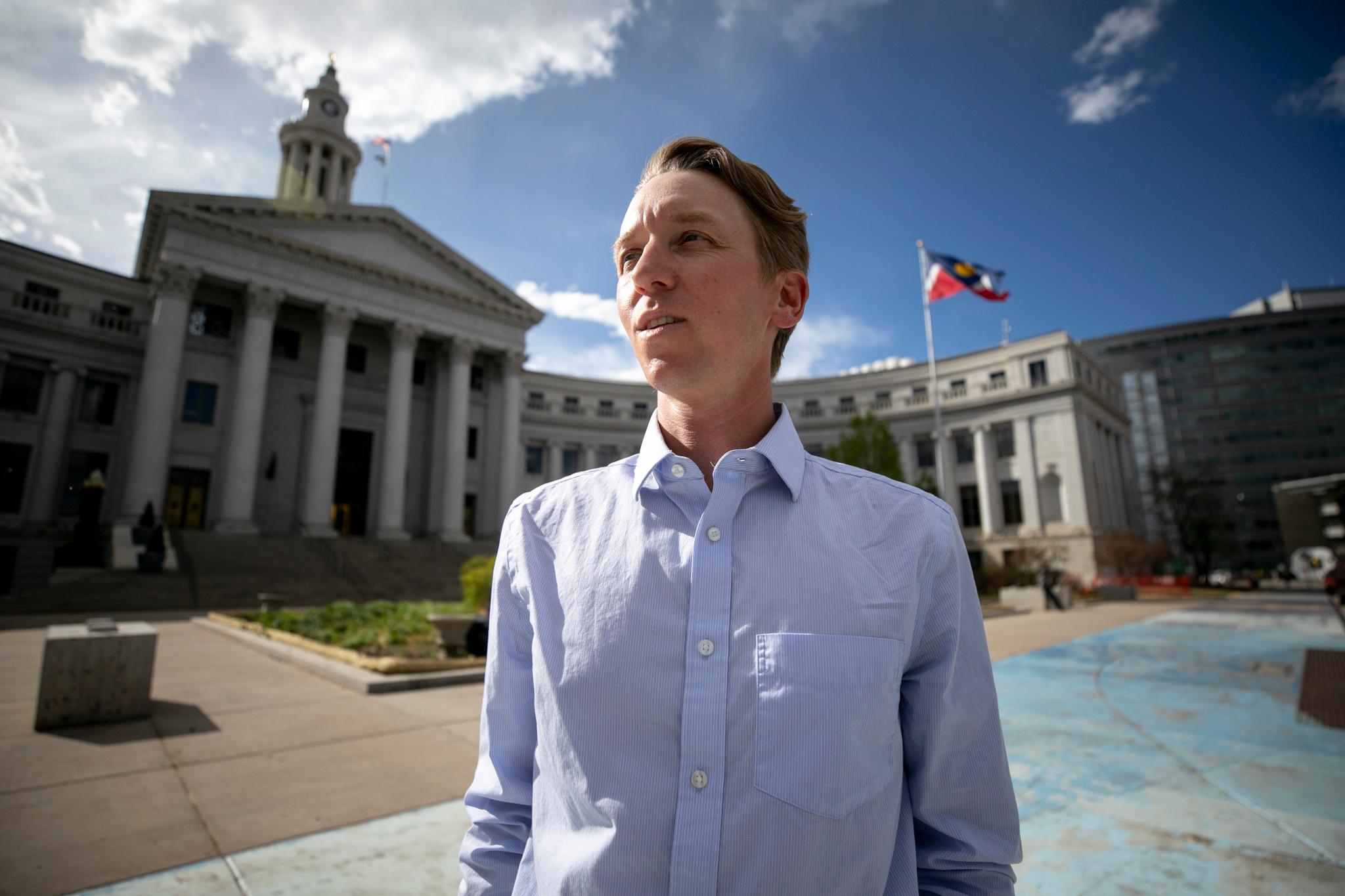
Ryan Ross, a businessman and the founder of New Downtown Denver, is the mastermind of the plan. But at a meeting with about 50 people in attendance and no presence from city officials, he acknowledged that the city hasn’t quite caught gondola fever.
“There is no parade on this issue,” said Ryan Ross, the founder of the nonprofit New Downtown Denver and mastermind behind the gondola. “I would add: yet.”
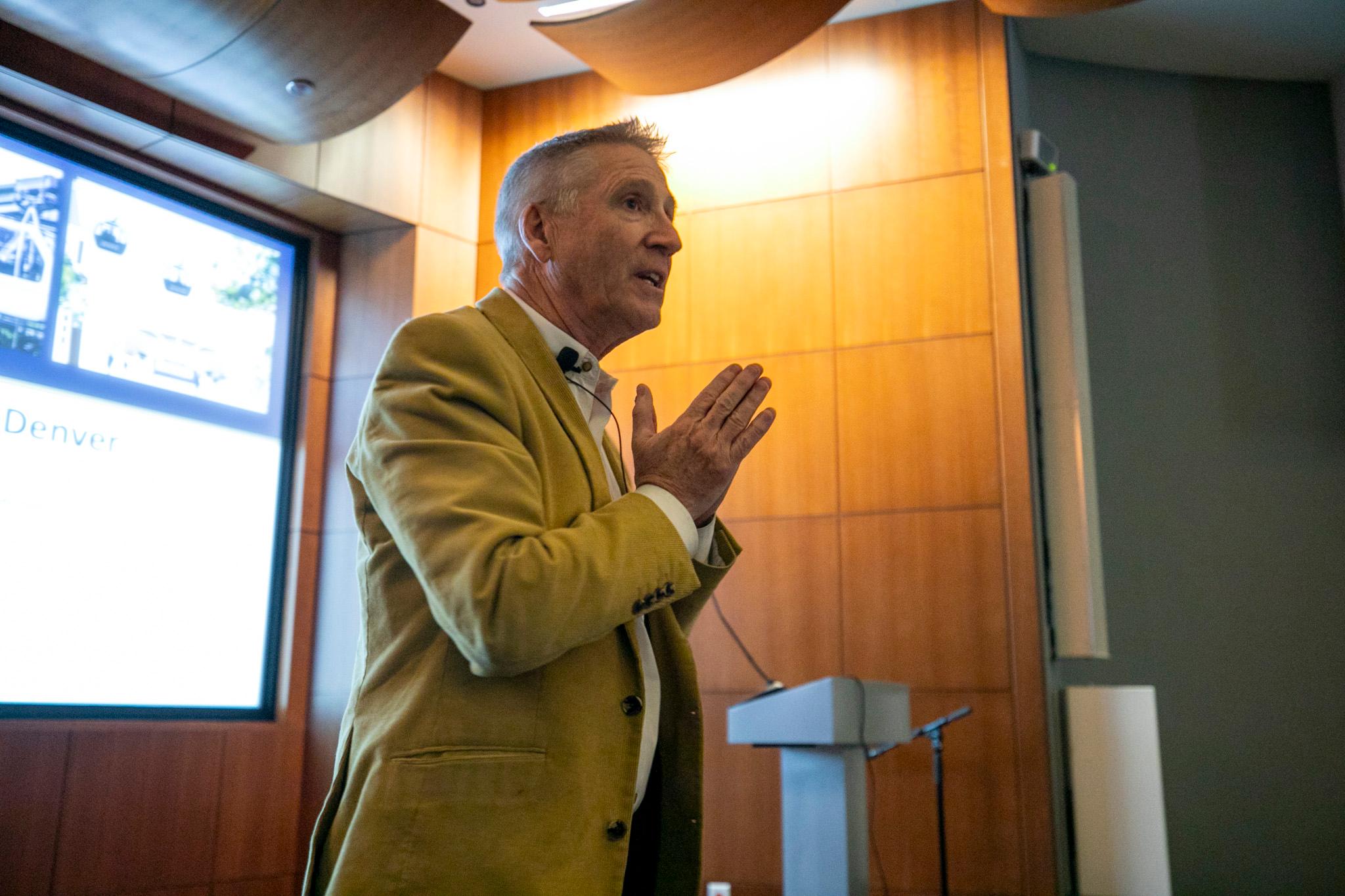
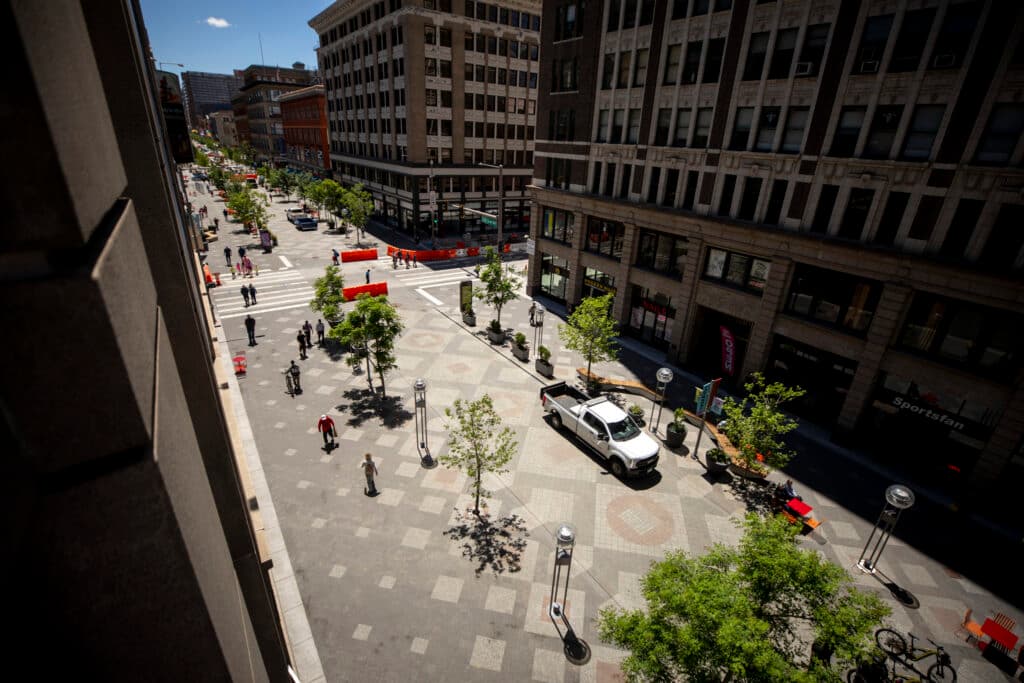
Ross has proposed a system connecting landmarks like Union Station, Civic Center, the Auraria campus and Elitch Gardens — all at an estimated cost of $120 million to $340 million. It's part of his futuristic carnival vision for downtown, which includes moving sidewalks, a Ferris wheel taller than the London Eye and a giant amphitheater at the Tabor Center.
He said recent improvements to downtown — namely the $175 million reconstruction of 16th Street — lack ambition. Instead, Ross — who has led a local private investigations firm — is calling for something with a “wow factor.”
Ross and his allies have pressed a marketing campaign for the ideas, complete with a website, renderings, industry consultants, media coverage and the meeting on Tuesday that they described as a “public hearing.”
But in the auditorium at the old Denver Post building, they faced people skeptical of another big infrastructure project.
Meeting attendees weren’t exactly sold.
In the iconic “Marge vs. the Monorail” episode of “The Simpsons,” a fast-talking salesman uses song and dance to convince Springfield to build a grand monorail train instead of fixing the town’s decrepit main street.
“What’d I say? Monorail!”
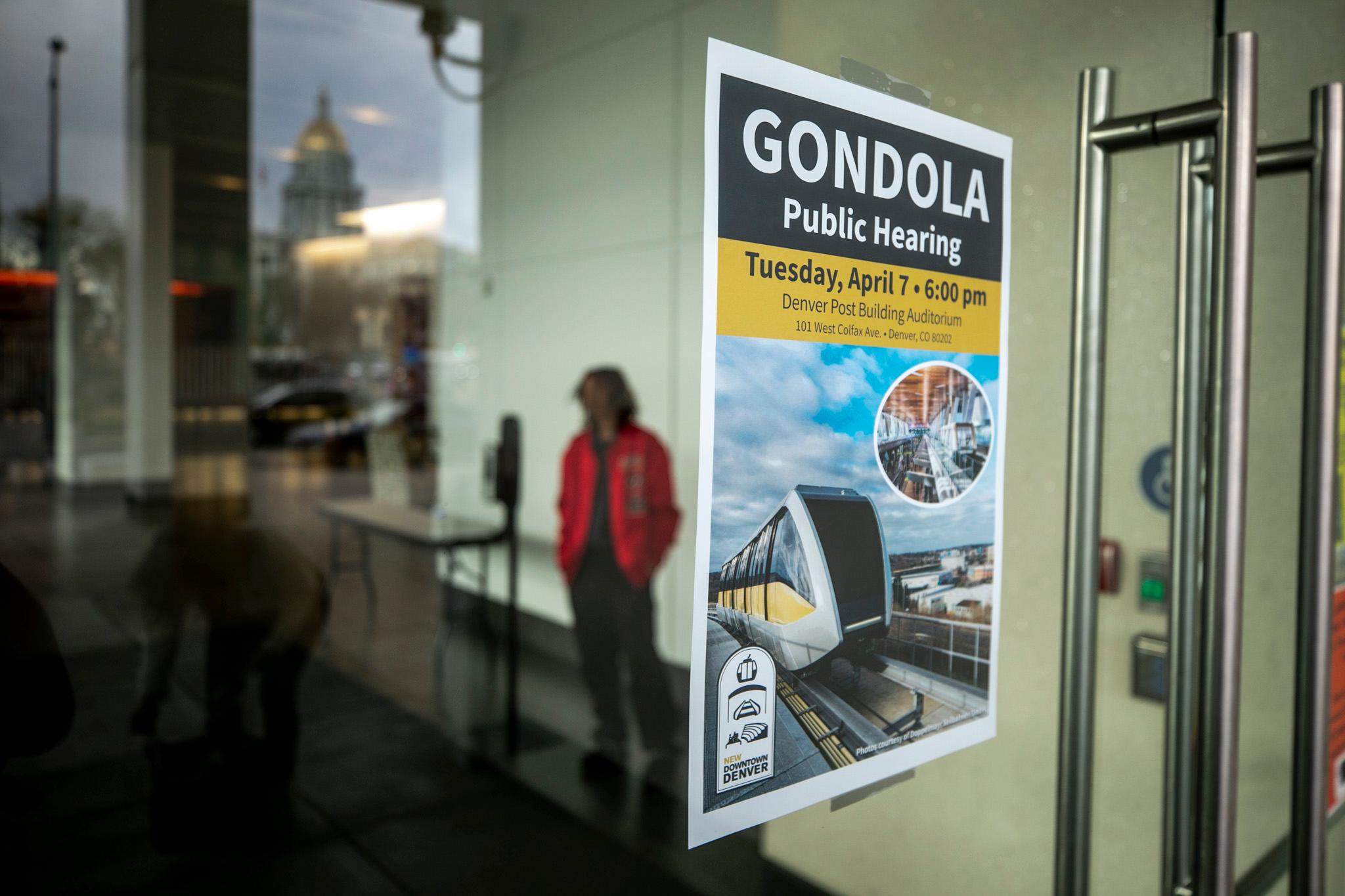
The episode has come up often in online discussions about the proposed gondola. A poster advertising the Tuesday meeting included an elevated train, inviting even more comparisons.
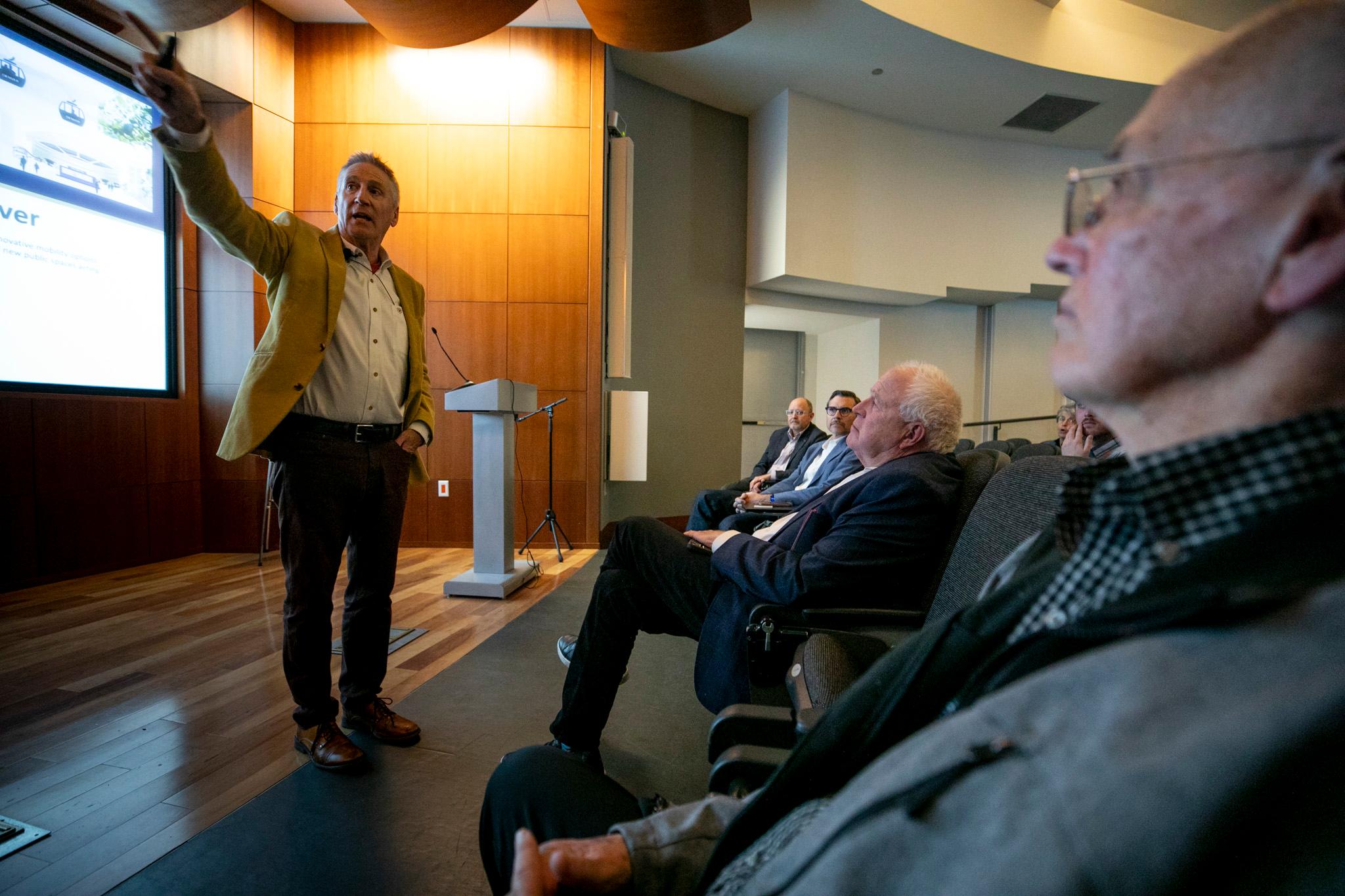
But during the meeting, no one was singing. Ross invited three manufacturers of aerial tramways to present to the audience about their expertise in building these systems. Each went into exacting detail about the benefits of gondolas.
During the first presentation, by a representative of lift maker Doppelmayr, one attendee — downtown property owner Anthony Andora — eventually butted in to ask questions.
“Are we going to get a chance — I mean this has been going on for a while — to ask questions?” Andora said.
He and others wanted to know whether a gondola would cause another downtown business downturn.
“We want to make sure that whatever happens with downtown Denver, that we're thinking about the businesses, the local businesses that are here and that they're being taken care of and that they're being supported,” Andora said. “Because I think we're starting to see a turn now, finally, after several years, and we want to make sure nothing slows that turn down.”
Instead of addressing those concerns, the Doppelmayr representative continued talking about real-life examples of urban gondolas.
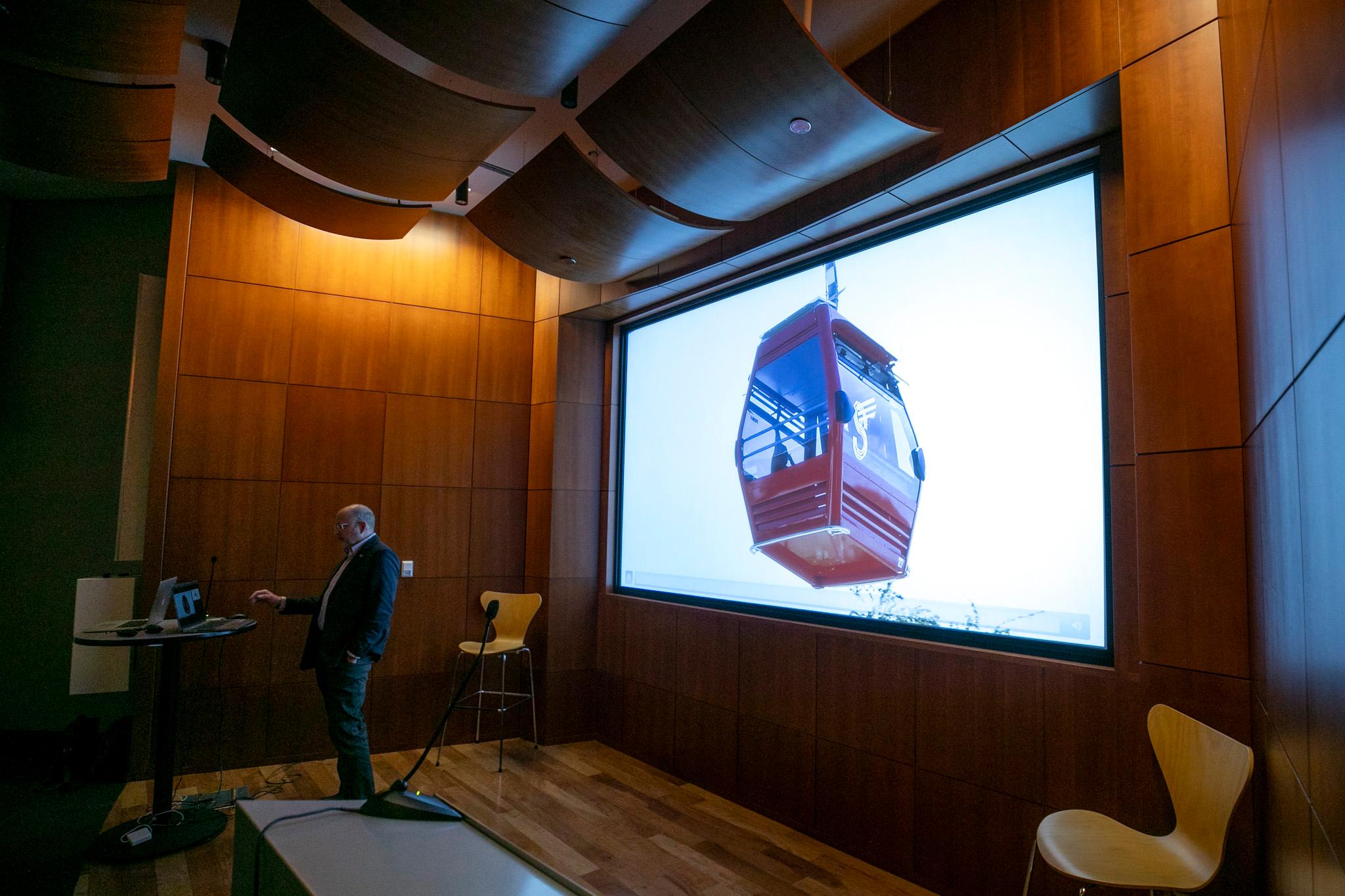
That was just the first 40 minutes of the meeting. Two more manufacturers presented, facing similar questions and comments from the audience. Many in the already small crowd left early, to the point that the final presenter, Peter Muller with Vuba, pleaded with those who remained to stay for his presentation. By the end of the two-hour meeting, about 25 people were left.
Presenters focused heavily on proof of concept. Doppelmayr recently helped establish Europe’s longest aerial cable car line in France, which opened in December and promises to shuttle 11,000 passengers a day on a 2.7-mile route. In Colombia, the city of Medellín has a gondola system with six lines that help passengers across uneven terrain. The three manufacturers also went into the nitty-gritty of gondolas, like support beam sizes and speeds.
Some people said the meeting wasn’t what they expected.
Several said the presentations were too granular and were perhaps getting ahead of themselves.
Julie Straehle, who left early, said she agrees that Denver needs a landmark like the St. Louis Arch or the Eiffel Tower. And while she likes the idea of a gondola somewhere in Denver, she isn’t sold on what she saw during the meeting.
“It is a dream right now,” Straehle said.
Alex Norgren, a metallurgist and engineer by trade, came to critique Ross’ Ferris wheel idea, dismissing what he described as shoddy concept art and unrealistic renderings for the project. But since the Ferris wheel wasn’t discussed at the meeting, he was left to reflect on the gondola.
“I think it could be reevaluated in 20 years, but we paid for the 16th Street Mall, and I see no reason to undo that and basically throw away that investment right off the bat,” he said.
What would it take for this to happen?
The meeting on Tuesday was a first step in Ross’ grand plan. He hopes to hold more gatherings to engage with Denverites and build public support.
For the project to move forward, it would need investment, which could come from a variety of sources.
In years past, Ross has floated the idea of getting the Downtown Denver Development Authority or the 2025 Vibrant Denver bond package to foot the bill. But now he says that the current rules wouldn’t allow projects like his to receive taxpayer funds.
He wrote in Westword that his organization has received an offer from a transportation company to “finance 100% of the construction costs in return for annual payments once the system is operating, derived from fare, sponsorship and advertising revenue.”
If that doesn’t work out, he said, the project would likely need public funding.
Ross claims the gondola could make up to $65 million annually, in addition to revenue from the other projects he’d proposed, like the Ferris wheel. Revenue could also be raised by station naming rights, advertising and more.
The most immediate cost is a scoping study. He said that $200,000 from a public-private partnership is needed to move it forward.
“That task force would then issue a request for proposals to the companies that design and build these automatic transit network systems and any other big-picture proposals to revitalize downtown (such as a Ferris wheel), and then evaluate the responses and green-light the one they like best, or mix-and-match from two or more of the proposals,” Ross wrote in Westword.
After the meeting, Ross wasn’t fazed by the crowd’s mixed reaction. He said a process like this will inevitably take time, and he’s hopeful that the city will begin to take the proposal seriously soon.
He took inspiration from a billboard seen in Denver depicting the Wright Brothers, who pioneered aviation.
“This is the right idea for Denver, and someday it will fly,” he said.