Have testicles and don’t want kids … ever? Now, you can head on down to Jefferson County Public Health.
For the first time, the local health agency will offer in-house vasectomies on a sliding scale. Each Friday, around 10 patients can get a scalpel-free contraceptive operation.
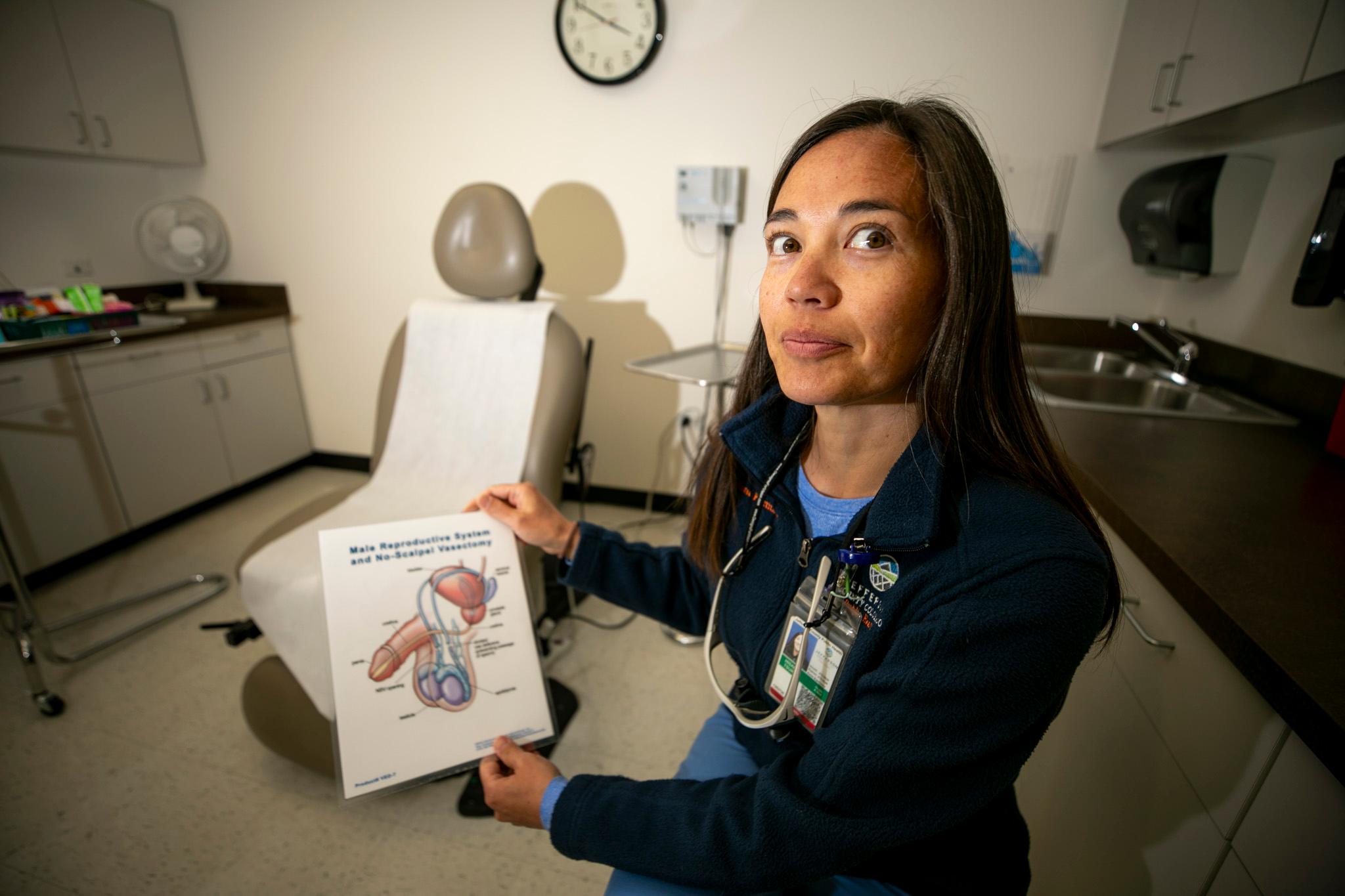
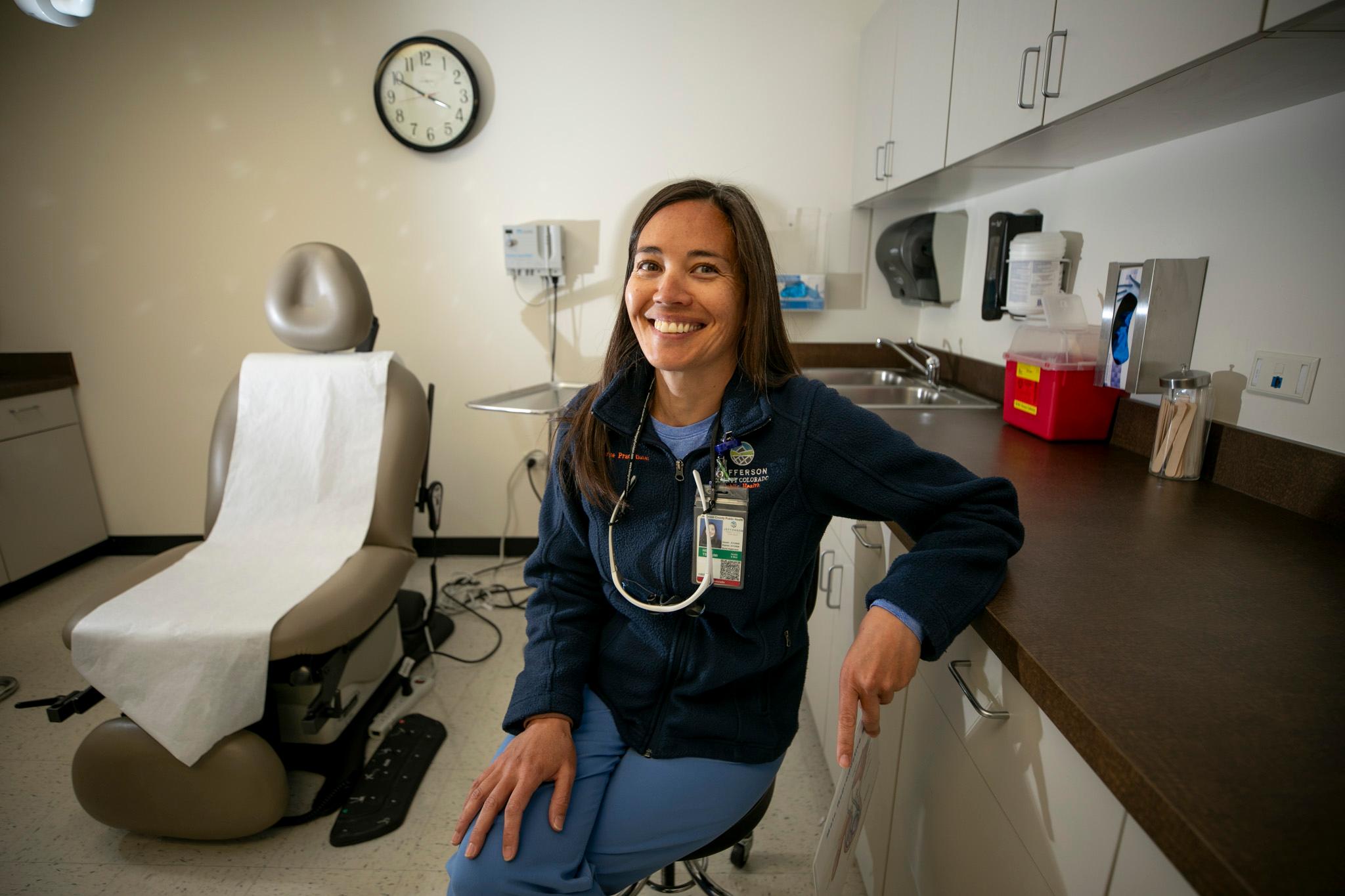
“We are really just wanting to ensure that everyone in the community has the opportunity to access affordable reproductive healthcare and contraception," said Hisae Tsurumi, a sexual health nurse practitioner for Jefferson County Public Health.
Federal funding for reproductive health care has been far from certain this year. The clinic hopes the money raised from in-house vasectomies will subsidize its other sexual health programs.
Offering in-house vasectomies is a rare move for public clinics like JCPH’s, though Denver Health offers similar procedures. In 2012, researchers found that only about 7% of publicly funded family planning organizations offered vasectomies. It’s far more common to offer female contraception.
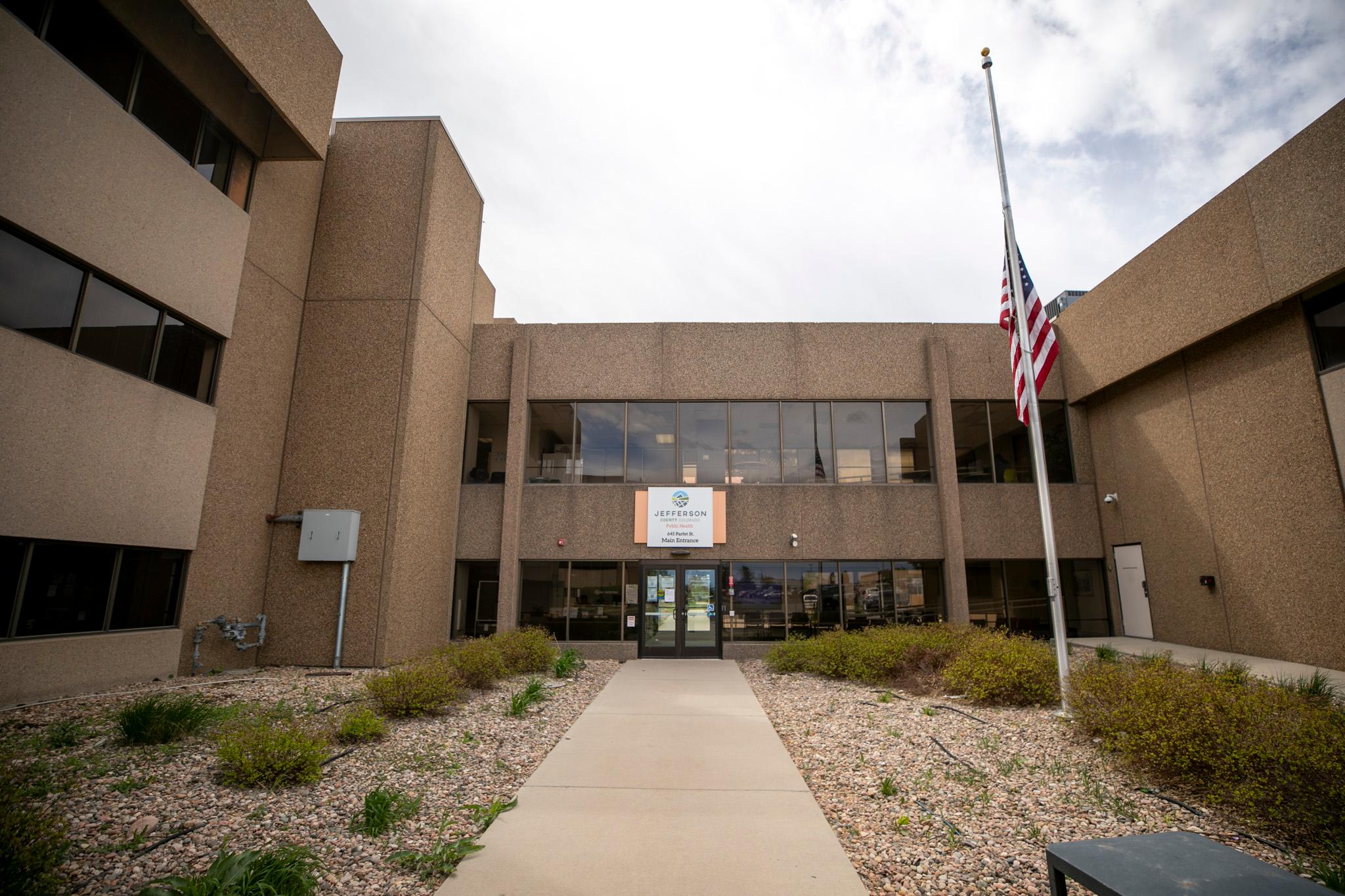
Clients do not have to live in Jefferson County. The procedures will be offered at the Lakewood clinic at 645 Parfet St.
Vasectomy costs vary depending on the patients’ insurance and economic need, but they can expect to pay around $800 in Jefferson County and, at some private clinics, upward of $3,000 without insurance.
There’s also a quasi-philanthropic side to the procedure. Jefferson County treats vasectomies like cookies in a bake sale.
Money made from the procedures goes to funding all of the other work of Jefferson County’s sexual health clinic: screening and treatment for sexually transmitted infections, family planning, contraception and more.
JCPH does not offer tubal ligation, a permanent contraception for women, though it does offer other forms of birth control.
How do vasectomies work?
Tsurumi walked Denverite through the process, which is performed by nurses.
For starters, there are no needles or scalpels involved.
The clinic injects lidocaine, an anesthetic, through the skin with a high-pressure tool – a process that is hardly painful. Then, the practitioners use an instrument to make a small opening.
“We don't make an incision with a scalpel in the skin of the scrotum, which has been the traditional method,” Tsurumi said. “We kind of open the skin about a quarter inch and pull out the vas deferens, which is the tube that carries the sperm.”
Within a day or two, most patients don’t even notice the opening. Semen can still hang around the vas deferens for several months afterward; a semen test can show if the surgery worked.
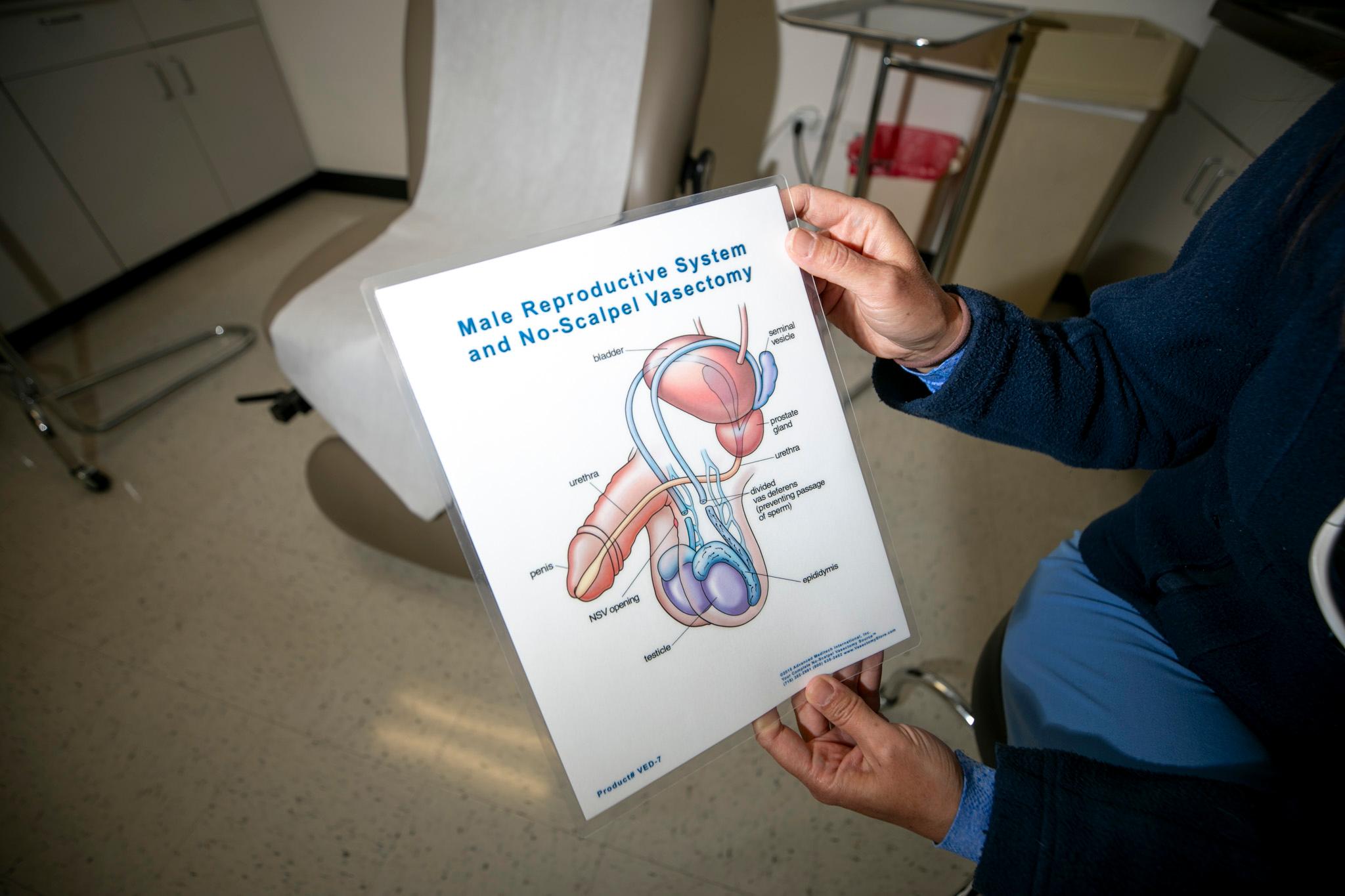
The scalpel-free, needle-free vasectomy is “minimally invasive, highly effective, very low complication rate, very quick recovery,” Tsurumi said.
Vasectomies are considered permanent operations, though there’s a lot of talk about them being reversible.
“Although reversals are possible, they are expensive, have higher risks than a vasectomy, and there is no guarantee the reversal will work,” Denver Health notes on its website.
Many clinics provide consultations and an offer of sperm saving to people considering the procedure.
Will a vasectomy diminish a person’s manliness?
In short: No.
“There's a common misconception among men that it somehow decreases your manliness, it changes your testosterone levels, it decreases your ability to have an erection or have the same amount of pleasure from sexual activity,” Tsurumi said.
All that is pure fiction, she said.
“We just want men to know that that is not the case,” Tsurumi said. “It's an easy, quick procedure that is reliable and does not have those sorts of common myth side effects.”
In all, about 6.8% of men ages 18-44 have had a vasectomy, according to CDC research.
By the way: A vasectomy does nothing to prevent sexually transmitted infections.
“We always recommend condoms when appropriate, and then also talking to our partners, knowing who they are, having those really good conversations so that we’re knowledgeable in our sexual activity and what we’re being exposed to,” Tsurumi said.