The last few months have been a reminder of why Denver is naturally a short-grass prairie, not a landscape shaded by a wide variety of leafy trees.
Snow drought robbed many Front Range trees of their biggest source of precipitation. Without extra water from human caretakers, experts warn trees could wither before the dual threats of dry soil and disease. Limbs have also come down in high winds and spring snowstorms, and late frosts took out the buds on many fruit trees.
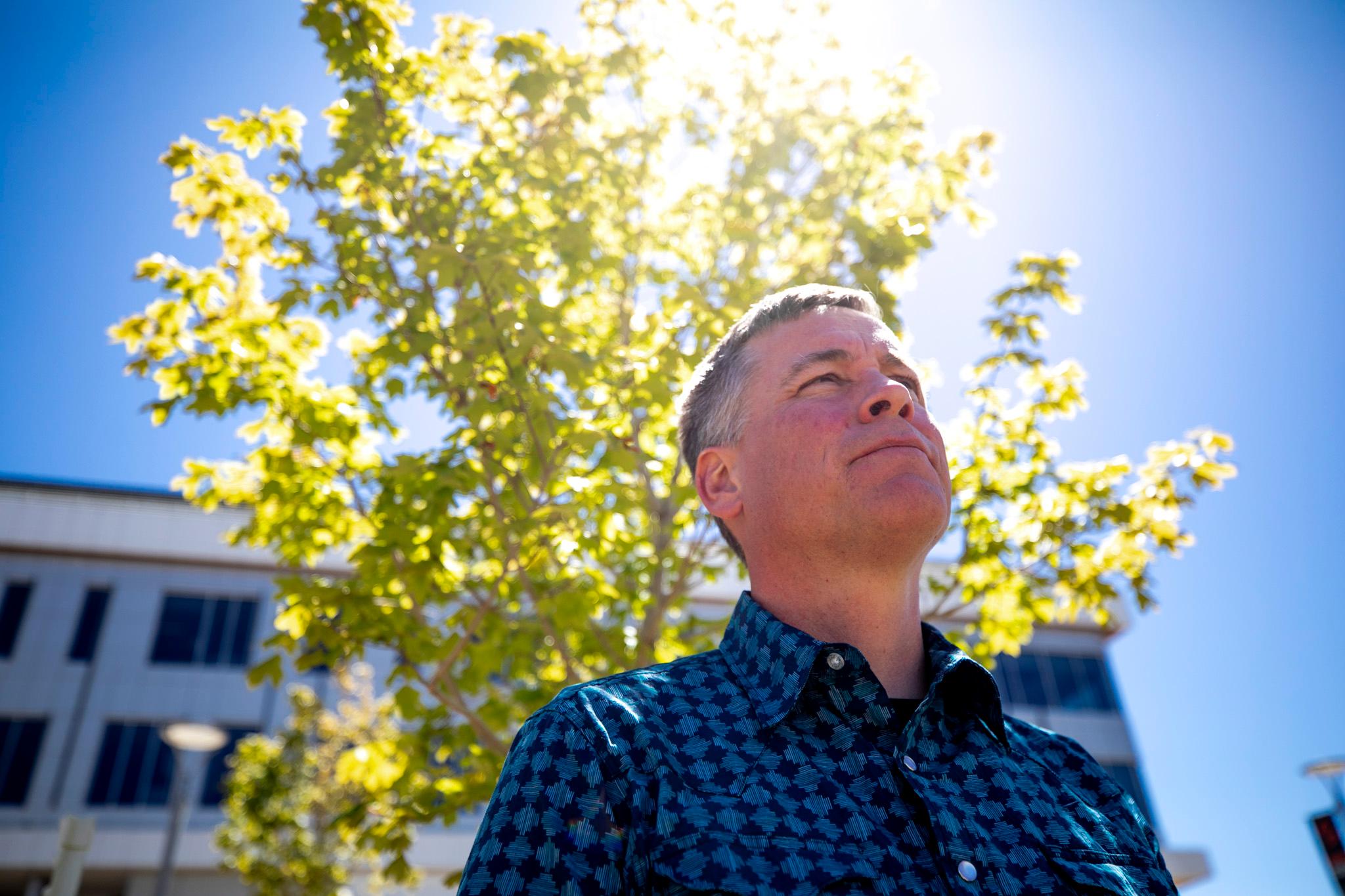
Jon Martin, a research scientist at Colorado State University, expects climate change to make life even harder for Denver’s tree canopy, right when the city needs its cooling powers more than ever.
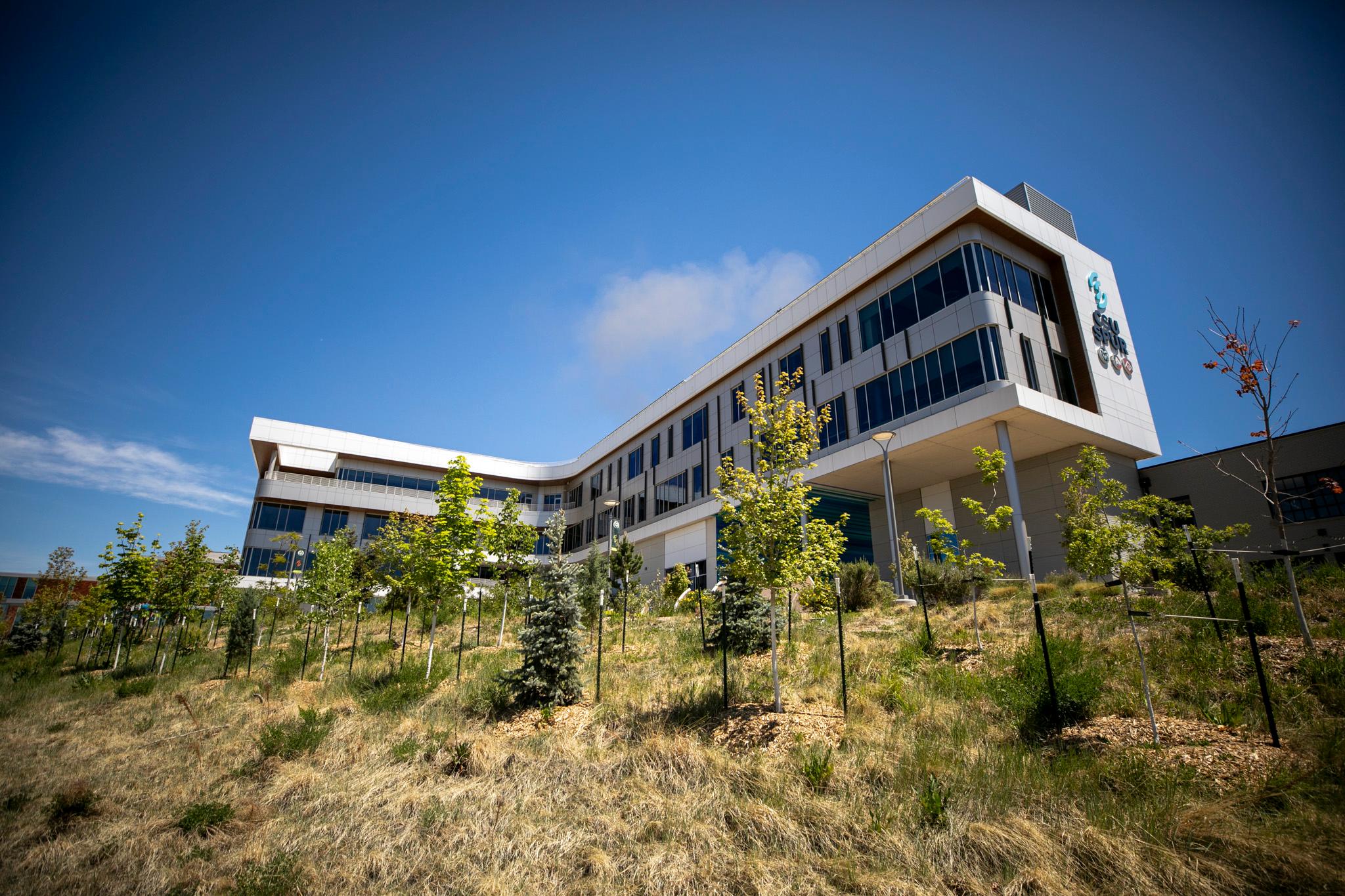
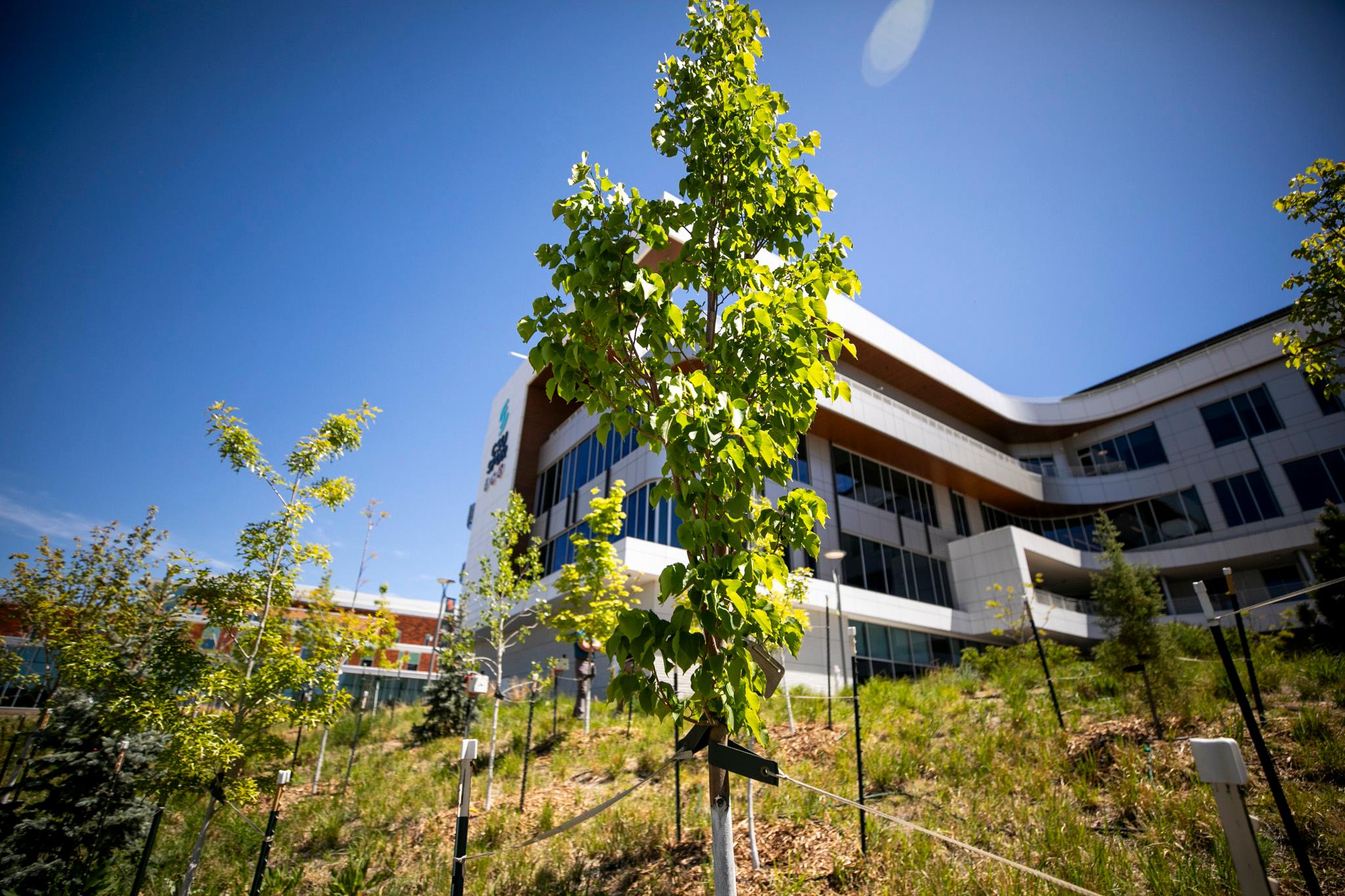
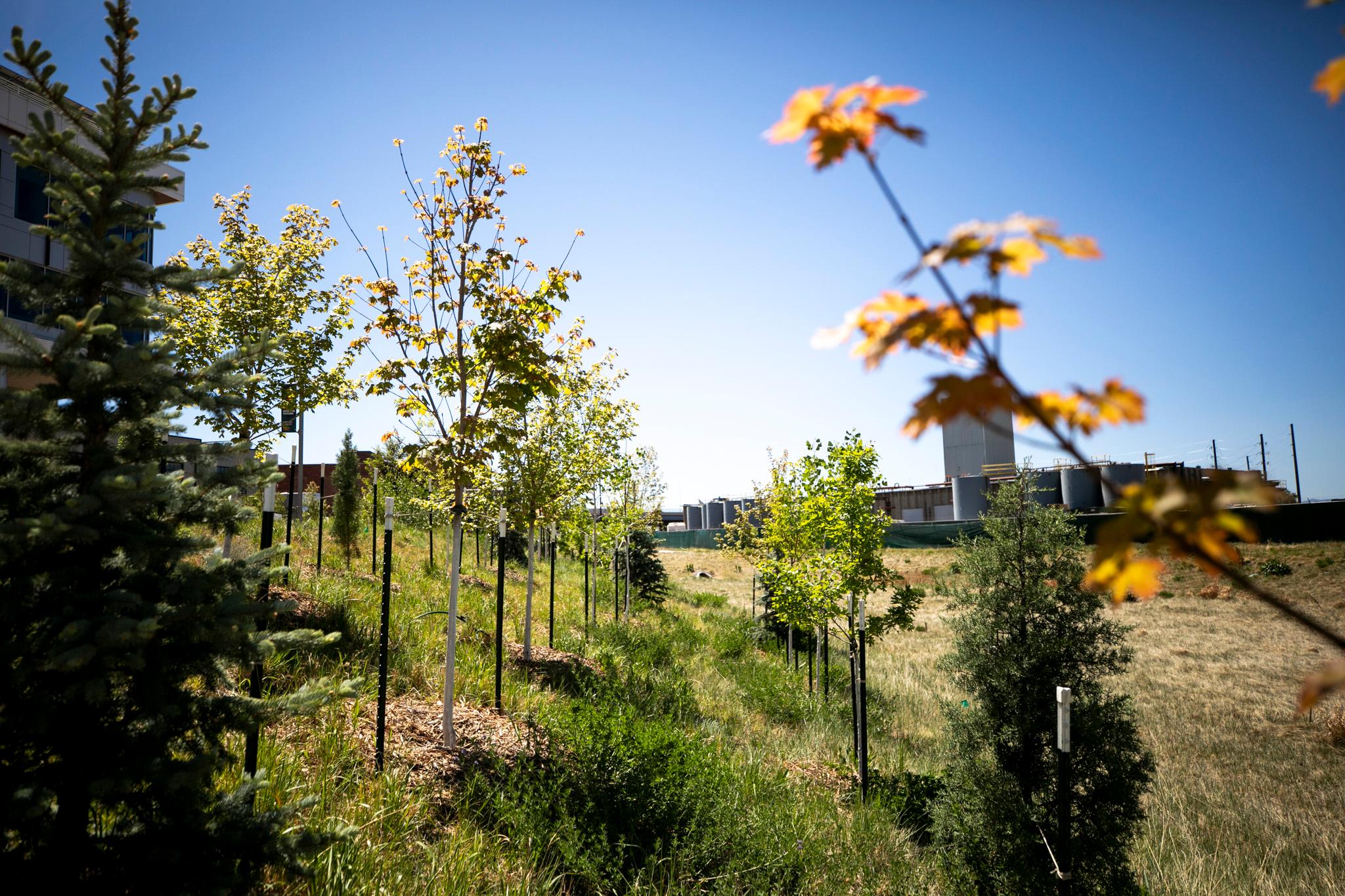
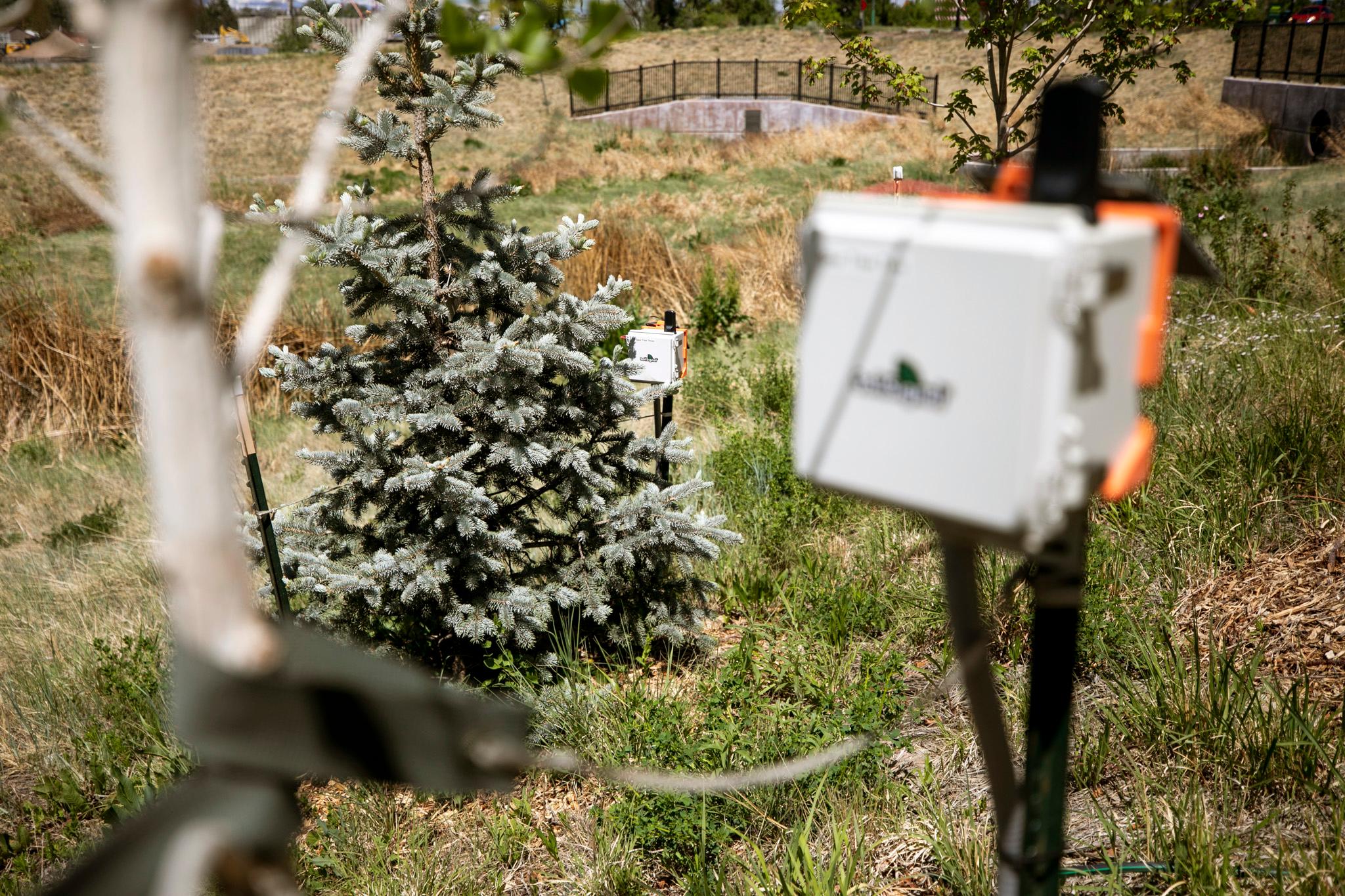
On a sun-drenched slope on the CSU Spur campus, Martin is trying to find trees capable of withstanding the tough conditions ahead. He planted the experimental grove in late 2024. It now contains 80 trees surrounded by irrigation tubes and sensors. By deliberately limiting water, Martin hopes to discover how different cultivars — both rare and common varieties — can best handle drought stress.
“We need speed,” Martin said. “We need to move faster to adopt the correct trees sooner and put them in the ground sooner.”
One tree has emerged as his early favorite.
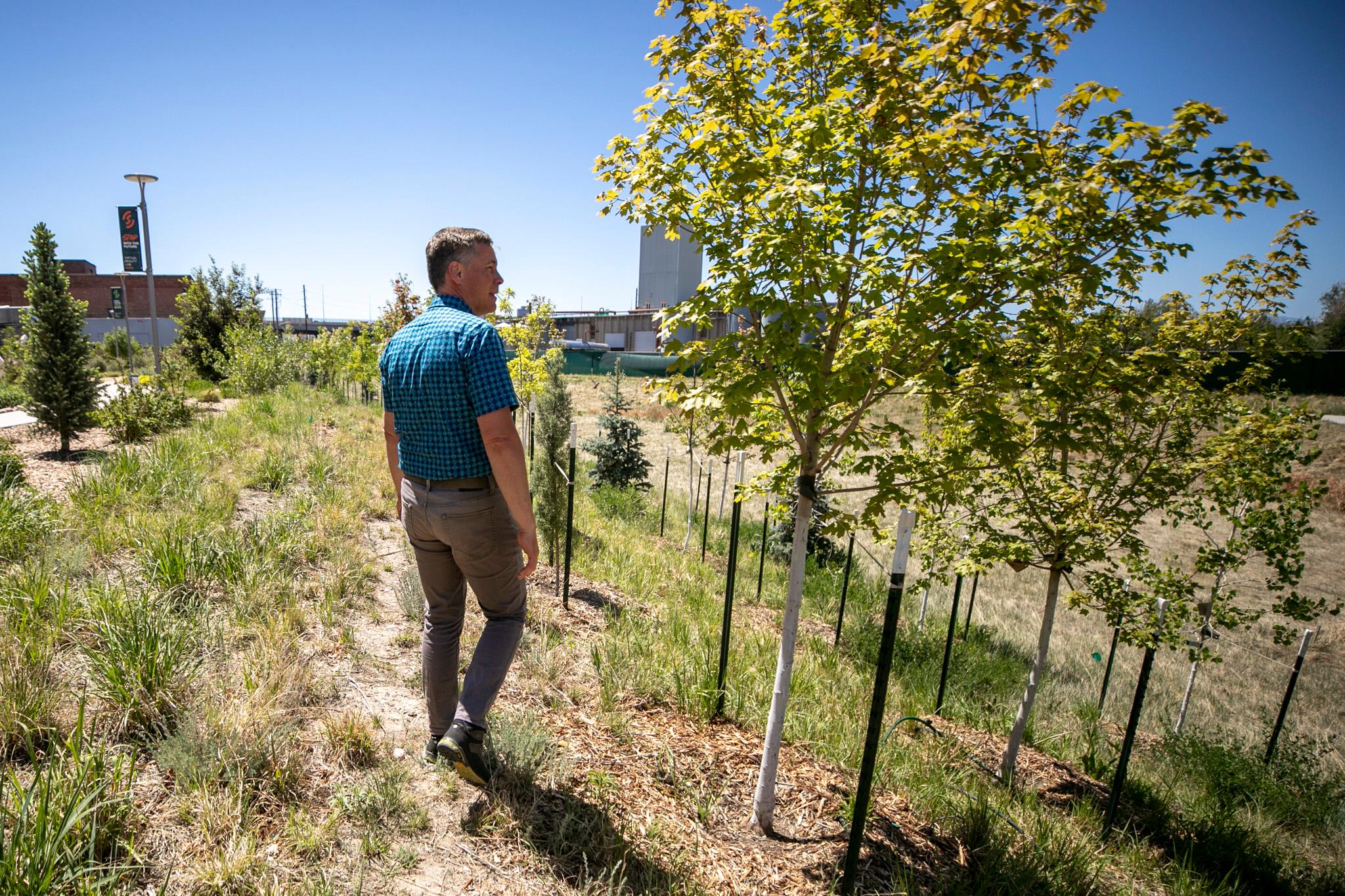
On a recent afternoon, Martin marched to the base of a big tooth maple with crimson seedpods. New Mexico State University developed the cultivar from native trees growing in the desert mountains outside Las Cruces, roughly 600 miles south of Denver.
Because it evolved in such a harsh climate, Martin expects it could prove cold-hardy and drought-tolerant enough to survive in Denver for decades. If he’s right, the maple, along with other tree options, could help expand a canopy even as climate change turns up the thermostat.
A patchy manmade forest
Denver’s urban forest has always relied on intense human management and planning.
In the Indigenous era before the city's founding, most trees in the high-plains grassland were cottonwoods, willows and box elders clustered around waterways. By the mid-1800s, however, white settlers in the region longed for expansive shade trees more common farther east.
After embracing the City Beautiful movement, Mayor Robert Speer led the charge for tree planting around the turn of the 20th century. The long-serving politician earned a reputation for giving out thousands of saplings every Arbor Day. Popular varieties at the time included elm, locust, maple and birch, according to "The Shade Trees of Denver," a guide published by the Colorado Agriculture Experiment Station in 1905.
The overview acknowledges certain varieties could “prove to be unsuited to our conditions.” Early tree planting was an experiment to find non-native trees that could scrape out a life as a transplant.
A 2019 study led by the Denver Botanic Garden tried to identify which trees had found the most success. It relied on a tree survey conducted more than half a century earlier by Al Rollinger, a young landscape architect unsatisfied with the information on the city’s trees. A team later tried to track down more than 1,100 individual trees on his list, finding many fast-growing trees like maples and poplars had started to succumb to old age. Oaks represent most of the city's longest living trees.
It also confirmed disease as a leading threat to trees across the city. Elm trees proved an initial favorite of Denver’s earliest settlers, but the species suffered massive losses after Dutch elm disease arrived in 1948.
Another die-off is likely coming after the appearance of the emerald ash borer last year. With almost 330,000 ash trees in Denver, the city stands to lose roughly one-sixth of its trees to the tiny insect. The city is responding through its Be A Smart Ash program, which helps residents identify ash trees to treat healthy individuals and replace others with a different variety.
Martin sees his experiments on the sunny hillside as one way to help. He hopes his results convince cities to add newer varieties to their approved tree lists and give landscapers and residents the confidence to plant them. The greater the overall diversity, the less likely any single threat could trigger a canopywide collapse.
That’s why he thinks a single “unicorn tree” will never come to Denver’s rescue. Even native trees like cottonwoods have their issues. The species might grow rapidly, but it requires intensive maintenance due to its soft wood prone to dropping massive branches.
“Consumers might hone in on a single tree, a single cultivar, and be excited about that,” Martin said. “It’ll sell well, which is great, but it may narrow diversity in the urban forest, and that’s less helpful in the long term.”
An expanding, less uniform canopy
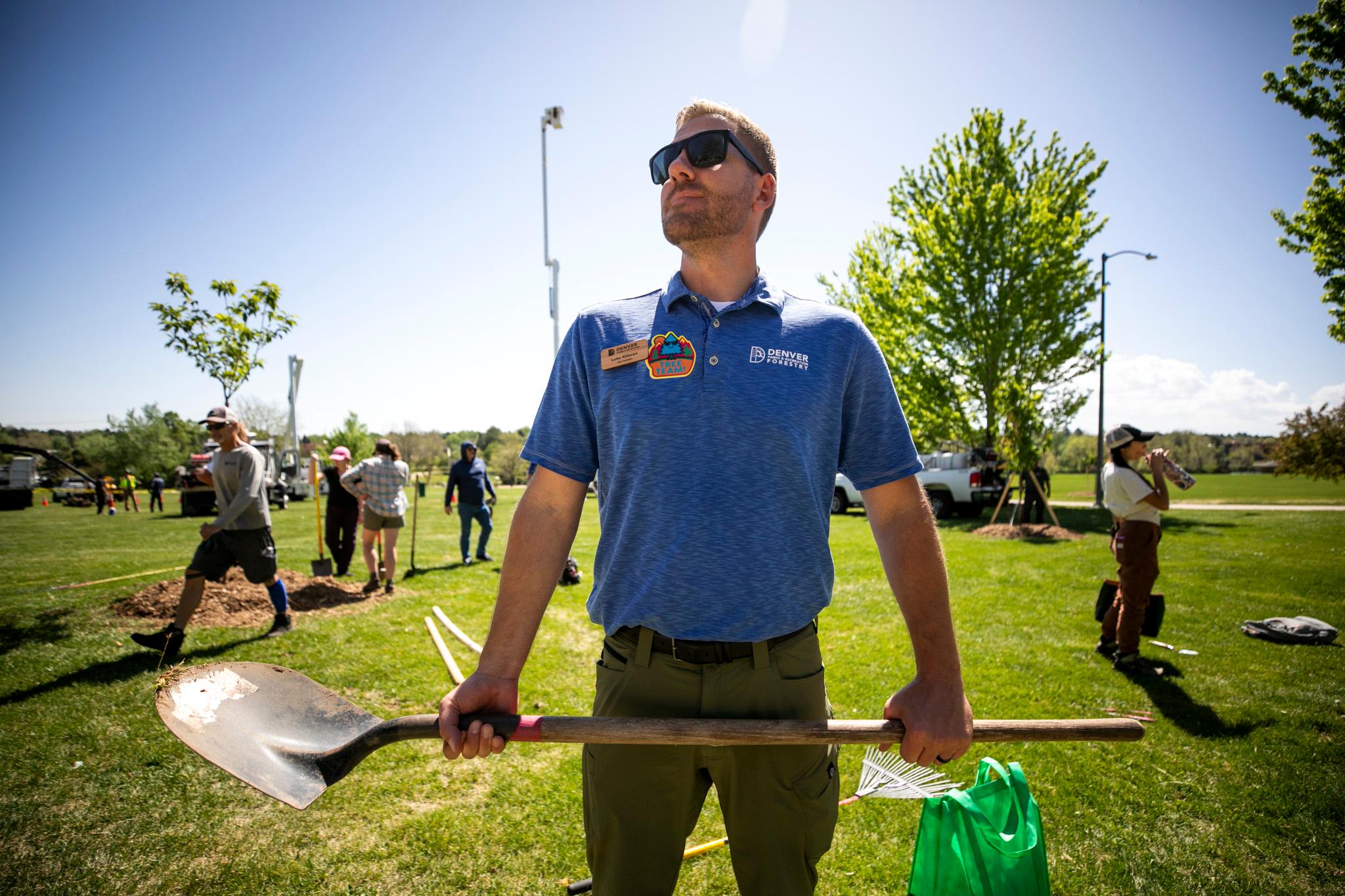
Luke Killoran, Denver’s urban forester, isn’t involved in the experimental grove at CSU, but he agrees the city needs a more eclectic tree canopy.
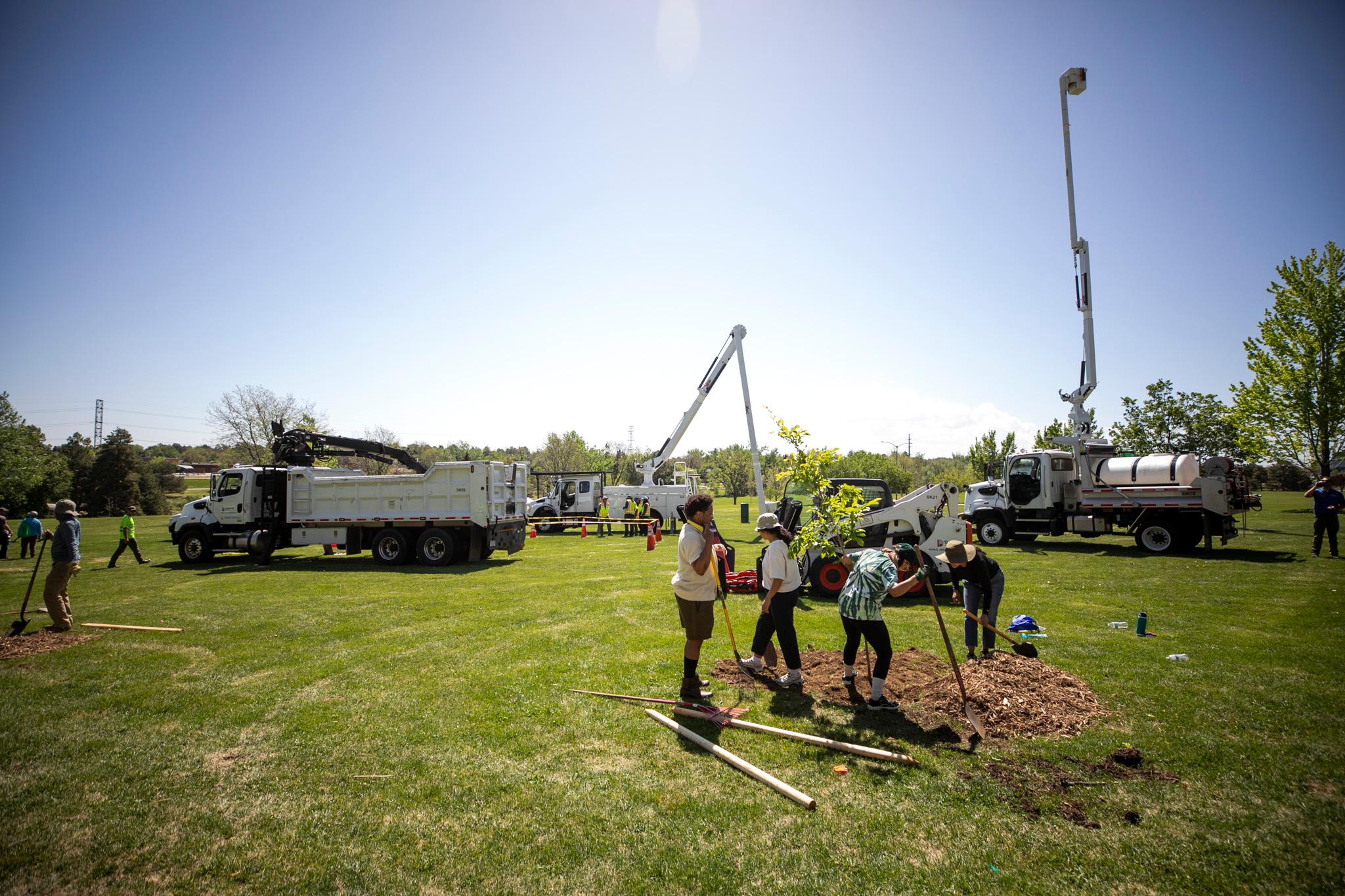
At an Arbor Day event in Denver’s Rosamond Park, Killoran oversaw city staff and volunteers planting 130 trees. The project sank a total of 47 different cultivars into the relatively unshaded greenspace, including oaks, elms, maples, pines, catalpas and tulip trees.
One tree he sees as especially promising is the “superhardy, bombproof, awesome” Kentucky Coffee Tree. The cultivar is drought-hardy and easily manages Denver's extreme temperature swings. Since it grows leaves later in the spring, Killoran said it's also less likely to lose large branches in spring snowstorms.
Killoran also appreciates elms for their rapid growth. While the threat of Dutch elm disease hasn’t disappeared, the city has held back the disease in recent decades, and the tree’s broad canopy could help combat dangerous urban heat.
It’s also important that trees are planted in the places most vulnerable to rising temperatures, Killoran said.
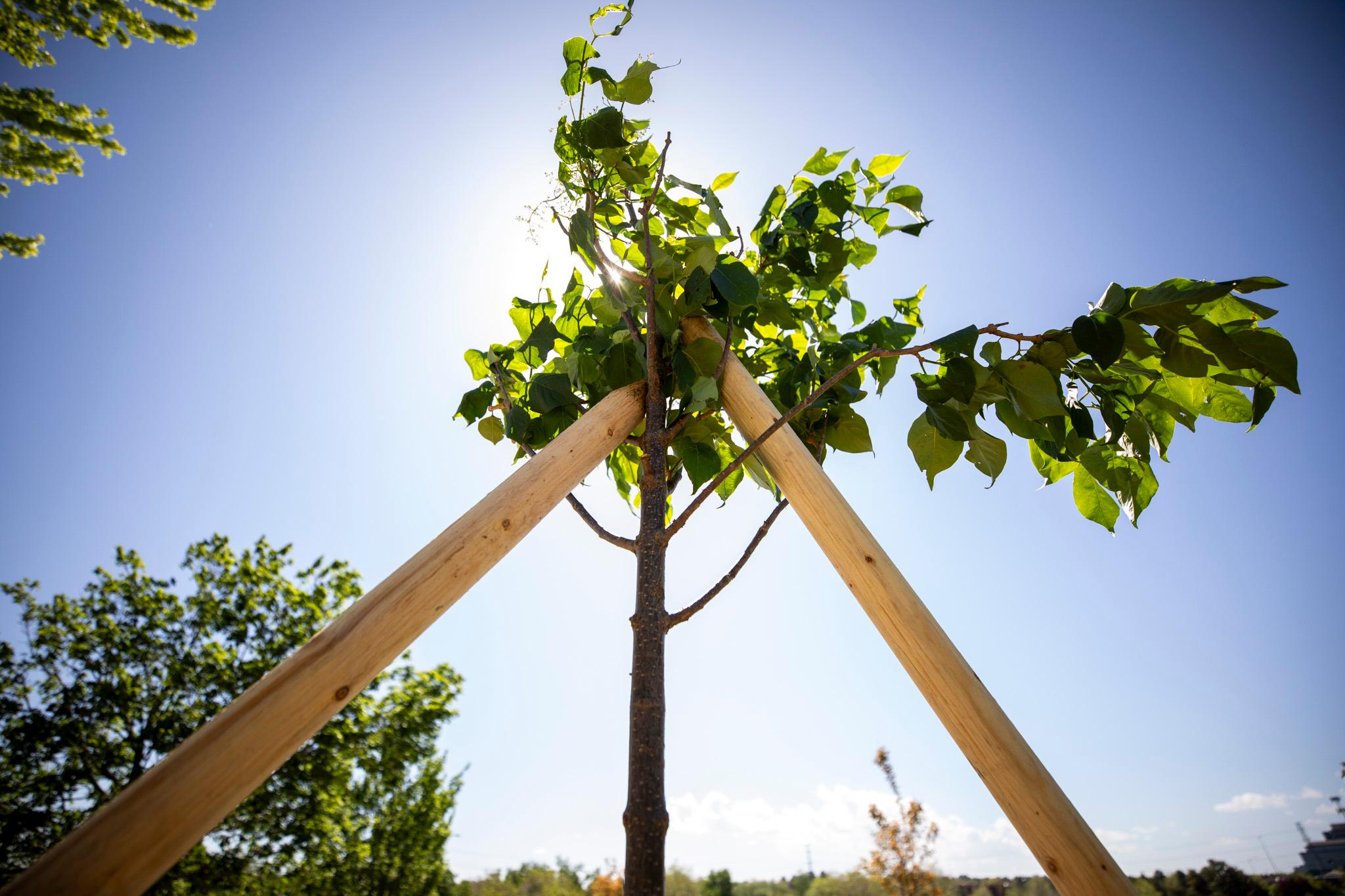
The shadiest areas are historic, wealthy neighborhoods, like Wellshire and South Park Hill, with a whopping 35% tree coverage in 2020, according to city data. In some poorer areas like Sun Valley, tree canopy sits at 4%, and coverage tends to be lower in the western and northern parts of the city. It’s another example of the “inverted L,” a pattern of inequality where economic disadvantage clusters on the city’s western and northern edges.
Excluding Denver International Airport, trees cover about 15% of the city overall. Its current urban forest strategic plan reaffirms a goal to boost the percentage to 20%, a lower target than other major U.S. cities like Phoenix and Chicago. Denver also hasn’t given itself a clear deadline to hit the benchmark.
“That's intentional because we understand that it takes time and it's going to take a lot of effort, resources, whether that's staff or budget,” Killoran said. “Obviously, going into the challenges of what is going to be a drought year, we want to be responsible and respectful of what those resources are.”
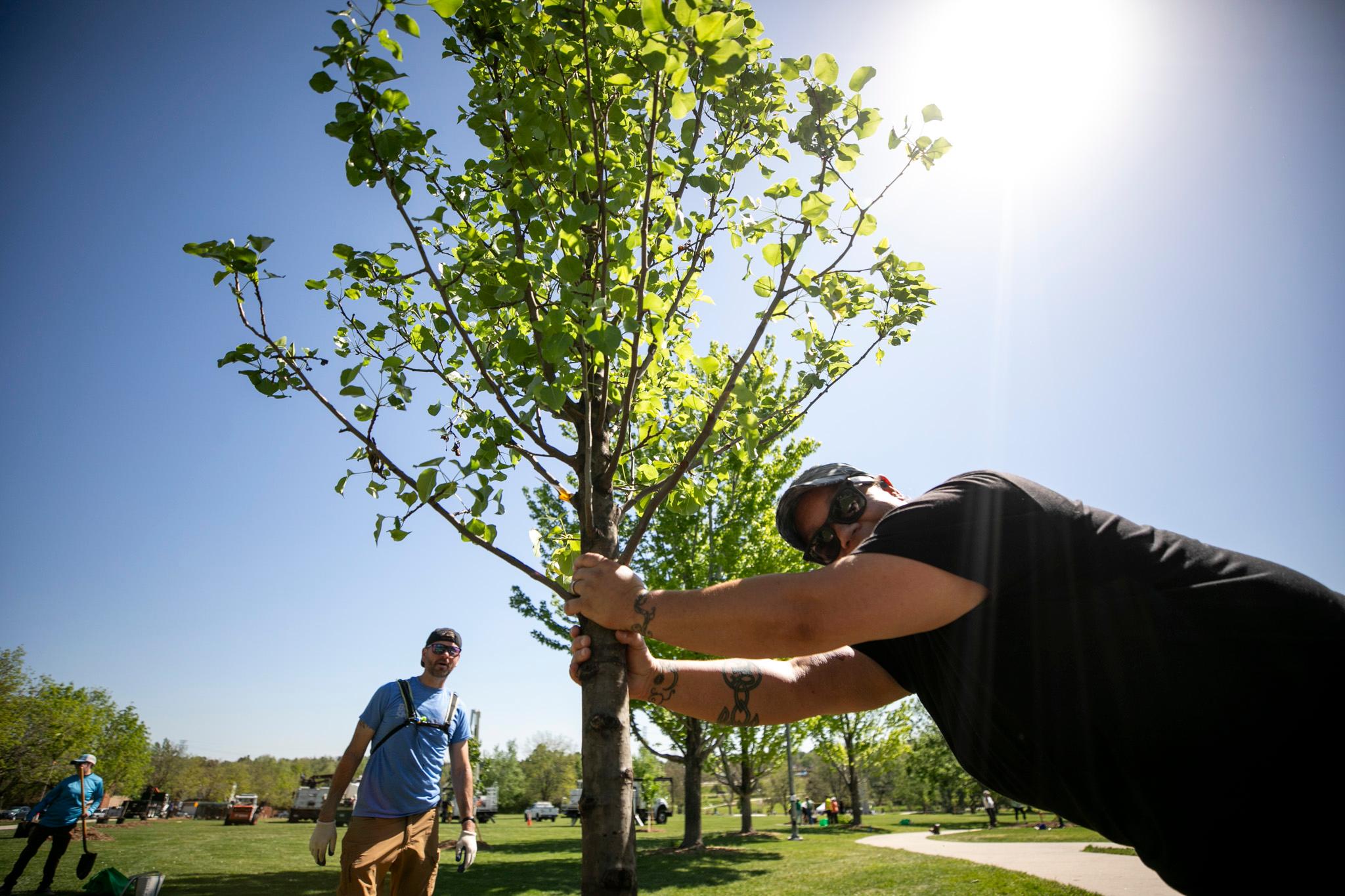
The city nevertheless went on a sprint last year, surpassing a target set by Mayor Mike Johnston to plant 4,500 trees in 2025, even as it admitted defeat on its first climate emission target. It’s taking a step back this year to plant roughly 2,500 trees, Killoran said.
That doesn’t mean the canopy won’t expand in the meantime. After years of aggressive planting, Denver’s average tree is less than nine inches in diameter, so increasing coverage depends on protecting those trees already in the ground.
“A lot of people expect us to plant a tree and set it and forget it,” Killoran said. “Whether it's hand watering, structural pruning, plant healthcare, those are all investments to make sure those trees are successful.”