President Donald Trump’s Department of Housing and Urban Development is changing the rules and slashing funding for long-term housing for low-income people, including those with disabilities.
The Colorado Coalition for the Homeless estimates that it could lose funding for some 800 households in permanent supportive housing, making up the vast majority of its inventory of 1,100 such units. And another 1,300 households around the state also could be impacted, CCH said.
The funding cuts would begin to be implemented as soon as January and play out over the following months.
“These new HUD policies virtually guarantee that tens of thousands of formerly homeless people in permanent housing nationwide will eventually be evicted through no fault of their own when the funds aren’t renewed, " Attorney General Phil Weiser wrote in a statement.
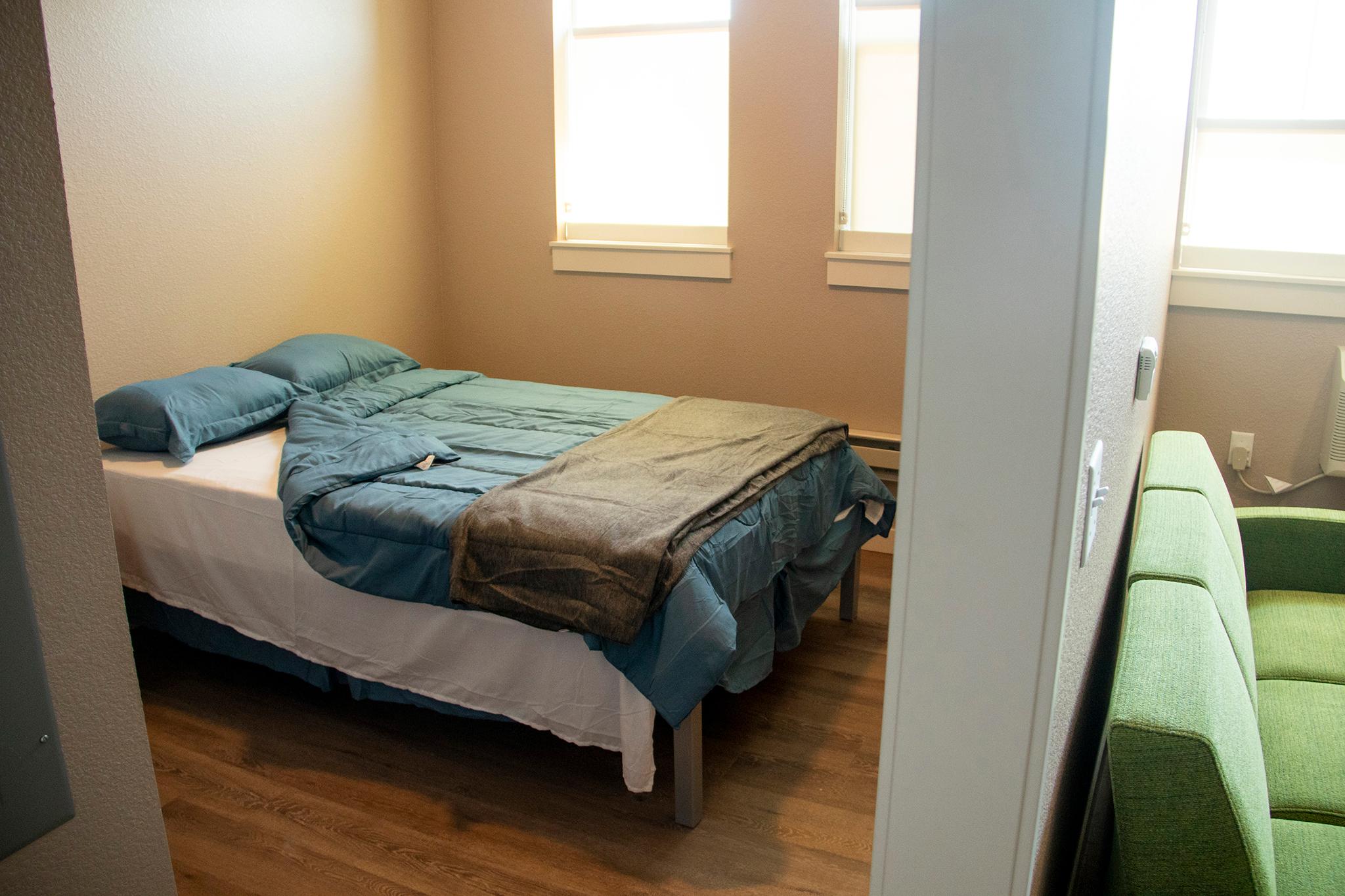
Permanent supportive housing is long-term, affordable housing that comes with ongoing services to help people with disabilities stay housed and stable.
In all, the changes could put more than 170,000 people — including thousands with severe mental health disabilities — at risk of returning to unsheltered homelessness, according to the nonprofit National Alliance to End Homelessness.
Dozens of entities — including Colorado and other states, cities and nonprofits — are suing HUD to block what they describe as illegal and unconstitutional shifts in spending priorities. The new rules are part of a larger push to repeal housing-first policies that have long had bipartisan support from academics, Congress and HUD itself.
Colorado joined nearly 20 other states in one lawsuit filed last week, and the Colorado Coalition for the Homeless is part of a separate suit filed this week by the nonprofit National Alliance to End Homelessness, a membership group comprising dozens of organizations that receive Continuum of Care funding.
The city of Denver hasn’t yet joined either lawsuit. Mayor Mike Johnston has promised to end unsheltered homelessness by 2027 and has invested mightily in housing-first solutions.
HUD did not respond to Denverite’s questions about the shift in policy or the lawsuits.
The agency quietly rolled out the changes in November, four months after Trump issued an executive order attacking housing first and harm reduction strategies.
The state of funding
The HUD funding in question goes to the Continuum of Care Program, a set of regional groups that distribute billions in federal funding across the country for housing and homelessness services.
Under the new guidelines, funding for permanent housing will now be diverted to transitional housing programs that require participants to get treatment for drug use and mental illness. In contrast, the housing first model works to bring people into long-term housing as soon as possible and with fewer requirements.
Previously, around 90 percent of CoC funds could go to permanent supportive housing for low-income people and those who cannot work because of disabilities. But under the new rules, just 30 percent could — putting thousands of housing projects and households in the crosshairs.
CCH estimates that 20 percent of those impacted are children, 10 percent youth, 20 percent veterans and 18 percent adults over 55.
The federal government is also changing who qualifies for such housing. People with mental disabilities and substance use disorders are at particular risk of losing their homes under a new eligibility scoring system, according to the states’ lawsuit.
Federal funding requirements have an outsized impact on how regions address big issues like homelessness. And the nation’s housing-first policies have shaped how nonprofits do their work.
Trump’s administration is eliminating that housing first strategy but has yet to create a transition plan. The shifts in grant requirements are happening fast. And some two-year contracts are being cut midstream, leaving the groups that have shouldered the country’s homelessness response uncertain about their future.
That’s the case for the Colorado Coalition for the Homeless, which is scrambling to decide what to do if its funding is cut.
The organization might move some of its 800 affected households from permanent housing to transitional housing — but there is not enough to go around.
It’s possible that the same buildings could be shifted into transitional housing, but there’s a legal snag. Because those buildings were funded under the federal Low Income Housing Tax Credit program, they are not allowed to be used for anything other than permanent affordable housing for people making a certain income.
Cathy Alderman, a spokesperson for the Colorado Coalition for the Homeless, said Trump-era attacks on housing first policies and funding don’t feel solution-oriented. The administration appears to be implementing “draconian measures” and is waiting “to see where the chips fall.”
“We know where the chips fall,” Alderman said. “When people don’t have housing, they die. They suffer. They end up in jail. They annoy the neighbors. We know what happens.”