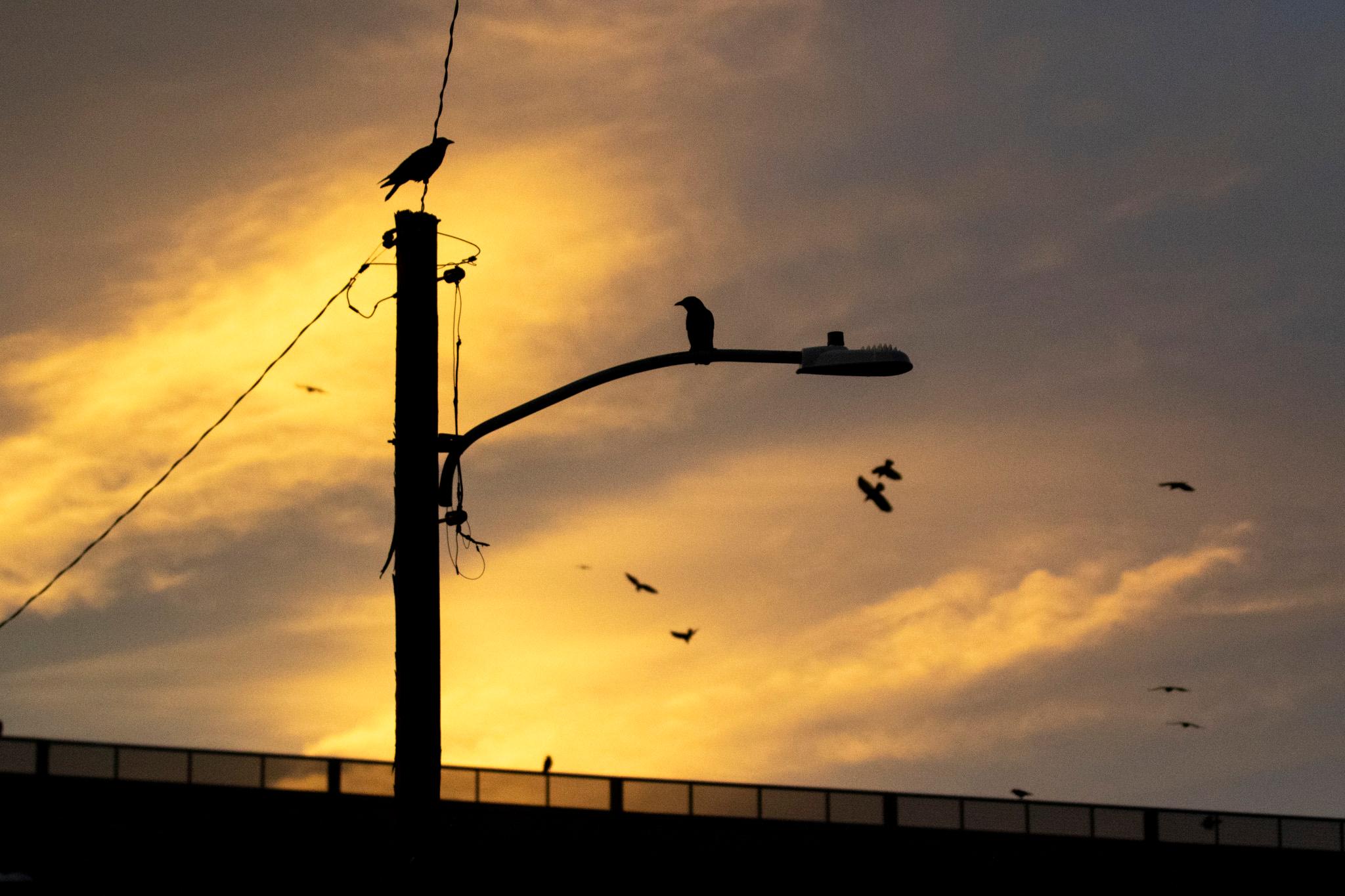
Denver is home to some special guests this time of year, and I don’t mean old men dressed in red satin suits. These visitors are not so cheery — they’re even a bit ominous.
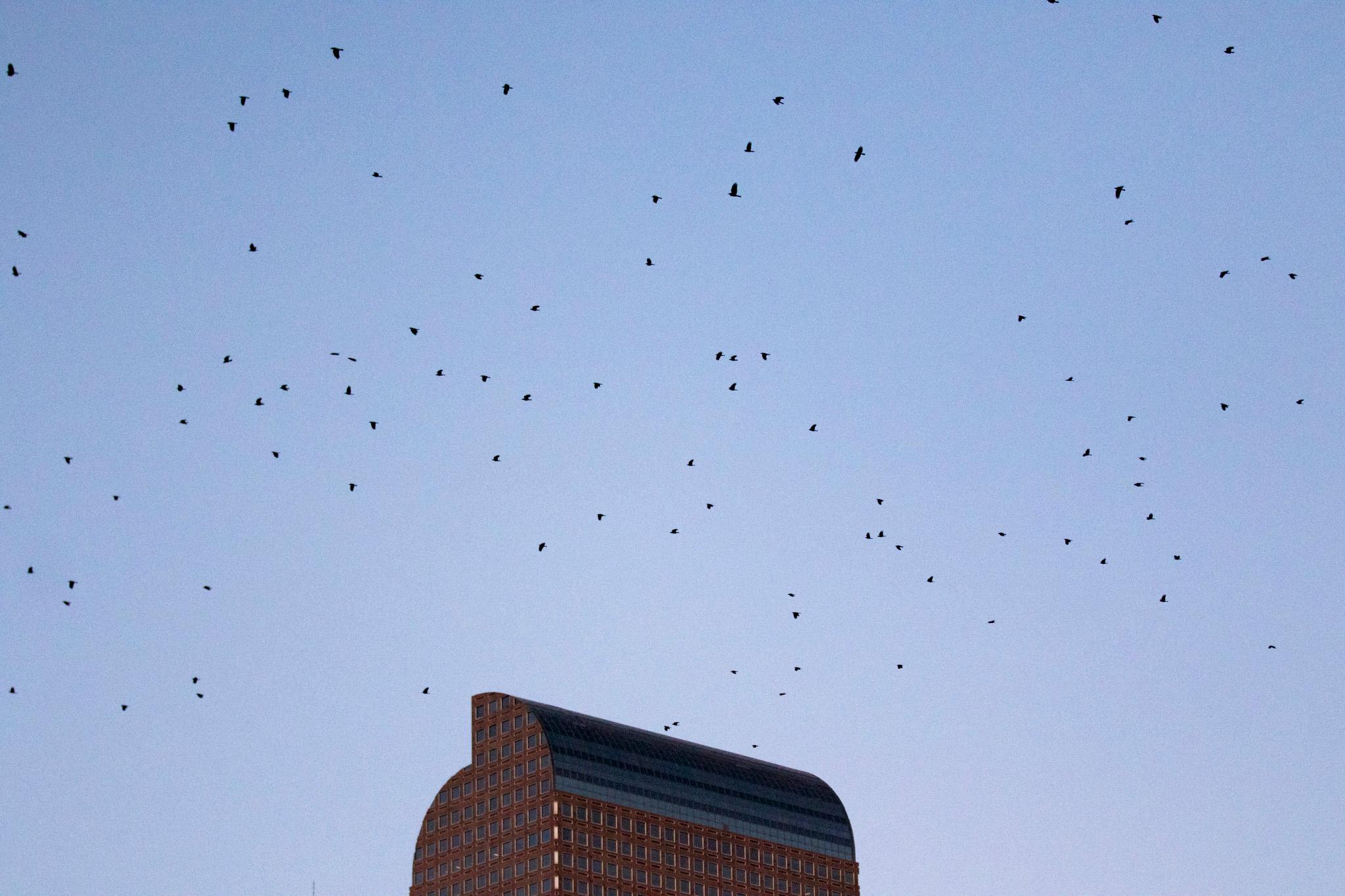
Each night, like clockwork, the metro’s skies fill with clouds of black birds. Denverite reader Dianne T. said she’s been watching the nightly ritual, and wrote us to ask about them:
“Toward dusk, hundreds of crows start flying north from south Denver and Englewood. It happens every day. Where are they going to roost?”
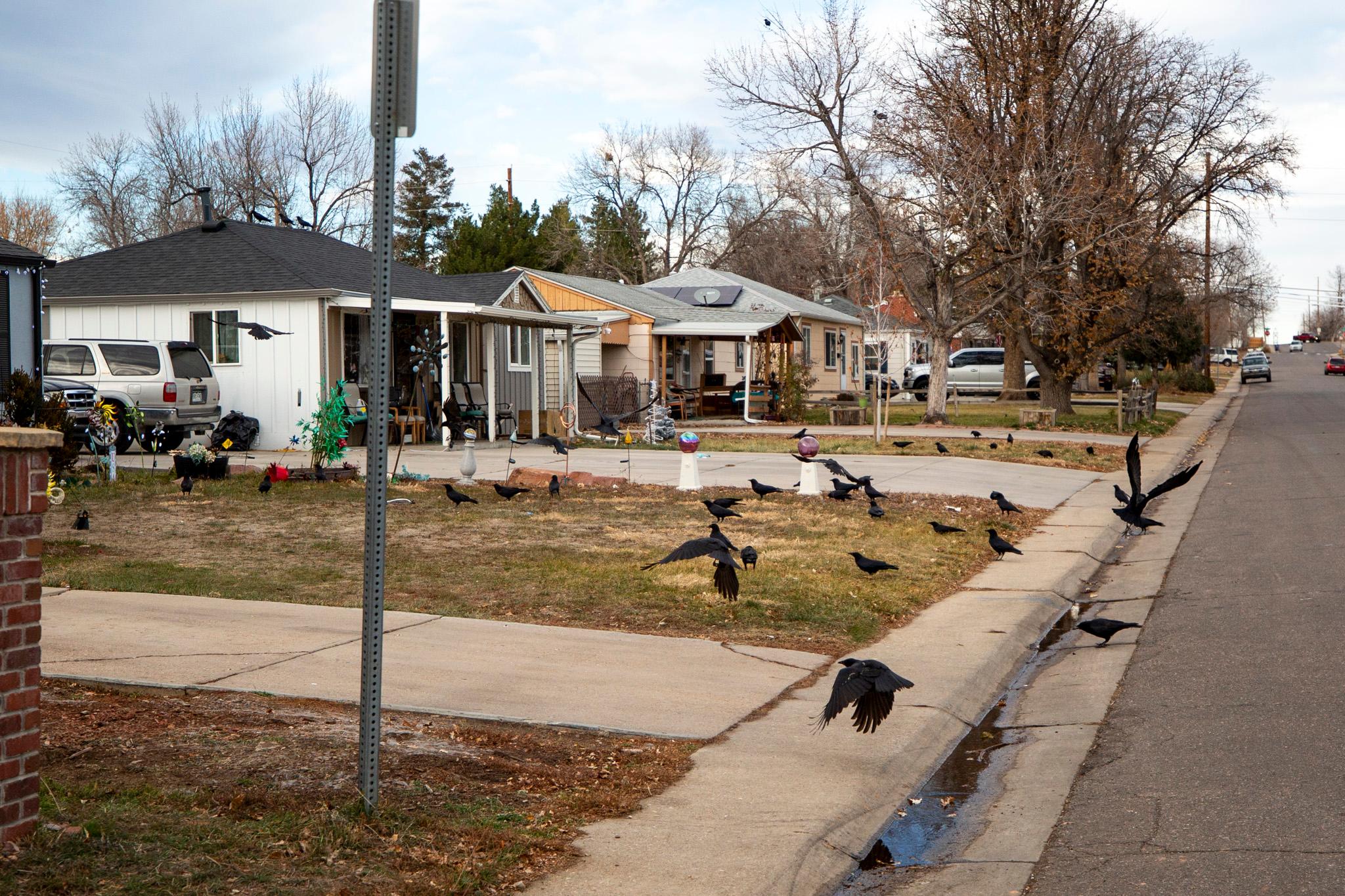
Gath Spellman, avian expert with the Denver Museum of Nature and Science, said he gets questions about corvids every year. They’re especially numerous now because cold weather has pushed birds from the mountains and the north. He said the Denver area was probably their winter home long before it was ever developed.
But the urban environment has become a particularly attractive place to land. Many of the birds our reader watches each night end up downtown, where they gather in the hundreds on the edges of buildings and atop trees.
Cities draw birds in, but urbanization has been a mixed bag for crows.
The city’s urban core offers some obvious allure: plenty of trees, access to the river and a lot to scavenge. Spellman said crows are extra social this time of year, and downtown is a good place to gather.
Dianne said she usually sees them fly over her home in south Denver about an hour before sunset; they arrive in hordes downtown when the sky really begins to dim. She also said she sees some landing near Washington Park’s big lakes in the summer; those birds are probably year-round residents.
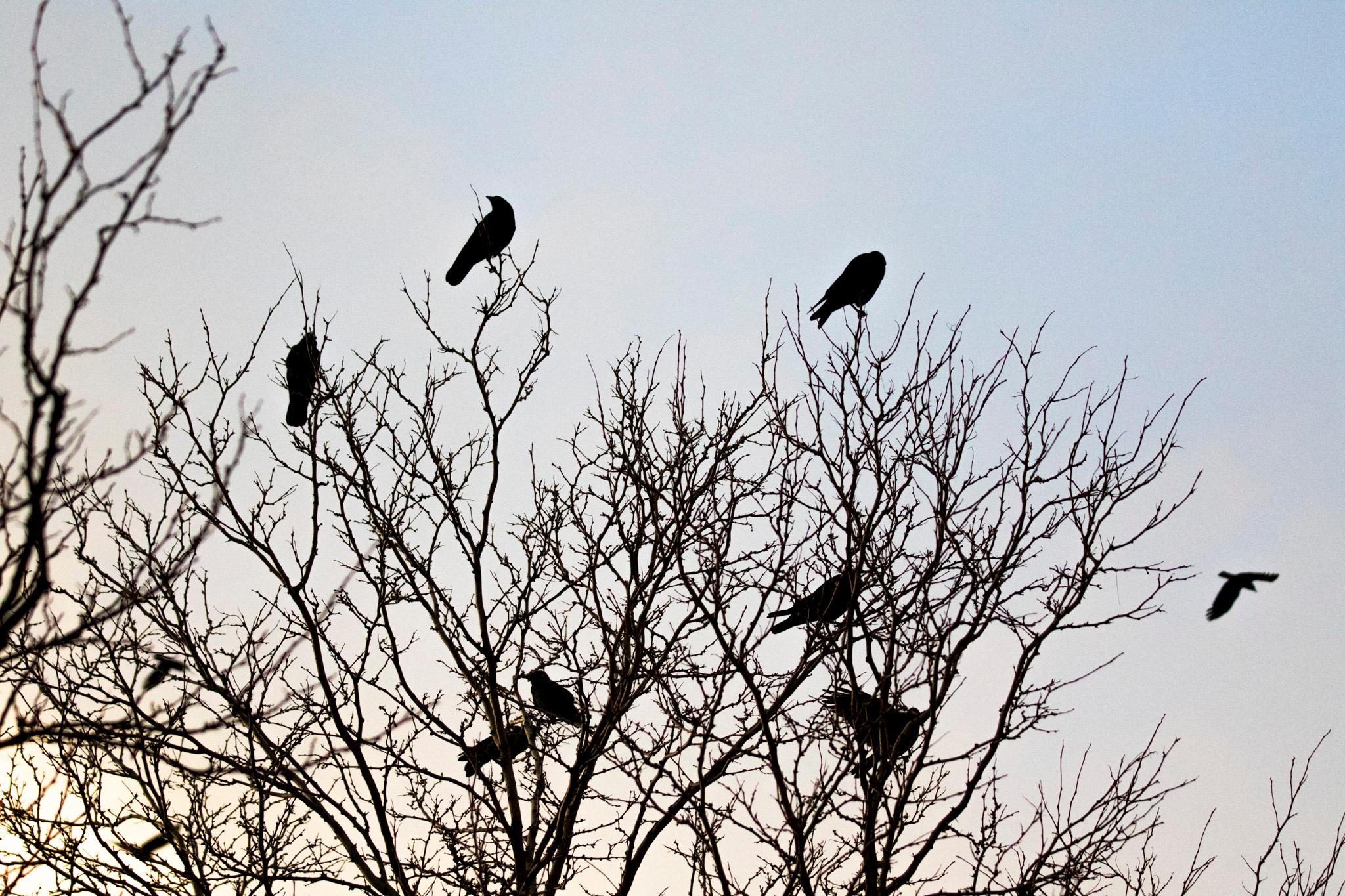
Some animals have thrived in the world of humans — like coyotes, who have grown their numbers as they’ve adapted to American cities. Crows’ success has not gone unnoticed, either. Some have even speculated that “crows are the new pigeons.”
But these birds, like many other species, have also been put into crisis by their collision with homo sapiens. Spellman said they have been particularly impacted by diseases that spread faster in human environments.
“It’s a double-edged sword for crows. The American crow was really hard hit by West Nile virus,” he said. “They lost a significant part of their population through eastern North America, central North America, and their populations have been rebounding since that decline.”
The rebound has been so successful that new species could emerge.
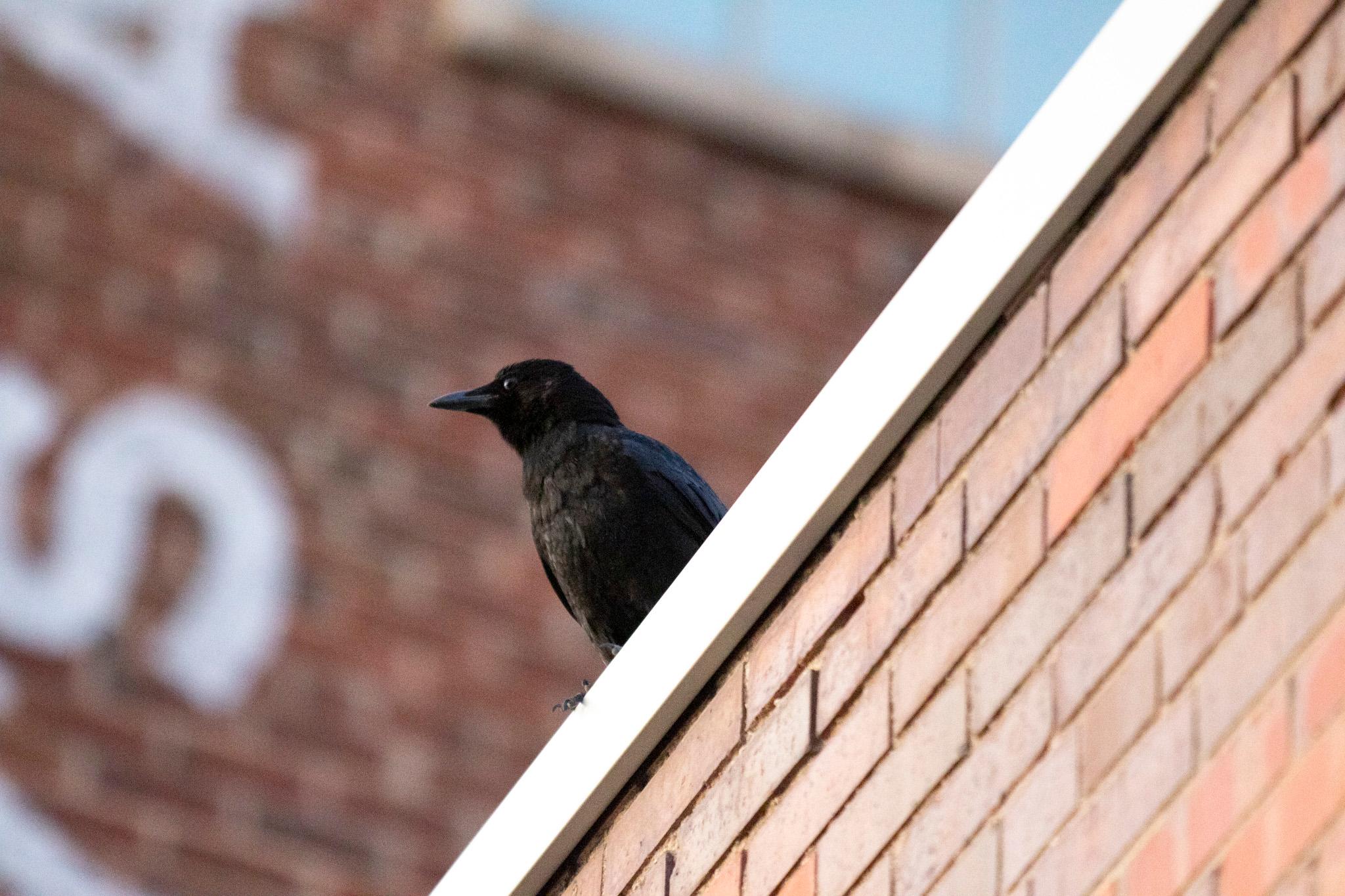
Crows and their broader corvid family are smart, so adaptation comes easy to them. Birds in cities behave differently from their country cousins, laying eggs earlier and demonstrating a higher tolerance for humans. Those observations have led some to wonder if they could evolve into distinct new species.
Spellman said he’s working on exactly that question in partnership with researchers based in Spain, studying blackbilled magpies in North America and European magpies in Morocco. Their work ponders whether evolution prefers “plasticity” — the ability to change behavior when needed — or if these birds must change in a more permanent way to survive.
Similar dynamics are at play all around us, in insects, rodents, flowers and more.
Dianne T. wondered if there might be unexpected trade-offs as animals master the human realm. The growing crow population in her neighborhood, she said, hasn’t boded well for other creatures.
“They create gangs, huge gangs,” she said. “And it’s merciless. They’ll make calls to get a gang together, and they’ll fly at the hawk or the owl.
“I’m very unhappy about that.”

Species do compete for space and resources, and Spellman added that crows also treat raptors like hawks as threats, hence the violence. But he said crows’ ability to so handily dominate our urban ecosystem does earn them some praise.
“They’re amazing birds, intelligent birds,” he said, “and we should be lucky we have them in our downtown.”