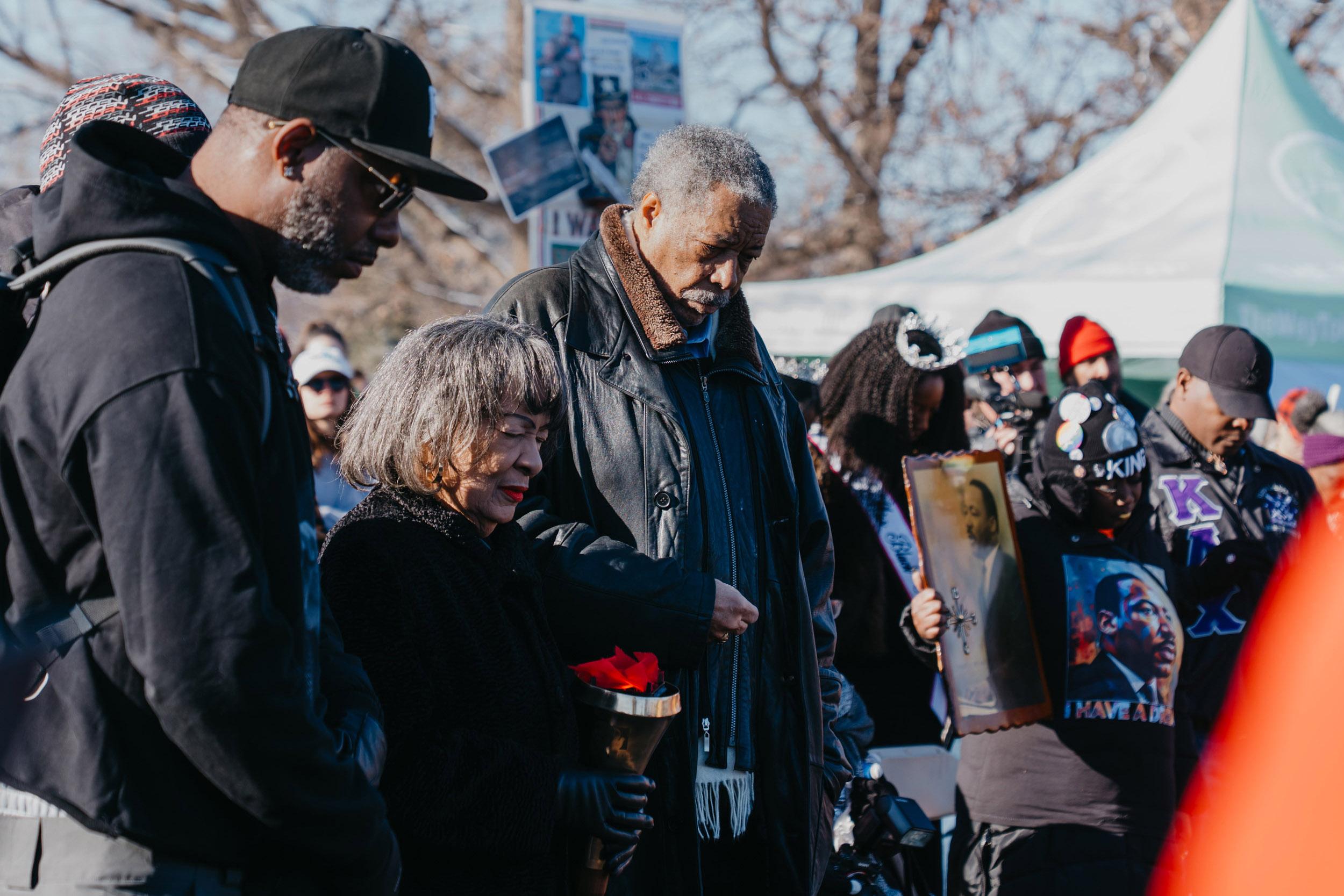
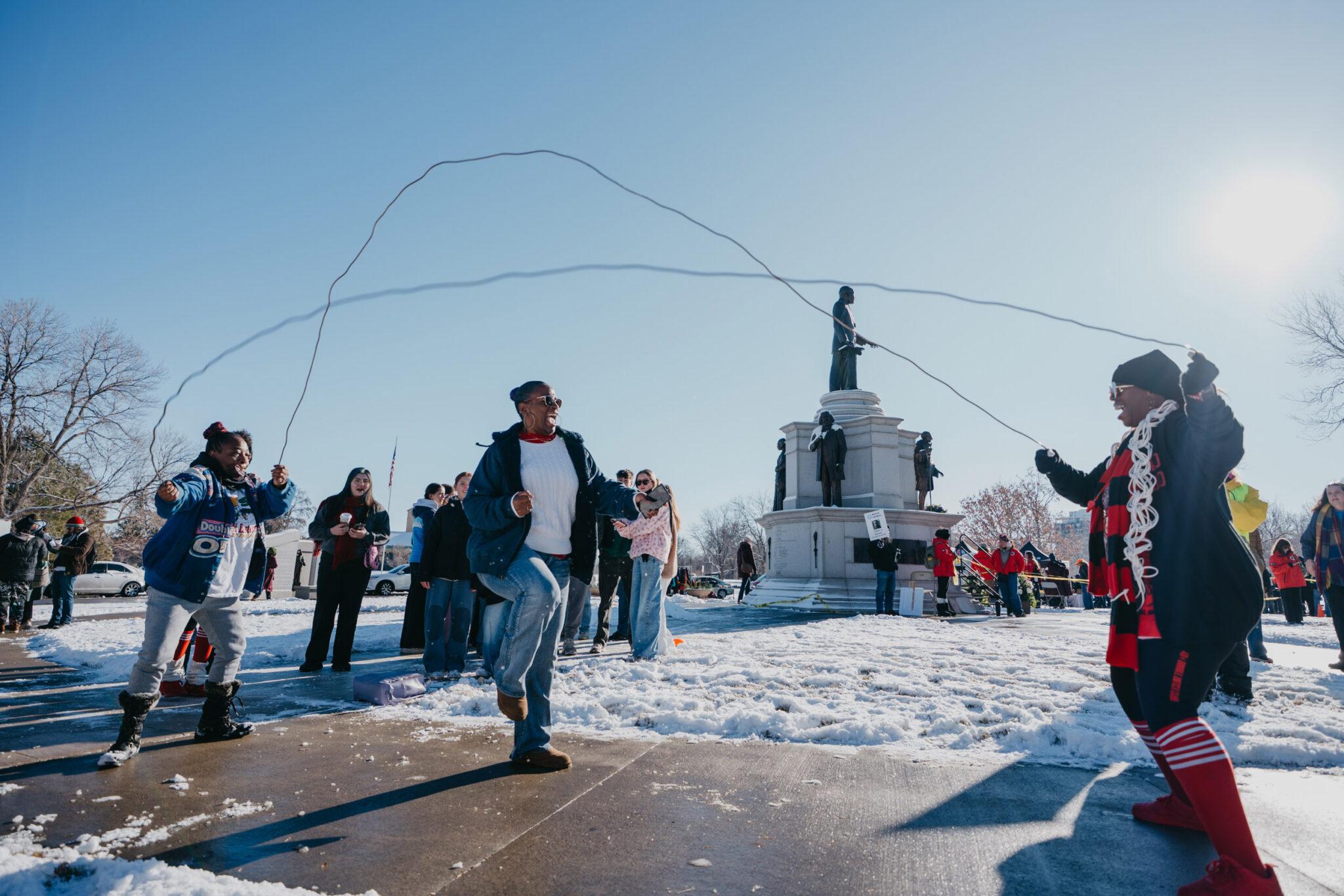
Part demonstration, part celebration — Denver’s Marade brought hundreds of people out to mark the birthday of Martin Luther King Jr., walking from the MLK memorial statue in City Park, along Colfax Avenue before ending at the Colorado State Capitol.
This year is the 40th anniversary of the first Marade in Denver. The term “Marade” is unique to the city, a combination of march and parade — blending a celebration of civil rights successes while acknowledging the work is not finished.
“It is not just about celebrating King, it’s having direct action like King,” said Wellington Webb, the first Black mayor of Denver, and one of the first speakers. “We need to be on the forefront of the issues of today.”
He said protest and action should be focused on opposing President Donald Trump’s agenda and he called on local lawmakers to “demask ICE” in Colorado, and he led a chant of Renee Good’s name — Good was shot and killed by an ICE agent in Minneapolis this month.
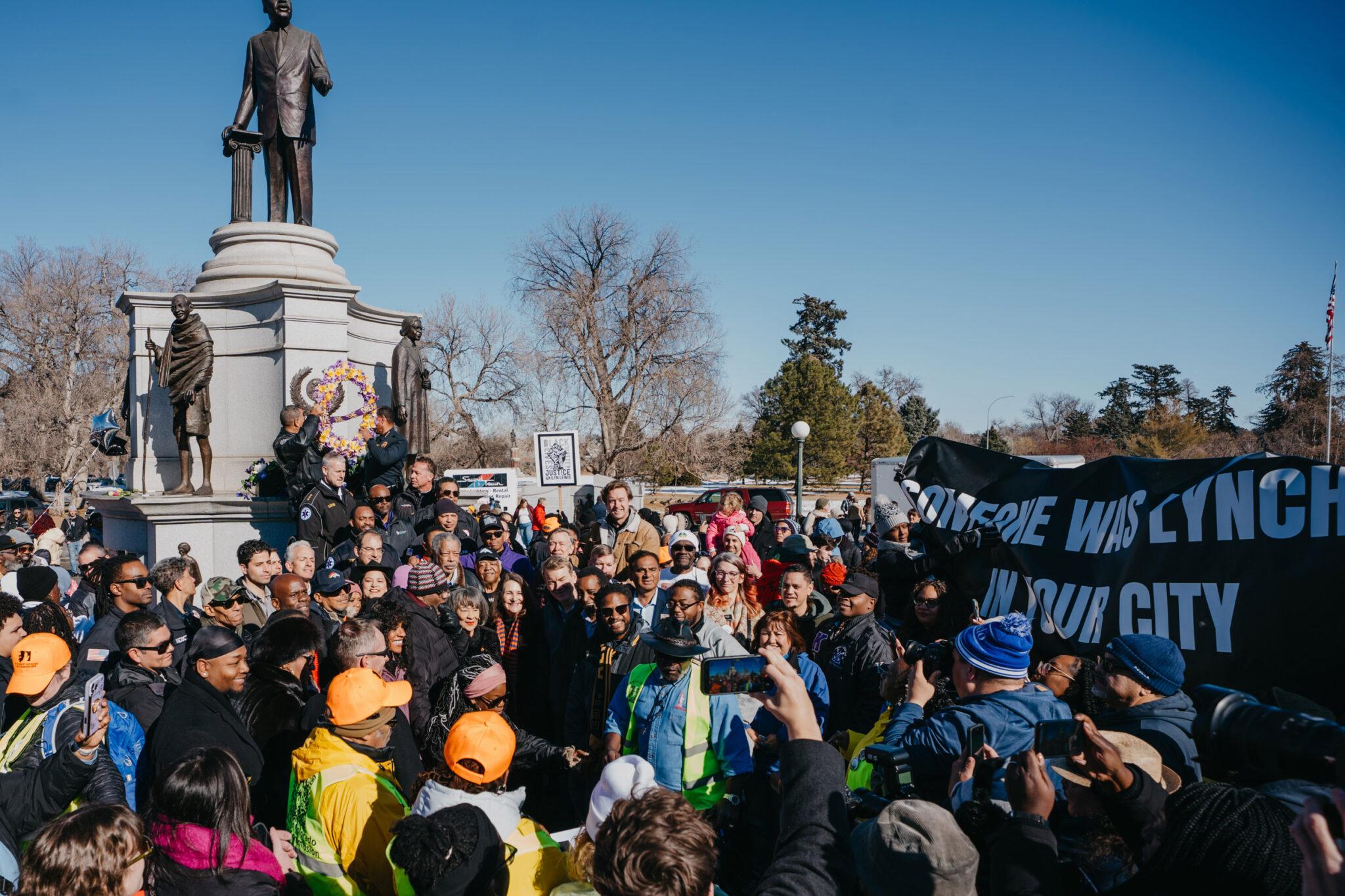
City and state officials pose on the step of City Park's Martin Luther King Jr. statue as the annual MLK Day Marade begins in Denver. Jan. 19, 2026. Becky Duffyhill for Denverite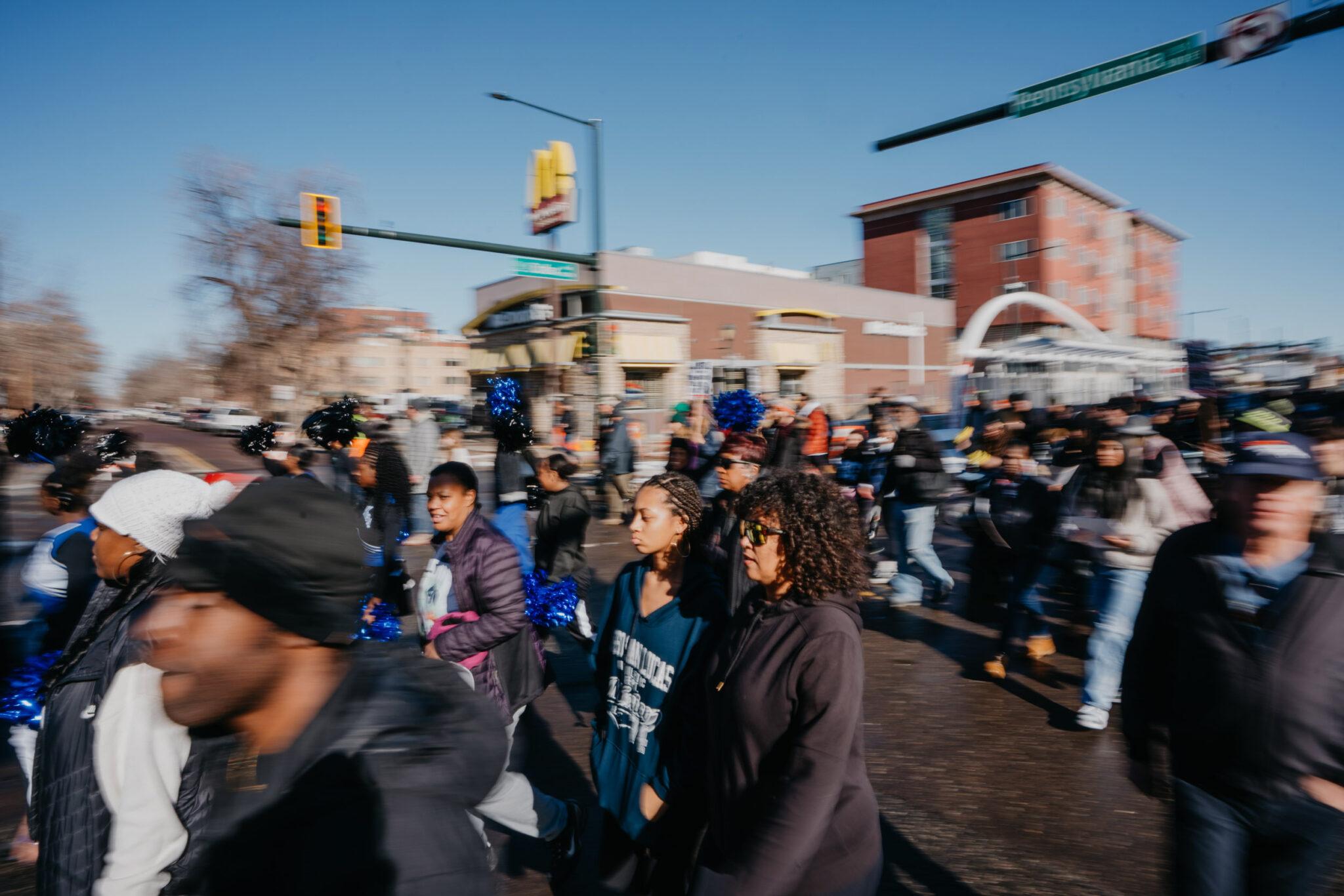
Marchers in Denver's annual Martin Luther King Jr. Day Marade head down Colfax Avenue towards the Capitol. Jan. 19, 2026. Becky Duffyhill for Denverite
Webb has a long history with the Marade; he was the first to introduce legislation when he was in the Colorado statehouse in the 1970s to recognize MLK day as a state holiday. But it was his wife, former State Rep. Wilma Webb, who sponsored and helped secure final passage of the law in Colorado.
“So we have to get busy, and vote for righteous people to be in leadership,” she said with her husband Wellington at her side.
Colorado was among a handful of early states to create an official state holiday for King, years before others.
In 1983, President Ronald Reagan signed the federal MLK holiday into law following years of lobbying by King’s wife, Coretta Scott King, and celebrities like Stevie Wonder, who added a song about the lack of a holiday honoring King to his 1980 album Hotter than July. The first official observance of the federal holiday was 1986.
But the law only applied to federal workers. It took another decade for all 50 states to create a holiday on the third Monday of January, around King’s birthday of Jan. 15. Colorado passed its law in 1984, but states like Arizona wouldn’t create a holiday until 1992 by voter referendum.
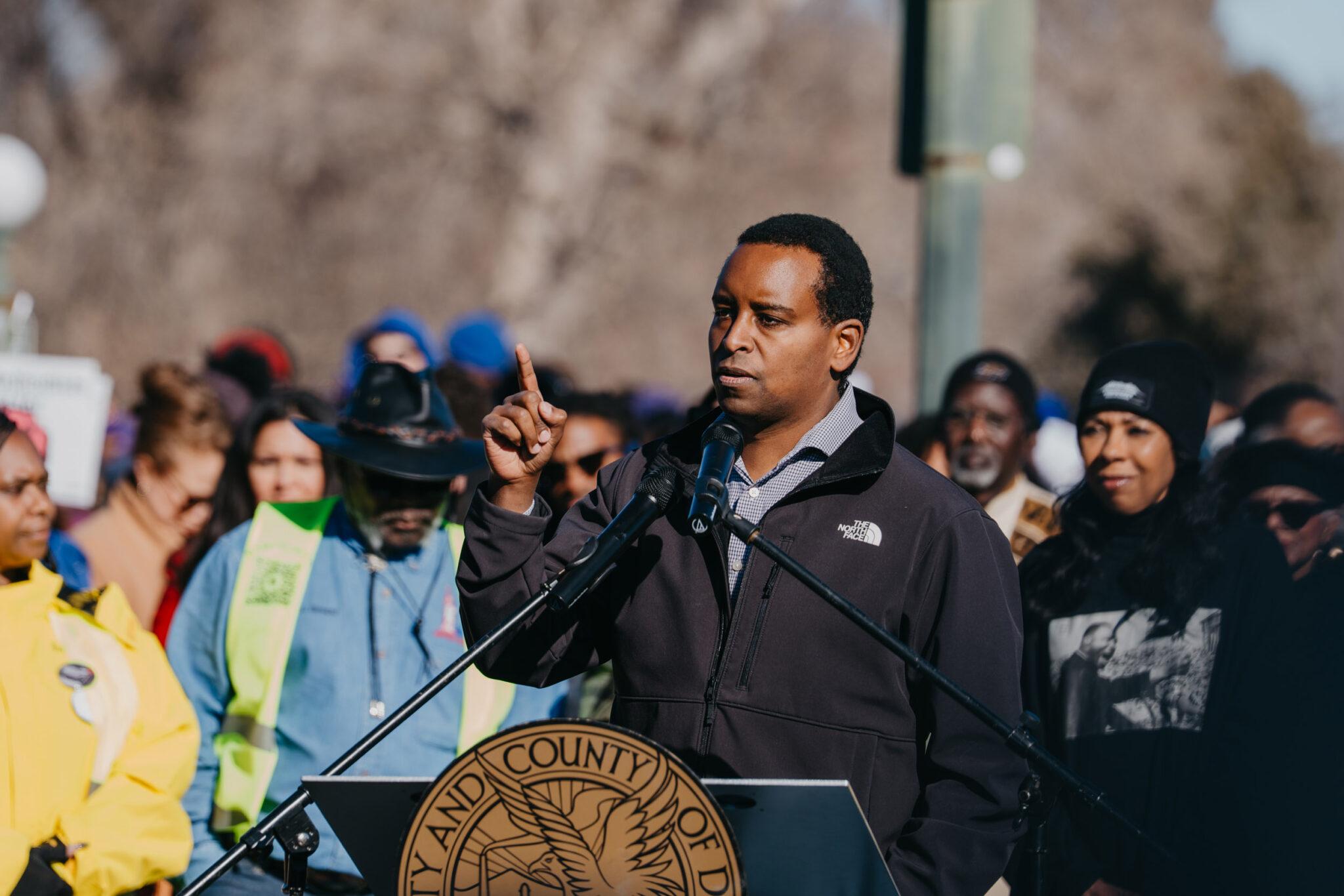
The first Black congressman from Colorado, Joe Neguse, gave a rousing speech before the Marade, noting that King and the Webbs didn’t make excuses, they acted. There are still issues affecting the Black community, he said, particularly around issues of health equity.
“The challenge for us is to do something about it,” said Neguse. “To stand up, to be a voice for the voiceless, to speak out, to speak up, for those who don’t have the means to do so, because we have work to do.”
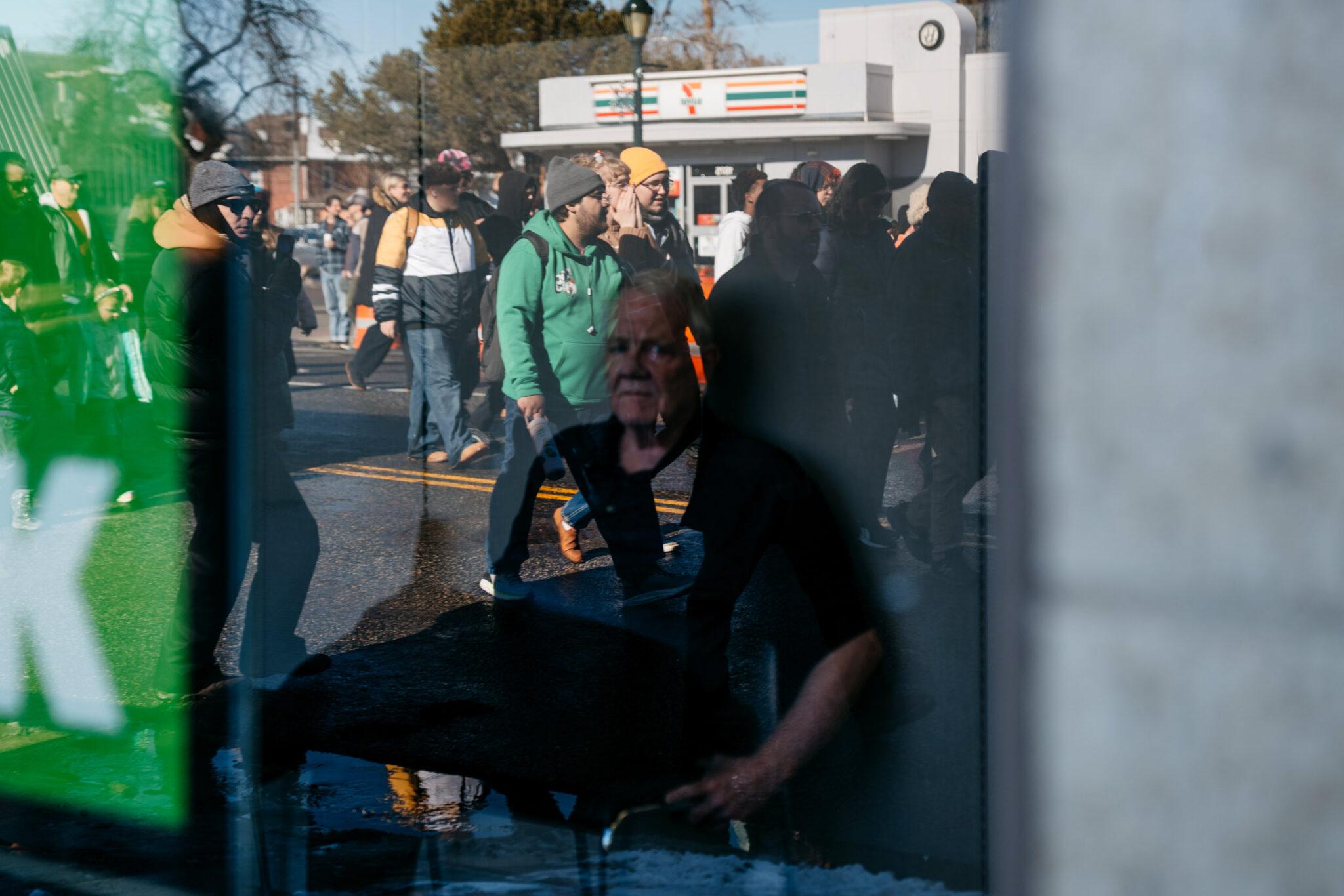
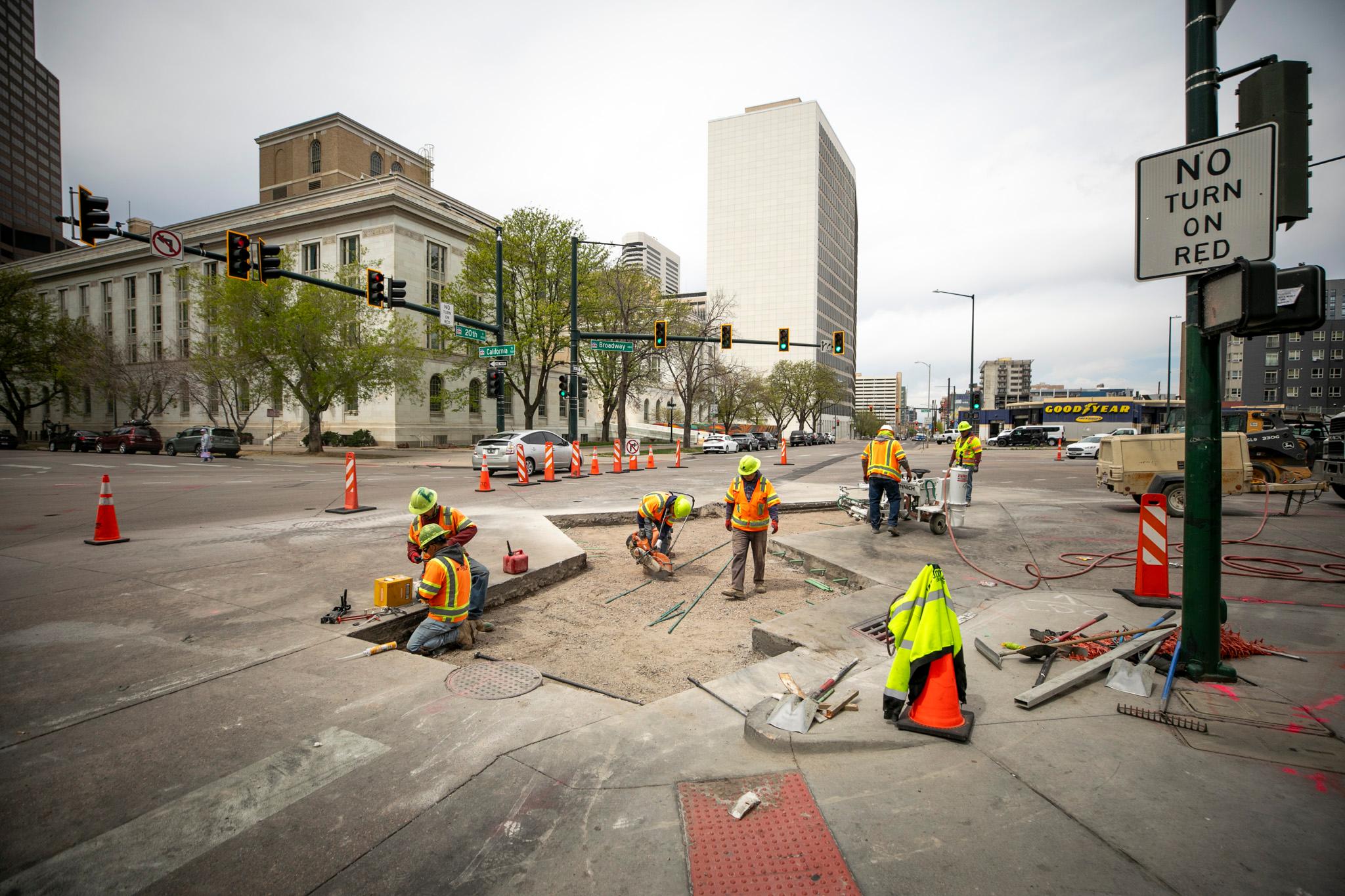
The march moved peacefully along Colfax Avenue, around the construction, toward the capitol.
“I think showing up makes a difference, it’s good to be involved,” said May Salem, a Denver resident, who grew up attending the Marade, and brought her 1-year-old daughter and husband. She was disappointed to see that the crowd was not as big as other years.
Arianna Butler, 21, came from Aurora to march in the Marade. She held a sign that said “All Power to the People,” and she said the Trump Administration’s immigration crackdowns helped to inspire her to come out.
“The militarization of a federal body of police — none of that, no more. The vicious deportations that are happening, it’s kidnapping. None of that. I can’t. I will not,” said Butler, who added that the fight for civil rights continues.
“It’s like a giant circle, that’s why we’re out here, that’s why it happens every year cause it never really stops and probably never will, but that’s why we come out.”
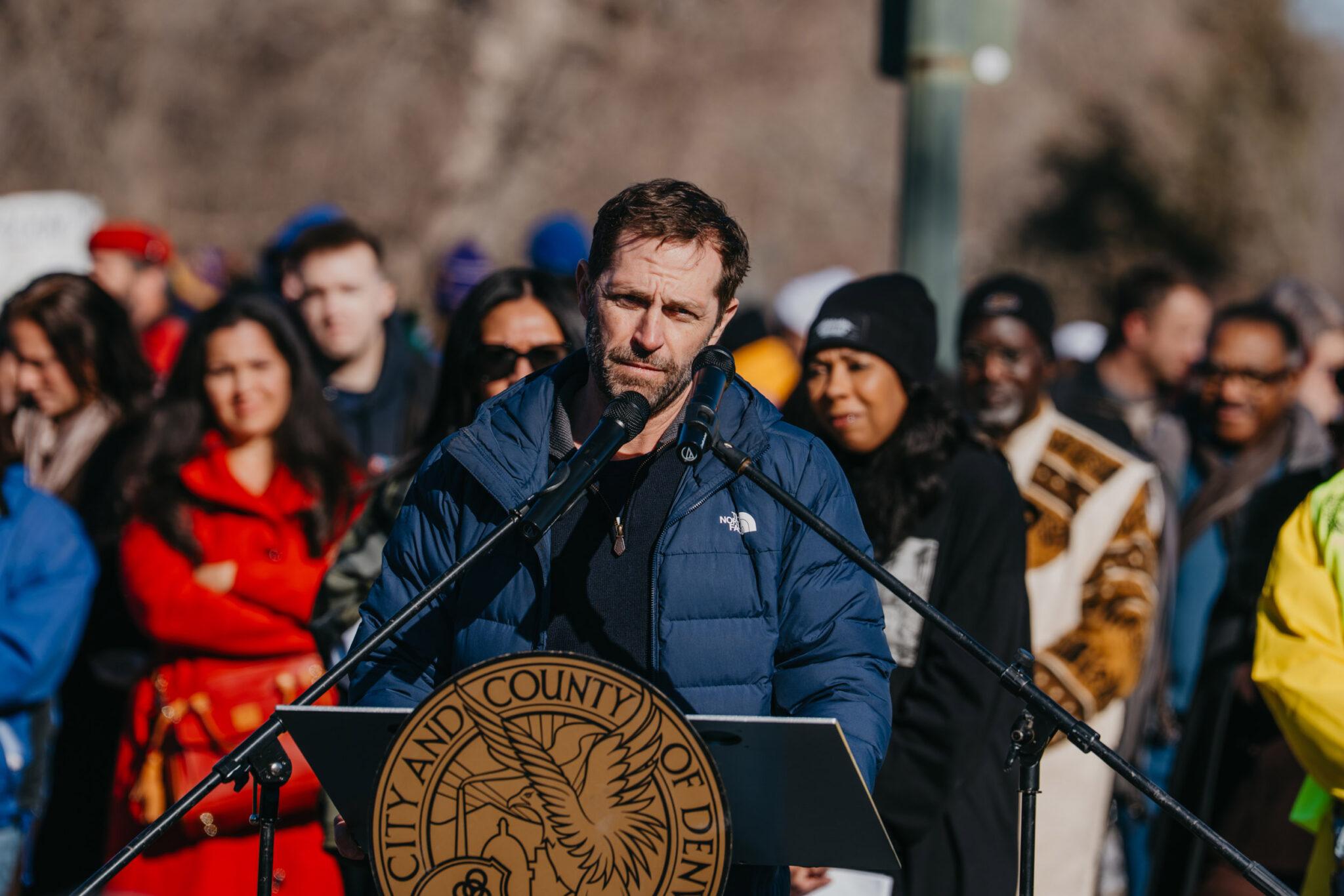
U.S. Rep. Jason Crow speaks at City Park during the opening ceremony for Denver's annual Martin Luther King Jr. Day Marade. Jan. 19, 2026. Becky Duffyhill for Denverite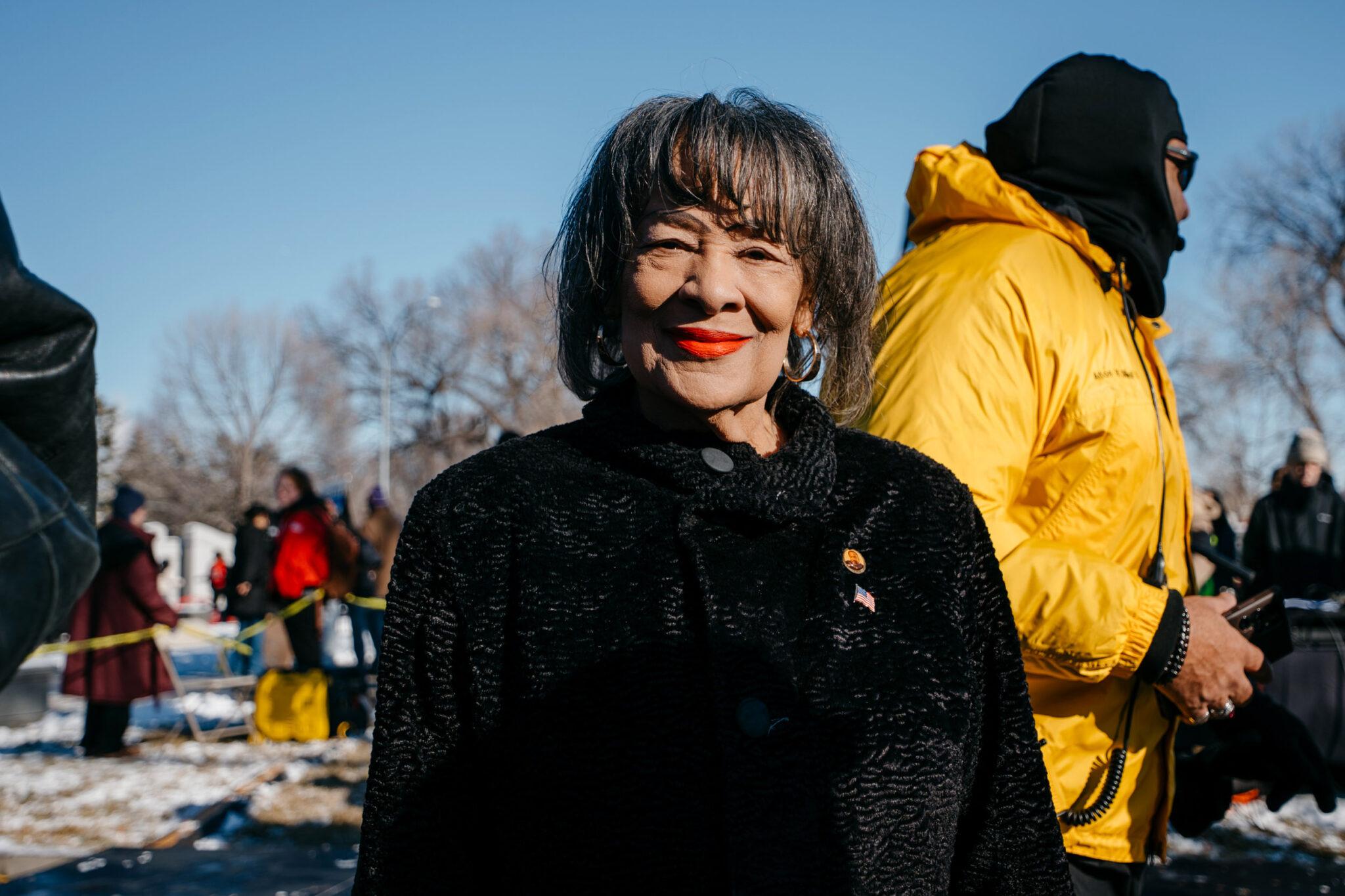
Former state Rep. Wilma Webb stands in City Park as the annual Martin Luther King Jr. Day Marade begins. Jan. 19, 2026. Becky Duffyhill for Denverite